
BuddhistCatholicContemplativeEvangelicalGeneral ChristianHinduJewishLatter-day SaintMuslimNew VisionsProgressive Christian
Beliefs
- Buddhist
- Catholic
- Contemplative
- Evangelical
- General Christian
- Hindu
- Jewish
- Latter-day Saint
- More Voices
- Muslim
- New Visions
- Pagan
- Progressive Christian
Topics
- Religion News
- Food and Religion
- Sports and Religion
- Religious Art
- Religious Music and Entertainment
- Religious Events
- History and Religion
- Style and Religion
- Politics and Religion
- Women in Religion
- Recreation Outdoors and Religion
- Business Finance and Religion
- Careers Workplace and Religion
- Education and Religion
- Family Parenting and Religion
- Health Fitness and Religion
- Home and Religion
- Relationships and Religion
- Technology and Religion
- Travel and Religion
Columnists
- Buddhist Columnists
- Business Finance and Religion Columnists
- Careers Workplace and Religion Columnists
- Catholic Columnists
- Contemplative Columnists
- Education and Religion Columnists
- Evangelists Columnists
- Family Parenting and Religion Columnists
- General Christian Columnists
- Health Fitness and Religion Columnists
- Hindu Columnists
- History and Religion Columnists
- Home and Religion Columnists
- Jewish Columnists
- More Voices Columnists
- Latter Day Columnists
- Muslim Columnists
- New Visions Columnists
- Nonreligious Columnists
- Pagan Columnists
- Politics and Religion Columnists
- Progressive Columnists
- Recreation Outdoors and Religion Columnists
- Relationships and Religion Columnists
- Religion News Columnists
- Religious Art Columnists
- Religious Events Columnists
- Religious Music and Entertainment Columnists
- Sports and Religion Columnists
- Style and Religion Columnists
- Technology and Religion Columnists
- Travel and Religion Columnists
- Women in Religion Columnists
Resource Library
- 2026 Calendar
- Library of World Religions
- The 100 Most Holy Places on Earth
- Patheos Answers
- Podcasts
- Videos
- Faith Leaders Database
- Anglican Episcopalian
- Bahai
- Baptist
- Buddhism
- Christianity
- Confucianism
- Eastern Orthodoxy
- Hinduism
- Holiness and Pentecostal
- ISKCON
- Islam
- Judaism
- Lutheran
- Methodist
- The Church of Jesus Christ of Latter-day Saints
- New Age
- Paganism
- Presbytarian and Reformed
- Protestantism
- Religion Behind the Scenes
- Roman Catholic
- Scientology
- Shia Islam
- Sikhism
- Sufism
- Sunni Islam
- Taoism
- Zen
- See all religions
Research Tools
 Ad-Free & Subscriber Log-In Subscription Support
Ad-Free & Subscriber Log-In Subscription Support
Follow Patheos 

- Trending:
- Forgiveness
- |
- Marriage
- |
- Consciousness
- |
- Death Penalty
- |
- Election
- |
- Halloween

-
About
-
Catholic Apologetics
-
Church History
-
Great Apologists
-
Christian Worldview
-
Protestantism & Misc.
- Home
- Catholic
- History and Religion
- “Roman But Not Catholic”: Defense of My Amazon Review
“Roman But Not Catholic”: Defense of My Amazon Review
Last updated on: June 5, 2026 at 11:51 pm by Dave Armstrong
“Roman But Not Catholic”: Defense of My Amazon Review 2026-06-05T23:51:20-04:00 Dave Armstrong
Patheos Explore the world's faith through different perspectives on religion and spirituality! Patheos has the views of the prevalent religions and spiritualities of the world.
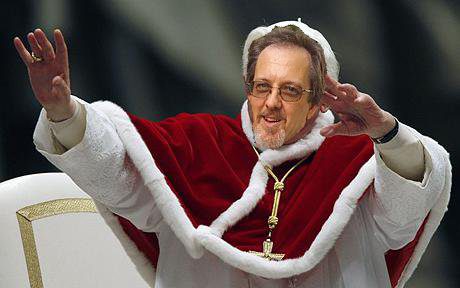
I wrote twelve critiques of the book entitled, Roman but Not Catholic: What Remains at Stake 500 Years after the Reformation, by evangelical Protestant (Wesleyan) theologian and historian Kenneth J. Collins and Anglican philosopher Jerry L. Walls (Grand Rapids, Michigan: Baker Academic, 2017). The complete list can be found on my Calvinism and General Protestantism web page (scroll about halfway down).
Then I wrote a review of the book on its Amazon page. Geoffrey S. Robinson wrote a fairly lengthy critique of my review, which can be read underneath it. This is my reply to most of it. His words will be in blue.
***
[T]he proper context for interpreting Newman must be considered. He was well aware of the theological method known as maximalism which was developed by Duns Scotus. From the book: “it was better to falsely attribute an honor to Mary than to possibly take a real one away.” (pg. 303)
*
This move encourages broad and general applications typical of Newman in this area. Second, it was Jaroslav Pelikan himself who referred to the “methodology of amplification,” that often played out in Mariological contexts. (RNC p. 318) “Once Mary was deemed by her devotees to be ‘higher than the cherubim, more glorious than the seraphim,’ and ‘to be regarded as not unworthy of any of the honors and privileges that had, according to the Scriptures of both the Old and New Testament, been conferred on others’. (pg. 318)
To prove that Cardinal Newman believed these ridiculous things would be easy enough: simply produce straightforward documentation that he said that Mary was to be worshiped, was the image of the Father, or could or should be called “God” or “Creator.” There is a website called Newman Reader that has all of his works, and it can be quickly searched. Good luck! But these contentions in the book are without question, patently absurd. Newman was describing what Arians said about Jesus and making a qualified partial analogy. He did not apply these attributes to Mary at all in this passage. These contentions alone are enough to discredit the authors (and you, as well).
Peter Sean Bradley has also thoroughly debunked this nonsense by using an argument from immediate context. Apparently I can’t give URLs here (I couldn’t in the review), which is a shame, but it is found on Jerry Walls’ Facebook page, on a thread entitled, “Newman’s Arian Marian Piety” (10-18-17).
Moreover, the same Jaroslav Pelikan that the authors and you cite, had an infinitely higher regard for Cardinal Newman than Collins does. Thus, in his 1988 work, The Melody of Theology, in the article on Newman, he opined that the Essay on Development was “the seminal work for the thought of theologians and historians –and, above all, of historians of theology” (p. 181; my italics). This is the judgment of a scholar who produced a famous five-volume history of the development doctrine (which I also own). Dr. Pelikan goes beyond that, into almost rapturous praise:
Not only to his latter-day disciples, therefore, but to many of those who have drawn other conclusions from his insights, John Henry Newman has become the most important theological thinker of modern times. (Melody, p. 181; my italics).
I wrote in my first critique of the book:
But Collins would have readers think that such an eminent Churchman and dazzling writer as Newman (even in the estimation of a then-Lutheran scholar like Pelikan, and, if he is right, many others, too, including many non-Catholics), was foolish enough to argue that Mary should be called “God” and “Creator” and “the Image of the Father.” It’s not even remotely plausible, and it is untrue as a matter of fact.
[Queen Mother / Queen of Heaven] Are you referring to Catholic apologist use of Solomon getting a request of the Queen Mother but ignoring that Solomon denies that request and then kills the person who the Queen Mother was interceding for?
Your comment about “Queen Mother” is a common contra-Catholic chestnut. Catholic apologist Steve Ray refuted it as follows:
The Queen Mothers of earthly kings of Judah were not always good examples or godly queens. Many of them were egregious sinners and would intercede for the people with improper requests to the king. But, this takes nothing away from the fact that the mother was the queen and intercessor. It only confirms that many of the Old Testament kings and queens were disobedient to God.
I would add that God knew from eternity that King David wold commit adultery and kill a man to obtain his wife. Yet that didn’t stop God from calling David a “man after his own heart”, from making an eternal covenant with him, and for directing the biblical writers to depict him as a prototype of the Messiah, Jesus. The “sin argument” never proves very much. Steve Ray answered this at greater length in another 30-page paper of his on the topic:
Now our naysayer comes up with the same tired old argument I heard as a child. He says “she did not obtain from her son what she wished” as if that proved there could not be a Queen Mother. I remember my dad telling me that Mary could not be the queen of heaven—using the same argument—because Bathsheba did not get the request she asked for. I guess my question to that is “So what, what does that prove?”
Solomon was a type of Christ even though he was a sinner. Bathsheba was also a sinner. She asked for something unwise and Solomon refused. Just because Bathsheba asked for something unwise and it was not granted to her by her son Solomon, it does not mean she didn’t have the office of Queen Mother. It simply means she was unwise and didn’t receive her request. . . .
But didn’t Solomon reject his mother’s request? Yes, he did. But that in no way detracts from the fact that this office existed anymore than the presence of false prophets proves that prophets did not exist. It should be noted that all three parties, Adonijah (v. 17), Bathsheba (v. 18), and Solomon (v. 20), believed that because Bathsheba was the Queen Mother that she could intercede on others’ behalf with the reasonable expectation of a favorable answer. No one’s sensibilities are shocked by Bathsheba’s actions. The negative answer does not invalidate the fact that Bathsheba could ask and that there was an expectation that whatever was asked would receive a favorable hearing. . . . whether or not office holders are sinners is irrelevant to whether an office exists. Indeed, an evil office holder may lower the prestige of an office, but it doesn’t invalid[ate] it any more than a bad president proves that the office of president doesn’t exist. We’ve seen that in our lifetime, unfortunately.
[see my critique #2: “Queen of Heaven” and critique #6, “Assumption, Queen Redux”]
“For almsgiving saves from death and purges away every sin. Those who give alms will enjoy a full life,”- Tobit 12:9
Tobit 12:9 is rather straightforward. Ephesians 2:8-10 excludes works from salvation as well and that is rather straightforward. The clear should interpret the unclear. Jesus tells the Rich Young Ruler to sell all he owns and follow Him. Jesus was essentially telling this poor soul, deluded by works righteousness thinking but still troubled, to repent of his money idolatry and follow (believe) in Jesus. Repent and believe. He was showing the Rich Young Ruler “no, you haven’t even begun to keep the 1st commandment like you think. You have an idol.” Going from this to “giving to the poor expiates sin” is eisegesis. And in the final judgement, Protestants agree that there is a judgement according to works. Works as evidence that you are a sheep. Helping the poor does turn a goat into a sheep. They give evidence. Again, this is a failure of eisegesis.
If we have a clear passage in Ephesians and a clear passage in Tobit and they conflict, Tobit needs to be jettisoned. They both cannot stand together.
[see my full treatment of this in critique #8: “Heretical Tobit? (Alms & Salvation)” and also critique #12: “Salvation (Soteriology)”]
The whole issue of faith and works and how they relate to justification and sanctification is a huge and extremely complex one, and I can’t possibly adequately reply to your comments here (especially without URLs). Readers who want to know my [orthodox Catholic] position, and abundant scriptural support for it, may search my name on Google, go to my Patheos blog, and look for the web page about Salvation and Justification.
But as one example: you trot out Ephesians 2:8-10 (as Protestants always do). I have a paper about 50 Bible passages regarding the Last Judgment. In all of these, works are central in the equation. Not one asserts faith alone (sola fide) as the quintessential requirement for salvation. One mentions being “faithless” as a disqualifier for salvation, but it also discusses works, so it’s not asserting faith alone as the way to be saved. The Bible mentions “faith alone” (at least in RSV) only one time: “You see that a man is justified by works and not by faith alone” (James 2:24).
I need a reference that Jerome came to accept the Apocrypha as canonical (in the proper sense of the word). Cajetan, opponent and contemporary of Luther, references Jerome for not believing the Apocrypha is canonical. I’ve searched high and low for this reference. I have found a Catholic discussion board where the Catholic looking for this reference is told by another Catholic that no, Jerome didn’t believe in the Apocrypha. I have read all of Roger Beckwith’s Old Testament Canon of the New Testament Church and I don’t remember such a reference. But if you can find a primary source for this, please do.
I didn’t claim that St. Jerome “came to accept the Apocrypha as canonical.” To the contrary, I said in my review (that you quote; italics added presently): “Jerome is the strongest case against it” but also that “even he accepted several of these books as scriptural, in various utterances.” In order to refute my claim (rather than your straw man), you would have to demonstrate that he did not say what he did about various books, that I documented in my blog post regarding the deuterocanon (one of twelve in reply to Walls and Collins). My review was only a quick summary of a few of the arguments I made in nine of those posts.
***
Calvinism & General Protestantism
blessed john henry Cardinal newman
Previous Post
October 23, 2017
Causes of the Protestant "Reformation" (vs. a Lutheran Pastor)
Next Post

October 24, 2017 Odd Trio: Jerry Walls, Ken Collins, & Anti-Catholic John Bugay
Browse Our Archives
Select a Category & Last Things About Me Anti-Catholicism Atheism & Agnosticism Baptism and Sacramentalism Bible and Tradition Blessed Virgin Mary Books by Dave Armstrong C. S. Lewis Calvinism & General Protestantism Catholic Apologetics Catholic Apologists Catholic conversion Catholic converts Christmas Church (Ecclesiology) Church History Conversion and Converts Development of Doctrine Eastern Orthodoxy Ecumenism & Christian Unity Eucharist & Liturgy Fathers of the Church French Translations G. K. Chesterton Hell Hell & Satan Hell & Satan & Last Things Heresies & Comparative Religion Holistic Health Inquisition & Crusades & Scandals James White Jews & Judaism & Old Testament John Calvin John Henry Newman Liberal / Modernist Theology Life Issues Literary Resume Lutheranism Mariology Martin Luther Music Orthodoxy Papacy & Infallibility Personal Page Philosophy & Science Political & Ethical & Moral Issues Protestant Persecution & Intolerance Protestantism Purgatory Purgatory & Penance Romantic & Imaginative Theology Saints & Purgatory & Penance Salvation Salvation & Justification Satan & Last Things Sexuality and Gender Issues Spanish Translations Traditionalism vs. Radical Catholic Reactionaries Traducciones al español / tradução para português Trinitarianism & Christology Uncategorized Videos
Select a Month October 2026 September 2026 August 2026 July 2026 June 2026 May 2026 April 2026 March 2026 February 2026 January 2026 December 2025 November 2025 October 2025 September 2025 August 2025 July 2025 June 2025 May 2025 April 2025 March 2025 February 2025 January 2025 December 2024 November 2024 October 2024 September 2024 August 2024 July 2024 June 2024 May 2024 April 2024 March 2024 February 2024 January 2024 December 2023 November 2023 October 2023 September 2023 August 2023 July 2023 June 2023 May 2023 April 2023 March 2023 February 2023 January 2023 December 2022 November 2022 October 2022 September 2022 August 2022 July 2022 June 2022 May 2022 April 2022 March 2022 February 2022 January 2022 December 2021 November 2021 October 2021 September 2021 August 2021 July 2021 June 2021 May 2021 April 2021 March 2021 February 2021 January 2021 December 2020 November 2020 October 2020 September 2020 August 2020 July 2020 June 2020 May 2020 April 2020 March 2020 February 2020 January 2020 December 2019 November 2019 October 2019 September 2019 August 2019 July 2019 June 2019 May 2019 April 2019 March 2019 February 2019 January 2019 December 2018 November 2018 October 2018 September 2018 August 2018 July 2018 June 2018 May 2018 April 2018 March 2018 February 2018 January 2018 December 2017 November 2017 October 2017 September 2017 August 2017 July 2017 June 2017 May 2017 April 2017 March 2017 February 2017 January 2017 December 2016 November 2016 October 2016 September 2016 August 2016 July 2016 June 2016 May 2016 April 2016 March 2016 February 2016 January 2016 December 2015 November 2015 October 2015 September 2015 August 2015 July 2015 June 2015 May 2015 April 2015 March 2015 February 2015 January 2015 December 2014 November 2014 October 2014 September 2014 August 2014 July 2014 June 2014 April 2014 March 2014 February 2014 January 2014 December 2013 November 2013 October 2013 September 2013 August 2013 July 2013 June 2013 April 2013 March 2013 February 2013 January 2013 December 2012 November 2012 October 2012 September 2012 August 2012 July 2012 June 2012 May 2012 April 2012 March 2012 February 2012 January 2012 December 2011 November 2011 October 2011 September 2011 August 2011 July 2011 June 2011 April 2011 March 2011 February 2011 October 2010 September 2010 August 2010 July 2010 April 2010 March 2010 December 2009 October 2009 August 2009 July 2009 June 2009 May 2009 March 2009 February 2009 October 2008 September 2008 April 2008 March 2008 February 2008 January 2008 December 2007 November 2007 October 2007 May 2007 March 2007 February 2007 January 2007 November 2006 October 2006 September 2006 August 2006 July 2006 June 2006 May 2006 April 2006 March 2006 February 2006 October 2005 June 2005 April 2005 February 2005 July 2004 May 2004 April 2004
Follow Us!
TAKE THE
Religious Wisdom Quiz
Who asked Jesus, "What is truth?"
Select your answer to see how you score.
Caiaphas Pilate Nicodemus Herod
Books by This Author Books by Dave Armstrong
Related posts from Biblical Evidence for Catholicism

On Protestant Explanations of Catholic Conversion
Biblical Evidence for Catholicism

Dialogue on Eternal Security / Absolute Assurance
Biblical Evidence for Catholicism

Protestant Confessions & "Ever-Virgin" Mary
Biblical Evidence for Catholicism

"Faith Alone" Dialogue with a Calvinist
Biblical Evidence for Catholicism
TRENDING AT PATHEOS Catholic

I was strolling through the top floor of the brand new Parthenon...

What Does Gêvâh Mean For Kimberley Guifoyle &...
This week, a lot of the news is focused on Kimberly Guilfoyle....

INNER CIRCLE: Profound Mystery (Of Christ In All...
Ephesians 5:31-32 “For this reason, a man will leave his father and...

Do Not Rejoice When Your Enemy Falls: The...
Turning an execution into a public spectacle is a disturbing expression of...

'The Chosen' S6 Trailer: The Passion Gets Very...
Not many watching 'The Chosen' worry about spoilers, but just because they...

The purpose-driven labor priest
A labor activist reads Rick Warren and it gets me wondering about...
view all Catholic blogs
Ad-Free & Subscriber Log-In Subscription Support
- About Us
- 2026 Calendar
- Videos
- Podcasts
- Library of World Religions
- Faith In Media Tracker
- Advertise With Us
- Write for Us
- Privacy Policy
- Terms of Service
- Do Not Sell My Data
- Contact Us
- Radiant Digital
- Manage Newsletter Subscriptions
- Unsubscribe From Notifications
- Sitemap
Copyright 2008-2026, Patheos. All rights reserved.
Subscription Support Ad-Free & Subscriber Log-In
Follow Patheos