
BuddhistCatholicContemplativeEvangelicalGeneral ChristianHinduJewishLatter-day SaintMuslimNew VisionsProgressive Christian
Beliefs
- Buddhist
- Catholic
- Contemplative
- Evangelical
- General Christian
- Hindu
- Jewish
- Latter-day Saint
- More Voices
- Muslim
- New Visions
- Pagan
- Progressive Christian
Topics
- Religion News
- Food and Religion
- Sports and Religion
- Religious Art
- Religious Music and Entertainment
- Religious Events
- History and Religion
- Style and Religion
- Politics and Religion
- Women in Religion
- Recreation Outdoors and Religion
- Business Finance and Religion
- Careers Workplace and Religion
- Education and Religion
- Family Parenting and Religion
- Health Fitness and Religion
- Home and Religion
- Relationships and Religion
- Technology and Religion
- Travel and Religion
Columnists
- Buddhist Columnists
- Business Finance and Religion Columnists
- Careers Workplace and Religion Columnists
- Catholic Columnists
- Contemplative Columnists
- Education and Religion Columnists
- Evangelists Columnists
- Family Parenting and Religion Columnists
- General Christian Columnists
- Health Fitness and Religion Columnists
- Hindu Columnists
- History and Religion Columnists
- Home and Religion Columnists
- Jewish Columnists
- More Voices Columnists
- Latter Day Columnists
- Muslim Columnists
- New Visions Columnists
- Nonreligious Columnists
- Pagan Columnists
- Politics and Religion Columnists
- Progressive Columnists
- Recreation Outdoors and Religion Columnists
- Relationships and Religion Columnists
- Religion News Columnists
- Religious Art Columnists
- Religious Events Columnists
- Religious Music and Entertainment Columnists
- Sports and Religion Columnists
- Style and Religion Columnists
- Technology and Religion Columnists
- Travel and Religion Columnists
- Women in Religion Columnists
Resource Library
- 2026 Calendar
- Library of World Religions
- The 100 Most Holy Places on Earth
- Patheos Answers
- Podcasts
- Videos
- Faith Leaders Database
- Anglican Episcopalian
- Bahai
- Baptist
- Buddhism
- Christianity
- Confucianism
- Eastern Orthodoxy
- Hinduism
- Holiness and Pentecostal
- ISKCON
- Islam
- Judaism
- Lutheran
- Methodist
- The Church of Jesus Christ of Latter-day Saints
- New Age
- Paganism
- Presbytarian and Reformed
- Protestantism
- Religion Behind the Scenes
- Roman Catholic
- Scientology
- Shia Islam
- Sikhism
- Sufism
- Sunni Islam
- Taoism
- Zen
- See all religions
Research Tools
 Ad-Free & Subscriber Log-In Subscription Support
Ad-Free & Subscriber Log-In Subscription Support
Follow Patheos 

- Trending:
- Forgiveness
- |
- Marriage
- |
- Consciousness
- |
- Death Penalty
- |
- Election
- |
- Halloween

-
About
-
Catholic Apologetics
-
Church History
-
Great Apologists
-
Christian Worldview
-
Protestantism & Misc.
- Home
- Catholic
- History and Religion
- Luther on Early Lutherans: “Ingrates” Who Deserve God’s “Wrath”
Luther on Early Lutherans: “Ingrates” Who Deserve God’s “Wrath”
Last updated on: June 5, 2026 at 11:50 pm by Dave Armstrong
Luther on Early Lutherans: “Ingrates” Who Deserve God’s “Wrath” 2026-06-05T23:50:40-04:00 Dave Armstrong
Patheos Explore the world's faith through different perspectives on religion and spirituality! Patheos has the views of the prevalent religions and spiritualities of the world.
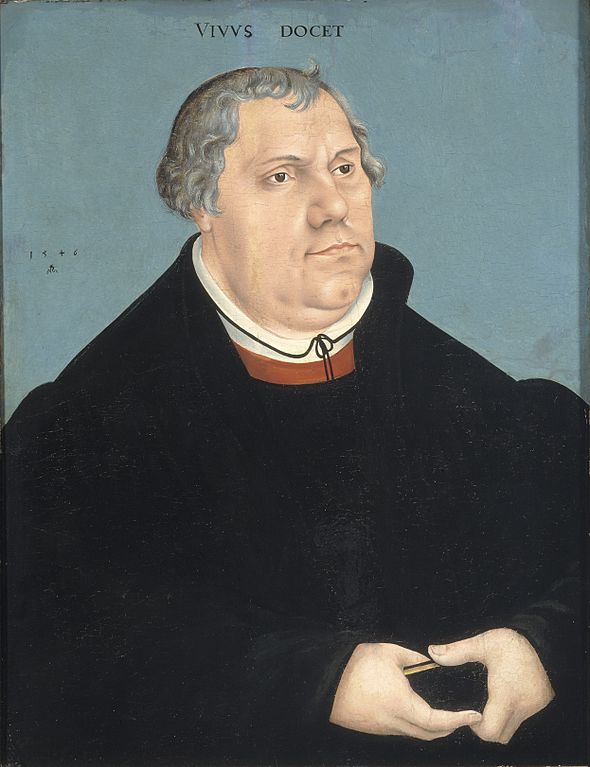
(2-28-10)
***
[The blue highlighting is my own]
***
So what is my own “take” on all this business of Luther’s teachings and current events in Germany and among the early Lutherans, during the earliest period of Protestantism? I think causes of historical events are always extraordinarily complex, just as causes of human behavior in general are. That has always been my position, as long as I can remember. I despise simplistic attempts of positing single causes for things as obviously complex as our topic of the social / theological situation of Germany in the 16th century.Cynical, misinformed critics, however, ridiculously caricature “my position” as the following:
Luther (a man who was an evil scoundrel, madman, foul loudmouth, and fanatic) wrote a bunch of dumb, heretical stuff that had no redeeming value whatever.
Folks therefore responded in kind and doctrinal and moral chaos resulted entirely because of Luther’s teaching.
In actuality, my position is far more nuanced than knee-jerk anti-Catholic opponents or quick-to-judge Lutherans unfamiliar with my overall collection of writings on Luther (including many where I agree with him), imagine:
1) Luther was a man with good intentions, who sought to follow God. He was prone to extremely fiery, unhelpful anti-Catholic rhetoric, but he was not mad, and far less fanatical and heretical than the Protestant sects that broke away from his own; including John Calvin’s.
2) His teachings were a mixture of previous Catholic tradition (particularly regarding Mary, baptism, and the Eucharist), and novel error.
3) Luther taught the absolute necessity of good works in the Christian life, as an inevitable manifestation of an authentic faith. He didn’t separate justification and sanctification to the degree that Calvin (or even his successor Philip Melanchthon) did.
4) But Luther also did a very poor job of communicating the subtleties of his “faith alone” (sola fide) soteriology to the masses: most of whom were incapable of analyzing the fine distinctions entailed (a state of affairs which is largely true even to our present time). In his extreme rhetoric of separation of faith and works, the necessary continuing connections that Luther in fact maintained in his theology, rightly understood, were lost in the public mind. In this sense, he showed himself to be rather excessively naive, as to the likely misunderstandings that would result and how many people would act in ways that he neither condoned nor envisioned.
5) As a result, there was a strong tendency at first towards antinomianism and anarchism (neither sanctioned by Luther) among the populace, as evidenced by an increase of immorality (noted often by Luther himself) and the Peasants’ Revolt.
6) Luther always had the last resort of recourse to the devil as the end-all explanation of any problems in his own ranks. This sort of hypothesis or theory was impervious to any possible falsification: being entirely subjective and speculative. All heretical breakaway groups through history have rationalized persecution or vehement disagreement from others by holding that it was inevitable, just as Jesus and the prophets and the early Christians were also persecuted. This allowed Luther to isolate himself from any possible criticism of his faulty teaching or faulty teaching methods of both false and true aspects of his teaching, as at least a partial cause of the difficulties. He was God’s man of the hour, delivering the “Gospel” (as if Catholics didn’t already have it); therefore, he couldn’t possibly be wrong in any major way. It was unthinkable to him.
[Luther’s own words follow]
***
Thus we have the teaching of nature and of reason regarding the sin of men’s ingratitude toward one another. How much greater the evil, how much more shameful and accursed, when manifested toward God who, in his infinite and ineffable goodness, conferred upon us while yet enemies to him and deserving of the fires of hell—conferred upon us, I say, not ten dollars, not a hundred thousand dollars even, but redemption from divine wrath and eternal death, and abundantly comforted us, granting us safety, a good conscience, peace and salvation! These are inexpressible blessings, incomprehensible in this life. And they will continue to occupy our minds in yonder eternal life. How much more awful the sin of ingratitude for these blessings, as exemplified in the servant mentioned in the Gospel passage for today, to whom was forgiven the debt of ten thousand talents and who yet would not forgive the debt of his fellow-servant who owed him a hundred pence! (p. 333)
Is it not incredible that there are to be found on earth individuals wicked enough to manifest for the highest and eternal blessings such unspeakable ingratitude? But alas, we have the evidence of our own eyes. We know them in their very dwelling-places. We see how the world abounds with them. Not only are the ingrates to be found among deliberate rejecters of the acknowledged truth of the Gospel, concerning God’s grace, an assured conscience and the promise of eternal life, terrible as such malice of the devil is, but they are present also in our midst, accepting the Gospel and boasting of it. Such shameful ingratitude prevails among the masses it would not be strange were God to send upon them the thunders and lightnings of his wrath, yes, all the Turks and the devils of hell. There is a generally prevalent ingratitude like that of the wicked servant who readily forgot the straits he experienced when, being called to account for what he could not pay, the wrathful sentence was pronounced against him that he and all he possessed must be sold, and he be indefinitely imprisoned. Nor have we less readily forgotten how we were tortured under the Papacy; how we were overwhelmed, drowned as in a flood, with numberless strange doctrines, when our anxious consciences longed for salvation. Now that we are, through the grace of God, liberated from these distresses, our gratitude is of a character to increasingly heap to ourselves the wrath of God. So have others before us done, and consequently have endured terrible chastisement. Only calculate the enormity of our wickedness when, God having infinitely blessed us in forgiving all our sins and making us lords over heaven and earth, we so little respect him as to be unmindful of his blessings; to be unwilling for the sake of them sincerely to forgive our neighbor a single slighting word, not to mention rendering him service. We conduct ourselves as if God might be expected to connive at our ingratitude and permit us to continue in it, at the same time conferring upon us as godly and obedient children, success and happiness. More than this, we think we have the privilege and power to live and do as we please. Indeed, the more learning and power we have and the more exalted our rank, the greater knaves we are; perpetrating every wicked deed, stirring up strife, discord, war and murder for the sake of executing our own arbitrary designs, where the question is the surrender of a penny in recognition of the hundreds of thousands of dollars daily received from God notwithstanding our ingratitude. (pp. 333-334).
The world remains the devil’s own. We must remember we shall not by any means find with the world that Christian heart pictured by the apostle; on the contrary we shall find what might be represented by a picture of the very opposite type —the most shameless ingratitude. But let the still existing God-fearing Christians be careful to imitate in their gratitude the spirit of the apostle’s beautiful picture. Let them give evidence of their willingness to hear the Word of God, of pleasure and delight in it and grief where it is rejected. Let them show by their lives a consciousness of the great blessing conferred by those from whom they received the Gospel. As recipients of such goodness, let their hearts and lips ever be ready with the happy declaration: “God be praised !” For thereunto are we called. As before said, praise should be the constant service and daily sacrifice of Christians; and according to Paul’s teaching here, the Christian’s works, his fruits of righteousness, should shine before men. Such manifestation of gratitude assuredly must result when we comprehend what God has given us. (p. 338) (from The Complete Sermons of Martin Luther Vol.4.2, edited by John Nicholas Lenker, Grand Rapids, Michigan: Baker Books, 2000, pp. 330-342; available online also in the Sermon on the Twenty-Second Sunday After Trinity [Philippians 1:3-11]: revised translation from the 1827 Erlangen edition of Luther’s writings by Socrates Henkel, in Dr. Martin Luther’s Church Postil: Sermons on The Epistles, New Market, Virginia: New Market Evangelical Lutheran Publishing Company, 1869)
. . . they who do as the gospel teaches, are true Christians. However, very few of these are found; we see many hearers, but all are not doers of the Gospel. (p. 104)
But who are they that love God, and cleave not to gold and worldly possessions? Take a good look at the whole world, also the Christians, and see if they despise gold and riches. It requires an effort to hear the Gospel and to live according to it. God be praised, we have the Gospel; that no one can deny, but what do we do with it? We are concerned only about learning and knowing it, and nothing more; we think it is enough to know it, and do not care whether we ever live according to it. However, on the other hand, one is very anxious when he leaves lying in window or in the room a dollar or two, yea, even a dime, then he worries and fears lest the money be stolen; but the same person can do without the Gospel through a whole year. And such characters still wish to be considered Evangelical. Here we see what and who we are. If we were Christians, we would despise riches and be concerned about Gospel that we some day might live in it and prove it by our deeds. We see few such Christians; therefore we must hear the judgment that we are despisers of God and hate God: the sake of riches and worldly possessions. Alas! That fine praise! We should be ashamed of ourselves in our inmost souls; there is no hope for us! What a fine condition we are in now! That means, I think, our names are blotted out. What spoiled children we are! (pp. 105-106)
Now the world cannot conceal its unbelief in its course outward sins, for I see it loves a dollar more than Christ; more than all the Apostles, even if they themselves were present and preached to it. I can hear the Gospel daily, but it does not profit me every day; it may indeed happen if I have heard it a whole year, the Holy Spirit may have been given to me only one hour. Now when I enjoyed this hour I obtained not only five hundred dollars, but also I riches of the whole world; for what have I not, when I have the Gospel? I received God, who made the silver and I gold, and all that is upon the earth; for I acquired the Spirit by which I know that I will be kept by him forever; that much more than if I had the church full of money. Examine now and see, if our heart is not a rogue, full of wickedness and unbelief. If I were a true Christian, I would say: In the hour the Gospel is received, there comes to me a hundred thousand dollars, and much more. For if I possess this treasure, I have all that is in heaven and upon earth. But one must serve this treasure only, for no man can serve God and mammon. Either you must love God and hate money; or you must hate God and love money; this and nothing more. (pp. 106-107) (from The Complete Sermons of Martin Luther Vol. 3.1; Grand Rapids, Michigan: Baker Books, 2000, pp. 102-117. It is readable online as Second Sermon for the Fifteenth Sunday After Trinity [Matthew 6:24-34] from the book, The Precious and Sacred Writings of Martin Luther, Vol. 14, edited by John Nicholas Lenker, Minneapolis, Lutherans in All Lands Co., 1905, 118-126. From Walch edition, Vol. XII, 1234 and Vol. XI, 2171)
To my kind and dear mistress of the house, Luther’s Catherine von Bora, a preacher, a brewer, a gardener, and whatever else she is capable of doing- Grace and peace! Dear Katie!
John surely will tell you everything pertaining to our journey; I am not yet certain whether he should stay with me, but Doctor Caspar Cruciger and Ferdinand, of course, will tell you. Ernst von Schönfeld has treated us graciously at Löbnitz, and Heintz Scherle at Leipzig even more so.
I would like to arrange matters in such a way that I do not have to return to Wittenberg. My heart has become cold, so that I do not like to be there any longer. I wish you would sell the garden and field, house and all. Also I would like to return the big house to my Most Gracious Lord. It would be best for you to move to Zölsdorf as long as I am still living and able to help you to improve the little property with my salary. For I hope that my Most Gracious Lord would let my salary be continued at least for one [year], that is, the last year of my life. After my death the four elements at Wittenberg certainly will not tolerate you [there]. Therefore it would be better to do while I am alive what certainly would have to be done then. As things are run in Wittenberg, perhaps the people there will acquire not only the dance of St. Vitus or St. John, but the dance of the beggars or the dance of Beelzebub, since they have started to bare women and maidens in front and back, and there is no one who punishes or objects. In addition the Word of God is being mocked [there]. Away from this Sodom! If Leeks Bachscheisse, our other Rosina, and [her] seducer are not yet imprisoned, then help as much as you can to see that this scoundrel loses what he has gained. While in the country I have heard more than I find out while in Wittenberg. Consequently I am tired of this city and do not wish to return, May God help me with this.
The day after tomorrow I shall drive to Merseburg, for Sovereign George has very urgently asked that I do so. Thus I shall be on the move, and will rather eat the bread of a beggar than torture and upset my poor old [age] and final days with the filth at Wittenberg which destroys my hard and faithful work. You might inform Doctor Pomer and Master Philip of this (if you wish), and [you might ask] if Doctor Pomer would wish to say farewell to Wittenberg in my behalf. For I am unable any longer to endure my anger [about] and dislike [of this city].
With this I commend you to God. Amen. (Luther’s Letter to His Wife Katie Regarding the State of Wittenberg: 28 July 1545, in Luther’s Works, Vol. 50, 273-278)
* * *
Photo credit: Portrait of Martin Luther (1546), by Lucas Cranach the Elder (1472-1553) [public domain / Wikimedia Commons]

***
Previous Post

October 12, 2017
Was Luther in His Old Age in Agony & Bitter About Lutheranism?
Next Post

October 13, 2017 On [Not?] Calling People "Fools": Biblical Reflections
Browse Our Archives
Select a Category & Last Things About Me Anti-Catholicism Atheism & Agnosticism Baptism and Sacramentalism Bible and Tradition Blessed Virgin Mary Books by Dave Armstrong C. S. Lewis Calvinism & General Protestantism Catholic Apologetics Catholic Apologists Catholic conversion Catholic converts Christmas Church (Ecclesiology) Church History Conversion and Converts Development of Doctrine Eastern Orthodoxy Ecumenism & Christian Unity Eucharist & Liturgy Fathers of the Church French Translations G. K. Chesterton Hell Hell & Satan Hell & Satan & Last Things Heresies & Comparative Religion Holistic Health Inquisition & Crusades & Scandals James White Jews & Judaism & Old Testament John Calvin John Henry Newman Liberal / Modernist Theology Life Issues Literary Resume Lutheranism Mariology Martin Luther Music Orthodoxy Papacy & Infallibility Personal Page Philosophy & Science Political & Ethical & Moral Issues Protestant Persecution & Intolerance Protestantism Purgatory Purgatory & Penance Romantic & Imaginative Theology Saints & Purgatory & Penance Salvation Salvation & Justification Satan & Last Things Sexuality and Gender Issues Spanish Translations Traditionalism vs. Radical Catholic Reactionaries Traducciones al español / tradução para português Trinitarianism & Christology Uncategorized Videos
Select a Month October 2026 September 2026 August 2026 July 2026 June 2026 May 2026 April 2026 March 2026 February 2026 January 2026 December 2025 November 2025 October 2025 September 2025 August 2025 July 2025 June 2025 May 2025 April 2025 March 2025 February 2025 January 2025 December 2024 November 2024 October 2024 September 2024 August 2024 July 2024 June 2024 May 2024 April 2024 March 2024 February 2024 January 2024 December 2023 November 2023 October 2023 September 2023 August 2023 July 2023 June 2023 May 2023 April 2023 March 2023 February 2023 January 2023 December 2022 November 2022 October 2022 September 2022 August 2022 July 2022 June 2022 May 2022 April 2022 March 2022 February 2022 January 2022 December 2021 November 2021 October 2021 September 2021 August 2021 July 2021 June 2021 May 2021 April 2021 March 2021 February 2021 January 2021 December 2020 November 2020 October 2020 September 2020 August 2020 July 2020 June 2020 May 2020 April 2020 March 2020 February 2020 January 2020 December 2019 November 2019 October 2019 September 2019 August 2019 July 2019 June 2019 May 2019 April 2019 March 2019 February 2019 January 2019 December 2018 November 2018 October 2018 September 2018 August 2018 July 2018 June 2018 May 2018 April 2018 March 2018 February 2018 January 2018 December 2017 November 2017 October 2017 September 2017 August 2017 July 2017 June 2017 May 2017 April 2017 March 2017 February 2017 January 2017 December 2016 November 2016 October 2016 September 2016 August 2016 July 2016 June 2016 May 2016 April 2016 March 2016 February 2016 January 2016 December 2015 November 2015 October 2015 September 2015 August 2015 July 2015 June 2015 May 2015 April 2015 March 2015 February 2015 January 2015 December 2014 November 2014 October 2014 September 2014 August 2014 July 2014 June 2014 April 2014 March 2014 February 2014 January 2014 December 2013 November 2013 October 2013 September 2013 August 2013 July 2013 June 2013 April 2013 March 2013 February 2013 January 2013 December 2012 November 2012 October 2012 September 2012 August 2012 July 2012 June 2012 May 2012 April 2012 March 2012 February 2012 January 2012 December 2011 November 2011 October 2011 September 2011 August 2011 July 2011 June 2011 April 2011 March 2011 February 2011 October 2010 September 2010 August 2010 July 2010 April 2010 March 2010 December 2009 October 2009 August 2009 July 2009 June 2009 May 2009 March 2009 February 2009 October 2008 September 2008 April 2008 March 2008 February 2008 January 2008 December 2007 November 2007 October 2007 May 2007 March 2007 February 2007 January 2007 November 2006 October 2006 September 2006 August 2006 July 2006 June 2006 May 2006 April 2006 March 2006 February 2006 October 2005 June 2005 April 2005 February 2005 July 2004 May 2004 April 2004
Follow Us!
TAKE THE
Religious Wisdom Quiz
What sea did Jesus walk on?
Select your answer to see how you score.
Mediterranean Sea Sea of Galilee Red Sea Dead Sea
Books by This Author Books by Dave Armstrong
Related posts from Biblical Evidence for Catholicism

A Few "Worst" & "Best" Arguments vs. Protestantism
Biblical Evidence for Catholicism

Book: Martin Luther: Dissenter and Defender
Biblical Evidence for Catholicism
Luther’s Anfechtung vs. Paul’s Spiritual Confidence
Biblical Evidence for Catholicism

"Martin Luther: Dissenter & Defender": Introduction
Biblical Evidence for Catholicism
TRENDING AT PATHEOS Catholic

The Sermon on the Mount, Part I: Matthew...
The Sermon on the Mount, Part I (Matthew 4:12-5:12) St. Matthew moves...

What's up from Crossway: Reviewing some of their latest A few weeks...

Janie Learns the Way of the Cross: A...
Teaching children about Jesus' Passion can be challenging. Many parents and educators...

Looking For Good Catholic Writing - October 2026
He alone extends the heavens, and he walks upon the waves of...

In "Irreplaceable," our book on vocation and technology, Trevor Sutton and I...

I was strolling through the top floor of the brand new Parthenon...
view all Catholic blogs
Ad-Free & Subscriber Log-In Subscription Support
- About Us
- 2026 Calendar
- Videos
- Podcasts
- Library of World Religions
- Faith In Media Tracker
- Advertise With Us
- Write for Us
- Privacy Policy
- Terms of Service
- Do Not Sell My Data
- Contact Us
- Radiant Digital
- Manage Newsletter Subscriptions
- Unsubscribe From Notifications
- Sitemap
Copyright 2008-2026, Patheos. All rights reserved.
Subscription Support Ad-Free & Subscriber Log-In
Follow Patheos