
BuddhistCatholicContemplativeEvangelicalGeneral ChristianHinduJewishLatter-day SaintMuslimNew VisionsProgressive Christian
Beliefs
- Buddhist
- Catholic
- Contemplative
- Evangelical
- General Christian
- Hindu
- Jewish
- Latter-day Saint
- More Voices
- Muslim
- New Visions
- Pagan
- Progressive Christian
Topics
- Religion News
- Food and Religion
- Sports and Religion
- Religious Art
- Religious Music and Entertainment
- Religious Events
- History and Religion
- Style and Religion
- Politics and Religion
- Women in Religion
- Recreation Outdoors and Religion
- Business Finance and Religion
- Careers Workplace and Religion
- Education and Religion
- Family Parenting and Religion
- Health Fitness and Religion
- Home and Religion
- Relationships and Religion
- Technology and Religion
- Travel and Religion
Columnists
- Buddhist Columnists
- Business Finance and Religion Columnists
- Careers Workplace and Religion Columnists
- Catholic Columnists
- Contemplative Columnists
- Education and Religion Columnists
- Evangelists Columnists
- Family Parenting and Religion Columnists
- General Christian Columnists
- Health Fitness and Religion Columnists
- Hindu Columnists
- History and Religion Columnists
- Home and Religion Columnists
- Jewish Columnists
- More Voices Columnists
- Latter Day Columnists
- Muslim Columnists
- New Visions Columnists
- Nonreligious Columnists
- Pagan Columnists
- Politics and Religion Columnists
- Progressive Columnists
- Recreation Outdoors and Religion Columnists
- Relationships and Religion Columnists
- Religion News Columnists
- Religious Art Columnists
- Religious Events Columnists
- Religious Music and Entertainment Columnists
- Sports and Religion Columnists
- Style and Religion Columnists
- Technology and Religion Columnists
- Travel and Religion Columnists
- Women in Religion Columnists
Resource Library
- 2026 Calendar
- Library of World Religions
- The 100 Most Holy Places on Earth
- Patheos Answers
- Podcasts
- Videos
- Faith Leaders Database
- Anglican Episcopalian
- Bahai
- Baptist
- Buddhism
- Christianity
- Confucianism
- Eastern Orthodoxy
- Hinduism
- Holiness and Pentecostal
- ISKCON
- Islam
- Judaism
- Lutheran
- Methodist
- The Church of Jesus Christ of Latter-day Saints
- New Age
- Paganism
- Presbytarian and Reformed
- Protestantism
- Religion Behind the Scenes
- Roman Catholic
- Scientology
- Shia Islam
- Sikhism
- Sufism
- Sunni Islam
- Taoism
- Zen
- See all religions
Research Tools
 Ad-Free & Subscriber Log-In Subscription Support
Follow Patheos 

- Trending:
- Advent
- |
- Forgiveness
- |
- Thanksgiving
- |
- Election
- |
- Seasonal Holidays
- |
- Marriage

-
About
-
Catholic Apologetics
-
Church History
-
Great Apologists
-
Christian Worldview
-
Protestantism & Misc.
- Home
- Catholic
- History and Religion
- Cyril of Jerusalem (d. 386) vs. Sola Scriptura as the Rule of Faith
Cyril of Jerusalem (d. 386) vs. Sola Scriptura as the Rule of Faith
Last updated on: November 6, 2017 at 3:19 am by Dave Armstrong
Cyril of Jerusalem (d. 386) vs. Sola Scriptura as the Rule of Faith 2017-11-06T03:19:16-04:00 Dave Armstrong
Patheos Explore the world's faith through different perspectives on religion and spirituality! Patheos has the views of the prevalent religions and spiritualities of the world.
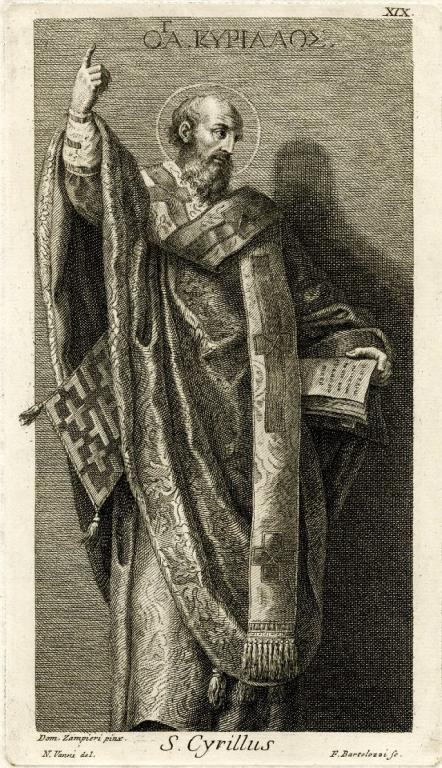
St. Cyril of Jerusalem, by Francesco Bartolozzi (1727-1815) [public domain / Wikimedia Commons]

***
(8-1-03)
***
For preliminaries concerning my methodology and the burden of proof for showing if a Church Father believed in sola Scriptura, see my paper, Church Fathers & Sola Scriptura. St. Cyril of Jerusalem’s’ words will be in blue. Anti-Catholic polemicist Jason Engwer’s words will be in green.
***
Here is a passage from St. Cyril that anti-Catholics think prove his adherence to sola Scriptura:
For concerning the divine and holy mysteries of the Faith, not even a casual statement must be delivered without the Holy Scriptures; nor must we be drawn aside by mere plausibility and artifices of speech. Even to me, who tell thee these things, give not absolute credence, unless thou receive the proof of the things which I announce from the Divine Scriptures. For this salvation which we believe depends not on ingenious reasoning, but on demonstration of the Holy Scriptures. (Catechetical Lectures, 4:17)
This is again a statement of material sufficiency and does not prove that Cyril held to sola Scriptura. Theoretically, he might hold to it and write like this (which is why Jason cites him, in vain hopes that he can be drafted as an ally to the Cause), but — as always — consideration of his other statements on the general issue of authority will disabuse any fair-minded inquirer of the opinion that he did so in fact. Catholic apologist Patrick Madrid comments on this passage:
Sometimes Protestant apologists try to bolster their case for
sola scriptura by using highly selective quotes from Church
Fathers such as Athanasius, John Chrysostom, Cyril of Jerusalem,
Augustine, and Basil of Caesarea. These quotes, isolated from the
rest of what the Father in question wrote about church authority,
Tradition and Scripture, can give the appearance that these
Fathers were hard-core Evangelicals who promoted an unvarnished
sola scriptura principle that would have done John Calvin proud.
But this is merely a chimera. In order for the selective “pro-
sola scriptura” quotes from the Fathers to be of value to a
Protestant apologist, his audience must have little or no
firsthand knowledge of what these Fathers wrote. By considering
the patristic evidence on the subject of scriptural authority in
context, a very different picture emerges . . .
*
And consider this quote from Cyril of Jerusalem’s Catechetical
Lectures, a favorite of the nouveau Protestant apologists [he then cites the passage]. . . How should we understand this? Catholic patristic scholars would
point out that such language as Cyril uses here is consistent with
his and the other Fathers’ high view of Scripture’s authority and
with what is sometimes called its material sufficiency (more on
that shortly). This language, while perhaps more rigorously
biblical than some modern Catholics are used to, nonetheless
conveys an accurate sense of Catholic teaching on the importance
of Scripture. Even taken at face value, Cyril’s admonition poses
no problem for the Catholic. But it does, ironically, for the
Protestant.The proponent of sola scriptura is faced with a dilemma when he
attempts to use Cyril’s quote. Option One: If Cyril was in fact
teaching sola scriptura, Protestants have a big problem. Cyril’s
Catechetical Lectures are filled with his forceful teachings on
the infallible teaching office of the Catholic Church (18:23), the
Mass as a sacrifice (23:6-8), the concept of purgatory and the
efficacy of expiatory prayers for the dead (23:10), the Real
Presence of Christ in the Eucharist (19:7; 21:3; 22:1-9), the
theology of sacraments (1:3), the intercession of the saints
(23:9), holy orders (23:2), the importance of frequent Communion
(23:23), baptismal regeneration (1:1-3; 3:10-12; 21:3-4), indeed a
staggering array of specifically “Catholic” doctrines.These are the same Catholic doctrines that Protestants claim are
not found in Scripture. So, if Cyril really held to the notion of
sola scriptura, he certainly believed he had found those
Catholic doctrines in Scripture. One would then have to posit that
Cyril was badly mistaken in his exegesis of Scripture, but this
tack, of course, leads nowhere for Protestants, for it would of
necessity impugn Cyril’s exegetical credibility as well as his
claim to find sola scriptura in Scripture.Option Two: Cyril did not teach sola scriptura; the Protestant
understanding of this passage is incorrect. That means an attempt
to hijack this quote to support sola scriptura is futile (if not
dishonest), since it would require a hopelessly incorrect
understanding of Cyril’s method of systematic theology, the
doctrinal schema he sets forth in Catechetical Lectures, and his
view of the authority of Scripture. Obviously, neither of these
options is palatable to the Protestant apologist.Were there time and space to cycle through each of the patristic
quotes proffered by Protestants arguing for sola scriptura, we
could demonstrate in each case that the Fathers are being quoted
out of context and without regard to the rest of their statements
on the authority of Scripture, Tradition and the Magisterium. It
will suffice for now, though, to remind Catholics that the Fathers
did not teach sola scriptura, and no amount of clever “cut-and-
paste” work by defenders of sola scriptura can demonstrate
otherwise.(online article, Sola scriptura: A Blueprint for Anarchy)
Protestant anti-Catholic apologist Bishop “Dr.” [???] James White utilizes the same passage for the same purpose in his chapter in the book, Sola Scriptura! The Protestant Position on the Bible (edited by Don Kistler, Morgan, Pennsylvania: Soli Deo Gloria, 1995, p. 27). But in the same work and same lecture, Cyril also states:
Of these read the two and twenty books, but have nothing to do with the apocryphal writings. Study earnestly these only which we read openly in the Church. Far wiser and more pious than thyself were the Apostles, and the bishops of old time, the presidents of the Church who handed down these books. Being therefore a child of the Church, trench thou not upon its statutes. (Catechetical Lectures, IV, 35)
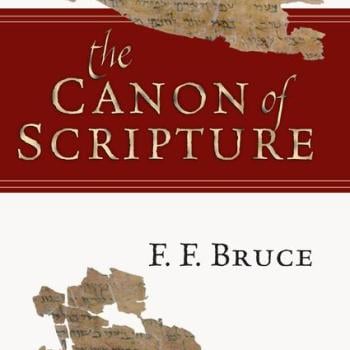
Two sections earlier, he had written: “Learn also diligently, and from the Church, what are the books of the Old Testament, and what those of the New.” But Cyril, who died in 386 (only eleven years before the canon was finalized by the Church), did not believe that Revelation was part of the New Testament, as noted Protestant scholar F. F. Bruce states in his book, The Canon of Scripture (Downers Grove, Illinois: InterVarsity Press, 1988, 213). Thus, there is all the more reason to believe that the Church was necessary to determine the canon of Scripture, as Cyril himself notes. Even he couldn’t know exactly what books were Scripture without the Church.
Protestants, with the benefit of hindsight, may think it is quite easy to know what books are biblical, inspired books, and which are not, but the actual history of the development of the canon suggests otherwise (to put it very mildly). It’s difficult to follow a principle of Scripture Alone when one can’t even be sure what Scripture is. It is what it is, apart from proclamation (and Catholics fully agree with that, as stated in Vatican I and elsewhere), yet the Church had to pronounce authoritatively the parameters of the canon, because men could not totally agree, and that necessity is part and parcel of the Catholic rejection of the formally sufficiency of the Bible as a rule of faith. The Church is necessary in this fashion and in others (such as in matters of biblical interpretation and determination of orthodoxy, creeds, etc.)
In his Catechetical Lecture V, “On Faith,” Cyril shows that he fully accepts the Catholic understanding of authority; the three-legged stool of Bible, Church, and Tradition, and apostolic succession, which is a different conception from sola Scriptura:
But in learning the Faith and in professing it, acquire and keep that only, which is now delivered to thee by the Church, and which has been built up strongly out of all the Scriptures. For since all cannot read the Scriptures, some being hindered as to the knowledge of them by want of learning, and others by a want of leisure, in order that the soul may not perish from ignorance, we comprise the whole doctrine of the Faith in a few lines. This summary I wish you both to commit to memory when I recite it , and to rehearse it with all diligence among yourselves, not writing it out on paper , but engraving it by the memory upon your heart , taking care while you rehearse it that no Catechumen chance to overhear the things which have been delivered to you. I wish you also to keep this as a provision through the whole course of your life, and beside this to receive no other, neither if we ourselves should change and contradict our present teaching, nor if an adverse angel, transformed into an angel of light should wish to lead you astray. For though we or an angel from heaven preach to you any other gospel than that ye have received, let him be to you anathema. So for the present listen while I simply say the Creed , and commit it to memory; but at the proper season expect the confirmation out of Holy Scripture of each part of the contents. For the articles of the Faith were not composed as seemed good to men; but the most important points collected out of all the Scripture make up one complete teaching of the Faith. And just as the mustard seed in one small grain contains many branches, so also this Faith has embraced in few words all the knowledge of godliness in the Old and New Testaments. Take heed then, brethren, and hold fast the traditions which ye now receive, and write them on the table of your heart. Guard them with reverence, lest per chance the enemy despoil any who have grown slack; or lest some heretic pervert any of the truths delivered to you. For faith is like putting money into the bank, even as we have now done; but from you God requires the accounts of the deposit. I charge you, as the Apostle saith, before God, who quickeneth all things, and Christ Jesus, who before Pontius Pilate witnessed the good confession, that ye keep this faith which is committed to you, without spot, until the appearing of our Lord Jesus Christ. A treasure of life has now been committed to thee, . . . (sections 12-13)
As Patrick Madrid mentions, he also upholds the infallibility of the Catholic Church:
It is called Catholic then because it extends over all the world, from one end of the earth to the other; and because it teaches universally and completely one and all the doctrines which ought to come to men’s knowledge, concerning things both visible and invisible, heavenly and earthly ; and because it brings into subjection to godliness the whole race of mankind, governors and governed, learned and unlearned; and because it universally treats and heals the whole class of sins, which are committed by soul or body, and possesses in itself every form of virtue which is named, both in deeds and words, and in every kind of spiritual gifts.. . . Concerning this Holy Catholic Church Paul writes to Timothy, That thou mayest know haw thou oughtest to behave thyself in the House of God, which is the Church of the Living God, the pillar and ground of the truth.
. . . And while the kings of particular nations have bounds set to their authority, the Holy Church Catholic alone extends her power without limit over the whole world . . .
. . . In this Holy Catholic Church receiving instruction and behaving ourselves virtuously, we shall attain the kingdom of heaven, and inherit Eternal Life; . . . (Catechetical Lecture XVIII, sections 23, 25, 27, 28)
Cyril explicitly teaches apostolic succession, referring to:
. . . that apostolic and evangelic faith, which our fathers ever preserved and handed down to us as a pearl of great price. (To Celestine, Epistle 9; from Joseph Berington and John Kirk, The Faith of Catholics, three volumes, London: Dolman, 1846; Vol. I: 446)
The Church plays a role in authoritative interpretation:
Now these things we teach, not of our own invention, but having learned them out of the divine Scriptures used in the Church, and chiefly from the prophecy of Daniel just now read; as Gabriel also the Archangel interpreted it, speaking thus: The fourth beast shall be a fourth kingdom upon earth, which shall surpass all kingdoms. And that this kingdom is that of the Romans, has been the tradition of the Church’s interpreters. (Catechetical Lecture 15, section 13)
I think we can safely conclude that the anti-Catholics are again guilty of selective presentation and fallacious reasoning, in the case of St. Cyril of Jerusalem. What Jehovah’s Witnesses do with the Scriptures, they do with the Church Fathers: select isolated passages which appear, prima facie, to fit into preconceived Protestant notions of sola Scriptura, (whereas their thing is Arianism), but examination of further related passages proves otherwise and makes the claim untenable and utterly implausible.
*****
Cyril believed the Church was the Guardian of true doctrine. Protestants don’t believe that, because they hold that the Church of the early centuries fell into many serious errors, and that the Church had to be “restored” and “reformed” by Luther in the 16th century because it had almost (but not quite) ceased to exist. Catholics have much more faith in God’s ability to preserve His Church than that.
Anti-Catholics produce this passage of Cyril acknowledging the possibility of Church’s leaders’ error:
I wish you also to keep this as a provision through the whole course of your life, and beside this to receive no other, neither if we ourselves should change and contradict our present teaching, nor if an adverse angel, transformed into an angel of light should wish to lead you astray. For though we or an angel from heaven preach to you any other gospel than that ye have received, let him be to you anathema. (Catechetical Lectures, 5:12)
Of course leaders sometimes teach error. But we believe that they cannot bind the entire Church to heresy, and that it has never happened. Anti-Catholics also appeal to these two statements of St. Cyril:
Why then dost thou busy thyself about things which not even the Holy Ghost has written in the Scriptures? Thou that knowest not the things which are written, busiest thou thyself about the things which are not written? There are many questions in the Divine Scriptures; what is written we comprehend not, why do we busy ourselves about what is not written? (Catechetical Lectures, 11:12)Now mind not my argumentations, for perhaps thou mayest be misled but unless thou receive testimony of the Prophets on each matter, believe not what I say: unless thou learn from the Holy Scriptures concerning the Virgin, and the place, the time, and the manner, receive not testimony from man. For one who at present thus teaches may possibly be suspected: but what man of sense will suspect one that prophesied a thousand and more years beforehand? (Catechetical Lectures, 12:5)
As usual, nothing is said about the superiority of Scripture, authority-wise, over against Church and Tradition, which alone would constitute proof for Protestant contentions in their never-ending, never successful quest to establish and uphold their “pillar” of sola Scriptura.
Cyril of Jerusalem & sola Scriptura
Cyril of Jerusalem's rule of faith
Previous Post
May 1, 2017
Hippolytus (d. c. 236) vs. Sola Scriptura as the Rule of Faith
Next Post
May 2, 2017 Catholic Converts' Qualms: Mariology, Formal Worship, Etc.
Browse Our Archives
Select a Category & Last Things About Me Anti-Catholicism Atheism & Agnosticism Baptism and Sacramentalism Bible and Tradition Blessed Virgin Mary Books by Dave Armstrong C. S. Lewis Calvinism & General Protestantism Catholic Apologetics Catholic Apologists Catholic conversion Catholic converts Christmas Church (Ecclesiology) Church History Conversion and Converts Development of Doctrine Eastern Orthodoxy Ecumenism & Christian Unity Eucharist & Liturgy Fathers of the Church French Translations G. K. Chesterton Hell Hell & Satan Hell & Satan & Last Things Heresies & Comparative Religion Holistic Health Inquisition & Crusades & Scandals James White Jews & Judaism & Old Testament John Calvin John Henry Newman Liberal / Modernist Theology Life Issues Literary Resume Lutheranism Mariology Martin Luther Music Orthodoxy Papacy & Infallibility Personal Page Philosophy & Science Political & Ethical & Moral Issues Protestant Persecution & Intolerance Protestantism Purgatory Purgatory & Penance Romantic & Imaginative Theology Saints & Purgatory & Penance Salvation Salvation & Justification Satan & Last Things Sexuality and Gender Issues Spanish Translations Traditionalism vs. Radical Catholic Reactionaries Traducciones al español / tradução para português Trinitarianism & Christology Uncategorized Videos
Select a Month November 2026 October 2026 September 2026 August 2026 July 2026 June 2026 May 2026 April 2026 March 2026 February 2026 January 2026 December 2025 November 2025 October 2025 September 2025 August 2025 July 2025 June 2025 May 2025 April 2025 March 2025 February 2025 January 2025 December 2024 November 2024 October 2024 September 2024 August 2024 July 2024 June 2024 May 2024 April 2024 March 2024 February 2024 January 2024 December 2023 November 2023 October 2023 September 2023 August 2023 July 2023 June 2023 May 2023 April 2023 March 2023 February 2023 January 2023 December 2022 November 2022 October 2022 September 2022 August 2022 July 2022 June 2022 May 2022 April 2022 March 2022 February 2022 January 2022 December 2021 November 2021 October 2021 September 2021 August 2021 July 2021 June 2021 May 2021 April 2021 March 2021 February 2021 January 2021 December 2020 November 2020 October 2020 September 2020 August 2020 July 2020 June 2020 May 2020 April 2020 March 2020 February 2020 January 2020 December 2019 November 2019 October 2019 September 2019 August 2019 July 2019 June 2019 May 2019 April 2019 March 2019 February 2019 January 2019 December 2018 November 2018 October 2018 September 2018 August 2018 July 2018 June 2018 May 2018 April 2018 March 2018 February 2018 January 2018 December 2017 November 2017 October 2017 September 2017 August 2017 July 2017 June 2017 May 2017 April 2017 March 2017 February 2017 January 2017 December 2016 November 2016 October 2016 September 2016 August 2016 July 2016 June 2016 May 2016 April 2016 March 2016 February 2016 January 2016 December 2015 November 2015 October 2015 September 2015 August 2015 July 2015 June 2015 May 2015 April 2015 March 2015 February 2015 January 2015 December 2014 November 2014 October 2014 September 2014 August 2014 July 2014 June 2014 April 2014 March 2014 February 2014 January 2014 December 2013 November 2013 October 2013 September 2013 August 2013 July 2013 June 2013 April 2013 March 2013 February 2013 January 2013 December 2012 November 2012 October 2012 September 2012 August 2012 July 2012 June 2012 May 2012 April 2012 March 2012 February 2012 January 2012 December 2011 November 2011 October 2011 September 2011 August 2011 July 2011 June 2011 April 2011 March 2011 February 2011 October 2010 September 2010 August 2010 July 2010 April 2010 March 2010 December 2009 October 2009 August 2009 July 2009 June 2009 May 2009 March 2009 February 2009 October 2008 September 2008 April 2008 March 2008 February 2008 January 2008 December 2007 November 2007 October 2007 May 2007 March 2007 February 2007 January 2007 November 2006 October 2006 September 2006 August 2006 July 2006 June 2006 May 2006 April 2006 March 2006 February 2006 October 2005 June 2005 April 2005 February 2005 July 2004 May 2004 April 2004
Follow Us!
TAKE THE
Religious Wisdom Quiz
What Persian king helped rebuild the Temple by searching royal records?
Select your answer to see how you score.
Darius Xerxes Cyrus Artaxerxes
Books by This Author Books by Dave Armstrong
Related posts from Biblical Evidence for Catholicism
Filioque & Twelve Eastern Church Fathers
Biblical Evidence for Catholicism
17 Church Fathers on Purgatory (Esp. 1 Cor...
Biblical Evidence for Catholicism
Deuterocanon & Javier Perdomo's Straw Men
Biblical Evidence for Catholicism
St. Athanasius & the Deuterocanon (vs. Javier Perdomo)
Biblical Evidence for Catholicism
TRENDING AT PATHEOS Catholic

Thomas Paine, the Smiths, the apostles in England,...
I'm pleased to announce that the Becoming Brigham Black Friday Sale,...

CatholicTV Series: Six Black Catholics on Path to...
WATERTOWN, Mass., November 9, 2026 – In recognition of Black Catholic History...

New Advent Journal Invites Catholics to Be Pilgrims
Florissant, MO, November 16, 2026— What if Advent were more than a...

INNER CIRCLE: John's Quantum Gospel
INTRODUCTION In this next Inner Circle series, which I anticipate will...
"Three B's" of My Apologetics Ministry (+ VIDEO)
In early December 2026 (less than a week from the time...

James Ishmael Ford's books on Zen
James Ishmael Ford's Official Website provides the most complete annotated list of...
view all Catholic blogs
Ad-Free & Subscriber Log-In Subscription Support
- About Us
- 2026 Calendar
- Videos
- Podcasts
- Library of World Religions
- Faith In Media Tracker
- Advertise With Us
- Write for Us
- Privacy Policy
- Terms of Service
- Do Not Sell My Data
- Contact Us
- Radiant Digital
- Manage Newsletter Subscriptions
- Unsubscribe From Notifications
- Sitemap
Copyright 2008-2026, Patheos, part of the Radiant Digital network of media brands. All rights reserved.
Subscription Support Ad-Free & Subscriber Log-In
Follow Patheos