
BuddhistCatholicContemplativeEvangelicalGeneral ChristianHinduJewishLatter-day SaintMuslimNew VisionsProgressive Christian
Beliefs
- Buddhist
- Catholic
- Contemplative
- Evangelical
- General Christian
- Hindu
- Jewish
- Latter-day Saint
- More Voices
- Muslim
- New Visions
- Pagan
- Progressive Christian
Topics
- Religion News
- Food and Religion
- Sports and Religion
- Religious Art
- Religious Music and Entertainment
- Religious Events
- History and Religion
- Style and Religion
- Politics and Religion
- Women in Religion
- Recreation Outdoors and Religion
- Business Finance and Religion
- Careers Workplace and Religion
- Education and Religion
- Family Parenting and Religion
- Health Fitness and Religion
- Home and Religion
- Relationships and Religion
- Technology and Religion
- Travel and Religion
Columnists
- Buddhist Columnists
- Business Finance and Religion Columnists
- Careers Workplace and Religion Columnists
- Catholic Columnists
- Contemplative Columnists
- Education and Religion Columnists
- Evangelists Columnists
- Family Parenting and Religion Columnists
- General Christian Columnists
- Health Fitness and Religion Columnists
- Hindu Columnists
- History and Religion Columnists
- Home and Religion Columnists
- Jewish Columnists
- More Voices Columnists
- Latter Day Columnists
- Muslim Columnists
- New Visions Columnists
- Nonreligious Columnists
- Pagan Columnists
- Politics and Religion Columnists
- Progressive Columnists
- Recreation Outdoors and Religion Columnists
- Relationships and Religion Columnists
- Religion News Columnists
- Religious Art Columnists
- Religious Events Columnists
- Religious Music and Entertainment Columnists
- Sports and Religion Columnists
- Style and Religion Columnists
- Technology and Religion Columnists
- Travel and Religion Columnists
- Women in Religion Columnists
Resource Library
- 2026 Calendar
- Library of World Religions
- The 100 Most Holy Places on Earth
- Patheos Answers
- Podcasts
- Videos
- Faith Leaders Database
- Anglican Episcopalian
- Bahai
- Baptist
- Buddhism
- Christianity
- Confucianism
- Eastern Orthodoxy
- Hinduism
- Holiness and Pentecostal
- ISKCON
- Islam
- Judaism
- Lutheran
- Methodist
- The Church of Jesus Christ of Latter-day Saints
- New Age
- Paganism
- Presbytarian and Reformed
- Protestantism
- Religion Behind the Scenes
- Roman Catholic
- Scientology
- Shia Islam
- Sikhism
- Sufism
- Sunni Islam
- Taoism
- Zen
- See all religions
Research Tools
 Ad-Free & Subscriber Log-In Subscription Support
Ad-Free & Subscriber Log-In Subscription Support
Follow Patheos 

- Trending:
- Forgiveness
- |
- Marriage
- |
- Consciousness
- |
- Death Penalty
- |
- Election
- |
- Halloween

-
About
-
Catholic Apologetics
-
Church History
-
Great Apologists
-
Christian Worldview
-
Protestantism & Misc.
- Home
- Catholic
- History and Religion
- Dialogue w Traditionalist re Deaconesses
Dialogue w Traditionalist re Deaconesses
Last updated on: February 27, 2017 at 12:33 pm by Dave Armstrong
Dialogue w Traditionalist re Deaconesses 2017-02-27T12:33:59-04:00 Dave Armstrong
Patheos Explore the world's faith through different perspectives on religion and spirituality! Patheos has the views of the prevalent religions and spiritualities of the world.
vs. Dr. Peter Kwasniewski
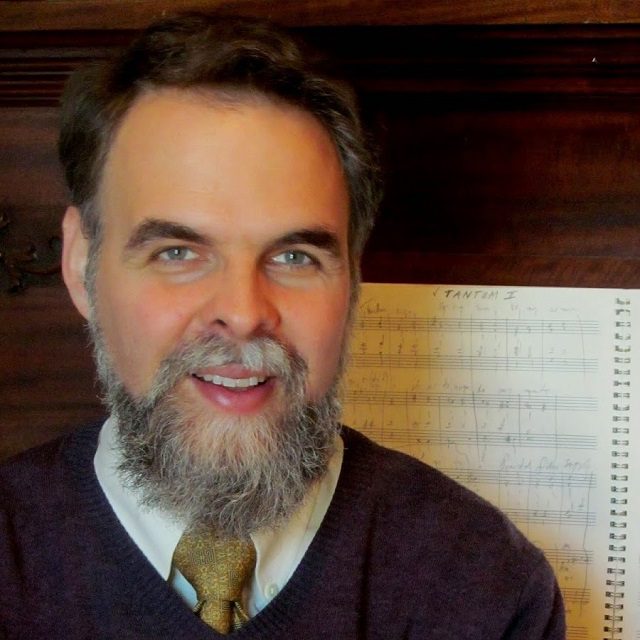
Peter Kwasniewski [You Tube image / Creative Commons license]
***
This is from an exchange on my Facebook page with Dr. Peter Kwasniewski: Professor of Theology and Philosophy at Wyoming Catholic College, and contributor to the reactionary sites, One Vader Five and Rorate Caeli. He was responding to my post, Are Deaconesses Inconceivable? No. I engaged in very lengthy dialogue with him regarding the reform of the liturgy, in February 2014 (see Part I / Part II). His words will be in blue.
*****
You are a spirited one. But sometimes your zeal gets the better of your logic. It happens to all of us at times. I do admire zeal and passion. I just like it to be much more harmonized with reason, theology, and history.
Oh, sure, deaconesses in the ancient church meant just what people today want them to mean, right?
What they meant and what liberals today “want” them to mean are, of course, two entirely separate issues: both of which I dealt with. So it is beyond silly for you to make this remark, implying that I confused the two things. I did not at all.
There are legitimate doctrines and practices of the historic Catholic Church (we shall call them “x”) and there are various “pseudo-x’s” which liberals dream up in their seemingly fertile but oh-so-flawed brains.
I dealt with the biblical and patristic existence of deaconesses (i.e., x). Deal with it. Nothing that is in inspired Scripture and widely accepted in the early Church can be so casually dismissed as “liberalism”: as if there are no nuances or complexities or fine points here at all.
That’s the difference between my analysis and yours. I actually took the biblical and patristic data seriously (even using that notoriously liberal source: The Catholic Encyclopedia of 1913)!
You, on the other hand, use the current discussion, brought on by Pope Francis (just as traditionalists used Amoris Laetitia) as an opportunity to do the usual tired play book analysis of ambiguity, liberals-under-every-rock, hand-wringing cynicism.
And there wasn’t a good reason why deaconesses disappeared over time, as women’s religious orders developed, right?
There could be various good reasons, and I assume there were (that the Church in her wisdom applied). But since this is not (I don’t think) a matter of unchangeable dogma, it’s not unthinkable that it could be modified, precisely like priestly celibacy (which operates differently in the Eastern Church), and the reintroduced diaconate after Vatican II. Are you against (male) deacons as a supposed corruption, because it came back in the last 50 years? Does the Church need to be scolded and slapped on the wrist for that, too?
It’s the same scenario with something like Mass in the vernacular. It largely went away for centuries, and then it came back, and did so with the blessing of Holy Mother Church. Individual Bible reading is much more encouraged than it used to be, etc. Lay ministries (including apologetics) are relatively more encouraged.
And the women’s ordination movement has nothing to do with this, right?
As I made very clear: “Of course it is a ‘stalking horse,’ for liberals. I’m saying that their predictable seeking to co-opt something for modernist / heterodox ends is not in and of itself a reason to rule anything out, since every good thing is distorted, inside the Church and outside it.”
And it doesn’t fit into the pattern of destabilization, confusion, mixed messages, and panting after novelties, right?
That is your traditionalist spin. It is not at all necessarily the case that a re-examination of a quite arguably biblical and definitely historically widespread office that may again be useful in our time, is improper or “liberal” or anything of the sort. It fits into that pattern for those who want it to; who insist on squeezing the square peg into that round hole, so that it fits with a preconceived narrative of liberals supposedly wrecking everything whatsoever in the Church.
On your marks… get set… go apologists!
I done went. God is my witness that I try to do the best job I can in lessening confusion and alarm, and to present the facts in a long historical perspective rather than merely in the bubble of our own time, through an arbitrary and predetermined biased filter.
I don’t even have a definite opinion on this. I made clear in three different statements that I was merely giving my ““raw” / off-the-cuff responses” and that “I don’t think it’s absolutely inconceivable,” and that “My opinion isn’t fully formed, but I’m just saying it’s not inconceivable.”
Thus, technically, this analysis of mine isn’t apologetics at all, since I haven’t taken a stand and defended it. I’ve done a biblical and historical survey and allowed readers to more fully form their opinions in light of those things, and have argued against the thing being necessarily wrong or impermissible.
That distinction will be lost on many, because that’s just how it is; but I do what I do (giving it my best shot), and folks can either understand what I am arguing or not.
When you’re living in the era of mercy, you don’t bother with such details any more. Bah, legalistic details.
When you’re operating in dogmatic strictures of legalism, you don’t bother with trifling details such as mercy and pastoral understanding anymore. Bah, biblical / pastoral details . . .
When a practice existed and then disappeared, and for many centuries a different practice obtained — in the case of kneeling to receive communion on the tongue, a posture more expressive of reverence — then suddenly to change it “back” is to reject the symbolism that had been expressed for all those centuries. Everyone can see this and one only has to read what the progressives were saying back in the 60s and 70s to know that they knew it very well.
I’m reminded of people who try to defend modern art or rock music by saying “it’s not so bad after all, you can give it a good meaning.” But that’s not the meaning its originators and proponents gave it — and it’s not the common sense view, either. Apologetics should follow common sense or it risks looking absurd.
First of all, as I have stated and reiterated: I am not defending deaconesses. I don’t have an opinion on it. It is a matter of perfect indifference to me in my current state of knowledge regarding it (which isn’t all that great). All I argued was that it was “conceivable”, and I provided a history of the practice, in order to show that it is not automatically (and intrinsically) some “crazy / liberal” innovation.
Thus (as also pointed out), I am not doing apologetics here, by definition, since I’m not defending anything. I’m functioning more in this instance as an amateur historian / sociologist.
Secondly, I have had a lengthy debate (almost eight years ago now) on precisely the issue you raise: why change a practice after centuries of development of another practice?: Dialogue: Receiving Communion (vs. Traditionalist) [David Palm]: “Traditionalist” Argument from Liturgical Development: Method of Receiving Communion.
There cannot ever be a good argument for dismantling that which so richly and evidently expresses our adoration of Christ truly present in the blessed Sacrament. The change was evilly motivated and has had evil results. No anthropologist or sociologist would question for a moment that kneeling is a powerful religious gesture — indeed, this is why we do it during the consecration. To take this away at communion time was to inculcate a different theology.
1. It’s not “dismantled,” since every Catholic has the canonical right to receive kneeling and on the tongue, and the Church has encouraged wider use of the traditional Mass in both the extraordinary and ordinary forms.
2. I myself have attended a traditional Latin Mass (Novus Ordo) for 25 years. My parish offers the extraordinary form also, and I occasionally attend it, as I did last Christmas.
3. I always receive on the tongue, kneeling, in my own parish.
4. I defend kneeling as relatively more reverent in our culture.
5. But I refuse to get legalistic and condemn all reception in the hand, standing, as intrinsically inferior or inherently and necessarily irreverent, for two reasons:
a) Reverence (like its opposite, idolatry) is essentially and fundamentally a matter of the heart and interior disposition. It can be (outwardly) expressed with various postures besides kneeling.
b) Since receiving in the hand, standing, was the norm in the Church for its first 6-9 centuries we can hardly argue that the practice is intrinsically irreverent, nor can we say that this posture is “evilly motivated and has had evil results”. Nor can we say that it necessarily implies a “different theology.” Your reasoning in all this is (with all due respect) incredibly shoddy. You connect dots all over the place that have no logical connection to each other.
6. There are various other factors besides posture, for any irreverence that actually takes place. But it is standard reactionary (and sometimes traditionalist) reasoning to foolishly assert one uber-cause for any negative phenomenon (lack of belief / irreverence, etc.). Hence, Vatican II is regarded as the locus of evil (rather than the sexual revolution, secularism and other socio-cultural factors). Or the Novus Ordo Mass is blamed for all liturgical abuses. Currently, the pope is receiving the brunt of the accusations of a supposed deliberate modernist conspiracy led by him, for the purpose of perverting the Church and her traditions.
General question: Why this frenzied need to explain and defend every single idiotic idea that comes along, even when thorough work has already been done to discredit said idea? It’s a symptom of some kind of desperate need for an oracle and absolute monarch on whom one can hang for reassurance. The Catholic Faith has nothing to do with this weird superstition.
1. I have not “defended” it, myself, insofar as I am concerned.
2. Whether it is “idiotic” is a question to be determined. I would tend not to call “idiotic” a practice that already has an honored history of many centuries in the Church, or at least large portions of the Church (the Eastern sector in the early, undivided Church: i.e., pre-Orthodoxy).
3. No one (last of all, meself) has argued in terms of “an oracle and absolute monarch”. That is simply your straw man projection of an exaggerated, caricatured picture of how non-traditionalists view the pope. If anything is “idiotic” here, it is that. If you protest its idiocy, then kindly produce evidence of anything remotely approaching such “papolatry” among “defenders” of deaconesses, or even those (like myself) who simply say it is a possibility.
4. Having set up this straw man, you label it “superstition” and dismiss it as entirely unCatholic. But since it is a straw man fiction in the first place, the additional judgment upon it has nothing to do with anything, and is perfectly irrelevant.
My point about “idiotic” was mainly to say that there are things one does not revive because too much water has passed under the bridge and words do not simply retain their original meaning. No matter how much you explain it, “deaconess” will mean one thing and one thing only: a female ordained minister with a position in the clerical hierarchy. Over a thousand years ago maybe it meant something else, but who cares? Language and ideas are not frozen. This is the reason why it was so dumb for the liturgical reformers to think they could leap-frog over centuries of organic development to get back to a supposedly “pristine” apostolic liturgy. That’s impossible.
I appeal back to my reasoning in my dialogue with my traditionalist friend, David Palm. Since development is my favorite theological topic, I rather enjoyed that, although I think liturgical development is a very different category from doctrinal development.
*****
Meta Description: Dr. Kwasniewski doesn’t like the notion of reintroduced deaconesses at all. I think it is “not inconceivable.”
Meta Keywords: Church offices, clergy, deaconesses, deacons, female priests, holy orders, ordination, Phoebe, priestesses, priests, Peter Kwasniewski
Traditionalism vs. Radical Catholic Reactionaries
Previous Post

May 12, 2016
Are Deaconesses Inconceivable? No.
Next Post

May 13, 2016 Dialogue: Clearness (Perspicuity) of Scripture
Browse Our Archives
Select a Category & Last Things About Me Anti-Catholicism Atheism & Agnosticism Baptism and Sacramentalism Bible and Tradition Blessed Virgin Mary Books by Dave Armstrong C. S. Lewis Calvinism & General Protestantism Catholic Apologetics Catholic Apologists Catholic conversion Catholic converts Christmas Church (Ecclesiology) Church History Conversion and Converts Development of Doctrine Eastern Orthodoxy Ecumenism & Christian Unity Eucharist & Liturgy Fathers of the Church French Translations G. K. Chesterton Hell Hell & Satan Hell & Satan & Last Things Heresies & Comparative Religion Holistic Health Inquisition & Crusades & Scandals James White Jews & Judaism & Old Testament John Calvin John Henry Newman Liberal / Modernist Theology Life Issues Literary Resume Lutheranism Mariology Martin Luther Music Orthodoxy Papacy & Infallibility Personal Page Philosophy & Science Political & Ethical & Moral Issues Protestant Persecution & Intolerance Protestantism Purgatory Purgatory & Penance Romantic & Imaginative Theology Saints & Purgatory & Penance Salvation Salvation & Justification Satan & Last Things Sexuality and Gender Issues Spanish Translations Traditionalism vs. Radical Catholic Reactionaries Traducciones al español / tradução para português Trinitarianism & Christology Uncategorized Videos
Select a Month October 2026 September 2026 August 2026 July 2026 June 2026 May 2026 April 2026 March 2026 February 2026 January 2026 December 2025 November 2025 October 2025 September 2025 August 2025 July 2025 June 2025 May 2025 April 2025 March 2025 February 2025 January 2025 December 2024 November 2024 October 2024 September 2024 August 2024 July 2024 June 2024 May 2024 April 2024 March 2024 February 2024 January 2024 December 2023 November 2023 October 2023 September 2023 August 2023 July 2023 June 2023 May 2023 April 2023 March 2023 February 2023 January 2023 December 2022 November 2022 October 2022 September 2022 August 2022 July 2022 June 2022 May 2022 April 2022 March 2022 February 2022 January 2022 December 2021 November 2021 October 2021 September 2021 August 2021 July 2021 June 2021 May 2021 April 2021 March 2021 February 2021 January 2021 December 2020 November 2020 October 2020 September 2020 August 2020 July 2020 June 2020 May 2020 April 2020 March 2020 February 2020 January 2020 December 2019 November 2019 October 2019 September 2019 August 2019 July 2019 June 2019 May 2019 April 2019 March 2019 February 2019 January 2019 December 2018 November 2018 October 2018 September 2018 August 2018 July 2018 June 2018 May 2018 April 2018 March 2018 February 2018 January 2018 December 2017 November 2017 October 2017 September 2017 August 2017 July 2017 June 2017 May 2017 April 2017 March 2017 February 2017 January 2017 December 2016 November 2016 October 2016 September 2016 August 2016 July 2016 June 2016 May 2016 April 2016 March 2016 February 2016 January 2016 December 2015 November 2015 October 2015 September 2015 August 2015 July 2015 June 2015 May 2015 April 2015 March 2015 February 2015 January 2015 December 2014 November 2014 October 2014 September 2014 August 2014 July 2014 June 2014 April 2014 March 2014 February 2014 January 2014 December 2013 November 2013 October 2013 September 2013 August 2013 July 2013 June 2013 April 2013 March 2013 February 2013 January 2013 December 2012 November 2012 October 2012 September 2012 August 2012 July 2012 June 2012 May 2012 April 2012 March 2012 February 2012 January 2012 December 2011 November 2011 October 2011 September 2011 August 2011 July 2011 June 2011 April 2011 March 2011 February 2011 October 2010 September 2010 August 2010 July 2010 April 2010 March 2010 December 2009 October 2009 August 2009 July 2009 June 2009 May 2009 March 2009 February 2009 October 2008 September 2008 April 2008 March 2008 February 2008 January 2008 December 2007 November 2007 October 2007 May 2007 March 2007 February 2007 January 2007 November 2006 October 2006 September 2006 August 2006 July 2006 June 2006 May 2006 April 2006 March 2006 February 2006 October 2005 June 2005 April 2005 February 2005 July 2004 May 2004 April 2004
Follow Us!
TAKE THE
Religious Wisdom Quiz
Who visited baby Jesus in the manger?
Select your answer to see how you score.
Fishermen Shepherds Roman guards Scribes
Books by This Author Books by Dave Armstrong
Related posts from Biblical Evidence for Catholicism

Jesus Founded the [Catholic] Church. If Not Him,...
Biblical Evidence for Catholicism

Jerusalem Council vs. James White & Sola Scriptura
Biblical Evidence for Catholicism

Apostolic Succession: 40 Biblical Arguments
Biblical Evidence for Catholicism

350 Bible Passages vs. Sola Scriptura
Biblical Evidence for Catholicism
TRENDING AT PATHEOS Catholic

Swimfan: Forgotten Aughts Pleasures
This is a recovery effort. In 2002, My Big Fat Greek Wedding...

Top Three Anti-Catholic Lies About Catholicism
This is my initial transcript for the video, "THE 3 WORST...

Pope Leo Celebrates Mass for Nurses & Docs...
I don't have any idea how he did it, but Pope Leo...

The Sermon on the Mount, Part I: Matthew...
The Sermon on the Mount, Part I (Matthew 4:12-5:12) St. Matthew moves...

What's up from Crossway: Reviewing some of their latest A few weeks...

Janie Learns the Way of the Cross: A...
Teaching children about Jesus' Passion can be challenging. Many parents and educators...
view all Catholic blogs
Ad-Free & Subscriber Log-In Subscription Support
- About Us
- 2026 Calendar
- Videos
- Podcasts
- Library of World Religions
- Faith In Media Tracker
- Advertise With Us
- Write for Us
- Privacy Policy
- Terms of Service
- Do Not Sell My Data
- Contact Us
- Radiant Digital
- Manage Newsletter Subscriptions
- Unsubscribe From Notifications
- Sitemap
Copyright 2008-2026, Patheos. All rights reserved.
Subscription Support Ad-Free & Subscriber Log-In
Follow Patheos