
BuddhistCatholicContemplativeEvangelicalGeneral ChristianHinduJewishLatter-day SaintMuslimNew VisionsProgressive Christian
Beliefs
- Buddhist
- Catholic
- Contemplative
- Evangelical
- General Christian
- Hindu
- Jewish
- Latter-day Saint
- More Voices
- Muslim
- New Visions
- Pagan
- Progressive Christian
Topics
- Religion News
- Food and Religion
- Sports and Religion
- Religious Art
- Religious Music and Entertainment
- Religious Events
- History and Religion
- Style and Religion
- Politics and Religion
- Women in Religion
- Recreation Outdoors and Religion
- Business Finance and Religion
- Careers Workplace and Religion
- Education and Religion
- Family Parenting and Religion
- Health Fitness and Religion
- Home and Religion
- Relationships and Religion
- Technology and Religion
- Travel and Religion
Columnists
- Buddhist Columnists
- Business Finance and Religion Columnists
- Careers Workplace and Religion Columnists
- Catholic Columnists
- Contemplative Columnists
- Education and Religion Columnists
- Evangelists Columnists
- Family Parenting and Religion Columnists
- General Christian Columnists
- Health Fitness and Religion Columnists
- Hindu Columnists
- History and Religion Columnists
- Home and Religion Columnists
- Jewish Columnists
- More Voices Columnists
- Latter Day Columnists
- Muslim Columnists
- New Visions Columnists
- Nonreligious Columnists
- Pagan Columnists
- Politics and Religion Columnists
- Progressive Columnists
- Recreation Outdoors and Religion Columnists
- Relationships and Religion Columnists
- Religion News Columnists
- Religious Art Columnists
- Religious Events Columnists
- Religious Music and Entertainment Columnists
- Sports and Religion Columnists
- Style and Religion Columnists
- Technology and Religion Columnists
- Travel and Religion Columnists
- Women in Religion Columnists
Resource Library
- 2026 Calendar
- Library of World Religions
- The 100 Most Holy Places on Earth
- Patheos Answers
- Podcasts
- Videos
- Faith Leaders Database
- Anglican Episcopalian
- Bahai
- Baptist
- Buddhism
- Christianity
- Confucianism
- Eastern Orthodoxy
- Hinduism
- Holiness and Pentecostal
- ISKCON
- Islam
- Judaism
- Lutheran
- Methodist
- The Church of Jesus Christ of Latter-day Saints
- New Age
- Paganism
- Presbytarian and Reformed
- Protestantism
- Religion Behind the Scenes
- Roman Catholic
- Scientology
- Shia Islam
- Sikhism
- Sufism
- Sunni Islam
- Taoism
- Zen
- See all religions
Research Tools
 Ad-Free & Subscriber Log-In Subscription Support
Ad-Free & Subscriber Log-In Subscription Support
Follow Patheos 

- Trending:
- Forgiveness
- |
- Marriage
- |
- Consciousness
- |
- Death Penalty
- |
- Election
- |
- Halloween

-
About
-
Catholic Apologetics
-
Church History
-
Great Apologists
-
Christian Worldview
-
Protestantism & Misc.
- Home
- Catholic
- History and Religion
- Visiting the Mount of Transfiguration & Nazareth
Visiting the Mount of Transfiguration & Nazareth
Last updated on: June 6, 2026 at 12:30 am by Dave Armstrong
Visiting the Mount of Transfiguration & Nazareth 2026-06-06T00:30:50-04:00 Dave Armstrong
Patheos Explore the world's faith through different perspectives on religion and spirituality! Patheos has the views of the prevalent religions and spiritualities of the world.
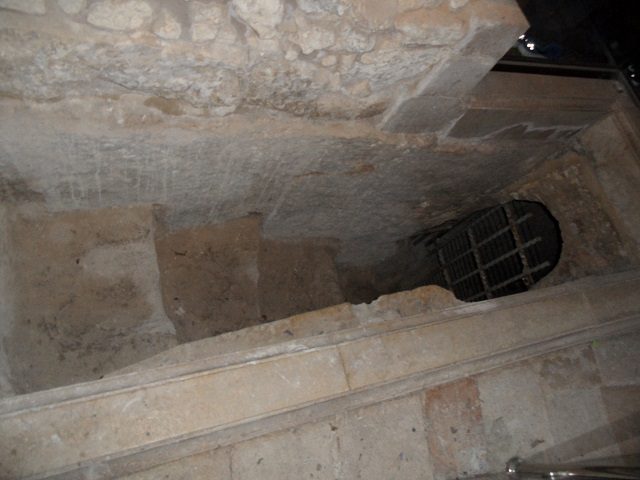
Steps leading down to the Holy Family’s house, in Nazareth. Photograph by wife Judy Armstrong: 20 October 2014.
*****
[excerpt from my book, Footsteps That Echo Forever: My Holy Land Pilgrimage]
*****
This is the account of the 3rd full day of my pilgrimage in Israel in 2014. I wrote this the same night in our lovely rustic chalet near the Sea of Galilee, after “interviewing” my wife Judy and fellow pilgrim Margie Prox Sindelar. They “stole the show” on this day, as you’ll see! It’s a “working holiday,” but I love my work as an apologist so much, that I can’t distinguish it from pleasure. ]
3rd day: Monday October 20th
This was to be a truly fabulous day, filled with glorious spiritual experiences. Our first destination was Mt. Tabor: the Mount of Transfiguration. It was a wonderfully sunny morning when we drove up its switchbacks, affording us spectacular views of the surrounding valleys and distant hills. Several churches had been built on the spot: this latest one in the 1920s.
Up near the altar it has two panes of glass on the floor, with older remnants below. One of them is believed to be the very spot where Jesus was transfigured. I looked at it in astonishment and kept thinking (never fully grasping the full reality of it): “Jesus was here! Jesus was here!” I sat off to the side, still gazing at it, and suddenly realized, “this very spot where I am, was where Elijah or Moses stood.”
[Matthew 17:1-9 cited]
It was my very first encounter with a holy place, where I could say with high certainty, “the Lord Jesus, God the Son; the incarnate God was at this very spot.” This is where words begin to fail. Shortly I will cite my wife Judy and fellow pilgrim and “official photographer” Margie Prox Sindelar explaining what they felt, after being encouraged to do so in a sort of “interview” with me after we arrived back at our chalet.
I can say that I was overwhelmed; eventually feeling that I would faint as a result of the “electric” spiritual power present in this amazing church. I didn’t, but I came very close, and as soon as I left the church building, that feeling went away. Margie was quite overcome, and explains her experience:
I was just taking photos and didn’t feel any emotion at first. Then I wanted to pray, and went into the church to do so. I was contemplating the Lord’s transfiguration and I kept being redirected to my transformation. It was kind of like a mantra of “Lord, transform me.” I felt that He was not only showing His glorified body, but also strengthening me and all of us, to help us get through the hard times in our lives, as with the apostles. I felt that we could look to Him and take hope that we’ll be glorified eventually, too. I felt a raw emotion that’s hard to explain, that’s staying with me. It’s a supernatural gift of tears. I’ve been teary for quite a while.
It was over eight hours later when I reported Margie’s feeling in this section. She continues:
I never thought that Mt. Tabor would be such a spiritual experience. I never really contemplated it in any depth and struggled with the luminous mysteries in the Rosary. But I was drawn to the mountain and there was some kind of connection, as if I was being called to it. The tears were not like tears that come from this world. It was like they were tears from another world, and it confirmed what I believe. It was a gift to be able to experience. I’m usually in control of my emotions, but this experience was beyond my control.
Judy had a very similar experience or (more descriptively) encounter with God:
I was so drawn to the mountain, too. When I woke up in the morning, I had a real excitement. I was taking pictures and was trying to picture Jesus climbing the mountain with the disciples. When we got into the church and looked down at the actual rock, I wanted to lay prostrate on the ground, and I didn’t care what people thought, if I at least knelt. Then I felt like I was seeing Jesus face to face, as if He was holding my hand and we were looking at each other. I felt a wash of pure joy, and the tears started coming, and it felt like it was beyond my control. They were tears of union with God and a mystical experience. I couldn’t handle being that close to Him. Part of me wanted to stay forever, but I couldn’t take it any more. I had to get up. I couldn’t talk to anyone and I kept wanting to go back and linger with Him more, but I knew that I couldn’t. I realized I was on really holy ground.
Also notable at this site was the remains of an earlier fourth century church, where the baptismal pool was visible, with a mosaic on the bottom.
Next on the docket was the site of the wedding of Cana, where Jesus performed His first miracle: turning the water into wine (Jn 2:1-11). After a particularly extraordinary talk (one of many) by our guide Amer, highlighting Middle Eastern marriage customs, that his family still observe to this day (very similar to Bible times), we went down to the lower floor, which is the remains of the actual house where it took place. Here was now the first site we visited where both Jesus and Mary were present. I walked around in circles in the small area, to be sure that I walked in places where either Jesus or Mary had set foot.
Upon entering Nazareth, first we saw the “precipice” where the townspeople tried to throw Jesus off the cliff:
[Luke 4:15-30 cited]
After a delightful walk for a few blocks through Nazareth, we came to the house of the holy family. Amer explained that the entire city at the time of Jesus was only as large as the courtyard we could easily observe from where we stood. Amer (rather shockingly) said that Joseph was not a carpenter. Rather, He was a stone mason. The other impression, he said, has come from a Bible mistranslation.
Curious, after I returned home, I wondered what the lexicons and language aids taught about this. An Expository Dictionary of New Testament Words by W. E. Vine (1940), defines the word used in Matthew 13:55 and Mark 6:3 (tekton) as “any craftsman, but especially a worker in wood, a carpenter.” Baptist scholar A. T. Robertson, in his Word Pictures in the New Testament (1930) states in his comment on Mark 6:3:
It is a very old word, from Homer down. It was originally applied to the worker in wood or builder with wood like our carpenter. Then it was used of any artisan or craftsman in metal, or in stone as well as in wood and even of sculpture. It is certain that Jesus worked in wood. Justin Martyr speaks of ploughs, yokes, et cetera, made by Jesus. He may also have worked in stone and may even have helped build some of the stone synagogues in Galilee like that in Capernaum.
Joseph H. Thayer’s Greek-English Lexicon of the New Testament (1901) likewise defines tekton (Strong’s word # 5045) as “a worker in wood, a carpenter.” It appears, then, that our guide was wrong in excluding woodwork, though (in his favor) the word can mean a craftsman who worked with other materials as well.
You can’t see much of the holy family’s house: mainly about six steps leading down to a doorway. But what steps! Jesus and His mother walked these steps for thirty years, and St. Joseph also did for some of that time. Catholics believe that grace can be conveyed by matter (so does any Christian who believes, for example, in sacraments).
Imagine the grace stored in these steps, where God the Son, and the highest creature God ever made: the immaculate Mother of God, walked! Later I told Ross that I wished I could lay a sleeping bag on the steps and just stay there for a week, soaking in all that grace.
It was another “powerhouse” spot. I felt something very difficult to describe, but Margie and my wife Judy magnificently succeeded in putting into words what they felt, after I helped to “draw it out of them” several hours later back at the chalet. Margie said, later that day:
When I saw the steps that led to the house of the holy family, I thought, “here’s my savior, going up and down steps, being held by his mother, and then as a toddler and as a teenager and adult, and these were the steps that He physically walked on.” In addition to it being believed in faith only, it becomes more of a physical reality, and it affects our senses to the very depths of our soul.
Judy added, from the wonderful perspective that women have, that I admire so much:
I’ve always wanted to emulate Mary, so when I got to the house of the holy family, I felt such a connection with her that I hadn’t had before: the motherly connection; the tenderness that she would have had with Jesus. I had such a feeling of compassion; a longing to be like her: everything she has; everything she is. I could see her preparing meals, rocking Jesus to sleep, playing with Him on the floor, and the compassion and tenderness that she showed towards Him, which I want.
Walking across the courtyard, we went into the Church of the Annunciation. Down in the basement is Mary’s house, where the angel Gabriel appeared to her, asking if she would be willing to bear the Son of God: using the words of the Hail Mary prayer:
[Luke 1:26-38 (RSV Catholic version) cited]
This is where it all began: the process and eventuality of the incarnation literally starts in this place and at that time in history. The “no” of Eve was undone by the glorious “yes” of Mary the Blessed Virgin.
How can one describe what it is like to be there!? There is an arch where it is believed that Mary stood when the angel appeared (in the place a few feet away now represented with a pillar). I wanted to stay there forever! The ladies once again had the ability (with some coaxing) to put into words what I am finding very difficult to express. But when I heard what they said about it, it was very much in line with my experience, too. First, Margie:
You hear these gospel readings and hear the stories ever since you were a child, and believe it, but to see the actual spot and be there in person, everything seems more real. You believe in faith and with grace, but it affects our senses, and it becomes more human. They went through what we go through. I’m not a person that likes to show emotions in front of others or cry in front of other people. I feel so vulnerable, being that close to God. You can’t humanly handle it. God has to humble Himself in the Eucharist because we couldn’t handle it if He did more than that. I feel that I’ve already been transformed after only three days on the pilgrimage. I was heartbroken when we had to leave Mary’s house.
Judy added: “When we went to Mary’s house, I could see the whole thing playing out before my eyes, as though it was me. That was what was so awesome about it.” We were walking around the lower area of the church, dazed and in awe, and then I wanted to pray the Hail Mary together, in the very place where the angel Gabriel first uttered the words to Mary. We started doing that, directly across from and above the house of Mary. Judy only made it through four or five words before breaking down, so I continued on.
I felt myself rapidly getting weaker, too. If it weren’t for the strong male instinct of suppressing overt emotions, especially in public, and the overwhelming social pressure on men to be “strong,” I could have easily melted into a puddle of goo, myself. Judy describes her feeling: “When Dave and I did the Hail Mary, I felt like I was hit by something so powerful, that I couldn’t even get the words out.”
Women, being the finer creatures of God, allow themselves to experience any given emotion as it arrives. Men have complained since time immemorial that women are “too emotional.” To which I reply: “hey, it’s a lot better to be too emotional as opposed to not being emotional at all, or to constantly suppressing emotions.”
When it comes to powerful spiritual experiences such as these, it’s clear that women’s more common reaction of breaking down (if we should even call it that) is superior and more “normal.” We men are the ones who lose out as a result. A few times on the pilgrimage, Ross described Margie as being a “basket case” when she was teary and speechless at some holy site. I replied that “we are the ones who are the basket cases. Her reaction is normal.”
But the pilgrimage was still young. We had two weeks to go, and Jerusalem awaited us in five days. I suspected that I had similarly powerful encounters with God ahead of me. Perhaps the extraordinary experiences on pilgrimages to the Holy Land have a cumulative effect, increasingly overpowering the pilgrim as he or she goes along. It was all a “spiritual adventure” for me.
That’s what this volume is meant to convey: what it’s like to be in the Holy Land. In six days I’d be worshiping at Mass in the location where Jesus died on the cross and where He was laid in the tomb, to rise again in three days. History and liturgy would be combined in a way that can occur nowhere else on earth. I pondered that whatever happened to me there, and to my spirit, would be like nothing I had ever experienced before. And I know that because of what I had already encountered: this very day alone. I was right.
These are (for lack of a better word) thoroughly otherworldly experiences. I expected to be “spiritually annihilated” (in a good way) when I got to Gethsemane and Golgotha. It was already so powerful in my mind that I was almost scared to visit. But it was a good kind of scared, too: that awestruck reverence we should have when approaching God more closely.
***
[further comments on Facebook, that I wrote and posted while in Israel]:
Today we hiked a 2- or 3-mile trail through the woods, near Caesarea Philippi, where Jesus certainly would have walked, and went up to our knees in the Sea of Galilee. We have a bottle of that water and another with Jordan River water; also about a dozen seashells from the Sea of Galilee.
We’ve seen many famous sites, but the favorite spot for both of us so far is where the Annunciation was (where the angel Gabriel met Mary in Nazareth and said, “Hail Mary full of grace”): as seen in the book excerpt above.
The house (really a cave) where the holy family lived was a few hundred feet away. All of these things are just amazing to see. You can hardly believe you’re standing there.
***
I did compare these spiritual experiences in my Introduction to the book, to Eucharistic adoration and what we felt visiting Gettysburg. I was about right, now that I have experienced some of it. They are thoroughly otherworldly experiences. That’s not the best word to describe it, but the best I can come up with at the moment.
I love how both Margie and Judy described the experiences. That could turn out to be the best part of the whole book, but they (and I) will be having more of these, as we go to Bethlehem and Jerusalem, starting in two days.
*****
Meta Description: Account of our thrilling visits to the Mount of Transfiguration (Mt. Tabor), Cana, and Nazareth in 2014.
Meta Keywords: biblical archaeology, holy items, Holy Land, holy places, Israel, Jerusalem, old city of Jerusalem, pilgrimage, presence of God, Mt. Tabor, Mount of Transfiguration, Cana, Nazareth, Annunciation, Blessed Virgin Mary, St. Joseph, Jesus
Jews & Judaism & Old Testament
Previous Post
April 23, 2016
Walking Where Jesus Walked
Next Post
April 24, 2016 "Shake the Dust Off of Your Feet": Is it Mean Behavior?
Browse Our Archives
Select a Category & Last Things About Me Anti-Catholicism Atheism & Agnosticism Baptism and Sacramentalism Bible and Tradition Blessed Virgin Mary Books by Dave Armstrong C. S. Lewis Calvinism & General Protestantism Catholic Apologetics Catholic Apologists Catholic conversion Catholic converts Christmas Church (Ecclesiology) Church History Conversion and Converts Development of Doctrine Eastern Orthodoxy Ecumenism & Christian Unity Eucharist & Liturgy Fathers of the Church French Translations G. K. Chesterton Hell Hell & Satan Hell & Satan & Last Things Heresies & Comparative Religion Holistic Health Inquisition & Crusades & Scandals James White Jews & Judaism & Old Testament John Calvin John Henry Newman Liberal / Modernist Theology Life Issues Literary Resume Lutheranism Mariology Martin Luther Music Orthodoxy Papacy & Infallibility Personal Page Philosophy & Science Political & Ethical & Moral Issues Protestant Persecution & Intolerance Protestantism Purgatory Purgatory & Penance Romantic & Imaginative Theology Saints & Purgatory & Penance Salvation Salvation & Justification Satan & Last Things Sexuality and Gender Issues Spanish Translations Traditionalism vs. Radical Catholic Reactionaries Traducciones al español / tradução para português Trinitarianism & Christology Uncategorized Videos
Select a Month October 2026 September 2026 August 2026 July 2026 June 2026 May 2026 April 2026 March 2026 February 2026 January 2026 December 2025 November 2025 October 2025 September 2025 August 2025 July 2025 June 2025 May 2025 April 2025 March 2025 February 2025 January 2025 December 2024 November 2024 October 2024 September 2024 August 2024 July 2024 June 2024 May 2024 April 2024 March 2024 February 2024 January 2024 December 2023 November 2023 October 2023 September 2023 August 2023 July 2023 June 2023 May 2023 April 2023 March 2023 February 2023 January 2023 December 2022 November 2022 October 2022 September 2022 August 2022 July 2022 June 2022 May 2022 April 2022 March 2022 February 2022 January 2022 December 2021 November 2021 October 2021 September 2021 August 2021 July 2021 June 2021 May 2021 April 2021 March 2021 February 2021 January 2021 December 2020 November 2020 October 2020 September 2020 August 2020 July 2020 June 2020 May 2020 April 2020 March 2020 February 2020 January 2020 December 2019 November 2019 October 2019 September 2019 August 2019 July 2019 June 2019 May 2019 April 2019 March 2019 February 2019 January 2019 December 2018 November 2018 October 2018 September 2018 August 2018 July 2018 June 2018 May 2018 April 2018 March 2018 February 2018 January 2018 December 2017 November 2017 October 2017 September 2017 August 2017 July 2017 June 2017 May 2017 April 2017 March 2017 February 2017 January 2017 December 2016 November 2016 October 2016 September 2016 August 2016 July 2016 June 2016 May 2016 April 2016 March 2016 February 2016 January 2016 December 2015 November 2015 October 2015 September 2015 August 2015 July 2015 June 2015 May 2015 April 2015 March 2015 February 2015 January 2015 December 2014 November 2014 October 2014 September 2014 August 2014 July 2014 June 2014 April 2014 March 2014 February 2014 January 2014 December 2013 November 2013 October 2013 September 2013 August 2013 July 2013 June 2013 April 2013 March 2013 February 2013 January 2013 December 2012 November 2012 October 2012 September 2012 August 2012 July 2012 June 2012 May 2012 April 2012 March 2012 February 2012 January 2012 December 2011 November 2011 October 2011 September 2011 August 2011 July 2011 June 2011 April 2011 March 2011 February 2011 October 2010 September 2010 August 2010 July 2010 April 2010 March 2010 December 2009 October 2009 August 2009 July 2009 June 2009 May 2009 March 2009 February 2009 October 2008 September 2008 April 2008 March 2008 February 2008 January 2008 December 2007 November 2007 October 2007 May 2007 March 2007 February 2007 January 2007 November 2006 October 2006 September 2006 August 2006 July 2006 June 2006 May 2006 April 2006 March 2006 February 2006 October 2005 June 2005 April 2005 February 2005 July 2004 May 2004 April 2004
Follow Us!
TAKE THE
Religious Wisdom Quiz
Who prayed for rain after a long drought and sent his servant to look seven times?
Select your answer to see how you score.
Elijah Isaiah Samuel Hosea
Books by This Author Books by Dave Armstrong
Related posts from Biblical Evidence for Catholicism

Holy Ground: Why Mary Had NO Other Children...
Biblical Evidence for Catholicism
Protestant Confessions & "Ever-Virgin" Mary
Biblical Evidence for Catholicism

A Few "Worst" & "Best" Arguments vs. Protestantism
Biblical Evidence for Catholicism

Mary Wife of Clopas (Jn 19:25): Mary's Sister-in-Law?
Biblical Evidence for Catholicism
TRENDING AT PATHEOS Catholic

I was strolling through the top floor of the brand new Parthenon...

What Does Gêvâh Mean For Kimberley Guifoyle &...
This week, a lot of the news is focused on Kimberly Guilfoyle....

INNER CIRCLE: Profound Mystery (Of Christ In All...
Ephesians 5:31-32 “For this reason, a man will leave his father and...

Do Not Rejoice When Your Enemy Falls: The...
Turning an execution into a public spectacle is a disturbing expression of...

'The Chosen' S6 Trailer: The Passion Gets Very...
Not many watching 'The Chosen' worry about spoilers, but just because they...

The purpose-driven labor priest
A labor activist reads Rick Warren and it gets me wondering about...
view all Catholic blogs
Ad-Free & Subscriber Log-In Subscription Support
- About Us
- 2026 Calendar
- Videos
- Podcasts
- Library of World Religions
- Faith In Media Tracker
- Advertise With Us
- Write for Us
- Privacy Policy
- Terms of Service
- Do Not Sell My Data
- Contact Us
- Radiant Digital
- Manage Newsletter Subscriptions
- Unsubscribe From Notifications
- Sitemap
Copyright 2008-2026, Patheos. All rights reserved.
Subscription Support Ad-Free & Subscriber Log-In
Follow Patheos