
BuddhistCatholicContemplativeEvangelicalGeneral ChristianHinduJewishLatter-day SaintMuslimNew VisionsProgressive Christian
Beliefs
- Buddhist
- Catholic
- Contemplative
- Evangelical
- General Christian
- Hindu
- Jewish
- Latter-day Saint
- More Voices
- Muslim
- New Visions
- Pagan
- Progressive Christian
Topics
- Religion News
- Food and Religion
- Sports and Religion
- Religious Art
- Religious Music and Entertainment
- Religious Events
- History and Religion
- Style and Religion
- Politics and Religion
- Women in Religion
- Recreation Outdoors and Religion
- Business Finance and Religion
- Careers Workplace and Religion
- Education and Religion
- Family Parenting and Religion
- Health Fitness and Religion
- Home and Religion
- Relationships and Religion
- Technology and Religion
- Travel and Religion
Columnists
- Buddhist Columnists
- Business Finance and Religion Columnists
- Careers Workplace and Religion Columnists
- Catholic Columnists
- Contemplative Columnists
- Education and Religion Columnists
- Evangelists Columnists
- Family Parenting and Religion Columnists
- General Christian Columnists
- Health Fitness and Religion Columnists
- Hindu Columnists
- History and Religion Columnists
- Home and Religion Columnists
- Jewish Columnists
- More Voices Columnists
- Latter Day Columnists
- Muslim Columnists
- New Visions Columnists
- Nonreligious Columnists
- Pagan Columnists
- Politics and Religion Columnists
- Progressive Columnists
- Recreation Outdoors and Religion Columnists
- Relationships and Religion Columnists
- Religion News Columnists
- Religious Art Columnists
- Religious Events Columnists
- Religious Music and Entertainment Columnists
- Sports and Religion Columnists
- Style and Religion Columnists
- Technology and Religion Columnists
- Travel and Religion Columnists
- Women in Religion Columnists
Resource Library
- 2026 Calendar
- Library of World Religions
- The 100 Most Holy Places on Earth
- Patheos Answers
- Podcasts
- Videos
- Faith Leaders Database
- Anglican Episcopalian
- Bahai
- Baptist
- Buddhism
- Christianity
- Confucianism
- Eastern Orthodoxy
- Hinduism
- Holiness and Pentecostal
- ISKCON
- Islam
- Judaism
- Lutheran
- Methodist
- The Church of Jesus Christ of Latter-day Saints
- New Age
- Paganism
- Presbytarian and Reformed
- Protestantism
- Religion Behind the Scenes
- Roman Catholic
- Scientology
- Shia Islam
- Sikhism
- Sufism
- Sunni Islam
- Taoism
- Zen
- See all religions
Research Tools
 Ad-Free & Subscriber Log-In Subscription Support
Ad-Free & Subscriber Log-In Subscription Support
Follow Patheos 

- Trending:
- Forgiveness
- |
- Marriage
- |
- Consciousness
- |
- Death Penalty
- |
- Election
- |
- Halloween

-
About
-
Catholic Apologetics
-
Church History
-
Great Apologists
-
Christian Worldview
-
Protestantism & Misc.
- Home
- Catholic
- History and Religion
- Jerusalem Council vs. Sola Scriptura
Jerusalem Council vs. Sola Scriptura
Last updated on: June 6, 2026 at 12:30 am by Dave Armstrong
Jerusalem Council vs. Sola Scriptura 2026-06-06T00:30:50-04:00 Dave Armstrong
Patheos Explore the world's faith through different perspectives on religion and spirituality! Patheos has the views of the prevalent religions and spiritualities of the world.
. . .Including Replies to Reformed Baptist Anti-Catholic Polemicist James White
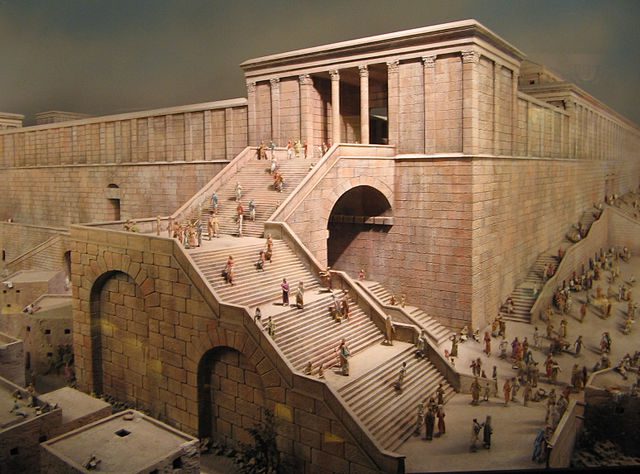
Reconstruction of Herod’s Temple (at the time of Jesus), with Robinson’s Arch in the foreground [Wikimedia Commons / Creative Commons Attribution-Share Alike 2.5 Generic license]

***
(9-2-04)
*****
This is a continuation of my series of responses to anti-Catholic luminary James White’s response to a talk I gave on Sola Scriptura on the radio show, Catholic Answers Live. [I offer a free download of this interview from 10-10-03]
I have decided to provide a lengthy response to White’s “rebuttal” of just one of the ten points I presented in that appearance. Remember (as I noted before), my talk was a mere summary. I estimated that I had about three minutes to elaborate upon each point, due to radio time constraints. So this was no in-depth analysis (which the extremely multi-faceted and complex topic of sola Scriptura ultimately demands). It doesn’t follow, however, that I am unable to provide a much more in-depth treatment of the topic.
White, after dodging my critiques of his work for nine years now, seized upon this great “opportunity” of my introductory talk on the radio to pretend, on his Dividing Line webcast, that I have “no clue” what I am talking about and “not a bit of substance” (his stock “responses” and insults where I am concerned). In his eyes, I am a complete ignoramus, a pretender, and utterly over my head in this discussion. White was trying to turn this into a half-baked “oral debate” and (as always, as with all his Catholic opponents) to embarrass me as a simpleton and lightweight apologist. We know he thinks this, because he made a statement like the following on his second show:
The problem, of course, is that this is, quite seriously, one of the things I’ve said about Mr. Armstrong and about many Catholic apologists, from the very beginning. They don’t do exegesis, and they don’t know how to. Um, of course, I could argue that they’re not allowed to.
Be that as it may, for my part, I replied that I have dealt with most or all these points (agree or disagree) in lengthy papers elsewhere, which he is most welcome to attempt to refute as he pleases. This one point is no exception. Here is the material upon which I based my radio presentation (I added just a little on the air, but rather than do more tedious transcription, I will cite the original “notes”: indented):
* * * * *
In the Jerusalem Council (Acts 15:6-30), we see Peter and James speaking with authority. This Council makes an authoritative pronouncement (citing the Holy Spirit) which was binding on all Christians:
Acts 15:28-29: For it has seemed good to the Holy Spirit and to us to lay upon you no greater burden than these necessary things: that you abstain from what has been sacrificed to idols and from blood and from what is strangled and from unchastity.
In the next chapter, we read that Paul, Timothy, and Silas were traveling around “through the cities,” and Scripture says that:
. . . they delivered to them for observance the decisions which had been reached by the apostles and elders who were at Jerusalem. (Acts 16:4)
This is Church authority. They simply proclaimed the decree as true and binding — with the sanction of the Holy Spirit Himself! Thus we see in the Bible an instance of the gift of infallibility that the Catholic Church claims for itself when it assembles in a council.
That’s it! Obviously, this is a bare-bones summary of one argument, that can be greatly expanded, with many aspects and facets of it examined. Also, it is important to note that I was writing a refutation of sola Scriptura, not an apologia for the full authority of the Catholic Church, and papal infallibility, etc. The two things are logically and categorically distinct. One could easily reject sola Scriptura without accepting the authority of Rome and the pope. Many Christians, in fact, do this: e.g., Anglicans and Orthodox. The subject at hand is “whether sola Scriptura is the true rule of faith, and what the Bible can inform us about that.” I made a biblical argument that does not support sola Scriptura at all (quite the contrary). But White, using his usual illogical, wrongheaded, and sophistical techniques, which he has honed to perfection, tried to cleverly switch the topic over to Catholic ecclesiology.
Beyond that, he also foolishly (but typically) implied that my intent in this argument was some silly notion that I thought I had demonstrated all that (Catholic ecclesiology, the papacy and magisterium, etc.) by recourse to this reasoning. This is part of his opinion that I am so stupid that I am unaware of such elementary logical considerations. Vastly underestimating one’s opponent makes for lousy debates and embarrassing “come-uppances” when the opponent proceeds to demonstrate that he is not nearly as much of a dunce and clueless imbecile as was made out. The Democrats have used this tactic for years in politics. It is disconcerting to see anti-Catholic Baptists follow their illegitimate model in theological discourse.
He is way ahead of the game, of course, and this is a straw man, since I believe no such thing at all. Sola Scriptura means something. It has a well-established definition among Protestant scholars. In the next excerpt, we will see it defined by the well-known, influential Reformed Presbyterian R.C. Sproul. The question at hand is whether sola Scriptura is indicated in the Bible. I gave ten reasons in my talk which suggest that it is not. This particular case, in fact, offers not only non-support, but also direct counter-evidence.
This argument concerning the Jerusalem Council was used in expanded form in my book, The Catholic Verses: 95 Bible Passages That Confound Protestants. Here is that portion of the book, in its entirety (indented):
THE BINDING AUTHORITY OF COUNCILS, LED BY THE HOLY SPIRIT
Acts 15:28-29: “For it has seemed good to the Holy Spirit and to us to lay upon you no greater burden than these necessary things: that you abstain from what has been sacrificed to idols and from blood and from what is strangled and from unchastity. If you keep yourselves from these, you will do well. Farewell.”
Acts 16:4: “As they went on their way through the cities, they delivered to them for observance the decisions which had been reached by the apostles and elders who were at Jerusalem.”
These passages offer a proof that the early Church held to a notion of the infallibility of Church councils, and to a belief that they were especially guided by the Holy Spirit (precisely as in Catholic Church doctrine concerning ecumenical councils). Accordingly, Paul takes the message of the conciliar decree with him on his evangelistic journeys and preaches it to the people. The Church had real authority; it was binding and infallible.
This is a far cry from the Protestant principle of sola Scriptura — which presumes that councils and popes can err, and thus need to be corrected by Scripture. Popular writer and radio expositor R.C. Sproul expresses the standard evangelical Protestant viewpoint on Christian authority:
For the Reformers no church council, synod, classical theologian, or early church father is regarded as infallible. All are open to correction and critique . . .
(in Boice, 109)
Arguably, this point of view derives from Martin Luther’s stance at the Diet of Worms in 1521 (which might be construed as the formal beginning of the formal principle of authority in Protestantism: sola Scriptura). Luther passionately proclaimed:
Unless I am convicted by Scripture and plain reason – I do not accept the authority of popes and councils, for they have contradicted each other – my conscience is captive to the Word of God. I cannot and I will not recant anything, for to go against conscience is neither right nor safe. God help me, Amen. Here I stand, I cannot do otherwise.
(in Bainton, 144)
One Protestant reply to these biblical passages might be to say that since this Council of Jerusalem referred to in Acts consisted of apostles, and since an apostle proclaimed the decree, both possessed a binding authority which was later lost (as Protestants accept apostolic authority as much as Catholics do). Furthermore, the incidents were recorded in inspired, infallible Scripture. They could argue that none of this is true of later Catholic councils; therefore, the attempted analogy is null and void.
But this is a bit simplistic, since Scripture is our model for everything, including Church government, and all parties appeal to it for their own views. If Scripture teaches that a council of the Church is authoritative and binding, then it is implausible and unreasonable to assert that no future council can be so simply because it is not conducted by apostles.
Scripture is our model for doctrine and practice (nearly all Christians agree on this). The Bible doesn’t exist in an historical vacuum, but has import for the day-to-day life of the Church and Christians for all time. St. Paul told us to imitate him (see, e.g., 2 Thess. 3:9). And he went around proclaiming decrees of the Church. No one was at liberty to disobey these decrees on the grounds of “conscience,” or to declare by “private judgment” that they were in error (per Luther).
It would be foolish to argue that how the apostles conducted the governance of the Church has no relation whatsoever to how later Christians engage in the same task. It would seem rather obvious that Holy Scripture assumes that the model of holy people (patriarchs, prophets, and apostles alike) is to be followed by Christians. This is the point behind entire chapters, such as (notably) Hebrews 11.
When the biblical model agrees with their theology, Protestants are all too enthusiastic to press their case by using Scriptural examples. The binding authority of the Church was present here, and there is no indication whatever that anyone was ever allowed to dissent from it. That is the fundamental question. Catholics wholeheartedly agree that no new Christian doctrines were handed down after the apostles. Christian doctrine was present in full from the beginning; it has only organically developed since.
John Calvin has a field day running down the Catholic Church in his commentary for Acts 15:28. It is clear that he is uncomfortable with this verse and must somehow explain it in Protestant terms. But he is not at all unanswerable. The fact remains that the decree was made, and it was binding. It will not do (in an attempt to undercut ecclesial authority) to proclaim that this particular instance was isolated. For such a judgment rests on Calvin’s own completely arbitrary authority (which he claims but cannot prove). Calvin merely states his position (rather than argue it) in the following passage:
. . . in vain do they go about out of the same to prove that the Church had power given to decree anything contrary to the word of God. The Pope hath made such laws as seemed best to him, contrary to the word of God, whereby he meant to govern the Church;
This strikes me as somewhat desperate argumentation. First of all, Catholics never have argued that the pope has any power to make decrees contrary to the Bible (making Calvin’s slanderous charge a straw man). Calvin goes on to use vivid language, intended to resonate with already strong emotions and ignorance of Catholic theology. It’s an old lawyer’s tactic: when one has no case, attempt to caricature the opponent, obfuscate, and appeal to emotions rather than reason.Far more sensible and objective are the comments on Acts 15:28 and 16:4 from the Presbyterian scholar, Albert Barnes, in his famous Barnes’ Notes commentary:
For it seemed good to the Holy Ghost. This is a strong and undoubted claim to inspiration. It was with special reference to the organization of the church that the Holy Spirit had been promised to them by the Lord Jesus, Matthew 18:18-20; John 14:26.
In this instance it was the decision of the council in a case submitted to it; and implied an obligation on the Christians to submit to that decision.
Barnes actually acknowledges that the passage has some implication for ecclesiology in general. It is remarkable, on the other hand, that Calvin seems concerned about the possibility of a group of Christians (in this case, a council) being led by the Holy Spirit to achieve a true doctrinal decree, whereas he has no problem with the idea that individuals can achieve such certainty:
. . . of the promises which they are wont to allege, many were given not less to private believers than to the whole Church [cites Mt 28:20, Jn 14:16-17] . . . we are not to give permission to the adversaries of Christ to defend a bad cause, by wresting Scripture from its proper meaning.
(Institutes, IV, 8, 11)
But it will be objected, that whatever is attributed in part to any of the saints, belongs in complete fulness to the Church. Although there is some semblance of truth in this, I deny that it is true.
(Institutes, IV, 8, 12)
Calvin believes that Scripture is self-authenticating. I appeal, then, to the reader to judge the above passages. Do they seem to support the notion of an infallible Church council (apart from the question of whether the Catholic Church, headed by the pope, is that Church)? Do Calvin’s arguments succeed? For Catholics, the import of Acts 15:28 is clear and undeniable.
Sources
Bainton, Roland H., Here I Stand, New York: Mentor Books, 1950.
Barnes, Albert [Presbyterian], Barnes’ Notes on the New Testament, 1872; reprinted by Baker Book House (Grand Rapids, Michigan), 1983. Available online.
Boice, James Montgomery, editor, The Foundation of Biblical Authority, Grand Rapids, Michigan: Zondervan, 1978, chapter four by R.C. Sproul: “Sola Scriptura: Crucial to Evangelicalism.”
Calvin, John, Calvin’s Commentaries, 22 volumes, translated and edited by John Owen; originally printed for the Calvin Translation Society, Edinburgh, Scotland, 1853; reprinted by Baker Book House, Grand Rapids, Michigan: 1979. Available online.
Calvin, John, Institutes of the Christian Religion, translated by Henry Beveridge for the Calvin Translation Society, 1845 from the 1559 edition in Latin; reprinted by Wm. B. Eerdmans Publishing Co. (Grand Rapids, Michigan), 1995. Available online.
Now let’s examine White’s reply to my argument on his Dividing Line webcast, and see if it can stand up under scrutiny. Let’s see how cogent and biblical it is, and how well the good, exceedingly-wise Bishop White can survive (what he calls a) “cross-examination” (he, of course, claims that I would utterly wilt under his sublime, brilliant questioning, which is supposedly why I refuse to debate him orally). I have given my argument in summary, in depth; I’ve responded to some historic Protestant objections to it; the argument is in print in a published book from a reputable Catholic publisher: Sophia Institute Press) and now I will counter-reply to White’s own sophistical commentary. Whether he wants to respond back, or flee for the hills as he almost always has before, for nine years, when I critique him, remains to be seen. Let his followers closely note his actions now, if they think he is so invulnerable and unable to be “vanquished.”
[White’s words below will be in blue. I am directly citing his words from the Dividing Line webcast of 8-31-04]:
[start from the time: 23:00. This portion ends at 25:00]
Hello, Mr. Armstrong! Acts 15, apostles are there; the Holy Spirit is speaking; the New Testament’s being written; hellooo! This is a period of inscripturation, and revelation! The only way to make that relevant is to say, “you still have apostles and still receive revelation,” but you all believe the canon’s closed, so that doesn’t work. This isn’t some extrabiblical tradition! This is the tradition of the Bible itself! It’s revelation! Uh, again, see why, as long as you don’t allow anyone to cross-examine you; remember Proverbs 18. The first one to present his case always seems right, until his opponent comes along and questions him. That’s what live debate allows to take place. [mocking, derisive, condescending tone throughout]
This is White’s entire answer. On the next Dividing Line of 9-2-04, which I just listened to live, he also added a few brief comments about the same argument:
. . . [the Jerusalem Council is binding] “as a part of Scripture.”
“The Church does have authority; not infallible authority.”
Now let’s see how this stands up, when analyzed closely. I shall respond to each statement in turn:
Hello, Mr. Armstrong!
Hello, Your Eminence, the Right Reverend Bishop Dr. James R. White, Th.D.!
apostles are there
So what? How does that change anything? Are not apostles models for us? Of course, they are. St. Paul tells us repeatedly to imitate him (1 Cor 4:16, Phil 3:17, 2 Thess 3:7-9). White would have us believe that since this is the apostolic period and so forth, it is completely unique, and any application of the known events of that time to our own is “irrelevant.” He acts as if the record of the Book of Acts has no historical, pedagogical import other than as a specimen of early Christian history, as if it is a piece of mere archaeology, rather than the living Word of God, which is (to use one of Protestants’ favorite verses) “profitable for teaching . . . and for training in righteousness” (2 Tim 3:16-17). So now the historical passages of the New Testament are “irrelevant”? Only the straight-out doctrinal teaching can be used to ascertain correct doctrine? If so, then where is that taught in Scripture itself, etc.? Passages like Hebrews 11, which recount the deeds of great saints and biblical heroes, imply that they are a model for us.
White’s viewpoint as to the implications of the Jerusalem Council is theologically and spiritually naive or simplistic because it would force us to accept recorded, inspired apostolic teaching about the Church and ecclesiology (whatever it is), yet overlook and ignore the very application of that doctrine to real life, that the apostles lived out in that real life. We would have to believe that this council in Jerusalem had nothing whatsoever to do with later governance of the Church, even though apostles were involved in it. That, in effect, would be to believe that we are smarter and more knowledgeable about Christian theology than the apostles were. They set out and governed the Church, yet they were dead-wrong, or else what they did has no bearing whatsoever on later Christian ecclesiology. Since this is clearly absurd, White’s view that goes along with it, collapses.
Moreover, this is a foolish approach because it would require us to believe that Paul and other apostles were in error with regard to how Christian or Church authority works. The preached a certain thing in this instance. If they believed in sola Scriptura (as models for us), then they would have taught what they knew to be Scripture (in those days, the Old Testament), and that alone, as binding and authoritative (for this is what sola Scriptura holds). If they didn’t understand authority in the way that God desired, how could they be our models? And if the very apostles who wrote Scripture didn’t understand it, and applied it incorrectly in such an important matter, how can we be expected to, from that same Scripture? A stream can’t rise above its source.
Lastly, White implicitly assumes here, as he often does, that everything the apostles taught was later doctrinally recorded in Scripture. This is his hidden premise (or it follows from his reasoning, whether he is aware of it or not). But this is a completely arbitrary assumption. Protestants have to believe something akin to this notion, because of their aversion to authoritative, binding tradition, but the notion itself is unbiblical. They agree that what apostles taught was binding, but they fail to see that some of that teaching would be “extrabiblical” (i.e., not recorded in Scripture). The Bible itself, however, teaches us that there are such teachings and deeds not recorded in it (Jn 20:30, 21:25, Acts 1:2-3, Lk 24:15-16,25-27). The logic is simple (at least when laid out for all to see):
- Apostles’ teaching was authoritative and binding.
- Some of that teaching was recorded in Scripture, but some was not.
- The folks who heard their teaching were bound to it whether it was later “inscripturated” or not.
- Therefore, early Christians were bound to “unbiblical” teachings or those not known to be “biblical” (as the Bible would not yet be canonized until more than three centuries later).
- If they were so bound, it stands to reason that we could and should be, also.
- Scripture itself does not rule out the presence of an authoritative oral tradition, not recorded in words. Paul refers more than once to a non-written tradition (e.g., 2 Tim 1:13-14, 2:2).
- Scripture informs us that much more was taught by Jesus and apostles than what is recorded in it.
- Scripture nowhere teaches that it is the sole rule of faith or that what is recorded in it about early Church history has no relevance to later Christians because this was the apostolic or “inscripturation” period. Those are all arbitrary, unbiblical traditions of men.
One could go on and on about the falsehood of White’s opinion here. His view is simply wrongheaded and not required by the Bible at all. It is an unsubstantiated, unbiblical tradition within Protestantism, that has to exist in order to bolster up the ragged edges of another thoroughly unbiblical tradition: sola Scriptura. As the latter cannot be proven at all from Scripture, it, and all the “supports” for it such as this one, are all logically circular.
. . . the Holy Spirit is speaking . . .
Exactly! This is my point, and what makes the argument such a strong one. Here we have in Scripture itself a clear example of a Church council which was guided by the Holy Spirit. That is our example. It happened. White can go on and on about how these were apostles, but the apostles had successors. We know from Scripture itself that bishops were considered the successors of the apostles.
There was to be a certain ecclesiology. The New Testament speaks of this in relatively undeveloped ways (just as it speaks of fine points of Christology and trinitarianism in an undeveloped sense, which was developed by the Church for hundreds of years afterwards).
If the Holy Spirit could speak to a council then, He can now. Why should it change? This doesn’t require belief in ongoing revelation. That is another issue. The disciples were clearly told by our Lord Jesus (at the Last Supper) that the Holy Spirit would “teach you all things” (Jn 14:26) and “guide you into all truth” (Jn 16:13). This can be understood either as referring to individuals alone, in a corporate sense, or both. If it is corporate, then it could apply to a church council. And in fact, we see exactly that in the Jerusalem Council, after Jesus’ Resurrection and Ascension.
Of course, if white wants to assert that the Holy Spirit can’t speak any more, after the apostolic age and the age of revelation, that is up to him, but that is equally unbiblical and unnecessary. He can give us non biblical proof that this is the case, anymore than some Protestants (perhaps white himself) are “cessationists,” who believe that miracles and the spiritual; gifts ceased with the apostles also.
. . . the New Testament’s being written . . . This is a period of inscripturation and revelation!
So what? What does that have to do with how these early Christians regarded authority and how they believed that councils were binding? Where in the Bible does it say that this period is absolutely unique because the Bible was being written during it? The inspired Bible either has examples of historical events in it which are models for us, or it doesn’t. If it does, White’s case collapses again. If it doesn’t, I need to hear why someone would think that, based on the Bible itself, which doesn’t even list its own books, let alone teach us that we can’t determine how the Church was to be governed by observing how the first Christians did it .
The only way to make that relevant is to say, “you still have apostles and still receive revelation” . . .
On what basis is this said? I don’t see this in the Bible anywhere. Why do we have to still have apostles around in order to follow their example, as we are commanded to do? What does the ending of revelation have to do with that, either? Therefore, it is (strictly-speaking) an “extrabiblical tradition.” If so, then it is inadmissible (in the sense of being binding) according to the doctrine of sola Scriptura. If that is the case, then I am under no obligation to accept it; it is merely white’s arbitrary opinion. Nor is White himself. He contradicts himself, and this is a self-defeating scenario, involving the following self-contradiction:
In upholding the principle which holds only biblical teachings as infallible and binding, I must appeal to an extrabiblical teaching.
This is utterly incoherent, inconsistent reasoning, and must, therefore, be rejected.
You all believe the canon’s closed, so that doesn’t work.
The question of the canon is irrelevant to this matter as well. Protestants and Catholics agree as to the New Testament books. So what is found in the New Testament is inspired, inerrant, and infallible. That’s why I cite it to make my arguments about ecclesiology and the rule of faith, just like I defend any other teaching I believe as a Catholic.
This isn’t some extrabiblical tradition! It’s the tradition of the Bible itself! It’s revelation!
Bingo! Why does he think I used it in the first place?! Exactly!!! Dr. White thus nails the lid on the coffin of his own “case” shut and covers it with a foot of concrete. This “tradition of the Bible” in Acts 15 and 16 teaches something about the binding authority of church councils, and it is not what sola Scriptura holds (which is the very opposite, of course). Case closed. White can grapple with this portion of what all agree is inspired revelation all he wants, and offer pat answers and insufficiently grounded, circular reasoning all he likes; that doesn’t change the fact.
Then White stated that the Council is binding “as a part of Scripture.”
This is equally wrongheaded and off the mark. It was binding, period, because it was a council of the Church, guided by the Holy Spirit (a fact expressly stated by inspired Scripture itself). It would have been binding on Christians if there had never been a New Testament (and at that time there was not yet one anyway). Whether this was recorded later in Scripture or not is irrelevant. If Dr. White disagrees, then let him produce a statement in the New Testament which teaches us what he claims: that it was only binding because it later was recorded in Scripture. If he can’t, then why should we believe him? I am the one arguing strictly from Scripture and what it reveals to us; he is not. He has to fall back on his own arbitrary opinions: mere extrabiblical traditions of men.
Of course, the Church later acts in precisely the same way in its ecumenical councils, declaring such things as that those who deny the Holy Trinity are outside Christianity and the Church, or that those who deny grace alone (Pelagians) are, etc. They make authoritative proclamations, and they are binding on all Christians. The Bible and St. Paul taught that true Christian councils were binding, but Martin Luther, James White, and most Protestants deny this. I will follow the Bible and the apostles, if that must be the choice, thank you.
The Church does have authority; not infallible authority.
Sorry to disagree again, but again, that is not what the Bible taught in this instance. Here the Church had infallible authority in council, and was led by the Holy Spirit. This is clearly taught in the Bible. Period. End of discussion. I think White senses the power of this argument, which is why he tried to blithely, cavalierly dismiss it, with scarcely any discussion (an old lawyer’s trick, to try to fool onlookers who don’t know any better). Knowing that, he has to use the “this is the period of inscripturation and the apostles” argument, but that doesn’t fly, and is not rooted in the Bible, as shown. We are shown here what authority the Church has. If White doesn’t like it, let him produce an express statement in the Bible, informing us that the Church is fallible. One tires of these games and this sort of “theological subterfuge,” where the person who claims to be uniquely following the Bible, and it alone, invents nonsense out of whole cloth, when directly confronted with portions of that same Bible that don’t fit into their preconceived theology and arbitrary traditions of men. Our Lord Jesus and the Apostle Paul dealt with this in their time. Sadly, we continue to today.
Addendum: Dividing Line of 9-2-04
This was more of the same silliness, with even less solid reply. It was remarkable (even by White’s low standards) in its sustained juvenile, giggly mocking of Catholics, especially as White sat and listened to the advertising on the Catholic Answers Live show. I found this to be a rather blatant demonstration of the prejudiced mindset and mentality of the anti-Catholic. But as I have known of this tendency in the good bishop for many years, it came as no surprise at all. He started out with the obligatory digs at me:
[derisive laughter throughout]
Dave’s just playin’ along with the game; you know what I mean?
How can you self-destruct two times on your own blog?
. . . I feel sorry for old Dave . . .
We didn’t have a postal debate . . . absolute pure desperation . . .
White even went after Cardinal Newman later on:
[Newmanian development of doctrine is a] convenient means of abandoning the historical field of battle.
He went on to state that this involves a “nebulous” notion of doctrine whereby it can be molded and transmutated into almost anything, no matter how it relates to what went before. Of course, this is a complete distortion of Newman’s teaching (which is an organic, continuous development of something which remains itself all along, like a biological organism), and shows profound ignorance of it by Dr. White, but that is another topic. Those who are familiar with Newman’s thought will see how bankrupt this “analysis” is. But this comes straight from the 19th-century Anglican anti-Catholic controversialist George Salmon (it is almost a direct quote from him). Nothing new under the sun . . .
I hope readers have enjoyed another installment of my writing which has, of course, no substance whatsoever, and where I exhibit yet again my marked characteristic of not having a clue concerning that of which I write. And I’m sure you will enjoy White’s lengthy written reply, too (just don’t hold your breath waiting for that, please!).
*****
Meta Description: Discussion about the relationship of Church authority to inspired Scripture; + exchanges with anti-Catholic polemicist James White.
Meta Keywords: Anti-Catholicism, apostolic succession, apostolic tradition, Bible Only, Catholic Tradition, Christian Authority, development of doctrine, James White, Rule of Faith, Scripture Alone, Sola Scriptura, Tradition
Previous Post
April 27, 2016
Catholic Closed Communion: A Defense
Next Post
April 27, 2016 Initial Justification & "Faith Alone": Harmonious?
Browse Our Archives
Select a Category & Last Things About Me Anti-Catholicism Atheism & Agnosticism Baptism and Sacramentalism Bible and Tradition Blessed Virgin Mary Books by Dave Armstrong C. S. Lewis Calvinism & General Protestantism Catholic Apologetics Catholic Apologists Catholic conversion Catholic converts Christmas Church (Ecclesiology) Church History Conversion and Converts Development of Doctrine Eastern Orthodoxy Ecumenism & Christian Unity Eucharist & Liturgy Fathers of the Church French Translations G. K. Chesterton Hell Hell & Satan Hell & Satan & Last Things Heresies & Comparative Religion Holistic Health Inquisition & Crusades & Scandals James White Jews & Judaism & Old Testament John Calvin John Henry Newman Liberal / Modernist Theology Life Issues Literary Resume Lutheranism Mariology Martin Luther Music Orthodoxy Papacy & Infallibility Personal Page Philosophy & Science Political & Ethical & Moral Issues Protestant Persecution & Intolerance Protestantism Purgatory Purgatory & Penance Romantic & Imaginative Theology Saints & Purgatory & Penance Salvation Salvation & Justification Satan & Last Things Sexuality and Gender Issues Spanish Translations Traditionalism vs. Radical Catholic Reactionaries Traducciones al español / tradução para português Trinitarianism & Christology Uncategorized Videos
Select a Month October 2026 September 2026 August 2026 July 2026 June 2026 May 2026 April 2026 March 2026 February 2026 January 2026 December 2025 November 2025 October 2025 September 2025 August 2025 July 2025 June 2025 May 2025 April 2025 March 2025 February 2025 January 2025 December 2024 November 2024 October 2024 September 2024 August 2024 July 2024 June 2024 May 2024 April 2024 March 2024 February 2024 January 2024 December 2023 November 2023 October 2023 September 2023 August 2023 July 2023 June 2023 May 2023 April 2023 March 2023 February 2023 January 2023 December 2022 November 2022 October 2022 September 2022 August 2022 July 2022 June 2022 May 2022 April 2022 March 2022 February 2022 January 2022 December 2021 November 2021 October 2021 September 2021 August 2021 July 2021 June 2021 May 2021 April 2021 March 2021 February 2021 January 2021 December 2020 November 2020 October 2020 September 2020 August 2020 July 2020 June 2020 May 2020 April 2020 March 2020 February 2020 January 2020 December 2019 November 2019 October 2019 September 2019 August 2019 July 2019 June 2019 May 2019 April 2019 March 2019 February 2019 January 2019 December 2018 November 2018 October 2018 September 2018 August 2018 July 2018 June 2018 May 2018 April 2018 March 2018 February 2018 January 2018 December 2017 November 2017 October 2017 September 2017 August 2017 July 2017 June 2017 May 2017 April 2017 March 2017 February 2017 January 2017 December 2016 November 2016 October 2016 September 2016 August 2016 July 2016 June 2016 May 2016 April 2016 March 2016 February 2016 January 2016 December 2015 November 2015 October 2015 September 2015 August 2015 July 2015 June 2015 May 2015 April 2015 March 2015 February 2015 January 2015 December 2014 November 2014 October 2014 September 2014 August 2014 July 2014 June 2014 April 2014 March 2014 February 2014 January 2014 December 2013 November 2013 October 2013 September 2013 August 2013 July 2013 June 2013 April 2013 March 2013 February 2013 January 2013 December 2012 November 2012 October 2012 September 2012 August 2012 July 2012 June 2012 May 2012 April 2012 March 2012 February 2012 January 2012 December 2011 November 2011 October 2011 September 2011 August 2011 July 2011 June 2011 April 2011 March 2011 February 2011 October 2010 September 2010 August 2010 July 2010 April 2010 March 2010 December 2009 October 2009 August 2009 July 2009 June 2009 May 2009 March 2009 February 2009 October 2008 September 2008 April 2008 March 2008 February 2008 January 2008 December 2007 November 2007 October 2007 May 2007 March 2007 February 2007 January 2007 November 2006 October 2006 September 2006 August 2006 July 2006 June 2006 May 2006 April 2006 March 2006 February 2006 October 2005 June 2005 April 2005 February 2005 July 2004 May 2004 April 2004
Follow Us!
TAKE THE
Religious Wisdom Quiz
Who said, "Repent, for the kingdom of heaven is at hand"?
Select your answer to see how you score.
Isaiah Peter Jesus John the Baptist
Books by This Author Books by Dave Armstrong
Related posts from Biblical Evidence for Catholicism

Three More Anti-Catholic Lies About Catholicism (#6-4)
Biblical Evidence for Catholicism

Top Ten Anti-Catholic Lies (#10-7)
Biblical Evidence for Catholicism

A Few "Worst" & "Best" Arguments vs. Protestantism
Biblical Evidence for Catholicism

"Baptism" & Romans 10 (Engwer's Silly Word Games)
Biblical Evidence for Catholicism
TRENDING AT PATHEOS Catholic

The Sermon on the Mount, Part I: Matthew...
The Sermon on the Mount, Part I (Matthew 4:12-5:12) St. Matthew moves...

What's up from Crossway: Reviewing some of their latest A few weeks...

Janie Learns the Way of the Cross: A...
Teaching children about Jesus' Passion can be challenging. Many parents and educators...

Looking For Good Catholic Writing - October 2026
He alone extends the heavens, and he walks upon the waves of...

In "Irreplaceable," our book on vocation and technology, Trevor Sutton and I...

I was strolling through the top floor of the brand new Parthenon...
view all Catholic blogs
Ad-Free & Subscriber Log-In Subscription Support
- About Us
- 2026 Calendar
- Videos
- Podcasts
- Library of World Religions
- Faith In Media Tracker
- Advertise With Us
- Write for Us
- Privacy Policy
- Terms of Service
- Do Not Sell My Data
- Contact Us
- Radiant Digital
- Manage Newsletter Subscriptions
- Unsubscribe From Notifications
- Sitemap
Copyright 2008-2026, Patheos. All rights reserved.
Subscription Support Ad-Free & Subscriber Log-In
Follow Patheos