
BuddhistCatholicContemplativeEvangelicalGeneral ChristianHinduJewishLatter-day SaintMuslimNew VisionsProgressive Christian
Beliefs
- Buddhist
- Catholic
- Contemplative
- Evangelical
- General Christian
- Hindu
- Jewish
- Latter-day Saint
- More Voices
- Muslim
- New Visions
- Pagan
- Progressive Christian
Topics
- Religion News
- Food and Religion
- Sports and Religion
- Religious Art
- Religious Music and Entertainment
- Religious Events
- History and Religion
- Style and Religion
- Politics and Religion
- Women in Religion
- Recreation Outdoors and Religion
- Business Finance and Religion
- Careers Workplace and Religion
- Education and Religion
- Family Parenting and Religion
- Health Fitness and Religion
- Home and Religion
- Relationships and Religion
- Technology and Religion
- Travel and Religion
Columnists
- Buddhist Columnists
- Business Finance and Religion Columnists
- Careers Workplace and Religion Columnists
- Catholic Columnists
- Contemplative Columnists
- Education and Religion Columnists
- Evangelists Columnists
- Family Parenting and Religion Columnists
- General Christian Columnists
- Health Fitness and Religion Columnists
- Hindu Columnists
- History and Religion Columnists
- Home and Religion Columnists
- Jewish Columnists
- More Voices Columnists
- Latter Day Columnists
- Muslim Columnists
- New Visions Columnists
- Nonreligious Columnists
- Pagan Columnists
- Politics and Religion Columnists
- Progressive Columnists
- Recreation Outdoors and Religion Columnists
- Relationships and Religion Columnists
- Religion News Columnists
- Religious Art Columnists
- Religious Events Columnists
- Religious Music and Entertainment Columnists
- Sports and Religion Columnists
- Style and Religion Columnists
- Technology and Religion Columnists
- Travel and Religion Columnists
- Women in Religion Columnists
Resource Library
- 2026 Calendar
- Library of World Religions
- The 100 Most Holy Places on Earth
- Patheos Answers
- Podcasts
- Videos
- Faith Leaders Database
- Anglican Episcopalian
- Bahai
- Baptist
- Buddhism
- Christianity
- Confucianism
- Eastern Orthodoxy
- Hinduism
- Holiness and Pentecostal
- ISKCON
- Islam
- Judaism
- Lutheran
- Methodist
- The Church of Jesus Christ of Latter-day Saints
- New Age
- Paganism
- Presbytarian and Reformed
- Protestantism
- Religion Behind the Scenes
- Roman Catholic
- Scientology
- Shia Islam
- Sikhism
- Sufism
- Sunni Islam
- Taoism
- Zen
- See all religions
Research Tools
 Ad-Free & Subscriber Log-In Subscription Support
Follow Patheos 

- Trending:
- Advent
- |
- Forgiveness
- |
- Thanksgiving
- |
- Election
- |
- Seasonal Holidays
- |
- Marriage

-
About
-
Catholic Apologetics
-
Church History
-
Great Apologists
-
Christian Worldview
-
Protestantism & Misc.
- Home
- Catholic
- History and Religion
- God’s “Punishing” of Descendants: Is it Unjust and Unfair?
God’s “Punishing” of Descendants: Is it Unjust and Unfair?
Last updated on: June 5, 2026 at 11:45 pm by Dave Armstrong
God’s “Punishing” of Descendants: Is it Unjust and Unfair? 2026-06-05T23:45:02-04:00 Dave Armstrong
Patheos Explore the world's faith through different perspectives on religion and spirituality! Patheos has the views of the prevalent religions and spiritualities of the world.
Exodus 20:5: “visiting the iniquity of the fathers upon the children to the third and the fourth generation”
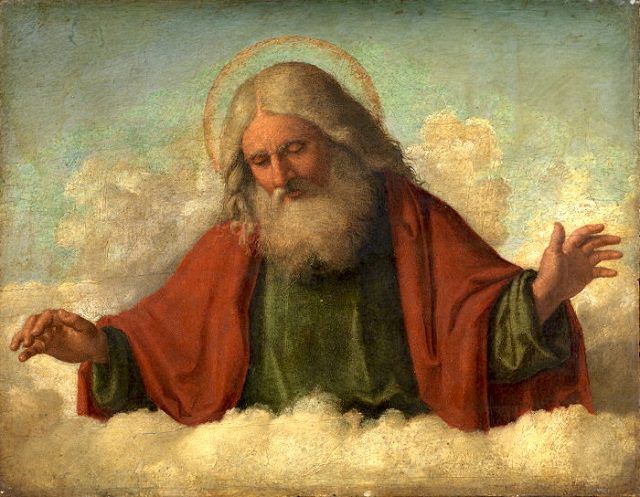
God the Father, attributed to Cima da Conegliano (1460-1518) [public domain / Wikimedia Commons]

***
(7-8-10)
***
A woman on the Coming Home Network forum [where I was a moderator from 2007-2010] was wondering about the interpretation of this passage:
Exodus 20:5-6 (RSV, as throughout) you shall not bow down to them or serve them; for I the LORD your God am a jealous God, visiting the iniquity of the fathers upon the children to the third and the fourth generation of those who hate me, [6] but showing steadfast love to thousands of those who love me and keep my commandments. (cf. identical passage Deut 5:9-10)
She wrote:
I was always taught that God doesn’t punish children for the sins of their parents, what does this mean? This is in direct opposition to that. Yeah, I’ve heard it said that naturally the children are going to suffer from their parents’ sins. For instance, if their father is an alcoholic, there are going to be repercussions that will affect the children – maybe for several generations. You know, that sort of thing. But it seems that here, God is specifically saying “I will punish the children for the sins of their fathers.” I know that often there’s that loss in translation between “God-speak” and “human-speak”, but still, it just rankles and I’d like a really good explanation if there is one.
Here is my “best shot” at giving an answer!
* * * * *
This is an example of Hebrew hyperbole, intended, as I understand it, to show (at a very early stage of salvation history and God’s revealing of Himself) that 1) God is judge, 2) God is not to be trifled with, 3) God is sovereign, and 4) sin has consequences (expressed in the typically Hebraic exaggerated fashion).
John W. Haley, in his book, Alleged Discrepancies of the Bible (Springdale, Pennsylvania: Whitaker House, n.d.; possibly 1992, originally published in 1874, pp. 86-87) wrote:
. . . we may say that Jehovah “visits” the iniquity of the fathers upon their children, in that he permits the latter to suffer in consequence of the sins of the former. He has established such laws of matter and mind that the sins of parents result in the physical and mental disease and suffering of their offspring. . . . “injustice” is no less chargeable upon the author of “the laws of nature” than upon the Author of the Bible.
*
Even if the above text conveys the idea not only of suffering, but also of punishment, yet the language, “unto the third and fourth generation of them that hate me,” indicates children who are sinful like their parents . . . Plainly children are intended to imitate and adopt the sinful habits and practices of their parents; hence, being morally, as well as physically, the representatives and heirs of their parents, they may be, in a certain sense, punished for the sins of those parents.
*
Fellow moderator at CHNI David W. Emery made a similar observation:
[This] has to do with the natural consequences of sin. This is inevitable with every sin; if it were not, people could sin with impunity. What you are reading has to do with the Israelite tendency to attribute those consequences directly to God as their ultimate source, ignoring the secondary cause, the sinner. So this is a case of 21st century American sensibilities not matching those in the middle east from two millennia before Christ. Those people did not have the benefit (as we do) of the later discoveries of the Greeks regarding causality and logic. Times change, cultures change, and language changes. No problem to those who recognize that fact and figure it into their equation. . . . the two systems of thought are different, and we should not therefore read our own intellectual heritage into the biblical text.
There is also anthropomorphism and anthropopathism in play here (particularly in the “jealous” clause): fancy words for God attributing to Himself very human emotions and actions and even physical characteristics that usually don’t literally apply in His case. He does this (especially in the earlier stages of salvation history of propositional revelation of Himself), in order to communicate His attributes to man; otherwise, men would have only the dimmest understanding of God. In the excellent overview, “Anthropomorphisms and their Meaning” (from Old Testament Theology; Philadelphia: Westminster Press, 1957 , pp. 22-25), Ludwig Köhler explains:
[In the Old Testament] the language which ascribes to God the attributes of man is neither restrained nor incidental; indeed, anthropomorphism is to be found on every page of the Old Testament in a wealth of detail, unashamed and even drastic. God speaks, Gen. 1:3; converses, Lev. 4:1; calls, Lev. 1:1; he hears, Ex. 16:12; sees, Gen. 1:4; smells, 1 Sam 26:19; laughs, Ps. 2:4; and hisses, Isa. 7:18. . . .
Not only is God represented as possessing parts of the human body; he also has feelings and passions like those of a man. Alongside anthropomorphisms in the strict sense there are anthropopathisms. He feels delight, Jer. 9:24; shows favor, Isa. 60:10; he rejoices with joy and exultation, Zeph. 3:17. But he also rebukes, Isa. 17:13; he hates, Deut. 12:31; he rejects, Jer. 14:19; he abhors, Ps. 106:40; he feels disgust, Lev. 20:23. He is provoked to anger, Jer. 7:18, and can be jealous; indeed this is an outstanding trait of his character. While the gods of a Pantheon need to be tolerant and permit their worshippers to invoke other gods, the God of the Old Testament never ceases to insist upon his exclusiveness. “I am a jealous God,” Ex. 20:5, Deut. 5:9. . . .
Their intention is not in the least to reduce God to a rank similar to that of man. To describe God in terms of human characteristics is not to humanize him. That has never happened except in unreasonable polemic. Rather the purpose of anthropomorphisms is to make God accessible to man. They hold open the door for encounter and controversy between God’s will and man’s will. They represent God as person. They avoid the error of presenting God as a careless and soulless abstract Idea or a fixed Principle standing over against man like a strong silent battlement. God is personal. He has a will, he exists in controversy ready to communicate himself, offended at men’s sins yet with a ready ear for their supplication and compassion for their confessions of guilt: in a word, God is a living God.
Exodus 20:5 has to be interpreted, as in most of these matters, in conjunction with many other Scriptures that (all taken together) provide a fuller picture of how God operates and how each individual is judged. Hence, we also must take into account the following passages:
Deuteronomy 24:16 The fathers shall not be put to death for the children, nor shall the children be put to death for the fathers; every man shall be put to death for his own sin.
2 Kings 14:6 But he did not put to death the children of the murderers; according to what is written in the book of the law of Moses, where the LORD commanded, “The fathers shall not be put to death for the children, or the children be put to death for the fathers; but every man shall die for his own sin.” (cf. parallel passage 2 Chronicles 25:4)
2 Chronicles 7:14 if my people who are called by my name humble themselves, and pray and seek my face, and turn from their wicked ways, then I will hear from heaven, and will forgive their sin and heal their land.
Isaiah 59:20 And he will come to Zion as Redeemer, to those in Jacob who turn from transgression, says the LORD.
Jeremiah 31:30 But every one shall die for his own sin . . .
Ezekiel 13:22 . . . you have encouraged the wicked, that he should not turn from his wicked way to save his life;
Ezekiel 18:1-24 The word of the LORD came to me again: [2] “What do you mean by repeating this proverb concerning the land of Israel, `The fathers have eaten sour grapes, and the children’s teeth are set on edge’? [3] As I live, says the Lord GOD, this proverb shall no more be used by you in Israel. [4] Behold, all souls are mine; the soul of the father as well as the soul of the son is mine: the soul that sins shall die. [5] “If a man is righteous and does what is lawful and right — [6] if he does not eat upon the mountains or lift up his eyes to the idols of the house of Israel, does not defile his neighbor’s wife or approach a woman in her time of impurity, [7] does not oppress any one, but restores to the debtor his pledge, commits no robbery, gives his bread to the hungry and covers the naked with a garment, [8] does not lend at interest or take any increase, withholds his hand from iniquity, executes true justice between man and man, [9] walks in my statutes, and is careful to observe my ordinances — he is righteous, he shall surely live, says the Lord GOD. [10] “If he begets a son who is a robber, a shedder of blood, [11] who does none of these duties, but eats upon the mountains, defiles his neighbor’s wife, [12] oppresses the poor and needy, commits robbery, does not restore the pledge, lifts up his eyes to the idols, commits abomination, [13] lends at interest, and takes increase; shall he then live? He shall not live. He has done all these abominable things; he shall surely die; his blood shall be upon himself. [14] “But if this man begets a son who sees all the sins which his father has done, and fears, and does not do likewise, [15] who does not eat upon the mountains or lift up his eyes to the idols of the house of Israel, does not defile his neighbor’s wife, 16] does not wrong any one, exacts no pledge, commits no robbery, but gives his bread to the hungry and covers the naked with a garment, [17] withholds his hand from iniquity, takes no interest or increase, observes my ordinances, and walks in my statutes; he shall not die for his father’s iniquity; he shall surely live. [18] As for his father, because he practiced extortion, robbed his brother, and did what is not good among his people, behold, he shall die for his iniquity. [19] “Yet you say, `Why should not the son suffer for the iniquity of the father?’ When the son has done what is lawful and right, and has been careful to observe all my statutes, he shall surely live. [20] The soul that sins shall die. The son shall not suffer for the iniquity of the father, nor the father suffer for the iniquity of the son; the righteousness of the righteous shall be upon himself, and the wickedness of the wicked shall be upon himself. [21] “But if a wicked man turns away from all his sins which he has committed and keeps all my statutes and does what is lawful and right, he shall surely live; he shall not die. [22] None of the transgressions which he has committed shall be remembered against him; for the righteousness which he has done he shall live. [23] Have I any pleasure in the death of the wicked, says the Lord GOD, and not rather that he should turn from his way and live? [24] But when a righteous man turns away from his righteousness and commits iniquity and does the same abominable things that the wicked man does, shall he live? None of the righteous deeds which he has done shall be remembered; for the treachery of which he is guilty and the sin he has committed, he shall die.
Ezekiel 33:1-20 The word of the LORD came to me: [2] “Son of man, speak to your people and say to them, If I bring the sword upon a land, and the people of the land take a man from among them, and make him their watchman; [3] and if he sees the sword coming upon the land and blows the trumpet and warns the people; [4] then if any one who hears the sound of the trumpet does not take warning, and the sword comes and takes him away, his blood shall be upon his own head. [5] He heard the sound of the trumpet, and did not take warning; his blood shall be upon himself. But if he had taken warning, he would have saved his life. [6] But if the watchman sees the sword coming and does not blow the trumpet, so that the people are not warned, and the sword comes, and takes any one of them; that man is taken away in his iniquity, but his blood I will require at the watchman’s hand. [7] “So you, son of man, I have made a watchman for the house of Israel; whenever you hear a word from my mouth, you shall give them warning from me. [8] If I say to the wicked, O wicked man, you shall surely die, and you do not speak to warn the wicked to turn from his way, that wicked man shall die in his iniquity, but his blood I will require at your hand. [9] But if you warn the wicked to turn from his way, and he does not turn from his way; he shall die in his iniquity, but you will have saved your life. [10] “And you, son of man, say to the house of Israel, Thus have you said: `Our transgressions and our sins are upon us, and we waste away because of them; how then can we live?’ [11] Say to them, As I live, says the Lord GOD, I have no pleasure in the death of the wicked, but that the wicked turn from his way and live; turn back, turn back from your evil ways; for why will you die, O house of Israel? [12] And you, son of man, say to your people, The righteousness of the righteous shall not deliver him when he transgresses; and as for the wickedness of the wicked, he shall not fall by it when he turns from his wickedness; and the righteous shall not be able to live by his righteousness when he sins. [13] Though I say to the righteous that he shall surely live, yet if he trusts in his righteousness and commits iniquity, none of his righteous deeds shall be remembered; but in the iniquity that he has committed he shall die. [14] Again, though I say to the wicked, `You shall surely die,’ yet if he turns from his sin and does what is lawful and right, [15] if the wicked restores the pledge, gives back what he has taken by robbery, and walks in the statutes of life, committing no iniquity; he shall surely live, he shall not die. [16] None of the sins that he has committed shall be remembered against him; he has done what is lawful and right, he shall surely live. [17] “Yet your people say, `The way of the Lord is not just’; when it is their own way that is not just. [18] When the righteous turns from his righteousness, and commits iniquity, he shall die for it. [19] And when the wicked turns from his wickedness, and does what is lawful and right, he shall live by it. [20] Yet you say, `The way of the Lord is not just.’ O house of Israel, I will judge each of you according to his ways.”
2 Maccabees 7:32 For we are suffering because of our own sins.
Matthew 23:37 O Jerusalem, Jerusalem, killing the prophets and stoning those who are sent to you! How often would I have gathered your children together as a hen gathers her brood under her wings, and you would not!
John 5:28-29 . . . the hour is coming when all who are in the tombs will hear his voice [29] and come forth, those who have done good, to the resurrection of life, and those who have done evil, to the resurrection of judgment.
Romans 2:5-13 But by your hard and impenitent heart you are storing up wrath for yourself on the day of wrath when God’s righteous judgment will be revealed. [6] For he will render to every man according to his works: [7] to those who by patience in well-doing seek for glory and honor and immortality, he will give eternal life; [8] but for those who are factious and do not obey the truth, but obey wickedness, there will be wrath and fury. [9] There will be tribulation and distress for every human being who does evil, the Jew first and also the Greek, [10] but glory and honor and peace for every one who does good, the Jew first and also the Greek. [11] For God shows no partiality. [12] All who have sinned without the law will also perish without the law, and all who have sinned under the law will be judged by the law. [13] For it is not the hearers of the law who are righteous before God, but the doers of the law who will be justified.
Romans 14:10 Why do you pass judgment on your brother? Or you, why do you despise your brother? For we shall all stand before the judgment seat of God;
2 Corinthians 5:10 For we must all appear before the judgment seat of Christ, so that each one may receive good or evil, according to what he has done in the body.
1 Timothy 2:3-4 God our Savior, [4] who desires all men to be saved and to come to the knowledge of the truth.
1 Peter 1:17 . . . who judges each one impartially according to his deeds . . .
Revelation 2:23 . . . I am he who searches mind and heart, and I will give to each of you as your works deserve.
Revelation 20:11-12 Then I saw a great white throne and him who sat upon it; from his presence earth and sky fled away, and no place was found for them. [12] And I saw the dead, great and small, standing before the throne, and books were opened. Also another book was opened, which is the book of life. And the dead were judged by what was written in the books, by what they had done.
Revelation 22:12 Behold, I am coming soon, bringing my recompense, to repay every one for what he has done.
The trouble comes when one verse is taken in isolation without regard to other relevant verses. Then it may appear that something is teaching what in fact it isn’t teaching. This is as true for the Christian (and we all make this mistake at times) as it is for the atheist who is cynically looking for “contradictions” in the Bible (one of my specialties in my apologetics: I try to answer those guys). Linguistics, context, cultural considerations of place and time, and cross-referencing are all relevant.
One primary consideration is the Hebrew word involved. Translations of Exodus 20:5 are about evenly divided between “punish,” etc. and “visiting.” Here are all the Bible translations I can find, from my library, or from online:
KJV, NKJV, ASV, NASB, RSV, ESV, Amplified, Douay-Rheims, Jewish (1917): “visiting”
NIV, REB, Moffatt, Goodspeed: “punishing”
NEB, CEV: “punish”
NAB, Confraternity: “inflicting punishment”
Knox: “my enemy, and thy children”
*
The Hebrew term paqad is Strong’s word #6485; see also the entry in Brown-Driver-Briggs Hebrew Lexicon for word usage. It is is translated in many different ways. In the KJV here is the spread (305 appearances in 270 verses):
number 119, visit 59, punish 31, appoint 14, commit 6, miss 6, set 6, charge 5, governor 5, lack 4, oversight 4, officers 4, counted 3, empty 3, ruler 3, overseer 3, judgment 2, misc 28
Moreover, it is important to determine the sense in this particular verse. Gesenius’ Hebrew-Chaldee Lexicon (listed in the online Brown-Driver-Briggs Hebrew Lexicon) appears to favor the “punish” interpretation: “to fall upon, to attack” — with emphasis on the sin to be punished. It cross-references the following passages that carry the same sense:
Exodus 32:34 But now go, lead the people to the place of which I have spoken to you; behold, my angel shall go before you. Nevertheless, in the day when I visit, I will visit their sin upon them.
Exodus 34:7 keeping steadfast love for thousands, forgiving iniquity and transgression and sin, but who will by no means clear the guilty, visiting the iniquity of the fathers upon the children and the children’s children, to the third and the fourth generation.
Numbers 14:18-20 `The LORD is slow to anger, and abounding in steadfast love, forgiving iniquity and transgression, but he will by no means clear the guilty, visiting the iniquity of fathers upon children, upon the third and upon the fourth generation.’ [19] Pardon the iniquity of this people, I pray thee, according to the greatness of thy steadfast love, and according as thou hast forgiven this people, from Egypt even until now.” [20] Then the LORD said, “I have pardoned, according to your word;
[these two passages are very interesting because they are similar to Ex 20:5 , but also provide the interpretive key within themselves: God forgives repentant sinners, but punishes the guilty]
Isaiah 13:11 I will punish the world for its evil, and the wicked for their iniquity;
I will put an end to the pride of the arrogant, and lay low the haughtiness of the ruthless.Hosea 1:4 And the LORD said to him, “Call his name Jezreel; for yet a little while, and I will punish the house of Jehu for the blood of Jezreel, and I will put an end to the kingdom of the house of Israel. (cf. 2:15)
Hosea 4:9 And it shall be like people, like priest; I will punish them for their ways, and requite them for their deeds.
Granting (with Gesenius) that “punishment” is the primary sense, rather than “visiting”, it still doesn’t pose any problems, in my opinion, once we more deeply understand the passage in light of Hebrew idiom and other relevant passages: the ones I have listed above. One interprets the less clear passages according to the light of the relatively more clear and abundant related passages. That is one of the fundamental rules of biblical hermeneutics and exegesis.
*
There is no contradiction here, and Exodus 20:5 and similar verses should not trouble us at all. We Christians can and should trust in both God’s justice and His mercy. This is the consistent Bible teaching. If we repent and follow His will and His commands, and persevere by His grace, won for us on the cross, we’ll be (and anyone will be) fine and will be saved in the end.
***
Meta Description: Explanation of what God “visiting the iniquity of the fathers upon the children to the third and the fourth generation” means.
Meta Keywords: Judgment, God’s providence, God’s grace, third and fourth generation, Bible difficulties, biblical genre, hyperbole, biblical idiom, anthropomorphism, anthropopathism
Previous Post

April 12, 2016
Debates w Atheist "DagoodS" ("Bible Difficulties")
Next Post

April 13, 2016 Dialogue: "Why pray to a saint rather than to God?"
Browse Our Archives
Select a Category & Last Things About Me Anti-Catholicism Atheism & Agnosticism Baptism and Sacramentalism Bible and Tradition Blessed Virgin Mary Books by Dave Armstrong C. S. Lewis Calvinism & General Protestantism Catholic Apologetics Catholic Apologists Catholic conversion Catholic converts Christmas Church (Ecclesiology) Church History Conversion and Converts Development of Doctrine Eastern Orthodoxy Ecumenism & Christian Unity Eucharist & Liturgy Fathers of the Church French Translations G. K. Chesterton Hell Hell & Satan Hell & Satan & Last Things Heresies & Comparative Religion Holistic Health Inquisition & Crusades & Scandals James White Jews & Judaism & Old Testament John Calvin John Henry Newman Liberal / Modernist Theology Life Issues Literary Resume Lutheranism Mariology Martin Luther Music Orthodoxy Papacy & Infallibility Personal Page Philosophy & Science Political & Ethical & Moral Issues Protestant Persecution & Intolerance Protestantism Purgatory Purgatory & Penance Romantic & Imaginative Theology Saints & Purgatory & Penance Salvation Salvation & Justification Satan & Last Things Sexuality and Gender Issues Spanish Translations Traditionalism vs. Radical Catholic Reactionaries Traducciones al español / tradução para português Trinitarianism & Christology Uncategorized Videos
Select a Month November 2026 October 2026 September 2026 August 2026 July 2026 June 2026 May 2026 April 2026 March 2026 February 2026 January 2026 December 2025 November 2025 October 2025 September 2025 August 2025 July 2025 June 2025 May 2025 April 2025 March 2025 February 2025 January 2025 December 2024 November 2024 October 2024 September 2024 August 2024 July 2024 June 2024 May 2024 April 2024 March 2024 February 2024 January 2024 December 2023 November 2023 October 2023 September 2023 August 2023 July 2023 June 2023 May 2023 April 2023 March 2023 February 2023 January 2023 December 2022 November 2022 October 2022 September 2022 August 2022 July 2022 June 2022 May 2022 April 2022 March 2022 February 2022 January 2022 December 2021 November 2021 October 2021 September 2021 August 2021 July 2021 June 2021 May 2021 April 2021 March 2021 February 2021 January 2021 December 2020 November 2020 October 2020 September 2020 August 2020 July 2020 June 2020 May 2020 April 2020 March 2020 February 2020 January 2020 December 2019 November 2019 October 2019 September 2019 August 2019 July 2019 June 2019 May 2019 April 2019 March 2019 February 2019 January 2019 December 2018 November 2018 October 2018 September 2018 August 2018 July 2018 June 2018 May 2018 April 2018 March 2018 February 2018 January 2018 December 2017 November 2017 October 2017 September 2017 August 2017 July 2017 June 2017 May 2017 April 2017 March 2017 February 2017 January 2017 December 2016 November 2016 October 2016 September 2016 August 2016 July 2016 June 2016 May 2016 April 2016 March 2016 February 2016 January 2016 December 2015 November 2015 October 2015 September 2015 August 2015 July 2015 June 2015 May 2015 April 2015 March 2015 February 2015 January 2015 December 2014 November 2014 October 2014 September 2014 August 2014 July 2014 June 2014 April 2014 March 2014 February 2014 January 2014 December 2013 November 2013 October 2013 September 2013 August 2013 July 2013 June 2013 April 2013 March 2013 February 2013 January 2013 December 2012 November 2012 October 2012 September 2012 August 2012 July 2012 June 2012 May 2012 April 2012 March 2012 February 2012 January 2012 December 2011 November 2011 October 2011 September 2011 August 2011 July 2011 June 2011 April 2011 March 2011 February 2011 October 2010 September 2010 August 2010 July 2010 April 2010 March 2010 December 2009 October 2009 August 2009 July 2009 June 2009 May 2009 March 2009 February 2009 October 2008 September 2008 April 2008 March 2008 February 2008 January 2008 December 2007 November 2007 October 2007 May 2007 March 2007 February 2007 January 2007 November 2006 October 2006 September 2006 August 2006 July 2006 June 2006 May 2006 April 2006 March 2006 February 2006 October 2005 June 2005 April 2005 February 2005 July 2004 May 2004 April 2004
Follow Us!
TAKE THE
Religious Wisdom Quiz
Blessed is the one who perseveres under trial because, having stood the test, that person will receive the ____ of life that the Lord has promised to those who love him.
Select your answer to see how you score.
Reward Crown Gift Blessing
Books by This Author Books by Dave Armstrong
Related posts from Biblical Evidence for Catholicism
Filioque & Twelve Eastern Church Fathers
Biblical Evidence for Catholicism

Bible & Catholicism on Mortal Sin (vs. John...
Biblical Evidence for Catholicism
Dialogue on Eternal Security / Absolute Assurance
Biblical Evidence for Catholicism
"Faith Alone" Dialogue with a Calvinist
Biblical Evidence for Catholicism
TRENDING AT PATHEOS Catholic

A Radix Teleology and Faith Before Seeing: Essentialism
“For we also have had the good news proclaimed to us, just...
Thy Word is Truth: The Bible Vindicated by...
My 59th book, completed on 9 November 2026; 204 pages. *****...

Adventurous Lectionary -1st. Sunday of Advent - November...
The Adventurous Lectionary - The First Sunday of Advent – November 29,...

Will Islam become the world's biggest religion by 2035? Congo will replace...

Best Books of 2026 on American Christianity
The resilience of the Christian faith in the english speaking world of...

An Advent Calendar, and a Tree full of...
I've spent the weekend deeply invested in internet drama about a $150...
view all Catholic blogs
Ad-Free & Subscriber Log-In Subscription Support
- About Us
- 2026 Calendar
- Videos
- Podcasts
- Library of World Religions
- Faith In Media Tracker
- Advertise With Us
- Write for Us
- Privacy Policy
- Terms of Service
- Do Not Sell My Data
- Contact Us
- Radiant Digital
- Manage Newsletter Subscriptions
- Unsubscribe From Notifications
- Sitemap
Copyright 2008-2026, Patheos, part of the Radiant Digital network of media brands. All rights reserved.
Subscription Support Ad-Free & Subscriber Log-In
Follow Patheos