
BuddhistCatholicContemplativeEvangelicalGeneral ChristianHinduJewishLatter-day SaintMuslimNew VisionsProgressive Christian
Beliefs
- Buddhist
- Catholic
- Contemplative
- Evangelical
- General Christian
- Hindu
- Jewish
- Latter-day Saint
- More Voices
- Muslim
- New Visions
- Pagan
- Progressive Christian
Topics
- Religion News
- Food and Religion
- Sports and Religion
- Religious Art
- Religious Music and Entertainment
- Religious Events
- History and Religion
- Style and Religion
- Politics and Religion
- Women in Religion
- Recreation Outdoors and Religion
- Business Finance and Religion
- Careers Workplace and Religion
- Education and Religion
- Family Parenting and Religion
- Health Fitness and Religion
- Home and Religion
- Relationships and Religion
- Technology and Religion
- Travel and Religion
Columnists
- Buddhist Columnists
- Business Finance and Religion Columnists
- Careers Workplace and Religion Columnists
- Catholic Columnists
- Contemplative Columnists
- Education and Religion Columnists
- Evangelists Columnists
- Family Parenting and Religion Columnists
- General Christian Columnists
- Health Fitness and Religion Columnists
- Hindu Columnists
- History and Religion Columnists
- Home and Religion Columnists
- Jewish Columnists
- More Voices Columnists
- Latter Day Columnists
- Muslim Columnists
- New Visions Columnists
- Nonreligious Columnists
- Pagan Columnists
- Politics and Religion Columnists
- Progressive Columnists
- Recreation Outdoors and Religion Columnists
- Relationships and Religion Columnists
- Religion News Columnists
- Religious Art Columnists
- Religious Events Columnists
- Religious Music and Entertainment Columnists
- Sports and Religion Columnists
- Style and Religion Columnists
- Technology and Religion Columnists
- Travel and Religion Columnists
- Women in Religion Columnists
Resource Library
- 2026 Calendar
- Library of World Religions
- The 100 Most Holy Places on Earth
- Patheos Answers
- Podcasts
- Videos
- Faith Leaders Database
- Anglican Episcopalian
- Bahai
- Baptist
- Buddhism
- Christianity
- Confucianism
- Eastern Orthodoxy
- Hinduism
- Holiness and Pentecostal
- ISKCON
- Islam
- Judaism
- Lutheran
- Methodist
- The Church of Jesus Christ of Latter-day Saints
- New Age
- Paganism
- Presbytarian and Reformed
- Protestantism
- Religion Behind the Scenes
- Roman Catholic
- Scientology
- Shia Islam
- Sikhism
- Sufism
- Sunni Islam
- Taoism
- Zen
- See all religions
Research Tools
 Ad-Free & Subscriber Log-In Subscription Support
Ad-Free & Subscriber Log-In Subscription Support
Follow Patheos 

- Trending:
- Forgiveness
- |
- Marriage
- |
- Consciousness
- |
- Death Penalty
- |
- Election
- |
- Halloween

-
About
-
Catholic Apologetics
-
Church History
-
Great Apologists
-
Christian Worldview
-
Protestantism & Misc.
- Home
- Catholic
- History and Religion
- Defenses of Pope Francis’ Amoris Laetitia
Defenses of Pope Francis’ Amoris Laetitia
Last updated on: February 27, 2017 at 4:56 pm by Dave Armstrong
Defenses of Pope Francis’ Amoris Laetitia 2017-02-27T16:56:52-04:00 Dave Armstrong
Patheos Explore the world's faith through different perspectives on religion and spirituality! Patheos has the views of the prevalent religions and spiritualities of the world.
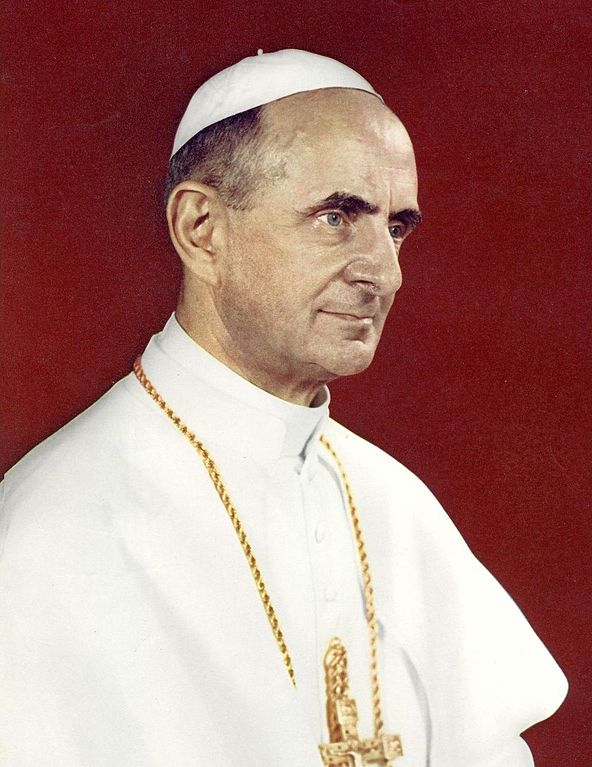
Amoris Laetitia repeatedly cites and expands upon the great 1968 encyclical, Humanae Vitae, from Blessed Pope Paul VI [Wikimedia Commons / Creative Commons CC0 1.0 Universal Public Domain Dedication ]

*****
Yesterday I chided the radical Catholic reactionaries for opposing the pope’s Apostolic Exhortation even before it came out, and being wrong, as usual. Then I posted extensive highlights of the document, having to do mostly with all the “hot-button” moral issues that reactionaries pessimistically claimed would be changed, and that liberals hoped would change. Both were misguided. The Church hasn’t changed any of her doctrines, which I have been predicting with yawns for the past two years that this has been bandied about.
Today I’d like to give some of my opinions, that were posted in the Facebook discussion and combox for my previous paper: in defense of the document over against continuing criticisms, or simply in explanation of the same, according to my best lights as an apologist. These are mostly random / spontaneous thoughts. I claim no more than that for them. But for what they are worth . . .
* * * * *
My goal in the article was to show that the document upheld traditional Catholic morality (can’t do everything at once). There will be plenty of time for discussion of how the reactionaries and their comrades-in-arms in goofiness and detraction, the modernists / liberals, exploit and twist a few passages, as they always do.
***
There are a few passages which will be taken wildly out of context, given the most cynical interpretation, and made the supposedly “ambiguous” roots of a supposed conspiracy against moral tradition. The reactionaries and modernists have done this with Vatican II; they will, sadly, with this document, too (since they have so many profound similarities in their thinking and attitudes).
***
It’s not hard for me to call it a “Humanae Vitae moment” (especially in light of the very strong reiterations of a strikingly “anti-secular” conjugal openness to life). As I said, the document will be distorted and dishonestly exploited, as reactionaries and modernists always do. They do the same with Scripture, which we know is perfect and infallible and inspired.
The liberals rebelled against Humanae Vitae, despite its great clarity. It’s not the fault of the documents in any of these cases.
***
What Amoris Laetitia does is continue to develop and expand and elaborate upon the truths and themes of Humanae Vitae by incorporating the wisdom of Pope St. John Paul II: especially his theology of the body. But I meant the “1968” analogy in a larger sense than just the pro-life and contraception issues.
***
[replies to criticism of the exhortation’s length] The Bible is clear and concise and definitive. 73 books. Or is that too long to be inspired? Indeed, it is often misinterpreted and butchered, and this document will be also (already is in the usual quarters).
1. Length is no “negative quality” in and of itself, of any document. Hence, the Bible . . .
2. If the Bible (very long) is even inspired, why is it that 250 pages somehow detracts from this document, which is far less than inspired? (analogical / logical principle: if the greater thing, how much more so the lesser thing in the same regard).
Length has nothing to do with anything. Yes, the pope gets “lengthy” about supremely important topics, and I’m ecstatic that he does. The more the merrier, because it’s all truth and we get more than enough garbage and lies rammed down our throats every day.
The Summa Theologica of St. Thomas Aquinas was a treatise for beginners in theology. Five long and enormously “meaty”, thought-provoking volumes! This is how far we’ve sunk over the last 740 years. Now folks complain about one document, the size of an average paperback (that they will devour in a day or two, and go out and buy many more).
***
The pope referred to admission to some of the sacraments in rare cases, in one footnote:
351 In certain cases, this can include the help of the sacraments. Hence, “I want to remind priests that the confessional must not be a torture chamber, but rather an encounter with the Lord’s mercy” (Apostolic Exhortation Evangelii Gaudium [24 November 2013], 44: AAS 105 [2013], 1038). I would also point out that the Eucharist “is not a prize for the perfect, but a powerful medicine and nourishment for the weak” (ibid., 47: 1039).
So of course, the reactionaries in their endless pessimism and self-delusions and the liberals in their relentless dishonesty and anti-traditionalism, are latching onto this. Read closely, I don’t even think the last sentence necessarily implies communion for those in irregular situations. It may simply be seen as a sort of related mark, or a footnote within a footnote. These people miss the following much more definitive and clear statement in section 242:
At the same time, “divorced people who have not remarried, and often bear witness to marital fidelity, ought to be encouraged to find in the Eucharist the nourishment they need to sustain them in their present state of life.”
I was asked in retort: “Why not address the issue more directly, instead of ambiguously, and in a footnote?” I replied:
Well, he did, by consigning it to a footnote! Nothing has changed, in other words . . . It’s like the Supreme Court passing over a case without comment. That means that existing law (civilly and in the Church) stands where it is. I think Fr. José Granados – Vice President of the Pontifical Institute of John Paul II (Rome), explains it quite sufficiently.
Nothing is ever sufficient to quell controversies, for those intent on whipping them up. Humanae Vitae was short and concise. Did that matter? No; there was a wholesale rebellion that almost split the Church. Vatican II is regarded as ambiguous and unclear by the recationaries and many mainstream traditionalists. So is the Catechism.
Vatican I defined papal infallibility. Some folks on the left didn’t like it and left (the Old Catholics, led by Dollinger). Others on the far right weren’t content with it (ultramontanes like Ward and Manning). Nothing is ever good enough for the modernists and their comrades, the reactionaries.
***
I strongly suggest ignoring reactionary hit-pieces from The Remnant, Hilary White, Rorate Caeli, One Peter Five, Lifesite News, Catholic Family News, and other like-minded reactionary groups, as well as secular sources and venues. Though Breitbart managed to do well, one simply can’t trust the secular media (even conservative or libertarian “alternative” media) to get it right.
Ignore these articles. And of course read the document for yourself and interpret it in line with Catholic tradition, which it is wholly consistent with. If you want to read additional summaries and commentary, read the ones recommended in my long list of defenses of Pope Francis (#198 and after). They respect and understand Pope Francis and the Church.
***
[referring to the pope’s “pastoral” approach to the divorced and remarried, cohabiting, etc.] The debt is not being forgiven (or overlooked). The person is being treated with charity so that they can come to realize more and more (in an atmosphere of love rather than spurning and personal condemnation) that they have to stop some behavior they are engaged in.
Jesus was charitable to the adulteress (indeed, saved her from stoning, which was quite permissible under the Law), but in doing so He also told her not to sin. This document teaches that certain things are sin, but just in a more subtle way. It’s a different approach, but I contend, in line with St. Paul: “I have become all things to all men, that I may by any means save some of them.” Some people will never grasp this sort of thing, but it is quite biblical, right along with the more strict statements of condemnation (that Paul also makes).
The strict Law was relaxed (letting the adulteress live rather than be stoned to death). And the reason was that we all sin, and so should be slow to judge the heart of someone in objective sin (but not infrequently not also in subjective mortal sin, out of ignorance, etc.).
All of this gets into age-old thorny questions of Law vs. Grace, which was a huge New Testament theme, and is also a question in the Church: how do we balance law / justice and mercy / charity, in order to maintain standards of morality, yet reach the greatest number of souls for salvation and the fullness of grace and faith?
It’s typical Catholic both/and reasoning. The problem is that many of the interpreters we see today think in either/or terms; in false dichotomies. They think that because charity is stressed, therefore, the objective moral law of the Church is simultaneously being rejected, as if it were a zero-sum game. It is not, and the pope makes that clear. But some (many?) critics of the document can’t comprehend that the pope can talk about one thing, without at the same time (in the same act or thought) changing the other.
***
Section 301 doesn’t mention the Eucharist, and is drawing the distinction between subjective and objective mortal sin. There could be, for example, someone in the “irregular” situation of a reputed marriage after divorce, yet living as brother and sister. That would be regular but not only not mortally sinful, but not sinful at all.
Moreover, when the Eucharist is mentioned in conjunction to “irregular” situations, it is a divorced person who did not “remarry”: not one who did:
At the same time, “divorced people who have not remarried, and often bear witness to marital fidelity, ought to be encouraged to find in the Eucharist the nourishment they need to sustain them in their present state of life. . . .” (242)
Spiritual death is caused by subjective mortal sin as well as objective. This is the distinction drawn by Amoris Laetitia, and is rather basic in Catholic theology: any child ought to be aware of it by First Communion and the age of reason.
Section 299 never mentions the Eucharist, either. It is simply assumed without warrant by some critics of the Exhortation. It says, rather, “Their participation can be expressed in different ecclesial services . . .” And it says that they should be “able to live and grow in the Church and experience her as a mother who welcomes them always, who takes care of them with affection and encourages them along the path of life and the Gospel.”
Folks too often pick and choose and isolate statements out of context to “read in” what they wish. But as with all documents, the entirety of the reasoning and the writing as a whole must be incorporated into interpretation.
***
Meta Description: Reflections and ruminations on Pope Francis’ “Amoris Laetitia,” from Catholic apologist Dave Armstrong.
Meta Keywords: Amoris Laetitia, Pope Francis, apostolic exhortation, synod on the family, Radical Catholic reactionaries, pope-bashing, Catholics & marriage, annulments, divorce, remarried Catholics, Catholics & the family, Holy communion
Political & Ethical & Moral Issues
Traditionalism vs. Radical Catholic Reactionaries
Radical Catholic Reactionaries
Previous Post
April 8, 2016
Amoris Laetitia: Pope Francis' "1968 Moment"
Next Post

April 9, 2016 Analyses of Catholic Apologetics (Series)
Browse Our Archives
Select a Category & Last Things About Me Anti-Catholicism Atheism & Agnosticism Baptism and Sacramentalism Bible and Tradition Blessed Virgin Mary Books by Dave Armstrong C. S. Lewis Calvinism & General Protestantism Catholic Apologetics Catholic Apologists Catholic conversion Catholic converts Christmas Church (Ecclesiology) Church History Conversion and Converts Development of Doctrine Eastern Orthodoxy Ecumenism & Christian Unity Eucharist & Liturgy Fathers of the Church French Translations G. K. Chesterton Hell Hell & Satan Hell & Satan & Last Things Heresies & Comparative Religion Holistic Health Inquisition & Crusades & Scandals James White Jews & Judaism & Old Testament John Calvin John Henry Newman Liberal / Modernist Theology Life Issues Literary Resume Lutheranism Mariology Martin Luther Music Orthodoxy Papacy & Infallibility Personal Page Philosophy & Science Political & Ethical & Moral Issues Protestant Persecution & Intolerance Protestantism Purgatory Purgatory & Penance Romantic & Imaginative Theology Saints & Purgatory & Penance Salvation Salvation & Justification Satan & Last Things Sexuality and Gender Issues Spanish Translations Traditionalism vs. Radical Catholic Reactionaries Traducciones al español / tradução para português Trinitarianism & Christology Uncategorized Videos
Select a Month October 2026 September 2026 August 2026 July 2026 June 2026 May 2026 April 2026 March 2026 February 2026 January 2026 December 2025 November 2025 October 2025 September 2025 August 2025 July 2025 June 2025 May 2025 April 2025 March 2025 February 2025 January 2025 December 2024 November 2024 October 2024 September 2024 August 2024 July 2024 June 2024 May 2024 April 2024 March 2024 February 2024 January 2024 December 2023 November 2023 October 2023 September 2023 August 2023 July 2023 June 2023 May 2023 April 2023 March 2023 February 2023 January 2023 December 2022 November 2022 October 2022 September 2022 August 2022 July 2022 June 2022 May 2022 April 2022 March 2022 February 2022 January 2022 December 2021 November 2021 October 2021 September 2021 August 2021 July 2021 June 2021 May 2021 April 2021 March 2021 February 2021 January 2021 December 2020 November 2020 October 2020 September 2020 August 2020 July 2020 June 2020 May 2020 April 2020 March 2020 February 2020 January 2020 December 2019 November 2019 October 2019 September 2019 August 2019 July 2019 June 2019 May 2019 April 2019 March 2019 February 2019 January 2019 December 2018 November 2018 October 2018 September 2018 August 2018 July 2018 June 2018 May 2018 April 2018 March 2018 February 2018 January 2018 December 2017 November 2017 October 2017 September 2017 August 2017 July 2017 June 2017 May 2017 April 2017 March 2017 February 2017 January 2017 December 2016 November 2016 October 2016 September 2016 August 2016 July 2016 June 2016 May 2016 April 2016 March 2016 February 2016 January 2016 December 2015 November 2015 October 2015 September 2015 August 2015 July 2015 June 2015 May 2015 April 2015 March 2015 February 2015 January 2015 December 2014 November 2014 October 2014 September 2014 August 2014 July 2014 June 2014 April 2014 March 2014 February 2014 January 2014 December 2013 November 2013 October 2013 September 2013 August 2013 July 2013 June 2013 April 2013 March 2013 February 2013 January 2013 December 2012 November 2012 October 2012 September 2012 August 2012 July 2012 June 2012 May 2012 April 2012 March 2012 February 2012 January 2012 December 2011 November 2011 October 2011 September 2011 August 2011 July 2011 June 2011 April 2011 March 2011 February 2011 October 2010 September 2010 August 2010 July 2010 April 2010 March 2010 December 2009 October 2009 August 2009 July 2009 June 2009 May 2009 March 2009 February 2009 October 2008 September 2008 April 2008 March 2008 February 2008 January 2008 December 2007 November 2007 October 2007 May 2007 March 2007 February 2007 January 2007 November 2006 October 2006 September 2006 August 2006 July 2006 June 2006 May 2006 April 2006 March 2006 February 2006 October 2005 June 2005 April 2005 February 2005 July 2004 May 2004 April 2004
Follow Us!
TAKE THE
Religious Wisdom Quiz
What city did David capture and make the capital of Israel?
Select your answer to see how you score.
Bethlehem Samaria Jerusalem Hebron
Books by This Author Books by Dave Armstrong
Related posts from Biblical Evidence for Catholicism

Was Peter "Any Old" Apostle? 10 Anti-Papal Arguments
Biblical Evidence for Catholicism

11 Protestant Objections to Papal Authority Debunked
Biblical Evidence for Catholicism

Matthew 16 & the Papacy (vs. Patrick O'Brien)
Biblical Evidence for Catholicism

Miraculous Eucharist (vs. Francois Turretin #4)
Biblical Evidence for Catholicism
TRENDING AT PATHEOS Catholic

I was strolling through the top floor of the brand new Parthenon...

What Does Gêvâh Mean For Kimberley Guifoyle &...
This week, a lot of the news is focused on Kimberly Guilfoyle....

INNER CIRCLE: Profound Mystery (Of Christ In All...
Ephesians 5:31-32 “For this reason, a man will leave his father and...

Do Not Rejoice When Your Enemy Falls: The...
Turning an execution into a public spectacle is a disturbing expression of...

'The Chosen' S6 Trailer: The Passion Gets Very...
Not many watching 'The Chosen' worry about spoilers, but just because they...

The purpose-driven labor priest
A labor activist reads Rick Warren and it gets me wondering about...
view all Catholic blogs
Ad-Free & Subscriber Log-In Subscription Support
- About Us
- 2026 Calendar
- Videos
- Podcasts
- Library of World Religions
- Faith In Media Tracker
- Advertise With Us
- Write for Us
- Privacy Policy
- Terms of Service
- Do Not Sell My Data
- Contact Us
- Radiant Digital
- Manage Newsletter Subscriptions
- Unsubscribe From Notifications
- Sitemap
Copyright 2008-2026, Patheos. All rights reserved.
Subscription Support Ad-Free & Subscriber Log-In
Follow Patheos