
BuddhistCatholicContemplativeEvangelicalGeneral ChristianHinduJewishLatter-day SaintMuslimNew VisionsProgressive Christian
Beliefs
- Buddhist
- Catholic
- Contemplative
- Evangelical
- General Christian
- Hindu
- Jewish
- Latter-day Saint
- More Voices
- Muslim
- New Visions
- Pagan
- Progressive Christian
Topics
- Religion News
- Food and Religion
- Sports and Religion
- Religious Art
- Religious Music and Entertainment
- Religious Events
- History and Religion
- Style and Religion
- Politics and Religion
- Women in Religion
- Recreation Outdoors and Religion
- Business Finance and Religion
- Careers Workplace and Religion
- Education and Religion
- Family Parenting and Religion
- Health Fitness and Religion
- Home and Religion
- Relationships and Religion
- Technology and Religion
- Travel and Religion
Columnists
- Buddhist Columnists
- Business Finance and Religion Columnists
- Careers Workplace and Religion Columnists
- Catholic Columnists
- Contemplative Columnists
- Education and Religion Columnists
- Evangelists Columnists
- Family Parenting and Religion Columnists
- General Christian Columnists
- Health Fitness and Religion Columnists
- Hindu Columnists
- History and Religion Columnists
- Home and Religion Columnists
- Jewish Columnists
- More Voices Columnists
- Latter Day Columnists
- Muslim Columnists
- New Visions Columnists
- Nonreligious Columnists
- Pagan Columnists
- Politics and Religion Columnists
- Progressive Columnists
- Recreation Outdoors and Religion Columnists
- Relationships and Religion Columnists
- Religion News Columnists
- Religious Art Columnists
- Religious Events Columnists
- Religious Music and Entertainment Columnists
- Sports and Religion Columnists
- Style and Religion Columnists
- Technology and Religion Columnists
- Travel and Religion Columnists
- Women in Religion Columnists
Resource Library
- 2026 Calendar
- Library of World Religions
- The 100 Most Holy Places on Earth
- Patheos Answers
- Podcasts
- Videos
- Faith Leaders Database
- Anglican Episcopalian
- Bahai
- Baptist
- Buddhism
- Christianity
- Confucianism
- Eastern Orthodoxy
- Hinduism
- Holiness and Pentecostal
- ISKCON
- Islam
- Judaism
- Lutheran
- Methodist
- The Church of Jesus Christ of Latter-day Saints
- New Age
- Paganism
- Presbytarian and Reformed
- Protestantism
- Religion Behind the Scenes
- Roman Catholic
- Scientology
- Shia Islam
- Sikhism
- Sufism
- Sunni Islam
- Taoism
- Zen
- See all religions
Research Tools
 Ad-Free & Subscriber Log-In Subscription Support
Follow Patheos 

- Trending:
- Advent
- |
- Forgiveness
- |
- Thanksgiving
- |
- Election
- |
- Seasonal Holidays
- |
- Marriage

-
About
-
Catholic Apologetics
-
Church History
-
Great Apologists
-
Christian Worldview
-
Protestantism & Misc.
- Home
- Catholic
- History and Religion
- “Apocrypha”: Historical Case for Canonicity
“Apocrypha”: Historical Case for Canonicity
Last updated on: June 6, 2026 at 12:30 am by Dave Armstrong
“Apocrypha”: Historical Case for Canonicity 2026-06-06T00:30:50-04:00 Dave Armstrong
Patheos Explore the world's faith through different perspectives on religion and spirituality! Patheos has the views of the prevalent religions and spiritualities of the world.

Judith with the Head of Holophernes, by Simon Vouet (1590-1649) or follower [public domain / Wikimedia Commons]

***
(5-19-04)
This is Appendix Three from my book, A Biblical Defense of Catholicism (1996):
* * *
The Old Testament in Catholic Bibles contains seven more books than are found in Protestant Bibles (46 and 39, respectively). Protestants call these seven books the Apocrypha and Catholics know them as the deuterocanonical books. These seven books are: Tobit, Judith, 1 and 2 Maccabees, Wisdom of Solomon, Ecclesiasticus (or, Sirach), and Baruch. Also, Catholic Bibles contain an additional six chapters (107 verses) in the book of Esther and another three in the book of Daniel (174 verses). These books and chapters were found in Bible manuscripts in Greek only, and were not part of the Hebrew Canon of the Old Testament, as determined by the Jews.
All of these were dogmatically acknowledged as Scripture at the Council of Trent in 1548 (which means that Catholics were henceforth not allowed to question their canonicity), although the tradition of their inclusion was ancient. At the same time, the Council rejected 1 and 2 Esdras and the Prayer of Manasses as part of Sacred Scripture (these are often included in collections of the “Apocrypha” as a separate unit).
The Catholic perspective on this issue is widely misunderstood (insofar as it can be said to be known at all). Protestants accuse Catholics of “adding” books to the Bible, while Catholics retort that Protestants have “booted out” part of Scripture. Catholics are able to offer very solid and reasonable arguments in defense of the scriptural status of the deuterocanonical books. These can be summarized as follows:
1) They were included in the Septuagint (the Greek translation of the Old Testament from the third century B.C.), which was the “Bible” of the Apostles. They usually quoted the Old Testament scriptures (in the text of the New Testament) from the Septuagint.
2) Almost all of the Church Fathers regarded the Septuagint as the standard form of the Old Testament. The deuterocanonical books were in no way differentiated from the other books in the Septuagint, and were generally regarded as canonical. St. Augustine thought the Septuagint was apostolically sanctioned and inspired, and this was the consensus in the early Church.
3) Many Church Fathers (such as St. Irenaeus, St. Cyprian, Tertullian) cite these books as Scripture without distinction. Others, mostly from the east (for example, St. Athanasius, St. Cyril of Jerusalem, St. Gregory Nazianzus) recognized some distinction but nevertheless still customarily cited the deuterocanonical books as Scripture. St. Jerome, who translated the Hebrew Bible into Latin (the Vulgate, early fifth century), was an exception to the rule (the Church has never held that individual Fathers are infallible).
4) The Church Councils at Hippo (393) and Carthage (397, 419), influenced heavily by St. Augustine, listed the deuterocanonical books as Scripture, which was simply an endorsement of what had become the general consensus of the Church in the west and most of the east. Thus, the Council of Trent merely reiterated in stronger terms what had already been decided eleven and a half centuries earlier, and which had never been seriously challenged until the onset of Protestantism.
5) Since these Councils also finalized the 66 canonical books which all Christians accept, it is quite arbitrary for Protestants to selectively delete seven books from this authoritative Canon. This is all the more curious when the complicated, controversial history of the New Testament Canon is understood.
6) Pope Innocent I concurred with and sanctioned the canonical ruling of the above Councils (Letter to Exsuperius, Bishop of Toulouse) in 405.
7) The earliest Greek manuscripts of the Old Testament, such as Codex Sinaiticus (fourth century), and Codex Alexandrinus (c.450) include all of the deuterocanonical books mixed in with the others and not separated.
8) The practice of collecting these books into a separate unit dates back no further than 1520 (in other words, it was a novel innovation of Protestantism). This is admitted by, for example, the Protestant New English Bible (Oxford University Press, 1976), in its “Introduction to the Apocrypha,” (page iii).
9) Protestantism, following Martin Luther, removed the deuterocanonical books from their Bibles due to their clear teaching of doctrines which had been recently repudiated by Protestants, such as prayers for the dead (Tobit 12:12, 2 Maccabees 12:39-45; cf. 1 Corinthians 15:29), intercession of dead saints (2 Maccabees 15:14; cf. Revelation 6:9-10), and intermediary intercession of angels (Tobit 12:12,15; cf. Revelation 5:8, 8:3-4). We know this from plain statements of Luther and other Reformers.
10) Luther was not content even to let the matter rest there, and proceeded to cast doubt on many other books of the Bible which are accepted as canonical by all Protestants. He considered Job and Jonah mere fables, and Ecclesiastes incoherent and incomplete. He wished that Esther (along with 2 Maccabees) “did not exist,” and wanted to “toss it into the Elbe” river. [Note: Luther in the latter quote was actually referring to “Esdras,” not Esther, as I later learned, and wrote about. This appendix was from research in 1996 or earlier. His views on the other books may not have been quite as bad as all that, either]
11) The New Testament fared scarcely better under Luther’s gaze. He rejected from the New Testament Canon (“chief books”) Hebrews, James (“epistle of straw”), Jude and Revelation, and placed them at the end of his translation, as a New Testament “Apocrypha.” He regarded them as non-apostolic. Of the book of Revelation he said, “Christ is not taught or known in it.” These opinions are found in Luther’s Prefaces to biblical books, in his German translation of 1522.
12) Although the New Testament does not quote any of these books directly, it does closely reflect the thought of the deuterocanonical books in many passages. For example, Revelation 1:4 and 8:3-4 appear to make reference to Tobit 12:15:
Revelation 1:4 Grace to you . . . from the seven spirits who are before his throne. {see also 3:1, 4:5, 5:6}
Revelation 8:3-4 And another angel came and stood at the altar with a golden censer; and he was given much incense to mingle with the prayers of all the saints upon the golden altar before the throne; and the smoke of the incense rose with the prayers of the saints from the hand of the angel before God. {see also Revelation 5:8}
Tobit 12:15 I am Raphael, one of the seven holy angels who present the prayers of the saints and enter into the presence of the glory of the Holy One.
St. Paul, in 1 Corinthians 15:29, seems to have 2 Maccabees 12:44 in mind. This saying of Paul is one of the most difficult in the New Testament for Protestants to interpret, given their theology:
1 Corinthians 15:29 Otherwise, what do people mean by being baptized on behalf of the dead? If the dead are not raised at all, why are people baptized on their behalf?
2 Maccabees 12:44 For if he were not expecting that those who had fallen would rise again, it would have been superfluous and foolish to pray for the dead.
This passage of St. Paul shows that it was the custom of the early Church to watch, pray and fast for the souls of the deceased. In Scripture, to be baptized is often a metaphor for affliction or (in the Catholic understanding) penance (for example, Matthew 3:11, Mark 10:38-39, Luke 3:16, 12:50). Since those in heaven have no need of prayer, and those in hell can’t benefit from it, these practices, sanctioned by St. Paul, must be directed towards those in purgatory. Otherwise, prayers and penances for the dead make no sense, and this seems to be largely what Paul is trying to bring out. The “penance interpretation” is contextually supported by the next three verses, where St. Paul speaks of Why am I in peril every hour? . . . I die every day, and so forth.
As a third example, Hebrews 11:35 mirrors the thought of 2 Maccabees 7:29:
Hebrews 11:35 Women received their dead by resurrection. Some were tortured, refusing to accept release, that they might rise again to a better life.
2 Maccabees 7:29 Do not fear this butcher, but prove worthy of your brothers. Accept death, so that in God’s mercy I may get you back again with your brothers. {a mother speaking to her son: see 7:25-26}
13) Ironically, in some of the same verses where the New Testament is virtually quoting the “Apocrypha,” doctrines are taught which are rejected by Protestantism, and which were a major reason why the deuterocanonical books were “demoted” by them. Therefore, it was not as easy to eliminate these disputed doctrines from the Bible as it was (and is) supposed, and Protestants still must grapple with much New Testament data which does not comport with their beliefs.
14) Despite this lowering of the status of the deuterocanonical books by Protestantism, they were still widely retained separately in Protestant Bibles for a long period of time (unlike the prevailing practice today). John Wycliffe, considered a forerunner of Protestantism, included them in his English translation. Luther himself kept them separately in his Bible, describing them generally as (although sub-scriptural) “useful and good to read.” Zwingli and the Swiss Protestants, and the Anglicans maintained them in this secondary sense also. The English Geneva Bible (1560) and Bishop’s Bible (1568) both included them as a unit. Even the Authorized, or King James Version of 1611 contained the “Apocrypha” as a matter of course. And up to the present time many Protestant Bibles continue this practice. The revision of the King James Bible (completed in 1895) included these books, as did the Revised Standard Version (1957), the New English Bible (1970), and the Goodspeed Bible (1939), among others.
15) The deuterocanonical books are read regularly in public worship in Anglicanism, and also among the Eastern Orthodox, and most Protestants and Jews fully accept their value as historical and religious documents, useful for teaching, even though they deny them full canonical status.
It is apparent, then, that the Catholic “case” for these books carries a great deal of weight, certainly at the very least equal to the Protestant view.
* * *
Meta Description: Explanation of Catholic historical reasoning for including the seven deuterocanonical books in Holy Scripture.
Meta Keywords: deuterocanonical books, deuterocanon, apocrypha, apocryphal books, The Bible, canonicity, canon of Scripture, biblical canon, Old Testament, Septuagint, 73 books, 46 books
Previous Post
April 17, 2016
Mary's Assumption & "Reformer" Heinrich Bullinger
Next Post

April 18, 2016 Dialogue on Objections to the "Apocrypha"
Browse Our Archives
Select a Category & Last Things About Me Anti-Catholicism Atheism & Agnosticism Baptism and Sacramentalism Bible and Tradition Blessed Virgin Mary Books by Dave Armstrong C. S. Lewis Calvinism & General Protestantism Catholic Apologetics Catholic Apologists Catholic conversion Catholic converts Christmas Church (Ecclesiology) Church History Conversion and Converts Development of Doctrine Eastern Orthodoxy Ecumenism & Christian Unity Eucharist & Liturgy Fathers of the Church French Translations G. K. Chesterton Hell Hell & Satan Hell & Satan & Last Things Heresies & Comparative Religion Holistic Health Inquisition & Crusades & Scandals James White Jews & Judaism & Old Testament John Calvin John Henry Newman Liberal / Modernist Theology Life Issues Literary Resume Lutheranism Mariology Martin Luther Music Orthodoxy Papacy & Infallibility Personal Page Philosophy & Science Political & Ethical & Moral Issues Protestant Persecution & Intolerance Protestantism Purgatory Purgatory & Penance Romantic & Imaginative Theology Saints & Purgatory & Penance Salvation Salvation & Justification Satan & Last Things Sexuality and Gender Issues Spanish Translations Traditionalism vs. Radical Catholic Reactionaries Traducciones al español / tradução para português Trinitarianism & Christology Uncategorized Videos
Select a Month November 2026 October 2026 September 2026 August 2026 July 2026 June 2026 May 2026 April 2026 March 2026 February 2026 January 2026 December 2025 November 2025 October 2025 September 2025 August 2025 July 2025 June 2025 May 2025 April 2025 March 2025 February 2025 January 2025 December 2024 November 2024 October 2024 September 2024 August 2024 July 2024 June 2024 May 2024 April 2024 March 2024 February 2024 January 2024 December 2023 November 2023 October 2023 September 2023 August 2023 July 2023 June 2023 May 2023 April 2023 March 2023 February 2023 January 2023 December 2022 November 2022 October 2022 September 2022 August 2022 July 2022 June 2022 May 2022 April 2022 March 2022 February 2022 January 2022 December 2021 November 2021 October 2021 September 2021 August 2021 July 2021 June 2021 May 2021 April 2021 March 2021 February 2021 January 2021 December 2020 November 2020 October 2020 September 2020 August 2020 July 2020 June 2020 May 2020 April 2020 March 2020 February 2020 January 2020 December 2019 November 2019 October 2019 September 2019 August 2019 July 2019 June 2019 May 2019 April 2019 March 2019 February 2019 January 2019 December 2018 November 2018 October 2018 September 2018 August 2018 July 2018 June 2018 May 2018 April 2018 March 2018 February 2018 January 2018 December 2017 November 2017 October 2017 September 2017 August 2017 July 2017 June 2017 May 2017 April 2017 March 2017 February 2017 January 2017 December 2016 November 2016 October 2016 September 2016 August 2016 July 2016 June 2016 May 2016 April 2016 March 2016 February 2016 January 2016 December 2015 November 2015 October 2015 September 2015 August 2015 July 2015 June 2015 May 2015 April 2015 March 2015 February 2015 January 2015 December 2014 November 2014 October 2014 September 2014 August 2014 July 2014 June 2014 April 2014 March 2014 February 2014 January 2014 December 2013 November 2013 October 2013 September 2013 August 2013 July 2013 June 2013 April 2013 March 2013 February 2013 January 2013 December 2012 November 2012 October 2012 September 2012 August 2012 July 2012 June 2012 May 2012 April 2012 March 2012 February 2012 January 2012 December 2011 November 2011 October 2011 September 2011 August 2011 July 2011 June 2011 April 2011 March 2011 February 2011 October 2010 September 2010 August 2010 July 2010 April 2010 March 2010 December 2009 October 2009 August 2009 July 2009 June 2009 May 2009 March 2009 February 2009 October 2008 September 2008 April 2008 March 2008 February 2008 January 2008 December 2007 November 2007 October 2007 May 2007 March 2007 February 2007 January 2007 November 2006 October 2006 September 2006 August 2006 July 2006 June 2006 May 2006 April 2006 March 2006 February 2006 October 2005 June 2005 April 2005 February 2005 July 2004 May 2004 April 2004
Follow Us!
TAKE THE
Religious Wisdom Quiz
Who is the apostle to deny Jesus?
Select your answer to see how you score.
Phillip Peter Judas Andrew
Books by This Author Books by Dave Armstrong
Related posts from Biblical Evidence for Catholicism
A Few "Worst" & "Best" Arguments vs. Protestantism
Biblical Evidence for Catholicism
Deuterocanon & Javier Perdomo's Straw Men
Biblical Evidence for Catholicism
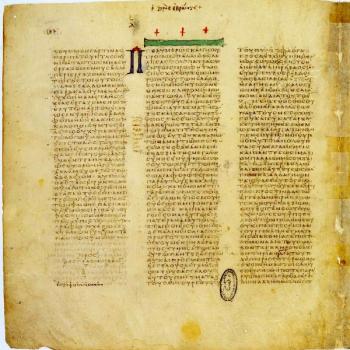
St. Athanasius & the Deuterocanon (vs. Javier Perdomo)
Biblical Evidence for Catholicism
Jerusalem Council vs. James White & Sola Scriptura
Biblical Evidence for Catholicism
TRENDING AT PATHEOS Catholic

James Ishmael Ford's books on Zen
James Ishmael Ford's Official Website provides the most complete annotated list of...
The Trouble with Taking Chesterton Literally
Guest writer: Pilgrim. On paradox, human nature and the art of seeing...

Somewhere right now, someone is sitting in a parked car with a...

Just as the emergence of leaves on the fig tree signals the...
Belief and Disbelief in Christ's Presence in Holy...
A study found that only 29% of Catholics believe that the bread...

Blue Christmas: Making Room for Grief at Church
A Blue Christmas service makes room for grief, remembrance, and hope. Explore...
view all Catholic blogs
Ad-Free & Subscriber Log-In Subscription Support
- About Us
- 2026 Calendar
- Videos
- Podcasts
- Library of World Religions
- Faith In Media Tracker
- Advertise With Us
- Write for Us
- Privacy Policy
- Terms of Service
- Do Not Sell My Data
- Contact Us
- Radiant Digital
- Manage Newsletter Subscriptions
- Unsubscribe From Notifications
- Sitemap
Copyright 2008-2026, Patheos, part of the Radiant Digital network of media brands. All rights reserved.
Subscription Support Ad-Free & Subscriber Log-In
Follow Patheos