
BuddhistCatholicContemplativeEvangelicalGeneral ChristianHinduJewishLatter-day SaintMuslimNew VisionsProgressive Christian
Beliefs
- Buddhist
- Catholic
- Contemplative
- Evangelical
- General Christian
- Hindu
- Jewish
- Latter-day Saint
- More Voices
- Muslim
- New Visions
- Pagan
- Progressive Christian
Topics
- Religion News
- Food and Religion
- Sports and Religion
- Religious Art
- Religious Music and Entertainment
- Religious Events
- History and Religion
- Style and Religion
- Politics and Religion
- Women in Religion
- Recreation Outdoors and Religion
- Business Finance and Religion
- Careers Workplace and Religion
- Education and Religion
- Family Parenting and Religion
- Health Fitness and Religion
- Home and Religion
- Relationships and Religion
- Technology and Religion
- Travel and Religion
Columnists
- Buddhist Columnists
- Business Finance and Religion Columnists
- Careers Workplace and Religion Columnists
- Catholic Columnists
- Contemplative Columnists
- Education and Religion Columnists
- Evangelists Columnists
- Family Parenting and Religion Columnists
- General Christian Columnists
- Health Fitness and Religion Columnists
- Hindu Columnists
- History and Religion Columnists
- Home and Religion Columnists
- Jewish Columnists
- More Voices Columnists
- Latter Day Columnists
- Muslim Columnists
- New Visions Columnists
- Nonreligious Columnists
- Pagan Columnists
- Politics and Religion Columnists
- Progressive Columnists
- Recreation Outdoors and Religion Columnists
- Relationships and Religion Columnists
- Religion News Columnists
- Religious Art Columnists
- Religious Events Columnists
- Religious Music and Entertainment Columnists
- Sports and Religion Columnists
- Style and Religion Columnists
- Technology and Religion Columnists
- Travel and Religion Columnists
- Women in Religion Columnists
Resource Library
- 2026 Calendar
- Library of World Religions
- The 100 Most Holy Places on Earth
- Patheos Answers
- Podcasts
- Videos
- Faith Leaders Database
- Anglican Episcopalian
- Bahai
- Baptist
- Buddhism
- Christianity
- Confucianism
- Eastern Orthodoxy
- Hinduism
- Holiness and Pentecostal
- ISKCON
- Islam
- Judaism
- Lutheran
- Methodist
- The Church of Jesus Christ of Latter-day Saints
- New Age
- Paganism
- Presbytarian and Reformed
- Protestantism
- Religion Behind the Scenes
- Roman Catholic
- Scientology
- Shia Islam
- Sikhism
- Sufism
- Sunni Islam
- Taoism
- Zen
- See all religions
Research Tools
 Ad-Free & Subscriber Log-In Subscription Support
Ad-Free & Subscriber Log-In Subscription Support
Follow Patheos 

- Trending:
- Forgiveness
- |
- Marriage
- |
- Consciousness
- |
- Death Penalty
- |
- Election
- |
- Halloween

-
About
-
Catholic Apologetics
-
Church History
-
Great Apologists
-
Christian Worldview
-
Protestantism & Misc.
- Home
- Catholic
- History and Religion
- Is Smoking a Sin?
Is Smoking a Sin?
Last updated on: December 22, 2017 at 4:09 pm by Dave Armstrong
Is Smoking a Sin? 2017-12-22T16:09:24-04:00 Dave Armstrong
Patheos Explore the world's faith through different perspectives on religion and spirituality! Patheos has the views of the prevalent religions and spiritualities of the world.
+ Comment on the Inadequacy and Unbiblical Nature of Libertarianism
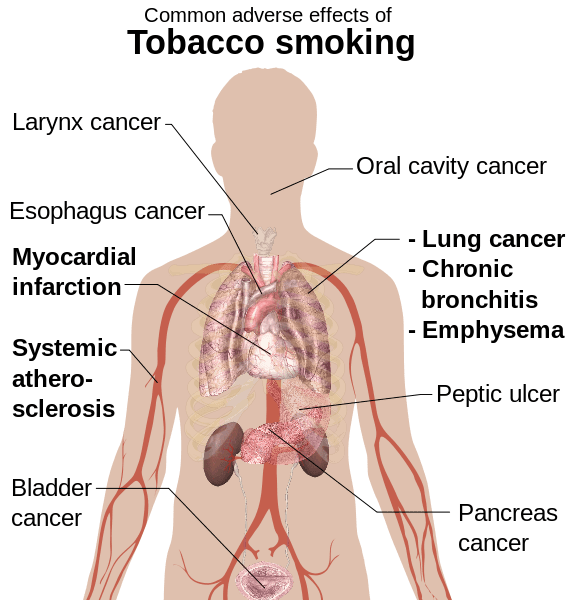
Figure 8-6, page 288, chapter 8 in: Mitchell, Richard Sheppard; Kumar, Vinay; Abbas, Abul K.; Fausto, Nelson Robbins Basic Pathology, Philadelphia: Saunders ISBN: 1-4160-2973-7. 8th edition. Häggström, Mikael. “Medical gallery of Mikael Häggström 2014“. Wikiversity Journal of Medicine 1 (2). DOI:10.15347/wjm/2014.008. ISSN 20018762. [released into public domain / Wikimedia Commons]

* * *
(2-25-08)
* * * * *
These are some related thoughts that have come up in different discussions on the CHNI board. My thoughts here are not honed and refined: just thrown out “off the cuff” for consideration. The discussion in one case was about whether drinking alcohol was a sin. An analogy to sports was made (somewhat facetiously, as it turned out). It was said that playing sports sometimes causes brain or spinal cord injuries, or serious ongoing knee problems, etc. Therefore, why do people play sports if there are such serious risks?
* * * * *
Interesting analogy. I’ll take a crack at it.
The difference is that sports are a calculated risk, whereas something like alcohol abuse or smoking are known harmful things that are always or intrinsically harmful (alcohol at the point of abuse, not absolutely any alcohol).
When one says: “sports are dangerous” as opposed to “smoking is dangerous” this is really meant (when closely analyzed) in two different ways. Playing sports is dangerous in the way that driving cars or climbing a very tall mountain is dangerous. There is a known risk involved. So many people will be killed or injured. We know this will occur without doubt. Yet it doesn’t stop us from driving. And that is because the percentages and risks are very small, comparatively speaking, so that the positives far outweigh the negatives.
Sports are the same. Some will get a spinal injury. A baseball player was killed in 1920 when struck by a pitch. Some basketball players can have a heart attack and die (that happened to Reggie Lewis of the Celtics, as I recall). But these are tiny percentages as well.
Therefore, the analogy breaks down, because something like smoking has overwhelming risk in doing it at all. To know that yet to keep doing it is (I would argue) an abuse of our bodies. Alcohol becomes the same harmful thing in excess, or for an alcoholic.
* * *
Someone else — following up on this argument — argued that the sport of professional boxing was “objectively immoral.” My reply:
I think boxing is the sport that comes closest to being classified as “abuse” (if one wishes to make that argument); however, I reject the notion that it is objectively immoral on the basis of reductio ad absurdum. Any number of physical activities, after all, would cause one to be exhausted and “physically unable to stand on his feet.”
I mentioned in this very thread about climbing Mt. Washington in New Hampshire. I couldn’t stand over and over, my 49 yo, sports-weakened knees hurt so bad at the top of that monster. It’s a willful activity that leads to physical exhaustion after a while.
If we say that boxing is objectively immoral, what about mountain climbing (serious climbing, like Mt. Everest)? People die doing that, or get frostbite and lose toes and fingers. You could sever your spine in a fall. So no one should ever climb a mountain? Moses couldn’t have even gone up on Mt. Sinai.
How about marathons or the bicycling in Tour de France? Are they not utterly exhausting? Sonny Bono was killed by running into a tree, while downhill skiing. So now that sport is out, too?
We can’t avoid risks in life. Some sports, granted, carry a much greater risk factor (e.g., auto racing, boxing). But I think it is only a matter of degree, not of essence. Boxers agree to undergo possible harm. That is the difference. But if someone comes up to you on the street and punches your face and breaks your nose and rearranges your jaw, that is, of course, a sin, because you didn’t voluntarily participate in that, train for it, etc.
I don’t think the case can be made. Smoking is very close to “objectively immoral,” but even there, the Church has apparently not declared it to be a sin, and it certainly has not done so with regard to boxing.
Based on your first argument, I attempted to draw analogies and create a reductio ad absurdum: if “a goal of reducing another to a state of being physically unable to stand on one’s feet” is objectively immoral, then why not also mountain climbing, and foot race and bicycle marathons?
Granted, the goal of those things is not to be unable to stand (it is getting to the top or first to the finish line), yet being unable to stand will be a virtual inevitable result, so the actual end result is the same. Therefore – so I argued — your argument fails unless you also condemn these other sports. No analogy is absolutely perfect because analogy is not equation.
It also occurs to me that it isn’t possible to say about boxing that the goal is always the knockout for the ten-count, for matches are often decided without one, or without even a knockdown (falling down but getting up before a ten-count). The goal is to get more points than the other guy by more direct hits and relatively less received. The secondary goal of a knockdown or knockout help bring about victory: the former by probability and the latter by certainty. If the knockout was the only criterion of victory then matches would continue until it occurred. But instead they are predetermined to have so many rounds and then end.
I’m not trying to “argue” — if by that one means being obnoxious or contentious — but simply responding to a very serious claim that a sport (one that I have enjoyed myself) is “objectively immoral.” The strong claim requires a strong response. I am arguing by logic and what the actual facts of the matter are according to the self-definition and competitive goals of professional boxing.
* * *
I’ve written about alcohol. As for cigarettes, I think that is more clear cut and not merely an issue of moderation: it is an abuse of our bodies, period. We know that it causes cancer. We know that even secondary smoke has serious negative health effects. It can also cause emphysema. My father has lung cancer because of it (but he is doing remarkably well for all that). I remember a chain-smoking neighbor who slowly died of emphysema. These aren’t pretty sights, and in most cases they were completely preventable.
Arguably, it is wrong to do anything that mutilates or harms our body.
* * *
I never said, myself (lest anyone think this) that smoking was a mortal sin. It would be tough to make that argument, even in the objective sense, let alone subjective. I think one would have to greatly misunderstand the nature of addiction, to try to do the latter.
What I said was that there is little doubt now that smoking harms your body in a serious manner. And it is not a good thing to do anything that does that, whether it is technically a “sin” or not. I think it’s very borderline; quite a complex thing to discuss. The same arguments can be made for overeating, lack of exercise, lack of sleep, eating lousy, unhealthy foods to the detriment of healthy foods, or over-dependence on various medications and drugs.
It’s a very tricky business because it is so much a matter of degree. Gluttony and drunkenness are clearly sins; eating a Twinkie or sipping a Scotch are clearly not. My wife and I have followed a pretty strict health food diet for 25 years. We try to avoid white sugar as much as possible, and eat whole foods as much as we can (financially permitting). We like natural, whole foods (based on serious, scientific studies on what is more healthy and health-promoting). But we never tell our kids that not doing that is a sin, because we don’t believe that. They get the usual candy at Halloween and Easter and at Christmas parties. We’re not legalistic at all about this.
We simply tell them the principles that we have learned and try to live by, and give them this kind of food, as much as it is in our power. If they don’t want to eat this way when they’re grown up, fine. Consequently, however, none of them have grown up with the terrible “junk food junkie” mentality” that I grew up with, because my mother is crazy about sweet stuff. They don’t even crave sweets half as much as I do myself.
I would go beyond the “legal” question and ask, “whether smoking is a sin or not, do you really want to do something that has been proven beyond any doubt to harm your body, and to take off years of your life (statistically)? Do you want to deprive your spouse or kids or parents, or friends, of possibly many years of your life because you refused to stop doing what you should have known full well was harmful?”
That works whether it is considered sinful or not. It’s a matter of charity towards our loved ones and stewardship of the bodies and good health that God gave us.
* * *
The issue is a bit more complicated than people often make out. Let me try to make a somewhat tentative argument. I’m “thinking out loud”; not trying to speak in “dogmatic” terms. The Church teaches that it is a sin to mutilate our bodies; for example to have a vasectomy. It’s wrong because it is doing things to our bodies that are harmful and not intended to be that way by God. The Church would also oppose the practice of clitorectomies, that take place in, for example, Africa, so that women will not experience as much sexual pleasure. These things are intrinsically wrong.
In the case of vasectomy, we are trying to avoid causing a conception altogether and to engage in contraception, which is itself an intrinsically disordered, sinful act. So it is already wrong on those grounds, but it also goes against the natural way a (male) body is supposed to operate.
The analogy to smoking isn’t perfect (very few analogies are), but I would say it is reasonable to argue that if we know beyond any doubt that smoking is antithetical to lung functions, and yet keep doing it, that this is wrong, and indeed, may be a sin, because by our action we are deliberately causing physical injury to ourselves. What would we say if we stabbed someone in the kidney and they had to have it removed? That is wrong not only because it was attacking another and causing them pain, but because that person’s body is now not fully operative in the way it was intended to be.
Now, is it essentially different when we are talking about our own bodies? No. It is a serious sin to commit suicide. The Church doesn’t agree with assisted suicide and euthanasia, because our bodies are not our own, and we are made in the image of God, with eternal souls created directly by God, and we are the temples of the Holy Spirit. The Church is not libertarian: we don’t “own” our own bodies; God does. We don’t own the bodies of our preborn children, and so cannot kill them as we please. It is a serious sin.
Therefore, if it is wrong to cause harm to other persons’ bodies, it is also wrong to cause harm to our own, by the same principle of our bodies being given to us as a gift of God, so that we are stewards of them. In a sense, we’re “renting” our bodies from God the Creator.
Nor can we say in the case of smoking, that it only affects us — just as libertarians argue that drugs and pornography and homosexual acts only have consequences for those who are doing that and no one else. And that is because we know now that second-hand smoke also can do harm to other people (not nearly as much, but still some).
I grew up my entire childhood, breathing the smoke from my father’s cigarettes. I also grew up in southwest Detroit breathing the pollution from the Ford Rouge Plant, just a mile and a half away (the largest factory in the world, at least at one time). Pollution was sort of like smoking on a huge scale. These factories were belching out harmful smoke with little or no control, until the 1970s and a greater awareness of the environment (and it’s not just radical, wacko, far left hysteria: pollution of air and water is objectively, demonstratively a bad thing).
So Ford (where my dad worked, like a typical Detroiter) and other companies got up to speed and did a better job there. In fact, Ford is doing quite a bit environmentally, now, because I just took the tour of the factory in the last few weeks, and they were describing a number of (rather fascinating) environmental programs that the plant is now promoting and practicing.
Cigarette smoke is known (without any doubt) to harm our lungs especially. Why would anyone want to do that (even apart from the sin question)? There is an aspect of this (I agree with another commenter) that is just plain stupid, whether it is technically a “sin” or not. Who would go around bashing their foot or hand with a lead pipe, so that it became increasingly damaged? Who would stab their ear so that 47% of the hearing were lost over time? Who would scrape their back with a sharp object so that it became raw and infected and permanently harmed, or try to deliberately break a finger or a toe?
All of that is considered irrational, “nutty” behavior. Yet if someone smokes and smokes and destroys their lung capacity and sets themselves up for cancer, is that not wrong and dumb, too, on the same grounds? I don’t see any difference. Perhaps someone can explain to me what the difference would be.
Who would make a theoretical choice where there were two doors (like Let’s Make a Deal) and two paths to choose from?:
Door A: a “healthy” lifestyle which is less “fun” but which will render it statistically probable that you can live a healthy, fairly happy life up to age 75-85 or even longer.
Door B: a lot more fun of a life with stuff like excessive alcohol intake and smoking and junk food that will “fulfill” the person at the time but which will cause a great statistical likelihood of cancer and other debilitating diseases and a loss of 10, 15, 20 years off of the person’s lifespan, so that they have a much greater likelihood of dying “early” (and often in horrible, tragic fashion).
Now, would a rational person who cares about his own life and body and about his loved ones, deliberately choose Door B (and, by the way, Door B is also the “choice” of the active homosexual, because we know beyond a doubt, that this lifestyle is unhealthy and takes many years off of lives, statistically)? Yet with the issue of smoking, in effect, millions choose Door B and seem to think little of it.
Whether smoking is a sin or not, I’m not sure. Now I am curious and would like to research this, in terms of what Catholics and other Christians have thought. I suspect that it will be a borderline thing. But at the very least it is an irrational and stupid choice, and I think there are strong arguments to abstain from it whether it is a sin or not. Not everything that is “legal” is necessarily “good”, which is a far smaller category. The Christian ought to pursue what is good and life-affirming and edifying.
And I say this without the least judgment of persons at all (and not the slightest pretense that I am “better” than anyone else). I’m just looking at the thing itself, and I see no good coming from it at all. If the pleasure of it is sought, certainly are plenty of other pleasures that can substitute, without the harm done. I would say it is an act of charity to try to reason with the smoker to stop. After all, it is their life and the life of their loved ones who is harmed. My own father has lung cancer, as I write, because he wouldn’t listen to reason and stop smoking years ago.
Someone argued that “Nicotine, like caffeine is a neurotransmitter analogue and in small doses can relieve stress.” I’m sure it can. But there are tons of natural tranquilizers and sedatives that can do the same with absolutely no harm or side effects. Niacin from Vitamin B does that. So does calcium and magnesium. There are a number of herbs that are quite calming, like chamomile or valerian root. There are now a great many natural anti-depressants, such as St. John’s Wort and SAM-e. My wife takes natural amino acids to relive her tendency to mild depression (as I have written about). There need not be the risks or side effects involved, and there is no addiction, either. Even exercise is known to relieve stress. Talking and laughing does that. Why should anyone seek that benefit from something that is known to harm and to be addictive? It’s not a rational choice.
* * * * * * * *
Christianity is not libertarianism. It’s valid for folks to be concerned with acts and behaviors that may harm others or cause them to stumble. It’s the Christian charity for others that comes into play here. Mere legalism doesn’t care about that, because it is all about “rights” and not “what’s right.”
Someone wants to argue by libertarian principles? St. Paul in the Bible also has principles too, that he tries to live by (and he calls us several times to imitate him). For example:
Romans 14:13-21
Then let us no more pass judgment on one another, but rather decide never to put a stumbling block or hindrance in the way of a brother. I know and am persuaded in the Lord Jesus that nothing is unclean in itself; but it is unclean for any one who thinks it unclean. If your brother is being injured by what you eat, you are no longer walking in love. Do not let what you eat cause the ruin of one for whom Christ died. So do not let your good be spoken of as evil. For the kingdom of God is not food and drink but righteousness and peace and joy in the Holy Spirit; he who thus serves Christ is acceptable to God and approved by men. Let us then pursue what makes for peace and for mutual upbuilding. Do not, for the sake of food, destroy the work of God. Everything is indeed clean, but it is wrong for any one to make others fall by what he eats; it is right not to eat meat or drink wine or do anything that makes your brother stumble.
This is biblical ethics. It goes beyond what I can do or not do, to considerations of how my actions may affect others. Libertarianism doesn’t give a damn about that: it is all about “my right to do this, and if you don’t like it, you can lump it.” Libertarianism assumes that “I am not my brother’s keeper” and that my actions do not affect others. That’s why libertarians defend things like pornography and mind-altering drugs and even legal prostitution. It’s brought us wonders like abortion and assisted suicide. And I’m the first to say, by the way, that I think this libertarian mentality has infested both US political parties. The thought of many conservatives is shot through with this unbiblical sort of thinking. Smoking (or the “right to smoke”) might be another instance where libertarian reasoning is often utilized.
Oftentimes, folks are not personally libertarian, but they will argue like one, having been influenced by those cultural currents (whether they are aware of it or not), and they are not being sufficiently biblical and Christian in their outlook.
Note that St. Paul above even says to refrain from a thing that is good in and of itself, if it stumbles someone else. This is highly significant. Even if something is a perfectly good thing, and it is causing stumbling, that alone is reason enough for a Christian to refrain from it. That ain’t “self-righteousness”; it is plain old biblical, Christian, Catholic, Pauline righteousness. See also 1 Corinthians 8:
1 Corinthians 8:8-13
Food will not commend us to God. We are no worse off if we do not eat, and no better off if we do. Only take care lest this liberty of yours somehow become a stumbling block to the weak. For if any one sees you, a man of knowledge, at table in an idol’s temple, might he not be encouraged, if his conscience is weak, to eat food offered to idols? And so by your knowledge this weak man is destroyed, the brother for whom Christ died. Thus, sinning against your brethren and wounding their conscience when it is weak, you sin against Christ. Therefore, if food is a cause of my brother’s falling, I will never eat meat, lest I cause my brother to fall.
I remember being at a wedding once, way back in 1981, when I was just starting to be a serious evangelical Christian. One of the persons at our table said, “I’m not gonna drink wine, because our friend x is a recovering alcoholic, and I don’t want to do anything to make him stumble.” I was profoundly affected by that and distinctly remember the incident. This woman (who later returned to the Church, by the way) was applying Romans 14 and 1 Corinthians 8 and showing profound love and concern for a fellow Christian who was weak in that regard.
This is Christianity. This is communal Christianity, not a bunch of renegade individuals strictly concerned with themselves, like the “Me Generation” or the stupid “rugged individualism” so beloved in American culture from the beginning. Chances are that Wyatt Earp and Buffalo Bill, riding off into the sunset, couldn’t care less about Christianity. They probably didn’t even go to church. I don’t know, but it wouldn’t surprise me one bit if they didn’t. And if they happened to be good Christians, I’m sure one could produce many other examples of the “American individualist” who were not, and in part because of this unChristian mentality of the atomistic individual, in no need of a Christian community, and clueless about the necessary relationship with others in the Church (whether Protestant or Catholic).
Another libertarian argument we often hear, and which is very widespread now in Christian circles, is the compartmentalization of life, so that certain areas are seen to be separate from Christianity, and our own little domain, away from God and faith and religion.
But the Church and Christianity deal with all aspects of life. Jesus is Lord of all of life. To deny this and to reserve various areas of life immune from the influence of God, is pure libertarianism and postmodernism. The Catholic, Christian, biblical worldview utterly rejects this. All of creation is God’s; therefore, God can give instruction, through His revelation and Church, regarding every aspect of life and Christianity has something valuable to say about everything.
We don’t make an absolute separation between science and religion. Hence, we oppose the materialism in science that wants to pretend that God had no part in the material universe whatsoever, even though science (by its very definition and essence) can’t say anything about that, since it deals with matter, and God is Spirit. It’s a self-contradiction. The truly scientific position (i.e., by science’s own internal self-definition) is to be agnostic on the question of God. But atheist scientists (people like Richard Dawkins) are often more atheist than scientific and they insist on meddling into religious matters, when (usually) they are profoundly ignorant of same. And some Christians meddle into science when they don’t have a clue (such as young-earth creationists). It’s the same mistake from opposite ends of the spectrum.
Christianity doesn’t separate reason from faith. It is my own life’s work to connect the two, and I’m very honored and excited to be involved in that endeavor, as an apologist. Christianity doesn’t take the view that what goes on behind closed doors is “none of God’s business.” It certainly is! Hence, we condemn homosexual acts not only because they are intrinsically wrong, but because they DO affect other people, besides the ones doing the sin, even in terms of health, despite all the libertarian, secular nonsense we hear, that there is no such effect, and all people are atomistic individuals, as if they lived in a bubble.
Catholicism abhors abortion precisely because every conceived child is made in the image of God and has a soul specially created by God. The mother does not own her child and cannot do with him or her whatever she likes. That may fit with Roman paganism or a slave mentality or modern-day Democratic platforms, but is utterly opposed to Christianity. And so we are the preeminent pro-lifers, because we refuse to grant that there are areas of life where God has no relevance.
That’s why Christians are almost always in the forefront of social change for the better, because that is part of God’s world, too. Hence, William Wilberforce conducted virtually a one-man crusade to abolish the slave-trade and all slavery in England, and succeeded (in 1807 and 1833). Martin Luther King was a Baptist preacher. Pope John Paul II and Lutherans in Germany and other Christians in Eastern Europe and Russia (folks like Solzhenitsyn) played key roles in bringing down Soviet Communism.
But Margaret Sanger, who crusaded for contraception, and founded Planned Parenthood, was a blatant racist who admired the Nazi eugenics programs.
Etc., etc., etc. So I hope we can all realize that it is not true to think that the Church ends where our house begins. God is everywhere and the Church is concerned with all areas of life. No exceptions. That doesn’t mean that we aren’t allowed think (a whole ‘nother discussion that I’d be more than happy to take up).
Political & Ethical & Moral Issues
Previous Post

March 16, 2016
Crucifixes: Abominable Idols or Devotional Aids?
Next Post

March 17, 2016 444 Irish Catholic Martyrs & Heroic Confessors
Browse Our Archives
Select a Category & Last Things About Me Anti-Catholicism Atheism & Agnosticism Baptism and Sacramentalism Bible and Tradition Blessed Virgin Mary Books by Dave Armstrong C. S. Lewis Calvinism & General Protestantism Catholic Apologetics Catholic Apologists Catholic conversion Catholic converts Christmas Church (Ecclesiology) Church History Conversion and Converts Development of Doctrine Eastern Orthodoxy Ecumenism & Christian Unity Eucharist & Liturgy Fathers of the Church French Translations G. K. Chesterton Hell Hell & Satan Hell & Satan & Last Things Heresies & Comparative Religion Holistic Health Inquisition & Crusades & Scandals James White Jews & Judaism & Old Testament John Calvin John Henry Newman Liberal / Modernist Theology Life Issues Literary Resume Lutheranism Mariology Martin Luther Music Orthodoxy Papacy & Infallibility Personal Page Philosophy & Science Political & Ethical & Moral Issues Protestant Persecution & Intolerance Protestantism Purgatory Purgatory & Penance Romantic & Imaginative Theology Saints & Purgatory & Penance Salvation Salvation & Justification Satan & Last Things Sexuality and Gender Issues Spanish Translations Traditionalism vs. Radical Catholic Reactionaries Traducciones al español / tradução para português Trinitarianism & Christology Uncategorized Videos
Select a Month October 2026 September 2026 August 2026 July 2026 June 2026 May 2026 April 2026 March 2026 February 2026 January 2026 December 2025 November 2025 October 2025 September 2025 August 2025 July 2025 June 2025 May 2025 April 2025 March 2025 February 2025 January 2025 December 2024 November 2024 October 2024 September 2024 August 2024 July 2024 June 2024 May 2024 April 2024 March 2024 February 2024 January 2024 December 2023 November 2023 October 2023 September 2023 August 2023 July 2023 June 2023 May 2023 April 2023 March 2023 February 2023 January 2023 December 2022 November 2022 October 2022 September 2022 August 2022 July 2022 June 2022 May 2022 April 2022 March 2022 February 2022 January 2022 December 2021 November 2021 October 2021 September 2021 August 2021 July 2021 June 2021 May 2021 April 2021 March 2021 February 2021 January 2021 December 2020 November 2020 October 2020 September 2020 August 2020 July 2020 June 2020 May 2020 April 2020 March 2020 February 2020 January 2020 December 2019 November 2019 October 2019 September 2019 August 2019 July 2019 June 2019 May 2019 April 2019 March 2019 February 2019 January 2019 December 2018 November 2018 October 2018 September 2018 August 2018 July 2018 June 2018 May 2018 April 2018 March 2018 February 2018 January 2018 December 2017 November 2017 October 2017 September 2017 August 2017 July 2017 June 2017 May 2017 April 2017 March 2017 February 2017 January 2017 December 2016 November 2016 October 2016 September 2016 August 2016 July 2016 June 2016 May 2016 April 2016 March 2016 February 2016 January 2016 December 2015 November 2015 October 2015 September 2015 August 2015 July 2015 June 2015 May 2015 April 2015 March 2015 February 2015 January 2015 December 2014 November 2014 October 2014 September 2014 August 2014 July 2014 June 2014 April 2014 March 2014 February 2014 January 2014 December 2013 November 2013 October 2013 September 2013 August 2013 July 2013 June 2013 April 2013 March 2013 February 2013 January 2013 December 2012 November 2012 October 2012 September 2012 August 2012 July 2012 June 2012 May 2012 April 2012 March 2012 February 2012 January 2012 December 2011 November 2011 October 2011 September 2011 August 2011 July 2011 June 2011 April 2011 March 2011 February 2011 October 2010 September 2010 August 2010 July 2010 April 2010 March 2010 December 2009 October 2009 August 2009 July 2009 June 2009 May 2009 March 2009 February 2009 October 2008 September 2008 April 2008 March 2008 February 2008 January 2008 December 2007 November 2007 October 2007 May 2007 March 2007 February 2007 January 2007 November 2006 October 2006 September 2006 August 2006 July 2006 June 2006 May 2006 April 2006 March 2006 February 2006 October 2005 June 2005 April 2005 February 2005 July 2004 May 2004 April 2004
Follow Us!
TAKE THE
Religious Wisdom Quiz
What does "Eden" (as in Garden of Eden) mean?
Select your answer to see how you score.
Green Land Blessing Beginning Delight
Books by This Author Books by Dave Armstrong
Related posts from Biblical Evidence for Catholicism

God, Modern Physics, & Dark Energy: An Analogy
Biblical Evidence for Catholicism

Parting of the Red Sea & Lake Erie...
Biblical Evidence for Catholicism

Free Speech & Inquiry Are Great!: Some of...
Biblical Evidence for Catholicism
Deus me curou! (Úlcera, alergias alimentares)
Biblical Evidence for Catholicism
TRENDING AT PATHEOS Catholic

I was strolling through the top floor of the brand new Parthenon...

What Does Gêvâh Mean For Kimberley Guifoyle &...
This week, a lot of the news is focused on Kimberly Guilfoyle....

INNER CIRCLE: Profound Mystery (Of Christ In All...
Ephesians 5:31-32 “For this reason, a man will leave his father and...

Do Not Rejoice When Your Enemy Falls: The...
Turning an execution into a public spectacle is a disturbing expression of...

'The Chosen' S6 Trailer: The Passion Gets Very...
Not many watching 'The Chosen' worry about spoilers, but just because they...

The purpose-driven labor priest
A labor activist reads Rick Warren and it gets me wondering about...
view all Catholic blogs
Ad-Free & Subscriber Log-In Subscription Support
- About Us
- 2026 Calendar
- Videos
- Podcasts
- Library of World Religions
- Faith In Media Tracker
- Advertise With Us
- Write for Us
- Privacy Policy
- Terms of Service
- Do Not Sell My Data
- Contact Us
- Radiant Digital
- Manage Newsletter Subscriptions
- Unsubscribe From Notifications
- Sitemap
Copyright 2008-2026, Patheos. All rights reserved.
Subscription Support Ad-Free & Subscriber Log-In
Follow Patheos