
BuddhistCatholicContemplativeEvangelicalGeneral ChristianHinduJewishLatter-day SaintMuslimNew VisionsProgressive Christian
Beliefs
- Buddhist
- Catholic
- Contemplative
- Evangelical
- General Christian
- Hindu
- Jewish
- Latter-day Saint
- More Voices
- Muslim
- New Visions
- Pagan
- Progressive Christian
Topics
- Religion News
- Food and Religion
- Sports and Religion
- Religious Art
- Religious Music and Entertainment
- Religious Events
- History and Religion
- Style and Religion
- Politics and Religion
- Women in Religion
- Recreation Outdoors and Religion
- Business Finance and Religion
- Careers Workplace and Religion
- Education and Religion
- Family Parenting and Religion
- Health Fitness and Religion
- Home and Religion
- Relationships and Religion
- Technology and Religion
- Travel and Religion
Columnists
- Buddhist Columnists
- Business Finance and Religion Columnists
- Careers Workplace and Religion Columnists
- Catholic Columnists
- Contemplative Columnists
- Education and Religion Columnists
- Evangelists Columnists
- Family Parenting and Religion Columnists
- General Christian Columnists
- Health Fitness and Religion Columnists
- Hindu Columnists
- History and Religion Columnists
- Home and Religion Columnists
- Jewish Columnists
- More Voices Columnists
- Latter Day Columnists
- Muslim Columnists
- New Visions Columnists
- Nonreligious Columnists
- Pagan Columnists
- Politics and Religion Columnists
- Progressive Columnists
- Recreation Outdoors and Religion Columnists
- Relationships and Religion Columnists
- Religion News Columnists
- Religious Art Columnists
- Religious Events Columnists
- Religious Music and Entertainment Columnists
- Sports and Religion Columnists
- Style and Religion Columnists
- Technology and Religion Columnists
- Travel and Religion Columnists
- Women in Religion Columnists
Resource Library
- 2026 Calendar
- Library of World Religions
- The 100 Most Holy Places on Earth
- Patheos Answers
- Podcasts
- Videos
- Faith Leaders Database
- Anglican Episcopalian
- Bahai
- Baptist
- Buddhism
- Christianity
- Confucianism
- Eastern Orthodoxy
- Hinduism
- Holiness and Pentecostal
- ISKCON
- Islam
- Judaism
- Lutheran
- Methodist
- The Church of Jesus Christ of Latter-day Saints
- New Age
- Paganism
- Presbytarian and Reformed
- Protestantism
- Religion Behind the Scenes
- Roman Catholic
- Scientology
- Shia Islam
- Sikhism
- Sufism
- Sunni Islam
- Taoism
- Zen
- See all religions
Research Tools
 Ad-Free & Subscriber Log-In Subscription Support
Follow Patheos 

- Trending:
- Advent
- |
- Forgiveness
- |
- Thanksgiving
- |
- Election
- |
- Seasonal Holidays
- |
- Marriage

-
About
-
Catholic Apologetics
-
Church History
-
Great Apologists
-
Christian Worldview
-
Protestantism & Misc.
- Home
- Catholic
- History and Religion
- Is Mary Impeccable (Incapable of Sinning)?
Is Mary Impeccable (Incapable of Sinning)?
Last updated on: March 27, 2017 at 12:12 pm by Dave Armstrong
Is Mary Impeccable (Incapable of Sinning)? 2017-03-27T12:12:56-04:00 Dave Armstrong
Patheos Explore the world's faith through different perspectives on religion and spirituality! Patheos has the views of the prevalent religions and spiritualities of the world.
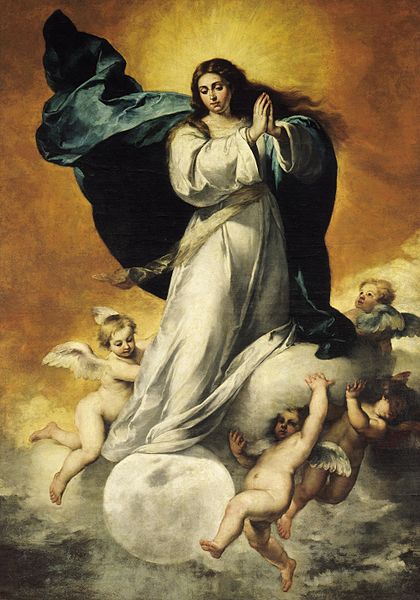
Immaculate Conception (c. 1652), by Bartolomé Esteban Murillo (1617-1682) [public domain / Wikimedia Commons]

(10-16-09)
* * *
From a discussion on the CHNI forum, where I am the moderator:
* * *
My wife and I have been listening to the Catholic Answers Live podcasts in the car (I got an iPhone for Father’s Day) together of late, and what their guest apologists (Tim Staples, Jimmy Akin, Steve Ray, etc.) are really good at, is defending our devotion to Mary. My wife, a convert from Protestantism to Catholicism, has come a very long way in understanding the Catholic devotion to Mary, especially in terms of accepting how she was conceived without Original Sin, that she had no other children, and so forth, but the one thing that she can’t grasp is how Mary could have remained sinless throughout her life. I have an idea in my head of how I could explain it to her, but I would like to hear (read) how you would or might explain it first.
Here’s how I defend it from a purely biblical standpoint:
Thanks, Dave. I do, however, have a question regarding Mary’s “grace”. I just need it to be clarified so I can better explain it to my wife (it has always made perfect sense to me, but then again I’ve always believed it and never felt the need to question it). Does Mary’s “grace” impart to more than the Immaculate Conception, i.e. because this grace was bestowed upon her, while she had the capacity to sin in life due to her human nature, did this grace make her incapable of sinning?
Great follow-up questions.
The answer is “yes” — but it needs to be immediately understood that there is a crucial distinction between Mary’s impeccability and God’s impeccability.
God cannot possibly sin because He is God and sin is an utter contradiction of God’s Nature. Mary couldn’t have sinned because God performed the very special miracle of grace: the Immaculate Conception: literally filling her with grace in a way that is almost beyond our comprehension. Sinlessness was not intrinsic to her nature (i.e., prior to and considered apart from the Immaculate Conception), as with God. Blog regular Jonathan Prejean has written eloquently about this, drawing the distinction between necessary and contingent impeccability:
No finite creature with a free will is intrinsically impeccable, because that would require either a perfect alignment between the ultimate end and the will (which is only true of God according to His divine nature) or a voluntary acceptance of that end in advance of creation (which is only true of the voluntary assumption of the human nature in the Incarnation). But the righteous angels and saints in Heaven are contingently impeccable on account of having been fixed in virtue by their initial choice (for angels) and by their state of grace at death (for saints). Likewise, it does seem entirely possible that Mary would have been contingently impeccable on account of the Immaculate Conception, and I think that is likely to be true, although it would not necessarily have to be the case.
Mary always said “yes” to God’s will, all by God’s grace, but not apart from her free will. She had a very significant “extra” aid: being “full of grace”.
I’m asking this because when I have tried to explain this to my wife, she then argues that if this is the case then it places her, Mary, on equal footing – in terms of divinity – with Jesus Christ, as if she is a deity.
She’s not on an equal footing with God because of the distinction noted above. Mary is not who she is, intrinsically, but because of the aid of God’s special and extraordinary graces in her case. Hence, The Catholic Encyclopedia (“The Blessed Virgin Mary”) asserts:
Theologians assert that Mary was impeccable, not by the essential perfection of her nature, but by a special Divine privilege. Moreover, the Fathers, at least since the fifth century, almost unanimously maintain that the Blessed Virgin never experienced the motions of concupiscence.
Mary had no concupiscence, or inclination towards, or unbalanced desire for sin, as we all do, because the effects of original sin were removed from her by a special act of God’s grace, and due to being “full of grace.” Fr. John A. Hardon, S. J. elaborates:
[S]inless Mary was impeccable, preserved by an extraordinary grace from God from ever being capable of offending God by deliberate sin. Yet though impeccable Mary was able to choose. This bears emphasis. We are so accustomed to identifying freedom as choosing between good and evil that we forget the highest use of our liberty is not to choose “not to sin”, but rather to choose to do more than we have to do or that we are obliged to do – in a word, to choose to be generous. Like Mary, then, we can choose to give God more than He demands under pain of sin. We can choose to love God with our whole heart and not just to avoid His punishment.
(The Handmaid of Humanity: Mary, Woman of Salvation History)
Likewise, fellow Jesuit Fr. Kenneth Baker asserts:
Two special factors rendered Mary impeccable or unable to sin. The first was her constant awareness of God, living always in his presence, and the second was her reception of special and extraordinary graces. These special graces made it possible for Mary to maintain a perfect harmony in her mind, will and emotions and to recognize always what was the right thing to do and then to do it.
We must not forget that Mary was “full of grace”.
(Fundamentals of Catholicism: God, Trinity, Creation, Christ, Mary, Vol. 2, San Francisco: Ignatius Press, 1983, p. 332)
The Catechism of the Catholic Church appears to concur:
492 The “splendor of an entirely unique holiness” by which Mary is “enriched from the first instant of her conception” comes wholly from Christ: she is “redeemed, in a more exalted fashion, by reason of the merits of her Son”. The Father blessed Mary more than any other created person “in Christ with every spiritual blessing in the heavenly places” and chose her “in Christ before the foundation of the world, to be holy and blameless before him in love”.
Catholic apologist David Palm wrote on one of the Catholic Answers forums (23 March 2009):
[W]e will have free wills in heaven, yet be unable to sin. That is a mystery, but unless I’m mistaken I believe the trajectory of human redemption goes:
Pre-Fall Adam/Eve – Able not to sin
Fallen human nature – Not able not to sin
The glorified in heaven – Not able to sin
By anticipation Our Lady received graces such that her whole life she lived out that final state of glorified human nature, not able to sin.
We know very well that Jesus had the capacity to sin due to his fully human nature, but did not because he was fully divine.
This is technically incorrect. He could not possibly have sinned because He is 100% God as well as 100% man. The Divine Nature is impeccable, and Jesus is a Divine Person with a perfect unity of Divine and Human Natures (the Hypostatic Union). Therefore He could not have sinned.
Oh how I wish that our Protestant brethren could grasp the true nature of our deep love for and veneration of the Blessed Virgin Mary! It’s such an extraordinarily beautiful thing. She is God’s very highest creature. Eve said “no” but she said “yes” and that led to the Incarnation that saved sinners, etc. What Eve could have done (in terms of not sinning), but did not do, Mary did. It’s not “idolatry” at all. We’re not raising Mary to Godhood in any way, shape, or form, or taking away anything from God. To the contrary, we are praising God for making Mary who she is: such a magnificent example of the true potential of human beings and what God had always intended for the human race.
When a person praises the great masterpiece of an artist, he is really praising the artist. No one would make the ridiculous statement that in praising the art, somehow we are equating the art with the artist, or acting as if it took his place or arose apart from his entire creation and “enabling” of it. So why do Protestants make the same sorts of statements about Marian veneration?
Granted, some Catholics are excessive in their veneration, but that doesn’t annihilate the whole concept of biblical veneration in thankfulness for God’s grace and mercy and love. The distortion of a thing by uneducated (though usually well-meaning) people does not mean that the thing itself is null and void.
Previous Post
March 1, 2016
Biblical Evidence for Mary Mediatrix
Next Post
March 2, 2016 Douthat's Flawed Critique of "Conservative" Catholicism
Browse Our Archives
Select a Category & Last Things About Me Anti-Catholicism Atheism & Agnosticism Baptism and Sacramentalism Bible and Tradition Blessed Virgin Mary Books by Dave Armstrong C. S. Lewis Calvinism & General Protestantism Catholic Apologetics Catholic Apologists Catholic conversion Catholic converts Christmas Church (Ecclesiology) Church History Conversion and Converts Development of Doctrine Eastern Orthodoxy Ecumenism & Christian Unity Eucharist & Liturgy Fathers of the Church French Translations G. K. Chesterton Hell Hell & Satan Hell & Satan & Last Things Heresies & Comparative Religion Holistic Health Inquisition & Crusades & Scandals James White Jews & Judaism & Old Testament John Calvin John Henry Newman Liberal / Modernist Theology Life Issues Literary Resume Lutheranism Mariology Martin Luther Music Orthodoxy Papacy & Infallibility Personal Page Philosophy & Science Political & Ethical & Moral Issues Protestant Persecution & Intolerance Protestantism Purgatory Purgatory & Penance Romantic & Imaginative Theology Saints & Purgatory & Penance Salvation Salvation & Justification Satan & Last Things Sexuality and Gender Issues Spanish Translations Traditionalism vs. Radical Catholic Reactionaries Traducciones al español / tradução para português Trinitarianism & Christology Uncategorized Videos
Select a Month November 2026 October 2026 September 2026 August 2026 July 2026 June 2026 May 2026 April 2026 March 2026 February 2026 January 2026 December 2025 November 2025 October 2025 September 2025 August 2025 July 2025 June 2025 May 2025 April 2025 March 2025 February 2025 January 2025 December 2024 November 2024 October 2024 September 2024 August 2024 July 2024 June 2024 May 2024 April 2024 March 2024 February 2024 January 2024 December 2023 November 2023 October 2023 September 2023 August 2023 July 2023 June 2023 May 2023 April 2023 March 2023 February 2023 January 2023 December 2022 November 2022 October 2022 September 2022 August 2022 July 2022 June 2022 May 2022 April 2022 March 2022 February 2022 January 2022 December 2021 November 2021 October 2021 September 2021 August 2021 July 2021 June 2021 May 2021 April 2021 March 2021 February 2021 January 2021 December 2020 November 2020 October 2020 September 2020 August 2020 July 2020 June 2020 May 2020 April 2020 March 2020 February 2020 January 2020 December 2019 November 2019 October 2019 September 2019 August 2019 July 2019 June 2019 May 2019 April 2019 March 2019 February 2019 January 2019 December 2018 November 2018 October 2018 September 2018 August 2018 July 2018 June 2018 May 2018 April 2018 March 2018 February 2018 January 2018 December 2017 November 2017 October 2017 September 2017 August 2017 July 2017 June 2017 May 2017 April 2017 March 2017 February 2017 January 2017 December 2016 November 2016 October 2016 September 2016 August 2016 July 2016 June 2016 May 2016 April 2016 March 2016 February 2016 January 2016 December 2015 November 2015 October 2015 September 2015 August 2015 July 2015 June 2015 May 2015 April 2015 March 2015 February 2015 January 2015 December 2014 November 2014 October 2014 September 2014 August 2014 July 2014 June 2014 April 2014 March 2014 February 2014 January 2014 December 2013 November 2013 October 2013 September 2013 August 2013 July 2013 June 2013 April 2013 March 2013 February 2013 January 2013 December 2012 November 2012 October 2012 September 2012 August 2012 July 2012 June 2012 May 2012 April 2012 March 2012 February 2012 January 2012 December 2011 November 2011 October 2011 September 2011 August 2011 July 2011 June 2011 April 2011 March 2011 February 2011 October 2010 September 2010 August 2010 July 2010 April 2010 March 2010 December 2009 October 2009 August 2009 July 2009 June 2009 May 2009 March 2009 February 2009 October 2008 September 2008 April 2008 March 2008 February 2008 January 2008 December 2007 November 2007 October 2007 May 2007 March 2007 February 2007 January 2007 November 2006 October 2006 September 2006 August 2006 July 2006 June 2006 May 2006 April 2006 March 2006 February 2006 October 2005 June 2005 April 2005 February 2005 July 2004 May 2004 April 2004
Follow Us!
TAKE THE
Religious Wisdom Quiz
Who said, "It is finished"?
Select your answer to see how you score.
Paul Peter John Jesus
Books by This Author Books by Dave Armstrong
Related posts from Biblical Evidence for Catholicism
Holy Ground: Why Mary Had NO Other Children...
Biblical Evidence for Catholicism
Protestant Confessions & "Ever-Virgin" Mary
Biblical Evidence for Catholicism
Mary Wife of Clopas (Jn 19:25): Mary's Sister-in-Law?
Biblical Evidence for Catholicism
Jesus Had Four Brothers? The Bible Sez No!
Biblical Evidence for Catholicism
TRENDING AT PATHEOS Catholic

For many years, Catholicism has been caught up in division over the...

'Statements of Faith' never get shorter
Nothing demonstrates a conservative commitment to faith and faithfulness like a "statement...

Michele's Reviews - Future Grace by John Piper
In God's Place, at God's Pace, by Future Grace Impatience is...

Bama Gramma's Blackout Christmas: the Power of Light...
Another Christmas Skit: I have an alter ego: Bama Gramma. She shows...

Thanksgiving as a Way of Life: A Christian...
Each year, Thanksgiving brings families and friends together to share meals, stories,...

Two Women Doctors Who Went Against the Current
Women physicians who transformed healthcare for "Indians" “I shall have an advantage...
view all Catholic blogs
Ad-Free & Subscriber Log-In Subscription Support
- About Us
- 2026 Calendar
- Videos
- Podcasts
- Library of World Religions
- Faith In Media Tracker
- Advertise With Us
- Write for Us
- Privacy Policy
- Terms of Service
- Do Not Sell My Data
- Contact Us
- Radiant Digital
- Manage Newsletter Subscriptions
- Unsubscribe From Notifications
- Sitemap
Copyright 2008-2026, Patheos, part of the Radiant Digital network of media brands. All rights reserved.
Subscription Support Ad-Free & Subscriber Log-In
Follow Patheos