
BuddhistCatholicContemplativeEvangelicalGeneral ChristianHinduJewishLatter-day SaintMuslimNew VisionsProgressive Christian
Beliefs
- Buddhist
- Catholic
- Contemplative
- Evangelical
- General Christian
- Hindu
- Jewish
- Latter-day Saint
- More Voices
- Muslim
- New Visions
- Pagan
- Progressive Christian
Topics
- Religion News
- Food and Religion
- Sports and Religion
- Religious Art
- Religious Music and Entertainment
- Religious Events
- History and Religion
- Style and Religion
- Politics and Religion
- Women in Religion
- Recreation Outdoors and Religion
- Business Finance and Religion
- Careers Workplace and Religion
- Education and Religion
- Family Parenting and Religion
- Health Fitness and Religion
- Home and Religion
- Relationships and Religion
- Technology and Religion
- Travel and Religion
Columnists
- Buddhist Columnists
- Business Finance and Religion Columnists
- Careers Workplace and Religion Columnists
- Catholic Columnists
- Contemplative Columnists
- Education and Religion Columnists
- Evangelists Columnists
- Family Parenting and Religion Columnists
- General Christian Columnists
- Health Fitness and Religion Columnists
- Hindu Columnists
- History and Religion Columnists
- Home and Religion Columnists
- Jewish Columnists
- More Voices Columnists
- Latter Day Columnists
- Muslim Columnists
- New Visions Columnists
- Nonreligious Columnists
- Pagan Columnists
- Politics and Religion Columnists
- Progressive Columnists
- Recreation Outdoors and Religion Columnists
- Relationships and Religion Columnists
- Religion News Columnists
- Religious Art Columnists
- Religious Events Columnists
- Religious Music and Entertainment Columnists
- Sports and Religion Columnists
- Style and Religion Columnists
- Technology and Religion Columnists
- Travel and Religion Columnists
- Women in Religion Columnists
Resource Library
- 2026 Calendar
- Library of World Religions
- The 100 Most Holy Places on Earth
- Patheos Answers
- Podcasts
- Videos
- Faith Leaders Database
- Anglican Episcopalian
- Bahai
- Baptist
- Buddhism
- Christianity
- Confucianism
- Eastern Orthodoxy
- Hinduism
- Holiness and Pentecostal
- ISKCON
- Islam
- Judaism
- Lutheran
- Methodist
- The Church of Jesus Christ of Latter-day Saints
- New Age
- Paganism
- Presbytarian and Reformed
- Protestantism
- Religion Behind the Scenes
- Roman Catholic
- Scientology
- Shia Islam
- Sikhism
- Sufism
- Sunni Islam
- Taoism
- Zen
- See all religions
Research Tools
 Ad-Free & Subscriber Log-In Subscription Support
Ad-Free & Subscriber Log-In Subscription Support
Follow Patheos 

- Trending:
- Forgiveness
- |
- Marriage
- |
- Consciousness
- |
- Death Penalty
- |
- Election
- |
- Halloween

-
About
-
Catholic Apologetics
-
Church History
-
Great Apologists
-
Christian Worldview
-
Protestantism & Misc.
- Home
- Catholic
- History and Religion
- God’s Judgment of Humans (Sometimes, Entire Nations)
God’s Judgment of Humans (Sometimes, Entire Nations)
Last updated on: January 11, 2018 at 2:34 pm by Dave Armstrong
God’s Judgment of Humans (Sometimes, Entire Nations) 2018-01-11T14:34:19-04:00 Dave Armstrong
Patheos Explore the world's faith through different perspectives on religion and spirituality! Patheos has the views of the prevalent religions and spiritualities of the world.
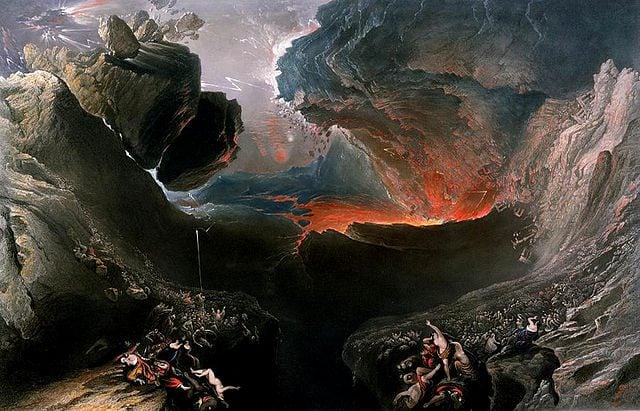
How can God judge entire nations, including young children?
* * * * *
God as Creator and judge has the prerogative to judge and take any human life as He wills. He could kill all of us and it would be perfectly just, since we are all sinners and saved only by His grace and mercy if we are at all.
It is not ever “intrinsically evil” for God to judge individuals or nations; it’s not “evil” at all, because, as Creator, God has the prerogative to give life or take it away.
In instances of judgment of entire nations, obviously there will be many people relatively innocent (in terms of actual sin, but not original), compared to others. Yet God still can make such a command and it is perfectly moral, because all men are sinners (if one accepts original sin). Whoever denies this must also deny some orthodox teaching of the faith or some key doctrine in the Bible, such as original sin, or the attributes of God.
The biblical Christian (Catholic, Orthodox, and Protestant alike) must accept these two premises:
A) God as Creator and Judge has the prerogative to judge and take any human life.
B) Mankind as a whole is in a condition or state of rebellion against God, due to original sin; therefore God is perfectly just if He kills any one of us. He is not “obliged” to show mercy to anyone anymore than a governor must pardon every criminal in a prison.
Everyone conceived is guilty of original sin. Original sin is every bit as real as actual sin. It is a corporate sense of human rebellion against God. It’s explicitly grounded in biblical teaching. We all participated in the fall and the rebellion against God.
Everyone is responsible for his or her original sin, as part of the human race. Sin cannot be regarded as only an individual affair, and only applicable after the age of reason. It is also a corporate affair: the rebellion of the human race against God. See my treatment of the relevant biblical data: “The Biblical Evidence for Original Sin“.
If something is intrinsically evil, then no one can do it, even God. The eternal rewards which await anyone who is judged by God, dies and is saved, are also relevant and a factor to be considered, according to the principle elucidated by St. Paul:
Romans 8:18 (RSV) I consider that the sufferings of the present time are not worth comparing with the glory that is to be revealed to us.
I’m not claiming that God would condemn someone eternally based on original sin alone. This is incorrect. What I’m contending is that God has the prerogative to kill anyone, and that anyone killed is not perfectly innocent (because of original sin), only relatively more or less so, and that God is not guilty of an intrinsically evil act in so doing. I think that holds regardless of how exactly one relates actual sin to original.
My philosophy student friend stated that CCC 404 and 405 justified putting “sin” in quotation marks. But then what to do with CCC 403?:
Following St. Paul, the Church has always taught that the overwhelming misery which oppresses men and their inclination towards evil and death cannot be understood apart from their connection with Adam’s sin and the fact that he has transmitted to us a sin with which we are all born afflicted, a sin which is the “death of the soul”. Because of this certainty of faith, the Church baptizes for the remission of sins even tiny infants who have not committed personal sin.
If this sin is not “really” sin, then what sin is remitted by baptism? Why do we baptize infants? Obviously, then, there is a real sin other than personal sin, of which even infants are guilty, which is why we baptize them. If this sin weren’t real, then baptismal regeneration is a false doctrine too.
Following this through to its logical end would mean the heresy of Pelagianism, which states that man can make the first steps toward God and salvation. But the Church teaches that this is impossible without God’s grace.
If man on his own cannot attain even the first baby step towards salvation without God’s supernatural help, he is already in a state of rebellion towards God. Therefore, it cannot possibly be unjust or “evil” for God to judge any individual person by killing (not necessarily eternal damnation, which is determined by additional factors). God is under no “obligation” to make positively certain that any man will live longer than he does. He has the power over life and death. He “giveth and taketh away.”
Also relevant is CCC 418:
As a result of original sin, human nature is weakened in its powers, subject to ignorance, suffering and the domination of death, and inclined to sin (this inclination is called “concupiscence”).
If the soul is already subject to the domination of death (cf. similar language in #405), then God cannot be blamed for bringing about a death in any such soul, at whatever age, as if this were evil, when each and every soul (except for Mary, and that due to a special preventive grace) is already subject to death by virtue of original sin.
Baptismal regeneration applies to infants below the “age of reason.” If an infant can be saved through baptism (CCC 846, 1257, 1277), what is he or she being saved from? Obviously, “real” sin. And, obviously, original sin, since actual sin is not in the picture yet. And this is real, true sin, because the effects of baptism are equally real and of immense significance. The Council of Trent’s Decree on Original Sin makes this clear:
[E]ven infants, who could not as yet commit any sin of themselves. are for this cause truly baptized for the remission of sins, that in them that may be cleansed away by regeneration which they have contracted by generation. (4)
The next section of the decree (5) refers to original sin as “that which has the true and proper nature of sin.” It is the remaining concupiscence which is not sin proper, but original sin is. The CCC follows Trent in affirming that original sin is the “death of the soul.”
It also should be noted that all these decrees to exterminate nations that are often objected to by biblical skeptics and atheists and theological liberals, occurred during the Old Covenant, before baptism was given.
Therefore, God is not guilty of an intrinsic evil in commanding (in some instances) whole nations to be annihilated. After all, God killed many people by drowning in Noah’s flood. Was that unnecessary suffering and another possible evil act by God, because of what a person experiences when drowning? No; of course not.
Lastly, there is another argument I alluded to in my first response: that of “relatively innocent” people being killed in a general judgment of an entire nation. I wrote at length about this aspect in my paper: “The Judgment of Nations: Biblical Passages and Commentary” (+ Part Two) Here is an excerpt:
Nations are as contradictory as every human being is: we are mixtures of radical good and radical evil, due to original sin, the world, the flesh, and the devil. Alexander Solzhenitsyn correctly noted: “the line between good and evil runs through every human heart.” Nations are much the same. Many of the inhabitants of a country could be very righteous and perform many good works, but there is a common motif in the Old Testament, whereby God ceases to even acknowledge the goodness of spiritually or morally good, pious acts, if enough evil is tolerated that even the pious acts become overtly hypocritical:
Proverbs 28:9 If one turns away his ear from hearing the law, even his prayer is an abomination.
Isaiah 1:4, 11, 13, 15-17 Ah, sinful nation, a people laden with iniquity, offspring of evildoers, sons who deal corruptly! They have forsaken the LORD, they have despised the Holy One of Israel, they are utterly estranged . . . “What to me is the multitude of your sacrifices? says the LORD; I have had enough of burnt offerings of rams and the fat of fed beasts; I do not delight in the blood of bulls, or of lambs, or of he-goats . . . Bring no more vain offerings; incense is an abomination to me. New moon and sabbath and the calling of assemblies – I cannot endure iniquity and solemn assembly . . . When you spread out your hands in prayer, I will hide my eyes from you; even if you offer many prayers, I will not listen. Your hands are full of blood; wash and make yourselves clean. Take your evil deeds out of my sight! Stop doing wrong, learn to do right! Seek justice, encourage the oppressed. Defend the cause of the fatherless, plead the case of the widow.
Isaiah 5:20 Woe to those who call evil good, and good evil; Who put darkness for light, and light for darkness; Who put bitter for sweet, and sweet for bitter!
Isaiah 59:2 . . . your iniquities have made a separation between you and your God, and your sins have hid his face from you so that he does not hear.
Jeremiah 14:12 Though they fast, I will not hear their cry, and though they offer burnt offering and cereal offering, I will not accept them; but I will consume them by the sword, by famine, and by pestilence.
Amos 5:21-24 I hate, I despise your feasts, and I take no delight in your solemn assemblies. Even though you offer me your burnt offerings and cereal offerings, I will not accept them, and the peace offerings of your fatted beasts I will not look upon. Take away from me the noise of your songs; to the melody of your harps I will not listen. But let justice roll down like waters, and righteousness like an ever-flowing stream.
See also Matthew 23:1-31 (Jesus’ condemnation of the “pious hypocrisy” of the Pharisees).
In any such judgment of a nation, there will be differential sin among individuals. But nevertheless, God has the power over life and death. In His omniscience, He could see the ultimate consequences of letting a wicked nation continue and harm His chosen people at that time. He decided that the time had come to judge some of them.
There could be hundreds, maybe even thousands of individuals who were saved in these nations, but that doesn’t mean that God was “evil” to command them to be killed, too, as part of the larger set of the wicked nation whose time for judgment had come. No human being can argue with God and claim that God has no “right” to take their life if He so wills. We are all under the dominion of death. It’s only a matter of time, anyway. But eternal damnation or salvation is another issue entirely.
***
(originally 2-16-07)
Photo credit: The Great Day of His Wrath (c. 1851), by John Martin (1789-1854) [public domain / Wikimedia Commons]

***
Jews & Judaism & Old Testament
Previous Post
March 19, 2016
Abstinence on Fridays & Meat: Doctrine or Discipline?
Next Post

March 21, 2016 Erasmus vs. Luther Disputes and Debates Documented
Browse Our Archives
Select a Category & Last Things About Me Anti-Catholicism Atheism & Agnosticism Baptism and Sacramentalism Bible and Tradition Blessed Virgin Mary Books by Dave Armstrong C. S. Lewis Calvinism & General Protestantism Catholic Apologetics Catholic Apologists Catholic conversion Catholic converts Christmas Church (Ecclesiology) Church History Conversion and Converts Development of Doctrine Eastern Orthodoxy Ecumenism & Christian Unity Eucharist & Liturgy Fathers of the Church French Translations G. K. Chesterton Hell Hell & Satan Hell & Satan & Last Things Heresies & Comparative Religion Holistic Health Inquisition & Crusades & Scandals James White Jews & Judaism & Old Testament John Calvin John Henry Newman Liberal / Modernist Theology Life Issues Literary Resume Lutheranism Mariology Martin Luther Music Orthodoxy Papacy & Infallibility Personal Page Philosophy & Science Political & Ethical & Moral Issues Protestant Persecution & Intolerance Protestantism Purgatory Purgatory & Penance Romantic & Imaginative Theology Saints & Purgatory & Penance Salvation Salvation & Justification Satan & Last Things Sexuality and Gender Issues Spanish Translations Traditionalism vs. Radical Catholic Reactionaries Traducciones al español / tradução para português Trinitarianism & Christology Uncategorized Videos
Select a Month October 2026 September 2026 August 2026 July 2026 June 2026 May 2026 April 2026 March 2026 February 2026 January 2026 December 2025 November 2025 October 2025 September 2025 August 2025 July 2025 June 2025 May 2025 April 2025 March 2025 February 2025 January 2025 December 2024 November 2024 October 2024 September 2024 August 2024 July 2024 June 2024 May 2024 April 2024 March 2024 February 2024 January 2024 December 2023 November 2023 October 2023 September 2023 August 2023 July 2023 June 2023 May 2023 April 2023 March 2023 February 2023 January 2023 December 2022 November 2022 October 2022 September 2022 August 2022 July 2022 June 2022 May 2022 April 2022 March 2022 February 2022 January 2022 December 2021 November 2021 October 2021 September 2021 August 2021 July 2021 June 2021 May 2021 April 2021 March 2021 February 2021 January 2021 December 2020 November 2020 October 2020 September 2020 August 2020 July 2020 June 2020 May 2020 April 2020 March 2020 February 2020 January 2020 December 2019 November 2019 October 2019 September 2019 August 2019 July 2019 June 2019 May 2019 April 2019 March 2019 February 2019 January 2019 December 2018 November 2018 October 2018 September 2018 August 2018 July 2018 June 2018 May 2018 April 2018 March 2018 February 2018 January 2018 December 2017 November 2017 October 2017 September 2017 August 2017 July 2017 June 2017 May 2017 April 2017 March 2017 February 2017 January 2017 December 2016 November 2016 October 2016 September 2016 August 2016 July 2016 June 2016 May 2016 April 2016 March 2016 February 2016 January 2016 December 2015 November 2015 October 2015 September 2015 August 2015 July 2015 June 2015 May 2015 April 2015 March 2015 February 2015 January 2015 December 2014 November 2014 October 2014 September 2014 August 2014 July 2014 June 2014 April 2014 March 2014 February 2014 January 2014 December 2013 November 2013 October 2013 September 2013 August 2013 July 2013 June 2013 April 2013 March 2013 February 2013 January 2013 December 2012 November 2012 October 2012 September 2012 August 2012 July 2012 June 2012 May 2012 April 2012 March 2012 February 2012 January 2012 December 2011 November 2011 October 2011 September 2011 August 2011 July 2011 June 2011 April 2011 March 2011 February 2011 October 2010 September 2010 August 2010 July 2010 April 2010 March 2010 December 2009 October 2009 August 2009 July 2009 June 2009 May 2009 March 2009 February 2009 October 2008 September 2008 April 2008 March 2008 February 2008 January 2008 December 2007 November 2007 October 2007 May 2007 March 2007 February 2007 January 2007 November 2006 October 2006 September 2006 August 2006 July 2006 June 2006 May 2006 April 2006 March 2006 February 2006 October 2005 June 2005 April 2005 February 2005 July 2004 May 2004 April 2004
Follow Us!
TAKE THE
Religious Wisdom Quiz
Which book of the Bible contains the most direct prophecies about the Messiah?
Select your answer to see how you score.
Micah Isaiah Zechariah Psalms
Books by This Author Books by Dave Armstrong
Related posts from Biblical Evidence for Catholicism

Bible & Catholicism on Mortal Sin (vs. John...
Biblical Evidence for Catholicism

No Hell? Dialogue on Conditional Immortality, Pt. 3
Biblical Evidence for Catholicism
No Hell? Dialogue on Conditional Immortality, Pt. 2
Biblical Evidence for Catholicism
No Hell? Dialogue on Conditional Immortality
Biblical Evidence for Catholicism
TRENDING AT PATHEOS Catholic

The Sermon on the Mount, Part I: Matthew...
The Sermon on the Mount, Part I (Matthew 4:12-5:12) St. Matthew moves...

What's up from Crossway: Reviewing some of their latest A few weeks...

Janie Learns the Way of the Cross: A...
Teaching children about Jesus' Passion can be challenging. Many parents and educators...

Looking For Good Catholic Writing - October 2026
He alone extends the heavens, and he walks upon the waves of...

In "Irreplaceable," our book on vocation and technology, Trevor Sutton and I...

I was strolling through the top floor of the brand new Parthenon...
view all Catholic blogs
Ad-Free & Subscriber Log-In Subscription Support
- About Us
- 2026 Calendar
- Videos
- Podcasts
- Library of World Religions
- Faith In Media Tracker
- Advertise With Us
- Write for Us
- Privacy Policy
- Terms of Service
- Do Not Sell My Data
- Contact Us
- Radiant Digital
- Manage Newsletter Subscriptions
- Unsubscribe From Notifications
- Sitemap
Copyright 2008-2026, Patheos. All rights reserved.
Subscription Support Ad-Free & Subscriber Log-In
Follow Patheos