
BuddhistCatholicContemplativeEvangelicalGeneral ChristianHinduJewishLatter-day SaintMuslimNew VisionsProgressive Christian
Beliefs
- Buddhist
- Catholic
- Contemplative
- Evangelical
- General Christian
- Hindu
- Jewish
- Latter-day Saint
- More Voices
- Muslim
- New Visions
- Pagan
- Progressive Christian
Topics
- Religion News
- Food and Religion
- Sports and Religion
- Religious Art
- Religious Music and Entertainment
- Religious Events
- History and Religion
- Style and Religion
- Politics and Religion
- Women in Religion
- Recreation Outdoors and Religion
- Business Finance and Religion
- Careers Workplace and Religion
- Education and Religion
- Family Parenting and Religion
- Health Fitness and Religion
- Home and Religion
- Relationships and Religion
- Technology and Religion
- Travel and Religion
Columnists
- Buddhist Columnists
- Business Finance and Religion Columnists
- Careers Workplace and Religion Columnists
- Catholic Columnists
- Contemplative Columnists
- Education and Religion Columnists
- Evangelists Columnists
- Family Parenting and Religion Columnists
- General Christian Columnists
- Health Fitness and Religion Columnists
- Hindu Columnists
- History and Religion Columnists
- Home and Religion Columnists
- Jewish Columnists
- More Voices Columnists
- Latter Day Columnists
- Muslim Columnists
- New Visions Columnists
- Nonreligious Columnists
- Pagan Columnists
- Politics and Religion Columnists
- Progressive Columnists
- Recreation Outdoors and Religion Columnists
- Relationships and Religion Columnists
- Religion News Columnists
- Religious Art Columnists
- Religious Events Columnists
- Religious Music and Entertainment Columnists
- Sports and Religion Columnists
- Style and Religion Columnists
- Technology and Religion Columnists
- Travel and Religion Columnists
- Women in Religion Columnists
Resource Library
- 2026 Calendar
- Library of World Religions
- The 100 Most Holy Places on Earth
- Patheos Answers
- Podcasts
- Videos
- Faith Leaders Database
- Anglican Episcopalian
- Bahai
- Baptist
- Buddhism
- Christianity
- Confucianism
- Eastern Orthodoxy
- Hinduism
- Holiness and Pentecostal
- ISKCON
- Islam
- Judaism
- Lutheran
- Methodist
- The Church of Jesus Christ of Latter-day Saints
- New Age
- Paganism
- Presbytarian and Reformed
- Protestantism
- Religion Behind the Scenes
- Roman Catholic
- Scientology
- Shia Islam
- Sikhism
- Sufism
- Sunni Islam
- Taoism
- Zen
- See all religions
Research Tools
 Ad-Free & Subscriber Log-In Subscription Support
Ad-Free & Subscriber Log-In Subscription Support
Follow Patheos 

- Trending:
- Forgiveness
- |
- Marriage
- |
- Consciousness
- |
- Death Penalty
- |
- Election
- |
- Halloween

-
About
-
Catholic Apologetics
-
Church History
-
Great Apologists
-
Christian Worldview
-
Protestantism & Misc.
- Home
- Catholic
- History and Religion
- “Personal Relationship” vs. “Join the One Church”?
“Personal Relationship” vs. “Join the One Church”?
Last updated on: June 6, 2026 at 12:29 am by Dave Armstrong
“Personal Relationship” vs. “Join the One Church”? 2026-06-06T00:29:51-04:00 Dave Armstrong
Patheos Explore the world's faith through different perspectives on religion and spirituality! Patheos has the views of the prevalent religions and spiritualities of the world.
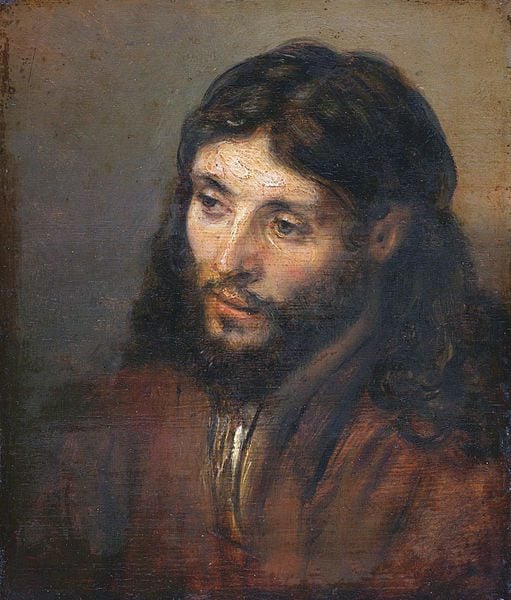
Head of Christ (c. 1648), by Rembrandt (1606-1669) [public domain / Wikimedia Commons]

* * * * *
A Protestant in one of the Facebook groups I am part of, observed (paraphrased):
The emphasis of Catholics is for you to join their church.
The emphasis of Protestants is to want others to experience a personal relationship with Jesus.
The question is typical of Protestantism’s characteristic “either/or” outlook, or what convert from Lutheranism Louis Bouyer called “the dichotomous mindset of Protestantism.”
I freely grant that the observation is true in a very broad way (i.e., true regarding the small number of Protestants who are actually concerned with evangelization and the few Catholics who care whether someone is a Catholic or not).
The insinuation is that the Catholic is completely out to sea and misguided in their emphasis, whereas the Protestant is only concerned with high and noble spiritual matters such as relationship with Jesus.
But we need not pit the two things against each other. To show why we don’t have to do that, I’d like to offer an analogy. Imagine a happy couple, not yet engaged.
By analogy, the “Protestant” would say to them, “the most important thing is their relationship of love with each other.” The “Catholic”, by contrast, would say (by analogy), “the most important thing is that they get married to each other.”
Is one better than the other? Well, yes and no. In one sense one of them is more important; in another sense the other one is more important. Relationship obviously precedes a happy and fruitful marriage. But marriage is where the relationship can best flourish and proceed in a moral way. It’s the natural and necessary “home” of the love and sexual relationship, within the bounds of traditional (Christian) sexual morality.
There is no need to dichotomize the two. Both are essential and important. The “Protestant” is emphasizing the primacy of the relationship itself, in its personal, subjective dimension, while the “Catholic” (in this analogy) is emphasizing the supreme importance of marriage, which is more of the institutional and cultural or communitarian dimension: with implications for the larger society.
Neither theological / spiritual thing (back to the original question) negates the other. Catholics (if we really delve deeply into Catholic teaching) teach relationship with Jesus as strongly as any Protestant does. I’ve compiled a book about Catholic mystics and contemplatives, and the “personal relationship with Jesus” aspects of these great teachers is more profound than any Protestant reflections on this that I have ever read.
A Protestant might want to check out The Imitation of Christ by Thomas à Kempis: if he or she doubts that Catholicism possesses this outlook.
So relationship with the Lord is great; no one (who knows anything about Catholicism) denies it. Protestants do emphasize it more in “everyday life” terms, and Catholics would do well to readily agree with that, rather than ever oppose it, since it is our own tradition (deeply understood), too.
But there is also nothing wrong with a Catholic focusing on others becoming Catholics. We do that because we believe that the Catholic Church possesses the fullness of spiritual and theological truth, and is protected by the Holy Spirit from doctrinal or moral error.
If that is indeed true (as we believe), then it is a loving act to share that news with non-Catholics, so they can share in the blessings. It would indeed be the place where they would be best-positioned for salvation and also for relationship with Jesus. It’s the concrete place and institution on the earth where discipleship can best — most effectively — be lived (just as marriage is the best place for a love relationship).
There is nothing wrong with this; though we understand that non-Catholics may honestly disagree with us and say we are wrong (as I used to do, in my Protestant evangelical days).
The Protestant is saying, “Here, let me share with you the glories and joys of a personal relationship with Jesus.” That’s a good motivation, and true message, and God honors it. He shares it out of love for the other and concern for their spiritual well-being.
Likewise, the Catholic says, “Here, let me share with you the glories and joys of the fullness of historic Christianity within the Catholic Church.” That’s a good motivation, and true message, and God honors it. He, too, shares it out of love for the other and concern for their spiritual well-being.
The only problem here comes with the Protestant denial that the Catholic Church is the “fullness,” whereas Catholics have no essential disagreement with the notion of a personal relationship with Jesus. We receive Him Body, Blood, Soul, and Divinity into our mouths and bellies every Sunday. It doesn’t get much more “personal” than that.
So we are “both/and” and the typical Protestant looks at this as an “either/or” proposition, and tends to deny that the Church is necessary or even (in some cases) important in the Christian life. This was set in motion as soon as Protestantism at large denied that neither the [historic, Catholic, pope-headed] Church nor sacred tradition was infallible; only the Bible was (the doctrine of sola Scriptura: the Protestant rule of faith). Protestantism tends to be (at least in some of its forms) individualistic, subjective, and ahistorical, whereas Catholicism is by nature communal, more objective, and within the historical / apostolic succession framework or perspective.
Catholics gather every Sunday to receive the Holy Eucharist: together, in a group. We do that because this was the essential purpose of church meetings (rather than, primarily, listening to sermons) from the beginning:
Acts 20:7 (RSV) On the first day of the week, when we were gathered together to break bread, Paul talked with them, intending to depart on the morrow; and he prolonged his speech until midnight. (cf. 20:11)
We know that “break bread” is eucharistic terminology. Protestants will say that one ought to go to church (the great Billy Graham famously urged that at the end of his evangelistic rallies), but it doesn’t hold the necessity that it does in Catholicism, where we have the Mass obligation to attend church every Sunday (it being a mortal sin to deliberately miss it without serious reason). Hence, we emphasize “the Church” far more than Protestants do.
Stay in touch! Like Biblical Evidence for Catholicism on Facebook:
Personal relationship with Jesus
Previous Post
February 2, 2016
Paul's "Nature" Argument as Regards Homosexual Acts
Next Post

February 3, 2016 Luther Favored the Death Penalty for Anabaptists
Browse Our Archives
Select a Category & Last Things About Me Anti-Catholicism Atheism & Agnosticism Baptism and Sacramentalism Bible and Tradition Blessed Virgin Mary Books by Dave Armstrong C. S. Lewis Calvinism & General Protestantism Catholic Apologetics Catholic Apologists Catholic conversion Catholic converts Christmas Church (Ecclesiology) Church History Conversion and Converts Development of Doctrine Eastern Orthodoxy Ecumenism & Christian Unity Eucharist & Liturgy Fathers of the Church French Translations G. K. Chesterton Hell Hell & Satan Hell & Satan & Last Things Heresies & Comparative Religion Holistic Health Inquisition & Crusades & Scandals James White Jews & Judaism & Old Testament John Calvin John Henry Newman Liberal / Modernist Theology Life Issues Literary Resume Lutheranism Mariology Martin Luther Music Orthodoxy Papacy & Infallibility Personal Page Philosophy & Science Political & Ethical & Moral Issues Protestant Persecution & Intolerance Protestantism Purgatory Purgatory & Penance Romantic & Imaginative Theology Saints & Purgatory & Penance Salvation Salvation & Justification Satan & Last Things Sexuality and Gender Issues Spanish Translations Traditionalism vs. Radical Catholic Reactionaries Traducciones al español / tradução para português Trinitarianism & Christology Uncategorized Videos
Select a Month October 2026 September 2026 August 2026 July 2026 June 2026 May 2026 April 2026 March 2026 February 2026 January 2026 December 2025 November 2025 October 2025 September 2025 August 2025 July 2025 June 2025 May 2025 April 2025 March 2025 February 2025 January 2025 December 2024 November 2024 October 2024 September 2024 August 2024 July 2024 June 2024 May 2024 April 2024 March 2024 February 2024 January 2024 December 2023 November 2023 October 2023 September 2023 August 2023 July 2023 June 2023 May 2023 April 2023 March 2023 February 2023 January 2023 December 2022 November 2022 October 2022 September 2022 August 2022 July 2022 June 2022 May 2022 April 2022 March 2022 February 2022 January 2022 December 2021 November 2021 October 2021 September 2021 August 2021 July 2021 June 2021 May 2021 April 2021 March 2021 February 2021 January 2021 December 2020 November 2020 October 2020 September 2020 August 2020 July 2020 June 2020 May 2020 April 2020 March 2020 February 2020 January 2020 December 2019 November 2019 October 2019 September 2019 August 2019 July 2019 June 2019 May 2019 April 2019 March 2019 February 2019 January 2019 December 2018 November 2018 October 2018 September 2018 August 2018 July 2018 June 2018 May 2018 April 2018 March 2018 February 2018 January 2018 December 2017 November 2017 October 2017 September 2017 August 2017 July 2017 June 2017 May 2017 April 2017 March 2017 February 2017 January 2017 December 2016 November 2016 October 2016 September 2016 August 2016 July 2016 June 2016 May 2016 April 2016 March 2016 February 2016 January 2016 December 2015 November 2015 October 2015 September 2015 August 2015 July 2015 June 2015 May 2015 April 2015 March 2015 February 2015 January 2015 December 2014 November 2014 October 2014 September 2014 August 2014 July 2014 June 2014 April 2014 March 2014 February 2014 January 2014 December 2013 November 2013 October 2013 September 2013 August 2013 July 2013 June 2013 April 2013 March 2013 February 2013 January 2013 December 2012 November 2012 October 2012 September 2012 August 2012 July 2012 June 2012 May 2012 April 2012 March 2012 February 2012 January 2012 December 2011 November 2011 October 2011 September 2011 August 2011 July 2011 June 2011 April 2011 March 2011 February 2011 October 2010 September 2010 August 2010 July 2010 April 2010 March 2010 December 2009 October 2009 August 2009 July 2009 June 2009 May 2009 March 2009 February 2009 October 2008 September 2008 April 2008 March 2008 February 2008 January 2008 December 2007 November 2007 October 2007 May 2007 March 2007 February 2007 January 2007 November 2006 October 2006 September 2006 August 2006 July 2006 June 2006 May 2006 April 2006 March 2006 February 2006 October 2005 June 2005 April 2005 February 2005 July 2004 May 2004 April 2004
Follow Us!
TAKE THE
Religious Wisdom Quiz
What city did God command Jonah to preach to?
Select your answer to see how you score.
Babylon Jericho Nineveh Tyre
Books by This Author Books by Dave Armstrong
Related posts from Biblical Evidence for Catholicism

Bible & Catholicism on Mortal Sin (vs. John...
Biblical Evidence for Catholicism

Dialogue on Eternal Security / Absolute Assurance
Biblical Evidence for Catholicism

Jesus Founded the [Catholic] Church. If Not Him,...
Biblical Evidence for Catholicism

"Faith Alone" Dialogue with a Calvinist
Biblical Evidence for Catholicism
TRENDING AT PATHEOS Catholic

The Sermon on the Mount, Part I: Matthew...
The Sermon on the Mount, Part I (Matthew 4:12-5:12) St. Matthew moves...

What's up from Crossway: Reviewing some of their latest A few weeks...

Janie Learns the Way of the Cross: A...
Teaching children about Jesus' Passion can be challenging. Many parents and educators...

Looking For Good Catholic Writing - October 2026
He alone extends the heavens, and he walks upon the waves of...

In "Irreplaceable," our book on vocation and technology, Trevor Sutton and I...

I was strolling through the top floor of the brand new Parthenon...
view all Catholic blogs
Ad-Free & Subscriber Log-In Subscription Support
- About Us
- 2026 Calendar
- Videos
- Podcasts
- Library of World Religions
- Faith In Media Tracker
- Advertise With Us
- Write for Us
- Privacy Policy
- Terms of Service
- Do Not Sell My Data
- Contact Us
- Radiant Digital
- Manage Newsletter Subscriptions
- Unsubscribe From Notifications
- Sitemap
Copyright 2008-2026, Patheos. All rights reserved.
Subscription Support Ad-Free & Subscriber Log-In
Follow Patheos