
BuddhistCatholicContemplativeEvangelicalGeneral ChristianHinduJewishLatter-day SaintMuslimNew VisionsProgressive Christian
Beliefs
- Buddhist
- Catholic
- Contemplative
- Evangelical
- General Christian
- Hindu
- Jewish
- Latter-day Saint
- More Voices
- Muslim
- New Visions
- Pagan
- Progressive Christian
Topics
- Religion News
- Food and Religion
- Sports and Religion
- Religious Art
- Religious Music and Entertainment
- Religious Events
- History and Religion
- Style and Religion
- Politics and Religion
- Women in Religion
- Recreation Outdoors and Religion
- Business Finance and Religion
- Careers Workplace and Religion
- Education and Religion
- Family Parenting and Religion
- Health Fitness and Religion
- Home and Religion
- Relationships and Religion
- Technology and Religion
- Travel and Religion
Columnists
- Buddhist Columnists
- Business Finance and Religion Columnists
- Careers Workplace and Religion Columnists
- Catholic Columnists
- Contemplative Columnists
- Education and Religion Columnists
- Evangelists Columnists
- Family Parenting and Religion Columnists
- General Christian Columnists
- Health Fitness and Religion Columnists
- Hindu Columnists
- History and Religion Columnists
- Home and Religion Columnists
- Jewish Columnists
- More Voices Columnists
- Latter Day Columnists
- Muslim Columnists
- New Visions Columnists
- Nonreligious Columnists
- Pagan Columnists
- Politics and Religion Columnists
- Progressive Columnists
- Recreation Outdoors and Religion Columnists
- Relationships and Religion Columnists
- Religion News Columnists
- Religious Art Columnists
- Religious Events Columnists
- Religious Music and Entertainment Columnists
- Sports and Religion Columnists
- Style and Religion Columnists
- Technology and Religion Columnists
- Travel and Religion Columnists
- Women in Religion Columnists
Resource Library
- 2026 Calendar
- Library of World Religions
- The 100 Most Holy Places on Earth
- Patheos Answers
- Podcasts
- Videos
- Faith Leaders Database
- Anglican Episcopalian
- Bahai
- Baptist
- Buddhism
- Christianity
- Confucianism
- Eastern Orthodoxy
- Hinduism
- Holiness and Pentecostal
- ISKCON
- Islam
- Judaism
- Lutheran
- Methodist
- The Church of Jesus Christ of Latter-day Saints
- New Age
- Paganism
- Presbytarian and Reformed
- Protestantism
- Religion Behind the Scenes
- Roman Catholic
- Scientology
- Shia Islam
- Sikhism
- Sufism
- Sunni Islam
- Taoism
- Zen
- See all religions
Research Tools
 Ad-Free & Subscriber Log-In Subscription Support
Ad-Free & Subscriber Log-In Subscription Support
Follow Patheos 

- Trending:
- Forgiveness
- |
- Marriage
- |
- Consciousness
- |
- Death Penalty
- |
- Election
- |
- Halloween

-
About
-
Catholic Apologetics
-
Church History
-
Great Apologists
-
Christian Worldview
-
Protestantism & Misc.
- Home
- Catholic
- History and Religion
- Gratefulness for My Evangelical Protestant Background
Gratefulness for My Evangelical Protestant Background
Last updated on: June 5, 2026 at 11:44 pm by Dave Armstrong
Gratefulness for My Evangelical Protestant Background 2026-06-05T23:44:21-04:00 Dave Armstrong
Patheos Explore the world's faith through different perspectives on religion and spirituality! Patheos has the views of the prevalent religions and spiritualities of the world.
. . . and its Wonderful Teachings and Blessings
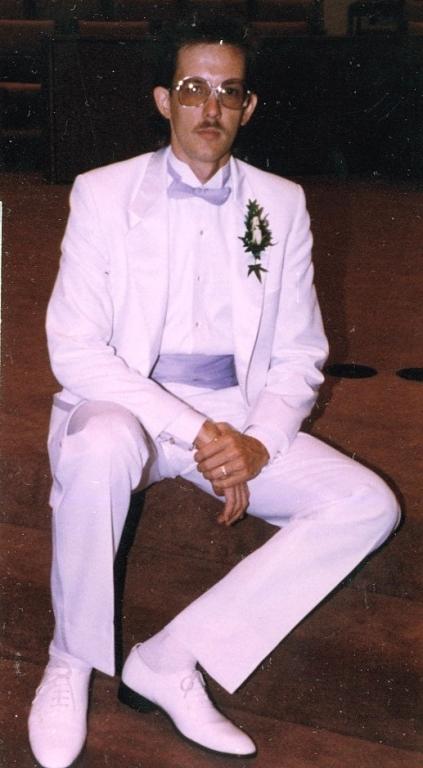
Yours Truly, in July 1988 (age 30 but looking more like 20!), during my evangelical “campus missionary” days.
(3-18-08)
* * *
Interviewer [Al Kresta]: What was your experience like as an evangelical?
Well, I loved it . . . most conversion stories I hear from Catholics, they don’t run down their evangelical experience. . . . I have great memories and fond memories. I learned all about the Bible when I was there, good moral teaching . . . I just think there was more to it that the Catholic Church can offer, along the lines of sacramentalism and tradition and matters of Church and authority. (1997)
I greatly admire and respect conservative, orthodox Protestantism. I once was an evangelical Protestant, and praise God for that experience, which was exceedingly beneficial to my spiritual advancement and theological education. (2001)
Do we have a great deal of respect for Protestant pastors, ministers, clergymen? Absolutely. I certainly do. Some of the people I respect the most to this day are, for example, the pastor under whom I began my serious evangelical Christian walk with the Lord in 1977: (Lutheran) Pastor Dick Bieber in Detroit (now in Halifax, Nova Scotia) or Gus Flaherty(Assemblies of God) who married us in 1984. I have immense admiration for Protestant pastors, most of whom are very godly men, devoted to the gospel and the spiritual edification and growth of their flock. I have lots of pastor friends as well (Baptists, independents, Anglican; you name it). I think I’ve always shown a great deal of personal respect towards them. And I don’t think my outlook is all that different (if at all) from other seriously committed Catholics that I know. (9-26-07)
Recently I made passing reference on the CHNI discussion board, about how I used to attend a Lutheran church and that Rev. Dick Bieber in Detroit was one whom I consider a highly influential spiritual father in my life. I was looking to find some material from Rev. Bieber online and discovered a great deal (including audio files of sermons). That in turn led me to considerable reflection upon the evangelical Protestant period of my life (1977-1990): how much it taught and formed me; the innumerable blessings and benefits I received, and how many wonderful Protestant teachers contributed to my Christian life, and even (indirectly) to my present Catholic apostolate of apologetics and evangelism. It is always good to ponder our experience and the paths through which God has led us, in His mercy and by His grace.
In what follows, I shall do a bit of a run-through of my past spiritual life, and acknowledge and honor the men who have taught me so much, and also make an analysis — in retrospect — of how many of these Protestant influences are very much in line with what I believe today as a Catholic. As such, it will be essentially an ecumenical endeavor, though I’m quite sure that some people involved might not care all that much (some, not at all!) for the topical / causal connection I would make between my Protestant past and present Catholic apostolate.
I described the limited spiritual understanding I had as a child in the following way, in my “standard” conversion story, published in Surprised by Truth:
My first exposure to Christianity came from the United Methodist Church, the denomination in which I was raised. The church we attended, in a working-class neighborhood of Detroit, appeared to me, even as a child in the early 1960s, to be in decline, sociologically speaking, as the average age of the members was about fifty or so years. In my studies as an Evangelical later, I learned that shrinking and aging congregations were one of the marks of the deterioration of mainline Protestantism.
As it turned out, our church actually folded in 1968, and after that, I barely attended church at all for the next nine years. My early religious upbringing was not totally without benefit, though, as I gained a respect for God which I never relinquished, a comprehension of His love for mankind, and an appreciation for the sense of the sacred and basic moral precepts.
At any rate, for whatever reason, I didn’t sustain an ongoing interest in Christianity at this time.
In a 1997 radio interview, I added:
I was raised Methodist; pretty nominal. It wasn’t very vital, and there wasn’t much fire there, for whatever reason. So it took really, till 1977 to become an evangelical Christian . . . But a big influence on me was the movies about Jesus that would come on, like The Greatest Story Ever Told. One time we were watchin’ that (this would be mid-70s, I guess), and my brother Gerry said “well, Jesus is God.” And I didn’t even know that! That’s how ignorant I was. I didn’t even know the Trinity. I said, “no, he’s the son of God!” And he said “no, He’s God the Son.” So I started thinking about . . . it gave me a different perspective, watching the movie, even, that this person is God in the flesh.
At least in the Catholic tradition, generally kids are going to parochial school; they get some kind of catechetical instruction. But I really didn’t have that. I didn’t have a good Sunday school, or much at all. I think if I had learned earlier, some of the things I learned later, that I think I would have had more zeal for being a Christian.
The first major thing that changed this was the influence of my brother Gerry (1948-1998). Asked how it happened that I became an evangelical Christian, I replied in the same interview:
Basically, my brother Gerry, getting “saved” around 1971, and the spectacle of his long-haired friends comin’ around, carrying Bibles; truth is stranger than fiction! And just observing them; it kinda got me wondering, “what’s going on here? These people are talking about Jesus . . . ” I thought you had to be a square [to be a good Christian].
I wrote about the same thing in Surprised by Truth:
[M]y brother Gerry, who is ten years older than I am, converted, in 1971, to “Jesus Freak” Evangelicalism, a trend which was at its peak at that time. He underwent quite a remarkable transformation out of a drug-filled rock band culture and personal struggles, and started preaching zealously to our family. This was a novel spectacle for me to observe. I had already been influenced by the hippie counterculture, and had always been a bit of a nonconformist, so the Jesus Movement held a strange fascination for me, although I had no intention of joining it.
I prided myself on my “moderation” with regard to religious matters. Like most nominal Christians and outright unbelievers, I reacted to any display of earnest and devout Christianity with a mixture of fear, amusement, and condescension, thinking that such behavior was “improper”, fanatical, and outside of mainstream American culture.
What my brother Gerry taught me the most at this stage of my life, was that Christianity was a Way: a Way of Life. It wasn’t something that was merely consigned to a few hours on Sunday and then forgotten the rest of the week. It was a total commitment, and a life-changing force. And he demonstrated (or, “witnessed”) by the example of his own life, that this was the case. Since I had always looked up to him, this couldn’t help but have a huge impact on me. He had been profoundly influenced by Rev. Dick Bieber and Messiah Lutheran Church in Detroit. I would attend this church every now and then before my evangelical conversion (when Gerry managed to “drag” me there, for some reason), and so I wrote in the above testimony:
During the early 1970s I occasionally visited Messiah Lutheran Church in Detroit where my brother attended, along with his “Jesus Freak,” long-haired friends, and would squirm in my seat under the conviction of the powerful sermons of Pastor Dick Bieber, the likes of which I had never heard. I remember thinking that what he was preaching was undeniably true, and that if I were to “get saved” there would be no room for middle ground or fence-sitting. Therefore, I was reluctant, to say the least, because I thought it would be the end of fun and fitting-in with my friends. Because of my rebelliousness and pride, God had to use more drastic methods to wake me up.
The “drastic method” was what I sarcastically refer to as the “Great Depression” period of my life (March-October 1977). I continued the narrative:
In 1977 I experienced a severe depression for six months, which was totally uncharacteristic of my temperament before or since. The immediate causes were the pressures of late adolescence, but in retrospect it is clear that God was bringing home to me the ultimate meaninglessness of my life – – a vacuous and futile individualistic quest for happiness without purpose or relationship with God. I was brought, staggering, to the end of myself. It was a frightening existential crisis in which I had no choice but to cry out to God. He was quick to respond. . . .
It was the combination of my depression and newfound knowledge of Christianity that caused me to decide to follow Jesus as my Lord and Savior in a much more serious fashion, in July 1977 what I would still regard as a “conversion to Christ,” and what Evangelicals view as the “born-again” experience or getting “saved.” I continue to look at this as a valid and indispensable spiritual step, even though, as a Catholic, I would, of course, interpret it in a somewhat different way than I did formerly.
In my radio interview I stated:
[I]t took a huge depression that I went through. I was 18 years-old at the time, and God – the way I look at it – God more or less had to put me right on my back to see that I couldn’t survive on my own. Because I was under this illusion, “well, you don’t need God.” I had lived for ten years without goin’ to church – a very secular life; kinda like what you see in England now, where 4% go to church every Sunday.
Today I again wrote about this traumatic experience:
God sometimes gives a person up to their sin (and to Satan) for a time, with the ultimate goal of causing them to repent by hitting bottom and waking up (rather than being lost).
I dare say that this happened in my own life. Being content, at age 18 (back in 1977), to live without God and pay Him very little notice at all, all of a sudden I found myself in a deep (very serious, clinical) depression and utter despair, that lasted six months. God knew what it would take in my case to wake me up. It worked. I soon cried out to Him (having nowhere else to go, and no hope). God in His tender mercy, accepts even this “default” / last resort discipleship. So I devoted my life to Him, as an evangelical Protestant. The depression didn’t go away immediately, but the black despair did, and once the depression left after six months, it never returned (thank heavens).
I’ve always interpreted this as God, in effect, saying, “okay, Dave. You want to live without Me? Do you truly want to see what it would be like to live a life of no hope and meaning; a world without God? Alright; I’ll let you do that.” And I saw what a truly Godless, nihilistic universe would be like and wanted no part of that!
There are also times that a person rejects God utterly and so God “gives him up” because God honors the free will of man and will force no one to follow Him by compulsion. It’s more a semi-sarcastic or ironic manner of biblical speech. Man chooses to rebel, but to phrase it as “God giving him up” conveys the sense of God’s control of everything, or relinquishing control (of human free will) as the case may be.
In my case, obviously God knew (being omniscient) that I would soon cry out, so it was literally an act of mercy to give me totally over to my own corrupt desire of living a life of “practical atheism”. Many atheists can play games and pretend as if a world without God still has meaning, but I was allowed the privilege of seeing what a consistent atheism leads and reduces to: black despair and meaninglessness.
Following this dedication of my life to God, I started attending Messiah Lutheran, but with some self-imposed limitations:
I would go to Bible studies, at Messiah Church. That’s a very good church. It was a good place to start. But I didn’t even go to church on Sunday; I just went to the Bible studies.
I was still (as I was for the entire time before I became a Catholic), extremely “unliturgical.” It always bored me (going back to my Methodist days). On the few occasions that I went to Messiah on Sunday I “endured” the liturgy, counting the minutes, and always looked forward to the sermon (a very good “low church” Protestant I was, concentrated on the “Word” and preaching!). Rev. Dick Bieber is an extraordinary preacher and teacher (and man). As I look back at what he taught me and gave to me in my Christian life (and to my brother and sister and many many others), I see that it was the firm conviction that discipleship and following Jesus has to be a total, radical commitment. This is central to all Christianity: be it Protestant, Catholic, Orthodox, or groups which consciously attempt to defy all three categories.
This aspect, and the high emphasis on sharing the gospel with others (including street evangelism) was what Messiah was about: what it was known and renowned for. And it had a profound and lasting influence on my life. I’ve always sought to radically follow Jesus (not that I always succeeded, by a long shot!), and evangelism and specifically its “half-sister”: defense of the faith, or apologetics, have been my vocation in life.
These emphases are almost a case study of what Catholics can learn from evangelicals. Neither a total, heartfelt commitment to Jesus nor evangelism are at all foreign to Catholicism, in terms of what we believe. In fact, in the 16th century when Protestantism began, Catholics were doing virtually all of the world evangelism and missions work, while Protestants did very little, and it was hardly stressed at all by Luther and Calvin. But in practice, today, many Catholics do not have this sense of urgency, to commit one’s life to Jesus and to share the exciting truths learned as a result.
Therefore, to the extent that a person has received these teachings in an evangelical setting, one has been taught what they should have been taught in the Catholic Church, but often are (sadly) not taught. That’s a failure of Catholic teaching and catechesis, not of the Catholic worldview itself (which completely agrees). And so such teachings received in my life literally have made me a better Catholic today.
Recently, I discovered many online resources from Dick Bieber and Messiah Church. The latter (no longer Lutheran but part of the Evangelical Covenant Church denomination) has a web page. On the sub-page “Our Past” we find a broad description:
1958
In 1958, Richard Bieber accepted the call to serve as pastor beginning what would be a thirty year commitment. The years 1958 through 1969 saw many changes and much fruit being born. More and more the church opened its doors to the local neighborhood and community and experienced a strengthening in its base of committed believers as members. Annual visitations of church members and others in need or open to the Gospel numbered into the thousands. Individual intercessory prayer on behalf of each member was encouraged. Strong proclamation of the Word of God in preaching and teaching and sincere worship of the Living Lord was the foundation upon which all hope for church growth was laid.
1970
The decade of the ‘70s was one of harvest. Beginning with an outpouring of the Holy Spirit there was a fresh anointing of the congregation which many believe happened around Palm Sunday of 1970. This, coupled with a large influx of what was known as “Jesus People” in that same year caused a rebirth in the congregation that would forever impact this church.
Much of what had been regarded as standard church life and practice gave way to burgeoning nets filled with people. Young, long-haired anti-establishment types as many of their older, more mainline and conservative parents and relatives were being drawn into the kingdom as those in the dark being drawn to a great light. “A city on a hill cannot be hid,” it was preached: and so it was.
I managed to find an online collection of Rev. Bieber’s written sermons, and also audio versions (where the power and heart-stirring nature of his preaching is, I think, plainly evident). One book (Set Our Hearts on Fire) is listed on amazon.com.
Also in the late 1970s I often attended a related group: a mixture of messianic Jews and “Jesus People” (mostly young people) called the Northwest Fellowship. There I was blessed by the wonderful teaching of the late Haskell Stone (a “completed Jew” who taught philosophy of religion at a local college: listen to his audio files; see also a second source page) and Harry Martin (see many audio files of his teaching mixed in with other teachers).
The emphasis here was much the same as with Messiah Church. One might roughly categorize both as forms of what is historically known as “pietism.” This school of thought and practice has its limitations (arguably, underemphasis on doctrine and theology being one) but as far as it goes, this brand of Christianity is, I think, very edifying and beneficial. I also acquired my great love of Jewish influences on Christianity from Northwest Fellowship.
The next move in my evangelical Christian life was to attend Shalom House: another non-denominational, “Jesus People”, hardly-anyone-over-the-age-of-50 type of fellowship that began with a weekly coffee house of Christian musicians. I wrote about this in my radio interview:
[I]n 1980, when I went to Shalom House . . . that’s when I really started to – I would say – commit myself to Jesus, and since then, it’s been pretty constant.
And in my published conversion story I added:
Despite my initial burst of zeal, I again settled into lukewarmness for three years until August 1980, when I finally yielded my whole being to God, and experienced a profound “renewal” in my spiritual life, as it were.
Throughout the 1980s I attended Lutheran, Assembly of God, and non-denominational churches with strong connections to the “Jesus Movement,” characterized by youth, spontaneity of worship, contemporary music, and warm fellowship. Many of my friends were former Catholics. I knew little of Catholicism until the early 1980s. I regarded it as an exotic, stern, and unnecessarily ritualistic “denomination,” which held little appeal for me.
God uses different environments and people to affect people in various ways. I certainly had enough solid teaching at Messiah Church and Northwest Fellowship to grow and flourish spiritually, yet I didn’t experience a profound “revival” in the Holy Spirit until I went to this church. All things in God’s time . . . it took time for me to wake up and acknowledge and worship God as God, and it took time for Christian truths to travel from my head to my heart, and to “catch on fire.”
The pastor at Shalom at the time was Joe Shannon (who in the last year has returned to the Catholic Church). Several profound influences on my life happened during this period (1980-1982). I first saw a book by Josh McDowell (Evidence That Demands a Verdict) at Joe’s house one day. I had already read C.S. Lewis, after discovering him in the Messiah Book Room (and he has since become my favorite author). I had encountered Francis Schaeffer and others in Inter-Varsity at college. Now the new thing was the historical apologetics that McDowell specializes in. I date my overt interest in and devotion to apologetics from this particular moment and time (1981). From this date I knew (finally!) what I wanted to do with my life.
In fact, my blog theme of “biblical evidence” comes from the phraseology of this book (just as I named by (1985-1989) college campus missionary outreach “True Truth Ministries” after a phrase in Schaeffer). In the same year I started doing a lot of research in opposing non-trinitarian cults (eventually specializing in Jehovah’s Witnesses), and doing my own in-depth research, such as biblical support for the divinity of Jesus and also trinitarianism and opposition to name-it-claim-it charismatic excess (papers still posted on my site today).
I described other evangelical influences at the same time (early 1980s):
I was, you might say, a typical Evangelical of the sort who had an above-average amateur theological interest. I became familiar with the works of many of the “big names”: C.S. Lewis, Francis Schaeffer, Josh McDowell, A.W. Tozer, Billy Graham, Hal Lindsey, John Stott, Chuck Colson, Christianity Today magazine, Keith Green and Last Days Ministries, the Jesus People in Chicago and Cornerstone magazine, Inter-Varsity Christian Fellowship (a campus organization), as well as the Christian music scene: all in all, quite beneficial influences and not to be regretted at all.
The other thing about Shalom that had a profound influence on me was their annual forays to the Ann Arbor Art Fair, to do street evangelism there, from their own booth. This was my first chance (in Summer 1981) to do both evangelism and apologetics in a live, spontaneous street setting. I had just become fired up about apologetics and had been taught about (and urged to do) street witnessing for the previous four years in the Christian circles I moved in, but now I was actually doing it (and enjoying it very much!). This began ten straight years of attending the Art Fair and talking and reasoning with folks of every imaginable belief-system.
A third thing that changed my life at Shalom House was a pro-life conference that was held in, I believe, January 1982. Prior to that point I knew I had to study more about abortion and make up my mind about it, but I was thoroughly ignorant and so not yet really pro-life. Because Joe Shannon thought it was an important enough issue to teach his flock about, I learned a ton of things in one day and instantly became a committed pro-lifer. This would later have a direct effect on my becoming a Catholic, because I got involved in the rescue movement in 1988, met several Catholics who actually knew and could defend their faith, started wondering about the contraception issue, and that started the “conversion ball” rolling for me.
From 1982 to 1986 I attended an Assembly of God church and the singles group there, where I met my wife Judy, got married in October 1984, made many friends (many of whom we still keep in contact with) and began my campus ministry. I met one of my very best friends, and kindred spirit, Dan Grajek, there. He and I collaborated, starting in 1985, on evangelistic “cartoon tracts” and did a great deal of street evangelism. Dan later returned to the Catholic Church and his wife Lori converted to Catholicism.
Also, during this period, I had some significant contact with Trinity Baptist Church, in Livonia, Michigan: a Reformed Baptist congregation that placed a great deal of emphasis on the typically Reformed, Schaefferian theme of “Jesus as Lord of all of life,” and “Christ and culture” issues: the motif of the “thinking Christian” or “thinking man’s Christianity.” This was another big influence on my Christian life.
My own theology was as much Baptist as anything else (and I had gotten “baptized” in 1982 as a reflection of this belief; my real baptism having occurred as a baby in the Methodist church). Paul Patton, who eventually became the pastor there, started Trinity House Theatre in 1981, which sought to produce distinctively Christian dramas. He had taught on occasion at Shalom House, and is now Associate Professor of Communication and Theater at Spring Arbor University on Michigan (hear a talk he gave in the university chapel on 10-22-07, and another from 3-26-07).
I was further blessed and “convicted” in the early 1980s by the fiery, charismatic-style preaching of George Bogle in Detroit (see also his Wikipedia entry). He is an immensely respected and influential pastor and valiant prayer warrior, who is still active today. I did a radio talk on Jehovah’s Witnesses (my only one of about a dozen, from my Protestant days) on the largest Protestant radio station in Detroit: WMUZ (103.5 FM): a show associated with his ministry, on 3 November 1989. Rev. Bogle is heard briefly at the end of the show. The same program remains on the air to this day (hear some of the messages and listen live: 12-3 AM EST weekday nights). The host was assistant pastor, Emery Moss, Jr., who is a friend of a Baptist friend of mine, Martin Smith, with whom I still keep in contact (his brother is Jerome Smith, author / editor of Nelson’s Cross-Reference Guide to the Bible: Illuminating God’s Word Verse-by-Verse).
I attended Shalom House again from 1986-1989. By this time, Al Kresta was the pastor. I had known him from 1982. He was a good friend of both Joe Shannon and Paul Patton and managed Christian bookstores. Al’s emphasis was also strongly on Christ and Culture and a thinking man’s Christianity. He began hosting a popular talk show on WMUZ, called Talk From the Heart, that ran about 10 years: from about 1985 to 1995. But Al returned to the Catholic Church a few years after I did (I have transcribed his marvelous conversion story, from a talk given in my own home) and now hosts a daily, nationally-syndicated Catholic radio show on Ave Maria Radio. He has also authored two great books of popular apologetics: Why Do Catholics Genuflect? and Why Are Catholics So Concerned About Sin?.
I’ve known Catholic apologist Steve Ray since 1982 as well (long before he became a Catholic), though not as well as the others mentioned here. Back then he was a virtual Francis Schaeffer disciple (having actually studied with him in Europe). Al Kresta was practically a Schaeffer disciple, too. All three of us might accurately be described (in those days, in the 80s) as “Schaefferites.” I wrote recently about Steve:
We’ve come a long way since we met in 1982 or 1983 at my Assemblies of God singles group where he came to speak one night. Around 1991, Al Kresta and I visited Steve at his house, right after I converted and not long before Al returned to the Church. Steve and I joked recently about how he was glaring at me when I criticized Luther. There were a few negative vibes in the room that day! Luther was his hero (he had been mine as well, and I still can’t help but like and admire the guy in many respects, even though I fundamentally oppose his outlook when it differs from the Catholic Church).
Steve had studied with Francis Schaeffer, and shortly after I first met our mutual friend Al Kresta he (Al) was acting the part of Schaeffer in a local Christian playhouse [Trinity House Theatre] (later he was my pastor and we wound up being the last two contributors to the conversion compilation, Surprised by Truth). I had recently (in the early 80s) read a lot of Schaeffer as well, and had been profoundly influenced by his thought. All three of us came from that evangelical milieu (and we would all say we have fond memories of it and that it was a tremendous blessing in our lives).
To me it is unthinkable (in terms of my own life and development) to have not had these wonderful experiences or to not have learned all these wonderful things as an evangelical. It is an important, crucial part of who I am, and always will be. This is why I frequently stress that becoming a Catholic is not at all an utter rejection of Protestantism. The Catholic convert from Protestantism takes with himself or herself a huge amount of true teaching and practice and zeal for God, in the move from Protestantism to Catholicism. The Catholic Church joyfully acknowledges this (most notably in the Decree on Ecumenism from Vatican II).
It’s not so much a matter of going from “bad” to “good” but rather, from “good” to “very good”. I thank God for my evangelical background, and that is why I have again “paid homage” to it in this paper. I feel a deep, sincere gratitude and thankfulness to God and the people involved, for having had all these manifest blessings and great teachers and friends in my Christian background.
Previous Post
February 12, 2016
"Explicit" Bible Proofs and Protestant Double Standards
Next Post

February 13, 2016 Reply to Misguided Radical Catholic Reactionary Criticisms
Browse Our Archives
Select a Category & Last Things About Me Anti-Catholicism Atheism & Agnosticism Baptism and Sacramentalism Bible and Tradition Blessed Virgin Mary Books by Dave Armstrong C. S. Lewis Calvinism & General Protestantism Catholic Apologetics Catholic Apologists Catholic conversion Catholic converts Christmas Church (Ecclesiology) Church History Conversion and Converts Development of Doctrine Eastern Orthodoxy Ecumenism & Christian Unity Eucharist & Liturgy Fathers of the Church French Translations G. K. Chesterton Hell Hell & Satan Hell & Satan & Last Things Heresies & Comparative Religion Holistic Health Inquisition & Crusades & Scandals James White Jews & Judaism & Old Testament John Calvin John Henry Newman Liberal / Modernist Theology Life Issues Literary Resume Lutheranism Mariology Martin Luther Music Orthodoxy Papacy & Infallibility Personal Page Philosophy & Science Political & Ethical & Moral Issues Protestant Persecution & Intolerance Protestantism Purgatory Purgatory & Penance Romantic & Imaginative Theology Saints & Purgatory & Penance Salvation Salvation & Justification Satan & Last Things Sexuality and Gender Issues Spanish Translations Traditionalism vs. Radical Catholic Reactionaries Traducciones al español / tradução para português Trinitarianism & Christology Uncategorized Videos
Select a Month October 2026 September 2026 August 2026 July 2026 June 2026 May 2026 April 2026 March 2026 February 2026 January 2026 December 2025 November 2025 October 2025 September 2025 August 2025 July 2025 June 2025 May 2025 April 2025 March 2025 February 2025 January 2025 December 2024 November 2024 October 2024 September 2024 August 2024 July 2024 June 2024 May 2024 April 2024 March 2024 February 2024 January 2024 December 2023 November 2023 October 2023 September 2023 August 2023 July 2023 June 2023 May 2023 April 2023 March 2023 February 2023 January 2023 December 2022 November 2022 October 2022 September 2022 August 2022 July 2022 June 2022 May 2022 April 2022 March 2022 February 2022 January 2022 December 2021 November 2021 October 2021 September 2021 August 2021 July 2021 June 2021 May 2021 April 2021 March 2021 February 2021 January 2021 December 2020 November 2020 October 2020 September 2020 August 2020 July 2020 June 2020 May 2020 April 2020 March 2020 February 2020 January 2020 December 2019 November 2019 October 2019 September 2019 August 2019 July 2019 June 2019 May 2019 April 2019 March 2019 February 2019 January 2019 December 2018 November 2018 October 2018 September 2018 August 2018 July 2018 June 2018 May 2018 April 2018 March 2018 February 2018 January 2018 December 2017 November 2017 October 2017 September 2017 August 2017 July 2017 June 2017 May 2017 April 2017 March 2017 February 2017 January 2017 December 2016 November 2016 October 2016 September 2016 August 2016 July 2016 June 2016 May 2016 April 2016 March 2016 February 2016 January 2016 December 2015 November 2015 October 2015 September 2015 August 2015 July 2015 June 2015 May 2015 April 2015 March 2015 February 2015 January 2015 December 2014 November 2014 October 2014 September 2014 August 2014 July 2014 June 2014 April 2014 March 2014 February 2014 January 2014 December 2013 November 2013 October 2013 September 2013 August 2013 July 2013 June 2013 April 2013 March 2013 February 2013 January 2013 December 2012 November 2012 October 2012 September 2012 August 2012 July 2012 June 2012 May 2012 April 2012 March 2012 February 2012 January 2012 December 2011 November 2011 October 2011 September 2011 August 2011 July 2011 June 2011 April 2011 March 2011 February 2011 October 2010 September 2010 August 2010 July 2010 April 2010 March 2010 December 2009 October 2009 August 2009 July 2009 June 2009 May 2009 March 2009 February 2009 October 2008 September 2008 April 2008 March 2008 February 2008 January 2008 December 2007 November 2007 October 2007 May 2007 March 2007 February 2007 January 2007 November 2006 October 2006 September 2006 August 2006 July 2006 June 2006 May 2006 April 2006 March 2006 February 2006 October 2005 June 2005 April 2005 February 2005 July 2004 May 2004 April 2004
Follow Us!
TAKE THE
Religious Wisdom Quiz
What did Isaiah say about Egypt's future in his oracles?
Select your answer to see how you score.
It would conquer Israel It would be conquered It would prosper It would rule Persia
Books by This Author Books by Dave Armstrong
Related posts from Biblical Evidence for Catholicism

A Few "Worst" & "Best" Arguments vs. Protestantism
Biblical Evidence for Catholicism

Book: Martin Luther: Dissenter and Defender
Biblical Evidence for Catholicism

Why Wes Huff (and Everyone) Should Be Catholic
Biblical Evidence for Catholicism
Catholic Salvation: Explanation for Protestants
Biblical Evidence for Catholicism
TRENDING AT PATHEOS Catholic

In "Irreplaceable," our book on vocation and technology, Trevor Sutton and I...

I was strolling through the top floor of the brand new Parthenon...

What Does Gêvâh Mean For Kimberley Guifoyle &...
This week, a lot of the news is focused on Kimberly Guilfoyle....

INNER CIRCLE: Profound Mystery (Of Christ In All...
Ephesians 5:31-32 “For this reason, a man will leave his father and...

Do Not Rejoice When Your Enemy Falls: The...
Turning an execution into a public spectacle is a disturbing expression of...

'The Chosen' S6 Trailer: The Passion Gets Very...
Not many watching 'The Chosen' worry about spoilers, but just because they...
view all Catholic blogs
Ad-Free & Subscriber Log-In Subscription Support
- About Us
- 2026 Calendar
- Videos
- Podcasts
- Library of World Religions
- Faith In Media Tracker
- Advertise With Us
- Write for Us
- Privacy Policy
- Terms of Service
- Do Not Sell My Data
- Contact Us
- Radiant Digital
- Manage Newsletter Subscriptions
- Unsubscribe From Notifications
- Sitemap
Copyright 2008-2026, Patheos. All rights reserved.
Subscription Support Ad-Free & Subscriber Log-In
Follow Patheos