
BuddhistCatholicContemplativeEvangelicalGeneral ChristianHinduJewishLatter-day SaintMuslimNew VisionsProgressive Christian
Beliefs
- Buddhist
- Catholic
- Contemplative
- Evangelical
- General Christian
- Hindu
- Jewish
- Latter-day Saint
- More Voices
- Muslim
- New Visions
- Pagan
- Progressive Christian
Topics
- Religion News
- Food and Religion
- Sports and Religion
- Religious Art
- Religious Music and Entertainment
- Religious Events
- History and Religion
- Style and Religion
- Politics and Religion
- Women in Religion
- Recreation Outdoors and Religion
- Business Finance and Religion
- Careers Workplace and Religion
- Education and Religion
- Family Parenting and Religion
- Health Fitness and Religion
- Home and Religion
- Relationships and Religion
- Technology and Religion
- Travel and Religion
Columnists
- Buddhist Columnists
- Business Finance and Religion Columnists
- Careers Workplace and Religion Columnists
- Catholic Columnists
- Contemplative Columnists
- Education and Religion Columnists
- Evangelists Columnists
- Family Parenting and Religion Columnists
- General Christian Columnists
- Health Fitness and Religion Columnists
- Hindu Columnists
- History and Religion Columnists
- Home and Religion Columnists
- Jewish Columnists
- More Voices Columnists
- Latter Day Columnists
- Muslim Columnists
- New Visions Columnists
- Nonreligious Columnists
- Pagan Columnists
- Politics and Religion Columnists
- Progressive Columnists
- Recreation Outdoors and Religion Columnists
- Relationships and Religion Columnists
- Religion News Columnists
- Religious Art Columnists
- Religious Events Columnists
- Religious Music and Entertainment Columnists
- Sports and Religion Columnists
- Style and Religion Columnists
- Technology and Religion Columnists
- Travel and Religion Columnists
- Women in Religion Columnists
Resource Library
- 2026 Calendar
- Library of World Religions
- The 100 Most Holy Places on Earth
- Patheos Answers
- Podcasts
- Videos
- Faith Leaders Database
- Anglican Episcopalian
- Bahai
- Baptist
- Buddhism
- Christianity
- Confucianism
- Eastern Orthodoxy
- Hinduism
- Holiness and Pentecostal
- ISKCON
- Islam
- Judaism
- Lutheran
- Methodist
- The Church of Jesus Christ of Latter-day Saints
- New Age
- Paganism
- Presbytarian and Reformed
- Protestantism
- Religion Behind the Scenes
- Roman Catholic
- Scientology
- Shia Islam
- Sikhism
- Sufism
- Sunni Islam
- Taoism
- Zen
- See all religions
Research Tools
 Ad-Free & Subscriber Log-In Subscription Support
Follow Patheos 

- Trending:
- Advent
- |
- Forgiveness
- |
- Thanksgiving
- |
- Election
- |
- Seasonal Holidays
- |
- Marriage

-
About
-
Catholic Apologetics
-
Church History
-
Great Apologists
-
Christian Worldview
-
Protestantism & Misc.
- Home
- Catholic
- History and Religion
- John Calvin’s Citations of the “Apocrypha” (Deuterocanon)
John Calvin’s Citations of the “Apocrypha” (Deuterocanon)
Last updated on: April 24, 2017 at 3:11 pm by Dave Armstrong
John Calvin’s Citations of the “Apocrypha” (Deuterocanon) 2017-04-24T15:11:12-04:00 Dave Armstrong
Patheos Explore the world's faith through different perspectives on religion and spirituality! Patheos has the views of the prevalent religions and spiritualities of the world.
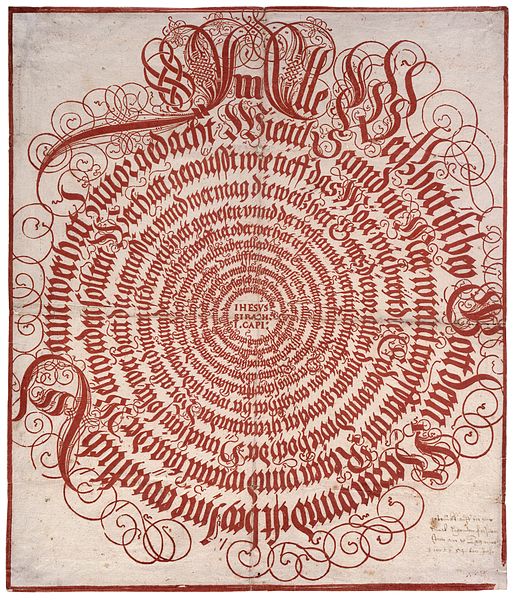
Book of Sirach, or Ecclesiasticus, first chapter, German translation: anonymous artist 1654 [public domain / Wikimedia Commons]

(12-1-08)
* * *
John Calvin rejected the deuterocanonical books (also known by Protestants as “the apocrypha“) as part of Holy Scripture. See, for example: Antidote to the Council of Trent (Session Four), Institutes of the Christian Religion, Book I, Chapter 8, Section 10, Book III, Chapter 5, Section 8, and Book IV, Chapter 9, Section 14. His written record, however, is not without its inconsistencies when it comes to particular deuterocanonical books. Like his comrade-in-arms Martin Luther, he seems to be unable to restrain himself from self-contradiction. It’s a fascinating study. Let’s examine it a bit (all bolded emphases throughout are my own).
* * * * *
John Calvin, in three different works, calls Baruch a “prophet”, cites the book that bears his name, and cites him as an authority:
Would you know what the death of the soul is? It is to be without God — to be abandoned by God, and left to itself: for if God is its life, it loses its life when it loses the presence of God. That which has been said in general may be shown in particular parts. If without God, there are no rays to illumine our night, surely the soul, buried in its own darkness, is blind. It is also dumb, not being able to confess unto salvation what it has believed unto righteousness. It is deaf, not hearing that living voice. It is lame, nay, unable to support itself, having none to whom it can say, “Thou hast held my right hand, and conducted me in thy will.” In short, it performs no one function of life. For thus speaks the Prophet, when he would shew that the fountain of life is with God, (Baruch 3:14) — “Learn where there is prudence, where there is virtue, where there is understanding, where there is length of life and food, where there is light to the eyes and peace.”
What more do you require for death? But, not to stop here, let us consider with ourselves what life Christ hath brought us, and then we shall understand what the death is from which he hath redeemed us. We are taught both by the Apostle, when he says, “Awake, thou that sleepest, and arise from the dead, and Christ will give thee light.” (Ephesians 5:14.)
(Psychopannychia, 1536, in Selected Works of John Calvin: Tracts and Letters, Vol. 3, Tracts, Part 3, edited and translated by Henry Beveridge, Grand Rapids, Michigan: Baker Book House, 1983; pp. 454-455 [from Tracts, Vol. 3, Containing “Antidote to the Council of Trent” . . ., Edinburgh: Calvin Translation Society, 1851]; available online)
In the 66 books of the Bible that are accepted by Protestants, Baruch is never called a “prophet” (unless I missed it; I couldn’t find any example in doing a search for it) He is, rather, described as the prophet Jeremiah’s scribe or secretary (e.g., Jer 36:4-8,27,32). In fact, when Jeremiah and Baruch are mentioned together, the former is described as a prophet but the latter is not:
Jeremiah 43:6 . . . Jeremiah the prophet and Baruch the son of Neri’ah.
Jeremiah 45:1 The word that Jeremiah the prophet spoke to Baruch the son of Neri’ah, when he wrote these words in a book at the dictation of Jeremiah, . . .
Nevertheless, Calvin wants to call him a “prophet” and cite his book as an authoritative source, when refuting the false doctrine of soul sleep (an error that Luther, by the way, seems to have accepted in some form). This makes no sense if the book is not regarded as inspired Scripture. But then, many things in Calvin make little sense.
This view is plainly confirmed by a speech which occurs in the Book of Baruch, or at least the book which bears his name, — “Open thine eyes and see: for not the dead who are in hell, (infernus,) whose spirit has been torn from their bowels, will ascribe glory and justice to God; but the soul which, sad for the magnitude of the evil, walks bent and weak, and the failing eyes and the hungry soul will give glory.” (Baruch 2:17.) Here we undoubtedly see that, under the names of “dead” are included those who, afflicted and crushed by God, have gone away into destruction; and that the sad, bent, and weak soul, is that which, failing in its own strength, and having no confidence in itself, runs to the Lord, calls upon him, and from him expects assistance.
(Psychopannychia, ibid., p. 484; available online)
Though it is not clear whether it is merely a rhetorical argument or Calvin’s own opinion, he appeals to Baruch as a record of the prophet Jeremiah’s own words in this instance:
They seek some countenance from a passage in the Epistle which is said to have been written by Jeremiah to the Israelites, when in exile at Babylon. (Baruch 6:3.) As the Prophet, or whoever was the author of the Epistle, there advised the captive people that whenever they saw gods of silver and gold carried about on men’s shoulders, and the crowd standing round in stupid amazement, they should not imitate them in their stupor, but, worshipping in their heart, say, “Thee, O Lord, it behoves us to adore!” so our objectors maintain, that when they are present at the sacrilegious rites of the present age, they lift up their hearts to the Lord, and reflect that it is to Him their adoration belongs. As if the Prophet, when he called them to inward adoration of heart, did not intimate how perilous it would be to gratify the Babylonians by assuming features expressive of the worship of images. As every one sees that his only object was to urge his countrymen, seeing they had no power to check the public superstition of a nation under whose power and yoke they were living, privately to retain their religion unimpaired in their own minds, our worthy objectors have no ground for bringing him forward as the patron of their Idolatry!
Could they be induced to weigh their actions, even in the balance of the Prophet, they would easily see that in appealing to him they are ruining their cause.
(On Shunning the Unlawful Rites of the Ungodly, and Preserving the Purity of the Christian Religion, 1537, in Beveridge, ibid., pp. 403-404; available online)
Likewise, in the famous Institutes itself, Calvin calls Baruch a prophet and cites the “apocryphal” book with his name.
For it was most truly and piously written by the uncertain author (whoever he may have been) that wrote the book which is attributed to the prophet Baruch, “But the soul that is greatly vexed, which goeth stooping and feeble, and the eyes that fail, and the hungry soul, will give thee praise and righteousness, O Lord. Therefore, we do not make our humble supplication before thee, O Lord our God, for the righteousness of our fathers, and of our kings.” “Hear, O Lord, and have mercy; for thou art merciful: and have pity upon us, because we have sinned before thee,” (Baruch 2:18, 19; 3:2).
(Institutes of the Christian Religion, 1536 edition, Book III, Chapter 20, Section 8: “Of Prayer: A Perpetual Exercise of Faith. The Daily Benefits derived From It”; available online [Henry Beveridge translation of 1845: Edinburgh: Calvin Translation Society] )
In Calvin’s treatment of the doctrine of the soul, he cites both Sirach (Ecclesiasticus) and Wisdom as “sacred writers” and “pious writers” who, though not “canonical,” “ought to have some weight”:
When he enjoins us to “put on the new man, which is renewed in knowledge after the image of him who created him,” he clearly shows what this image is, or wherein it consists; as he also does when he says, ( Ephesians 4:24,) “Put on the new man, who has been created after God in knowledge and true holiness.” When we would comprehend all these things, in one word we say, that man, in respect of spirit, was made partaker of the wisdom, justice, and goodness of God. This mode of expression was followed by two sacred writers. The one, in dividing man into two parts — body, taken from the earth, and soul, derived from the image of God — briefly comprehended what Moses had more fully expressed, (Ecclesiasticus 17:1.) “God created man, and made him after his own image.” The other, desiring to state exegetically how far the image of God extended, called man “inexterminable,” because created in the image of God. (Wisdom 2:23.) I would not urge the authority of these writers strongly on our opponents, did they not allege them against us. Still they ought to have some weight, if not as canonical, at least as ancient pious writers strongly supported.
(Psychopannychia, ibid., 424; available online)
[the online version absurdly lists the Ecclesiasticus passage as “Ecclesiastes 17:1” — the problem — besides the misquotation itself –, is that Ecclesiastes has only twelve chapters. In the Beveridge translation of 1851 (I have the hard copy of the book before me as I write), it is listed as “Ecclus. xvii. 1”. Interestingly, in the Index (p. 499), this citation is omitted, while it states: “one of the books of the Apocrypha, attempts of the Popish Church to support their doctrines from, 68, 129; not inspired, 70.” One would never know of Calvin’s qualified support of the book and argument made from it, which appears on p. 424. The “Wisdom of Solomon” entry in the Index, on the other hand, provides a reference to p. 424]
Calvin also calls the author of Ecclesiasticus, or Sirach, a “prophet”:
Almost similar to this [Ps 103:13] is the passage in Ecclesiasticus, “The number of the years of man, as much as a hundred years, have been counted as the drop of water in the sea, and as the sand on the sea shore; but they are few compared with the whole duration of time. Therefore God is patient towards them, and sheds out his mercy upon them.” (Ecclesiasticus 18:8- 10.) Here they must admit that the prophet’s sentiment was very different; from that which they dream, and means that the Lord pitied those whom he knew to stand by his mercy alone, and, who, were he for a little to withdraw his hand, would return to the dust whence they were taken. Thereafter he subjoins a brief description of human life, comparing it to a flower which, though it blooms today, will be nothing more than dead herbage tomorrow.
Had he even declared that the spirit of man perishes and comes to nothing, he would not have given any defence to their error. For when we say that the spirit of man is immortal, we do not affirm that it can stand against the hand of God, or subsist without his agency. Far from us be such blasphemy! But we say that it is sustained by his hand and blessing.
(Psychopannychia, ibid., pp. 477-478; available online)
[Again, the Beveridge translation from 1851, oddly neglects to mention this citation in its General Index. Surely an innocent oversight . . .]
Three paragraphs later, Calvin cites Wisdom as having some degree of authority for determining spiritual truth:
What! they ask, if they have been cut off from the energy of God, if they have fallen away from his care and remembrance, have they not ceased to be? As if I had it not in my power to retort. What! if they have been cut off from the energy of God, if they have escaped his remembrance, how will they ever again be? And when will the Resurrection be? Again, how do the things agree? “The souls of the just are in the hands of God,” (Wisdom 3:1;) or, to quote only from the sure oracles of God, “The just will be in eternal remembrance.” (Psalm 112:6.)
(Ibid., pp. 478-479; available online)
Calvin again cites Ecclesiasticus, but denies (contrary to an earlier section) that the writer was a prophet:
This is not inelegantly stated by Ecclesiasticus when he says, (Ecclesiasticus 37:28) “The life of a man is in the number of his days, but the days of Israel are innumerable.” But as the authority of that writer is doubtful, let us leave him, and listen to a prophet, admirably teaching the same thing, in his own words, (Psalm 102:24,)
(Ibid., p. 489; available online)
So the writer of Ecclesiastes is a prophet, but then he isn’t, and the authority of a prophet (the writer of Psalm 102) is cited over against him. In other words, the implication is that the “prophet” has biblical, inspired authority. But then Calvin had referred to Baruch as a “prophet” too, in no less than three different works, as we saw above (therefore, his authority would seem, by analogy, to be equal or similar to that of the canonical Psalm writer). Thus, there is no end of vicious internal contradiction.
At least one example of deuterocanonical citation is absent from Beveridge or from the electronic version drawn from him (and hence the online search engine for same). One can find it in the “Biblical References” Index (Vol. II, p. 1568) of the 1960 edition of the Institutes (edited by John T. McNeill; translated and indexed by Ford Lewis Battles; Philadelphia: Westminster Press). From Book III, Chapter 9, Section 6 (“The comfort prepared for believers by aspiration for the life to come”):
For before their eyes will be that day when the Lord will receive his faithful people into the peace of his Kingdom, “will wipe away every tear from their eyes” [Rev 7:17; cf. Isa. 25:8], will clothe them with “a robe of glory . . . and rejoicing” [Ecclus. 6:31, EV] . . .
(Vol. II, p. 718)
Beveridge has similar words, but not as a quotation, and either Beveridge or the electronic version neglects to give a citation, so that it becomes a textual issue of whether Calvin was deliberately citing the book:
They will turn their eye to that day (Isaiah 25:8; Rev. 7:17), on which the Lord will receive his faithful servants, wipe away all tears from their eyes, clothe them in a robe of glory and joy, feed them with the ineffable sweetness of his pleasures, exalt them to share with him in his greatness; in fine, admit them to a participation in his happiness.
(see the online version)
Here is the deuterocanonical passage that the Battles edition believes Calvin to be quoting, and making part of his argument, reads, in its RSV version:
You will wear her like a glorious robe, and put her on like a crown of gladness.
Calvin cites the Book of Wisdom in his Institutes, as well:
8. In regard to the origin of idols, the statement contained in the Book of Wisdom has been received with almost universal consent—viz. that they originated with those who bestowed this honour on the dead, from a superstitious regard to their memory. I admit that this perverse practice is of very high antiquity, and I deny not that it was a kind of torch by which the infatuated proneness of mankind to idolatry was kindled into a greater blaze. I do not, however, admit that it was the first origin of the practice. That idols were in use before the prevalence of that ambitious consecration of the images of the dead, frequently adverted to by profane writers, is evident from the words of Moses (Gen. 31:19). When he relates that Rachel stole her father’s images, he speaks of the use of idols as a common vice. Hence we may infer, that the human mind is, so to speak, a perpetual forge of idols. There was a kind of renewal of the world at the deluge, but before many years elapse, men are forging gods at will.
(Book I, Chapter 10, Section 8; available online; passage indicated in Battles edition as 14:15-16: “. . . he now honored as a god what was once a dead human being . . .” [RSV]; cf. passing reference to the angel Raphael in Tobit 12:15: Inst., I, 14, 8)
Previous Post
December 2, 2015
"Live Chat" Debate: Mariology of the Church Fathers (vs. James White)
Next Post

December 3, 2015 Christmas Carols & Songs: A Comprehensive Catalogue
Browse Our Archives
Select a Category & Last Things About Me Anti-Catholicism Atheism & Agnosticism Baptism and Sacramentalism Bible and Tradition Blessed Virgin Mary Books by Dave Armstrong C. S. Lewis Calvinism & General Protestantism Catholic Apologetics Catholic Apologists Catholic conversion Catholic converts Christmas Church (Ecclesiology) Church History Conversion and Converts Development of Doctrine Eastern Orthodoxy Ecumenism & Christian Unity Eucharist & Liturgy Fathers of the Church French Translations G. K. Chesterton Hell Hell & Satan Hell & Satan & Last Things Heresies & Comparative Religion Holistic Health Inquisition & Crusades & Scandals James White Jews & Judaism & Old Testament John Calvin John Henry Newman Liberal / Modernist Theology Life Issues Literary Resume Lutheranism Mariology Martin Luther Music Orthodoxy Papacy & Infallibility Personal Page Philosophy & Science Political & Ethical & Moral Issues Protestant Persecution & Intolerance Protestantism Purgatory Purgatory & Penance Romantic & Imaginative Theology Saints & Purgatory & Penance Salvation Salvation & Justification Satan & Last Things Sexuality and Gender Issues Spanish Translations Traditionalism vs. Radical Catholic Reactionaries Traducciones al español / tradução para português Trinitarianism & Christology Uncategorized Videos
Select a Month November 2026 October 2026 September 2026 August 2026 July 2026 June 2026 May 2026 April 2026 March 2026 February 2026 January 2026 December 2025 November 2025 October 2025 September 2025 August 2025 July 2025 June 2025 May 2025 April 2025 March 2025 February 2025 January 2025 December 2024 November 2024 October 2024 September 2024 August 2024 July 2024 June 2024 May 2024 April 2024 March 2024 February 2024 January 2024 December 2023 November 2023 October 2023 September 2023 August 2023 July 2023 June 2023 May 2023 April 2023 March 2023 February 2023 January 2023 December 2022 November 2022 October 2022 September 2022 August 2022 July 2022 June 2022 May 2022 April 2022 March 2022 February 2022 January 2022 December 2021 November 2021 October 2021 September 2021 August 2021 July 2021 June 2021 May 2021 April 2021 March 2021 February 2021 January 2021 December 2020 November 2020 October 2020 September 2020 August 2020 July 2020 June 2020 May 2020 April 2020 March 2020 February 2020 January 2020 December 2019 November 2019 October 2019 September 2019 August 2019 July 2019 June 2019 May 2019 April 2019 March 2019 February 2019 January 2019 December 2018 November 2018 October 2018 September 2018 August 2018 July 2018 June 2018 May 2018 April 2018 March 2018 February 2018 January 2018 December 2017 November 2017 October 2017 September 2017 August 2017 July 2017 June 2017 May 2017 April 2017 March 2017 February 2017 January 2017 December 2016 November 2016 October 2016 September 2016 August 2016 July 2016 June 2016 May 2016 April 2016 March 2016 February 2016 January 2016 December 2015 November 2015 October 2015 September 2015 August 2015 July 2015 June 2015 May 2015 April 2015 March 2015 February 2015 January 2015 December 2014 November 2014 October 2014 September 2014 August 2014 July 2014 June 2014 April 2014 March 2014 February 2014 January 2014 December 2013 November 2013 October 2013 September 2013 August 2013 July 2013 June 2013 April 2013 March 2013 February 2013 January 2013 December 2012 November 2012 October 2012 September 2012 August 2012 July 2012 June 2012 May 2012 April 2012 March 2012 February 2012 January 2012 December 2011 November 2011 October 2011 September 2011 August 2011 July 2011 June 2011 April 2011 March 2011 February 2011 October 2010 September 2010 August 2010 July 2010 April 2010 March 2010 December 2009 October 2009 August 2009 July 2009 June 2009 May 2009 March 2009 February 2009 October 2008 September 2008 April 2008 March 2008 February 2008 January 2008 December 2007 November 2007 October 2007 May 2007 March 2007 February 2007 January 2007 November 2006 October 2006 September 2006 August 2006 July 2006 June 2006 May 2006 April 2006 March 2006 February 2006 October 2005 June 2005 April 2005 February 2005 July 2004 May 2004 April 2004
Follow Us!
TAKE THE
Religious Wisdom Quiz
Who is the apostle to deny Jesus?
Select your answer to see how you score.
Phillip Peter Judas Andrew
Books by This Author Books by Dave Armstrong
Related posts from Biblical Evidence for Catholicism
A Few "Worst" & "Best" Arguments vs. Protestantism
Biblical Evidence for Catholicism
Deuterocanon & Javier Perdomo's Straw Men
Biblical Evidence for Catholicism
St. Athanasius & the Deuterocanon (vs. Javier Perdomo)
Biblical Evidence for Catholicism
Jerusalem Council vs. James White & Sola Scriptura
Biblical Evidence for Catholicism
TRENDING AT PATHEOS Catholic

James Ishmael Ford's books on Zen
James Ishmael Ford's Official Website provides the most complete annotated list of...
The Trouble with Taking Chesterton Literally
Guest writer: Pilgrim. On paradox, human nature and the art of seeing...

Somewhere right now, someone is sitting in a parked car with a...

Just as the emergence of leaves on the fig tree signals the...
Belief and Disbelief in Christ's Presence in Holy...
A study found that only 29% of Catholics believe that the bread...

Blue Christmas: Making Room for Grief at Church
A Blue Christmas service makes room for grief, remembrance, and hope. Explore...
view all Catholic blogs
Ad-Free & Subscriber Log-In Subscription Support
- About Us
- 2026 Calendar
- Videos
- Podcasts
- Library of World Religions
- Faith In Media Tracker
- Advertise With Us
- Write for Us
- Privacy Policy
- Terms of Service
- Do Not Sell My Data
- Contact Us
- Radiant Digital
- Manage Newsletter Subscriptions
- Unsubscribe From Notifications
- Sitemap
Copyright 2008-2026, Patheos, part of the Radiant Digital network of media brands. All rights reserved.
Subscription Support Ad-Free & Subscriber Log-In
Follow Patheos