
BuddhistCatholicContemplativeEvangelicalGeneral ChristianHinduJewishLatter-day SaintMuslimNew VisionsProgressive Christian
Beliefs
- Buddhist
- Catholic
- Contemplative
- Evangelical
- General Christian
- Hindu
- Jewish
- Latter-day Saint
- More Voices
- Muslim
- New Visions
- Pagan
- Progressive Christian
Topics
- Religion News
- Food and Religion
- Sports and Religion
- Religious Art
- Religious Music and Entertainment
- Religious Events
- History and Religion
- Style and Religion
- Politics and Religion
- Women in Religion
- Recreation Outdoors and Religion
- Business Finance and Religion
- Careers Workplace and Religion
- Education and Religion
- Family Parenting and Religion
- Health Fitness and Religion
- Home and Religion
- Relationships and Religion
- Technology and Religion
- Travel and Religion
Columnists
- Buddhist Columnists
- Business Finance and Religion Columnists
- Careers Workplace and Religion Columnists
- Catholic Columnists
- Contemplative Columnists
- Education and Religion Columnists
- Evangelists Columnists
- Family Parenting and Religion Columnists
- General Christian Columnists
- Health Fitness and Religion Columnists
- Hindu Columnists
- History and Religion Columnists
- Home and Religion Columnists
- Jewish Columnists
- More Voices Columnists
- Latter Day Columnists
- Muslim Columnists
- New Visions Columnists
- Nonreligious Columnists
- Pagan Columnists
- Politics and Religion Columnists
- Progressive Columnists
- Recreation Outdoors and Religion Columnists
- Relationships and Religion Columnists
- Religion News Columnists
- Religious Art Columnists
- Religious Events Columnists
- Religious Music and Entertainment Columnists
- Sports and Religion Columnists
- Style and Religion Columnists
- Technology and Religion Columnists
- Travel and Religion Columnists
- Women in Religion Columnists
Resource Library
- 2026 Calendar
- Library of World Religions
- The 100 Most Holy Places on Earth
- Patheos Answers
- Podcasts
- Videos
- Faith Leaders Database
- Anglican Episcopalian
- Bahai
- Baptist
- Buddhism
- Christianity
- Confucianism
- Eastern Orthodoxy
- Hinduism
- Holiness and Pentecostal
- ISKCON
- Islam
- Judaism
- Lutheran
- Methodist
- The Church of Jesus Christ of Latter-day Saints
- New Age
- Paganism
- Presbytarian and Reformed
- Protestantism
- Religion Behind the Scenes
- Roman Catholic
- Scientology
- Shia Islam
- Sikhism
- Sufism
- Sunni Islam
- Taoism
- Zen
- See all religions
Research Tools
 Ad-Free & Subscriber Log-In Subscription Support
Ad-Free & Subscriber Log-In Subscription Support
Follow Patheos 

- Trending:
- Forgiveness
- |
- Marriage
- |
- Consciousness
- |
- Death Penalty
- |
- Election
- |
- Halloween

-
About
-
Catholic Apologetics
-
Church History
-
Great Apologists
-
Christian Worldview
-
Protestantism & Misc.
- Home
- Catholic
- History and Religion
- “Why Should Anyone Care About Early Protestant Mariology?”
“Why Should Anyone Care About Early Protestant Mariology?”
Last updated on: April 27, 2017 at 1:21 pm by Dave Armstrong
“Why Should Anyone Care About Early Protestant Mariology?” 2017-04-27T13:21:15-04:00 Dave Armstrong
Patheos Explore the world's faith through different perspectives on religion and spirituality! Patheos has the views of the prevalent religions and spiritualities of the world.
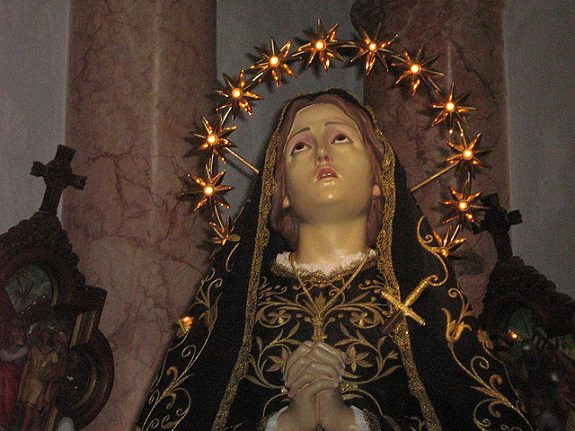
[Wikimedia Commons / Creative Commons Attribution-Share Alike 3.0 Unported license]

[from a Facebook post of 16 October 2014]
* * * * *
This is a question often raised by Protestant apologists, who misunderstand the reason why Catholics note these historical facts about the Protestant founders’ beliefs and aspects of “distinctive Catholicism” that they retain.
* * *
Primarily, it is a matter of historical fact or absence of evidence for same. Hence I wrote in the thread at CA where Tim Staples and I had a little friendly debate:
“In this instance, no dogma is involved. It’s purely a matter of historical fact: did Calvin believe in the perpetual virginity of Mary [PVM] or not? Whether he did or not has nothing to do with Catholic belief. We do hold to it in any event, as dogma.”
If one is interested in the history of theology, development of doctrine, and history of ideas (as I am, very much so), these sorts of questions are interesting, in and of themselves, wholly apart from apologetics or personal adherence one way or the other. Along these lines, it’s fascinating to see how the earliest Protestants differ from present-day ones, which is a matter of internal Protestant development (or departure, as the case may be). These approaches are as much sociological as they are historical, but not directly related to apologetics or “partisanship.”
I also think, however, that such questions are tangentially or potentially also apologetical ones in some respects. If a Protestant founder like Luther or Calvin believes in the PVM and at the same time believes in sola Scriptura, then (assuming self-consistency) they obviously think they have biblical rationale to believe it, rather than merely Catholic authority or an argument from extrascriptural tradition.
This then becomes a question in apologetics, insofar as a Protestant tries to claim that Catholics believe in it (as they habitually claim) only due to extrascriptural tradition. At that point we say that it is entirely possible to accept it within a sola Scriptura rule of faith, since Luther or Calvin or Zwingli or whoever, did the same. This undercuts the argument against such-and-such detested Catholic doctrines based on thinking they are “traditions of men” or corruptions. And that is undoubtedly apologetics and/or “polemics.”
Protestant apologists typically claim that such beliefs among their founders are mere unfortunate remnants of their former Catholic affiliation, which they haven’t yet managed to shake off because they were still early in the game of Protestant history, and this is “understandable,” etc., etc.
This is the “spin” that indicates, I think, a definite measure of embarrassment that the heroes and founders of the Protestant Revolt continued to believe a fair amount of “Catholic stuff” that now your average Protestant “Tom, Dick, or Harry” immediately “knows” from Scripture Alone, are abominable false doctrines. Luther and Calvin hadn’t yet arrived at that basic state of “Bible knowledge” (a ridiculous contention if there ever was one, once one sees how learned and “soaked in the Bible” both men were).
The “remnant” explanation is possible; however, it’s an entirely subjective argument, very difficult to prove. It’s a distinction without a difference. How would one prove that so-called “Reformer X” believed in the PVM because of the continuance of arbitrary Catholic tradition, or because he truly thought it was warranted from the Bible? I don’t see any way to do it.
The claim is arbitrary and made based on wishful thinking and special pleading, rather than solid ascertainable fact. It’s an interpretation superimposed on the facts as can be determined, to “explain away” what is thought to be anomalous or embarrassing or inconvenient in the course of anti-Catholic and/or pro-Protestant apologetics and polemics.
In the first instance, it is the ostensible self-understanding of the person who believes whatever he does (granting consistency), and provides a biblical rationale for why he does (which is apologetics and/or epistemology). In the second, folks today are observing so-and-so believing in the PVM and speculating as to WHY he did (motivation, getting into almost psychological analysis, which is often quite dubious).
It’s possible, of course, for both things to be true, too, just as, say, e.g., St. Augustine and Catholics today make arguments for beliefs based on both the Bible and tradition. But we’re not holding that only Scripture is infallible. When Calvin believes something, he’s gonna test it basically by Scripture alone, far more so than with Luther, who explicitly appeals to tradition (e.g., infant baptism over against the Anabaptists) and occasionally even to tradition alone in favor of his views (e.g., crucifixes).
So Calvin would say that he believes in the PVM (if in fact he did, as I believe) because the Bible indicates it, not tradition. But the observer today might say that “well, he really believed it because he has Catholic remnants that he was unaware of.” I find that to be most disrespectful of Calvin, as if he is some sort of dense dummy beholden to forces outside of himself, of which he is blissfully unaware.
The armchair psychoanalysis requires a belief that the very initiators of sola Scriptura as the rule of faith didn’t understand their own perspective, whereas any average Protestant today understands it better than the ones with whom it began. That makes no sense, and it is an insult to Luther, Calvin et al, as if they were simpletons or imbeciles. If anything can definitely said to not be true about them, it’s that: they they were stupid.
I think Catholics sometimes respect Protestant founders more than many Protestants do, because we accord them the respect of acknowledging that they believed what they believed, whatever it is, and don’t try to spin it away (with a polemical intent) by claiming that it’s because they are so ignorant of the Bible or still in bed with the Great Whore . . . . we simply let them be who they were: theological thinkers who deserve serious consideration whether we agree with their conclusions or not.
In any event, all parties are responsible to try to determine the historical facts of any given matter, whichever way they turn out, and to be willing to retract some things and modify positions, as more facts become available. That’s what it’s all about: we ought to go to wherever the truth leads us, as can best be determined by diligent study. It was that pursuit of truth that led both Tim Staples and I into the Catholic Church, which entailed changing our minds on a host of matters.
In conclusion, we could also look at these facts from another angle. If anyone who believes in the PVM is making Mary a “goddess” then Luther and Calvin would be doing so as well. But that is rejected as absurd by Protestants. Therefore, the premise must be discarded, lest Luther and Calvin be Mariolaters.
Calvinism & General Protestantism
Previous Post
November 3, 2015
Michael Voris vs. the Ordinary Form Mass & Pope Benedict XVI
Next Post

November 4, 2015 Why Should We Believe in Mary's Perpetual Virginity?
Browse Our Archives
Select a Category & Last Things About Me Anti-Catholicism Atheism & Agnosticism Baptism and Sacramentalism Bible and Tradition Blessed Virgin Mary Books by Dave Armstrong C. S. Lewis Calvinism & General Protestantism Catholic Apologetics Catholic Apologists Catholic conversion Catholic converts Christmas Church (Ecclesiology) Church History Conversion and Converts Development of Doctrine Eastern Orthodoxy Ecumenism & Christian Unity Eucharist & Liturgy Fathers of the Church French Translations G. K. Chesterton Hell Hell & Satan Hell & Satan & Last Things Heresies & Comparative Religion Holistic Health Inquisition & Crusades & Scandals James White Jews & Judaism & Old Testament John Calvin John Henry Newman Liberal / Modernist Theology Life Issues Literary Resume Lutheranism Mariology Martin Luther Music Orthodoxy Papacy & Infallibility Personal Page Philosophy & Science Political & Ethical & Moral Issues Protestant Persecution & Intolerance Protestantism Purgatory Purgatory & Penance Romantic & Imaginative Theology Saints & Purgatory & Penance Salvation Salvation & Justification Satan & Last Things Sexuality and Gender Issues Spanish Translations Traditionalism vs. Radical Catholic Reactionaries Traducciones al español / tradução para português Trinitarianism & Christology Uncategorized Videos
Select a Month October 2026 September 2026 August 2026 July 2026 June 2026 May 2026 April 2026 March 2026 February 2026 January 2026 December 2025 November 2025 October 2025 September 2025 August 2025 July 2025 June 2025 May 2025 April 2025 March 2025 February 2025 January 2025 December 2024 November 2024 October 2024 September 2024 August 2024 July 2024 June 2024 May 2024 April 2024 March 2024 February 2024 January 2024 December 2023 November 2023 October 2023 September 2023 August 2023 July 2023 June 2023 May 2023 April 2023 March 2023 February 2023 January 2023 December 2022 November 2022 October 2022 September 2022 August 2022 July 2022 June 2022 May 2022 April 2022 March 2022 February 2022 January 2022 December 2021 November 2021 October 2021 September 2021 August 2021 July 2021 June 2021 May 2021 April 2021 March 2021 February 2021 January 2021 December 2020 November 2020 October 2020 September 2020 August 2020 July 2020 June 2020 May 2020 April 2020 March 2020 February 2020 January 2020 December 2019 November 2019 October 2019 September 2019 August 2019 July 2019 June 2019 May 2019 April 2019 March 2019 February 2019 January 2019 December 2018 November 2018 October 2018 September 2018 August 2018 July 2018 June 2018 May 2018 April 2018 March 2018 February 2018 January 2018 December 2017 November 2017 October 2017 September 2017 August 2017 July 2017 June 2017 May 2017 April 2017 March 2017 February 2017 January 2017 December 2016 November 2016 October 2016 September 2016 August 2016 July 2016 June 2016 May 2016 April 2016 March 2016 February 2016 January 2016 December 2015 November 2015 October 2015 September 2015 August 2015 July 2015 June 2015 May 2015 April 2015 March 2015 February 2015 January 2015 December 2014 November 2014 October 2014 September 2014 August 2014 July 2014 June 2014 April 2014 March 2014 February 2014 January 2014 December 2013 November 2013 October 2013 September 2013 August 2013 July 2013 June 2013 April 2013 March 2013 February 2013 January 2013 December 2012 November 2012 October 2012 September 2012 August 2012 July 2012 June 2012 May 2012 April 2012 March 2012 February 2012 January 2012 December 2011 November 2011 October 2011 September 2011 August 2011 July 2011 June 2011 April 2011 March 2011 February 2011 October 2010 September 2010 August 2010 July 2010 April 2010 March 2010 December 2009 October 2009 August 2009 July 2009 June 2009 May 2009 March 2009 February 2009 October 2008 September 2008 April 2008 March 2008 February 2008 January 2008 December 2007 November 2007 October 2007 May 2007 March 2007 February 2007 January 2007 November 2006 October 2006 September 2006 August 2006 July 2006 June 2006 May 2006 April 2006 March 2006 February 2006 October 2005 June 2005 April 2005 February 2005 July 2004 May 2004 April 2004
Follow Us!
TAKE THE
Religious Wisdom Quiz
Who asked Jesus, "What is truth?"
Select your answer to see how you score.
Caiaphas Pilate Nicodemus Herod
Books by This Author Books by Dave Armstrong
Related posts from Biblical Evidence for Catholicism

On Protestant Explanations of Catholic Conversion
Biblical Evidence for Catholicism

Does Catholic Intercession of Saints Require Omniscience?
Biblical Evidence for Catholicism

Holy Ground: Why Mary Had NO Other Children...
Biblical Evidence for Catholicism
Protestant Confessions & "Ever-Virgin" Mary
Biblical Evidence for Catholicism
TRENDING AT PATHEOS Catholic

I was strolling through the top floor of the brand new Parthenon...

What Does Gêvâh Mean For Kimberley Guifoyle &...
This week, a lot of the news is focused on Kimberly Guilfoyle....

INNER CIRCLE: Profound Mystery (Of Christ In All...
Ephesians 5:31-32 “For this reason, a man will leave his father and...

Do Not Rejoice When Your Enemy Falls: The...
Turning an execution into a public spectacle is a disturbing expression of...

'The Chosen' S6 Trailer: The Passion Gets Very...
Not many watching 'The Chosen' worry about spoilers, but just because they...

The purpose-driven labor priest
A labor activist reads Rick Warren and it gets me wondering about...
view all Catholic blogs
Ad-Free & Subscriber Log-In Subscription Support
- About Us
- 2026 Calendar
- Videos
- Podcasts
- Library of World Religions
- Faith In Media Tracker
- Advertise With Us
- Write for Us
- Privacy Policy
- Terms of Service
- Do Not Sell My Data
- Contact Us
- Radiant Digital
- Manage Newsletter Subscriptions
- Unsubscribe From Notifications
- Sitemap
Copyright 2008-2026, Patheos. All rights reserved.
Subscription Support Ad-Free & Subscriber Log-In
Follow Patheos