
BuddhistCatholicContemplativeEvangelicalGeneral ChristianHinduJewishLatter-day SaintMuslimNew VisionsProgressive Christian
Beliefs
- Buddhist
- Catholic
- Contemplative
- Evangelical
- General Christian
- Hindu
- Jewish
- Latter-day Saint
- More Voices
- Muslim
- New Visions
- Pagan
- Progressive Christian
Topics
- Religion News
- Food and Religion
- Sports and Religion
- Religious Art
- Religious Music and Entertainment
- Religious Events
- History and Religion
- Style and Religion
- Politics and Religion
- Women in Religion
- Recreation Outdoors and Religion
- Business Finance and Religion
- Careers Workplace and Religion
- Education and Religion
- Family Parenting and Religion
- Health Fitness and Religion
- Home and Religion
- Relationships and Religion
- Technology and Religion
- Travel and Religion
Columnists
- Buddhist Columnists
- Business Finance and Religion Columnists
- Careers Workplace and Religion Columnists
- Catholic Columnists
- Contemplative Columnists
- Education and Religion Columnists
- Evangelists Columnists
- Family Parenting and Religion Columnists
- General Christian Columnists
- Health Fitness and Religion Columnists
- Hindu Columnists
- History and Religion Columnists
- Home and Religion Columnists
- Jewish Columnists
- More Voices Columnists
- Latter Day Columnists
- Muslim Columnists
- New Visions Columnists
- Nonreligious Columnists
- Pagan Columnists
- Politics and Religion Columnists
- Progressive Columnists
- Recreation Outdoors and Religion Columnists
- Relationships and Religion Columnists
- Religion News Columnists
- Religious Art Columnists
- Religious Events Columnists
- Religious Music and Entertainment Columnists
- Sports and Religion Columnists
- Style and Religion Columnists
- Technology and Religion Columnists
- Travel and Religion Columnists
- Women in Religion Columnists
Resource Library
- 2026 Calendar
- Library of World Religions
- The 100 Most Holy Places on Earth
- Patheos Answers
- Podcasts
- Videos
- Faith Leaders Database
- Anglican Episcopalian
- Bahai
- Baptist
- Buddhism
- Christianity
- Confucianism
- Eastern Orthodoxy
- Hinduism
- Holiness and Pentecostal
- ISKCON
- Islam
- Judaism
- Lutheran
- Methodist
- The Church of Jesus Christ of Latter-day Saints
- New Age
- Paganism
- Presbytarian and Reformed
- Protestantism
- Religion Behind the Scenes
- Roman Catholic
- Scientology
- Shia Islam
- Sikhism
- Sufism
- Sunni Islam
- Taoism
- Zen
- See all religions
Research Tools
 Ad-Free & Subscriber Log-In Subscription Support
Ad-Free & Subscriber Log-In Subscription Support
Follow Patheos 

- Trending:
- Forgiveness
- |
- Marriage
- |
- Consciousness
- |
- Death Penalty
- |
- Election
- |
- Halloween

-
About
-
Catholic Apologetics
-
Church History
-
Great Apologists
-
Christian Worldview
-
Protestantism & Misc.
- Home
- Catholic
- History and Religion
- Dialogue on Religious Epistemology with an Agnostic
Dialogue on Religious Epistemology with an Agnostic
Last updated on: April 25, 2017 at 2:03 pm by Dave Armstrong
Dialogue on Religious Epistemology with an Agnostic 2017-04-25T14:03:54-04:00 Dave Armstrong
Patheos Explore the world's faith through different perspectives on religion and spirituality! Patheos has the views of the prevalent religions and spiritualities of the world.
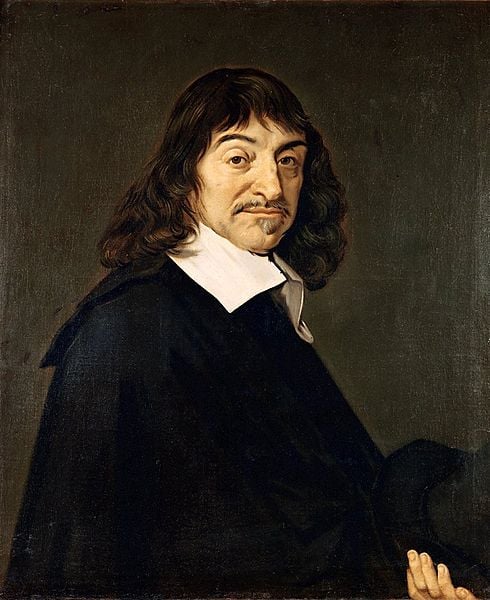
René Descartes (1596-1650), the great theistic philosopher; portrait by Frans Hals (c. 1582-1666) [public domain / Wikimedia Commons]

* * *
This took place in the combox for my post, “Fairies, Atheism, God, & Ad Populum Fallacy.” The words of the always stimulating and interesting JD Eveland will be in blue.
* * * * *
An atheist asked: “How do you differentiate a trick of a fallible mind from a genuine experience if it cannot be evidenced or corroborated?” I replied:
By applying the cumulative effect of many different arguments for God, including the experiential one.
Each and every one of these classes of arguments has been criticized and sometimes refuted, over the course of centuries. Is it your contention that anyone who doubts the truth of the Christian narrative of the Universe must personally contend with and argue against all of these arguments collectively? I could assemble an equally impressive listing of such counter-arguments. But even if I were able to do that (which at my advanced age am not), would that change anything at all about your faith or the nature of your religious practice?
“Proofs of God” and their counter-arguments seem to me to be largely epiphenomenal – that is, they comfort and reinforce the already believing, but do little to causally influence those not already in sympathy with them. Are there any committed and reasoning atheists or agnostics out there who have been convinced into the Catholic Church through reading your materials? I ask this not to question your value or your quality of argument; simply as an inquiry. If so, what would be the key to that conversion? And why haven’t you sprung it on me or some of your other dialogue partners of a skeptical bent?
I agree about arguments. Probably 95% or more of Christians are not convinced because of intellectual arguments. They feel the thing intuitively or subjectively to be true.
Probably some atheists have become Christians because of my writing. I don’t recall for sure. I know that several hundred people have become Catholics, from letters received.
As I wrote recently, I think the thing most likely to convert an atheist or agnostic would be a profound act of love towards them, like saving their life. Or, secondly, something that brings them to the end of themselves, so that they surrender and reach out to God (as happened to me in 1977, with a huge clinical depression and existential despair).
Interesting! I’ve been dealing with clinical depression and despair for some time now, and I can’t say that I’ve ever found that moving me toward religion as a solution. But then, I was raised with a free-thinking (that term is just descriptive, not evaluative in any way) mindset, not a Christian mindset as you were, so vocabulary such as “God” and “salvation” wouldn’t naturally occur to me. I have a hard time imagining how anything other than myself is going to get me out of a mental state that I’ve systematically generated for myself.
I wasn’t raised in a “Christian mindset” (by my definition), but rather, a very nominally Methodist mindset. I didn’t know Christian theology from a hole in the ground. So when I converted to evangelicalism in 1977, it was a whole new thing for me, not a “renewal” of a familiar thing.
At that time, I hadn’t gone to church regularly for ten years. Even after my conversion I went to Bible studies and not church on Sunday, for another three years.
I should note, though, that my brother had been an evangelical Christian for six years before I was, so he was an influence. But I wasn’t raised in it initially. I was 13 when he converted as part of the “Jesus People” movement (long hair, former hippies and druggies, etc.).
Thus, one might argue that you stuck with what you were raised with all along because of strong conditioning, or “environment” (if we want to analyze it in that fashion), whereas I was the nonconformist and followed my own way despite my upbringing.
Conversion to Catholicism was even more radical of a move, in 1990. I knew virtually nothing about Catholicism, and had no background whatever (of any family or friends) in that. Intellectual curiosity was the primary driver in that case.
No one in their right mind who knew me in those days would have ever predicted in a million years that I would “go Catholic.” Nor would I have, myslf. But I follow truth wherever I think it leads. That’s the common thread.
One could make that argument. Of course, since what I have “stuck with” – free thinking – isn’t about content of any sort; it’s about process. It had allowed me to explore a number of religious and spiritual paths. Had I found any of them to be convincing to the exclusion of any others, I would have been quite able to stop there; but I didn’t, and I didn’t. I’ve found many of them (including Catholicism) to have ideas of value, but no convincing reason why I should stop there and wrap up my spiritual explorations.
Had I by some chance been brought up Catholic, there’s a strong probability that I would have joined the priesthood, probably the jesuits whom I’ve always much admired.
* * *
And I’ve had my life saved on several occasions (first as a child, by an older child when I was drowning, a couple of other occasions, and most recently a couple of years ago by my partner, from choking). My response has always been profound gratitude to the person involved, but not to any abstraction beyond that.
I should add, regarding this scenario of saving a life: it would only have “theological impact” if it was seen as a manifestation of a particularly profound love for others, which the person attributes to the grace of God in his life.
There was a scene of similar nature in the famous Christian movie and book, The Cross and the Switchblade, written by evangelical David Wilkerson. In the book was a guy named Nicky Cruz, who was a gang member. Wilkerson was trying to “get him saved” and was preaching to him and Nicky got so agitated that he said, “I’ll cut you, preacher!”
Then Wilkerson said back to him, “you can cut me in a thousand pieces and each piece will still love you.”
That cut Cruz to the quick (no pun intended) so profoundly that it led to his conversion to Christ.
This is what I mean: an act of love that seems to have an origin in the grace of God and not mere human origin. Why would someone be willing to die for a guy he doesn’t even know, who was being quite mean to him? Well, it’s the love of Jesus, that goes beyond mere human capacity or predisposition.
This is what Jesus taught His disciples: “love one another as I have loved you.” He laid down His life for them. Thus, that is a profound manifestation of love.
And that goes far beyond any argument ever conceived.
* * *
[A]ny religion is also a human model of some aspects of reality, constructed by human minds to achieve human purposes. But much like any scientific model, any religious model is also always going to be an approximation, within its domain – never “true” or “false” in any precise sense, but more or less useful to those who employ it.
Of course I disagree with your analysis of religion. I believe quite the opposite: not that human beings necessarily invent all religions (certainly some do invent some), but rather, that God put belief in Him inside of us, as innate knowledge (which Newman has described as the illative sense, and Polanyi as tacit knowledge). I suppose this would be a species of Platonic thought rather than the beloved empiricism.
There is no way of “proving” anything about consciousness. Consciousness is an emergent property of human bodies and nervous systems, that allows us to build up entire worlds of experience on the basis of really quite limited sensory inputs. Quite creative, indeed!
In fact, there is no way to establish the “reality” of anything. Human beings share their experiences of consciousness with each other, on the theory that they might be of use to someone else. I have no way of establishing the reality of any experience you share with me, but it might be useful.
I don’t see “spirituality” as necessarily implying “the supernatural”. There are varieties of conscious experience that relate to the physical world accessed through the senses, and varieties that relate to purely mental constructions, particularly speculations and experiences about consciousness itself. It’s the latter I’m referring to. There is simply a great deal about being human that we do not currently understand.
It is entirely possible that various “spiritual” issues and experiences will turn out on more sophisticated investigation to be physical phenomena presently unknown and/or undetectable. That would neither shock nor surprise me. It’s also possible that some are mere epiphenomena – random neuron firings of some sort. And I wouldn’t automatically reject the possibility that there are indeed super-natural processes at work in unknown ways.
The problem is that, contrary to many people’s views (including Dave) the latter is not a very helpful hypothesis for day-to-day living. It encourages dependence, reduces the incentives for inquiry, and in general minimizes human potential. But it’s equally important not to automatically reject experiences and ideas just because we don’t have immediate explanations for them.
It didn’t do that in the Middle Ages when Christian Europe produced stuff like, um, universities and modern science . . . and the monks preserved classical pagan learning by copying manuscripts.
The great cathedrals are also monuments to a “minimization” of human [architectural and artistic] potential, ain’t they?
That damned Christian belief in the supernatural ruins everything, doesn’t it?
* * *
We trust our senses for giving us accurate information about the external world. Indeed, all of science is built upon this initial premise.
We all do that naturally. A baby can do it. Does that mean it’s not valid or trustworthy or “serious” until and unless we can fully explain it? Clearly not.
It’s only recently, in fact, that we have advanced in neuroscience to the extent that we can actually explain the particular processes that go into sight and storage of such information obtained by sight into our brains.
But we all had trusted our eyesight (and other senses) all those years before we had technical explanations of it. We had created modern science before we could “prove” all the ins and outs of sensory perception.
That kind of proposition is known as a “heuristic”. It’s a working assumption that one can’t “prove” to be true (outside of mathematics and formal logic, there is no way to establish “truth”, only falsity) but which seem to work. a statement like “the sun will rise tomorrow” is one such heuristic. We pretty much all believe that one, since it’s consistent with a lot of experience, but there’s no evidence for it apart from that accumulated experience until tomorrow morning actually arrives.
I’ve written a couple of blog columns about the idea of technology we don’t understand being more or less like magic. We’re all applied magicians, since we understand the spells and incantations and potions necessary to make something work, even if we haven’t the vaguest idea of how it works. We manipulate most of our world through such magic-based heuristics. Check this out on my blog if you’re interested.
And this is the sort of approach I’ve suggested with you: the thought of Alvin Plantinga (“properly basic beliefs”), Michael Polanyi (tacit knowledge), and John Henry Newman (Illative sense).
I love this sort of thinking because it meets people where they (some 90%) are at, and it is non-empirical (which atheists love above all) and non-positivistic. Non-intellectuals or folks who may not be able to articulate or explain to the nth degree arrive at many truths, too.
* * *
Even more of a leap “…leap to go from “there is an uncaused cause” to “that cause is God””, and then on to “that God is the specific vision/version of God defined by the Roman Catholic Church, and any other versions are invalid”. Dave’s been trying to explain to me why that last leap makes sense, but I haven’t been able to fold my brain around it yet.
You won’t until you accept the validity of revelation: the evidences for which are of a completely different nature (legal-historical).
But the “Catholic God” is not altogether exclusive to us. In most respects, Protestants and Orthodox believe in the same God, with the same characteristics. It’s only highly abstract stuff that is controversial (temporality, process theology, etc.).
The Jewish God is also very similar, minus the trinitarian aspect. The Old Testament God is essentially the same as what we believe to be God the Father.
* * *
Forget the Tooth Fairy; how about Brahma/Vishnu/Shiva? Or the Buddha? There are well-established academic fields at universities across Asia that would argue there’s just as much systematic theology supporting them as there is with regard to Christianity. And certainly, as previously observed, there is a vast amount of atheist scholarship and thinking and philosophizing without any divine focus at all.
I would say that the eastern religions lack the historical arguments that Christianity has. Buddha didn’t claim to be God. Buddhism isn’t monotheistic; indeed, I understand that its primary form is not theistic at all. It would say, rather, “we’re all God / gods” or “we’re all part of God.” This is a denial of the transcendence of God in Christian thought.
There is a reason why science didn’t develop in India, and did in Christian western Europe. Hinduism didn’t lend itself to scientific thinking. And for similar reasons, neither can it be defended rationally in the way that Christianity can.
Previous Post

November 17, 2015
Dialogue with an Atheist on "Tooth Fairyology" vs. Theology
Next Post
November 18, 2015 “Catholic Justification” as Seen in James and Romans
Browse Our Archives
Select a Category & Last Things About Me Anti-Catholicism Atheism & Agnosticism Baptism and Sacramentalism Bible and Tradition Blessed Virgin Mary Books by Dave Armstrong C. S. Lewis Calvinism & General Protestantism Catholic Apologetics Catholic Apologists Catholic conversion Catholic converts Christmas Church (Ecclesiology) Church History Conversion and Converts Development of Doctrine Eastern Orthodoxy Ecumenism & Christian Unity Eucharist & Liturgy Fathers of the Church French Translations G. K. Chesterton Hell Hell & Satan Hell & Satan & Last Things Heresies & Comparative Religion Holistic Health Inquisition & Crusades & Scandals James White Jews & Judaism & Old Testament John Calvin John Henry Newman Liberal / Modernist Theology Life Issues Literary Resume Lutheranism Mariology Martin Luther Music Orthodoxy Papacy & Infallibility Personal Page Philosophy & Science Political & Ethical & Moral Issues Protestant Persecution & Intolerance Protestantism Purgatory Purgatory & Penance Romantic & Imaginative Theology Saints & Purgatory & Penance Salvation Salvation & Justification Satan & Last Things Sexuality and Gender Issues Spanish Translations Traditionalism vs. Radical Catholic Reactionaries Traducciones al español / tradução para português Trinitarianism & Christology Uncategorized Videos
Select a Month October 2026 September 2026 August 2026 July 2026 June 2026 May 2026 April 2026 March 2026 February 2026 January 2026 December 2025 November 2025 October 2025 September 2025 August 2025 July 2025 June 2025 May 2025 April 2025 March 2025 February 2025 January 2025 December 2024 November 2024 October 2024 September 2024 August 2024 July 2024 June 2024 May 2024 April 2024 March 2024 February 2024 January 2024 December 2023 November 2023 October 2023 September 2023 August 2023 July 2023 June 2023 May 2023 April 2023 March 2023 February 2023 January 2023 December 2022 November 2022 October 2022 September 2022 August 2022 July 2022 June 2022 May 2022 April 2022 March 2022 February 2022 January 2022 December 2021 November 2021 October 2021 September 2021 August 2021 July 2021 June 2021 May 2021 April 2021 March 2021 February 2021 January 2021 December 2020 November 2020 October 2020 September 2020 August 2020 July 2020 June 2020 May 2020 April 2020 March 2020 February 2020 January 2020 December 2019 November 2019 October 2019 September 2019 August 2019 July 2019 June 2019 May 2019 April 2019 March 2019 February 2019 January 2019 December 2018 November 2018 October 2018 September 2018 August 2018 July 2018 June 2018 May 2018 April 2018 March 2018 February 2018 January 2018 December 2017 November 2017 October 2017 September 2017 August 2017 July 2017 June 2017 May 2017 April 2017 March 2017 February 2017 January 2017 December 2016 November 2016 October 2016 September 2016 August 2016 July 2016 June 2016 May 2016 April 2016 March 2016 February 2016 January 2016 December 2015 November 2015 October 2015 September 2015 August 2015 July 2015 June 2015 May 2015 April 2015 March 2015 February 2015 January 2015 December 2014 November 2014 October 2014 September 2014 August 2014 July 2014 June 2014 April 2014 March 2014 February 2014 January 2014 December 2013 November 2013 October 2013 September 2013 August 2013 July 2013 June 2013 April 2013 March 2013 February 2013 January 2013 December 2012 November 2012 October 2012 September 2012 August 2012 July 2012 June 2012 May 2012 April 2012 March 2012 February 2012 January 2012 December 2011 November 2011 October 2011 September 2011 August 2011 July 2011 June 2011 April 2011 March 2011 February 2011 October 2010 September 2010 August 2010 July 2010 April 2010 March 2010 December 2009 October 2009 August 2009 July 2009 June 2009 May 2009 March 2009 February 2009 October 2008 September 2008 April 2008 March 2008 February 2008 January 2008 December 2007 November 2007 October 2007 May 2007 March 2007 February 2007 January 2007 November 2006 October 2006 September 2006 August 2006 July 2006 June 2006 May 2006 April 2006 March 2006 February 2006 October 2005 June 2005 April 2005 February 2005 July 2004 May 2004 April 2004
Follow Us!
TAKE THE
Religious Wisdom Quiz
Who fell out of a window and was restored to life by Paul?
Select your answer to see how you score.
Silas Barnabas Eutychus Timothy
Books by This Author Books by Dave Armstrong
Related posts from Biblical Evidence for Catholicism

God, Modern Physics, & Dark Energy: An Analogy
Biblical Evidence for Catholicism
C. S. Lewis’ Argument for God from Desire
Biblical Evidence for Catholicism
Jesus Proved He Was God in Six Ways...
Biblical Evidence for Catholicism

General Debate on Christianity with an Atheist
Biblical Evidence for Catholicism
TRENDING AT PATHEOS Catholic

In "Irreplaceable," our book on vocation and technology, Trevor Sutton and I...

I was strolling through the top floor of the brand new Parthenon...

What Does Gêvâh Mean For Kimberley Guifoyle &...
This week, a lot of the news is focused on Kimberly Guilfoyle....

INNER CIRCLE: Profound Mystery (Of Christ In All...
Ephesians 5:31-32 “For this reason, a man will leave his father and...

Do Not Rejoice When Your Enemy Falls: The...
Turning an execution into a public spectacle is a disturbing expression of...

'The Chosen' S6 Trailer: The Passion Gets Very...
Not many watching 'The Chosen' worry about spoilers, but just because they...
view all Catholic blogs
Ad-Free & Subscriber Log-In Subscription Support
- About Us
- 2026 Calendar
- Videos
- Podcasts
- Library of World Religions
- Faith In Media Tracker
- Advertise With Us
- Write for Us
- Privacy Policy
- Terms of Service
- Do Not Sell My Data
- Contact Us
- Radiant Digital
- Manage Newsletter Subscriptions
- Unsubscribe From Notifications
- Sitemap
Copyright 2008-2026, Patheos. All rights reserved.
Subscription Support Ad-Free & Subscriber Log-In
Follow Patheos