
BuddhistCatholicContemplativeEvangelicalGeneral ChristianHinduJewishLatter-day SaintMuslimNew VisionsProgressive Christian
Beliefs
- Buddhist
- Catholic
- Contemplative
- Evangelical
- General Christian
- Hindu
- Jewish
- Latter-day Saint
- More Voices
- Muslim
- New Visions
- Pagan
- Progressive Christian
Topics
- Religion News
- Food and Religion
- Sports and Religion
- Religious Art
- Religious Music and Entertainment
- Religious Events
- History and Religion
- Style and Religion
- Politics and Religion
- Women in Religion
- Recreation Outdoors and Religion
- Business Finance and Religion
- Careers Workplace and Religion
- Education and Religion
- Family Parenting and Religion
- Health Fitness and Religion
- Home and Religion
- Relationships and Religion
- Technology and Religion
- Travel and Religion
Columnists
- Buddhist Columnists
- Business Finance and Religion Columnists
- Careers Workplace and Religion Columnists
- Catholic Columnists
- Contemplative Columnists
- Education and Religion Columnists
- Evangelists Columnists
- Family Parenting and Religion Columnists
- General Christian Columnists
- Health Fitness and Religion Columnists
- Hindu Columnists
- History and Religion Columnists
- Home and Religion Columnists
- Jewish Columnists
- More Voices Columnists
- Latter Day Columnists
- Muslim Columnists
- New Visions Columnists
- Nonreligious Columnists
- Pagan Columnists
- Politics and Religion Columnists
- Progressive Columnists
- Recreation Outdoors and Religion Columnists
- Relationships and Religion Columnists
- Religion News Columnists
- Religious Art Columnists
- Religious Events Columnists
- Religious Music and Entertainment Columnists
- Sports and Religion Columnists
- Style and Religion Columnists
- Technology and Religion Columnists
- Travel and Religion Columnists
- Women in Religion Columnists
Resource Library
- 2026 Calendar
- Library of World Religions
- The 100 Most Holy Places on Earth
- Patheos Answers
- Podcasts
- Videos
- Faith Leaders Database
- Anglican Episcopalian
- Bahai
- Baptist
- Buddhism
- Christianity
- Confucianism
- Eastern Orthodoxy
- Hinduism
- Holiness and Pentecostal
- ISKCON
- Islam
- Judaism
- Lutheran
- Methodist
- The Church of Jesus Christ of Latter-day Saints
- New Age
- Paganism
- Presbytarian and Reformed
- Protestantism
- Religion Behind the Scenes
- Roman Catholic
- Scientology
- Shia Islam
- Sikhism
- Sufism
- Sunni Islam
- Taoism
- Zen
- See all religions
Research Tools
 Ad-Free & Subscriber Log-In Subscription Support
Ad-Free & Subscriber Log-In Subscription Support
Follow Patheos 

- Trending:
- Forgiveness
- |
- Marriage
- |
- Consciousness
- |
- Death Penalty
- |
- Election
- |
- Halloween

-
About
-
Catholic Apologetics
-
Church History
-
Great Apologists
-
Christian Worldview
-
Protestantism & Misc.
- Home
- Catholic
- History and Religion
- Simultaneously Dumb & Smart Christians, Atheists, & Scientists
Simultaneously Dumb & Smart Christians, Atheists, & Scientists
Last updated on: June 6, 2026 at 12:28 am by Dave Armstrong
Simultaneously Dumb & Smart Christians, Atheists, & Scientists 2026-06-06T00:28:16-04:00 Dave Armstrong
Patheos Explore the world's faith through different perspectives on religion and spirituality! Patheos has the views of the prevalent religions and spiritualities of the world.
Reply to atheist Neil Carter’s article,“Why Do Intelligent, Well-Educated People Still Believe Nonsense?” (10-9-15)
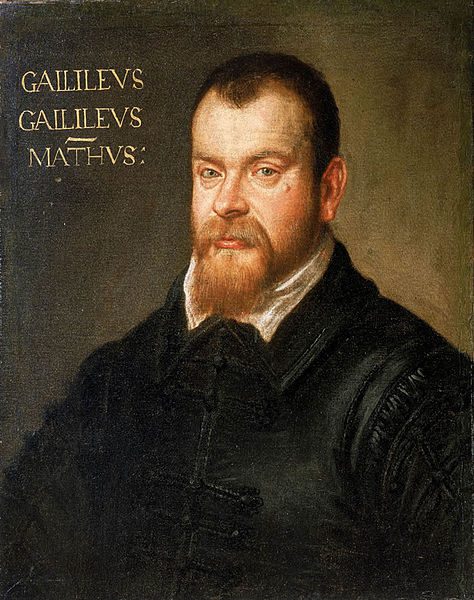
Galileo Galilei (1564-1642); portrait (c. 1605-1607) by Domenico Tintoretto (1560-1635) [public domain / Wikimedia Commons]

Neil Carter’s cited words will be in blue.
* * * * *
Last night for the third time in as many months I found myself explaining to someone raised outside of a devoutly religious environment that religious people are not stupid simply because they believe nonsensical things. . . .
Very often they flatly disagree and insist that anyone who believes in things like demons and angels and Young Earth Creationism must be morons. But then like last night they get a puzzled expression as they sit across from me and finally admit, “The thing is, you don’t seem stupid to me. So how on earth did you ever believe such things?”
Good article. I can heavily relate to it. I, too, have often found myself explaining to someone not familiar with the devoted atheist environment, that atheists are not stupid or wicked simply because they believe nonsensical and absurd things.
It’s tough for us non-believers in the atheist “vision” and worldview to comprehend how intelligent, sharp people with lots of degrees and books read and high IQs and a profound love of science, manage to believe that trillions of atoms (having popped into existence for no known or discernible reason in a Big Bang: an event now accepted and first developed by a Catholic priest, Georges Lemaître) — but we “know” that GOD COULDN’T HAVE DONE IT!!! — and their distant relatives, cells, can make absolutely everything in the universe occur, by their own power, possessed eternally either in full or (who knows how?) in inevitably unfolding potentiality. We’re baffled at how they can attribute to atoms and cells the omnipotence and omniscience and extraordinary creative power that we attribute to an eternal spirit, God. But they manage to do so.
We’re baffled how intelligent scientists could be fooled by Piltdown Man for 41 years (!). Henry Fairfield Osborn, President of the American Museum of Natural History, thought the jaw and skull belonged together “without question”. It turned out to be an obvious hoax: the jawbone of an orangutan attached to a human skull. Atheist paleontologist (and great critical writer on the history of science) Stephen Jay Gould observed that it was immediately apparent that it had been tampered with — if only someone had bothered to look closely at the damned thing during all those years. Finally someone did. It just took 41 years . . .
But it had been accepted for 41 years as a compelling proof of Darwinian human evolution, and thrown in the face of the folks at the famous Scopes trial in 1925 (I happened to visit that courtroom this summer). Nebraska Man: another silly so-called “specimen” — was widely accepted from 1922 to 1927, and turned out to be a tooth of an extinct pig (one tooth was the entire evidence for it). It’s another case of intelligent scientists believing in folly.
It’s remarkable how often throughout history this happens. Of course we don’t hear much about it, but these follies and imbecilities assuredly happened, just as all the stuff we constantly hear about Christian history happened (albeit usually fantastically distorted and exaggerated, as I have myself shown in my apologetics work, time and again).
Scientists started becoming enthralled with eugenics in the early 20th century, and advocated things like sterilizing black men, so they wouldn’t pollute white society too much. We saw how Germany, a highly advanced, pro-scientific society, started using its scientists to torture Jewish prisoners in concentration camps for “scientific experiments.” It’s tough to grasp that one! How could the “smart” people do such things? The Nazis loved eugenics. That was sufficient to wake up the scientists who loved it, and it fell by the wayside. Nuthin’ like a wake-up call, huh? The Wikipedia article on eugenics states:
[T]he modern history of eugenics began in the early 20th century when a popular eugenics movement emerged in Britain and spread to many countries, including the United States and most European countries. In this period, eugenic ideas were espoused across the political spectrum. Consequently, many countries adopted eugenic policies meant to improve the genetic stock of their countries. Such programs often included both “positive” measures, such as encouraging individuals deemed particularly “fit” to reproduce, and “negative” measures such as marriage prohibitions and forced sterilization of people deemed unfit for reproduction. People deemed unfit to reproduce often included people with mental or physical disabilities, people who scored in the low ranges of different IQ tests, criminals and deviants, and members of disfavored minority groups.
The “enlightened” French revolutionaries who worshiped the “goddess of reason” in the late 18th century were so smart that they decided that the father of chemistry, Antoine Lavoisier, ought to be put to death. But those wicked evil Catholics, who burned everyone at the stake, right? [wrong!] were so brutal to Galileo 150 years earlier that they sentenced him to (are you ready?!) house arrest in the luxurious palace of a supporter (Niccolini, the ambassador to the Vatican from Tuscany). Somehow we all hear about the [grossly distorted and twisted] story of Galileo. And that is, of course, because he took on the big bad evil Catholic Church (never mind that Copernicus was a good Catholic, and that his revolutionary book had been endorsed by the pope of the time).
But Copernicus (1473-1543) had erred in asserting circular orbits and in holding that the sun was the stationary center of the universe, with not only the earth and the other planets of the solar system, but also all the other stars, moving around it. He also believed that transparent rotating crystalline spheres carried the planets in their orbits. So why is only the Catholic Church mocked for the temporary scientific errors of some of her members during this fledgling period of astronomy, when everyone else held to errors, too?
Not so well-known are the stupid errors that Galileo (1564-1642) believed in. He rejected Johannes Kepler’s (1571-1630) elliptical orbits of the planets, considering the circle the “perfect” shape for planetary orbits; even though his main publications (unlike Copernicus) came after Kepler’s groundbreaking work. Galileo was oblivious to the current, cutting-edge, correct science of orbiting planets.
Einstein described Galileo’s failure to incorporate Kepler’s laws as “a grotesque illustration of the fact that creative individuals are often not receptive”. Kepler was correct in asserting elliptical orbits of the planets around the sun, at varying speeds (both notions having been foreseen by the Catholic Cardinal Nicholas of Cusa in the 15th century), but continued to err in thinking that the sun was the center of the entire universe.
Galileo was wrong in following Copernicus’s (and Kepler’s) view that the sun was the stationary center of the universe, with the earth and other planets of the solar system, and also all the other stars, moving around it. In this respect, he and Copernicus had hardly advanced beyond what was already posited by the ancient Greek astronomer Aristarchus (d. c. 230 B. C.). All three had merely moved the center of the universe 93 million miles from the earth to the sun.
Galileo, moreover, argued vehemently in his 1623 book The Assayer that the comets of 1618 were merely an optical illusion. Furthermore, Galileo dismissed as a “useless fiction” the idea, held by Kepler, that the moon caused the tides. He thought they were caused by the rotation of the earth. Galileo (like Kepler) was an avid proponent of astrology (see “Galileo’s Astrology,” by Nick Kollerstrom). He drew up astrological charts for his two illegitimate daughters, and composed character-judgments based upon them. For his oldest, Virginia, he noted:
The Moon is very debilitated and in a sign which obeys. She is dominated by family relationships. Saturn signifies submission and severe customs which gives her a sad demeanour, but Jupiter is very well with Mercury, and well-aspected corrects this.
St. Robert Bellarmine, who was directly involved in the Galileo controversy, made it clear that heliocentrism was not irreversibly condemned, and also that a not-yet proven theory was not an unassailable fact. Bellarmine actually had the superior understanding of the nature of a scientific hypothesis. The mere observations of the telescope had not technically proved anything. True heliocentrism wasn’t conclusively proven until some 200 years later. Thus, Bellarmine’s attitude was more advanced regarding scientific method than the dogmatic Galileo’s attitude was. I’d bet that not one in 25,000 (maybe 100,000) people know that!
Tycho Brahe (1546–1601) erred insofar as he was a geocentrist and held (Tychonic “geoheliocentric” system) that the sun and moon revolve around the earth, and the other five planets revolve around the sun: in circular, not elliptical orbits. Also, in his system the earth did not rotate. He was an avid proponent of astrology, too, and even Isaac Newton was fascinated with alchemy, a sort of half-sister to astrology, and long considered a pseudo-science.
No one was infallible in this period, according to modern-day science. Those who condemn only the Catholic Church because some of its prominent members held to geocentrism a bit longer, are simply ignorant of history, or are choosing to selectively present it, so that the Catholics look stupid and the scientists unfailingly brilliant, intelligent, and forward-looking. Isn’t the real, full truth far more fascinating?
It’s hard to understand how intelligent, informed scientists could be enthralled with a pseudo-science as stupid as phrenology (“observing and/or feeling the skull to determine an individual’s psychological attributes”) for many decades (mostly from around the 1770s to the 1840s, but in some scientific circles, well into the 20th century).
We shouldn’t regard these thousands of “enlightened” scientists (not infrequently, also agnostics or atheists) as stupid; just those who somehow come to believe in nonsensical, absurd, utterly implausible things. Y’all don’t “get” us; we don’t get y’all. But we gotta be kind and nice to each other anyway.
Carter goes after Dr. Ben Carson in his article:
To see what I mean by compartmental intelligence, look no further than presidential candidate Ben Carson, who distinguished himself as a pioneering brain surgeon but who displays the political acumen of a remedial third grader. As a presidential candidate I must say he makes a fine neurosurgeon.
But take solace, my atheist friends; as a Seventh-Day Adventist, Dr. Carson (from my hometown of Detroit) rejects the doctrine of hell (they believe in annihilationism). So will atheists and theological liberals (among whom a denial of hell is quite the trendy fashion these days) praise him to the skies for that? I won’t hold my breath.
If Dr. Carson has no political abilities (here, Carter merely reveals his political bias, not atheism per se), I’d love to see how President Obama is ranked in Carter’s estimation (catatonic? unconscious? ignoramus?). One of my daughter’s guinea pigs could have done a better job than he has these past seven years.
Iran can be trusted regarding nuclear weapons or anything else? The radical jihadists have no relation to even a perverted version of Islam? We’ll get to keep our doctors and health insurance won’t increase in cost? We’ll live in a wonderfully colorblind, racist-free liberal Utopia, with lower crime, etc.? African-American incomes will go up? We’ll control illegal immigration? The south side of Chicago will cease being a murderous hellhole? Socialism will get the US economy going? Right.
How utterly stupid and anti-scientific also is it for intelligent “enlightened” people, to argue that babies in the womb are not human beings? Do pro-abortion atheists wanna argue about the genetic science involved in that? no; they almost never do that. Talk about absolutely ignoring science and all common sense . . .
I’d much rather have a President Carson than a President Obama, who believes the ghastly, ghoulish murder of the most helpless and innocent human beings; believes in sucking the brains out of a full-term baby, or winks at the practice of delivering perfectly intact, healthy babies, only to dissect and dismember them outside of the womb, in order to harvest their body parts for profit (and if evil is also stupid, these outrages are extremely stupid). Dr. Carson has devoted his life to saving lives, not deliberately ending them, or indulging in the most hideous, cruel tortures for a profit motive.
Carter continues:
Another thing you must realize is that very intelligent people will believe very nonsensical things if you get to them young enough. When you grow up in an environment which takes for granted that a system of belief is sacred, your knowledge base and your critical thinking skills grow up around that belief structure in such a way as to leave it undisturbed.
I agree, totally. Atheists who grow up in the atheist environment, or surround themselves with only like-minded people (after work) will continue on as good atheists, oblivious to all the absurdities inherent in the position. They take it in with their mother’s milk. That argument cuts both ways . . . Carter grew up some kind of Christian (lemme guess: a fundamentalist?) and later rejected it for atheism. So he doesn’t fit into this mold. I don’t either. I grew up as a very theologically ignorant nominal Methodist till age 10, when we stopped going to church, at which time became a “practical atheist” enthralled with the occult. I converted to evangelical Protestantism at age 18 and again to Catholicism at age 32, as a result of my own study, not environmental factors (I was surrounded by almost all Protestants in 1990!).
I agree that many people fit this mold, but not just Christians. Anyone of any stripe is highly prone, statistically, to “become what they eat.” It’s by no means only a Christian phenomenon. He continues:
We learned at an early age that human reasoning cannot be trusted. . . . With a narrative like that, is it any wonder that Christians grow up suspicious of the life of the mind? We were taught to distrust our own intellects even within those subcultures which otherwise valued science, education, and exploration . . .
Now here he clearly betrays the fact that he must have grown up in anti-intellectual fundamentalist circles. This is very common among former Christians who become atheists. But the mistake he makes is to equate that small sub-community with all of Christianity. He doesn’t qualify it. I don’t recognize this mentality in the many Protestant and Catholic subcultures I have been involved in (Methodist, Lutheran, messianic Jewish, non-denominational “Jesus Freak”, Assemblies of God, Inter-Varsity, Baptist, the cult researcher community, the pro-life community, Catholicism since 1990). I never saw it.
What’s fallacious here is for Carter to assume (or so it would seem) that Christianity as a whole teaches a hostility to reason and science. It’s simply not the case. I was never a fundamentalist; never a young-earther, never denied the possibility of evolution, never feared (in abject horror) that science would “disprove” my faith, didn’t go to bed every night scared to death that quantum mechanics or black holes would prove that God doesn’t exist (we were correctly taught that faith and reason and faith and science were harmonious; not at odds).
And I was an evangelical from age 18 to 32. If one knows the history of the fundamentalist-modernist conflicts of the 1890s and 1920s and the emergence of evangelicalism after World War II, they would know that evangelicalism welcomed reason, culture, and science, in reaction to fundamentalism, that had gone too far in reaction to theological liberalism.
Carter describes his former belief-system as “evangelical,” but it sure sounds like “fundamentalist” to me, with its strong distrust of reason. Luther and Calvin started out with a strong distrust of reason, philosophy, and science, too, but their followers have not followed that, for the most part. The Catholic Church has always valued reason and science and philosophy. I wrote a book detailing the profound, overwhelming Catholic and Protestant and theist influence in the history of science.
Previous Post

October 9, 2015
God, Empiricism, & Atheist Demands for "Evidence"
Next Post
October 10, 2015 Manuscript Evidence: New Testament vs. Plato, Etc.
Browse Our Archives
Select a Category & Last Things About Me Anti-Catholicism Atheism & Agnosticism Baptism and Sacramentalism Bible and Tradition Blessed Virgin Mary Books by Dave Armstrong C. S. Lewis Calvinism & General Protestantism Catholic Apologetics Catholic Apologists Catholic conversion Catholic converts Christmas Church (Ecclesiology) Church History Conversion and Converts Development of Doctrine Eastern Orthodoxy Ecumenism & Christian Unity Eucharist & Liturgy Fathers of the Church French Translations G. K. Chesterton Hell Hell & Satan Hell & Satan & Last Things Heresies & Comparative Religion Holistic Health Inquisition & Crusades & Scandals James White Jews & Judaism & Old Testament John Calvin John Henry Newman Liberal / Modernist Theology Life Issues Literary Resume Lutheranism Mariology Martin Luther Music Orthodoxy Papacy & Infallibility Personal Page Philosophy & Science Political & Ethical & Moral Issues Protestant Persecution & Intolerance Protestantism Purgatory Purgatory & Penance Romantic & Imaginative Theology Saints & Purgatory & Penance Salvation Salvation & Justification Satan & Last Things Sexuality and Gender Issues Spanish Translations Traditionalism vs. Radical Catholic Reactionaries Traducciones al español / tradução para português Trinitarianism & Christology Uncategorized Videos
Select a Month October 2026 September 2026 August 2026 July 2026 June 2026 May 2026 April 2026 March 2026 February 2026 January 2026 December 2025 November 2025 October 2025 September 2025 August 2025 July 2025 June 2025 May 2025 April 2025 March 2025 February 2025 January 2025 December 2024 November 2024 October 2024 September 2024 August 2024 July 2024 June 2024 May 2024 April 2024 March 2024 February 2024 January 2024 December 2023 November 2023 October 2023 September 2023 August 2023 July 2023 June 2023 May 2023 April 2023 March 2023 February 2023 January 2023 December 2022 November 2022 October 2022 September 2022 August 2022 July 2022 June 2022 May 2022 April 2022 March 2022 February 2022 January 2022 December 2021 November 2021 October 2021 September 2021 August 2021 July 2021 June 2021 May 2021 April 2021 March 2021 February 2021 January 2021 December 2020 November 2020 October 2020 September 2020 August 2020 July 2020 June 2020 May 2020 April 2020 March 2020 February 2020 January 2020 December 2019 November 2019 October 2019 September 2019 August 2019 July 2019 June 2019 May 2019 April 2019 March 2019 February 2019 January 2019 December 2018 November 2018 October 2018 September 2018 August 2018 July 2018 June 2018 May 2018 April 2018 March 2018 February 2018 January 2018 December 2017 November 2017 October 2017 September 2017 August 2017 July 2017 June 2017 May 2017 April 2017 March 2017 February 2017 January 2017 December 2016 November 2016 October 2016 September 2016 August 2016 July 2016 June 2016 May 2016 April 2016 March 2016 February 2016 January 2016 December 2015 November 2015 October 2015 September 2015 August 2015 July 2015 June 2015 May 2015 April 2015 March 2015 February 2015 January 2015 December 2014 November 2014 October 2014 September 2014 August 2014 July 2014 June 2014 April 2014 March 2014 February 2014 January 2014 December 2013 November 2013 October 2013 September 2013 August 2013 July 2013 June 2013 April 2013 March 2013 February 2013 January 2013 December 2012 November 2012 October 2012 September 2012 August 2012 July 2012 June 2012 May 2012 April 2012 March 2012 February 2012 January 2012 December 2011 November 2011 October 2011 September 2011 August 2011 July 2011 June 2011 April 2011 March 2011 February 2011 October 2010 September 2010 August 2010 July 2010 April 2010 March 2010 December 2009 October 2009 August 2009 July 2009 June 2009 May 2009 March 2009 February 2009 October 2008 September 2008 April 2008 March 2008 February 2008 January 2008 December 2007 November 2007 October 2007 May 2007 March 2007 February 2007 January 2007 November 2006 October 2006 September 2006 August 2006 July 2006 June 2006 May 2006 April 2006 March 2006 February 2006 October 2005 June 2005 April 2005 February 2005 July 2004 May 2004 April 2004
Follow Us!
TAKE THE
Religious Wisdom Quiz
What city did David capture and make the capital of Israel?
Select your answer to see how you score.
Bethlehem Samaria Jerusalem Hebron
Books by This Author Books by Dave Armstrong
Related posts from Biblical Evidence for Catholicism

God, Modern Physics, & Dark Energy: An Analogy
Biblical Evidence for Catholicism

General Debate on Christianity with an Atheist
Biblical Evidence for Catholicism

Parting of the Red Sea & Lake Erie...
Biblical Evidence for Catholicism

Can Atheists Be Saved? Surprising Biblical Data
Biblical Evidence for Catholicism
TRENDING AT PATHEOS Catholic

I was strolling through the top floor of the brand new Parthenon...

What Does Gêvâh Mean For Kimberley Guifoyle &...
This week, a lot of the news is focused on Kimberly Guilfoyle....

INNER CIRCLE: Profound Mystery (Of Christ In All...
Ephesians 5:31-32 “For this reason, a man will leave his father and...

Do Not Rejoice When Your Enemy Falls: The...
Turning an execution into a public spectacle is a disturbing expression of...

'The Chosen' S6 Trailer: The Passion Gets Very...
Not many watching 'The Chosen' worry about spoilers, but just because they...

The purpose-driven labor priest
A labor activist reads Rick Warren and it gets me wondering about...
view all Catholic blogs
Ad-Free & Subscriber Log-In Subscription Support
- About Us
- 2026 Calendar
- Videos
- Podcasts
- Library of World Religions
- Faith In Media Tracker
- Advertise With Us
- Write for Us
- Privacy Policy
- Terms of Service
- Do Not Sell My Data
- Contact Us
- Radiant Digital
- Manage Newsletter Subscriptions
- Unsubscribe From Notifications
- Sitemap
Copyright 2008-2026, Patheos. All rights reserved.
Subscription Support Ad-Free & Subscriber Log-In
Follow Patheos