
BuddhistCatholicContemplativeEvangelicalGeneral ChristianHinduJewishLatter-day SaintMuslimNew VisionsProgressive Christian
Beliefs
- Buddhist
- Catholic
- Contemplative
- Evangelical
- General Christian
- Hindu
- Jewish
- Latter-day Saint
- More Voices
- Muslim
- New Visions
- Pagan
- Progressive Christian
Topics
- Religion News
- Food and Religion
- Sports and Religion
- Religious Art
- Religious Music and Entertainment
- Religious Events
- History and Religion
- Style and Religion
- Politics and Religion
- Women in Religion
- Recreation Outdoors and Religion
- Business Finance and Religion
- Careers Workplace and Religion
- Education and Religion
- Family Parenting and Religion
- Health Fitness and Religion
- Home and Religion
- Relationships and Religion
- Technology and Religion
- Travel and Religion
Columnists
- Buddhist Columnists
- Business Finance and Religion Columnists
- Careers Workplace and Religion Columnists
- Catholic Columnists
- Contemplative Columnists
- Education and Religion Columnists
- Evangelists Columnists
- Family Parenting and Religion Columnists
- General Christian Columnists
- Health Fitness and Religion Columnists
- Hindu Columnists
- History and Religion Columnists
- Home and Religion Columnists
- Jewish Columnists
- More Voices Columnists
- Latter Day Columnists
- Muslim Columnists
- New Visions Columnists
- Nonreligious Columnists
- Pagan Columnists
- Politics and Religion Columnists
- Progressive Columnists
- Recreation Outdoors and Religion Columnists
- Relationships and Religion Columnists
- Religion News Columnists
- Religious Art Columnists
- Religious Events Columnists
- Religious Music and Entertainment Columnists
- Sports and Religion Columnists
- Style and Religion Columnists
- Technology and Religion Columnists
- Travel and Religion Columnists
- Women in Religion Columnists
Resource Library
- 2026 Calendar
- Library of World Religions
- The 100 Most Holy Places on Earth
- Patheos Answers
- Podcasts
- Videos
- Faith Leaders Database
- Anglican Episcopalian
- Bahai
- Baptist
- Buddhism
- Christianity
- Confucianism
- Eastern Orthodoxy
- Hinduism
- Holiness and Pentecostal
- ISKCON
- Islam
- Judaism
- Lutheran
- Methodist
- The Church of Jesus Christ of Latter-day Saints
- New Age
- Paganism
- Presbytarian and Reformed
- Protestantism
- Religion Behind the Scenes
- Roman Catholic
- Scientology
- Shia Islam
- Sikhism
- Sufism
- Sunni Islam
- Taoism
- Zen
- See all religions
Research Tools
 Ad-Free & Subscriber Log-In Subscription Support
Ad-Free & Subscriber Log-In Subscription Support
Follow Patheos 

- Trending:
- Forgiveness
- |
- Marriage
- |
- Consciousness
- |
- Death Penalty
- |
- Election
- |
- Halloween

-
About
-
Catholic Apologetics
-
Church History
-
Great Apologists
-
Christian Worldview
-
Protestantism & Misc.
- Home
- Catholic
- History and Religion
- Jesus vs. the “Faith Alone” Doctrine (Rich Young Ruler)
Jesus vs. the “Faith Alone” Doctrine (Rich Young Ruler)
Last updated on: January 4, 2023 at 1:46 pm by Dave Armstrong
Jesus vs. the “Faith Alone” Doctrine (Rich Young Ruler) 2023-01-04T13:46:24-04:00 Dave Armstrong
Patheos Explore the world's faith through different perspectives on religion and spirituality! Patheos has the views of the prevalent religions and spiritualities of the world.
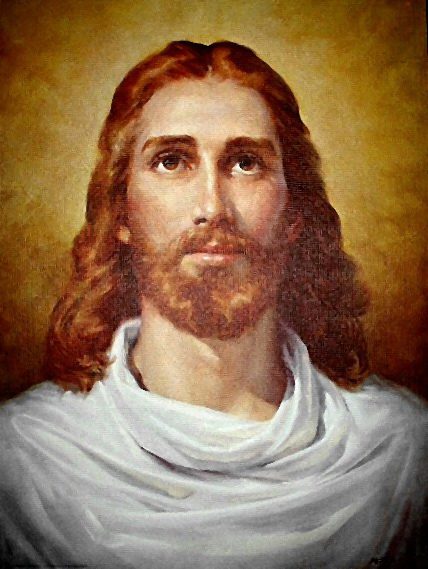
Matthew 19:16-24 (RSV) And behold, one came up to him, saying, “Teacher, what good deed must I do, to have eternal life?” [17] And he said to him, “Why do you ask me about what is good? One there is who is good. If you would enter life, keep the commandments.” [18] He said to him, “Which?” And Jesus said, “You shall not kill, You shall not commit adultery, You shall not steal, You shall not bear false witness, [19] Honor your father and mother, and, You shall love your neighbor as yourself.” [20] The young man said to him, “All these I have observed; what do I still lack?” [21] Jesus said to him, “If you would be perfect, go, sell what you possess and give to the poor, and you will have treasure in heaven; and come, follow me.” [22] When the young man heard this he went away sorrowful; for he had great possessions. [23] And Jesus said to his disciples, “Truly, I say to you, it will be hard for a rich man to enter the kingdom of heaven. [24] Again I tell you, it is easier for a camel to go through the eye of a needle than for a rich man to enter the kingdom of God.”
Mark 10:17, 19, 21 . . . “Good Teacher, what must I do to inherit eternal life?” . . . [19] You know the commandments: . . . [21] And Jesus looking upon him loved him, and said to him, “You lack one thing; go, sell what you have, and give to the poor, and you will have treasure in heaven; and come, follow me.”
Luke 18:18, 20, 22 And a ruler asked him, “Good Teacher, what shall I do to inherit eternal life?” . . . [20] You know the commandments: . . . [22] And when Jesus heard it, he said to him, “One thing you still lack. Sell all that you have and distribute to the poor, and you will have treasure in heaven; and come, follow me.”
The standard evangelical teaching in terms of “how one is saved” is called sola fide, or “salvation / justification by faith alone.” It doesn’t mean that evangelical Protestants frown upon or discourage good works. Both Luther and Calvin taught that good works should be present in any Christian’s life, and that if they were not, their faith was suspect in terms of its being a genuine faith. They were not antinomians.
But Protestants do formally separate works from salvation, putting it in the separate box of sanctification, rather than justification. To put it another way, if you ask a Protestant how to be saved, he virtually never would say, “do good works x, y, and z.” He will say, rather, “repent, have faith in Jesus Christ; believe in Him; put your faith and trust in Him as your Lord and Savior.”
This is fundamental to Protestantism. Many Protestants erroneously think that Catholics teach “‘works-salvation” or the heresy known to history as Pelagianism. Or they will say that since Catholics believe in faith + works, they are semi-Pelagians. But the Catholic Church condemned both heresies 1400 or more years ago. We do not believe that we are saved by works. We believe (in agreement with Protestants) that we’re saved by God’s grace, that faith without works is dead (as it says in James), and that faith and works are two sides of the same “coin” of justification / salvation.
What is most striking about this incident in the life of Jesus — given Protestant views — is the almost sole emphasis on works rather than faith, in Jesus’ reply to the rich young ruler’s question (I have combined elements in all three accounts), “what good deed must I / shall I do to inherit / have eternal life?” It’s reiterated over and over again: works, works, works. It doesn’t follow that faith is not involved, too. Elsewhere, Jesus and Paul and other biblical writers say plenty about faith and assent. But it does mean that works are central in the whole equation and can’t be separated from faith and put in a secondary category.
Right at the beginning of the incident, the ruler asks, “what good deed must I do?” Inheriting eternal life is clearly synonymous with “ultimate salvation.” According to Protestant soteriology (theology of salvation), this isn’t even the right question to ask. Their immediate reply would be, “you have a fundamental misunderstanding of salvation. You can’t do anything to be saved. No work you do is sufficient. All you can do is have faith in Jesus Christ, Who died for your sins.” That’s evangelical Protestant doctrine.
The interesting consideration here, then, is: why doesn’t Jesus act like a good evangelical and correct him right out of the starting-gate? Jesus would have failed Soteriology 0101 in any evangelical seminary or divinity school. Not only are good works, or deeds front and center; he also asks about which deed “must” he do. There is an element of necessity. If he doesn’t do some sort of good deed, he won’t be saved. But if this is essentially wrong and wrongheaded, Jesus would have corrected him by saying that he was wrong to be thinking about works rather than faith, and about thinking that any work was necessary for salvation.
He doesn’t do that at all. Instead, Jesus strengthens the man’s initial assumptions and explains what works he has to do to be saved: “If you would enter life, keep the commandments.” It’s a required condition for obtaining a desired goal: “If you want x, do y.” Y is necessary to obtain x, and y = keeping commandments, which are good works, in order to achieve x (eternal life). This is not like any sermon I ever heard in my 13 years as an evangelical! This is not how we were taught to share our faith in street witnessing, in order to “get people saved.”
Then Jesus even individually names six commandments. This means that, since they are all required to achieve eternal life, not observing any of them would disqualify one from salvation. Elsewhere in the New Testament there are several passages that list sins which, if habitually committed, would bar one from heaven. Jesus says not a word about faith. Why didn’t He say, “have faith in Me“? Again, in other places, He does emphasize that point. But here He ignores it.
This listing of commandments as a minimal requirement for salvation is consistent with what Jesus taught in His Sermon on the Mount:
Matthew 5:17-20 “Think not that I have come to abolish the law and the prophets; I have come not to abolish them but to fulfil them. [18] For truly, I say to you, till heaven and earth pass away, not an iota, not a dot, will pass from the law until all is accomplished. [19] Whoever then relaxes one of the least of these commandments and teaches men so, shall be called least in the kingdom of heaven; but he who does them and teaches them shall be called great in the kingdom of heaven. [20] For I tell you, unless your righteousness exceeds that of the scribes and Pharisees, you will never enter the kingdom of heaven.”
The man says he had observed the commandments. So far so good. It’s like getting six out of ten answers right on a school exam. You still have to get four more right to receive an A+. According to Jesus, he also has to do one more big thing, that he “lacks” — in order to be saved. He has to sell all he has and give it to the poor. Note that this isn’t required of every man to do. It’s not a general rule of Christianity. But for the rich young ruler, it was an absolute necessity. Most commentators think that it was because the ruler had made money his idol, putting it above God in his allegiance. That’s why he had to part with it; so that God would occupy the highest place in His life.
In any event, it is a requirement for his salvation. Once again, it is a good work that is made central. It’s clear that it was necessary, from Jesus’ concluding statement about it being difficult for rich men to enter the kingdom. They so often make money their idol, that it can jeopardize their very salvation. This is also notable in illustrating that salvation is not a cookie-cutter matter. What is required for one person (in terms of works that exhibit faith) may not be for the next.
Therefore, I submit that evangelicals ought to change their Bibles, to better fit their theology. The Bible we have is plainly far too “Catholic.” Perhaps it should read something like the following:
Matthew 19:16-18, 21-23 (REV: Revised Evangelical Version) . . . “Teacher, what must I believe, to have eternal life?” [17] And he said to him, “If you would enter life, exercise faith alone in the son of man.” [18] He said to him, “Which commandments should I keep, in order to be saved?” And Jesus said, “none can save you.” . . . [21] Jesus said to him, “Say the sinner’s prayer, so you will be saved; and come, follow me.” [22] When the young man heard this he went away sorrowful; for he couldn’t bring himself to say the sinner’s prayer. [23] And Jesus said to his disciples, “Truly, I say to you, it will be hard for a man without faith alone to enter the kingdom of heaven.”
Previous Post
October 10, 2015
My Claims Regarding Piltdown Man & the Scopes Trial Twisted
Next Post
October 12, 2015 150 Reasons Why I Became (and Remain) a Catholic
Browse Our Archives
Select a Category & Last Things About Me Anti-Catholicism Atheism & Agnosticism Baptism and Sacramentalism Bible and Tradition Blessed Virgin Mary Books by Dave Armstrong C. S. Lewis Calvinism & General Protestantism Catholic Apologetics Catholic Apologists Catholic conversion Catholic converts Christmas Church (Ecclesiology) Church History Conversion and Converts Development of Doctrine Eastern Orthodoxy Ecumenism & Christian Unity Eucharist & Liturgy Fathers of the Church French Translations G. K. Chesterton Hell Hell & Satan Hell & Satan & Last Things Heresies & Comparative Religion Holistic Health Inquisition & Crusades & Scandals James White Jews & Judaism & Old Testament John Calvin John Henry Newman Liberal / Modernist Theology Life Issues Literary Resume Lutheranism Mariology Martin Luther Music Orthodoxy Papacy & Infallibility Personal Page Philosophy & Science Political & Ethical & Moral Issues Protestant Persecution & Intolerance Protestantism Purgatory Purgatory & Penance Romantic & Imaginative Theology Saints & Purgatory & Penance Salvation Salvation & Justification Satan & Last Things Sexuality and Gender Issues Spanish Translations Traditionalism vs. Radical Catholic Reactionaries Traducciones al español / tradução para português Trinitarianism & Christology Uncategorized Videos
Select a Month October 2026 September 2026 August 2026 July 2026 June 2026 May 2026 April 2026 March 2026 February 2026 January 2026 December 2025 November 2025 October 2025 September 2025 August 2025 July 2025 June 2025 May 2025 April 2025 March 2025 February 2025 January 2025 December 2024 November 2024 October 2024 September 2024 August 2024 July 2024 June 2024 May 2024 April 2024 March 2024 February 2024 January 2024 December 2023 November 2023 October 2023 September 2023 August 2023 July 2023 June 2023 May 2023 April 2023 March 2023 February 2023 January 2023 December 2022 November 2022 October 2022 September 2022 August 2022 July 2022 June 2022 May 2022 April 2022 March 2022 February 2022 January 2022 December 2021 November 2021 October 2021 September 2021 August 2021 July 2021 June 2021 May 2021 April 2021 March 2021 February 2021 January 2021 December 2020 November 2020 October 2020 September 2020 August 2020 July 2020 June 2020 May 2020 April 2020 March 2020 February 2020 January 2020 December 2019 November 2019 October 2019 September 2019 August 2019 July 2019 June 2019 May 2019 April 2019 March 2019 February 2019 January 2019 December 2018 November 2018 October 2018 September 2018 August 2018 July 2018 June 2018 May 2018 April 2018 March 2018 February 2018 January 2018 December 2017 November 2017 October 2017 September 2017 August 2017 July 2017 June 2017 May 2017 April 2017 March 2017 February 2017 January 2017 December 2016 November 2016 October 2016 September 2016 August 2016 July 2016 June 2016 May 2016 April 2016 March 2016 February 2016 January 2016 December 2015 November 2015 October 2015 September 2015 August 2015 July 2015 June 2015 May 2015 April 2015 March 2015 February 2015 January 2015 December 2014 November 2014 October 2014 September 2014 August 2014 July 2014 June 2014 April 2014 March 2014 February 2014 January 2014 December 2013 November 2013 October 2013 September 2013 August 2013 July 2013 June 2013 April 2013 March 2013 February 2013 January 2013 December 2012 November 2012 October 2012 September 2012 August 2012 July 2012 June 2012 May 2012 April 2012 March 2012 February 2012 January 2012 December 2011 November 2011 October 2011 September 2011 August 2011 July 2011 June 2011 April 2011 March 2011 February 2011 October 2010 September 2010 August 2010 July 2010 April 2010 March 2010 December 2009 October 2009 August 2009 July 2009 June 2009 May 2009 March 2009 February 2009 October 2008 September 2008 April 2008 March 2008 February 2008 January 2008 December 2007 November 2007 October 2007 May 2007 March 2007 February 2007 January 2007 November 2006 October 2006 September 2006 August 2006 July 2006 June 2006 May 2006 April 2006 March 2006 February 2006 October 2005 June 2005 April 2005 February 2005 July 2004 May 2004 April 2004
Follow Us!
TAKE THE
Religious Wisdom Quiz
Who prayed for rain after a long drought and sent his servant to look seven times?
Select your answer to see how you score.
Elijah Isaiah Samuel Hosea
Books by This Author Books by Dave Armstrong
Related posts from Biblical Evidence for Catholicism

Bible & Catholicism on Mortal Sin (vs. John...
Biblical Evidence for Catholicism

Dialogue on Eternal Security / Absolute Assurance
Biblical Evidence for Catholicism

"Faith Alone" Dialogue with a Calvinist
Biblical Evidence for Catholicism

Exegesis of 75 NT Faith [Alone?] & Works...
Biblical Evidence for Catholicism
TRENDING AT PATHEOS Catholic

I was strolling through the top floor of the brand new Parthenon...

What Does Gêvâh Mean For Kimberley Guifoyle &...
This week, a lot of the news is focused on Kimberly Guilfoyle....

INNER CIRCLE: Profound Mystery (Of Christ In All...
Ephesians 5:31-32 “For this reason, a man will leave his father and...

Do Not Rejoice When Your Enemy Falls: The...
Turning an execution into a public spectacle is a disturbing expression of...

'The Chosen' S6 Trailer: The Passion Gets Very...
Not many watching 'The Chosen' worry about spoilers, but just because they...

The purpose-driven labor priest
A labor activist reads Rick Warren and it gets me wondering about...
view all Catholic blogs
Ad-Free & Subscriber Log-In Subscription Support
- About Us
- 2026 Calendar
- Videos
- Podcasts
- Library of World Religions
- Faith In Media Tracker
- Advertise With Us
- Write for Us
- Privacy Policy
- Terms of Service
- Do Not Sell My Data
- Contact Us
- Radiant Digital
- Manage Newsletter Subscriptions
- Unsubscribe From Notifications
- Sitemap
Copyright 2008-2026, Patheos. All rights reserved.
Subscription Support Ad-Free & Subscriber Log-In
Follow Patheos