
BuddhistCatholicContemplativeEvangelicalGeneral ChristianHinduJewishLatter-day SaintMuslimNew VisionsProgressive Christian
Beliefs
- Buddhist
- Catholic
- Contemplative
- Evangelical
- General Christian
- Hindu
- Jewish
- Latter-day Saint
- More Voices
- Muslim
- New Visions
- Pagan
- Progressive Christian
Topics
- Religion News
- Food and Religion
- Sports and Religion
- Religious Art
- Religious Music and Entertainment
- Religious Events
- History and Religion
- Style and Religion
- Politics and Religion
- Women in Religion
- Recreation Outdoors and Religion
- Business Finance and Religion
- Careers Workplace and Religion
- Education and Religion
- Family Parenting and Religion
- Health Fitness and Religion
- Home and Religion
- Relationships and Religion
- Technology and Religion
- Travel and Religion
Columnists
- Buddhist Columnists
- Business Finance and Religion Columnists
- Careers Workplace and Religion Columnists
- Catholic Columnists
- Contemplative Columnists
- Education and Religion Columnists
- Evangelists Columnists
- Family Parenting and Religion Columnists
- General Christian Columnists
- Health Fitness and Religion Columnists
- Hindu Columnists
- History and Religion Columnists
- Home and Religion Columnists
- Jewish Columnists
- More Voices Columnists
- Latter Day Columnists
- Muslim Columnists
- New Visions Columnists
- Nonreligious Columnists
- Pagan Columnists
- Politics and Religion Columnists
- Progressive Columnists
- Recreation Outdoors and Religion Columnists
- Relationships and Religion Columnists
- Religion News Columnists
- Religious Art Columnists
- Religious Events Columnists
- Religious Music and Entertainment Columnists
- Sports and Religion Columnists
- Style and Religion Columnists
- Technology and Religion Columnists
- Travel and Religion Columnists
- Women in Religion Columnists
Resource Library
- 2026 Calendar
- Library of World Religions
- The 100 Most Holy Places on Earth
- Patheos Answers
- Podcasts
- Videos
- Faith Leaders Database
- Anglican Episcopalian
- Bahai
- Baptist
- Buddhism
- Christianity
- Confucianism
- Eastern Orthodoxy
- Hinduism
- Holiness and Pentecostal
- ISKCON
- Islam
- Judaism
- Lutheran
- Methodist
- The Church of Jesus Christ of Latter-day Saints
- New Age
- Paganism
- Presbytarian and Reformed
- Protestantism
- Religion Behind the Scenes
- Roman Catholic
- Scientology
- Shia Islam
- Sikhism
- Sufism
- Sunni Islam
- Taoism
- Zen
- See all religions
Research Tools
 Ad-Free & Subscriber Log-In Subscription Support
Ad-Free & Subscriber Log-In Subscription Support
Follow Patheos 

- Trending:
- Forgiveness
- |
- Marriage
- |
- Consciousness
- |
- Death Penalty
- |
- Election
- |
- Halloween

-
About
-
Catholic Apologetics
-
Church History
-
Great Apologists
-
Christian Worldview
-
Protestantism & Misc.
- Home
- Catholic
- History and Religion
- God, Empiricism, & Atheist Demands for “Evidence”
God, Empiricism, & Atheist Demands for “Evidence”
Last updated on: June 5, 2026 at 11:42 pm by Dave Armstrong
God, Empiricism, & Atheist Demands for “Evidence” 2026-06-05T23:42:04-04:00 Dave Armstrong
Patheos Explore the world's faith through different perspectives on religion and spirituality! Patheos has the views of the prevalent religions and spiritualities of the world.

How can an empirical spirit be directly empirically tested? It makes no sense. [public domain / Pixabay]
I am an agnostic atheist. I leave open the possibility of evidence for a god, therefore I must be agnostic about such a beings existence.
But as for my belief? I could really care less about how you define your god. There is simply no reliable evidence for any of them, Catholic or Protestant.
So yes – I proportion my belief to the evidence. But I could be convinced to change my knowledge – should I ever be presented with concrete empirical evidence.
And again – this evidence should exist.
So I leave you with Delos McKown…
“The invisible and the non-existent look very much alike.”
Why do you assume that empirical evidence is the only kind of indication that God exists? If indeed God [the Father] is a spirit (as we Christians believe), how in the world is it that empiricism (the study of matter) is trotted out as the only possible way by which His existence can be proven or indicated?
That makes no sense. Empiricism is not the only form of knowledge, in any event, and it doesn’t directly apply to God as we believe Him to be, because He (the Father) is an immaterial spirit.
But Jesus, Who is also God, was quite material, and He performed (empirically verifiable) miracles (blind men began to see; lame began to walk), and rose from the dead, which was an observable thing (i.e., when He appeared afterwards and ate fish, and people touched Him). That was quite along the lines of what you demand; yet atheists simply dismiss it as a fairy tale.
So when we give you what you ask for, it’s immediately dismissed: which is itself an irrational attitude: closed to possible empirical evidence, simply because it was 2,000 years ago, and because it was miraculous; because you guys, in your infinite wisdom, arbitrarily and dogmatically declare that miracles are impossible from the outset (something which is extremely difficult to absolutely prove).
Let me switch that around a bit for you and get your reaction.
“But Zoroaster, Who is also God, was quite material, and He performed (empirically verifiable) miracles (blind men began to see; lame began to walk), and rose from the dead, which was an observable thing (i.e., when He appeared afterwards and ate fish, and people touched Him).”
Neither of these claims are empirically verifiable.
And as I stated above – even if God is spirit, if he intervenes in the physical world, that intervention should be empirically detectable.
One example would be the efficacy of intercessory prayer. Another would be an undisputable case of a miraculous healing (as the prime example we atheists use – an amputee re-growing a missing limb spontaneously).
Yet when we look for those interventions – we come up empty. If you have not read it – check out the STEP study done by Harvard.
They are verifiable by the same standards of evidence that are accepted in courtrooms as legitimate eyewitness testimony. Or do you reject THAT method for arriving at the truth of disputed historical events, too?
I don’t know the story of Zoroaster, but according to Wikipedia, there is little manuscript evidence to attest to it: “Almost all Zoroastrian pseudepigrapha is now lost, and of the attested texts—with only one exception—only fragments have survived. . . . no one before Pliny refers to literature by ‘Zoroaster'”.
That can scarcely be compared to the huge amount of manuscript evidence for the NT: better than any other ancient document, and the mountain of archaeological verification of its accuracy.
There are tons of books about this topic. Go read some.
I glanced at the article about Zoroaster, and I don’t see that he claimed to be God (in the theistic sense) or that it is claimed that he rose from the dead.
If the NT is shown to be trustworthy as to history, it can be trusted to accurately convey Jesus’ words, too. To deny that, given all the evidence we know of, is simply prejudice and dogmatically / irrationally partisan skeptical polemics.
Not long ago many scholars denied that King David existed at all. Not anymore. Inscriptions have been found; his palace has been discovered in Jerusalem (I visited it last October). A city from his time (c. 1000 BC) west of Jerusalem has been uncovered. I stood there and collected pottery from it, that sits in my closet eight feet away from me as I type. I found lots of pottery from 1000 BC!
Many of the Muslim Palestinians today want to pretend that there never was a Jewish Temple; never was a City of David. They’re wrong, and irrational. Their view comes from prejudice, just as atheist views do, when they ignore plenty of hard evidence for Jesus, David, and other biblical figures.
They once said that Moses and Abraham lived before there was any writing. That’s all been blown away by archaeology. The pool of Siloam, where Jesus healed the blind man, was discovered just ten or so years ago. I was there, too. The pool of Bethesda has shown attributes that the Bible gives it.
On and on and on. But it’s easy for atheists who don’t know anything about any of these details, to trot out some supposed analogy that (so we are told) “refutes” the evidence about Jesus and early Christianity.
There is plenty of documented evidence of observably (medically / scientifically) verifiable miraculous cures. Atheists simply ignore it. There are many books about this. Or you could check out the records at Lourdes, where Mary appeared. They have a long record of many hundreds of cures: all verified by medical science.
There are incorruptible saints. They exist. One can go see them. When various saints’ graves were opened up, their bodies had not corrupted. That’s either a true, verifiable fact or it is not, and all these people are a bunch of liars, and every incorrupt body is fake (mummified or something).
We can go wherever the evidence takes us (with a true, open-minded scientifically curious approach), but you can’t because you dogmatically rule out all possibility of the miraculous from the outset.
Yet you have to explain away each and every documented miraculous healing.
Nothing is ever sufficient to convince most skeptics because they are too dogmatic and prejudiced.
This is explained in the Bible itself, from Jesus:
Luke 16:30-31 (RSV) And he said, `No, father Abraham; but if some one goes to them from the dead, they will repent.’ [31] He said to him, `If they do not hear Moses and the prophets, neither will they be convinced if some one should rise from the dead.'”
And so it is today. Jesus did rise from the dead, but people refuse to believe it, because of their irrational prior hostile predispositions.
There are plenty of good books about the solid historical arguments backing up Jesus’ Resurrection, by Gary Habermas, Michael Licona, William Lane Craig, Frank Morison, and others.
Go read them if you are truly open to being convinced.
You can go after one purported miracle that may in fact not have been such. It doesn’t wipe out the hundreds of verified accounts. But it’s the game that atheists and other skeptics of miracles always play: the basic fallacy of “disprove one; justify skepticism towards all reports.”
That’s why I usually don’t bother even arguing these things, because it’s always the same.
You won’t be convinced in the near future. But I gave it a shot. Others are reading, too. That’s the beauty of public dialogues.
Remission of cancer? Happens more than people think. And to people besides Christians. Those ‘incorruptible’ bodies of saints? Ever been subjected to a scientific inquiry? How do we know they were not preserved by artificial means?
Nothing will convince you. As I said, I don’t spend much time on stuff like this. Those who are interested will go read books that delve into all this stuff. You’ve sealed yourself into a sealed box that no evidence can penetrate. You just sit in there and say “nope . . .nope . . . nope . . . ”
You’ve read every purported account of a miracle and explained all of ’em away as fairy tales, no evidence whatever, a pack of lies . . . Gotcha.
As to the incorruptibles, well we know that many saints were simply buried without being mummified. Many years later the bodies were dug up and found to be incorrupt. That ain’t natural. This was found to be the case 25 years after death, for Medgar Evers, the civil rights activist (and non-Catholic).
Our local Detroit saint-to-be, Ven. Fr. Solanus Casey, was found to be incorrupt 30 years after his death.
But you can always say that some snickering, cynical idiot snuck into the funeral home and did the mummification routine (in every case), so gullible Catholics would be duped into believing in a miracle when in fact it was a hoax.
You always have the ready answer. You’re a modern-day Doubting Thomas. Even he shut up after he met the risen Jesus and felt the wound in His side.
But were they ever the subject of a scientific inquiry? We have recovered quite a few naturally mummified bodies – some much older that your saints. Have they been examined or not? Or has the Church refused to allow a scientific examination?
Maybe if Jesus could be convinced to show up in the modern age all this discussion would be moot. Yet he remains conspicuously absent :) And you already know about the similarities between the invisible and the non-existent!
Yes, I’m sure that in at least some cases when the bodies were exhumed (I suspect, much more than just a few), they were examined by a scientist or doctor. The Church is very meticulous in verification, and rightly very skeptical until such verification takes place.
If Jesus “showed up,” He would be doubted by people like you, just as He was when He rose from the dead back when. The Jews who didn’t believe simply went right to alternate theories (hoax, stolen body). None of those are plausible or hold any water under scrutiny.
But the mere presence of a miracle is not enough for some excessively skeptical minds to be convinced. They are capable of always “explaining it away” somehow.
When the Pharisees who opposed Jesus witnessed His miracles, even they couldn’t blithely dismiss them, so they started saying that He cast out demons by Beelzebub (i.e., a Satanic rather than divine miracle); to which Jesus said, “a house divided against itself cannot stand.”
Previous Post

October 9, 2015
John Loftus' Deconversion and Feuds with Atheists
Next Post

October 9, 2015 Simultaneously Dumb & Smart Christians, Atheists, & Scientists
Browse Our Archives
Select a Category & Last Things About Me Anti-Catholicism Atheism & Agnosticism Baptism and Sacramentalism Bible and Tradition Blessed Virgin Mary Books by Dave Armstrong C. S. Lewis Calvinism & General Protestantism Catholic Apologetics Catholic Apologists Catholic conversion Catholic converts Christmas Church (Ecclesiology) Church History Conversion and Converts Development of Doctrine Eastern Orthodoxy Ecumenism & Christian Unity Eucharist & Liturgy Fathers of the Church French Translations G. K. Chesterton Hell Hell & Satan Hell & Satan & Last Things Heresies & Comparative Religion Holistic Health Inquisition & Crusades & Scandals James White Jews & Judaism & Old Testament John Calvin John Henry Newman Liberal / Modernist Theology Life Issues Literary Resume Lutheranism Mariology Martin Luther Music Orthodoxy Papacy & Infallibility Personal Page Philosophy & Science Political & Ethical & Moral Issues Protestant Persecution & Intolerance Protestantism Purgatory Purgatory & Penance Romantic & Imaginative Theology Saints & Purgatory & Penance Salvation Salvation & Justification Satan & Last Things Sexuality and Gender Issues Spanish Translations Traditionalism vs. Radical Catholic Reactionaries Traducciones al español / tradução para português Trinitarianism & Christology Uncategorized Videos
Select a Month October 2026 September 2026 August 2026 July 2026 June 2026 May 2026 April 2026 March 2026 February 2026 January 2026 December 2025 November 2025 October 2025 September 2025 August 2025 July 2025 June 2025 May 2025 April 2025 March 2025 February 2025 January 2025 December 2024 November 2024 October 2024 September 2024 August 2024 July 2024 June 2024 May 2024 April 2024 March 2024 February 2024 January 2024 December 2023 November 2023 October 2023 September 2023 August 2023 July 2023 June 2023 May 2023 April 2023 March 2023 February 2023 January 2023 December 2022 November 2022 October 2022 September 2022 August 2022 July 2022 June 2022 May 2022 April 2022 March 2022 February 2022 January 2022 December 2021 November 2021 October 2021 September 2021 August 2021 July 2021 June 2021 May 2021 April 2021 March 2021 February 2021 January 2021 December 2020 November 2020 October 2020 September 2020 August 2020 July 2020 June 2020 May 2020 April 2020 March 2020 February 2020 January 2020 December 2019 November 2019 October 2019 September 2019 August 2019 July 2019 June 2019 May 2019 April 2019 March 2019 February 2019 January 2019 December 2018 November 2018 October 2018 September 2018 August 2018 July 2018 June 2018 May 2018 April 2018 March 2018 February 2018 January 2018 December 2017 November 2017 October 2017 September 2017 August 2017 July 2017 June 2017 May 2017 April 2017 March 2017 February 2017 January 2017 December 2016 November 2016 October 2016 September 2016 August 2016 July 2016 June 2016 May 2016 April 2016 March 2016 February 2016 January 2016 December 2015 November 2015 October 2015 September 2015 August 2015 July 2015 June 2015 May 2015 April 2015 March 2015 February 2015 January 2015 December 2014 November 2014 October 2014 September 2014 August 2014 July 2014 June 2014 April 2014 March 2014 February 2014 January 2014 December 2013 November 2013 October 2013 September 2013 August 2013 July 2013 June 2013 April 2013 March 2013 February 2013 January 2013 December 2012 November 2012 October 2012 September 2012 August 2012 July 2012 June 2012 May 2012 April 2012 March 2012 February 2012 January 2012 December 2011 November 2011 October 2011 September 2011 August 2011 July 2011 June 2011 April 2011 March 2011 February 2011 October 2010 September 2010 August 2010 July 2010 April 2010 March 2010 December 2009 October 2009 August 2009 July 2009 June 2009 May 2009 March 2009 February 2009 October 2008 September 2008 April 2008 March 2008 February 2008 January 2008 December 2007 November 2007 October 2007 May 2007 March 2007 February 2007 January 2007 November 2006 October 2006 September 2006 August 2006 July 2006 June 2006 May 2006 April 2006 March 2006 February 2006 October 2005 June 2005 April 2005 February 2005 July 2004 May 2004 April 2004
Follow Us!
TAKE THE
Religious Wisdom Quiz
Which Old Testament book is entirely written as a dialogue between God and a prophet?
Select your answer to see how you score.
Zechariah Malachi Amos Habakkuk
Books by This Author Books by Dave Armstrong
Related posts from Biblical Evidence for Catholicism

God, Modern Physics, & Dark Energy: An Analogy
Biblical Evidence for Catholicism
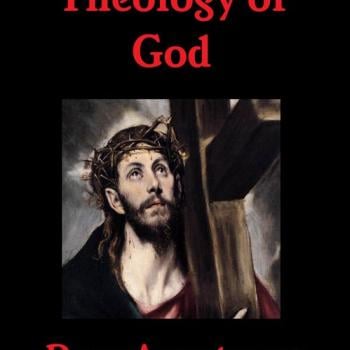
Jesus Proved He Was God in Six Ways...
Biblical Evidence for Catholicism

General Debate on Christianity with an Atheist
Biblical Evidence for Catholicism

Can Atheists Be Saved? Surprising Biblical Data
Biblical Evidence for Catholicism
TRENDING AT PATHEOS Catholic

In "Irreplaceable," our book on vocation and technology, Trevor Sutton and I...

I was strolling through the top floor of the brand new Parthenon...

What Does Gêvâh Mean For Kimberley Guifoyle &...
This week, a lot of the news is focused on Kimberly Guilfoyle....

INNER CIRCLE: Profound Mystery (Of Christ In All...
Ephesians 5:31-32 “For this reason, a man will leave his father and...

Do Not Rejoice When Your Enemy Falls: The...
Turning an execution into a public spectacle is a disturbing expression of...

'The Chosen' S6 Trailer: The Passion Gets Very...
Not many watching 'The Chosen' worry about spoilers, but just because they...
view all Catholic blogs
Ad-Free & Subscriber Log-In Subscription Support
- About Us
- 2026 Calendar
- Videos
- Podcasts
- Library of World Religions
- Faith In Media Tracker
- Advertise With Us
- Write for Us
- Privacy Policy
- Terms of Service
- Do Not Sell My Data
- Contact Us
- Radiant Digital
- Manage Newsletter Subscriptions
- Unsubscribe From Notifications
- Sitemap
Copyright 2008-2026, Patheos. All rights reserved.
Subscription Support Ad-Free & Subscriber Log-In
Follow Patheos