
BuddhistCatholicContemplativeEvangelicalGeneral ChristianHinduJewishLatter-day SaintMuslimNew VisionsProgressive Christian
Beliefs
- Buddhist
- Catholic
- Contemplative
- Evangelical
- General Christian
- Hindu
- Jewish
- Latter-day Saint
- More Voices
- Muslim
- New Visions
- Pagan
- Progressive Christian
Topics
- Religion News
- Food and Religion
- Sports and Religion
- Religious Art
- Religious Music and Entertainment
- Religious Events
- History and Religion
- Style and Religion
- Politics and Religion
- Women in Religion
- Recreation Outdoors and Religion
- Business Finance and Religion
- Careers Workplace and Religion
- Education and Religion
- Family Parenting and Religion
- Health Fitness and Religion
- Home and Religion
- Relationships and Religion
- Technology and Religion
- Travel and Religion
Columnists
- Buddhist Columnists
- Business Finance and Religion Columnists
- Careers Workplace and Religion Columnists
- Catholic Columnists
- Contemplative Columnists
- Education and Religion Columnists
- Evangelists Columnists
- Family Parenting and Religion Columnists
- General Christian Columnists
- Health Fitness and Religion Columnists
- Hindu Columnists
- History and Religion Columnists
- Home and Religion Columnists
- Jewish Columnists
- More Voices Columnists
- Latter Day Columnists
- Muslim Columnists
- New Visions Columnists
- Nonreligious Columnists
- Pagan Columnists
- Politics and Religion Columnists
- Progressive Columnists
- Recreation Outdoors and Religion Columnists
- Relationships and Religion Columnists
- Religion News Columnists
- Religious Art Columnists
- Religious Events Columnists
- Religious Music and Entertainment Columnists
- Sports and Religion Columnists
- Style and Religion Columnists
- Technology and Religion Columnists
- Travel and Religion Columnists
- Women in Religion Columnists
Resource Library
- 2026 Calendar
- Library of World Religions
- The 100 Most Holy Places on Earth
- Patheos Answers
- Podcasts
- Videos
- Faith Leaders Database
- Anglican Episcopalian
- Bahai
- Baptist
- Buddhism
- Christianity
- Confucianism
- Eastern Orthodoxy
- Hinduism
- Holiness and Pentecostal
- ISKCON
- Islam
- Judaism
- Lutheran
- Methodist
- The Church of Jesus Christ of Latter-day Saints
- New Age
- Paganism
- Presbytarian and Reformed
- Protestantism
- Religion Behind the Scenes
- Roman Catholic
- Scientology
- Shia Islam
- Sikhism
- Sufism
- Sunni Islam
- Taoism
- Zen
- See all religions
Research Tools
 Ad-Free & Subscriber Log-In Subscription Support
Ad-Free & Subscriber Log-In Subscription Support
Follow Patheos 

- Trending:
- Forgiveness
- |
- Marriage
- |
- Consciousness
- |
- Death Penalty
- |
- Election
- |
- Halloween

-
About
-
Catholic Apologetics
-
Church History
-
Great Apologists
-
Christian Worldview
-
Protestantism & Misc.
- Home
- Catholic
- History and Religion
- Galileo, St. Robert Bellarmine, & Scientific Method
Galileo, St. Robert Bellarmine, & Scientific Method
Last updated on: June 6, 2026 at 12:28 am by Dave Armstrong
Galileo, St. Robert Bellarmine, & Scientific Method 2026-06-06T00:28:34-04:00 Dave Armstrong
Patheos Explore the world's faith through different perspectives on religion and spirituality! Patheos has the views of the prevalent religions and spiritualities of the world.
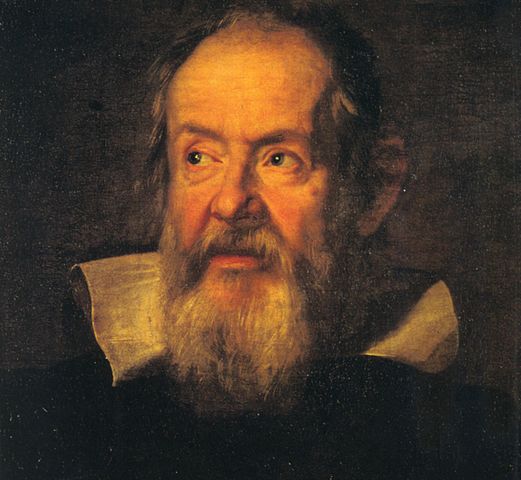
Portrait of Galileo Galilei (1636), by Justus Sustermans (1597-1681). [public domain / Wikimedia Commons]

***
This mini-debate took place in the combox for my post, Galileo: The Myths and the Facts. See also my recent related post, The Galileo Fiasco & Catholic Infallibility. The words of Andrew G. will be in blue.
* * * * *
From my initial post (linked above):
Indeed, his biographer Giorgio de Santillana stated that “It has been known for a long time that a major part of the church intellectuals were on the side of Galileo, while the clearest opposition to him came from secular ideas” (The Crime of Galileo, University of Chicago Press, 1955, xii-xiii). But the scientist (though basically correct) was overconfident and quite obstinate in proclaiming his scientific theory as absolute truth, and this was a major concern.
Accordingly, St. Robert Bellarmine, who was directly involved in the controversy, made it clear that heliocentrism was not irreversibly condemned, and also that a not-yet proven theory was not an unassailable fact. Bellarmine actually had the superior understanding of the nature of a scientific hypothesis. Galileo was scientifically fallible, too. He held that the entire universe revolved around the sun in circular (not elliptical) orbits, and that tides were caused by the rotation of the earth. True heliocentrism wasn’t conclusively proven until some 200 years later. Pope John Paul II apologized for the Church’s mistake, but the Holy Office had done so in 1825, and Galileo’s written works were permitted in 1741.
I strongly recommend Annibale Fantoli’s The Case Of Galileo: A Closed Question? (translated by George Coyne, published by University of Notre Dame) for those seeking a more reliable account of the Galileo affair without either the mythologizing or the apologetic whitewash.
Where have I whitewashed anything?
Oh, let’s see:
1. Blaming the victim: framing the issue as being between a “reasonable” church and an “obstinate”, “overconfident” Galileo.
I blamed the victim precisely where he was in error, just as I blame the tribunal for making the dumb judgment. It’s about facts; it’s not about defending the indefensible.
2. Portraying Bellarmine as “actually [having] the superior understanding of the nature of a scientific hypothesis”. This is both false and ahistorical; Bellarmine nowhere evinces anything close to scientific reasoning as a basis for any of his actions in the affair.
That’s not how [at least some] historians who have looked at it think. They are the authorities for that. It wasn’t my argument about Bellarmine, but rather, noted Jewish philosopher and historian of science, Thomas Kuhn’s. I wrote in my book about science and Christianity:
Bellarmine didn’t consider heliocentrism proven beyond all doubt, like Galileo did, and in that respect he was right. Bellarmine actually had the superior understanding of the nature of a scientific hypothesis, . . . philosopher of science Thomas Kuhn, in his book, The Copernican Revolution (New York: Random House / Vintage Books, 1957, p. 226), after commenting on some folks who refused to look through Galileo’s telescope, wrote:
Most of Galileo’s opponents behaved more rationally. Like Bellarmine, they agreed that the phenomena were in the sky but denied that they proved Galileo’s contentions. In this, of course, they were quite right. Though the telescope argued much, it proved nothing.
See this excerpt in my book, at Google Books.
3. Whitewashing the role of the pope (Urban VIII), who was by all accounts the prime mover in both the 1633 trial and the relative severity of its sentence.
I didn’t say a word about him. If he was a geocentrist, he was wrong. But there were many geocentrists then. It was a transitional time. My point again and again is that one standard is applied to and for the Church, and another for everyone else. WE make a [sub-infallible] mistake and the world has to hear about it for 400 years. Anyone else makes a mistake or commits a wicked act (like the “Enlightened” French revolutionaries killing the father of chemistry, Lavoisier), and no one’s ever heard about it. Those inconvenient facts are deliberately omitted in grade school and high school scientific education, or if not so, everyone is so ignorant about them they don’t even know enough to suppress the embarrassing information.
My original post had a lengthy citation that did mention him:
Can it be said that either Paul V or Urban VIII so committed himself to the doctrine of geocentricism as to impose it upon the Church as an article of faith, and so to teach as pope what is now acknowledged to be untrue? That both these pontiffs were convinced anti-Copernicans cannot be doubted, nor that they believed the Copernican system to be unscriptural and desired its suppression. The question is, however, whether either of them condemned the doctrine ex cathedra. This, it is clear, they never did.
How any of that is to be regarded as “whitewashing,” however, is a mystery to me.
4. The subsequent developments: when Galileo’s works were finally permitted to be published a century later, it was with the condemnation and recantation attached, even though by that time it was clear that Galileo had been substantially correct.
If that was the case, it was wrong.
5. The terms in which heliocentrism was originally condemned were indeed “irreversible” and were treated as such until it became clear that geocentrism was completely untenable; at which point rather than admitting error, the church simply retconned the basis for the original judgement.
Ditto.
6. That the questioning of Galileo did not go beyond the verbal threat of torture, and that he was reasonably comfortably housed during his trial and imprisonment, has more to do with the fact that Galileo was 70 and had the Grand Duke of Tuscany as personal patron than with any desire for leniency on the part of the church.
Right. So now you can say that it would have been different if he were younger. How convenient. The Church did not kill scientists for doing science. That was left to the atheist French in the 1700s, and the Nazi Germans and Communist Soviets and Chinese in the 20th century. Bruno was executed in 1600 not as a “scientific martyr,” but as a rank heretic, according to Catholic teaching (he was an odd sort of pantheist).
1. Being wrong in science is an expected condition. Punishing people for being wrong—or worse, for being only partially wrong—is exactly the kind of anti-scientific attitude that is being criticized.
2. Kuhn in the work you quote does not make anything even remotely like the claim that you ascribe to him. (Note that the antecedent of “more rationally” in the passage quoted is not Galileo himself, but rather those who either refused to look through the telescope or who claimed that the phenomena observed were caused by the telescope rather than being real.)
Re: Bellarmine. He was the topic you brought up: i.e., his relation to scientific method. I cited Kuhn because he agreed with me on that score: Bellarmine understood scientific method better than Galileo did.
So, again, Kuhn wrote (my present bolding): “Like Bellarmine, they agreed that the phenomena were in the sky but denied that they proved Galileo’s contentions. In this, of course, they were quite right.”
Bellarmine said the telescope didn’t prove heliocentrism, whereas Galileo said it did. Bellarmine was right. Heliocentrism wasn’t proven till 200 years later. This is a particular question of scientific method
That was my point about Bellarmine, and Kuhn supported it, while acknowledging that there were also anti-scientific fools and idiots in the Church. That doesn’t overcome my immediate point here. You are just looking at what you want to see (always against the Church, no matter what). I am interested in all the facts: where the Church was wrong, where Galileo was, and where either got it right.
This is not apologetics; it’s history. Everyone knows the Church blew it on this one (i.e., one tribunal of the Church, which isn’t magisterial, or totally authoritative). I’m not saying otherwise. I’m simply taking into consideration all the relevant facts of the matter, as I learn of them.
You stated: “Bellarmine nowhere evinces anything close to scientific reasoning.”
According to prominent philosopher of science Thomas Kuhn, he did do so: at least in the sense that I mentioned.
Where did Galileo say that [that the telescope proved heliocentrism]? And what standard of “proof” are you applying?
Kuhn nowhere in the cited text says or even implies that Bellarmine is a better scientist that Galileo in any respect. Clearly they disagree over what the observations imply; which may be a question of standards of proof, but in fact from Bellarmine’s letter to Foscarini it’s clear that Bellarmine is almost completely closed to the idea of an observational proof of heliocentrism (he discusses it as a possibility, but then goes on at length about how heavily the scriptural considerations weigh against it, which is of course a completely non-scientific (even anti-scientific) attitude.
Yes; at that point he thought Scripture was against it, but acknowledged a scenario whereby science might make it necessary to re-think that particular interpretation.
Thus, he is open-minded on that possibility (this also shows that there was leeway on the issue and that it wasn’t a matter of irreversible dogma) and the Catholic Church and Catholics have shown a full willingness to go where the science leads, in matters of science.
Bellarmine also stated: “if there were a true demonstration that the sun is at the center of the world and the earth in the third heaven, and that the sun does not circle the earth but the earth circles the sun, then one would have to proceed with great care in explaining the Scriptures that appear contrary, and say rather that we do not understand them than that what is demonstrated is false” (Letter to Foscarini, April 1615).
It is a matter of historical fact that the Church (following Bellarmine’s attitude above) has adjusted its views of biblical interpretation as science has progressed. So, e.g., most Catholics believe in an old earth now, and theistic evolution; in a local rather than universal flood, and uniformitarianism rather than catastrophism in geology; even in things like quantum mechanics (that one such as Einstein balked at).
But Bellarmine didn’t show any such willingness; to the contrary, he fully concurred with the 1616 decision of Paul V to suppress heliocentrism as being contrary to Scripture, thus staking the reputation of the church on the issue. Galileo wasn’t told “don’t hold or teach heliocentrism until you have sufficient evidence”, he was told “don’t hold or teach heliocentrism, full stop”.
The letter to Foscarini taken as a whole, rather than just an isolated quotation, doesn’t support the revisionist view of Bellarmine as some sort of exemplar of scientific virtue. I’ve already pointed out that Duhem’s claim of this is unfounded, and Kuhn isn’t making the claim at all; Galileo scholars such as Fantoli and Mcmullin reject your characterization.
Now, if you have a source that isn’t just parroting Duhem and has more backing than just a couple of sentences taken out of context, let’s see it.
I haven’t claimed that Bellarmine was a perfect specimen of scientific virtue, in every way.
You’re missing the point: which was that he understood the tentative nature of scientific theories better than Galileo did.
He was a geocentrist: not yet convinced of heliocentrism, but so were many at the time, including the great scientist Tycho Brahe, who had just recently died.
You appear to have quite a closed mind on this. You goal seems to be to follow every line of thought that makes Bellarmine an anti-scientific idiot in every way, Galileo perfect (whatever errors he held perfectly understandable, while Bellarmine’s errors are indefensible), and the Church anti-science. All the relevant facts of the matter, taken together, do not support that cynical, jaded view.
My goal is to present lesser-known facts that the secularists usually don’t provide. But there are sources that go beyond the polemics on either side, and get to the complexity that always characterizes real people and their views.
Oxford Bibliographies: “Cardinal Bellarmine” by Stefania Tutino, states:
Brodrick, James. The Life and Work of Blessed Robert Francis Cardinal Bellarmine, S.J., 1542–1621. 2 vols. London: Burns Oates and Washbourne, 1928.
Written also by a fellow Jesuit, this biography shares with the others a general apologetic and hagiographic tone. Nevertheless, it is the most accurate biography of Bellarmine, and it is substantiated by a rich array of primary sources.
It is a curious and paradoxical circumstance . . . that as a piece of Scriptural exegesis Galileo’s theological letters are much superior to Bellarmine’s, while as an essay on scientific method Bellarmine’s letter is far sounder and more modern in its views than Galileo’s.
(Vol. II, p. 360)
Brodrick’s earlier Life and work of Robert Francis Bellarmine (London, 1928) is quite defective in its treatment of the Galileo case.
— Ernan Mcmullin, in Complete Dictionary of Scientific Biography (via encyclopedia.com)
(Mcmullin was a Catholic priest, a professor at Notre Dame, and an expert on the life of Galileo)
The idea that Bellarmine’s scientific views were “more modern” than Galileo’s is a suggestion that seems to have been first made by Duhem and then variously repeated, but as Mcmullin says, Duhem is simply wrong here on the facts:
In his Système du monde, Duhem suggests that in one respect, at least, Bellarmine had shown himself a better scientist than Galileo by disallowing the possibility of a “strict proof” of the earth’ motion, on the grounds that an astronomical theory merely “saves the appearances” without necessarily revealing what “really happens.” This claim has often been repeated, most recently by Karl Popper, who makes Bellarmine seem a pioneer of the nineteenth-century positivist theory of science. In point of fact, nothing could be further from the case. Bellarmine by no means denied that strict demonstrations of what is “really” the case could be given in astronomical matters. In his view, however, such demonstrations had to rest on “physical” considerations of the type used by Aristotle, not on the mathematical models of positional astronomy.
Galileo’s excessive dogmatism about heliocentrism was verified in the paper, “Theories of Scientific Method from Plato to Mach: A bibliographical review,” by L. Laudan, History of Science, Vol. 7, p. 1-63 (1968); citation from p. 18: “Galileo was disposed to interpret the heliocentric system as a demonstrably true description of an actual state of affairs. He refused even to concede that it was an hypothesis . . .”
Also, Stanford Encyclopedia of Philosophy, in its article on Galileo, states: “Cardinal Bellarmine was willing to countenance scientific truth if it could be proven or demonstrated . . .”
So you lump folks into “good” and “bad” Catholics, according to how they come down on the Galileo issue. Duhem and me are the bad guys because we point out merely that Bellarmine had some things right over against Galileo. Mcmullin is the good Catholic because he agrees with your take. But no bias on your end at all . . .
There are different opinions on the fine points, as with anything else. What I have shown is that my opinion is one permissible one, backed up by sources that are non-Catholic.
Karl Popper was mentioned unfavorably in your citation. He was, of course, a major philosopher of science and also a Jewish agnostic.
Thus, two of the greatest philosophers of science, Popper and Thomas Kuhn, both Jewish, take my general side on this issue. So you can cite one or two Catholics against my opinion; I cite Jewish philosophers of science Popper and Kuhn against yours.
Uh, I think every single source I’ve cited against you so far has been Catholic.
Kuhn was Jewish and you have claimed that I cited him incorrectly.
But my opinion as to what I commented upon is just as permissible or “respectable” based on various historical analyses, as yours is. Your claim that it was merely an apologetic whitewash has been shown to be an inaccurate one, since I have cited several non-Catholic reputable sources, which obviously have no “apologetic” motivation.
Previous Post
October 19, 2015
Limited Atonement Refuted? (John 12:32 & St. John Chrysostom)
Next Post
October 20, 2015 33 Empiricist Christian Thinkers Before 1000 A. D.
Browse Our Archives
Select a Category & Last Things About Me Anti-Catholicism Atheism & Agnosticism Baptism and Sacramentalism Bible and Tradition Blessed Virgin Mary Books by Dave Armstrong C. S. Lewis Calvinism & General Protestantism Catholic Apologetics Catholic Apologists Catholic conversion Catholic converts Christmas Church (Ecclesiology) Church History Conversion and Converts Development of Doctrine Eastern Orthodoxy Ecumenism & Christian Unity Eucharist & Liturgy Fathers of the Church French Translations G. K. Chesterton Hell Hell & Satan Hell & Satan & Last Things Heresies & Comparative Religion Holistic Health Inquisition & Crusades & Scandals James White Jews & Judaism & Old Testament John Calvin John Henry Newman Liberal / Modernist Theology Life Issues Literary Resume Lutheranism Mariology Martin Luther Music Orthodoxy Papacy & Infallibility Personal Page Philosophy & Science Political & Ethical & Moral Issues Protestant Persecution & Intolerance Protestantism Purgatory Purgatory & Penance Romantic & Imaginative Theology Saints & Purgatory & Penance Salvation Salvation & Justification Satan & Last Things Sexuality and Gender Issues Spanish Translations Traditionalism vs. Radical Catholic Reactionaries Traducciones al español / tradução para português Trinitarianism & Christology Uncategorized Videos
Select a Month October 2026 September 2026 August 2026 July 2026 June 2026 May 2026 April 2026 March 2026 February 2026 January 2026 December 2025 November 2025 October 2025 September 2025 August 2025 July 2025 June 2025 May 2025 April 2025 March 2025 February 2025 January 2025 December 2024 November 2024 October 2024 September 2024 August 2024 July 2024 June 2024 May 2024 April 2024 March 2024 February 2024 January 2024 December 2023 November 2023 October 2023 September 2023 August 2023 July 2023 June 2023 May 2023 April 2023 March 2023 February 2023 January 2023 December 2022 November 2022 October 2022 September 2022 August 2022 July 2022 June 2022 May 2022 April 2022 March 2022 February 2022 January 2022 December 2021 November 2021 October 2021 September 2021 August 2021 July 2021 June 2021 May 2021 April 2021 March 2021 February 2021 January 2021 December 2020 November 2020 October 2020 September 2020 August 2020 July 2020 June 2020 May 2020 April 2020 March 2020 February 2020 January 2020 December 2019 November 2019 October 2019 September 2019 August 2019 July 2019 June 2019 May 2019 April 2019 March 2019 February 2019 January 2019 December 2018 November 2018 October 2018 September 2018 August 2018 July 2018 June 2018 May 2018 April 2018 March 2018 February 2018 January 2018 December 2017 November 2017 October 2017 September 2017 August 2017 July 2017 June 2017 May 2017 April 2017 March 2017 February 2017 January 2017 December 2016 November 2016 October 2016 September 2016 August 2016 July 2016 June 2016 May 2016 April 2016 March 2016 February 2016 January 2016 December 2015 November 2015 October 2015 September 2015 August 2015 July 2015 June 2015 May 2015 April 2015 March 2015 February 2015 January 2015 December 2014 November 2014 October 2014 September 2014 August 2014 July 2014 June 2014 April 2014 March 2014 February 2014 January 2014 December 2013 November 2013 October 2013 September 2013 August 2013 July 2013 June 2013 April 2013 March 2013 February 2013 January 2013 December 2012 November 2012 October 2012 September 2012 August 2012 July 2012 June 2012 May 2012 April 2012 March 2012 February 2012 January 2012 December 2011 November 2011 October 2011 September 2011 August 2011 July 2011 June 2011 April 2011 March 2011 February 2011 October 2010 September 2010 August 2010 July 2010 April 2010 March 2010 December 2009 October 2009 August 2009 July 2009 June 2009 May 2009 March 2009 February 2009 October 2008 September 2008 April 2008 March 2008 February 2008 January 2008 December 2007 November 2007 October 2007 May 2007 March 2007 February 2007 January 2007 November 2006 October 2006 September 2006 August 2006 July 2006 June 2006 May 2006 April 2006 March 2006 February 2006 October 2005 June 2005 April 2005 February 2005 July 2004 May 2004 April 2004
Follow Us!
TAKE THE
Religious Wisdom Quiz
What famous cathedral is in Paris, known for its flying buttresses and rose windows?
Select your answer to see how you score.
Notre Dame St. Paul's St. Peter's Canterbury
Books by This Author Books by Dave Armstrong
Related posts from Biblical Evidence for Catholicism

Jesus Founded the [Catholic] Church. If Not Him,...
Biblical Evidence for Catholicism

Jerusalem Council vs. James White & Sola Scriptura
Biblical Evidence for Catholicism

Apostolic Succession: 40 Biblical Arguments
Biblical Evidence for Catholicism

God, Modern Physics, & Dark Energy: An Analogy
Biblical Evidence for Catholicism
TRENDING AT PATHEOS Catholic

In "Irreplaceable," our book on vocation and technology, Trevor Sutton and I...

I was strolling through the top floor of the brand new Parthenon...

What Does Gêvâh Mean For Kimberley Guifoyle &...
This week, a lot of the news is focused on Kimberly Guilfoyle....

INNER CIRCLE: Profound Mystery (Of Christ In All...
Ephesians 5:31-32 “For this reason, a man will leave his father and...

Do Not Rejoice When Your Enemy Falls: The...
Turning an execution into a public spectacle is a disturbing expression of...

'The Chosen' S6 Trailer: The Passion Gets Very...
Not many watching 'The Chosen' worry about spoilers, but just because they...
view all Catholic blogs
Ad-Free & Subscriber Log-In Subscription Support
- About Us
- 2026 Calendar
- Videos
- Podcasts
- Library of World Religions
- Faith In Media Tracker
- Advertise With Us
- Write for Us
- Privacy Policy
- Terms of Service
- Do Not Sell My Data
- Contact Us
- Radiant Digital
- Manage Newsletter Subscriptions
- Unsubscribe From Notifications
- Sitemap
Copyright 2008-2026, Patheos. All rights reserved.
Subscription Support Ad-Free & Subscriber Log-In
Follow Patheos