
BuddhistCatholicContemplativeEvangelicalGeneral ChristianHinduJewishLatter-day SaintMuslimNew VisionsProgressive Christian
Beliefs
- Buddhist
- Catholic
- Contemplative
- Evangelical
- General Christian
- Hindu
- Jewish
- Latter-day Saint
- More Voices
- Muslim
- New Visions
- Pagan
- Progressive Christian
Topics
- Religion News
- Food and Religion
- Sports and Religion
- Religious Art
- Religious Music and Entertainment
- Religious Events
- History and Religion
- Style and Religion
- Politics and Religion
- Women in Religion
- Recreation Outdoors and Religion
- Business Finance and Religion
- Careers Workplace and Religion
- Education and Religion
- Family Parenting and Religion
- Health Fitness and Religion
- Home and Religion
- Relationships and Religion
- Technology and Religion
- Travel and Religion
Columnists
- Buddhist Columnists
- Business Finance and Religion Columnists
- Careers Workplace and Religion Columnists
- Catholic Columnists
- Contemplative Columnists
- Education and Religion Columnists
- Evangelists Columnists
- Family Parenting and Religion Columnists
- General Christian Columnists
- Health Fitness and Religion Columnists
- Hindu Columnists
- History and Religion Columnists
- Home and Religion Columnists
- Jewish Columnists
- More Voices Columnists
- Latter Day Columnists
- Muslim Columnists
- New Visions Columnists
- Nonreligious Columnists
- Pagan Columnists
- Politics and Religion Columnists
- Progressive Columnists
- Recreation Outdoors and Religion Columnists
- Relationships and Religion Columnists
- Religion News Columnists
- Religious Art Columnists
- Religious Events Columnists
- Religious Music and Entertainment Columnists
- Sports and Religion Columnists
- Style and Religion Columnists
- Technology and Religion Columnists
- Travel and Religion Columnists
- Women in Religion Columnists
Resource Library
- 2026 Calendar
- Library of World Religions
- The 100 Most Holy Places on Earth
- Patheos Answers
- Podcasts
- Videos
- Faith Leaders Database
- Anglican Episcopalian
- Bahai
- Baptist
- Buddhism
- Christianity
- Confucianism
- Eastern Orthodoxy
- Hinduism
- Holiness and Pentecostal
- ISKCON
- Islam
- Judaism
- Lutheran
- Methodist
- The Church of Jesus Christ of Latter-day Saints
- New Age
- Paganism
- Presbytarian and Reformed
- Protestantism
- Religion Behind the Scenes
- Roman Catholic
- Scientology
- Shia Islam
- Sikhism
- Sufism
- Sunni Islam
- Taoism
- Zen
- See all religions
Research Tools
 Ad-Free & Subscriber Log-In Subscription Support
Ad-Free & Subscriber Log-In Subscription Support
Follow Patheos 

- Trending:
- Forgiveness
- |
- Marriage
- |
- Consciousness
- |
- Death Penalty
- |
- Election
- |
- Halloween

-
About
-
Catholic Apologetics
-
Church History
-
Great Apologists
-
Christian Worldview
-
Protestantism & Misc.
- Home
- Catholic
- History and Religion
- My Wedding Ring: A Third-Class Relic (from Visiting Israel)
My Wedding Ring: A Third-Class Relic (from Visiting Israel)
Last updated on: May 20, 2017 at 4:38 pm by Dave Armstrong
My Wedding Ring: A Third-Class Relic (from Visiting Israel) 2017-05-20T16:38:37-04:00 Dave Armstrong
Patheos Explore the world's faith through different perspectives on religion and spirituality! Patheos has the views of the prevalent religions and spiritualities of the world.
+ An Examination of Fine Distinctions of Relic Classes
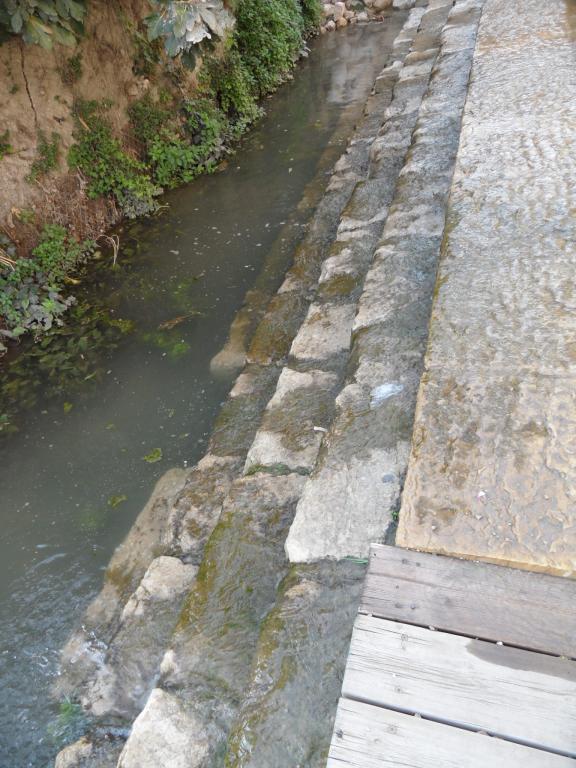
The Pool of Siloam in the City of David in Jerusalem (ancient Jerusalem). Here, Jesus healed the blind man. On the day we visited it, we were told that the water from the Gihon Spring was flowing into the pool for the first time (see it flowing, above) since the Temple was destroyed in 70 AD (!!!). It also stopped when we were there. [photograph by my wife Judy Armstrong, October 2014]
* * * * *
On my pilgrimage to Israel in October 2014, I touched my wedding ring to all the holy sites I visited: according to the Catholic theology of relics and veneration of same, as conduits of grace. But upon researching particulars about the three classes, I (curiously) discovered different things. The Church (somewhat unfortunately) has not made hard-and-fast statements about it. Here is what Fr. John A. Hardon, Modern Catholic Dictionary (“Relic”) says:
Relics are of three classes: the first is part of the saint’s body and is the type placed in the altar stone; the second is part of the clothing or anything used during the saint’s life; and the third is any other object, such as a piece of cloth, that has been touched to a first-class relic.
According to this very trustworthy catechist, a third-class relic has to be touched to a saint’s actual body: a first-class relic (which I never did on my pilgrimage). He precludes touching a second-class relic to create a third-class relic. But others disagree. For example, the Marian Research Institute of Dayton, Ohio, states: “Bits of cloth that have been touched to an actual first or second class relic are called third class relics.”
Rev. John Trigilio, Jr., Rev. Kenneth Brighenti, in their 2010 book, Saints for Dummies (p. 241) agree: “. . . touched to a first- or second-class relic.”)
The material of a third-class relic need not be confined to cloth, as Fr. Hardon notes. Fr. William Saunders, a great teacher, operates with a broader definition of both first- and third-class relics (even categorizing some ostensible 3rd-class relics as 2nd-class):
First class or real relics include the physical body parts, clothing and instruments connected with a martyr’s imprisonment, torture and execution. Second class or representative relics are those which the faithful have touched to the physical body parts or grave of the saint.
A Corpus Dei page follows Fr. Hardon’s scheme of third-class relics; however, it widens first-class relics in some cases as follows:
An exceptional position of this scheme hold the biblical relics, those objects that are connected to Jesus Christ and Mary directly. They are first class too. Objects in this category are the cross relics, the passion relics, that played a role in the Passion of Christ in His last days of His life.
By this criterion, my ring is a third-class many times over, since it has touched many objects directly connected with both Jesus and Mary. Joan Carroll Cruz, in her 1984 book, Relics, concurs with this to some extent, arguing (p. 2) that “the instruments of Our Lord’s Passion” are first-class relics, and that third-class relics can be touched to second-class relics as well as first-class.
Thus, depending on whom one believes, my ring is or is not a legitimate third-class relic. Even if it isn’t, it was touched to sites and objects whose veneration as holy places, shrines, and objects the Church clearly does condone and encourage (along with the sincere, well-intended piety and devotion of such acts), so at the very least one might say that my ring is now an “extraordinary sacramental item” if not technically a form of relic. That said, here are the 100 things and sites that my ring touched (with a convenient index at the end), in chronological order:
1. Elijah’s cave on Mt. Carmel.
2. Place of Elijah’s confrontation with the false prophets of Baal on Mt. Carmel.
3. The “audience hall” (Acts 25:23) during St. Paul’s trial, in Caesarea on the Mediterranean, where he appeared before King Agrippa.
4. Glass over the actual spot of Jesus’ transfiguration on Mt. Tabor.
5. 4th c. Byzantine church on Mt. Tabor (transfiguration).
6. Cana, wedding at a house in.
7. House of Mary, Joseph, and Jesus in Nazareth (steps to).
8. Mary’s Annunciation: pillar and rocks close nearby.
9. Ground of the Sermon on the Mount.
10. Feeding of the 5000: olive press on the site.
11. 1st c. mosaic tile of the church at the feeding of the 5000 location.
12. Peter’s house in Capernaum.
13. Early churches built over Peter’s house in Capernaum.
14. Synagogue in Capernaum where Jesus preached.
15. Sea of Galilee: location where Jesus appeared after His Resurrection and ate fish.
16. Sea of Galilee (water of).
17. Steps leading to the church (see #15), that Jesus and the disciples walked on.
18. Rock at the spot where Jesus healed the woman with a hemorrhage, who touched His garment: one mile from Capernaum.
19. River Jordan near where Jesus was baptized; also close to where Joshua and his armies miraculously crossed (Josh 4:1-24), and where Elijah (2 Ki 2:8) and Elisha (2 Ki 2:14) parted the waters of the river.
20. The rock Jesus sat upon when He was tempted by the devil in the wilderness.
21. Icons in the Greek Orthodox monastery on the Mount of Temptation.
22. Hermit cave in the Greek Orthodox monastery on the Mount of Temptation.
23. Road from Jericho to Jerusalem through the rugged “hill country of Judea” that both Abraham and Jesus walked. Jesus told the parable of the Good Samaritan there.
24. Mountain where Jesus commissioned Peter to lead His Church in Caesarea Philippi (Matthew 16).
25. Path that Jesus and disciples walked near Caesarea Philippi.
26. Road to Damascus that Paul took.
27. Place of the feeding of the 4000 on the eastern shore of the Sea of Galilee (Mt 12:32).
28. 5th c. monastery on the site of the Gadarenes and casting out the demon into the swine.
29. Spot where Jesus was born in Bethlehem.
30. Jesus’ Manger in Bethlehem.
31. Cave where Jesus was born in Bethlehem.
32. St. Jerome’s cave next to the cave of the nativity in Bethlehem.
33. Room where St. Jerome wrote the Vulgate Bible in Bethlehem.
34. Shepherd’s field, where they heard the angels on Christmas, in Bethlehem.
35. Shepherd’s cave in Bethlehem, where they kept their sheep.
36. Arch upon entering the church in Bethlehem.
37. Grotto of the holy innocents in Bethlehem.
38. Location of angel warning Joseph to escape to Egypt.
39. Grotto of the Three Wise Men.
40. Slab where Jesus’ dead body was lain and anointed by Mary Magdalene and Mary mother of Joses and James.
41. Rock of Golgotha, where Jesus was crucified.
42. Altar at Golgotha.
43. Rock in front of the tomb, rolled away by the angel.
44. Outside the tomb of Christ.
45. Slab inside Jesus’ tomb, where He was laid and rose from the dead.
46. Pillar where Jesus was scourged.
47. Pillar of Constantine’s church built over Golgotha.
48. St. Helena’s chapel in Church of the Holy Sepulchre.
49. Location where St. Helena found the cross of Christ.
50. Spot where the Blessed Virgin Mary, Mary Magdalene, Mary mother of Joses and James, and St. John were standing during Jesus’ crucifixion.
51. Marble and seat at the “Pavement” (“Gabbatha”: Jn 19:13) where Pilate judged Jesus.
52. Jesus Ascension on the Mt. of Olives and His “footprint” in the rock.
53. Ancient road down Mt. of Olives where Jesus wept over the city and made a triumphal entry on Palm Sunday.
54. Garden of Gethsemane.
55. Rock of agony at Gethsemane (outside church).
56. Rock of agony at Gethsemane (inside church).
57. Grotto where St. Stephen (the first Christian martyr) was stoned.
58. Mary’s tomb (Orthodox site).
59. Gethsemane cave.
60. King David’s palace in Jerusalem.
61. “Step structure”: possibly part of David’s palace.
62. Wall at Salem, where Abraham met Melchizedek, who gave him bread and wine.
63. Hezekiah’s tunnel (c. 700 B. C.)
64. Gihon Spring.
65. Pool of Siloam, where Jesus healed the blind man.
66. Steps and walk to the temple (near Pool of Siloam), that Jesus and disciples would have walked.
67. Rachel’s tomb in Bethlehem.
68. Old Byzantine church where Rachel gave birth to Benjamin.
69. Same spot, where Mary rested on the way to Bethlehem.
70. Church near where Goliath’s head is buried: Khirbet Hanot or Horvat Hanot (c. 563 A. D.).
71. Fortified city from King David’s time (Khirbet Qeiyafa).
72. Shepherd’s cave in Bethlehem, where they visited Jesus.
73. Bet Gemal monastery (5th c. Byzantine), where Gamaliel lived: who taught St. Paul. St. Stephen, Nicodemus, and Gamaliel are buried there.
74. Granite and marble columns now part of the Dome of the Rock, which were originally part of Herod’s temple.
75. Byzantine church built over Pool of Bethesda.
76. Wall close to Pool of Bethesda.
77. Church of St. Anne: birthplace of Mary.
78. Southeast corner of the southern Pool of Bethesda.
79. Fortress Antonia, where St. Paul was held prisoner, awaiting his trial.
80. Steps of St. Helena’s church, near the area of the cross.
81. The “eye of the needle” in St. Helena’s church.
82. Part of the rock of Golgotha in Russian Orthodox Church.
83. Western, “Wailing” Wall from Herod’s temple mount (holiest spot of Judaism).
84. Steps just outside the southern side of the temple that Jesus and the disciples and the holy family would have walked on.
85. Temple floor at the top of the stairs.
86. South temple wall.
87. First temple period structures south of the temple mount (destroyed in 586 B. C.).
88. Ritual bath of Herod’s temple.
89. Statue of Mary at Dormition Abby on Mt. Zion (where she was assumed into heaven).
90. David’s tomb on Mt. Zion (his body was probably moved to there).
91. Upper room (later, 2nd floor room marking the spot).
92. Lower part of upper room (closer to original).
93. Byzantine church above where Peter denied Christ three times.
94. Caiphas’ house, where Jesus was first tried.
95. Jail where Jesus was held and scourged and where Peter and other “apostles” were held for preaching the gospel (Acts 5:19-42).
96. “Holy Stairs” where Jesus walked to Caiphas’ house after His arrest.
97. Giant stone from Herod’s Western wall (underground).
98. Place closest to the Holy of Holies from Herod’s wall (underground).
99. Main street of Jerusalem, west of the temple, in Jesus’ time (He would have walked there).
100. Byzantine church mosaic from near Peter’s denials.
INDEX of TOPICS
Abraham, 23, 62
Angels, 34, 38, 43, 52, 95
Apostles, 95
Ark of the Covenant, 19, 74
Benjamin, 68
Bible, 33
Byzantine churches (early), 5, 11, 13, 28, 36, 42, 47-48, 68, 70, 73, 75, 80-81, 93, 100
Caiphas, 94, 96
Caves (hermit), 22
Christmas, first, 29-31, 34-39, 72
Church, origin of, 24, 91-92
Cross, Crucifixion, 41-42, 49-50, 80, 82
David, King, 60-61, 70-71, 90
Elijah, 1-2, 4, 19
Elisha, 19
Eucharist, 62, 91
Gabriel (angel), 8
Gamaliel, 73
Gihon Spring, 64
God the Father: miraculous manifestations of, 2, 4, 8
Goliath, 70
Hezekiah, King (tunnel), 63
Holy Family (incl. Joseph), 7, 29-31, 84
Holy of Holies, 74, 98
Icons, 21
James, St. (disciple), 4
Jerome, St. 32-33
Jesus, 4, 6-7, 9-10, 12, 14-20, 23-25, 27, 29-31, 40-41, 43-46, 50-51, 53-56, 59, 65-66, 76, 78, 84, 93, 95-96, 99
Jesus and the disciples, 9-10, 12, 15, 17, 24-25, 27, 52-54, 59, 66, 84, 91-92
Jesus, post-Resurrection appearances, 15, 52
John, St. (disciple), 4, 50, 95
John the Baptist, 19
Jordan, River, 19
Joseph, St. (Mary’s husband), 38, 69, 84
Joshua, 19
Mary, Blessed Virgin, 6-8, 12, 29-31, 50, 58, 69, 77, 84, 89, 91-92
Mary and Jesus, 6-7, 12, 29-31, 50, 84
Mary Magdalene, 40, 50
Mary mother of Joses and James, 40, 50
Melchizedek, 62
Moses, 4
Nicodemus, 73
Paul, St. 3, 26, 57, 73, 79
Pentecost, first Day of, 91-92
Peter, St. 4, 12, 15, 24, 91-93, 95
Rachel, 67-68
Sea of Galilee, 9-15-16, 18, 27
Solomon, 74, 87
Stephen, St., 57, 73
Temple (Herod’s “3rd”), 66, 74, 83-86, 88, 97-99
Temple, Solomon’s, 87, 98
Additionally, we collected water from the River Jordan and Sea of Galilee, about a dozen shells from the latter, found about a dozen or so pieces of pottery from Khirbet Qeiyafa: the city from David’s time (1000 B. C.), bought a carving of the baby Jesus made of olive wood in Bethlehem, which was then touched to the star where Jesus was born, the manger, the church at Bethlehem, the shepherd’s cave in the field, St. Jerome’s tomb, the room where he wrote the Vulgate, and the Nativity cave, and five smooth roundish stones from the Elah Brook, similar to what David would have selected to kill Goliath with his sling.
Previous Post
September 16, 2015
On My Reason for Critiquing Atheist "Deconversion" Stories
Next Post
September 17, 2015 Review of Karl Keating's Critical Book, "The New Geocentrists"
Browse Our Archives
Select a Category & Last Things About Me Anti-Catholicism Atheism & Agnosticism Baptism and Sacramentalism Bible and Tradition Blessed Virgin Mary Books by Dave Armstrong C. S. Lewis Calvinism & General Protestantism Catholic Apologetics Catholic Apologists Catholic conversion Catholic converts Christmas Church (Ecclesiology) Church History Conversion and Converts Development of Doctrine Eastern Orthodoxy Ecumenism & Christian Unity Eucharist & Liturgy Fathers of the Church French Translations G. K. Chesterton Hell Hell & Satan Hell & Satan & Last Things Heresies & Comparative Religion Holistic Health Inquisition & Crusades & Scandals James White Jews & Judaism & Old Testament John Calvin John Henry Newman Liberal / Modernist Theology Life Issues Literary Resume Lutheranism Mariology Martin Luther Music Orthodoxy Papacy & Infallibility Personal Page Philosophy & Science Political & Ethical & Moral Issues Protestant Persecution & Intolerance Protestantism Purgatory Purgatory & Penance Romantic & Imaginative Theology Saints & Purgatory & Penance Salvation Salvation & Justification Satan & Last Things Sexuality and Gender Issues Spanish Translations Traditionalism vs. Radical Catholic Reactionaries Traducciones al español / tradução para português Trinitarianism & Christology Uncategorized Videos
Select a Month October 2026 September 2026 August 2026 July 2026 June 2026 May 2026 April 2026 March 2026 February 2026 January 2026 December 2025 November 2025 October 2025 September 2025 August 2025 July 2025 June 2025 May 2025 April 2025 March 2025 February 2025 January 2025 December 2024 November 2024 October 2024 September 2024 August 2024 July 2024 June 2024 May 2024 April 2024 March 2024 February 2024 January 2024 December 2023 November 2023 October 2023 September 2023 August 2023 July 2023 June 2023 May 2023 April 2023 March 2023 February 2023 January 2023 December 2022 November 2022 October 2022 September 2022 August 2022 July 2022 June 2022 May 2022 April 2022 March 2022 February 2022 January 2022 December 2021 November 2021 October 2021 September 2021 August 2021 July 2021 June 2021 May 2021 April 2021 March 2021 February 2021 January 2021 December 2020 November 2020 October 2020 September 2020 August 2020 July 2020 June 2020 May 2020 April 2020 March 2020 February 2020 January 2020 December 2019 November 2019 October 2019 September 2019 August 2019 July 2019 June 2019 May 2019 April 2019 March 2019 February 2019 January 2019 December 2018 November 2018 October 2018 September 2018 August 2018 July 2018 June 2018 May 2018 April 2018 March 2018 February 2018 January 2018 December 2017 November 2017 October 2017 September 2017 August 2017 July 2017 June 2017 May 2017 April 2017 March 2017 February 2017 January 2017 December 2016 November 2016 October 2016 September 2016 August 2016 July 2016 June 2016 May 2016 April 2016 March 2016 February 2016 January 2016 December 2015 November 2015 October 2015 September 2015 August 2015 July 2015 June 2015 May 2015 April 2015 March 2015 February 2015 January 2015 December 2014 November 2014 October 2014 September 2014 August 2014 July 2014 June 2014 April 2014 March 2014 February 2014 January 2014 December 2013 November 2013 October 2013 September 2013 August 2013 July 2013 June 2013 April 2013 March 2013 February 2013 January 2013 December 2012 November 2012 October 2012 September 2012 August 2012 July 2012 June 2012 May 2012 April 2012 March 2012 February 2012 January 2012 December 2011 November 2011 October 2011 September 2011 August 2011 July 2011 June 2011 April 2011 March 2011 February 2011 October 2010 September 2010 August 2010 July 2010 April 2010 March 2010 December 2009 October 2009 August 2009 July 2009 June 2009 May 2009 March 2009 February 2009 October 2008 September 2008 April 2008 March 2008 February 2008 January 2008 December 2007 November 2007 October 2007 May 2007 March 2007 February 2007 January 2007 November 2006 October 2006 September 2006 August 2006 July 2006 June 2006 May 2006 April 2006 March 2006 February 2006 October 2005 June 2005 April 2005 February 2005 July 2004 May 2004 April 2004
Follow Us!
TAKE THE
Religious Wisdom Quiz
Which book follows Psalms in the Bible?
Select your answer to see how you score.
Job Proverbs Ecclesiastes Song of Solomon
Books by This Author Books by Dave Armstrong
Related posts from Biblical Evidence for Catholicism

Bible & Catholicism on Mortal Sin (vs. John...
Biblical Evidence for Catholicism

Does Catholic Intercession of Saints Require Omniscience?
Biblical Evidence for Catholicism

Capabilities of Heavenly Saints: Protestant Commentaries
Biblical Evidence for Catholicism

Revelation 5 & 8 (Intercession of Saints &...
Biblical Evidence for Catholicism
TRENDING AT PATHEOS Catholic

Janie Learns the Way of the Cross: A...
Teaching children about Jesus' Passion can be challenging. Many parents and educators...

Looking For Good Catholic Writing - October 2026
He alone extends the heavens, and he walks upon the waves of...

In "Irreplaceable," our book on vocation and technology, Trevor Sutton and I...

I was strolling through the top floor of the brand new Parthenon...

What Does Gêvâh Mean For Kimberley Guifoyle &...
This week, a lot of the news is focused on Kimberly Guilfoyle....

INNER CIRCLE: Profound Mystery (Of Christ In All...
Ephesians 5:31-32 “For this reason, a man will leave his father and...
view all Catholic blogs
Ad-Free & Subscriber Log-In Subscription Support
- About Us
- 2026 Calendar
- Videos
- Podcasts
- Library of World Religions
- Faith In Media Tracker
- Advertise With Us
- Write for Us
- Privacy Policy
- Terms of Service
- Do Not Sell My Data
- Contact Us
- Radiant Digital
- Manage Newsletter Subscriptions
- Unsubscribe From Notifications
- Sitemap
Copyright 2008-2026, Patheos. All rights reserved.
Subscription Support Ad-Free & Subscriber Log-In
Follow Patheos