
BuddhistCatholicContemplativeEvangelicalGeneral ChristianHinduJewishLatter-day SaintMuslimNew VisionsProgressive Christian
Beliefs
- Buddhist
- Catholic
- Contemplative
- Evangelical
- General Christian
- Hindu
- Jewish
- Latter-day Saint
- More Voices
- Muslim
- New Visions
- Pagan
- Progressive Christian
Topics
- Religion News
- Food and Religion
- Sports and Religion
- Religious Art
- Religious Music and Entertainment
- Religious Events
- History and Religion
- Style and Religion
- Politics and Religion
- Women in Religion
- Recreation Outdoors and Religion
- Business Finance and Religion
- Careers Workplace and Religion
- Education and Religion
- Family Parenting and Religion
- Health Fitness and Religion
- Home and Religion
- Relationships and Religion
- Technology and Religion
- Travel and Religion
Columnists
- Buddhist Columnists
- Business Finance and Religion Columnists
- Careers Workplace and Religion Columnists
- Catholic Columnists
- Contemplative Columnists
- Education and Religion Columnists
- Evangelists Columnists
- Family Parenting and Religion Columnists
- General Christian Columnists
- Health Fitness and Religion Columnists
- Hindu Columnists
- History and Religion Columnists
- Home and Religion Columnists
- Jewish Columnists
- More Voices Columnists
- Latter Day Columnists
- Muslim Columnists
- New Visions Columnists
- Nonreligious Columnists
- Pagan Columnists
- Politics and Religion Columnists
- Progressive Columnists
- Recreation Outdoors and Religion Columnists
- Relationships and Religion Columnists
- Religion News Columnists
- Religious Art Columnists
- Religious Events Columnists
- Religious Music and Entertainment Columnists
- Sports and Religion Columnists
- Style and Religion Columnists
- Technology and Religion Columnists
- Travel and Religion Columnists
- Women in Religion Columnists
Resource Library
- 2026 Calendar
- Library of World Religions
- The 100 Most Holy Places on Earth
- Patheos Answers
- Podcasts
- Videos
- Faith Leaders Database
- Anglican Episcopalian
- Bahai
- Baptist
- Buddhism
- Christianity
- Confucianism
- Eastern Orthodoxy
- Hinduism
- Holiness and Pentecostal
- ISKCON
- Islam
- Judaism
- Lutheran
- Methodist
- The Church of Jesus Christ of Latter-day Saints
- New Age
- Paganism
- Presbytarian and Reformed
- Protestantism
- Religion Behind the Scenes
- Roman Catholic
- Scientology
- Shia Islam
- Sikhism
- Sufism
- Sunni Islam
- Taoism
- Zen
- See all religions
Research Tools
 Ad-Free & Subscriber Log-In Subscription Support
Ad-Free & Subscriber Log-In Subscription Support
Follow Patheos 

- Trending:
- Forgiveness
- |
- Marriage
- |
- Consciousness
- |
- Death Penalty
- |
- Election
- |
- Halloween

-
About
-
Catholic Apologetics
-
Church History
-
Great Apologists
-
Christian Worldview
-
Protestantism & Misc.
- Home
- Catholic
- History and Religion
- Dialogue with a Polymath Agnostic on Root Premises
Dialogue with a Polymath Agnostic on Root Premises
Last updated on: June 6, 2026 at 12:27 am by Dave Armstrong
Dialogue with a Polymath Agnostic on Root Premises 2026-06-06T00:27:36-04:00 Dave Armstrong
Patheos Explore the world's faith through different perspectives on religion and spirituality! Patheos has the views of the prevalent religions and spiritualities of the world.
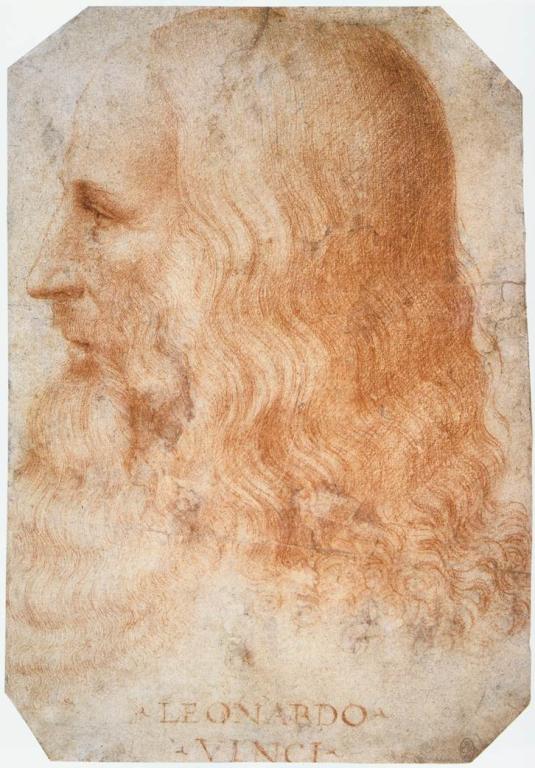
Portrait of Leonardo da Vinci (a polymath) by Francesco Melzi (1493-1570) [public domain / Wikimedia Commons]

This exchange occurred in the combox for my post, Clarifications re: Atheist “Reductio” Paper. My opponent’s (JD Eveland’s) words will be in blue. He has very impressive credentials: a Ph.D. and various professorships. He claims to be a “polymath” too: which means a great genius, with expertise in many fields. This title has been applied to men like Leonardo da Vinci, Galileo, and Isaac Newton.
I’m honored to have been able to talk at all with such a distinguished man (I truly am). Of course, when we started talking, I didn’t know any of this about him (I did know that many active atheists and agnostics online have advanced degrees and are very sharp).
What I have been known for, these past 19 years online, is engaging in lots of honest dialogues (over 700 posted through the years), where I present all of my opponent’s words (in a given discussion of one broad or specific topic) and interact with them. I have written three books (one / two / three) that are entirely or mostly of this nature. Readers can then exercise their own critical faculties in judging relative merits of the arguments. This is the beauty of dialogue, and why I love it so much as a teaching tool. Free speech and exchange of ideas are wonderful things.
* * * * *
Let’s assume for a bit that there is some element of “faith” in accepting the notion of a non-theistic universe, analogous to the faith exercised in accepting a theistic universe. There still remain two critical differences that render this equivalence false. First, there is the question of how to deal with disconfirming evidence. The non-theist has no difficulty incorporating new information into his worldview; the theist, by contrast, must deny such evidence if it turns out to disconfirm some particular article of faith deemed necessary. Second, even if one agrees to call all the uncertainties in the universe “God”, there is no necessary segue to acceptance of the details of the Catholic/Christian “God” as necessary and valid. Something other than the inherent uncertainty of cosmological questions would be necessary to establish the Christian “God” as the only legitimate way of filling in the cosmological holes.
1. Philosophy and religion (non-empirical ways of knowledge) generally ascertain knowledge non-empirically (DUH!!!).Therefore, your “argument” is a non sequitur. All it establishes is that science operates with the methodology and presuppositions of scientific method, which no one denied in the first place. It can’t speak to non-empiricism because it is outside of its purview.
It seems that not one atheist or agnostic in a hundred understands this basic, fundamental, elementary fact of epistemology and reality, but assuredly there are some. I’ve met them here.
2. I have not argued that the Christian God necessarily follows if we reject the fathomless irrationality of atheism / agnosticism, so your point on that score is also a non sequitur. I have asserted that it is reasonable (and requires no more faith) to posit God as an alternative explanation of the origins of things. But that is only the “bare” philosophical / deist-type / Humean God. The Christian / biblical God has to be proven by any number of other arguments.
You gave it the old college try; you just have to present some arguments that are not non sequiturs.
Wrong again, Dave. Philosophy (if not religion) may be “non-empirical” in the sense that there aren’t experiments that can be set up to test particular propositions, but it is expected at least to follow the general rules of logic and discourse. It is also expected not to blatantly contradict empirically verifiable propositions. Non-experimental methods aren’t a license to just throw any old thought up against the wall and see if you can convince people that it’s sticking.
And I would also observe that the article also covertly attempts to get around your second assertion (which is in fact correct). By failing to make this point explicitly in the article, you leave a wide space within which you may hope that the non-analytical will be persuaded that if there is any difficulty to be found with some atheist propositions, the only alternative is traditional Christianity. It would be more intellectually honest to be clear about what you have and have not either refuted or verified.
1st paragraph: you seem to be laboring under the illusion that we disagree about much more than is actually the case. I have no reply to this portion because I essentially agree with it.
2nd paragraph: I fail to see what more I need to say by way of clarification. I have massively done that here. The paper is about the necessity of faith on all sides, and universal acceptance of as-yet-unproven and unprovable (?) axioms.
I don’t recall saying anywhere in the clarification or in the original paper anything along the lines of “the only alternative is traditional Christianity.” Perhaps you can kindly direct me to any such statement of mine (documentation is always a helpful thing). If it can be found, I’ll retract it, because it is not what I believe, and I must have had a momentary lapse of reason if I stated that.
Glancing at the original paper, I do find the following assertion: “the Christian must reject it [atheism], since we believe (very unlike the Atomist) that irrational and non-rational beliefs are untrue and unworthy of anyone’s allegiance.”
Disbelieving in X is not the same as belief in Y. Here (and throughout the paper) I was asserting that atheists exercised faith just as Christians do (on a very fundamental or presuppositional level), but also that atheist faith is ultimately irrational and should be rejected as such.
Thus I was arguing that X is unworthy of belief. I give few if any positive reasons for acceptance of Y. Of course I do that in many other places, seeing that I am a Christian / Catholic apologist. I have 1500 posts online and 49 published books. But somehow you have this notion that I either argued (or mistakenly believed) that rejection of X is logically and automatically an acceptance of Y.
And that is apparently because Christians are routinely (among atheists and agnostics) thought to be very illogical and “unscientific” people, who would routinely make such elementary mistakes in logic. Some Christians are that way; the majority (at least of thinking / educated ones) are not. I am not. If you desire constructive discussion with me, the sooner you figure out that I think logically (agree or disagree with me), the better for good and mutually enjoyable discussion.
***
The paper doesn’t assume or require belief that Christianity is correct, but I do, personally, as a Catholic. One can critique one view without necessarily having another, though I think it is better to have an alternative at least in mind.
Just because a proposition is an “alternative” to a somewhat questionable proposition says nothing whatever about its “truth”. There are at least as many silly alternative propositions as there are silly main propositions. Putting something forward as an “alternative” without offering at least some evidence for its having greater validity than the original is not much of a contribution to any public discourse.
***
The issue is not whether or not there are non-immediately-verifiable propositions underlying any world view; of course there are. The issue is how they are handled in the future. Non-theist propositions are all subject to review and change; theist propositions are in principle not subject to empirical review. The moment that you assert propositions that are not subject to refutation, you’ve placed yourself outside the sphere of rational discourse.
Sure, you can believe that if you are also willing to classify all non-empirical philosophical thought as “outside the sphere of rational discourse.” That is patently ridiculous, and most people, whether they believe in God or not, see it for what it is.
This is sort of a religion made out of empiricism, or what C. S. Lewis relentlessly critiqued as “scientism”: the belief that only science can reliably answer all relevant questions about anything.
Any rational belief (including Christians ones) is or should be subject to refutation, but that’s not the same as saying (as you seem to say) that all rational refutation is of an empirical nature. You appear to imply the latter by stating, “theist propositions are in principle not subject to empirical review.”
I concur that we probably agree on quite a lot. I think that we continue to disagree on the nature of science. I would agree that there are questions about which science has little to say, but that doesn’t mean that in principle science might not have something to say down the road.
If I’m not wholly deluded, I see the point of your article to be that both science and religion deal with propositions that are not immediately subject to empirical tests – what you term “faith propositions”. True enough. But you then seem to suggest that these are equivalent, and that is not so. Untested scientific propositions may be used as axioms, but if evidence emerges that they are not correct, they can be discarded without fundamental change to the scientific worldview. The shift from a geocentric to a heliocentric universe was accomplished without rejecting astronomy as an idea. On the other hand, rejection of a religious axiom (such as the existence of a God) entails the rejection of the whole approach.
Here’s the difference. I am not currently a “believer” in God as generally understood, particularly the Christian view. Yet I can easily describe empirical evidence that would cause me to revise my ideas and change. Could you do the same? Is there any evidence that might be adduced that would cause you to revise your faith propositions? The difference between my “faith” and yours is that mine interacts with the world, while yours exists independent from the world. To obscure this difference by labeling both approaches as “faith-based” seems a bit disingenuous.
The characterization in your last paragraph is quite unfair and untrue.
There are a number of things that could theoretically dissuade someone of Christianity, because it is belief based in part (importantly so) on empirical evidence of observation and miracle (the latter not being arbitrarily ruled out as impossible from the outset). Here are some:
1) Producing the verifiable bones of Jesus.
2) Proving that His resurrection was an elaborate hoax.
3) Proving that the New Testament was pure fiction, made up by those who wrote it and deliberately presented to the public in order to deceive them.
4) Proving that Jesus of Nazareth never existed.
5) Proving that Jesus never made the claims of being God that the New Testament [massively] presents as having occurred, in history (a variation of the Lord, Liar, or Lunatic? “trilemma” argument).
Save for #1, skeptics and atheists and agnostics have seriously tried to argue all of these claims. I had an atheist friend in my home make the [pathetic] “case” that St. Paul never existed. I think they have failed miserably. Of course, you will just say that I say that because I “have” to.
Believe what you will. These are conceivable, theoretical, hypothetical disproofs, whereas you were just claiming that there are no such things for the Christian. Atheists and agnostics often do so; and it’s all thoroughly wrongheaded analysis.
I have now shown that there were many such things, and that was just off the top of my head. As in all such questions of evidence and proof, reasonable people can disagree as to the strength of a proposed disproof.
I’d like to add another quick note on your “empirical evidence of observation and miracle”. Regarding observation, I’m assuming that you are referring to the “Gospels” and related pseudoeipgraphia dating from the first couple of centuries CE. Since you begin with the presumption that, say, the “Gospel of Matthew” represents legitimate testimony written down by somebody named “Matthew” who was an acquaintance of Jesus, I would have to either prove that there wasn’t anybody named Matthew around the time of Jesus whom I have known him, or find some copy of the gospel that contained a footnote saying that this was actually written by John of Cappadocia in the sixth century. The burden ought to be on the observer to establish the truth of what s/he claims to have seen, not on the reader to disprove it.
Regarding miracles, I’m assuming that you’re referring to things that happen in the natural world for which there is no immediately apparent naturalistic explanation. There are a lot of things that happen all around us that we can’t immediately explain; that by no means establishes that there isn’t a naturalistic explanation. If someone claims to have been cured of cancer by praying to an image of the Virgin Mary that appeared in a pancake somewhere, that hardly establishes a miracle just because you or anyone else says it is. It’s not legitimate to say that a particular occurrence is miraculous just because its mechanics can’t be immediately understood in terms of natural science at the moment.
Nor is it legitimate to claim that it couldn’t possibly be miraculous because our stunted, paltry epistemology and worldview won’t allow it.
I’m gratified that in principle you are willing to set forth some possible conditions for disconfirmation of Christian belief. Of course, some of the conditions are essentially impossible to establish. Proving a negative proposition – e.g., #4-5 – is extremely difficult if not impossible, since some margin of doubt will always remain that one other piece of evidence might be out there. It’s also common practice to interpret evidence that contradicts the Christian interpretation as something artificially planted by either God or Satan deliberately to mislead and/or tempt the faithful; there’s no possible argument against this, since it assumes supernatural power and authority. This line of argument has been employed often enough that any claim to true falsifiability of any fundamental Christian propositions is seriously suspect.
Finally, as you yourself note, it ultimately comes down to the credibility of the evidence and what you’re willing to accept as legitimate proof. It’s one thing to say that you’re open to evidence that might disconfirm your beliefs; quite another to get you to admit that particular items of evidence constitute legitimate objections. Whatever bones I might produce in response to your #1, what hope would I have of ever establishing in your mind that they were in fact those of Jesus (DNA testing not having been overwhelmingly available in first century Palestine)?
In short, you’re playing a rhetorical game which by definition you win unless I can pass a series of impossible tests. This is in direct contradiction to Carl Sagan’s theorem that “extraordinary claims require extraordinary evidence”. By asking me to provide extraordinary evidence, you’re implicitly stating that my disbelief is a personal supreme being is an extraordinary claim. I would suggest instead that the existence of such a being is the extraordinary claim, and therefore the burden of extraordinary evidence ought to fall upon you. I’m willing to continue the discussion, but I’d rather not just play word games.
And I’d rather not go round and round with atheists who are exceedingly unlikely to change their minds regarding anything Christian. I usually stick to exposing fallacies and falsehoods in their reasoning when they attack Christianity.
I have neither attacked Christianity (all I said was that I was not personally a Christian) nor committed any fallacies or uttered any falsehoods in the course of this discussion. I am unlikely to change my opinions, since you have offered nothing in the way of evidence. I’ll leave it to the readers of these comments to decide who has made the more salient and useful comments.
[Since he wouldn’t tell us what his belief-system is, I discovered that he is an agnostic, as he stated five months ago in a comment elsewhere:
I didn’t say that there is no god. I said that I didn’t have any unequivocal proof that there is one. As a scientist ought to, I retain an open mind to any evidence that might be adduced in favor of the hypothesis. There is no faith involved except for a belief in the value of the scientific method. And even that is also open to question. . . .
The “God” of evangelical Christians is only one possible thing to believe in. There is about as much evidence for its being an accurate descrioption of divinity as there is for the existence of Marduk, Apollo, or Set.
I prefer not to believe something for which there is no particular evidence other than what someone says or wrote down.I believe facts, and I believe reliable heuristics. That’s the default. It takes an affirmative action to assert the existence of something for which there is no evidence. It takes no faith at all to remain skeptical about such a being, and even more about the validity of a set of dubious moral precepts which are largely irrational and are premised solely on someone interpreting what they think that this dubious deity might actually want.
I’m certainly prepared to accept the idea that there may be some larger intelligence behind the Universe. But I doubt that it issues instructions on the way to have sex or eat shrimp.
Ten months ago in the same thread, he wrote:
I have read the Bible carefully, and will stack my knowledge of it up against that of almost any Christian. I have read theologians from Plato through Augustine and Aquinas, to Luther and Calvin. I come from 13 generations of New Englanders; my direct ancestors were among the Puritans who founded Boston in 1630 and established its theocracy in the name of Calvin and Zwingli. I understand antinomianism, predestination, salvation by grace, dispensationalism, and a whole lot more. I’ve made a serious study of all this.
The problem is this: it all makes sense only if you are prepared to accept certain basic assumptions that make little to no sense, purely on faith (that is, belief without prior evidence). You’re welcome to believe whatever you like – six impossible things before breakfast, as the Red Queen said, if you like. Personally, I can see no basis for accepting a premise such as an omnipotent and omniscient being in charge of this whole Universe of a hundred billion galaxies each with a hundred million or more stars endowing me with the facility of reason and then requiring me to suspend it entirely in favor of believing a story made up a couple of thousand years ago on a hillside somewhere among the sheep; who would create someone knowing that he was going to do something wrong, and then create multiple billions of souls solely for the purpose of tormenting them for all eternity (since he would know that they wouldn’t accept the story at face value) on account of something that a supposed ancestor did unaccountable generations ago; and who moreover cares so much about who I might go to bed with that he requires me to be killed in the most appalling kinds of ways solely because of the plumbing of my bedmate. ]
Previous Post

August 31, 2015
Provocative (?) Thoughts on Radical Catholic Reactionaries
Next Post

September 1, 2015 Dialogue on Why C. S. Lewis Didn't "Pope" (Become a Catholic)
Browse Our Archives
Select a Category & Last Things About Me Anti-Catholicism Atheism & Agnosticism Baptism and Sacramentalism Bible and Tradition Blessed Virgin Mary Books by Dave Armstrong C. S. Lewis Calvinism & General Protestantism Catholic Apologetics Catholic Apologists Catholic conversion Catholic converts Christmas Church (Ecclesiology) Church History Conversion and Converts Development of Doctrine Eastern Orthodoxy Ecumenism & Christian Unity Eucharist & Liturgy Fathers of the Church French Translations G. K. Chesterton Hell Hell & Satan Hell & Satan & Last Things Heresies & Comparative Religion Holistic Health Inquisition & Crusades & Scandals James White Jews & Judaism & Old Testament John Calvin John Henry Newman Liberal / Modernist Theology Life Issues Literary Resume Lutheranism Mariology Martin Luther Music Orthodoxy Papacy & Infallibility Personal Page Philosophy & Science Political & Ethical & Moral Issues Protestant Persecution & Intolerance Protestantism Purgatory Purgatory & Penance Romantic & Imaginative Theology Saints & Purgatory & Penance Salvation Salvation & Justification Satan & Last Things Sexuality and Gender Issues Spanish Translations Traditionalism vs. Radical Catholic Reactionaries Traducciones al español / tradução para português Trinitarianism & Christology Uncategorized Videos
Select a Month October 2026 September 2026 August 2026 July 2026 June 2026 May 2026 April 2026 March 2026 February 2026 January 2026 December 2025 November 2025 October 2025 September 2025 August 2025 July 2025 June 2025 May 2025 April 2025 March 2025 February 2025 January 2025 December 2024 November 2024 October 2024 September 2024 August 2024 July 2024 June 2024 May 2024 April 2024 March 2024 February 2024 January 2024 December 2023 November 2023 October 2023 September 2023 August 2023 July 2023 June 2023 May 2023 April 2023 March 2023 February 2023 January 2023 December 2022 November 2022 October 2022 September 2022 August 2022 July 2022 June 2022 May 2022 April 2022 March 2022 February 2022 January 2022 December 2021 November 2021 October 2021 September 2021 August 2021 July 2021 June 2021 May 2021 April 2021 March 2021 February 2021 January 2021 December 2020 November 2020 October 2020 September 2020 August 2020 July 2020 June 2020 May 2020 April 2020 March 2020 February 2020 January 2020 December 2019 November 2019 October 2019 September 2019 August 2019 July 2019 June 2019 May 2019 April 2019 March 2019 February 2019 January 2019 December 2018 November 2018 October 2018 September 2018 August 2018 July 2018 June 2018 May 2018 April 2018 March 2018 February 2018 January 2018 December 2017 November 2017 October 2017 September 2017 August 2017 July 2017 June 2017 May 2017 April 2017 March 2017 February 2017 January 2017 December 2016 November 2016 October 2016 September 2016 August 2016 July 2016 June 2016 May 2016 April 2016 March 2016 February 2016 January 2016 December 2015 November 2015 October 2015 September 2015 August 2015 July 2015 June 2015 May 2015 April 2015 March 2015 February 2015 January 2015 December 2014 November 2014 October 2014 September 2014 August 2014 July 2014 June 2014 April 2014 March 2014 February 2014 January 2014 December 2013 November 2013 October 2013 September 2013 August 2013 July 2013 June 2013 April 2013 March 2013 February 2013 January 2013 December 2012 November 2012 October 2012 September 2012 August 2012 July 2012 June 2012 May 2012 April 2012 March 2012 February 2012 January 2012 December 2011 November 2011 October 2011 September 2011 August 2011 July 2011 June 2011 April 2011 March 2011 February 2011 October 2010 September 2010 August 2010 July 2010 April 2010 March 2010 December 2009 October 2009 August 2009 July 2009 June 2009 May 2009 March 2009 February 2009 October 2008 September 2008 April 2008 March 2008 February 2008 January 2008 December 2007 November 2007 October 2007 May 2007 March 2007 February 2007 January 2007 November 2006 October 2006 September 2006 August 2006 July 2006 June 2006 May 2006 April 2006 March 2006 February 2006 October 2005 June 2005 April 2005 February 2005 July 2004 May 2004 April 2004
Follow Us!
TAKE THE
Religious Wisdom Quiz
What city did David capture and make the capital of Israel?
Select your answer to see how you score.
Bethlehem Samaria Jerusalem Hebron
Books by This Author Books by Dave Armstrong
Related posts from Biblical Evidence for Catholicism

God, Modern Physics, & Dark Energy: An Analogy
Biblical Evidence for Catholicism

General Debate on Christianity with an Atheist
Biblical Evidence for Catholicism

Parting of the Red Sea & Lake Erie...
Biblical Evidence for Catholicism

My Apologetics Work: Interview with Kenny Burchard
Biblical Evidence for Catholicism
TRENDING AT PATHEOS Catholic

I was strolling through the top floor of the brand new Parthenon...

What Does Gêvâh Mean For Kimberley Guifoyle &...
This week, a lot of the news is focused on Kimberly Guilfoyle....

INNER CIRCLE: Profound Mystery (Of Christ In All...
Ephesians 5:31-32 “For this reason, a man will leave his father and...

Do Not Rejoice When Your Enemy Falls: The...
Turning an execution into a public spectacle is a disturbing expression of...

'The Chosen' S6 Trailer: The Passion Gets Very...
Not many watching 'The Chosen' worry about spoilers, but just because they...

The purpose-driven labor priest
A labor activist reads Rick Warren and it gets me wondering about...
view all Catholic blogs
Ad-Free & Subscriber Log-In Subscription Support
- About Us
- 2026 Calendar
- Videos
- Podcasts
- Library of World Religions
- Faith In Media Tracker
- Advertise With Us
- Write for Us
- Privacy Policy
- Terms of Service
- Do Not Sell My Data
- Contact Us
- Radiant Digital
- Manage Newsletter Subscriptions
- Unsubscribe From Notifications
- Sitemap
Copyright 2008-2026, Patheos. All rights reserved.
Subscription Support Ad-Free & Subscriber Log-In
Follow Patheos