
BuddhistCatholicContemplativeEvangelicalGeneral ChristianHinduJewishLatter-day SaintMuslimNew VisionsProgressive Christian
Beliefs
- Buddhist
- Catholic
- Contemplative
- Evangelical
- General Christian
- Hindu
- Jewish
- Latter-day Saint
- More Voices
- Muslim
- New Visions
- Pagan
- Progressive Christian
Topics
- Religion News
- Food and Religion
- Sports and Religion
- Religious Art
- Religious Music and Entertainment
- Religious Events
- History and Religion
- Style and Religion
- Politics and Religion
- Women in Religion
- Recreation Outdoors and Religion
- Business Finance and Religion
- Careers Workplace and Religion
- Education and Religion
- Family Parenting and Religion
- Health Fitness and Religion
- Home and Religion
- Relationships and Religion
- Technology and Religion
- Travel and Religion
Columnists
- Buddhist Columnists
- Business Finance and Religion Columnists
- Careers Workplace and Religion Columnists
- Catholic Columnists
- Contemplative Columnists
- Education and Religion Columnists
- Evangelists Columnists
- Family Parenting and Religion Columnists
- General Christian Columnists
- Health Fitness and Religion Columnists
- Hindu Columnists
- History and Religion Columnists
- Home and Religion Columnists
- Jewish Columnists
- More Voices Columnists
- Latter Day Columnists
- Muslim Columnists
- New Visions Columnists
- Nonreligious Columnists
- Pagan Columnists
- Politics and Religion Columnists
- Progressive Columnists
- Recreation Outdoors and Religion Columnists
- Relationships and Religion Columnists
- Religion News Columnists
- Religious Art Columnists
- Religious Events Columnists
- Religious Music and Entertainment Columnists
- Sports and Religion Columnists
- Style and Religion Columnists
- Technology and Religion Columnists
- Travel and Religion Columnists
- Women in Religion Columnists
Resource Library
- 2026 Calendar
- Library of World Religions
- The 100 Most Holy Places on Earth
- Patheos Answers
- Podcasts
- Videos
- Faith Leaders Database
- Anglican Episcopalian
- Bahai
- Baptist
- Buddhism
- Christianity
- Confucianism
- Eastern Orthodoxy
- Hinduism
- Holiness and Pentecostal
- ISKCON
- Islam
- Judaism
- Lutheran
- Methodist
- The Church of Jesus Christ of Latter-day Saints
- New Age
- Paganism
- Presbytarian and Reformed
- Protestantism
- Religion Behind the Scenes
- Roman Catholic
- Scientology
- Shia Islam
- Sikhism
- Sufism
- Sunni Islam
- Taoism
- Zen
- See all religions
Research Tools
 Ad-Free & Subscriber Log-In Subscription Support
Follow Patheos 

- Trending:
- Advent
- |
- Forgiveness
- |
- Thanksgiving
- |
- Election
- |
- Seasonal Holidays
- |
- Marriage

-
About
-
Catholic Apologetics
-
Church History
-
Great Apologists
-
Christian Worldview
-
Protestantism & Misc.
- Home
- Catholic
- History and Religion
- 50 Heterodox Beliefs of Luther in 1520
50 Heterodox Beliefs of Luther in 1520
Last updated on: July 9, 2024 at 6:15 pm by Dave Armstrong
50 Heterodox Beliefs of Luther in 1520 2024-07-09T18:15:38-04:00 Dave Armstrong
Patheos Explore the world's faith through different perspectives on religion and spirituality! Patheos has the views of the prevalent religions and spiritualities of the world.
Original title: “50 Ways In Which Luther Had Departed From Catholic Orthodoxy by 1520 (and Why He Was Excommunicated)”
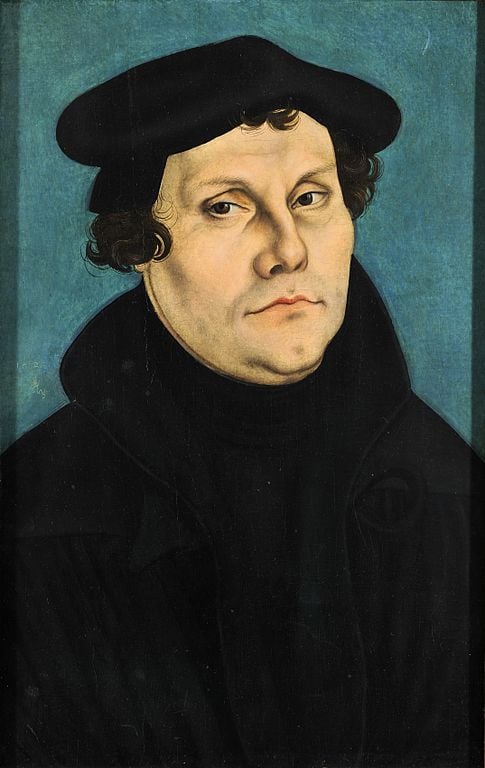
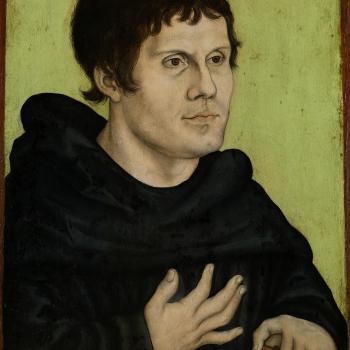
Portrait of Martin Luther (1528), by Lucas Cranach the Elder (1472-1553) [public domain / Wikimedia Commons]

***
(3-29-06)
***
Martin Luther’s words will be in green.
* * * * *
Chris Jones (Lutheran) asked: “So why was Dr Luther excommunicated? In what way was he heterodox?”
. . . I must confess that that subject is quite ambitious . . ., but nevertheless I will reply because I’m sick and tired of this canard, and it is high time to decisively refute it. This I will do below.
How about, for starters, separating justification from sanctification, adopting an extrinsic, forensic, imputed notion of justification (a radical departure from precedent, as McGrath and Geisler have noted), championing the novelty of fiduciary faith, changing the ancient rule of faith of Church, Tradition, and Bible to sola Scriptura, adopting private judgment over against ecclesial infallibility (Luther denied that even ecumenical councils possess this; going beyond the conciliarist position of some nominalists), throwing out the Sacrifice of the Mass and seven books of the Bible, and ditching five sacraments? Is that enough to be heretical by Catholic standards?
In his Commentary on Romans (1516), Luther wrote:
It is clear that according to substance and nature venial sin does not exist, and that there is no such thing as merit.
Two more Catholic doctrines denied. Now, you may think he was right, but the question at hand concerns why he was excommunicated as a “heterodox” Catholic. This is more than enough evidence to convict him of this “shortcoming,” wouldn’t you agree?
It gets even more bizarre than that, for those who are interested in the history of doctrine and theology. Luther thought that men should be content with discovering that they were damned, because they were resigned to God’s will:
If men willed what God wills, even though He should will to damn and reject them, they would see no evil in that [in the predestination to hell which he teaches]; for, as they will what God wills, they have, owing to their resignation, the will of God in them.
Luther asserts (I think, blasphemously), during this same period, long before 1521, that Jesus Christ offered to go to hell for the sake of the salvation of mankind (a heresy picked up today by the hyperfaith teachers such as Kenneth Copeland):
He actually and in truth offered Himself to the eternal Father to be consigned to eternal damnation for us. His human nature did not behave differently from that of a man who is to be condemned eternally to hell. On account of this love of God, God at once raised Him from death and hell, and so He overcame hell.
In the Heidelberg Disputation (1518), Luther stated:
The mercy of God consists in this, that He has patience with us in spite of our sins and graciously accepts our works and our life notwithstanding their complete worthlessness . . . All that a man does is the work of the devil, of sin, of darkness and foolishness.
The radical nature of Luther’s so-called “reform” is clearly evident in the three great treatises of 1520. Let’s make a survey of [two of] them, since there seems to be so much ignorance in this matter of how far Luther had departed from the received Catholic faith by 1520. I cite from the book Three Treatises, taken from Luther’s Works, revised edition, 1970 (Philadelphia: Fortress Press):
1) To the Christian Nobility of the German Nation
A) “. . . we are all consecrated priests through baptism . . . The consecration by pope or bishop would never make a priest, and if we had no higher consecration than that which pope or bishop gives, no one could say mass or preach a sermon or give absolution . . . the whole community, all of whom have like power . . .” (p. 12)
B) “. . . a priest in Christendom is nothing else but an officeholder . . . a priest is never a priest when he is deposed . . . there is no true, basic difference between laymen and priests . . .” (p. 14)
[denial of ordination, the special status of the priesthood, and in effect, apostolic succession; going back to the mentality of the Donatist heresy; on p. 13 Luther claims that a group of laymen in a desert could “elect” one of themselves to say mass and give absolution; cf. p. 70]
C) “. . . since the temporal power is ordained by God to punish the wicked and protect the good, it should be left free to perform its office in the whole body of Christendom without restriction and without respect to persons, whether it affects pope, bishops, priests, monks, nuns, or anyone else . . .
“All that canon law has said to the contrary is the invention of Romanist presumption.” (pp. 15-16; cf. pp. 45-46, and p. 53: “The pope should have no authority over the emperor”)
[radical overthrow of the entire Catholic medieval understanding of the relationship of Church and state]
D) “. . . they play about with words before our very eyes, trying to persuade us that the pope cannot err in matters of faith, regardless of whether he is righteous or wicked.” (p. 19)
[denial of papal infallibility, which was widely believed; also adoption of the schismatic ancient Donatist mentality of righteousness nullifying an office or sacramental efficacy]
E) “. . . the keys were not given to Peter alone but to the whole community.” (p. 20)
[this is untrue; the “keys of the kingdom” were only given to Peter in Scripture, and to no one else.]
F) “. . . if we are all priests . . . why should we not also have the power to test and judge what is right or wrong in matters of faith?” (p. 21)
[private judgment and sola Scriptura: radical innovations concerning Christian authority]
G) “The Romanists have no basis in Scripture for their claim that the pope alone has the right to call or confirm a council.” (p. 22)
[overthrows the long-established principle of governance of ecumenical councils; on p. 23 he states that when the pope is “an offense to Christendom, the first man who is able should . . . do what he can to bring about a truly free council” and on p. 24 says that “we” can “excommunicate” the pope if he has gone astray]
H) “. . . restore freedom to everybody and leave every man free to marry or not marry.” (p. 65)
[denial of the ancient practice of celibate priests, nuns, and monks]
I) “. . . . popes, bishops, canons, and monks. God has not instituted these offices.” (p. 66)
[self-explanatory]
J) “Furthermore, I advise anyone henceforth being ordained a priest or anything else that he in no wise vow to the bishop that he will remain celibate.”
“. . . the pope has as little power to command this as he has to forbid eating, drinking, the natural movement of the bowels, or growing fat.” (pp. 66, 68)
[denial of vows of celibacy, and the institutional right to demand same as a matter of discipline, contrary to Jesus’ statement about eunuchs and Paul’s teaching that celibacy is preferable for the purposes of serving God more fully in an undistracted manner]
K) “All festivals should be abolished, and Sunday alone retained. If it were desired, however, to retain the festivals of Our Lady, and of the major saints, they should be transferred to Sunday, or observed only by a morning mass.” (pp. 72-73)
[radical revision of the liturgical calendar]
L) “. . . fasts should be left to individuals and every kind of food left optional . . . “ (p. 74)
[overthrow of the Church’s prerogative to prescribe penitential practices in commemoration of our Lord’s suffering, such as on Fridays and during Lent]
M) “What spirit gave the pope authority to canonize saints? . . . My advice is to let the saints canonize themselves. Indeed, it is God alone who should canonize them.
“. . . Although the canonization of saints may have been a good thing in former days, it is certainly never good practice now.” (pp. 77-78)
[So much for saints . . . throw the baby out with the bath water, as usual with Luther . . .]
N) “The brotherhoods, and for that matter, letters of indulgence . . . dispensations, and everything of that kind, should be snuffed out and brought to an end.” (p. 84)
[Indulgences are an expressly biblical practice. St. Paul issued a penitential punishment, or “binding” (1 Cor 5:3-5 ) and then relaxed or “loosed” it, which is all that an indulgence is (2 Cor 2:6-11). ]
O) Luther goes after Aristotle (and by extension, all philosophy), on pp. 92-94, calling him a “blind, heathen teacher” and “damned, conceited, rascally heathen . . . wretched fellow” and recommending discarding his books because “nothing can be learned from them either about nature or the Spirit . . . nobody has yet understood him.” He then claims that “I understand him better than St. Thomas or Duns Scotus did.”
Right . . . I do agree with one thing Luther wrote, however (except the last sentence):
“I know full well that I have been very outspoken. I have made many suggestions that will be considered impractical. I have attacked many things too severely. But how else ought I to do it?” (p. 111)
2) The Babylonian Captivity of the Church
A) “. . . transubstantiation (a monstrous word and a monstrous idea) . . . “ (p. 147)
[denial of a defined dogma]
B) “The third captivity of this sacrament is by far the most wicked of all, in consequence of which there is no opinion more generally held or more firmly believed in the church today than this, that the mass is a good work and a sacrifice.” (p. 152)
“. . . monstrous and wicked doctrines, as they have done who have made of the sacrament an opus operatum and a sacrifice.” (p. 154)
“. . . the gospel does not sanction the idea that the mass is a sacrifice . . . “ (p. 174)
[denial of the central aspect of the Christian liturgy, as had been practiced for 1500 years]
C) “. . . the sacrament of penance . . . The first and chief abuse of this sacrament is that they have completely abolished it. Not a vestige of the sacrament remains.” (p. 206)
“. . . this Babylon of ours has so completely extinguished faith that it insolently denies its necessity in this sacrament.” (p. 209)
[I see! Who am I to quibble with the opinions of the illustrious “reformer”?! Seriously, though, this is simply untrue. For any confession to be efficacious, the penitent must be sincerely repentant, and exercise faith that the priest has the power to absolve, by God’s design. On p. 212, Luther is “heartily in favor of” private confession and “would not have it abolished.” But he thinks “it cannot be proved from the Scriptures” and denies that it is a sacrament]
D) “For Christ has given to every one of his believers the power to absolve even open sins.” (p. 214)
[subversive of ordination and apostolic succession]
E) “For these monstrous things we are indebted to you, O Roman See, and to your murderous laws and ceremonies, with which you have corrupted all mankind, so that they believe they can with works make satisfaction for sin to God, when he can be satisfied only by the faith of a contrite heart!” (pp. 216-217)
[Penance, more generally construed as penitential acts, is denied]
F) “I do not say this because I condemn the seven sacraments, but because I deny that they can be proved from Scriptures.” (p. 218)
[Interesting comment. In any event, Protestantism generally held to two sacraments, and the denial that there was any proof in Scripture is radically contrary to the Catholic position, making Luther “heretical” again insofar as he has denied yet another received Catholic teaching: that Jesus instituted all seven sacraments and that the Bible sufficiently indicates this]
G) “Not only is marriage regarded as a sacrament without the least warrant of Scripture, . . . “ (p. 220)
[Yet another sacrament goes down the drain . . . ]
H) “Among endless other monstrosities, there are enumerated in this book eighteen impediments to marriage . . . snares in order to prevent people from marrying, or, if they are married, to annul their marriage? Who gave this power to men?” (p. 225)
[denial of the Catholic belief in an invalid marriage and annulments]
I) “As to divorce, it is still a question for debate whether it is allowable . . . whether it is allowable I do not venture to decide . . . Christ, then, permits divorce, but only on the ground of unchastity . . . it is still a greater wonder to me why they compel a man to remain unmarried after being separated from his wife by divorce.” (p. 236)
[contrary to centuries-long Catholic moral theology]
J) “Ordination – Of this sacrament the church of Christ knows nothing; it is an invention of the church of the pope . . . there is not a single word said about it in the whole New Testament. Now it is ridiculous to put forth as a sacrament of God something that cannot be proved to have been instituted by God.” (p. 237)
[radical innovation again; not even followed by many later Protestants, in this radical form]
K) “The church can give no promise of grace; that is the work of God alone. Therefore, she cannot institute a sacrament.” (p. 238)
[radical anti-sacramentarian view]
L) “. . . mumbling the vain repetitions of his prescribed prayers . . . “ (p. 245)
[mocking of the priest’s daily office]
M) “We do not deny, therefore, that forgiveness and peace are granted through extreme unction; not because it is a sacrament divinely instituted, but because he who receives it believes that those blessings are granted to him.” (p. 256)
[denial of another sacrament]
N) “. . . it has seemed proper to restrict the name of sacrament to those promises which have signs attached to them. The remainder, not being bound to signs, are bare promises. Hence there are, strictly speaking, but two sacraments in the church of God – baptism and the bread. For only in these two do we find both the divinely instituted sign and the promise of forgiveness of sins.” (p. 258)
[definitive statement of the number of sacraments being reduced from five to two]
O) “To the godless, on the other hand, and those who in obstinate tyranny force on us their own teachings instead of God’s I confidently and freely oppose these pages. I shall be completely indifferent to their senseless fury. Yet I wish even them a right understanding. And I do not despise their efforts; I only distinguish them from what is sound and truly Christian.
“I hear a rumor that new bulls and papal maledictions are being prepared against me, in which I am urged to recant or be declared a heretic. If that is true, I desire this little book to be part of the recantation that I shall make; so that the arrogant despots might not complain of having acted in vain.” (p. 260)
[as usual, anyone who disagrees with Luther, be it individual or pope or entire Church, must be wrong and unbiblical, and indeed, not even “truly Christian”]
* * * * *
Okay; to revisit the original query, Chris Jones asked: “So why was Dr Luther excommunicated? In what way was he heterodox?” I have summarized how he was heterodox by 1520, by virtually indisputable, unarguable Catholic standards. Remember again: this is not a discussion of whether Catholic teaching is right or wrong, but rather, whether Luther was “heterodox” or “heretical” by that same teaching (i.e., whether the Church was at least self-consistent in excommunicating him, or whether it was a power play unrelated to truth or Luther’s actual — or falsely-imagined — heresy).
It is absolutely evident that Luther was heretical and that the Church was under no obligation to even contend with him at the Diet of Worms in 1521. Since it was obvious that he was teaching heresy, it was equally obvious that the Church should demand that he recant, renounce, and cease doing so. He refused, because he knew more than the Church (as he in effect implied, many times). But no Protestant body would have acted any differently, then or now, in the face of dozens of rejections of its own stated dogmas. Here is what Luther believed contrary to the Church (without even delving too much into the finer points of soteriology):
1. Separation of justification from sanctification.
2. Extrinsic, forensic, imputed notion of justification.
3. Fiduciary faith.
4. Private judgment over against ecclesial infallibility.
5. Tossing out seven books of the Bible.
6. Denial of venial sin.
7. Denial of merit.
8. The damned should be content that they are damned and accept God’s will.
9. Jesus offered Himself for damnation and possible hellfire.
10. No good work can be done except by a justified man.
11. All baptized men are priests (denial of the sacrament of ordination).
12. All baptized men can give absolution.
13. Bishops do not truly hold that office; God has not instituted it.
14. Popes do not truly hold that office; God has not instituted it.
15. Priests have no special, indelible character.
16. Temporal authorities have power over the Church; even bishops and popes; to assert the contrary was a mere presumptuous invention.
17. Vows of celibacy are wrong and should be abolished.
18. Denial of papal infallibility.
19. Belief that unrighteous priests or popes lose their authority (contrary to Augustine’s rationale against the Donatists).
20. The keys of the kingdom were not just given to Peter.
21. Private judgment of every individual to determine matters of faith.
22. Denial that the pope has the right to call or confirm a council.
23. Denial that the Church has the right to demand celibacy of certain callings.
24. There is no such vocation as a monk; God has not instituted it.
25. Feast days should be abolished, and all church celebrations confined to Sundays.
26. Fasts should be strictly optional.
27. Canonization of saints is thoroughly corrupt and should stop.
28. Confirmation is not a sacrament.
29. Indulgences should be abolished.
30. Dispensations should be abolished.
31. Philosophy (Aristotle as prime example) is an unsavory, detrimental influence on Christianity.
32. Transubstantiation is “a monstrous idea.”
33. The Church cannot institute sacraments.
34. Denial of the “wicked” belief that the mass is a good work.
35. Denial of the “wicked” belief that the mass is a true sacrifice.
36. Denial of the sacramental notion of ex opere operato.
37. Denial that penance is a sacrament.
38. Assertion that the Catholic Church had “completely abolished” even the practice of penance.
39. Claim that the Church had abolished faith as an aspect of penance.
40. Denial of apostolic succession.
41. Any layman who can should call a general council.
42. Penitential works are worthless.
43. None of what Catholics believe to be the seven sacraments have any biblical proof.
44. Marriage is not a sacrament.
45. Annulments are a senseless concept and the Church has no right to determine or grant annulments.
46. Whether divorce is allowable is an open question.
47. Divorced persons should be allowed to remarry.
48. Jesus allowed divorce when one partner committed adultery.
49. The priest’s daily office is “vain repetition.”
50. Extreme unction is not a sacrament (there are only two sacraments: baptism and the Eucharist).
So that is 50 ways in which Luther was a heretic, heterodox, a schismatic, or believed things which were clearly contrary to the Catholic Church’s teaching or practice, up to and including truly radical departures (even societally radical in some cases). Is that enough to justify his excommunication from Catholic ranks? Or was the Church supposed to say, “yeah, Luther, you know, you’re right about these fifty issues. You know better than the entire Church, the entire history of the Church, and all the wisdom of the saints in past ages who have believed these things. So we will bow to your heaven-sent wisdom, change all fifty beliefs or practices, so we can proceed in a godly direction. Thanks so much! We are forever indebted to you for having informed us of all these errors!!”
Is that not patently ridiculous? What Church would change 50 things in its doctrines because one person feels himself to be some sort of oracle from God or pseudo-prophet: God’s man for the age? Yet we are led to believe that it is self-evident that Luther was a good, obedient Catholic who only wanted to reform the Church, not overturn or leave it, let alone start a new sect. He may have been naive or silly enough to believe that himself, but objectively-speaking, it is clear and plain to one and all that what he offered – even prior to 1520 – was a radical program; a revolution. This is not reform. And the so-called “Protestant Reformation” was not that, either (considered as a whole). It was a Revolt or a Revolution. I have just shown why that is.
No sane, conscious person who had read any of his three radical treatises of 1520 could doubt that he had already ceased to be an orthodox Catholic. He did not reluctantly become so because he was unfairly kicked out of the Church by men who would not listen to manifest Scripture and reason (as the Protestant myth and perpetual propaganda would have it) but because he had chosen himself to accept heretical teachings, by the standard of Catholic orthodoxy, and had become a radical, intent also on spreading his (sincerely and passionately held) errors across the land with slanderous, mocking, propagandistic tracts and even vulgar woodcuts, if needs be.
Therefore, the Church was entirely sensible, reasonable, within her rights, logical, self-consistent, and not hypocritical or “threatened” in the slightest to simply demand Luther’s recantation of his errors at the Diet of Worms in 1521, and to refuse to argue with him (having already tried on several occasions, anyway), because to do so would have granted his ridiculous presumption that he was in a position to singlehandedly dispute and debate what had been the accumulated doctrinal and theological wisdom of the Church for almost 1500 years.
Previous Post
September 21, 2015
Martin Luther's Belief in the "Immaculate Purification" of Mary
Next Post
September 21, 2015 Searching for the Perfect Beethoven's 9th Symphony
Browse Our Archives
Select a Category & Last Things About Me Anti-Catholicism Atheism & Agnosticism Baptism and Sacramentalism Bible and Tradition Blessed Virgin Mary Books by Dave Armstrong C. S. Lewis Calvinism & General Protestantism Catholic Apologetics Catholic Apologists Catholic conversion Catholic converts Christmas Church (Ecclesiology) Church History Conversion and Converts Development of Doctrine Eastern Orthodoxy Ecumenism & Christian Unity Eucharist & Liturgy Fathers of the Church French Translations G. K. Chesterton Hell Hell & Satan Hell & Satan & Last Things Heresies & Comparative Religion Holistic Health Inquisition & Crusades & Scandals James White Jews & Judaism & Old Testament John Calvin John Henry Newman Liberal / Modernist Theology Life Issues Literary Resume Lutheranism Mariology Martin Luther Music Orthodoxy Papacy & Infallibility Personal Page Philosophy & Science Political & Ethical & Moral Issues Protestant Persecution & Intolerance Protestantism Purgatory Purgatory & Penance Romantic & Imaginative Theology Saints & Purgatory & Penance Salvation Salvation & Justification Satan & Last Things Sexuality and Gender Issues Spanish Translations Traditionalism vs. Radical Catholic Reactionaries Traducciones al español / tradução para português Trinitarianism & Christology Uncategorized Videos
Select a Month November 2026 October 2026 September 2026 August 2026 July 2026 June 2026 May 2026 April 2026 March 2026 February 2026 January 2026 December 2025 November 2025 October 2025 September 2025 August 2025 July 2025 June 2025 May 2025 April 2025 March 2025 February 2025 January 2025 December 2024 November 2024 October 2024 September 2024 August 2024 July 2024 June 2024 May 2024 April 2024 March 2024 February 2024 January 2024 December 2023 November 2023 October 2023 September 2023 August 2023 July 2023 June 2023 May 2023 April 2023 March 2023 February 2023 January 2023 December 2022 November 2022 October 2022 September 2022 August 2022 July 2022 June 2022 May 2022 April 2022 March 2022 February 2022 January 2022 December 2021 November 2021 October 2021 September 2021 August 2021 July 2021 June 2021 May 2021 April 2021 March 2021 February 2021 January 2021 December 2020 November 2020 October 2020 September 2020 August 2020 July 2020 June 2020 May 2020 April 2020 March 2020 February 2020 January 2020 December 2019 November 2019 October 2019 September 2019 August 2019 July 2019 June 2019 May 2019 April 2019 March 2019 February 2019 January 2019 December 2018 November 2018 October 2018 September 2018 August 2018 July 2018 June 2018 May 2018 April 2018 March 2018 February 2018 January 2018 December 2017 November 2017 October 2017 September 2017 August 2017 July 2017 June 2017 May 2017 April 2017 March 2017 February 2017 January 2017 December 2016 November 2016 October 2016 September 2016 August 2016 July 2016 June 2016 May 2016 April 2016 March 2016 February 2016 January 2016 December 2015 November 2015 October 2015 September 2015 August 2015 July 2015 June 2015 May 2015 April 2015 March 2015 February 2015 January 2015 December 2014 November 2014 October 2014 September 2014 August 2014 July 2014 June 2014 April 2014 March 2014 February 2014 January 2014 December 2013 November 2013 October 2013 September 2013 August 2013 July 2013 June 2013 April 2013 March 2013 February 2013 January 2013 December 2012 November 2012 October 2012 September 2012 August 2012 July 2012 June 2012 May 2012 April 2012 March 2012 February 2012 January 2012 December 2011 November 2011 October 2011 September 2011 August 2011 July 2011 June 2011 April 2011 March 2011 February 2011 October 2010 September 2010 August 2010 July 2010 April 2010 March 2010 December 2009 October 2009 August 2009 July 2009 June 2009 May 2009 March 2009 February 2009 October 2008 September 2008 April 2008 March 2008 February 2008 January 2008 December 2007 November 2007 October 2007 May 2007 March 2007 February 2007 January 2007 November 2006 October 2006 September 2006 August 2006 July 2006 June 2006 May 2006 April 2006 March 2006 February 2006 October 2005 June 2005 April 2005 February 2005 July 2004 May 2004 April 2004
Follow Us!
TAKE THE
Religious Wisdom Quiz
How many times does Jesus perform a miracle in the Gospel of John?
Select your answer to see how you score.
5 7 12 10
Books by This Author Books by Dave Armstrong
Related posts from Biblical Evidence for Catholicism
A Few "Worst" & "Best" Arguments vs. Protestantism
Biblical Evidence for Catholicism
Book: Martin Luther: Dissenter and Defender
Biblical Evidence for Catholicism
Luther’s Anfechtung vs. Paul’s Spiritual Confidence
Biblical Evidence for Catholicism
"Martin Luther: Dissenter & Defender": Introduction
Biblical Evidence for Catholicism
TRENDING AT PATHEOS Catholic

What are your dreams trying to tell you?...
Dreams can seem crazy. You’re suddenly with a person you haven’t seen...

Advent Begins in the Waiting: Preparing for Jesus
The Christmas season seems to arrive earlier every year. Before Halloween decorations...

As was predicted many years ago, the Interpreter Foundation's website is...

"Why Do Churches Talk So Much About Money?"
If you were inclined to do so, you could probably find any...

Watch and Pray: On Mark 13:33-37
Jesus said to his disciples: “Be watchful! Be alert! You do not...

Debate on Purgatory & Biblical Evidences for It
This is from a combox on my video channel, Catholic Bible Highlights....
view all Catholic blogs
Ad-Free & Subscriber Log-In Subscription Support
- About Us
- 2026 Calendar
- Videos
- Podcasts
- Library of World Religions
- Faith In Media Tracker
- Advertise With Us
- Write for Us
- Privacy Policy
- Terms of Service
- Do Not Sell My Data
- Contact Us
- Radiant Digital
- Manage Newsletter Subscriptions
- Unsubscribe From Notifications
- Sitemap
Copyright 2008-2026, Patheos, part of the Radiant Digital network of media brands. All rights reserved.
Subscription Support Ad-Free & Subscriber Log-In
Follow Patheos