
BuddhistCatholicContemplativeEvangelicalGeneral ChristianHinduJewishLatter-day SaintMuslimNew VisionsProgressive Christian
Beliefs
- Buddhist
- Catholic
- Contemplative
- Evangelical
- General Christian
- Hindu
- Jewish
- Latter-day Saint
- More Voices
- Muslim
- New Visions
- Pagan
- Progressive Christian
Topics
- Religion News
- Food and Religion
- Sports and Religion
- Religious Art
- Religious Music and Entertainment
- Religious Events
- History and Religion
- Style and Religion
- Politics and Religion
- Women in Religion
- Recreation Outdoors and Religion
- Business Finance and Religion
- Careers Workplace and Religion
- Education and Religion
- Family Parenting and Religion
- Health Fitness and Religion
- Home and Religion
- Relationships and Religion
- Technology and Religion
- Travel and Religion
Columnists
- Buddhist Columnists
- Business Finance and Religion Columnists
- Careers Workplace and Religion Columnists
- Catholic Columnists
- Contemplative Columnists
- Education and Religion Columnists
- Evangelists Columnists
- Family Parenting and Religion Columnists
- General Christian Columnists
- Health Fitness and Religion Columnists
- Hindu Columnists
- History and Religion Columnists
- Home and Religion Columnists
- Jewish Columnists
- More Voices Columnists
- Latter Day Columnists
- Muslim Columnists
- New Visions Columnists
- Nonreligious Columnists
- Pagan Columnists
- Politics and Religion Columnists
- Progressive Columnists
- Recreation Outdoors and Religion Columnists
- Relationships and Religion Columnists
- Religion News Columnists
- Religious Art Columnists
- Religious Events Columnists
- Religious Music and Entertainment Columnists
- Sports and Religion Columnists
- Style and Religion Columnists
- Technology and Religion Columnists
- Travel and Religion Columnists
- Women in Religion Columnists
Resource Library
- 2026 Calendar
- Library of World Religions
- The 100 Most Holy Places on Earth
- Patheos Answers
- Podcasts
- Videos
- Faith Leaders Database
- Anglican Episcopalian
- Bahai
- Baptist
- Buddhism
- Christianity
- Confucianism
- Eastern Orthodoxy
- Hinduism
- Holiness and Pentecostal
- ISKCON
- Islam
- Judaism
- Lutheran
- Methodist
- The Church of Jesus Christ of Latter-day Saints
- New Age
- Paganism
- Presbytarian and Reformed
- Protestantism
- Religion Behind the Scenes
- Roman Catholic
- Scientology
- Shia Islam
- Sikhism
- Sufism
- Sunni Islam
- Taoism
- Zen
- See all religions
Research Tools
 Ad-Free & Subscriber Log-In Subscription Support
Ad-Free & Subscriber Log-In Subscription Support
Follow Patheos 

- Trending:
- Forgiveness
- |
- Marriage
- |
- Consciousness
- |
- Death Penalty
- |
- Election
- |
- Halloween

-
About
-
Catholic Apologetics
-
Church History
-
Great Apologists
-
Christian Worldview
-
Protestantism & Misc.
- Home
- Catholic
- History and Religion
- Apologetics-Oriented Biblical Commentary on Colossians (RSV)
Apologetics-Oriented Biblical Commentary on Colossians (RSV)
Last updated on: May 24, 2017 at 1:59 pm by Dave Armstrong
Apologetics-Oriented Biblical Commentary on Colossians (RSV) 2017-05-24T13:59:07-04:00 Dave Armstrong
Patheos Explore the world's faith through different perspectives on religion and spirituality! Patheos has the views of the prevalent religions and spiritualities of the world.
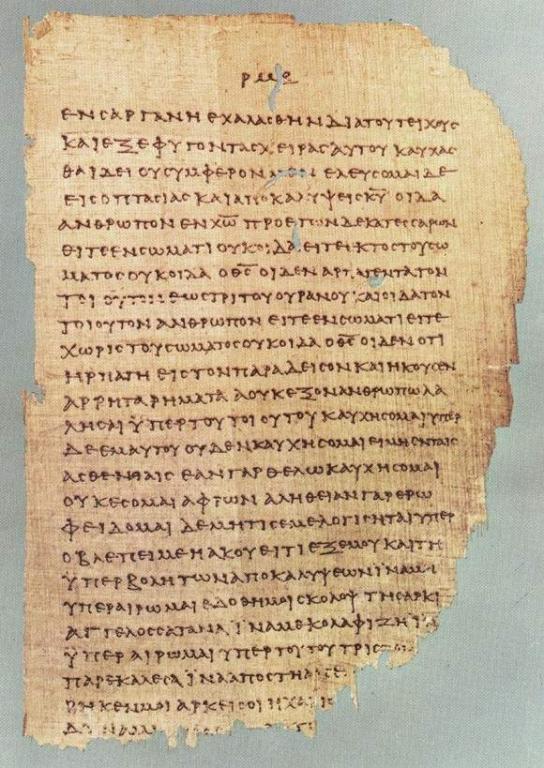
Folio from Papyrus 46, (dated between 175 and 225) containing 2 Corinthians 11:33-12:9 [public domain / Wikimedia Commons]

(1998)
Chapter 1
1 Paul, an apostle of Christ Jesus by the will of God, and Timothy our brother, 2 To the saints and faithful brethren in Christ at Colos’sae: Grace to you and peace from God our Father. 3 We always thank God, the Father of our Lord Jesus Christ, when we pray for you, 4 because we have heard of your faith in Christ Jesus and of the love which you have for all the saints, 5 because of the hope laid up for you in heaven. Of this you have heard before in the word of the truth, the gospel 6 which has come to you, as indeed in the whole world it is bearing fruit and growing–so among yourselves, from the day you heard and understood the grace of God in truth, 7 as you learned it from Ep’aphras our beloved fellow servant. He is a faithful minister of Christ on our behalf 8 and has made known to us your love in the Spirit. 9 And so, from the day we heard of it, we have not ceased to pray for you, asking that you may be filled with the knowledge of his willin all spiritual wisdom and understanding, 10 to lead a life worthy of the Lord, fully pleasing to him, bearing fruit in every good work and increasing in the knowledge of God. 11 May you be strengthened with all power, according to his glorious might, for all endurance and patience with joy, 12 giving thanks to the Father, who has qualified us to share in the inheritance of the saints in light. 13 He has delivered us from the dominion of darkness and transferred us to the kingdom of his beloved Son, 14 in whom we have redemption, the forgiveness of sins. 15 He is the image of the invisible God, the first-born of all creation; 16 for in him all things were created, in heaven and on earth, visible and invisible, whether thrones or dominions or principalities or authorities–all things were created through him and for him. 17 He is before all things, and in him all things hold together. 18 He is the head of the body, the church; he is the beginning, the first-born from the dead, that in everything he might be pre-eminent. 19 For in him all the fulness of God was pleased to dwell, 20 and through him to reconcile to himself all things, whether on earth or in heaven, making peace by the blood of his cross. 21 And you, who once were estranged and hostile in mind, doing evil deeds, 22 he has now reconciled in his body of flesh by his death, in order to present you holy and blameless and irreproachable before him, 23 provided that you continue in the faith, stable and steadfast, not shifting from the hope of the gospel which you heard, which has been preached to every creature under heaven, and of which I, Paul, became a minister. 24 Now I rejoice in my sufferings for your sake, and in my flesh I complete what is lacking in Christ’s afflictions for the sake of his body, that is, the church, 25 of which I became a minister according to the divine office which was given to me for you, to make the word of God fully known, 26 the mystery hidden for ages and generations but now made manifest to his saints. 27 To them God chose to make known how great among the Gentiles are the riches of the glory of this mystery, which is Christ in you, the hope of glory. 28 Him we proclaim, warning every man and teaching every man in all wisdom, that we may present every man mature in Christ. 29 For this I toil, striving with all the energy which he mightily inspires within me.
* * *
apostle: Gr. apostolos=sent one or ambassador: Mt 10:2; Lk 22:14; Ac 2:37; 8:18; 15:2-6,22-23; Rm 1:1; 11:13; 1Co 1:1; 9:1-5; 12:28-29; 2Co 1:1; 12:11-12; 1Pt 1:1; 2Pt 3:2; Jd 17; Rv 21:14
God, the Father: Is 9:6; 64:8; Jr 31:9; Ma 2:10; Mt 5:45-48; 6:1-32; 11:27; Jn 3:35; 5:18; 6:27; Rm 1:7; 8:15; 1Co 8:6; Gl 1:1-4; 4:6; Ep 5:20; Ph 2:11; Cl 3:17; 1Th 1:1; Hb 1:5; Jm 1:27; 1Pt 1:2-3; 1Jn 2:1,14-24
grace of God: Lk 1:28; Jn 1:17; Ac 4:33; 6:8; 11:23; 13:43; 14:26; 15:11,40; Rm 5:15; 16:20; 1Co 3:10; 15:10; 16:23; 2Co 8:1; 9:14; 13:13; Gl 2:21; Ep 3:2,7-8; Ph 1:2,7; 1Th 5:28; 1Tm 1:14; Ti 2:11; Hb 2:9; 1Pt 5:5,10,12; 2Pt 3:18; Jd 4; Rv 22:21
good work(s): Jn 10:32; 14:12; Ac 9:36; 2Co 9:8; Gl 6:4,10; Ep 2:10; Ph 1:6; 2Th 2:17; 1Tm 2:10; 5:10,25; 6:18; 2Tm 2:21; 3:17; Ti 1:16; 2:7; 3:1,8,14; Jm 2:14-26; Rv 20:12
redemption: Lk 21:28; Rm 3:24; 1Co 1:30; Ep 1:7,14; 4:30; Hb 9:15
his body, that is, the church: Rm 7:4; 12:5; 1Co 10:17; 12:12-27; Ep 1:22-23; 4:4,12,16; 5:30; Cl 1:18; 2:19; 3:15
Christ in you: (the indwelling): Jn 14:17-18,20,23; 15:4; 16:7; 17:23; Rm 8:9-11; 1Co 2:12; 3:16; 6:19; 2Co 6:16; Gl 4:6; 1Jn 3:24; 4:12-13
Image of the invisible God: God the Father is invisible, and can’t be seen, as He is a Spirit (cf. Ex 33:20,23; Jn 1:18; 5:37; 6:46; Cl 1:15; 1Tm 1:17; 6:16; 1Jn 4:12). But Jesus reveals, and is the eikon=image of, the Father (cf. Jn 1:18; 12:45; 14:7-9; 2 Co 4:4; Cl 1:15; Hb 1:3; Rv 22:1-4). Thus, the passages about the invisible God are adequately explained in a non-contradictory manner. Only trinitarianism can make sense out of, and harmonize all the biblical teaching about God’s nature.
First-born of all creation: Gk. prototokos=firstborn: here means preeminence and eternal preexistence, not first-created as some Arian sects hold. OT usage is instructive. David is called first-born in Ps 89:27, not because he was the literal first child of Jesse (for he was the youngest), but in the sense of his ascendancy to the kingship of Israel. Likewise, Jr 31:9 refers to Ephraim as the first-born, whereas Manasseh was chronologically first (Gn 41:50-52). The nation Israel is called my first-born son by God (Ex 4:22). The Jewish rabbinical writers even called God the Father Bekorah Shelolam, meaning firstborn of all creation, precisely as St. Paul uses the phrase here. Prototokos is also used as a title for Jesus in Hb 1:6. In context, Jesus is described as omnipotent (1:3), the reflection (image) of God’s glory (1:3), Creator (1:10), worthy of worship (1:6), and is called God by the Father (1:8). All of these characteristics can only apply to God.
In him all things were created: Jesus is both eternal and the Creator (cf. Is 9:6; Mc 5:2; Jn 1:1,3,10; 8:58; 13:19; 1Co 8:6; Cl 1:15-17; Hb 1:2,8,10; 13:8; 1Jn 1:1; Rv 1:17-18; 22:13). Besides the above direct indications, Holy Scripture also says that only God is the Creator (cf. Gn 1:1; Ps 33:6; Is 40:28; 44:24; Rm 11:36; 1Co 11:12; Ep 3:9; Hb 2:10; CCC 295-308).
Beginning: Gk. arche, from which is derived the word architect. Its literal meaning, according to Greek scholars, is origin, active cause, source, uncreated principle. So Jesus is the architect, or Creator of the Universe, as Cl 1:16-17 make clear (and see entry immediately above). He was in the beginning (arche) with God the Father (Jn 1:2; Hb 1:10). He created all things, and is before all things, so He Himself cannot possibly be a thing (i.e., a created entity). In Rev 1:8 (often rendered Alpha) and 21:6 (cf. Is 41:4; 44:6; 48:12) arche is applied to the Lord God, the Almighty (God the Father), so it can’t possibly mean created being, as Arian-influenced sects maintain. Similar terminology (first and last, Alpha and Omega) is applied to Jesus in Rv 1:17-18; 2:8; 3:14, and 22:13,16. Thus, both Father and Son are God. Scripture teaches the Holy Trinity: the one God exists eternally in three Persons: Father, Son, and Holy Spirit.
In my flesh I complete what is lacking . . .: This is the most striking example in Scripture of what Catholics call redemptive suffering or vicarious atonement, whereby the sufferings of a Christian, as fellow workers with God (1Co 3:9) can be applied – like prayer or fasting or evangelism – to the benefit of another, either on earth, or in purgatory (2Mc 12:39-45 with 1Cor 15:29; CCC 1032). Our sufferings (Mt 16:24) can be literally offered up to God (Rm 12:1), meritoriously and redemptively on behalf of others or ourselves. Explicit biblical indications of this teaching – much disputed by non-Catholic Christianity – are numerous (cf. Ex 32:30-32; Nm 16:46-48; 25:6-13; Rm 8:13,17; 1Co 12:24; 2Co 1:4-9; 4:10; Gl 2:20; Ep 3:13; Ph 2:17; 3:10; 2Tm 4:6; Hb 11:39-40; 1Jn 3:16). Paul even serves as a co-redeemer or co-mediator of God’s grace, since he was a steward of grace and salvation (Ep 3:2; cf. 1Co 9:22) – precisely as Catholics teach concerning the Blessed Virgin Mary. He informed Timothy that he, too, could be a savior of sorts, for himself and his hearers (1Tm 4:16). All grace comes from God, but creatures have a share in its dispensing and application, in God’s Providence (e.g., Rv 1:4). See related commentary for Ph 1:29; 3:10, and cross-references for libation, Ph 2:17; also CCC 307,618,1508,1521.
* * *
Chapter 2
1 For I want you to know how greatly I strive for you, and for those at La-odice’a, and for all who have not seen my face, 2 that their hearts may be encouraged as they are knit together in love, to have all the riches of assured understanding and the knowledge of God’s mystery, of Christ, 3 in whom are hid all the treasures of wisdom and knowledge. 4 I say this in order that no one may delude you with beguiling speech. 5 For though I am absent in body, yet I am with you in spirit, rejoicing to see your good order and the firmness of your faith in Christ. 6 As therefore you received Christ Jesus the Lord, so live in him, 7 rooted and built up in him and established in the faith, just as you were taught, abounding in thanksgiving. 8 See to it that no one makes a prey of you by philosophy and empty deceit, according to human tradition, according to the elemental spirits of the universe, and not according to Christ. 9 For in him the whole fulness of deity dwells bodily, 10 and you have come to fulness of life in him, who is the head of all rule and authority. 11 In him also you were circumcised with a circumcision made without hands, by putting off the body of flesh in the circumcision of Christ; 12 and you were buried with him in baptism, in which you were also raised with him through faith in the working of God, who raised him from the dead. 13 And you, who were dead in trespasses and the uncircumcision of your flesh, God made alive together with him, having forgiven us all our trespasses, 14 having canceled the bond which stood against us with its legal demands; this he set aside, nailing it to the cross. 15 He disarmed the principalities and powers and made a public example of them, triumphing over them in him. 16 Therefore let no one pass judgment on you in questions of food and drink or with regard to a festival or a new moon or a sabbath. 17 These are only a shadow of what is to come; but the substance belongs to Christ. 18 Let no one disqualify you, insisting on self-abasement and worship of angels, taking his stand on visions, puffed up without reason by his sensuous mind, 19 and not holding fast to the Head, from whom the whole body, nourished and knit together through its joints and ligaments, grows with a growth that is from God. 20 If with Christ you died to the elemental spirits of the universe, why do you live as if you still belonged to the world? Why do you submit to regulations, 21 “Do not handle, Do not taste, Do not touch” 22 (referring to things which all perish as they are used), according to human precepts and doctrines? 23 These have indeed an appearance of wisdom in promoting rigor of devotion and self-abasement and severity to the body, but they are of no value in checking the indulgence of the flesh.
* * *
wisdom: Gr. sophia: Mt 13:54; Lk 2:40; 21:15; Ac 6:3,10; Rm 11:33; 1Co 1:17-24; 2:4-7; 3:19; Ep 1:8,17; 3:10; Cl 1:9,28; 3:16; Jm 1:5; 3:13,15,17; 2Pt 3:15
knowledge: Gr. gnosis: Lk 1:77; Rm 2:20; 11:33; 15:14; 1Co 1:5; 8:1,7,10-11; 12:8; 13:2,8; 14:6; 2Co 2:14; 4:6; 6:6; 8:7; 10:5; 11:6; Ep 3:19; Ph 3:8; 1Tm 6:20; 1Pt 3:7; 2Pt 1:5-6; 3:18
human tradition: cf. Mt 15:3,6; Mk 7:7-9,13; Ac 20:29-30; 1Pt 1:18; 1Jn 4:1-3 – in contrast to Apostolic, Christian Tradition, which is regarded entirely positively by the biblical writers. See commentary for Ph 1:4 (“Gospel”)
principalities and powers: Rm 8:38; 1Co 15:24; Ep 1:21; 2:2; 3:10; 6:12; Cl 1:13,16; 2:10; Ti 3:1; 1Pt 3:22; Rv 13:4-5,7,12
world: Gr. kosmos (as world-system, hostile to God): Jn 1:10; 7:7; 8:23; 12:31; 14:27; 15:18-19; 16:11,33; 17:6,14,16,25; 18:36; Rm 3:6,19; 5:12; 12:2; 1Co 1:27-28; 2:6-12; 11:32; 2Co 5:19; 7:10; Gl 6:14; Hb 11:38; Jm 1:27; 4:4; 1Jn 3:13; 4:3-4; 5:4-5,18-19
Fulness of deity dwells bodily: (cf. Cl 1:19). This is a remarkable proof for the divinity of Christ. The Father and the Son are presented as fully and essentially in union (monotheism), yet the distinctiveness of Divine Persons (trinitarianism) is also evident. Jesus is fully God, yet God Who has taken on human flesh (the incarnation). Ph 2:6-8 offers a similar description of the incarnate God (cf. Jn 1:1,14; Ac 20:28; 1Tm 3:16). St. Augustine wrote:
The same One who is God is Man, not by a confusion of nature but by a unity of person . . . He that is the Son of God by being generated and who is coeternal always with the Father, – that same One begins to be Son of Man from the Virgin. And so too humanity is added to the Son’s divinity; and yet, no quaternity of Persons results, but the Trinity remains (Sermons, 186, 1).
Buried with him in baptism: St. Paul here connects baptism – which regenerates – with justification. This is a common teaching of Holy Scripture – though denied by many Christians. Ac 2:38 speaks of being baptized for the forgiveness of your sins. 1 Pt 3:21 says baptism . . . now saves you (cf. Mk 16:16; Rm 6:1-6). Paul recalls how Ananias told him to be baptized, and wash away your sins (Ac 22:16). In 1Co 6:11 the Apostle seems to imply an organic connection between baptism (washed), sanctification, and justification. Ti 3:5 informs us that he saved us, . . . by the washing of regeneration (cf. Mt 28:19; Jn 3:5; Gl 3:26-27; Ep 4:5; 5:26; Hb 10:22; 1Pt 3:20).Cl 2:11-13 also establishes a connection between baptism and circumcision. Israel was the church before Christ (cf. Ac 7:38; Rm 9:4). Circumcision, given to 8-day old boys, was the seal of the covenant God made with Abraham, which applies to us also (Gl 3:14,29). It was a sign of repentance and future faith (Rm 4:11). Infants were just as much a part of the covenant as adults (cf. Gn 17:7; Dt 29:10-12; also Mt 19:14). Likewise, baptism is the seal of the New Covenant in Christ. It signifies cleansing from sin, just as circumcision did (cf. Dt 10:16; 30:6; Jr 4:4; 9:25; Rm 2:28-9; Ph 3:3). Infants are wholly saved by God’s grace just as adults are, only apart from their rational and willful consent (see, e.g., Mk 2:1-6; 1Co 7:12-14). Their parents act in their behalf. Infant baptism is taught by Scripture (cf. Ac 16:15,33; 18:8 with 11:14; 1Co 1:16). See CCC 405,628,683,977-978,1113,1210-1213,1220,1250-1252,1263-1270,1992
Sabbath: (cf. similar texts about excessive legalism with regard to observance of days: Gl 4:9-11; Rm 13:8-10; 14:4-13). Cl 2:12-17 is a disproof of the belief of some that Christians ought to observe Saturday as the Sabbath / Lord’s Day (Rv 1:10). From the beginning, Christians met and worshiped on Sunday, due to the Resurrection of Christ (cf. Ac 20:7; 1Co 16:1-2; vast patristic testimony: e.g., Didache 14; St. Ignatius, Magn 9:1; St. Justin Martyr, Apol 1:67; CCC 2168-2175,2190).
**Worship of angels:**The Bible forbids all creature worship (cf. Ac 10:25-26; 14:11-15; Rv 19:10; 22:8-9). God alone is to be worshiped (cf. Nh 9:6; Mt 4:10; Lk 4:8; Rv 4:9-11). Jesus – being God – often receives (and fully accepts) worship in the NT (cf. Mt 8:2; 9:18; 14:33; 15:25; 20:20; 28:9,17; Mk 5:6; Lk 24:52; Jn 5:23; 9:38; 20:28). The Apostles also teach that Jesus is to be worshiped (cf. Ph 2:9-11; Hb 1:6; Rv 5:8,12-14; 7:9-12,15-17).
* * *
Chapter 3
1 If then you have been raised with Christ, seek the things that are above, where Christ is, seated at the right hand of God. 2 Set your minds on things that are above, not on things that are on earth. 3 For you have died, and your life is hid with Christ in God. 4 When Christ who is our life appears, then you also will appear with him in glory. 5 Put to death therefore what is earthly in you: fornication, impurity, passion, evil desire, and covetousness, which is idolatry. 6 On account of these the wrath of God is coming. 7 In these you once walked, when you lived in them. 8 But now put them all away: anger, wrath, malice, slander, and foul talk from your mouth. 9 Do not lie to one another, seeing that you have put off the old nature with its practices 10 and have put on the new nature, which is being renewed in knowledge after the image of its creator. 11 Here there cannot be Greek and Jew, circumcised and uncircumcised, barbarian, Scyth’ian, slave, free man, but Christ is all, and in all. 12 Put on then, as God’s chosen ones, holy and beloved, compassion, kindness, lowliness, meekness, and patience, 13 forbearing one another and, if one has a complaint against another, forgiving each other; as the Lord has forgiven you, so you also must forgive. 14 And above all these put on love, which binds everything together in perfect harmony. 15 And let the peace of Christ rule in your hearts, to which indeed you were called in the one body. And be thankful. 16 Let the word of Christ dwell in you richly, teach and admonish one another in all wisdom, and sing psalms and hymns and spiritual songs with thankfulness in your hearts to God. 17 And whatever you do, in word or deed, do everything in the name of the Lord Jesus, giving thanks to God the Father through him. 18 Wives, be subject to your husbands, as is fitting in the Lord. 19 Husbands, love your wives, and do not be harsh with them. 20 Children, obey your parents in everything, for this pleases the Lord. 21 Fathers, do not provoke your children, lest they become discouraged. 22 Slaves, obey in everything those who are your earthly masters, not with eyeservice, as men-pleasers, but in singleness of heart, fearing the Lord. 23 Whatever your task, work heartily, as serving the Lord and not men, 24 knowing that from the Lord you will receive the inheritance as your reward; you are serving the Lord Christ. 25 For the wrongdoer will be paid back for the wrong he has done, and there is no partiality.
* * *
raised with Christ: Mt 10:8; 22:31; 27:52; Mk 12:26-27; Lk 10:27; 20:36; Jn 5:21,29; 11:24-25; Ac 23:6,8; 24:15,21; 26:8; Rm 6:5,8-11; 8:11; 1Co 6:14; 15:12-13,21,29-52; 2Co 1:9; 4:14; Ep 2:6; Ph 3:10-11; Cl 2:12; Hb 6:2; 11:19,35; Jm 5:15; Rv 20:5-6
right hand of God: Ex 15:6,12; Ps 16:11; 48:10; 60:5; 63:8; 98:1; 110:1,5; 118:15-16; Is 41:10; 62:8; Mt 19:28; 22:44; 25:31; 26:64; Mk 14:62; 16:19; Lk 22:69; Ac 2:33-34; 5:31; 7:55-56; Rm 8:34; Ep 1:20; Hb 1:3,8,13; 8:1; 10:12; 12:2; 1Pt 3:22; Rv 5:1-14; 7:17; 22:1-4
you have died (i.e., spiritual or metaphorical death): Rm 5:15; 6:2,8,13,16,21,23; 7:4,6,9-10,13,24; 8:2,6,13; 1Co 15:22,31; 2Co 5:14; Gl 2:19; Cl 2:20; 2Tm 2:11; Rv 2:11; 20:6,14; 21:8
old nature: Mk 2:21-22; Jn 8:44; Rm 5:12-14; 6:6; 7:5-6,8-11,14-25; 8:5-8,19-23; 1Co 5:7-8; 15:53; Ep 2:3; 4:22; 2Co 4:16
new nature: Ez 11:19; 18:31; Mk 14:25; Lk 5:36-39; Jn 3:3; Rm 6:4; 7:6; 8:1-17,21,23,29-30; 12:2; 13:14; 1Co 5:7; 2Co 3:3,18; 4:16; 5:17; Gl 6:15; Ep 2:15; 4:23-24; 6:11; Hb 8:10; 9:15; 10:20; 1Pt 1:3; 2Pt 1:4; 1Jn 3:2
inheritance: Mt 5:5; 19:29; 25:34; Mk 10:17; Lk 10:25; 18:18; Ac 20:32; Rm 8:17; 1Co 6:9-10; 15:50; Gl 3:18,29; 4:7; 5:21; Ep 1:11,14,18; 5:5; Cl 1:12; Ti 3:7; Hb 1:14; 6:12,17; 9:15; 11:7; Jm 2:5; 1Pt 1:4; Rv 21:7
reward: Mt 5:12; Lk 6:23,35; Hb 11:26; 2Jo 8; Rv 22:12
Forgiving each other: Forgiveness is, of course, a distinguishing characteristic of the Christian life. We are to lovingly forgive others (cf. Mt 5:24; 6:12-15; 18:21 ff.; 18:35; Mk 11:25; Lk 6:37; 17:4; 2Co 2:7,10; Ep 4:32), because God has forgiven us (cf. Mt 6:14-15; 9:6; Mk 2:7,10; Ac 10:43; 13:38; Rm 5:10-11; 2Co 5:18-19; Ep 1:7; 4:32; Cl 1:14,20,22; Hb 9:22; Jm 5:15). The recipient must repent, however, in order to ask for, and obtain true forgiveness, which is not absolutely unconditional, as many falsely teach (cf. Mt 3:11; 11:21; 12:41; Mk 1:4,15; 6:12; Lk 3:3; 5:32; 13:3,5; 17:3-4; 24:47; Ac 2:38; 3:19; 5:31; 8:22; 11:18; 13:24; 14:15; 17:30; 19:4; 20:21; 26:18,20; Rm 2:4; 2Co 5:20; 7:9-10; 12:21; 1Th 1:9; 2Tm 2:19,25; Hb 6:1,4; 1Pt 3:11; Rv 2:5,16,21-22; 3:3,19; 9:20-21). True repentance is a heartfelt acknowledgement of one’s sin (Lk 7:36-50; 15:7), a firm resolve to try to do better (Mt 3:8; Lk 3:8; 22:32; Ac 26:20), and a determination to cease engaging in that sin (Jn 5:14; 8:11; Gl 4:9; Cl 1:21-23; 2Pt 2:21). Our willingness to mercifully forgive anyone who repents and asks for forgiveness ought to be unconditional. The Catholic notion of priestly absolution is grounded in Holy Scripture (cf. Mt 16:19; 18:18; Lk 24:47; Jn 20:21-23; 2Co 2:5-11; Jm 5:15). The unforgivable sin or sin against the Holy Spirit is a rejection of God’s offer of salvation (cf. Mt 12:31-32; Mk 3:28-29; Lk 12:10). This provides further evidence that even God cannot and will not forgive a person who doesn’t repent and accept the forgiveness (in this case, salvation itself – see 2Pt 3:9). For to forgive everyone unconditionally would reduce to universalism, whereby everyone is saved, with no one being consigned to hell – itself a most unbiblical doctrine (see commentary for Ph 1:28).
Wives, be subject to your husbands: In his Apostolic Letter On the Dignity and Vocation of Women (1988), Pope John Paul II wrote:
Wives, be subject to your husbands, as to the Lord. For the husband is the head of the wife (Eph 5:22-23) . . . to be understood and carried out in a new way: as a mutual subjection out of reverence for Christ (cf. Eph 5:21). This is especially true because the husband is called the head of the wife as Christ is the head of the Church; he is so in order to give himself up for her (Eph 5:25) (section 24).
The greatest among you will be your servant (Mt 23:11; cf. Ep 5:28-31). The highest of God’s created beings, according to Catholicism, is a woman (the Blessed Virgin Mary), and a woman – Mary Magdalene – first saw the risen Jesus (Jn 20:11-18). Wives are equal to husbands in the same way that Jesus is equal to the Father (Jn 10:30; Cl 2:9), even though in subjection to Him (Ph 2:5-8). Analogously, marriage, by nature, creates a spiritual oneness (Mt 19:5-6) which nevertheless incorporates male headship and differential gender roles. Masculinity and femininity are ontological realities created by God, not human culture (cf. 1Co 11:3,7-9; 1 Tm 2:12-14; 1Pt 3:7), thus accounting for marriage roles and exclusively male ordination. Yet men and women are fundamentally equal, according to St. Paul: there is no longer male and female; for all of you are one in Christ Jesus (Gl 3:28).
* * *
Chapter 4
1 Masters, treat your slaves justly and fairly, knowing that you also have a Master in heaven. 2 Continue steadfastly in prayer, being watchful in it with thanksgiving; 3 and pray for us also, that God may open to us a door for the word, to declare the mystery of Christ, on account of which I am in prison, 4 that I may make it clear, as I ought to speak. 5 Conduct yourselves wisely toward outsiders, making the most of the time. 6 Let your speech always be gracious, seasoned with salt, so that you may know how you ought to answer every one. 7 Tych’icus will tell you all about my affairs; he is a beloved brother and faithful minister and fellow servant in the Lord. 8 I have sent him to you for this very purpose, that you may know how we are and that he may encourage your hearts, 9 and with him Ones’imus, the faithful and beloved brother, who is one of yourselves. They will tell you of everything that has taken place here. 10 Aristar’chus my fellow prisoner greets you, and Mark the cousin of Barnabas (concerning whom you have received instructions–if he comes to you, receive him), 11 and Jesus who is called Justus. These are the only men of the circumcision among my fellow workers for the kingdom of God, and they have been a comfort to me. 12 Ep’aphras, who is one of yourselves, a servant of Christ Jesus, greets you, always remembering you earnestly in his prayers, that you may stand mature and fully assured in all the will of God. 13 For I bear him witness that he has worked hard for you and for those in La-odice’a and in Hi-erap’olis. 14 Luke the beloved physician and Demas greet you. 15 Give my greetings to the brethren at La-odice’a, and to Nympha and the church in her house. 16 And when this letter has been read among you, have it read also in the church of the La-odice’ans; and see that you read also the letter from La-odice’a. 17 And say to Archip’pus, “See that you fulfil the ministry which you have received in the Lord.” 18 I, Paul, write this greeting with my own hand. Remember my fetters. Grace be with you.
* * *
watchful: Mt 24:42-43; 25:13; Lk 12:37; Ac 20:31; 1Co 10:12; 16:13; 1Th 5:6; 1Pt 5:8; Rv 3:2-3; 16:15
open to us a door: Ac 14:27; 1Co 16:9; 2Co 2:12; Rv 3:8
mystery: Mt 13:11; Mk 4:11; Lk 8:10; Rm 11:25; 16:25; 1Co 2:7; 4:1; 13:2; 14:2; 15:51; Ep 1:9; 3:3-4,9; 5:32; 6:19; Cl 1:26-27; 2:2; 2Th 2:7; 1Tm 3:9,16; Rv 1:20; 10:7; 17:5,7
Let your speech always be gracious: Jb 27:4; Ps 19:14; 39:1; 141:3; Pr 10:11; 15:26; 21:23; 22:11; 31:26; Ec 10:12; Mt 5:22; 12:34-37; Lk 4:22; 6:45; 1Co 13:1; 16:10; Ep 4:29-31; 5:4; Ph 1:27; 2Tm 2:14; Ti 3:2; Jm 1:19,26; 3:2,5-10; 4:11; 1Pt 2:1,12; 3:9-10,15-16; Rv 14:5
assured: Jn 14:20; 15:11; 16:24; Ac 2:28; Rm 2:18; 8:16,28,38-39; 15:13-14; 2Co 7:4; Ep 1:18; 3:12,19; Cl 2:2,10; 1Th 1:4-5; 2Tm 1:12; Hb 6:11,19; 10:22; 11:1; 1Jn 3:2,14,19,24; 4:18; 5:13
ministry: Gr. diakonia: Ac 1:17,25; 6:1,4; 12:25; 20:24; 21:19; 1Co 12:5; 16:15; 2Co 3:6; 4:1; 5:18; 6:3-4; Ep 3:7; 4:12; Cl 1:7,23,25; 1Th 3:2; 1Tm 1:12; 2Tm 4:5,11
Continue steadfastly in prayer: (cf. 1Ch 16:11; 2Ch 7:14; Ps 5:1-3; 27:8; 109:4; 116:2; Mt 7:7-8; 21:22; Lk 2:37; 11:1-13; 18:1; 21:36; Jn 14:13-14; Ac 2:46-47; 6:4; 10:2; 12:2; Rm 1:9; 12:12; Ep 1:15-16; 6:18; Ph 4:6; Cl 1:9; 1Th 3:10; 5:17; 1Tm 2:8; 5:5; 2Tm 1:3; Hb 4:16; 10:25; Jm 5:16; CCC 2564-2565,2592,2607,2612,2621,2659-2669, 2725,2738-2745,2752,2779-2802). Venerable John Henry Cardinal Newman, in his sermon The Daily Service (1836), exclaimed, with typically magnificent eloquence:
Stated and continual prayer, then, and especially united prayer, is plainly the duty of Christians. And if we ask how often we are to pray, I reply, that we ought to consider prayer as a plain privilege, directly we know that it is a duty, and therefore that the question is out of place . . . When thoughts such as these are set before the multitude of men, they appear to some of them strained and unnatural; to others, formal, severe, and tending to bondage. So must it be. Christ’s commands will seem to be a servitude, and His privileges will be strange, till we act upon the one and embrace the other. To those who come in faith, to receive and to obey, who, instead of standing at a distance, reasoning, criticising, investigating, adjusting, hear His voice and follow Him, not knowing whither they go; who throw themelves, their hearts and wills, their opinions and conduct, into His Divine System with a noble boldness, and serve Him on a venture, without experience of results, or skill to defend their own confidence by argument: who, when He says ‘Pray,’ ‘Continue in prayer,’ take His words simply, and forthwith pray, and that instantly; these men, through His great mercy and the power of the Holy Ghost working in them, will at length find persevering prayer, praise, and intercession, neither a bondage nor a barrenness . . . May He lead us on evermore in the narrow way, who is the One Aid of all that need, the Helper of all that flee to Him for succour, the Life of them that believe, and the Resurrection of the dead!
Will of God: (cf. Mt 6:10; 7:21; 12:50; 26:42; Mk 3:35; Jn 5:30; Ac 21:14; 22:14; Rm 1:10; 2:18; 9:19; 12:2; 1Co 1:1; 2Co 1:1; 8:5; Gl 1:4; Ep 1:1,5,9,11; 5:17; 6:6; Ph 2:13; Cl 1:1,9; 1Th 4:3; 5:18; Hb 2:4; 10:7-10; 1Pt 2:15; 3:17; 4:2,19; 1Jn 2:17; 5:14; CCC 2611).
Men do not take for the object towards which they act, God’s will, but certain maxims, rules, or measures, right perhaps as far as they go, but defective because they admit of being subjected to certain other ultimate ends, which are not religious. Men are just, honest, upright, trustworthy; but all this not from the love and fear of God, but from a mere feeling of obligation to be so, and in subjection to certain worldly objects (Ven. John Henry Cardinal Newman: sermon Obedience Without Love, 1838).
Previous Post
July 6, 2015
Refutation of Dr. John MacArthur's Defense of Sola Scriptura
Next Post
July 8, 2015 Pope Francis Defended: Resources for Confused Folks
Browse Our Archives
Select a Category & Last Things About Me Anti-Catholicism Atheism & Agnosticism Baptism and Sacramentalism Bible and Tradition Blessed Virgin Mary Books by Dave Armstrong C. S. Lewis Calvinism & General Protestantism Catholic Apologetics Catholic Apologists Catholic conversion Catholic converts Christmas Church (Ecclesiology) Church History Conversion and Converts Development of Doctrine Eastern Orthodoxy Ecumenism & Christian Unity Eucharist & Liturgy Fathers of the Church French Translations G. K. Chesterton Hell Hell & Satan Hell & Satan & Last Things Heresies & Comparative Religion Holistic Health Inquisition & Crusades & Scandals James White Jews & Judaism & Old Testament John Calvin John Henry Newman Liberal / Modernist Theology Life Issues Literary Resume Lutheranism Mariology Martin Luther Music Orthodoxy Papacy & Infallibility Personal Page Philosophy & Science Political & Ethical & Moral Issues Protestant Persecution & Intolerance Protestantism Purgatory Purgatory & Penance Romantic & Imaginative Theology Saints & Purgatory & Penance Salvation Salvation & Justification Satan & Last Things Sexuality and Gender Issues Spanish Translations Traditionalism vs. Radical Catholic Reactionaries Traducciones al español / tradução para português Trinitarianism & Christology Uncategorized Videos
Select a Month October 2026 September 2026 August 2026 July 2026 June 2026 May 2026 April 2026 March 2026 February 2026 January 2026 December 2025 November 2025 October 2025 September 2025 August 2025 July 2025 June 2025 May 2025 April 2025 March 2025 February 2025 January 2025 December 2024 November 2024 October 2024 September 2024 August 2024 July 2024 June 2024 May 2024 April 2024 March 2024 February 2024 January 2024 December 2023 November 2023 October 2023 September 2023 August 2023 July 2023 June 2023 May 2023 April 2023 March 2023 February 2023 January 2023 December 2022 November 2022 October 2022 September 2022 August 2022 July 2022 June 2022 May 2022 April 2022 March 2022 February 2022 January 2022 December 2021 November 2021 October 2021 September 2021 August 2021 July 2021 June 2021 May 2021 April 2021 March 2021 February 2021 January 2021 December 2020 November 2020 October 2020 September 2020 August 2020 July 2020 June 2020 May 2020 April 2020 March 2020 February 2020 January 2020 December 2019 November 2019 October 2019 September 2019 August 2019 July 2019 June 2019 May 2019 April 2019 March 2019 February 2019 January 2019 December 2018 November 2018 October 2018 September 2018 August 2018 July 2018 June 2018 May 2018 April 2018 March 2018 February 2018 January 2018 December 2017 November 2017 October 2017 September 2017 August 2017 July 2017 June 2017 May 2017 April 2017 March 2017 February 2017 January 2017 December 2016 November 2016 October 2016 September 2016 August 2016 July 2016 June 2016 May 2016 April 2016 March 2016 February 2016 January 2016 December 2015 November 2015 October 2015 September 2015 August 2015 July 2015 June 2015 May 2015 April 2015 March 2015 February 2015 January 2015 December 2014 November 2014 October 2014 September 2014 August 2014 July 2014 June 2014 April 2014 March 2014 February 2014 January 2014 December 2013 November 2013 October 2013 September 2013 August 2013 July 2013 June 2013 April 2013 March 2013 February 2013 January 2013 December 2012 November 2012 October 2012 September 2012 August 2012 July 2012 June 2012 May 2012 April 2012 March 2012 February 2012 January 2012 December 2011 November 2011 October 2011 September 2011 August 2011 July 2011 June 2011 April 2011 March 2011 February 2011 October 2010 September 2010 August 2010 July 2010 April 2010 March 2010 December 2009 October 2009 August 2009 July 2009 June 2009 May 2009 March 2009 February 2009 October 2008 September 2008 April 2008 March 2008 February 2008 January 2008 December 2007 November 2007 October 2007 May 2007 March 2007 February 2007 January 2007 November 2006 October 2006 September 2006 August 2006 July 2006 June 2006 May 2006 April 2006 March 2006 February 2006 October 2005 June 2005 April 2005 February 2005 July 2004 May 2004 April 2004
Follow Us!
TAKE THE
Religious Wisdom Quiz
What does "Moses" mean?
Select your answer to see how you score.
Drawn Out (of water) Rescued Born Amid Trouble Gifted
Books by This Author Books by Dave Armstrong
Related posts from Biblical Evidence for Catholicism

A Few "Worst" & "Best" Arguments vs. Protestantism
Biblical Evidence for Catholicism

Jerusalem Council vs. James White & Sola Scriptura
Biblical Evidence for Catholicism

Biblical Perspicuity: Absurd Anti-Catholic "Defense"
Biblical Evidence for Catholicism

50 Biblical Disproofs of "Evident Clearness" of the...
Biblical Evidence for Catholicism
TRENDING AT PATHEOS Catholic

57th Dove Awards Honor Dolly Parton, Crown New...
On gospel music’s biggest night, the 57th annual GMA Dove Awards honored...

The First Eucharistic Controversy: Christ’s Real Presence
For Catholics, the Eucharist is the source and summit of the Christian...

What a Stop Sign Can Teach Us About...
How to Make a Decision When You Can't Hear God Main point:...

Archdiocese Hosts Military Marriage Retreat in Germany
RASTATT, Germany — The transient military lifestyle, with its frequent deployments and...

Nearly every morning, I make the drive to Detroit with my high-school-age...

The Real AI Story Is Adoption Without Trust
Artificial intelligence has crossed a political threshold. It is no longer a...
view all Catholic blogs
Ad-Free & Subscriber Log-In Subscription Support
- About Us
- 2026 Calendar
- Videos
- Podcasts
- Library of World Religions
- Faith In Media Tracker
- Advertise With Us
- Write for Us
- Privacy Policy
- Terms of Service
- Do Not Sell My Data
- Contact Us
- Radiant Digital
- Manage Newsletter Subscriptions
- Unsubscribe From Notifications
- Sitemap
Copyright 2008-2026, Patheos. All rights reserved.
Subscription Support Ad-Free & Subscriber Log-In
Follow Patheos