
BuddhistCatholicContemplativeEvangelicalGeneral ChristianHinduJewishLatter-day SaintMuslimNew VisionsProgressive Christian
Beliefs
- Buddhist
- Catholic
- Contemplative
- Evangelical
- General Christian
- Hindu
- Jewish
- Latter-day Saint
- More Voices
- Muslim
- New Visions
- Pagan
- Progressive Christian
Topics
- Religion News
- Food and Religion
- Sports and Religion
- Religious Art
- Religious Music and Entertainment
- Religious Events
- History and Religion
- Style and Religion
- Politics and Religion
- Women in Religion
- Recreation Outdoors and Religion
- Business Finance and Religion
- Careers Workplace and Religion
- Education and Religion
- Family Parenting and Religion
- Health Fitness and Religion
- Home and Religion
- Relationships and Religion
- Technology and Religion
- Travel and Religion
Columnists
- Buddhist Columnists
- Business Finance and Religion Columnists
- Careers Workplace and Religion Columnists
- Catholic Columnists
- Contemplative Columnists
- Education and Religion Columnists
- Evangelists Columnists
- Family Parenting and Religion Columnists
- General Christian Columnists
- Health Fitness and Religion Columnists
- Hindu Columnists
- History and Religion Columnists
- Home and Religion Columnists
- Jewish Columnists
- More Voices Columnists
- Latter Day Columnists
- Muslim Columnists
- New Visions Columnists
- Nonreligious Columnists
- Pagan Columnists
- Politics and Religion Columnists
- Progressive Columnists
- Recreation Outdoors and Religion Columnists
- Relationships and Religion Columnists
- Religion News Columnists
- Religious Art Columnists
- Religious Events Columnists
- Religious Music and Entertainment Columnists
- Sports and Religion Columnists
- Style and Religion Columnists
- Technology and Religion Columnists
- Travel and Religion Columnists
- Women in Religion Columnists
Resource Library
- 2026 Calendar
- Library of World Religions
- The 100 Most Holy Places on Earth
- Patheos Answers
- Podcasts
- Videos
- Faith Leaders Database
- Anglican Episcopalian
- Bahai
- Baptist
- Buddhism
- Christianity
- Confucianism
- Eastern Orthodoxy
- Hinduism
- Holiness and Pentecostal
- ISKCON
- Islam
- Judaism
- Lutheran
- Methodist
- The Church of Jesus Christ of Latter-day Saints
- New Age
- Paganism
- Presbytarian and Reformed
- Protestantism
- Religion Behind the Scenes
- Roman Catholic
- Scientology
- Shia Islam
- Sikhism
- Sufism
- Sunni Islam
- Taoism
- Zen
- See all religions
Research Tools
 Ad-Free & Subscriber Log-In Subscription Support
Ad-Free & Subscriber Log-In Subscription Support
Follow Patheos 

- Trending:
- Forgiveness
- |
- Marriage
- |
- Consciousness
- |
- Death Penalty
- |
- Election
- |
- Halloween

-
About
-
Catholic Apologetics
-
Church History
-
Great Apologists
-
Christian Worldview
-
Protestantism & Misc.
- Home
- Catholic
- History and Religion
- The Papacy and the Aid of Conciliarity (or, Collegiality)
The Papacy and the Aid of Conciliarity (or, Collegiality)
Last updated on: June 6, 2026 at 12:25 am by Dave Armstrong
The Papacy and the Aid of Conciliarity (or, Collegiality) 2026-06-06T00:25:45-04:00 Dave Armstrong
Patheos Explore the world's faith through different perspectives on religion and spirituality! Patheos has the views of the prevalent religions and spiritualities of the world.
. . . How Popes Routinely Consult Bishops, Priests, and Laity Prior to Momentous Decrees
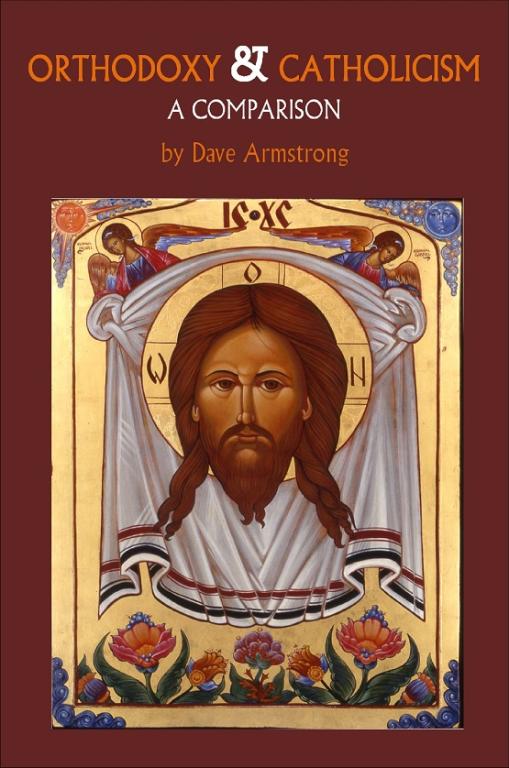
[Lulu cover design by Fr. Deacon Daniel Dozier]
[my counter-reply to Fr. Deacon Daniel Dozier from Chapter Six of the heavily revised Third (2015) Edition of Orthodoxy and Catholicism: A Comparison]
* * * * *
I fully, wholeheartedly agree with my friend, Fr. Deacon Daniel’s words in his superb reply. Perhaps that may surprise some. It shouldn’t (for anyone familiar with my past work). I’ve always been as concerned with genuine, authentic ecumenism as I have been with apologetics.
Especially notable is his emphasis on “the manner of [the papacy’s] exercise” often historically being a problem. That’s most unfortunate, but the good news is that recent popes seem to “get” it. We particularly see this in the profound ecumenical efforts of Ven. Pope Paul VI, Pope St. John Paul II (I’m a huge fan of his ecumenical encyclicals), and Pope Benedict XVI. The way forward is clear and already manifest, and it’s exciting and heartening to observe.
The emphasis on collegiality in the Second Vatican Council was noted above. In my understanding, this council stressed the infallibility of ecumenical councils in a way more explicit and highly developed than had ever been seen before. This might be seen also as a bolstering of collegiality, insofar as the authority of such councils (gatherings of bishops) is raised to a higher level.
This vision of conciliarism is, of course, one in which bishops and the pope are united and in harmony, with the pope as the head. Historically, during the high Middle Ages, conciliarism got off-track in the sense of false notions of councils being higher in the authority than the pope. The truly Catholic vision of authority and collegiality, most highly developed in Vatican II, is seen in its Dogmatic Constitution on the Church (Lumen Gentium): 21 November 1964:
*
22. Just as in the Gospel, the Lord so disposing, St. Peter and the other apostles constitute one apostolic college, so in a similar way the Roman Pontiff, the successor of Peter, and the bishops, the successors of the apostles, are joined together. Indeed, the very ancient practice whereby bishops duly established in all parts of the world were in communion with one another and with the Bishop of Rome in a bond of unity, charity and peace, and also the councils assembled together, in which more profound issues were settled in common, the opinion of the many having been prudently considered, both of these factors are already an indication of the collegiate character and aspect of the episcopal order; and the ecumenical councils held in the course of centuries are also manifest proof of that same character. And it is intimated also in the practice, introduced in ancient times, of summoning several bishops to take part in the elevation of the newly elected to the ministry of the high priesthood. Hence, one is constituted a member of the episcopal body in virtue of sacramental consecration and hierarchical communion with the head and members of the body.
. . . The order of bishops, which succeeds to the college of apostles and gives this apostolic body continued existence, is also the subject of supreme and full power over the universal Church, provided we understand this body together with its head the Roman Pontiff and never without this head. This power can be exercised only with the consent of the Roman Pontiff. For our Lord placed Simon alone as the rock and the bearer of the keys of the Church, and made him shepherd of the whole flock; it is evident, however, that the power of binding and loosing, which was given to Peter, was granted also to the college of apostles, joined with their head. This college, insofar as it is composed of many, expresses the variety and universality of the People of God, but insofar as it is assembled under one head, it expresses the unity of the flock of Christ. In it, the bishops, faithfully recognizing the primacy and pre-eminence of their head, exercise their own authority for the good of their own faithful, and indeed of the whole Church, the Holy Spirit supporting its organic structure and harmony with moderation. The supreme power in the universal Church, which this college enjoys, is exercised in a solemn way in an ecumenical council. (ch. 3, section 22; footnote numbers excised; Latin translated by the Holy See; from the EWTN Internet posting)
*
Servant of God Fr. John A. Hardon, S. J. my mentor, wrote some interesting things about collegiality in his book, The Catholic Catechism (Garden City, New York: Doubleday & Co., 1975, 219-221):
*
[A] new dimension has entered the picture in the past century, or rather an always present dimension received new emphasis and raises some new, even startling, implications for the future. Collegiality must now be seen as an aspect of apostolicity. It is the Church’s apostolicity seen from the standpoint of her social or collective, hence collegial, character.
*
. . . the apostles were not only called individually . . . they were also a collegial community . . .
We see them acting as a body during the novena of waiting for the spirit after Christ’s Ascension, when, on Peter’s initiative, they chose Matthias to replace Judas. We see them doing the same at the council in Jerusalem to settle the thorny problem of whether Christian converts had to follow the Jewish laws. . . .
For more than sixteen centuries, these forms of collegiality-in-practice were commonplace in the Church, yet the doctrine itself was only partially realized until the mid twentieth century and formalized under John XXIII and Paul VI. Several reasons may account for this, but one contributing factor was the dawn of the communications age . . .
*
Finally, I would like to note the historical fact of input to the pope in the matters of the two dogmatic definitions of the Immaculate Conception of the Blessed Virgin Mary (1854) and her Bodily Assumption (or Dormition, as the East refers to it, in 1950). In no way were these merely “top-down” (some would say, arbitrary) decrees. The two popes (Blessed Pope Pius IX and Ven. Pope Pius XII) took into consideration the desires of not only bishops, but also priests and laypeople (sensus fidelium). Thus, in the widest sense of the term, these proclamations may be regarded as collegial in nature (though I’m sure our Eastern friends would note that the East was inadequately represented in the “polling”). Catholic theologian Alan Schreck observed:
*
In the hundred years before Pope Pius’ declaration, the popes had received petitions from 113 cardinals, 250 bishops, 32,000 priests and religious brothers, 50,000 religious women, and 8 million lay people, all requesting that the Assumption be recognized officially as a Catholic teaching. Apparently, the pope discerned that the Holy Spirit was speaking through the people of God on this matter. (Catholic and Christian, Ann Arbor, Michigan: Servant Books, 1984, 180)
Likewise in an article in the Catholic apologetics magazine This Rock (“Assumptions About Mary”, May/June 1992, 12-18; quote from p. 18), T. L. Frazier noted of the bishops consulted by Ven. Pope Pius XII:
*
[O]nly 22 replied negatively. Of the 22, only six doubted that the Assumption was a divinely revealed truth, the rest feeling that the time was not yet appropriate for such a definition.
*
Blessed Pope Pius IX, in his Apostolic Constitution Ineffabilis Deus, (8 December 1854) in which he defined ex cathedra the dogma of the Immaculate Conception, noted the sought-after (overwhelming) consensus of the bishops:
*
Although we knew the mind of the bishops from the petitions which we had received from them, namely, that the Immaculate Conception of the Blessed Virgin be finally defined, nevertheless, on February 2, 1849, we sent an Encyclical Letter from Gaeta to all our venerable brethren, the bishops of the Catholic world, that they should offer prayers to God and then tell us in writing what the piety and devotion of their faithful was in regard to the Immaculate Conception of the Mother of God. We likewise inquired what the bishops themselves thought about defining this doctrine and what their wishes were in regard to making known with all possible solemnity our supreme judgment.
We were certainly filled with the greatest consolation when the replies of our venerable brethren came to us. For, replying to us with a most enthusiastic joy, exultation and zeal, they not only again confirmed their own singular piety toward the Immaculate Conception of the most Blessed Virgin, and that of the secular and religious clergy and of the faithful, but with one voice they even entreated us to define our supreme judgment and authority the Immaculate Conception of the Virgin. In the meantime we were indeed filled with no less joy when, after a diligent examination, our venerable brethren, the cardinals of the special congregation and the theologians chosen by us as counselors (whom we mentioned above), asked with the same enthusiasm and fervor for the definition of the Immaculate Conception of the Mother of God.
Consequently, following the examples of our predecessors, and desiring to proceed in the traditional manner, we announced and held a consistory, in which we addressed our brethren, the cardinals of the Holy Roman Church. It was the greatest spiritual joy for us when we heard them ask us to promulgate the dogmatic definition of the Immaculate Conception of the Virgin Mother of God.
Therefore, having full trust in the Lord that the opportune time had come for defining the Immaculate Conception of the Blessed Virgin Mary, Mother of God, which Holy Scripture, venerable Tradition, the constant mind of the Church, the desire of Catholic bishops and the faithful, and the memorable Acts and Constitutions of our predecessors, wonderfully illustrate and proclaim, and having most diligently considered all things, as we poured forth to God ceaseless and fervent prayers, we concluded that we should no longer delay in decreeing and defining by our supreme authority the Immaculate Conception of the Blessed Virgin. (from the posting on EWTN; footnote numbers excised).
After consulting theologians Bl. Pope Pius IX had consulted 603 bishops and 546 (91%) had responded affirmatively. Four or five thought it couldn’t be defined, 24 were “inopportunists” (i.e., believed that the time was not right, independently of the truth of the doctrine), and ten wanted a more indirect definition.
It stands to reason then, in light of this existing strong collegiality, even in cases of the “highest” exercise of papal prerogatives (going back at least to the 1840s), and in light of the expressed desire for reunion, that in a reunited Church, Eastern bishops or patriarchs would be able to fully participate in this collegiality, under the headship of the Bishop of Rome, the pope. Being ecclesiologically or formally separate from Rome does not further that desired end on both sides. Reunion would then, I submit, greatly foster collegiality and a profound harmony of East and West in a way that has not been seen since the patristic age.
I bring up, in conclusion (but not in reply to Fr. Deacon Daniel), Eastern objections to Blessed Pope Pius IX: who might be the third-biggest “whipping-boy” of the Orthodox after St. Thomas Aquinas and St. Augustine: largely (so a cynic might opine) because he was in office when the decree of papal infallibility was declared, so that he has become a sort of “symbol” of the thing that is so opposed.
Fr. Deacon Daniel has already cleared him of the ludicrous legend of his supposedly putting his foot on Patriarch Gregory’s head. How did that myth and fairy-tale begin, one wonders? Orthodox might say (if they grant that it is a myth) that it was because of his “imperious” demeanor or what-not. But Catholics could just as well say that the legend arose from the rancid soil of centuries-long Eastern prejudices against Latins, Rome, and her popes. The bottom-line is that it isn’t true, and this is what is so endlessly repeated and believed. I saw it several times in looking up some potential sources for use in this reply.
One tires of these myths that contain an element of personal attack against some notable Catholic figure. St. Thomas Aquinas is supposedly a Mr. Spock-like hyper-rationalistic machine, when in fact he was a deeply spiritual and even mystical person as well as philosopher and theologian, who combined the rational and non-rational aspects of Christianity in an extraordinary way.
His Confessions reveal St. Augustine’s deep personal piety. So what do we know of the person of Blessed Pope Pius IX? What made him tick? Was it a lust for raw power and a domineering, arrogant spirit? Even Baptist historian Kenneth Scott Latourette wrote the following about him:
*
[H]is convictions in the main were in accord with what was eventually decided . . . he favored the ultramontane elements. That in doing so he was gratifying a personal desire for power is by no means so certain. He was a man of deep and genuine piety who had a quiet confidence in God, who scrupulously observed his daily meditations, who delighted in saying his breviary on his knees, and who spent much time in prayer before the Blessed Sacrament. As one sympathetic observer said, he was not a saint: he had his weaknesses, among them a quick temper. But that he sought to fulfil conscientiously what he conceived to be the duties of his high office appears to be undebatable.
(Christianity in a Revolutionary Age, Vol. 1 of 5: The Nineteenth Century in Europe: Background and the Roman Catholic Phase, Grand Rapids, Michigan: Zondervan Publishing House, 1958, 283)
*
It occurred to me while writing this reply, that there is a huge irony indeed running right through the Orthodox (and sometimes Eastern Catholic) objection to papal infallibility (or – a different thing – how it is exercised for better or worse). That irony is the following: the dogmatic proclamation of the infallibility of the pope was itself a conciliar decree; not a papal decree.
Blessed Pope Pius IX could have made the decree himself, just as he had proclaimed the dogma of the Immaculate Conception 16 years earlier. And even if he had done so, it would have been in deep consultation with bishops and priests, as was the case with the dogmatic, ex cathedra decree that he did make (as shown in my previous reply). But he didn’t do so. It was the council that did it. Now, if he was so power-hungry and arrogant, why is it that he didn’t merely proclaim the thing and grant himself all this power that he supposedly so desired (in a selfish, self-centered sort of way)?
Fr. Deacon Daniel stressed “conciliarity” over and over in his reply, and it is clearly the primary modus operandi of the East. Very well, then: papal infallibility was a conciliar decree. So where is the beef about that? Many people don’t like it, or even if they accept it as a dogma they do so plugging their nose or with a grimace. They don’t resonate with it; it’s not intuitive to them. It’s not accepted wholeheartedly or enthusiastically.
I understand some of that firsthand. I know how it rankles many people and irks them to no end. Papal infallibility was my single biggest gripe against the Catholic Church before I was received into it: by far: infinitely more than Marian doctrines, which I didn’t find difficult to believe at all, when properly explained to me. I fought it vigorously for many months. I thought it was the most self-evidently ridiculous thing in the world. And in defending it over the past 24 years as an apologist, I have heard (believe me) every imaginable objection to it.
But if we want to be serious about being conciliar (understood in the Catholic sense of the pope having “veto power”), we have to submit to what these councils proclaim. We can reject them because the decrees were not to our own personal liking. But then that is the spirit of Martin Luther and pick-and-choose, “cafeteria Catholic” dissent: going our own way; disbelieving that the Holy Spirit works corporately through his bishops and the pope, solemnly assembled.
The council decided that the pope was infallible, making this a dogma (at the highest level) of the Catholic Church. That’s conciliar; that’s the expressed will of the bishops in solemn, magisterial assembly. Think for a moment of the contrary (let’s do a thought-experiment here).
We can be assured that if it had gone the other way: the heretical (from the Catholic perspective) sort of conciliarism, whereby the Ecumenical Council is the highest, most supreme authority, above the pope (which in fact almost happened in the Middle Ages), that the Orthodox would then be trumpeting this and shouting it from the rooftops as the expressed will of the people, the sensus fidelium. That wouldn’t have been questioned for a second.
We know this also because we know the reaction the Orthodox (at least more ecumenical ones) have had to Vatican II: which stressed collegiality in an effort to further develop papal infallibility “in context” and Church authority in general. Fr. Deacon Daniel has repeatedly emphasized his admiration for the Second Vatican Council, which is fine with me, because I love and admire it as much as he does, and my hero (Cardinal Newman) is considered the “father” of it and in large part, the inspiration for it.
But because the council proclaimed that the pope was infallible (under certain specific conditions, as laid out), all of a sudden it is hyper-controversial and Pope Pius IX becomes the scapegoat and “bad guy.”
Bottom line: if we claim to follow the authority of councils and to be conciliar, then we have to accept in faith that God was working in those councils, to produce the right and true results. If we, on the other hand, want to selectively reject conciliar decisions (agreed-to by popes), then we have forsaken the Catholic rule of faith (and the Orthodox as well, in a somewhat different sense) and have adopted Protestant private judgment. The choices in this respect really are very few.
Blessed John Henry Cardinal Newman wrote some extraordinary things about papal infallibility, in relation to conciliarism. This is in turn fascinating, because the myth is that he was opposedto papal infallibility. He was notat all (he had held the doctrine himself for over 25 years, as he expressly stated); Newman was an inopportunistas to its timing and fully accepted and defended it when it was decreed. He wrote, after the definition was made by the council:
*
When you became a Catholic, you ought to have understood that the voice of the Church is the voice of God. The Church defines nothing that was not given to the Apostles in the beginning, but that sacred deposit cannot be fully brought forward and dispensed except in the course of ages. It is not any argument against the Pope’s Infallibility, that it was not defined as a truth till the 19thcentury. Don’t set yourself against the doctrine. Very little was passed, much less than its advocates wished – they are disappointed. Nothing is defined as to what acts are ex cathedra, nor to what things infallibility extends. Some people think the decree lessens the Pope’s actualpower. (Letters and Diaries, vol. xxv, 216; Letter to Mrs. Margaret A. Wilson, 20 October 1870)
*
The Church is the Mother of high and low, of the rulers as well as of the ruled. Securus judicat orbis terrarum. If she declares by her various voices that the Pope is infallible in certain matters, in those matters infallible he is. What Bishops and people say all over the earth, that is the truth, whatever complaint we may have against certain ecclesiastical proceedings. Let us not oppose ourselves to the universal voice. (Letter to Père Hyacinthe, 24 November 1870)
*
For myself, I see the doctrine implied in the conduct of the Roman See, nay of the Catholic Church, from the first, . . . The dogma seems to me as mildly framed as it could be—or nearly so. That the Pope was infallible in General Council, or when speaking with the Church, all admitted, even Gallicans. (Letter to Sir William Henry Cope, 10 December 1871)
*
I would say that you are quite right in saying that ‘the Church cannot delegate her magisterium to another’, and therefore cannot make the Pope infallible. The Council has done nothing of the kind – no Council does more than declarethe Apostolic truth. The early Councils declared that it was true that Almighty God was a Trinity in Unity – they did not makethe Trinity in Unity – and the Vatican Council does not makethe Pope infallible but declares that, when he teaches the revealed doctrine, God from the beginning has made him infallible. . . . It has been his pleasure to protect his own revelation, by committing the true teaching of it to the Church and to the Pope. They are infallible when they teach, because God made them so – they are not infallible except when they teach because God has not given them that gift at other times. (Letters and Diaries, vol. xxxii, 348; Letter to Henry Stacke, 9 February 1875)
*
. . . the great object of a Council being in some way or other to declare the judgment of the Church. . . . There are those who have no belief in the authority of Councils at all, and feel no call upon them to discriminate between one Council and another; but Anglicans, who are so fierce against the Vatican, and so respectful towards the Ephesine, should consider what good reason they have for swallowing the third Council, while they strain out the nineteenth. (Letter to the Duke of Norfolk, ch. 8, 1875)
*
There were circumstances in the mode of conducting the Vatican Council which I could not like, but its definition of the Pope’s Infallibility was nothing short of the upshot of numberless historical facts looking that way, and of the multitudinous mind of theologians acting upon them. (Letters and Diaries, vol. xxix, 118; Letter to William Froude, 29 April 1879)
*
Of course the Vatican Council has distinctly adopted as de fide what from the beginning was taught in the Church, though not defined. (Letters and Diaries, vol.xxx, 101; Letter to Henry Bittleston [2], 14 June 1882)
*
Cardinal Newman was also quite personally fond of Blessed Pope Pius IX, as was obvious, as I read many of his letters, in preparing my two quotations books of his utterances.
*
In conclusion, I would stress once again the conciliar nature of the dogma of papal infallibility, and the fact that it came about by majority vote, according to how councils have worked from the beginning. Church historian Latourette gives us some numbers to ponder:
*
On the preliminary vote of the question of approval of the declaration of infallibility, 451, or three-fourths, were in favour; 88, between a sixth and a seventh, were flatly opposed; and 62, slightly more than a tenth, approved with reservations. Ninety-one bishops abstained from voting. (Ibid., 282)
*
By my math, that is 692 bishops. 65% were totally in favour. If we add “approval with reservations,” the total “yay” vote is 513 out of 692, or 74%. Those “flatly opposed” were only 13% of the whole. This is the “voice of the bishops” and the “Mind of the Church”. If, theoretically, say, 400 Orthodox bishops had also been present, in a truly universal council, and all voted “no”; the ayes still would have had it, 513 to 488. So what would the response have been: to reject the council out of hand until they got the result they wanted? That’s not how Christian, apostolic authority works. But it is how dissidence and schism have always worked.
Lastly, how was the proclamation received? Was it regarded as an autocratic, “top-down” decision or was it perceived to be the will of the people? Latourette (no Catholic partisan) again provides an excellent overview:
*
It must be said, moreover, that the decisions of the Vatican Council, especially those which stressed the administrative authority and the infallibility of the Pope, represented the convictions of the large majority of those Roman Catholics who were sincerely committed to the faith. Like the majority of the council, they believed that here was nothing new, but only what had always been implicit in the deposit of the faith entrusted to the Church.
*
. . . Few serious protests came from any Latin country. They were not even widespread in France, where liberal Catholicism had been strong. (Ibid., 283-284)
*
He goes on to inform his readers of where opposition didcome from: England, the United States, Germany, Switzerland, and Austria. What else is new? Some things never change, do they? These are the very same countries where dissident, liberal modernist Catholics (real or in name only) thrive to this day: 144 years later. It’s also notable that, with the exception of Austria, they are all Protestant-majority countries or of a mixed nature. Germany today has almost equal numbers of Lutherans and Catholics, while Switzerland has slightly more Catholics.
Thus it is no coincidence at all that the ideas of Protestantism (some of them false) filter-down into the thoughts of Catholics, when the two groups mix. That was true in 1870 and remains very much true today.
Previous Post
September 6, 2014
The Great Spanking Debate Revisited
Next Post
September 28, 2014 Israel as God's Chosen Agent of Wrath and Judgment
Browse Our Archives
Select a Category & Last Things About Me Anti-Catholicism Atheism & Agnosticism Baptism and Sacramentalism Bible and Tradition Blessed Virgin Mary Books by Dave Armstrong C. S. Lewis Calvinism & General Protestantism Catholic Apologetics Catholic Apologists Catholic conversion Catholic converts Christmas Church (Ecclesiology) Church History Conversion and Converts Development of Doctrine Eastern Orthodoxy Ecumenism & Christian Unity Eucharist & Liturgy Fathers of the Church French Translations G. K. Chesterton Hell Hell & Satan Hell & Satan & Last Things Heresies & Comparative Religion Holistic Health Inquisition & Crusades & Scandals James White Jews & Judaism & Old Testament John Calvin John Henry Newman Liberal / Modernist Theology Life Issues Literary Resume Lutheranism Mariology Martin Luther Music Orthodoxy Papacy & Infallibility Personal Page Philosophy & Science Political & Ethical & Moral Issues Protestant Persecution & Intolerance Protestantism Purgatory Purgatory & Penance Romantic & Imaginative Theology Saints & Purgatory & Penance Salvation Salvation & Justification Satan & Last Things Sexuality and Gender Issues Spanish Translations Traditionalism vs. Radical Catholic Reactionaries Traducciones al español / tradução para português Trinitarianism & Christology Uncategorized Videos
Select a Month October 2026 September 2026 August 2026 July 2026 June 2026 May 2026 April 2026 March 2026 February 2026 January 2026 December 2025 November 2025 October 2025 September 2025 August 2025 July 2025 June 2025 May 2025 April 2025 March 2025 February 2025 January 2025 December 2024 November 2024 October 2024 September 2024 August 2024 July 2024 June 2024 May 2024 April 2024 March 2024 February 2024 January 2024 December 2023 November 2023 October 2023 September 2023 August 2023 July 2023 June 2023 May 2023 April 2023 March 2023 February 2023 January 2023 December 2022 November 2022 October 2022 September 2022 August 2022 July 2022 June 2022 May 2022 April 2022 March 2022 February 2022 January 2022 December 2021 November 2021 October 2021 September 2021 August 2021 July 2021 June 2021 May 2021 April 2021 March 2021 February 2021 January 2021 December 2020 November 2020 October 2020 September 2020 August 2020 July 2020 June 2020 May 2020 April 2020 March 2020 February 2020 January 2020 December 2019 November 2019 October 2019 September 2019 August 2019 July 2019 June 2019 May 2019 April 2019 March 2019 February 2019 January 2019 December 2018 November 2018 October 2018 September 2018 August 2018 July 2018 June 2018 May 2018 April 2018 March 2018 February 2018 January 2018 December 2017 November 2017 October 2017 September 2017 August 2017 July 2017 June 2017 May 2017 April 2017 March 2017 February 2017 January 2017 December 2016 November 2016 October 2016 September 2016 August 2016 July 2016 June 2016 May 2016 April 2016 March 2016 February 2016 January 2016 December 2015 November 2015 October 2015 September 2015 August 2015 July 2015 June 2015 May 2015 April 2015 March 2015 February 2015 January 2015 December 2014 November 2014 October 2014 September 2014 August 2014 July 2014 June 2014 April 2014 March 2014 February 2014 January 2014 December 2013 November 2013 October 2013 September 2013 August 2013 July 2013 June 2013 April 2013 March 2013 February 2013 January 2013 December 2012 November 2012 October 2012 September 2012 August 2012 July 2012 June 2012 May 2012 April 2012 March 2012 February 2012 January 2012 December 2011 November 2011 October 2011 September 2011 August 2011 July 2011 June 2011 April 2011 March 2011 February 2011 October 2010 September 2010 August 2010 July 2010 April 2010 March 2010 December 2009 October 2009 August 2009 July 2009 June 2009 May 2009 March 2009 February 2009 October 2008 September 2008 April 2008 March 2008 February 2008 January 2008 December 2007 November 2007 October 2007 May 2007 March 2007 February 2007 January 2007 November 2006 October 2006 September 2006 August 2006 July 2006 June 2006 May 2006 April 2006 March 2006 February 2006 October 2005 June 2005 April 2005 February 2005 July 2004 May 2004 April 2004
Follow Us!
TAKE THE
Religious Wisdom Quiz
I made a rash vow that cost me my only child after a military victory. Who am I?
Select your answer to see how you score.
Jephthah Samson Gideon Barak
Books by This Author Books by Dave Armstrong
Related posts from Biblical Evidence for Catholicism

Was Peter "Any Old" Apostle? 10 Anti-Papal Arguments
Biblical Evidence for Catholicism

Book: Martin Luther: Dissenter and Defender
Biblical Evidence for Catholicism

11 Protestant Objections to Papal Authority Debunked
Biblical Evidence for Catholicism
"Martin Luther: Dissenter & Defender": Introduction
Biblical Evidence for Catholicism
TRENDING AT PATHEOS Catholic

The Sermon on the Mount, Part I: Matthew...
The Sermon on the Mount, Part I (Matthew 4:12-5:12) St. Matthew moves...

What's up from Crossway: Reviewing some of their latest A few weeks...

Janie Learns the Way of the Cross: A...
Teaching children about Jesus' Passion can be challenging. Many parents and educators...

Looking For Good Catholic Writing - October 2026
He alone extends the heavens, and he walks upon the waves of...

In "Irreplaceable," our book on vocation and technology, Trevor Sutton and I...

I was strolling through the top floor of the brand new Parthenon...
view all Catholic blogs
Ad-Free & Subscriber Log-In Subscription Support
- About Us
- 2026 Calendar
- Videos
- Podcasts
- Library of World Religions
- Faith In Media Tracker
- Advertise With Us
- Write for Us
- Privacy Policy
- Terms of Service
- Do Not Sell My Data
- Contact Us
- Radiant Digital
- Manage Newsletter Subscriptions
- Unsubscribe From Notifications
- Sitemap
Copyright 2008-2026, Patheos. All rights reserved.
Subscription Support Ad-Free & Subscriber Log-In
Follow Patheos