
BuddhistCatholicContemplativeEvangelicalGeneral ChristianHinduJewishLatter-day SaintMuslimNew VisionsProgressive Christian
Beliefs
- Buddhist
- Catholic
- Contemplative
- Evangelical
- General Christian
- Hindu
- Jewish
- Latter-day Saint
- More Voices
- Muslim
- New Visions
- Pagan
- Progressive Christian
Topics
- Religion News
- Food and Religion
- Sports and Religion
- Religious Art
- Religious Music and Entertainment
- Religious Events
- History and Religion
- Style and Religion
- Politics and Religion
- Women in Religion
- Recreation Outdoors and Religion
- Business Finance and Religion
- Careers Workplace and Religion
- Education and Religion
- Family Parenting and Religion
- Health Fitness and Religion
- Home and Religion
- Relationships and Religion
- Technology and Religion
- Travel and Religion
Columnists
- Buddhist Columnists
- Business Finance and Religion Columnists
- Careers Workplace and Religion Columnists
- Catholic Columnists
- Contemplative Columnists
- Education and Religion Columnists
- Evangelists Columnists
- Family Parenting and Religion Columnists
- General Christian Columnists
- Health Fitness and Religion Columnists
- Hindu Columnists
- History and Religion Columnists
- Home and Religion Columnists
- Jewish Columnists
- More Voices Columnists
- Latter Day Columnists
- Muslim Columnists
- New Visions Columnists
- Nonreligious Columnists
- Pagan Columnists
- Politics and Religion Columnists
- Progressive Columnists
- Recreation Outdoors and Religion Columnists
- Relationships and Religion Columnists
- Religion News Columnists
- Religious Art Columnists
- Religious Events Columnists
- Religious Music and Entertainment Columnists
- Sports and Religion Columnists
- Style and Religion Columnists
- Technology and Religion Columnists
- Travel and Religion Columnists
- Women in Religion Columnists
Resource Library
- 2026 Calendar
- Library of World Religions
- The 100 Most Holy Places on Earth
- Patheos Answers
- Podcasts
- Videos
- Faith Leaders Database
- Anglican Episcopalian
- Bahai
- Baptist
- Buddhism
- Christianity
- Confucianism
- Eastern Orthodoxy
- Hinduism
- Holiness and Pentecostal
- ISKCON
- Islam
- Judaism
- Lutheran
- Methodist
- The Church of Jesus Christ of Latter-day Saints
- New Age
- Paganism
- Presbytarian and Reformed
- Protestantism
- Religion Behind the Scenes
- Roman Catholic
- Scientology
- Shia Islam
- Sikhism
- Sufism
- Sunni Islam
- Taoism
- Zen
- See all religions
Research Tools
 Ad-Free & Subscriber Log-In Subscription Support
Ad-Free & Subscriber Log-In Subscription Support
Follow Patheos 

- Trending:
- Forgiveness
- |
- Marriage
- |
- Consciousness
- |
- Death Penalty
- |
- Election
- |
- Halloween

-
About
-
Catholic Apologetics
-
Church History
-
Great Apologists
-
Christian Worldview
-
Protestantism & Misc.
- Home
- Catholic
- History and Religion
- Death of the Reform of the Reform of the Liturgy? Part II
Death of the Reform of the Reform of the Liturgy? Part II
Last updated on: June 5, 2026 at 11:36 pm by Dave Armstrong
Death of the Reform of the Reform of the Liturgy? Part II 2026-06-05T23:36:02-04:00 Dave Armstrong
Patheos Explore the world's faith through different perspectives on religion and spirituality! Patheos has the views of the prevalent religions and spiritualities of the world.
. . . The Reports are Greatly Exaggerated (Peter Kwasniewski and Fr. Thomas Kocik vs. Pope Benedict XVI)
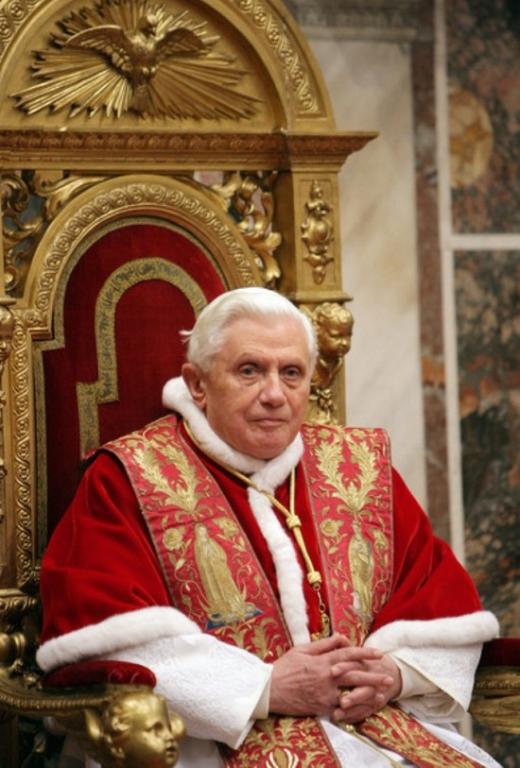
Pope Benedict XVI on 6 July 2011. Photograph by Peter Nguyen [Wikimedia Commons / Creative Commons Attribution 2.0 Generic license]

(2-26-14)
See Part One
As I’ve always said, I’m very close in spirit to “traditionalists” in many ways (lots follow me on Facebook, and many are my friends “in real life”). I just think there are very important premises in play here, that, if crossed, might have very dire consequences. The lines in this case (as I see it) are the disagreement with Summorum Pontificum and saying that the NO / OF is intrinsically flawed rather than plagued by abuses (as all agree).
I would say that I’m not the one to judge what the Church wants to do with the Roman Rite Mass. That is the purview of Holy Mother Church, and Pope Benedict XVI has made it quite clear that the NO / OF is here to stay. I don’t sit around and figure out what the Church should or shouldn’t do. I did that as an evangelical Protestant apologist. I defend, as a Catholic apologist, what I understand to be Church teaching, and have done so in this paper.Those who have this mindset always have some book or set of books that will “clinch the argument” (if Fr. Cekada helps, they even bring him in; despite his sedevacantism), whereas I follow the Church in her magisterium. The “magisterium of scholars” (or, today, even mere bloggers and folks who write a lot) is, again, a very Protestant rule of faith. That’s why our Catholic schools are a mess, because they’ve been allowed to teach all sorts of heretical and moral nonsense, precisely because they are not “under” the pope and the Church and so decide to teach whatever they please (in their infinite secular wisdom).
I can’t be all that far off, since my position is what the men I am criticizing took a few months ago (I presume; don’t know for sure) before they gave up in despair of the reform of the [liturgical] reform. So I’m still there; I don’t buy these arguments. I’m Dr. Kwasniewski and Fr. Kocik a year ago. I’m standing next to Pope Benedict on this, whereas they think he got it wrong. Even if he is wrong, I don’t think God would be displeased with me for agreeing with a pope rather than professors and priests who disagree with him: those who have no magisterial authority at all. When a bishop chimed in at NLM, he did the same. That’s Church authority.
As an apologist, I observe trends and what certain opinions tend to lead to. In this case, I have observed that bashing the Novus Ordo Mass (usually the first step) often leads to then attacking Vatican II, and then after that, questioning the popes since Ven. Pope Pius XII.
Those are my three identifiers for what I have called the radical Catholic reactionary position. Rather than simply advocate traditional worship (as I do myself, in both forms), it has to go on to oppose the other. It’s the “either/or” mentality, that is highly characteristic of Protestantism (per Louis Bouyer’s superb book on them).
Now, obviously it’s not inevitable that anyone who rejects the reform of the reform and says the New Mass is intrinsically flawed and beyond hope of reform will follow this path of increasing disagreement with the magisterium (I don’t know the future); all I’m saying is that many who in the past talked as Dr. Kwasniewski and Fr. Kocik do now have in fact done so; therefore, who’s to say that they won’t also do that?
How do they know that they won’t end up in the SSPX or in sedevacantism? Mario Derksen and Gerry Matatics (both of whom I dialogued with) would have denied they would end up there 15 years ago. But they did. The problem is that if one decides to cross certain lines that exist in the Church for our protection, and rely more and more on their private judgment (in the sense that Cardinal Newman vociferously condemned), it quickly becomes a slippery slope.
So we see, e.g., sedevacantists in some of the comments for Dr. Kwasniewski’s article, doing “I told you so’s” and observing that he is now starting to get what they got years ago. So who’s to say that he may not “get” that there is no pope five years from now, or that Vatican II stinks altogether and was the victory of modernism? We are what we eat. If he keeps reading these books and talking to people who think as he now does (rather than folks like me who don’t), and changing the goalposts as he goes, he may very well end up like them. It’s human nature.
This is how I approach the matter: partly from a “sociological” view (my major in college: on rare occasions I actually utilize some of that knowledge).
* * *
Whether the New Mass is valid and licit is not related to my point in this paper at all. Those whom I am criticizing claim it is not organically related to the Roman Rite: not a development of it. Pope Benedict said it was. I agree with him. I submit to him and think he knows what he is talking about, being the pope.
* * *
In my parish, we don’t hold hands or do the “orans” posture during the Our Father, usually don’t do the kiss of peace (optional in the rubrics), often celebrate in Latin, usually ad orientem, with altar rails, no eucharistic ministers (hence no overuse), receiving on the tongue, all altar boys, with chant and great traditional music: all in a glorious German Gothic Revival cathedral, with some of the best stained glass and one of the largest bells in North America.
If my choice was between the Novus Ordo Mass in the way it is too often celebrated (with mediocre music, ugly buildings, tabernacle off to the side, etc.) and the Tridentine, I’m at the latter in a heartbeat. But I’m very blessed (speaking just of myself; no one else) to have the best of both worlds: the traditional reverence, beauty, etc., with the renewed liturgy of the Pauline Mass.
* * *
I think analogically a lot (I get that from Cardinal Newman). The atheist says following God is a crutch and infantile. Those of the RadCathR mind seem to say that if one follows the pope and accepts what he says (which I would call simply being Catholic), it is simplistic and ultramontane and a fantasy world not in reality. They know better.
It’s the same mentality in many respects: a sort of hyper-rationalism and (in the worst cases) lack of supernatural faith that leads people astray both left and right. The excommunicated historian Dollinger had it in the 1870s, Hans Kung and those in the SSPX and the sedevacantists have it today, as do RadCathRs to a lesser but still very alarming extent.
I’ve observed the dynamic for 17 years online: people moving further and further right: sometimes right out of the Church. Today’s “traditionalist” may be tomorrow’s radical Catholic reactionary, the next month’s SSPX adherent, and the next year’s (or decade’s) sedevacantist. It has happened, and it could happen to these folks whom I critique now. The devil is always at work, sowing discord and confusion and division and falsehood. He’s quite content to work slowly, so people aren’t aware that they have crossed crucial, fatal lines (the frog in the boiling water scenario).
It just keeps getting more and more extreme. Thus in this instance, what began as a divergence or dissent from clear injunctions of Pope Benedict XVI in his Summorum Pontificum could possibly (though not inevitably) get much worse as time goes on. Every dam that bursts starts with one little crack or weakness. Every flu epidemic starts with one case and then spreads like wildfire. When you change or reject fundamental true premises in exchange for the rotgut of false ones, the entire house is built on sand and a faulty foundation, and will come tumbling down eventually as a result.
* * *
I would emphasize again that the radical Catholic reactionary position is characterized precisely for bashing the Novus Ordo constantly, while not denying its validity; the same is done with Vatican II and popes (JPII and Francis, but not, of course, Benedict, who is their hero and darling, even though he expressly disagrees with them on this point, as I have been showing). My own coined term, “radical Catholic reactionary” has “Catholic” in it, and that was quite deliberate, to show how I classify them.
It’s all about going right up to the line that ought not be crossed, and playing with it: almost like jumping over it and back. Those who take the step of denying that the New Mass can be reformed, are now “bashing” it, and that has in fact has usually been the first step towards greater departures. That’s why those who do it are in more danger of going down that wrong path than I am, because I haven’t taken the first step that is often taken on that wrong path.
* * *
I’ve now had the famous Cardinal Ratzinger pre-papal “banal” Mass quote thrown at me about 19,864,208 times (well, maybe 19,864,209). It must be in Bartlett’s Quotations by now: the most famous words ever uttered by any Christian in 2,000 years, surpassing in high importance, even “I am the way, and the truth, and the life.” I already “replied” to that in this paper by citing Dr. Jeff Mirus regarding his pre-papal vs. papal utterances. I’d have to see his earlier words in context. Dr. Mirus has said he had no general antipathy towards the Novus Ordo before he was pope. Not knowing particulars, I accept his word. In any event, we can hardly give his pre-papal views more precedence than his papal ones, if they appear to contradict. But Fr. Geiger argues below that they do not contradict.
* * *
Dr. Kwasniewski and I have maintained a very cordial private dialogue (so much so that we’re virtually becoming buddies), while this paper was still being written, so it is quite possible to talk about these issues without rancor and insult.
* * *
Fr. Angelo Geiger of Mary Victrix fame (I love his stuff), has posted an article called “The Reform of the Reform Fights Back”. He wrote:
David Armstrong has an excellent post refuting the “death of the reform of the reform” proclamation by Peter Kwasniewski, which I have discussed here.
And thanks be to God, Bishop Peter Elliott has posted a refutation of this premature announcement on New Liturgical Movement.
For a superb, lengthy treatment of Summorum Pontificum and Pope Benedict XVI’s liturgical views (which is most welcome, since I am no liturgical expert at all and it isn’t even one of my main topics that I write about), see Fr. Geiger’s article, “The Spirit of Summorum Pontificum“ (11 March 2012).
Fr. Geiger has clearly gone through the same process and frustration I have with regard to the “banal” quote and folks ignoring what Pope Benedict XVI stated as pope (even being called an ultramontanist). He wrote in the comments for this article:
Nice cut and paste out of context quote from Cardinal Ratzinger, . . . You might actually learn something from David Armstrong’s piece. . . . Context doesn’t mean anything? Read Armstrong’s piece and this, [his article above] and then come back and talk to me.
. . . to show context and the actual nuance of thought of Ratzinger is not prooftexting. It is simply illustrat[ing] that his thought is complex and defies being used as a club, unless of course, one cherry-picks the quotes one likes and disregards those one doesn’t. The trads (not you necessarily) quote Cardinal Ratzinger (not Pope Benedict) out of context from a preface to a book (not a magisterial document) and suggest it proves something, and then when as Pope he speaks magisterially on religious liberty (see, for example 26-27), we are told not to be ultramontanists . . .
In his article on Summorum Pontificum, Fr. Geiger commented on the famous “banal” quote:
Beyond this Cardinal Ratzinger has leveled qualified criticisms of the way in which the new liturgical books came into existence, saying that they appeared to be “put together by professors,” and not as a result of “a phase in a continual growth process.” He said: “I do regard it as unfortunate that we have been presented with the idea of a new book rather than with that of continuity within a single liturgical history” (Feast of Faith, 87). In his preface to the French edition of The Reform of the Roman Liturgy by Klaus Gamber (1992), Ratzinger’s criticisms are more stinging and appear to support the position of Gamber, which is that the new liturgical books could be revised to reflect more accurately the principles laid down by Vatican II, and hence, be drawn more fully within Tradition. In that preface, he contrasts the Western understanding of liturgical development with the Eastern notion that the liturgy is a “reflection of eternal light,” and then writes:
What happened after the Council was totally different: in the place of liturgy as the fruit of development came fabricated liturgy. We left the living process of growth and development to enter the realm of fabrication. There was no longer a desire to continue developing and maturing, as the centuries passed and so this was replaced—as if it were a technical production—with a construction, a banal on-the-spot product.
This statement might be taken in one of several ways: as pertaining simply to the abuses of the new Mass and not to the new books themselves; as pertaining to the very novus ordo itself as codified in the Missal of Paul VI; as pertaining to the manner of presentation of the books, as the work of professors and not as organic development. I suggest that the meaning of the Cardinal is nuanced, tending toward the third option, because his earlier statements and those of his pontificate suggest that he is not denigrating the novus ordo as such. Again, to be clear, both before and after his 1992 preface for Gamber’s book, his remarks indicate that he favors the new liturgical books, even if he hopes for some revisions.
From the same article, Fr. Geiger shows how Cardinal Ratzinger affirmed historical continuity of the New Mass:
In fact, the principle that motivates his criticisms of the new liturgical books is organic development, and not in any way an argument for a mummified liturgy. In fact, he suggested in 1981 that those who refuse to accept the liturgical reform mandated by the council are operating on “a faulty view of the historical facts.” The Cardinal declared that the Missal “both before and after Pius V . . . was subject to a continuous process of purification” and “continued to grow and develop” (“Lecture”). Furthermore, he said that subsequent editions of the new books
will need to make it quite clear that the so-called Missal of Paul VI is nothing other than a renewed form of the same Missal to which Pius X, Urban VIII, Pius V and their predecessors have contributed, right from the Church’s earliest history. It is of the very essence of the Church that she should be aware of her unbroken continuity throughout the history of faith, expressed in an ever-present unity of prayer (ibid.).
This is hardly a reason to count the novus ordo as a break with the liturgical tradition; on the contrary, it is an affirmation that the actual books in use in 1981, the Cardinal considered to be in actual continuity with the older books.
See Part One
* * *
Traditionalism vs. Radical Catholic Reactionaries
Previous Post
February 24, 2014
Death of the Reform of the Reform of the Liturgy? Part I
Next Post
February 27, 2014 Does Pope Francis Think that Jesus Was a Sinner?
Browse Our Archives
Select a Category & Last Things About Me Anti-Catholicism Atheism & Agnosticism Baptism and Sacramentalism Bible and Tradition Blessed Virgin Mary Books by Dave Armstrong C. S. Lewis Calvinism & General Protestantism Catholic Apologetics Catholic Apologists Catholic conversion Catholic converts Christmas Church (Ecclesiology) Church History Conversion and Converts Development of Doctrine Eastern Orthodoxy Ecumenism & Christian Unity Eucharist & Liturgy Fathers of the Church French Translations G. K. Chesterton Hell Hell & Satan Hell & Satan & Last Things Heresies & Comparative Religion Holistic Health Inquisition & Crusades & Scandals James White Jews & Judaism & Old Testament John Calvin John Henry Newman Liberal / Modernist Theology Life Issues Literary Resume Lutheranism Mariology Martin Luther Music Orthodoxy Papacy & Infallibility Personal Page Philosophy & Science Political & Ethical & Moral Issues Protestant Persecution & Intolerance Protestantism Purgatory Purgatory & Penance Romantic & Imaginative Theology Saints & Purgatory & Penance Salvation Salvation & Justification Satan & Last Things Sexuality and Gender Issues Spanish Translations Traditionalism vs. Radical Catholic Reactionaries Traducciones al español / tradução para português Trinitarianism & Christology Uncategorized Videos
Select a Month October 2026 September 2026 August 2026 July 2026 June 2026 May 2026 April 2026 March 2026 February 2026 January 2026 December 2025 November 2025 October 2025 September 2025 August 2025 July 2025 June 2025 May 2025 April 2025 March 2025 February 2025 January 2025 December 2024 November 2024 October 2024 September 2024 August 2024 July 2024 June 2024 May 2024 April 2024 March 2024 February 2024 January 2024 December 2023 November 2023 October 2023 September 2023 August 2023 July 2023 June 2023 May 2023 April 2023 March 2023 February 2023 January 2023 December 2022 November 2022 October 2022 September 2022 August 2022 July 2022 June 2022 May 2022 April 2022 March 2022 February 2022 January 2022 December 2021 November 2021 October 2021 September 2021 August 2021 July 2021 June 2021 May 2021 April 2021 March 2021 February 2021 January 2021 December 2020 November 2020 October 2020 September 2020 August 2020 July 2020 June 2020 May 2020 April 2020 March 2020 February 2020 January 2020 December 2019 November 2019 October 2019 September 2019 August 2019 July 2019 June 2019 May 2019 April 2019 March 2019 February 2019 January 2019 December 2018 November 2018 October 2018 September 2018 August 2018 July 2018 June 2018 May 2018 April 2018 March 2018 February 2018 January 2018 December 2017 November 2017 October 2017 September 2017 August 2017 July 2017 June 2017 May 2017 April 2017 March 2017 February 2017 January 2017 December 2016 November 2016 October 2016 September 2016 August 2016 July 2016 June 2016 May 2016 April 2016 March 2016 February 2016 January 2016 December 2015 November 2015 October 2015 September 2015 August 2015 July 2015 June 2015 May 2015 April 2015 March 2015 February 2015 January 2015 December 2014 November 2014 October 2014 September 2014 August 2014 July 2014 June 2014 April 2014 March 2014 February 2014 January 2014 December 2013 November 2013 October 2013 September 2013 August 2013 July 2013 June 2013 April 2013 March 2013 February 2013 January 2013 December 2012 November 2012 October 2012 September 2012 August 2012 July 2012 June 2012 May 2012 April 2012 March 2012 February 2012 January 2012 December 2011 November 2011 October 2011 September 2011 August 2011 July 2011 June 2011 April 2011 March 2011 February 2011 October 2010 September 2010 August 2010 July 2010 April 2010 March 2010 December 2009 October 2009 August 2009 July 2009 June 2009 May 2009 March 2009 February 2009 October 2008 September 2008 April 2008 March 2008 February 2008 January 2008 December 2007 November 2007 October 2007 May 2007 March 2007 February 2007 January 2007 November 2006 October 2006 September 2006 August 2006 July 2006 June 2006 May 2006 April 2006 March 2006 February 2006 October 2005 June 2005 April 2005 February 2005 July 2004 May 2004 April 2004
Follow Us!
TAKE THE
Religious Wisdom Quiz
I lift my eyes to the _________, where does my help come from? My help comes from the LORD.
Select your answer to see how you score.
Heavens Seas Hills Sky
Books by This Author Books by Dave Armstrong
Related posts from Biblical Evidence for Catholicism

The Mass & Development of Doctrine (vs. Wes...
Biblical Evidence for Catholicism

Miraculous Eucharist (vs. Francois Turretin #4)
Biblical Evidence for Catholicism

God's Presence, the Ark, the Eucharist, & Death
Biblical Evidence for Catholicism
Protestant Eucharistic Objections Fail (Turretin)
Biblical Evidence for Catholicism
TRENDING AT PATHEOS Catholic

In "Irreplaceable," our book on vocation and technology, Trevor Sutton and I...

I was strolling through the top floor of the brand new Parthenon...

What Does Gêvâh Mean For Kimberley Guifoyle &...
This week, a lot of the news is focused on Kimberly Guilfoyle....

INNER CIRCLE: Profound Mystery (Of Christ In All...
Ephesians 5:31-32 “For this reason, a man will leave his father and...

Do Not Rejoice When Your Enemy Falls: The...
Turning an execution into a public spectacle is a disturbing expression of...

'The Chosen' S6 Trailer: The Passion Gets Very...
Not many watching 'The Chosen' worry about spoilers, but just because they...
view all Catholic blogs
Ad-Free & Subscriber Log-In Subscription Support
- About Us
- 2026 Calendar
- Videos
- Podcasts
- Library of World Religions
- Faith In Media Tracker
- Advertise With Us
- Write for Us
- Privacy Policy
- Terms of Service
- Do Not Sell My Data
- Contact Us
- Radiant Digital
- Manage Newsletter Subscriptions
- Unsubscribe From Notifications
- Sitemap
Copyright 2008-2026, Patheos. All rights reserved.
Subscription Support Ad-Free & Subscriber Log-In
Follow Patheos