
BuddhistCatholicContemplativeEvangelicalGeneral ChristianHinduJewishLatter-day SaintMuslimNew VisionsProgressive Christian
Beliefs
- Buddhist
- Catholic
- Contemplative
- Evangelical
- General Christian
- Hindu
- Jewish
- Latter-day Saint
- More Voices
- Muslim
- New Visions
- Pagan
- Progressive Christian
Topics
- Religion News
- Food and Religion
- Sports and Religion
- Religious Art
- Religious Music and Entertainment
- Religious Events
- History and Religion
- Style and Religion
- Politics and Religion
- Women in Religion
- Recreation Outdoors and Religion
- Business Finance and Religion
- Careers Workplace and Religion
- Education and Religion
- Family Parenting and Religion
- Health Fitness and Religion
- Home and Religion
- Relationships and Religion
- Technology and Religion
- Travel and Religion
Columnists
- Buddhist Columnists
- Business Finance and Religion Columnists
- Careers Workplace and Religion Columnists
- Catholic Columnists
- Contemplative Columnists
- Education and Religion Columnists
- Evangelists Columnists
- Family Parenting and Religion Columnists
- General Christian Columnists
- Health Fitness and Religion Columnists
- Hindu Columnists
- History and Religion Columnists
- Home and Religion Columnists
- Jewish Columnists
- More Voices Columnists
- Latter Day Columnists
- Muslim Columnists
- New Visions Columnists
- Nonreligious Columnists
- Pagan Columnists
- Politics and Religion Columnists
- Progressive Columnists
- Recreation Outdoors and Religion Columnists
- Relationships and Religion Columnists
- Religion News Columnists
- Religious Art Columnists
- Religious Events Columnists
- Religious Music and Entertainment Columnists
- Sports and Religion Columnists
- Style and Religion Columnists
- Technology and Religion Columnists
- Travel and Religion Columnists
- Women in Religion Columnists
Resource Library
- 2026 Calendar
- Library of World Religions
- The 100 Most Holy Places on Earth
- Patheos Answers
- Podcasts
- Videos
- Faith Leaders Database
- Anglican Episcopalian
- Bahai
- Baptist
- Buddhism
- Christianity
- Confucianism
- Eastern Orthodoxy
- Hinduism
- Holiness and Pentecostal
- ISKCON
- Islam
- Judaism
- Lutheran
- Methodist
- The Church of Jesus Christ of Latter-day Saints
- New Age
- Paganism
- Presbytarian and Reformed
- Protestantism
- Religion Behind the Scenes
- Roman Catholic
- Scientology
- Shia Islam
- Sikhism
- Sufism
- Sunni Islam
- Taoism
- Zen
- See all religions
Research Tools
 Ad-Free & Subscriber Log-In Subscription Support
Ad-Free & Subscriber Log-In Subscription Support
Follow Patheos 

- Trending:
- Forgiveness
- |
- Marriage
- |
- Consciousness
- |
- Death Penalty
- |
- Election
- |
- Halloween

-
About
-
Catholic Apologetics
-
Church History
-
Great Apologists
-
Christian Worldview
-
Protestantism & Misc.
- Home
- Catholic
- History and Religion
- Conciliation: “Traditionalists” & Other Orthodox Catholics
Conciliation: “Traditionalists” & Other Orthodox Catholics
Last updated on: May 27, 2017 at 11:33 am by Dave Armstrong
Conciliation: “Traditionalists” & Other Orthodox Catholics 2017-05-27T11:33:07-04:00 Dave Armstrong
Patheos Explore the world's faith through different perspectives on religion and spirituality! Patheos has the views of the prevalent religions and spiritualities of the world.
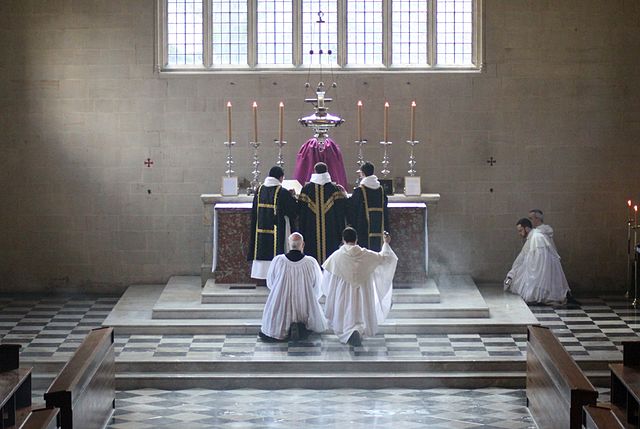
Tridentine Mass; photo by James Bradley, 20 Feb. 2010 [Wikimedia Commons / Creative Commons Attribution 2.0 Generic

license]
***
(9-20-13)
***
This comes from a vigorous Facebook discussion on a page other than my own.
* * * * *
Younger folks (at least of a certain, “serious” sort) are always quick to reject nonsense; so they are rejecting liberalism and liturgical mediocrity. All perfectly predictable. It’s always been that way (“can’t teach an old dog new tricks”). But Catholics shouldn’t be divided by mere age; it’s absurd.
Sure, the younger ones should be in the forefront of progress, but rest assured, they’ll make the same stupid mistakes that everyone else makes, being human beings. They just don’t know it yet, because that’s the nature of youthful idealism (and in many ways, thank God for it). Generations are not a barometer for anything. People are people, and if the youngsters don’t make the same dumb mistakes their parents made, then they’ll assuredly find others just as bad to take their place.
Also, as long as the internal problems that “traditionalists” have (and all groups have difficulties and negative tendencies to be overcome) are (in my opinion) rationalized away as merely a “generational” problem, nothing will be improved. It has to be squarely faced as stuff that tends to be generated within “traditionalism,” for whatever reason. It’s a sin problem, not an age problem. The latter “hypothesis” is far too simplistic.
* * *
I think the labeling discussion is very good and is bearing significant fruit. I’ve removed “trad” from my newly coined term for the radicals: radical Catholic reactionaries (RadCathRs for short). Folks were calling for that. I responded and did it, and I think it’s a net gain.
Mark Shea seems to have started using “reactionaries” now: basically the same nomenclature as mine: I just wanted to make sure “Catholic” was in there and “radical” retained. So both he and “Torquemada”, who were in on the early usage of “radtrad” (Sandra Miesel being the one who coined it), have now suggested that others drop “radtrad” and they have started using different words.
The trend line is clear. Now “traditionalists” are calling for a cessation of “neo-Catholic” and other inane and inapplicable terms for non-trads and some (“Bonaventure”) are even saying that “traditionalist” shouldn’t be used any longer. I’m very encouraged by it.
I don’t see the self-label “traditionalist” going away anytime soon, but that type of thinking evidences a self-reflection and awareness of labels and what they do, that I’ve been writing about for 15 years, so I’m ecstatic to see that, too.
David Palm, friend and “traditionalist” observed:
I’m all for the current rapprochement between traditionalists and…..what shall we say?….fill-in-the-blank…. Truly I am. But I continue to think that the debate and, to a lesser extent, certain labels are necessary because there remain distinctly different approaches to the Faith. We’re not talking about “liberals”, who have abandoned the Faith, so let’s set that on one side. By all means sign me up for treating others with respect, hanging out, praying and drinking beer together. I do wish there was a forum in which we could discuss these things more seriously.
* * *
The apologist (as I’ve explained before in the discussions about these labels) is concerned with identifying errors and preventing others from falling into them. That’s our method and motivation as well. That requires (quite clearly) labels because you can’t spend a whole paragraph defining some belief system every time it’s mentioned. That’s why we have labels in the first place: to shorten discourses by about 50% or more.
So when some folks say, “just don’t use a label,” I say that it’s quite impossible (when doing apologetics). It’s not necessary when addressing someone first person, but it is when writing about belief-systems and distinguishing them from others, in an effort to educate readers who are often confused about the different camps.
And it all started (sorry! — but it’s undeniable) when you guys insisted on calling yourselves “traditionalists.” That set up a scenario with different camps (or “tribes” or “tribalism” — as some are fond of saying). Once that is in place, then there has to be a name for those of us who don’t use the label or worship at the TLM. Most of those labels have been quite insulting (and equally silly and ridiculous); now we’re finally getting to a place where many of us on both sides are trying to get past that, which is very refreshing to see.
I remember when (about 6-7 years ago) a “traditionalist” said he would stop calling me a “neo-Catholic” after I explained the traditional nature of my parish and my own worship practices. I was touched by that, and it changed the entire tone of the several friendly dialogues we later engaged in (many of them now paraphrased in my 2012 book, Mass Movements). That’s how I reacted to not being called by a false label, so I can understand the sensitivity among “traditionalists” too: as we all have that in common: we want to be called what we wish to be called and not some label that we don’t feel applies to us at all.
But (getting back to my main point) as an apologist, I looked out and saw you guys calling yourselves “traditionalists”; and at the same time there was a far more radical group that called themselves the same name but was plainly quite different. Thus, they had to have a different name. For me now, it is “radical Catholic reactionary.” “Reactionary” has an edge, but they’re gonna have to live with it. It’s a lot less objectionable than what these people say about Holy Mother Church and many of her obedient children. And it’s literally accurate, as far as I’m concerned.
* * *
I tend to think it is mostly the emotions of being the “outsider” and treated as second-class citizens, that “traditionalists” have felt, that cause such things as the strong negative reactions to the two Catholic Answers Live shows on RadCathRs. Thus, they saw the term “radtrad” and they thought, “that means they’re saying all traditionalists are radical wackos,” when in fact we have made it very clear that we meant “a tiny number of fringe trads are wacko.”
Now my own change of mind is to classify the wackos as not “traditionalists” at all (rather than a fringe wing). I hope it is not just an abstract distinction, or one only on paper, and that it is real, because many times there is a lot of overlap in many different ways (seen in links, Facebook friends, “likes,”etc.). But sometimes language can help frame a desired reality.
* * *
I’m not trying to “reach out” to radical Catholic reactionaries. I’m reaching out to those who are tempted to follow their errors. The radicals won’t listen to me; they will only talk to “traditionalists,” who half-sympathize with who knows how much of their viewpoint . . .
Again, that is the particular goal of the apologist. We’re concerned with error and preventing others from falling into it, and defense of Catholic truth. The concern of many “traditionalists” (especially younger ones) is, on the other hand, community-building over beer after Mass, and PR and movement-building and proper conceptualizing and worldview pondering for “traditionalists,” which is fantastic.
I don’t condemn those worthy endeavors, yet some “traditionalists” seem to have a need to run down (or at any rate, minimize) apologetics (an attitude I’ve seen time and again). We seem to be a very popular whipping boy. I have a theory as to why that is, or most likely partially why it is, but I’m not gonna get into it here!
We all need to live and let live. Allow the apologists to do their thing without running them down, when there is no need to: it’s apples and oranges. I have no corresponding need to run down the endeavors noted above. And that’s because I follow St. Paul’s spirit in what he was saying in 1 Corinthians 12: different parts of the body: we should reinforce each other and rejoice in different gifts and roles, not puff our own role up at every turn.
* * *
It’s high time we all get along better, with our society going down the toilet all around us. The worse it gets, the more we’ll have in common, including with our Orthodox and Protestant brethren. I used to love how the pro-life rescue movement was so ecumenical. I was still Protestant when I was part of that, and I thought it was great that we were all out there working together.
I think legitimate ecumenism is applicable to divisions within the Church as well as our differences with non-Catholics. I’m happy to vigorously apply Vatican II, in order to get along better with my traditionalist friends. :-) :-)
I’m particularly excited about the increasing constructiveness and mutual respect of trad / non-trad discussion. This will bode well for the Church.
* * * * *
Traditionalism vs. Radical Catholic Reactionaries
Previous Post
September 15, 2013
Dialogue on Vatican II: Interpretation and Application
Next Post

October 1, 2013 Karl Keating's Fundraiser on Dave Armstrong's Behalf (Sep. 2013)
Browse Our Archives
Select a Category & Last Things About Me Anti-Catholicism Atheism & Agnosticism Baptism and Sacramentalism Bible and Tradition Blessed Virgin Mary Books by Dave Armstrong C. S. Lewis Calvinism & General Protestantism Catholic Apologetics Catholic Apologists Catholic conversion Catholic converts Christmas Church (Ecclesiology) Church History Conversion and Converts Development of Doctrine Eastern Orthodoxy Ecumenism & Christian Unity Eucharist & Liturgy Fathers of the Church French Translations G. K. Chesterton Hell Hell & Satan Hell & Satan & Last Things Heresies & Comparative Religion Holistic Health Inquisition & Crusades & Scandals James White Jews & Judaism & Old Testament John Calvin John Henry Newman Liberal / Modernist Theology Life Issues Literary Resume Lutheranism Mariology Martin Luther Music Orthodoxy Papacy & Infallibility Personal Page Philosophy & Science Political & Ethical & Moral Issues Protestant Persecution & Intolerance Protestantism Purgatory Purgatory & Penance Romantic & Imaginative Theology Saints & Purgatory & Penance Salvation Salvation & Justification Satan & Last Things Sexuality and Gender Issues Spanish Translations Traditionalism vs. Radical Catholic Reactionaries Traducciones al español / tradução para português Trinitarianism & Christology Uncategorized Videos
Select a Month October 2026 September 2026 August 2026 July 2026 June 2026 May 2026 April 2026 March 2026 February 2026 January 2026 December 2025 November 2025 October 2025 September 2025 August 2025 July 2025 June 2025 May 2025 April 2025 March 2025 February 2025 January 2025 December 2024 November 2024 October 2024 September 2024 August 2024 July 2024 June 2024 May 2024 April 2024 March 2024 February 2024 January 2024 December 2023 November 2023 October 2023 September 2023 August 2023 July 2023 June 2023 May 2023 April 2023 March 2023 February 2023 January 2023 December 2022 November 2022 October 2022 September 2022 August 2022 July 2022 June 2022 May 2022 April 2022 March 2022 February 2022 January 2022 December 2021 November 2021 October 2021 September 2021 August 2021 July 2021 June 2021 May 2021 April 2021 March 2021 February 2021 January 2021 December 2020 November 2020 October 2020 September 2020 August 2020 July 2020 June 2020 May 2020 April 2020 March 2020 February 2020 January 2020 December 2019 November 2019 October 2019 September 2019 August 2019 July 2019 June 2019 May 2019 April 2019 March 2019 February 2019 January 2019 December 2018 November 2018 October 2018 September 2018 August 2018 July 2018 June 2018 May 2018 April 2018 March 2018 February 2018 January 2018 December 2017 November 2017 October 2017 September 2017 August 2017 July 2017 June 2017 May 2017 April 2017 March 2017 February 2017 January 2017 December 2016 November 2016 October 2016 September 2016 August 2016 July 2016 June 2016 May 2016 April 2016 March 2016 February 2016 January 2016 December 2015 November 2015 October 2015 September 2015 August 2015 July 2015 June 2015 May 2015 April 2015 March 2015 February 2015 January 2015 December 2014 November 2014 October 2014 September 2014 August 2014 July 2014 June 2014 April 2014 March 2014 February 2014 January 2014 December 2013 November 2013 October 2013 September 2013 August 2013 July 2013 June 2013 April 2013 March 2013 February 2013 January 2013 December 2012 November 2012 October 2012 September 2012 August 2012 July 2012 June 2012 May 2012 April 2012 March 2012 February 2012 January 2012 December 2011 November 2011 October 2011 September 2011 August 2011 July 2011 June 2011 April 2011 March 2011 February 2011 October 2010 September 2010 August 2010 July 2010 April 2010 March 2010 December 2009 October 2009 August 2009 July 2009 June 2009 May 2009 March 2009 February 2009 October 2008 September 2008 April 2008 March 2008 February 2008 January 2008 December 2007 November 2007 October 2007 May 2007 March 2007 February 2007 January 2007 November 2006 October 2006 September 2006 August 2006 July 2006 June 2006 May 2006 April 2006 March 2006 February 2006 October 2005 June 2005 April 2005 February 2005 July 2004 May 2004 April 2004
Follow Us!
TAKE THE
Religious Wisdom Quiz
Who was the first woman?
Select your answer to see how you score.
Sarah Eve Mary Deborah
Books by This Author Books by Dave Armstrong
Related posts from Biblical Evidence for Catholicism
Foreword: "Ignorance of Things Divine" (Andrew Mioni)
Biblical Evidence for Catholicism
Must the Gospel be Preached at Every Time...
Biblical Evidence for Catholicism

I Never Regarded Bp. Strickland or Cdl. Burke...
Biblical Evidence for Catholicism
Pedro Gabriel's Masterful "Heresy Disguised as Tradition"
Biblical Evidence for Catholicism
TRENDING AT PATHEOS Catholic

In "Irreplaceable," our book on vocation and technology, Trevor Sutton and I...

I was strolling through the top floor of the brand new Parthenon...

What Does Gêvâh Mean For Kimberley Guifoyle &...
This week, a lot of the news is focused on Kimberly Guilfoyle....

INNER CIRCLE: Profound Mystery (Of Christ In All...
Ephesians 5:31-32 “For this reason, a man will leave his father and...

Do Not Rejoice When Your Enemy Falls: The...
Turning an execution into a public spectacle is a disturbing expression of...

'The Chosen' S6 Trailer: The Passion Gets Very...
Not many watching 'The Chosen' worry about spoilers, but just because they...
view all Catholic blogs
Ad-Free & Subscriber Log-In Subscription Support
- About Us
- 2026 Calendar
- Videos
- Podcasts
- Library of World Religions
- Faith In Media Tracker
- Advertise With Us
- Write for Us
- Privacy Policy
- Terms of Service
- Do Not Sell My Data
- Contact Us
- Radiant Digital
- Manage Newsletter Subscriptions
- Unsubscribe From Notifications
- Sitemap
Copyright 2008-2026, Patheos. All rights reserved.
Subscription Support Ad-Free & Subscriber Log-In
Follow Patheos