
BuddhistCatholicContemplativeEvangelicalGeneral ChristianHinduJewishLatter-day SaintMuslimNew VisionsProgressive Christian
Beliefs
- Buddhist
- Catholic
- Contemplative
- Evangelical
- General Christian
- Hindu
- Jewish
- Latter-day Saint
- More Voices
- Muslim
- New Visions
- Pagan
- Progressive Christian
Topics
- Religion News
- Food and Religion
- Sports and Religion
- Religious Art
- Religious Music and Entertainment
- Religious Events
- History and Religion
- Style and Religion
- Politics and Religion
- Women in Religion
- Recreation Outdoors and Religion
- Business Finance and Religion
- Careers Workplace and Religion
- Education and Religion
- Family Parenting and Religion
- Health Fitness and Religion
- Home and Religion
- Relationships and Religion
- Technology and Religion
- Travel and Religion
Columnists
- Buddhist Columnists
- Business Finance and Religion Columnists
- Careers Workplace and Religion Columnists
- Catholic Columnists
- Contemplative Columnists
- Education and Religion Columnists
- Evangelists Columnists
- Family Parenting and Religion Columnists
- General Christian Columnists
- Health Fitness and Religion Columnists
- Hindu Columnists
- History and Religion Columnists
- Home and Religion Columnists
- Jewish Columnists
- More Voices Columnists
- Latter Day Columnists
- Muslim Columnists
- New Visions Columnists
- Nonreligious Columnists
- Pagan Columnists
- Politics and Religion Columnists
- Progressive Columnists
- Recreation Outdoors and Religion Columnists
- Relationships and Religion Columnists
- Religion News Columnists
- Religious Art Columnists
- Religious Events Columnists
- Religious Music and Entertainment Columnists
- Sports and Religion Columnists
- Style and Religion Columnists
- Technology and Religion Columnists
- Travel and Religion Columnists
- Women in Religion Columnists
Resource Library
- 2026 Calendar
- Library of World Religions
- The 100 Most Holy Places on Earth
- Patheos Answers
- Podcasts
- Videos
- Faith Leaders Database
- Anglican Episcopalian
- Bahai
- Baptist
- Buddhism
- Christianity
- Confucianism
- Eastern Orthodoxy
- Hinduism
- Holiness and Pentecostal
- ISKCON
- Islam
- Judaism
- Lutheran
- Methodist
- The Church of Jesus Christ of Latter-day Saints
- New Age
- Paganism
- Presbytarian and Reformed
- Protestantism
- Religion Behind the Scenes
- Roman Catholic
- Scientology
- Shia Islam
- Sikhism
- Sufism
- Sunni Islam
- Taoism
- Zen
- See all religions
Research Tools
 Ad-Free & Subscriber Log-In Subscription Support
Ad-Free & Subscriber Log-In Subscription Support
Follow Patheos 

- Trending:
- Forgiveness
- |
- Marriage
- |
- Consciousness
- |
- Death Penalty
- |
- Election
- |
- Halloween

-
About
-
Catholic Apologetics
-
Church History
-
Great Apologists
-
Christian Worldview
-
Protestantism & Misc.
- Home
- Catholic
- History and Religion
- Older Luther’s Illness and Frustrations and His Writing
Older Luther’s Illness and Frustrations and His Writing
Last updated on: May 27, 2017 at 4:38 pm by Dave Armstrong
Older Luther’s Illness and Frustrations and His Writing 2017-05-27T16:38:52-04:00 Dave Armstrong
Patheos Explore the world's faith through different perspectives on religion and spirituality! Patheos has the views of the prevalent religions and spiritualities of the world.
Original title: Did the Older Luther’s Illness and Frustration Significantly (and Negatively) Impact His Writing? Luther Historians Say Yes
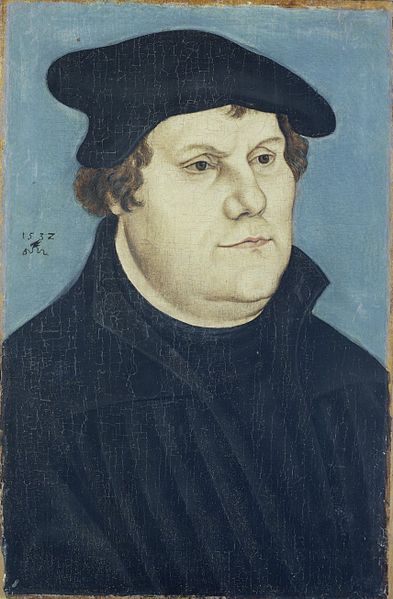
Portrait of Martin Luther (1532), by Lucas Cranach the Elder (1472-1553). [public domain / Wikimedia Commons]

***
(6-12-13)
* * * * *
I made the following statement in another paper of mine:
Another relevant factor to take into consideration is Luther’s ravings when he was an old, embittered, sick man (disgusted even with most Protestants, including his own party, let alone Catholics): often regarded as from 1543 till his death in 1546. Many — if not most — Luther scholars think they should be taken with a large grain of salt: certainly not literally all down the line. Some of these rantings are blatantly anti-Catholic in nature; other famous pontifications from this period are his jeremiads against the “Sacramentarians” (Protestants who denied the Real Presence in the Eucharist) and the Jews.
The context had to do with Luther’s view of the Catholic Church: whether it still retained Christianity or could be regarded as Christian in some sense. I documented his affirmative views in that paper, but I also noted that he said many negative things, and that as an old man his rhetoric was so ratcheted-up that it must be interpreted a bit differently, taking his illness and frustrations, etc. into consideration.
Now, that rankled and distressed James Swan, an anti-Catholic Reformed Protestant polemicist, to such an extent that he felt compelled to rail about it on his site, Boors All: as usual, neither naming me nor linking to the paper where I stated this, so that folks could examine context (even though he quotes me directly).
All of this is quite ironic and ridiculous, of course, since Swan rants constantly about how Catholic apologists care nothing about context. Moreover, if I dare to show up on his site to give the link to the latest paper of mine that he is obsessed with as of late, and dare to present another side, he deletes everything I put up. Can’t be too careful these days, in preserving cynical propaganda against criticism from those wascally wicked “Romanists”!! Here is what he wrote today:
Oh no with Luther, if he’s saying something Romanists don’t like which disagrees with their preconceived historical revisionism, Luther isn’t “developing.” Rather, he was such an erratic thinker that he contradicted himself month to month, and… to make it worse, he was “an old, embittered, sick man” so anything he said later in his life can’t be trusted. . . .
Luther did not consider the defenders of the papacy to be Christians, and even in 1520, in a restrained way he’s saying the same thing he did 20 years later when he was “an old, embittered, sick man.”
First of all, I didn’t say that we should entirely discount “anything” Luther wrote when he was old, sick, and embittered. I simply stated that it was “another relevant factor” and that (Protestant) Luther scholars “think they should be taken with a large grain of salt: certainly not literally all down the line.” Big wow! This is, unfortunately, classic Swan tactics: distort what the opponent says; don’t cite it in context; don’t provide a link for the same ends; don’t allow the person to respond on your site; then proceed to tear down the straw man that isn’t even the person’s actual opinion, in an effort to defame and belittle. I never claimed that later Luther statements were to be completely disregarded or dismissed. But for Swan (given to myths and fairy-tales, above all, whenever the detested, despised “Romanists” are involved), somehow I did do that.
I shall now proceed to back up everything I stated from Protestant biographers, and even from John Calvin and Heinrich Bullinger: contemporaries, fellow “reformers” and acquaintances of Luther (if only by letter).
Roland H. Bainton
[author of Here I Stand: A Life of Martin Luther (New York: Mentor Books, 1950): without question the most well-known and probably most renowned — certainly most influential — Luther biography in English; citations from the Internet Archive version, that can easily be searched by word; excerpts from chapter 22: “The Measure of the Man”]
The last sixteen years of Luther’s life, from the Augsburg Confession in 1530 to his death in 1546, are commonly treated more cursorily by biographers than the earlier period, if indeed they are not omitted altogether. There is a measure of justification for this comparative neglect because the last quarter of Luther’s life was neither determinative for his ideas nor crucial for his achievements. . . .
. . . the conflicts and the labors of the dramatic years had impaired his health and made him prematurely an irascible old man, petulant, peevish, unrestrained, and at times positively coarse. This is no doubt another reason why biographers prefer to be brief in dealing with this period. There are several incidents over which one would rather draw the veil, but precisely because they are so often exploited to his discredit they are not to be left unrecorded. The most notorious was his attitude toward the bigamy of the landgrave, Philip of Hesse. . . . Luther’s solution of the problem can be called only a pitiable subterfuge.
. . . The second development of those later years was a hardening toward sectaries, notably the Anabaptists.
[Bainton goes on to detail how Luther and Melanchthon adopted the view of capital punishment against them]
. . . Another dissenting group to attract Luther’s concern was the Jews.
[Bainton analyzes — with obvious disapproval, as in all these cases — the horrible and famous statements that Luther made against them, stating, “One could wish that Luther had died before ever this tract was written.”]
. . . The third group toward whom Luther became more bitter was the papists. His railing against the pope became perhaps the more vituperative because there was so little else that could be done. Another public appearance such as that at Worms, where an ampler confession could be made, was denied Luther, and the martyrdom which came to others also passed him by. He compensated by hurling vitriol Toward the very end of his life he issued an illustrated tract with outrageously vulgar cartoons. In all of this he was utterly unrestrained.
. . . However much the superb defiance of the earlier days might degenerate into the peevishness of one racked by disease, labor, and discouragement, yet a case of genuine need would always restore his sense of proportion and bring him into the breach. . . . Luther’s later years are, however, by no means to be written off as the sputterings of a dying flame. If in his polemical tracts he was at times savage and coarse, in the works which constitute the real marrow of his life’s endeavor he grew constantly in maturity and artistic creativity.
There you have it, folks. I outrageously (?) describe Luther as “an old, embittered, sick man . . . disgusted . . ..” Two of those words are undeniable (“old” and “sick”); so the only “controversial” things I said was that he was “embittered” and “disgusted” (with various shortcomings among Protestants and all of his other concerns).
Bainton, his leading biographer (and great admirer) describes him, on the other hand, as “prematurely an irascible old man, petulant, peevish, unrestrained, and at times positively coarse. . . . more bitter . . . [producer of] outrageously vulgar cartoons . . . utterly unrestrained. . . . the peevishness of one racked by disease, labor, and discouragement . . .”
I stated that his “last years” were roughly from 1543-1546. Bainton dates them from 1530 on: 13 years earlier than my given dates. He even notes how historians generally greatly underemphasize the last 16 years of Luther’s life. Thus, for Bainton (and Church historians generally), this is a far bigger factor in Luther analysis than in my view. Yet I am supposedly so “anti-Luther” and they are not.
Which is worse? I get trashed as a mere partisan of “Romanism” who cares nothing about historical fact, because I supposedly despise Luther (I don’t: I admire him in many ways but am also a strong critic of his theological errors and whoppers about the Catholic Church and catholics: none of it entailing hatred or calumny), while Bainton gets a pass for stating far worse than I did? That is James Swan’s Alice-in-Wonderland world, where facts are irrelevant and logic is a joke, and Catholics always wrong, wherever they disagree with Protestants: about anything whatever!
Martin Brecht
[author of Martin Luther: The Preservation of the Church: 1532-1546 (Minneapolis: Fortress Press, 1993, from the 1987 German original; translated by James L. Schaaf) ]
. . . recent presentations have treated the last two decades of his life more or less cursorily . . .
It is well known that the personality of the old Luther displayed great tensions, both in deed and thought, His shortness and rudeness with his friends, although perhaps explainable, continually caused offense. In the many tasks that he had to perform, it was unavoidable that he also repeatedly made serious errors both ion practice and in theory. (Foreword, pp. xi-xii)
In February [1545] he was engaged in writing Against the Roman Papacy, an Institution of the Devil . . . It was written in an extremely vehement manner, full of crude statements and vulgar expressions. He was probably unable, because of his declining abilities, to organize it in as well-balanced a manner as he planned. To this extent, it is not one of Luther’s best works, but its offensiveness and formalistic weaknesses need not divert us from seeing that once again he was dealing with essential matters in his conflict with the papacy. (p. 359)
Although the manifestation of Christianity in the papacy was a pollution to Luther — theologically, juridically, ecclesiastically, and politically — his reaction was still inappropriate, for, conditioned in his anger and eschatological bias, he could scarcely see any positive alternative in the controversy that concerned him until his end. (p. 367)
Mark U. Edwards, Jr.
[author of Luther’s Last Battles: Politics and Polemics, 1531-1546 (Ithaca, New York, and London: Cornell University Press, 1983) ]
It becomes difficult to escape the impression that Against Hanswurst[1541] represented an escalation in the coarseness and abusiveness of the controversy . . .Heinrich Bullinger of Zurich [fellow Protestant “reformer”] . . . did characterize it in a later letter to Bucer [another “reformer”] as ‘unbecoming, completely immodest, entirely scurrilous, and frivolous,’ but his evaluation remained private. (p. 154)
Here is an excerpt from Luther’s work, that Edwards cites on pp. 150-151:
You are both the real Hanswursts, bumpkins, louts, and boors . . . Both of you, father and son, are incorrigible, honorless, perjured rogues . . . But suppose what you will, so do it in your pants and hang it around your neck and make a sausage of it for yourself and gobble it down, you gross asses and sows!
Edwards:
The last major polemic of Luther’s life [Against the Papacy at Rome, Founded by the Devil (March 1545) ] . . . was intended to inform Protestants of the true horror of the papal antichrist and to discredit the council convened at Trent . . . Without question it is the most intentionally violent and vulgar writing to come from Luther’s pen. (p. 163)
The Introduction for this hideous tract, in Luther’s Works, the 55-volume American edition, describes it as “the most bitter of Luther’s polemic writings” (LW, 41, 259-290)
Preserved Smith
During his later years Luther’s polemic never flagged. His last book, Against the Papacy of Rome, founded by the Devil, surpassed Cicero and the humanists and all that had ever been known in the virulence of its invective . . . Of course such lack of restraint largely defeated its own ends. The Swiss Reformer Bullinger called it “amazingly violent,” and a book than which he “had never read anything more savage or imprudent.” Our judgment of it must be tempered by the consideration that Luther suffered in his last years from a nervous malady and from other painful diseases, due partly to overwork and lack of exercise, partly to the quantities of alcohol he imbibed, though he never became intoxicated.
(Reformation in Europe, Book I of a two-volume edition of The Age of Reformation, New York: Collier Books, 1962; originally 1920, 102)
John Calvin
Writing to Luther’s right hand man Philip Melanchthon, Calvin stated:
Your Pericles [Luther] allows himself to be carried beyond all due bounds with his love of thunder . . .
But, you will say, his disposition is vehement, and his impetuosity is ungovernable; — as if that very vehemence did not break forth with all the greater violence when all shew themselves alike indulgent to him, and allow him to have his way, unquestioned. If this specimen of overbearing tyranny has sprung forth already as the early blossom in the springtide of a reviving Church, what must we expect in a short time, when affairs have fallen into a far worse condition?
(28 June 1545; Letter CXXXVI in Selected Works of John Calvin: Tracts and Letters, edited by Henry Beveridge and Jules Bonnet, Volume 4: Letters, Part 1: 1528-1545, translated by David Constable, Philadelphia: Presbyterian Board of Publication, 1858; reprinted by Baker Book House [Grand Rapids, Michigan], 1983, 466-467)
He was even more critical in a letter to Bullinger (the “reformers” had a knack of griping about each other in such letters):
I hear that Luther has at length broken forth in fierce invective, not so much against you as against the whole of us [referring to Luther’s Short Confession Concerning the Supper] . . .
But while he is endued with rare and excellent virtues, he labours at the same time under serious faults. Would that he had rather studied to curb this restless, uneasy temperament which is so apt to boil over in every direction. I wish, moreover, that he had always bestowed the fruits of that vehemence of natural temperament upon the enemies of the truth, and that he had not flashed his lightning sometimes also upon the servants of the Lord. Would that he had been more observant and careful in the acknowledgment of his own vices. Flatterers have done him much mischief, since he is naturally too prone to be over-indulgent to himself. It is our part, however, so to reprove whatsoever evil qualities may beset him, as that we may make some allowance for him at the same time on the score of these remarkable endowments with which he has been gifted.
(25 November 1544; Letter CXXII, ibid., 432-433)
See lots more Luther analyses on my Martin Luther web page.
*****
Previous Post
June 12, 2013
Martin Luther: Catholicism is Christian
Next Post

July 2, 2013 New Testament on Sanctification by Our Own Actions
Browse Our Archives
Select a Category & Last Things About Me Anti-Catholicism Atheism & Agnosticism Baptism and Sacramentalism Bible and Tradition Blessed Virgin Mary Books by Dave Armstrong C. S. Lewis Calvinism & General Protestantism Catholic Apologetics Catholic Apologists Catholic conversion Catholic converts Christmas Church (Ecclesiology) Church History Conversion and Converts Development of Doctrine Eastern Orthodoxy Ecumenism & Christian Unity Eucharist & Liturgy Fathers of the Church French Translations G. K. Chesterton Hell Hell & Satan Hell & Satan & Last Things Heresies & Comparative Religion Holistic Health Inquisition & Crusades & Scandals James White Jews & Judaism & Old Testament John Calvin John Henry Newman Liberal / Modernist Theology Life Issues Literary Resume Lutheranism Mariology Martin Luther Music Orthodoxy Papacy & Infallibility Personal Page Philosophy & Science Political & Ethical & Moral Issues Protestant Persecution & Intolerance Protestantism Purgatory Purgatory & Penance Romantic & Imaginative Theology Saints & Purgatory & Penance Salvation Salvation & Justification Satan & Last Things Sexuality and Gender Issues Spanish Translations Traditionalism vs. Radical Catholic Reactionaries Traducciones al español / tradução para português Trinitarianism & Christology Uncategorized Videos
Select a Month October 2026 September 2026 August 2026 July 2026 June 2026 May 2026 April 2026 March 2026 February 2026 January 2026 December 2025 November 2025 October 2025 September 2025 August 2025 July 2025 June 2025 May 2025 April 2025 March 2025 February 2025 January 2025 December 2024 November 2024 October 2024 September 2024 August 2024 July 2024 June 2024 May 2024 April 2024 March 2024 February 2024 January 2024 December 2023 November 2023 October 2023 September 2023 August 2023 July 2023 June 2023 May 2023 April 2023 March 2023 February 2023 January 2023 December 2022 November 2022 October 2022 September 2022 August 2022 July 2022 June 2022 May 2022 April 2022 March 2022 February 2022 January 2022 December 2021 November 2021 October 2021 September 2021 August 2021 July 2021 June 2021 May 2021 April 2021 March 2021 February 2021 January 2021 December 2020 November 2020 October 2020 September 2020 August 2020 July 2020 June 2020 May 2020 April 2020 March 2020 February 2020 January 2020 December 2019 November 2019 October 2019 September 2019 August 2019 July 2019 June 2019 May 2019 April 2019 March 2019 February 2019 January 2019 December 2018 November 2018 October 2018 September 2018 August 2018 July 2018 June 2018 May 2018 April 2018 March 2018 February 2018 January 2018 December 2017 November 2017 October 2017 September 2017 August 2017 July 2017 June 2017 May 2017 April 2017 March 2017 February 2017 January 2017 December 2016 November 2016 October 2016 September 2016 August 2016 July 2016 June 2016 May 2016 April 2016 March 2016 February 2016 January 2016 December 2015 November 2015 October 2015 September 2015 August 2015 July 2015 June 2015 May 2015 April 2015 March 2015 February 2015 January 2015 December 2014 November 2014 October 2014 September 2014 August 2014 July 2014 June 2014 April 2014 March 2014 February 2014 January 2014 December 2013 November 2013 October 2013 September 2013 August 2013 July 2013 June 2013 April 2013 March 2013 February 2013 January 2013 December 2012 November 2012 October 2012 September 2012 August 2012 July 2012 June 2012 May 2012 April 2012 March 2012 February 2012 January 2012 December 2011 November 2011 October 2011 September 2011 August 2011 July 2011 June 2011 April 2011 March 2011 February 2011 October 2010 September 2010 August 2010 July 2010 April 2010 March 2010 December 2009 October 2009 August 2009 July 2009 June 2009 May 2009 March 2009 February 2009 October 2008 September 2008 April 2008 March 2008 February 2008 January 2008 December 2007 November 2007 October 2007 May 2007 March 2007 February 2007 January 2007 November 2006 October 2006 September 2006 August 2006 July 2006 June 2006 May 2006 April 2006 March 2006 February 2006 October 2005 June 2005 April 2005 February 2005 July 2004 May 2004 April 2004
Follow Us!
TAKE THE
Religious Wisdom Quiz
What city did God command Jonah to preach to?
Select your answer to see how you score.
Babylon Jericho Nineveh Tyre
Books by This Author Books by Dave Armstrong
Related posts from Biblical Evidence for Catholicism

Book: Martin Luther: Dissenter and Defender
Biblical Evidence for Catholicism
Luther’s Anfechtung vs. Paul’s Spiritual Confidence
Biblical Evidence for Catholicism
"Martin Luther: Dissenter & Defender": Introduction
Biblical Evidence for Catholicism

Luther & "Faith Alone": An In-Depth Examination
Biblical Evidence for Catholicism
TRENDING AT PATHEOS Catholic

The Sermon on the Mount, Part I: Matthew...
The Sermon on the Mount, Part I (Matthew 4:12-5:12) St. Matthew moves...

What's up from Crossway: Reviewing some of their latest A few weeks...

Janie Learns the Way of the Cross: A...
Teaching children about Jesus' Passion can be challenging. Many parents and educators...

Looking For Good Catholic Writing - October 2026
He alone extends the heavens, and he walks upon the waves of...

In "Irreplaceable," our book on vocation and technology, Trevor Sutton and I...

I was strolling through the top floor of the brand new Parthenon...
view all Catholic blogs
Ad-Free & Subscriber Log-In Subscription Support
- About Us
- 2026 Calendar
- Videos
- Podcasts
- Library of World Religions
- Faith In Media Tracker
- Advertise With Us
- Write for Us
- Privacy Policy
- Terms of Service
- Do Not Sell My Data
- Contact Us
- Radiant Digital
- Manage Newsletter Subscriptions
- Unsubscribe From Notifications
- Sitemap
Copyright 2008-2026, Patheos. All rights reserved.
Subscription Support Ad-Free & Subscriber Log-In
Follow Patheos