
BuddhistCatholicContemplativeEvangelicalGeneral ChristianHinduJewishLatter-day SaintMuslimNew VisionsProgressive Christian
Beliefs
- Buddhist
- Catholic
- Contemplative
- Evangelical
- General Christian
- Hindu
- Jewish
- Latter-day Saint
- More Voices
- Muslim
- New Visions
- Pagan
- Progressive Christian
Topics
- Religion News
- Food and Religion
- Sports and Religion
- Religious Art
- Religious Music and Entertainment
- Religious Events
- History and Religion
- Style and Religion
- Politics and Religion
- Women in Religion
- Recreation Outdoors and Religion
- Business Finance and Religion
- Careers Workplace and Religion
- Education and Religion
- Family Parenting and Religion
- Health Fitness and Religion
- Home and Religion
- Relationships and Religion
- Technology and Religion
- Travel and Religion
Columnists
- Buddhist Columnists
- Business Finance and Religion Columnists
- Careers Workplace and Religion Columnists
- Catholic Columnists
- Contemplative Columnists
- Education and Religion Columnists
- Evangelists Columnists
- Family Parenting and Religion Columnists
- General Christian Columnists
- Health Fitness and Religion Columnists
- Hindu Columnists
- History and Religion Columnists
- Home and Religion Columnists
- Jewish Columnists
- More Voices Columnists
- Latter Day Columnists
- Muslim Columnists
- New Visions Columnists
- Nonreligious Columnists
- Pagan Columnists
- Politics and Religion Columnists
- Progressive Columnists
- Recreation Outdoors and Religion Columnists
- Relationships and Religion Columnists
- Religion News Columnists
- Religious Art Columnists
- Religious Events Columnists
- Religious Music and Entertainment Columnists
- Sports and Religion Columnists
- Style and Religion Columnists
- Technology and Religion Columnists
- Travel and Religion Columnists
- Women in Religion Columnists
Resource Library
- 2026 Calendar
- Library of World Religions
- The 100 Most Holy Places on Earth
- Patheos Answers
- Podcasts
- Videos
- Faith Leaders Database
- Anglican Episcopalian
- Bahai
- Baptist
- Buddhism
- Christianity
- Confucianism
- Eastern Orthodoxy
- Hinduism
- Holiness and Pentecostal
- ISKCON
- Islam
- Judaism
- Lutheran
- Methodist
- The Church of Jesus Christ of Latter-day Saints
- New Age
- Paganism
- Presbytarian and Reformed
- Protestantism
- Religion Behind the Scenes
- Roman Catholic
- Scientology
- Shia Islam
- Sikhism
- Sufism
- Sunni Islam
- Taoism
- Zen
- See all religions
Research Tools
 Ad-Free & Subscriber Log-In Subscription Support
Ad-Free & Subscriber Log-In Subscription Support
Follow Patheos 

- Trending:
- Forgiveness
- |
- Marriage
- |
- Consciousness
- |
- Death Penalty
- |
- Election
- |
- Halloween

-
About
-
Catholic Apologetics
-
Church History
-
Great Apologists
-
Christian Worldview
-
Protestantism & Misc.
- Home
- Catholic
- History and Religion
- My Interview Notes for “Meet the Author” (Ken Huck)
My Interview Notes for “Meet the Author” (Ken Huck)
Last updated on: May 28, 2017 at 5:21 pm by Dave Armstrong
My Interview Notes for “Meet the Author” (Ken Huck) 2017-05-28T17:21:28-04:00 Dave Armstrong
Patheos Explore the world's faith through different perspectives on religion and spirituality! Patheos has the views of the prevalent religions and spiritualities of the world.
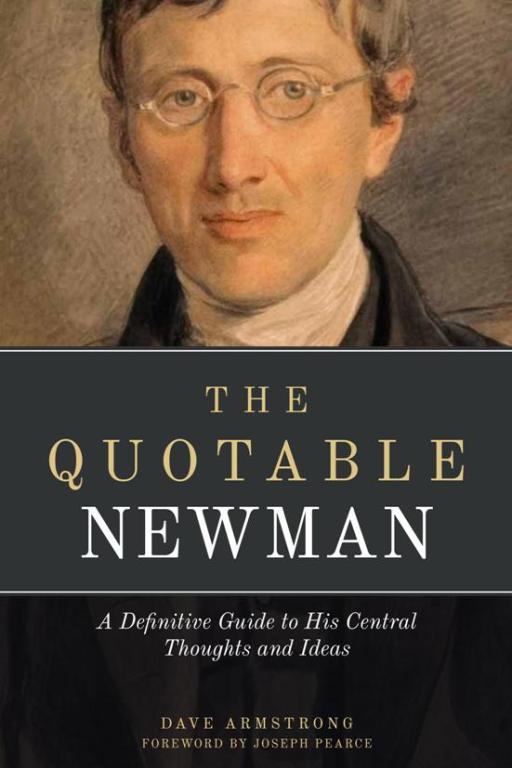
. . . Re: The Quotable Newman and The Catholic Verses
(January 2013)
***
I was interviewed for about 45 minutes on 1-17-13. We talked about two of my books, published by Sophia Institute Press: The Quotable Newman (Oct. 2012) and The Catholic Verses (2004). Past guest authors on this show include: David B. Currie, Amy Welborn, Marcus Grodi, Dr. Diane Moczar, Teresa Tomeo, Dr. Paul Thigpen, Kevin Lowry, Rod Bennett, Brandon Vogt, Bruce Sullivan, and many others.
***
You can hear the interview in an audio podcast file on the show’s website (Radio Maria).
Here is the specific link for the audio file:
* * * [ Audio Link ] * * *
Ken had sent me interview questions beforehand, allowing me to prepare extensive notes. As it turned out, the interview covered only about 60-70% of the material I had prepared (replies regarding The Catholic Verses, particularly, were greatly curtailed, due to time pressure). Thus, my notes have some usefulness on their own. We also talked about a few matters that were not included at all in the prior questions received.
The interview questions will be in blue.
* * * * *
Could you give the “five minute version” of your conversion?
I was very happy as an evangelical Protestant. I underwent a conversion to Christ in 1977 after being very nominal in my Methodist faith as a child and young teenager. I was an apologist on college campuses in the late 80s and had done a lot of street evangelism also. In the late 80s I became involved in Operation Rescue, where we would block the doors of abortion clinics in order to save the lives of babies about to be killed.
In that movement I met many committed, serious Catholics (I never really had, before), and I was most curious about the Catholic prohibition of contraception. I didn’t get that. I wasn’t anti-Catholic, but I thought evangelicalism was sort of the cream of the crop of Christianity, and Catholicism had some things wrong.
In early 1990 I began ecumenical discussions in my home and invited two Catholics I had met. I also met Fr. John Hardon (a major Catholic author and catechist, and saintly man — canonization), and attended his informal catechetical meetings at the University of Detroit. After lengthy discussions, I became convinced on the contraception issue (after learning that the Anglicans were the first Christians to change the prohibition, in 1930). I thought Catholicism had the best moral theology of any Christian group.
But my big objection was infallibility, so I fought about that tooth and nail (citing liberal dissidents like Hans Küng and Joseph Döllinger). My friend suggested Cardinal Newman’s Essay on the Development of Christian Doctrine and that pulverized all my objections. I also studied the Protestant Revolt (or what’s called the “Reformation”) from a Catholic perspective, for the first time. So it was moral theology and history of doctrine that were the main causes. By October 1990 and many discussions and books read, I was convinced that Catholicism was the fullness of the Christian faith: the Church. [see conversion story from Surprised by Truth and a lengthier, more technical published version, emphasizing development]
Your bio says that you are a full time Catholic apologist. I know the first time I heard the term apologist, I thought “What is he apologizing for?” What is an apologist?
“Apologist” means “defender” — so a Catholic apologist defends the Catholic faith by reason, and from the Bible (my specialty). The original meaning of the word “apologist” comes from Plato’s Apology (apologia in Greek), which was an account of the ancient philosopher Socrates defending himself against trumped-up charges, at his own trial. The same word is also in the Bible; e.g., 1 Peter 3:15, “stand ready to make a defense . . . ” So that was the original, classical meaning. Then in modern usage it became synonymous with saying we are sorry; but it still implies some sort of explanation or defense.
Your most recent book, The Quotable Newman, is of course, about the writing of Blessed John Henry Cardinal Newman. Can you give the listeners a sketch of his life?
Newman lived from 1801-1890. He first became famous as an Anglican preacher and writer in the 1830s at Oxford, and was and is considered one of the greatest preachers in English and one of the very greatest writers. Parochial and Plain Sermons collects in eight volumes, his preaching from this time. I include a lot of that material in my book; it’s very good. He was also interested in reforming Anglicanism, and reviving more traditional “Catholic” aspects. His group of reformers was called the Oxford Movement or Tractarianism, after a series of pamphlets called Tracts for the Times. Yet he was still basically anti-Catholic.
He loved history and wrote about it; particularly about the Arian heresy of he 4th century. The Arians were like present-day Jehovah’s Witnesses: they thought Jesus was created, and deny that He is God. Eventually he began to see that in the early Church Rome had always stood firm, and that the analogy to Anglicans was semi-Arianism: sort of in the middle between orthodoxy and heresy. Some historical questions of this sort eventually caused him to start questioning whether Anglicanism was the Church. Around 1843 he began studying the issue of development of doctrine: how doctrines are better understood and explained in more detail as time goes on. That was the issue that caused him to argue himself into Catholicism, and he was received in 1845, to the great shock of the whole nation.
What part did Blessed Newman play in your own conversion experience?
As I mentioned, it was his Essay on Development that explained to me how the Catholic Church could be infallible when it taught binding doctrine. Because I loved history, as Newman did, when I read that, it explained in a brilliant way how one could go from the simplicity of the early Church to the complexity of Catholic doctrine as it is today. The doctrines developed. That was the key to my conversion, because it explained the history of doctrine in a way that was perfectly plausible, and also demonstrated the infallibility of the Church throughout history. This book, then, is sort of my way of repaying the huge debt I owe to Cardinal Newman for my own conversion.
Why does Blessed John Cardinal Newman continue to be significant to Catholics as well as Christians from other faith traditions?
He’s very important in many ways. His early sermons and writings as an Anglican are excellent, and continue to be admired by Anglicans. His conversion is said to be one of the more notable ones since St. Augustine. In the 1860s he was falsely accused of misrepresenting his story and playing fast and loose with the truth, and decided to write an explanation of his life and conversion, called the Apologia pro vita Sua. He won over the English public as a result and was very highly respected thereafter.
Just how extensive are the writings of Blessed John Henry Cardinal Newman?
He wrote about 50 books on many different topics. There is also a multi-volume collection now of his correspondence. I have a couple complete shelves (about ten feet in length) of his own works in my library.
Did you read everything?
I have a technique that I call “heavily skimming”: sort of a cross between speed-reading and skimming a book. I went through virtually all of his books about theology and several volumes of correspondence (that I could obtain); also some biographical works. The number of sources I list in my book adds up to 51 books altogether. I think it was the most enjoyable reading I’ve ever done in my life. Pure joy!
Tell us about how the book is organized?
It has 123 topics, with the focus overwhelmingly on theology. They’re arranged alphabetically, then within each section, the citations are arranged chronologically, so the reader can see how his thought developed through the years. This is especially important in the section on his conversion, which runs 34 pages in the book. I think this may be one of the most unique or useful parts of the book: to follow that whole train of thought: how he changed his mind. It’s actually more so, what is called a “Reader” — because Newman writes in very long sentences. So the excerpts are generally longer, as compared to my collection of Chesterton quotes, where each was one sentence long.
In your book, some of the sections are just a few sentences, and on other topics you have extensive quotes. Tell us about some of the areas of theology he is most famous for addressing?
In addition to his historical works and Essay on Development, he wrote about education (The Idea of a University) and is very influential there; also a very sophisticated and thought-provoking treatment of philosophy of religion (a book called Essay on the Grammar of Assent). He wrote importantly about the religious conscience, and was a great advocate of more lay participation: anticipating Vatican II by over a hundred years. He’s a fabulous thinker, who would stimulate anyone who read his works.
The book has 12 pages on Anglicanism, 12 on apologetics, 20 pages of quotes on development of doctrine, nine on theological liberalism, 34 on various aspects of Mariology, 18 on papal infallibility, nine on the Bible. Those are some of the more extensive topics.
If I could read just one quote (from the Essay on Development):
. . . whatever history teaches, whatever it omits, whatever it exaggerates or extenuates, whatever it says and unsays, at least the Christianity of history is not Protestantism. If ever there were a safe truth, it is this. . . . To be deep in history is to cease to be a Protestant.
The last clause is probably the single most famous quotation, that is often seen online. And that literally happened in my life. I read his book, and it was over. I felt that if I were true to Church history, I had to become a Catholic.
* * * * *
The Catholic Verses – 95 Bible Passages that Confound Protestants
You had a little fun with the subtitle. Why 95 Bible passages?
That goes back to the 95 Theses of Luther, that he tacked up on the door of the Church, to begin the so-called “Reformation.” So that was my way — in my usual provocative manner — of sort of being “in your face” to my Protestant friends: “here’s 95 Bible passages!” I actually discussed the subtitle with my editor; originally it had “ignore” in it, I think, but I argued that that was too strong, and we used “confound” — which is more accurate, I think. Titles are very important.
You cover 16 common topics that tend to separate Catholics from other Christian traditions. For example, chapter one is on the nature of “the Church” and you start with the verse 1 Timothy 3:15, that describes the Church as “the pillar and bulwark of the truth”. How do Catholics look at this verse compared to Protestants?
The way I contended in the book, and how Catholics generally would look at it, is as a proof of infallibility or the strong authority of the Church. I wrote a lengthy paper about this, separately from the book. If we analyze it logically, if the Church is the very “pillar” or support of truth, then obviously, this is profound authority. Most Protestants don’t view it that way. But there it is: right in the Bible. I note that John Calvin uses the verse to run down the Catholic Church, since he thought it contained so much error, and then argued for an invisible church as an alternative. But that doesn’t fly. It’s eisegesis: reading things into the Bible, rather than exegesis: reading things out of the Bible. Paul is talking about an institutional, historical Church that one can point to and identify.
There are two major pillars of Protestant theology – sola scriptura and sola fide. Tell the listeners about what these terms mean?
These are Latin terms, of course. Sola Scriptura (meaning, “Bible alone” or “Bible only”) is the belief that the Bible is the only infallible authority in Christianity. It doesn’t mean “only authority, period.” We must get our definitions accurate when critiquing Protestantism. It denies the infallibility of Church and tradition. But of course, the Bible has to be interpreted: that’s the catch. I’ve written two books just on this topic. My book, 100 Biblical Arguments Against Sola Scriptura was published by Catholic Answers last May.
Sola fide means, literally, “faith alone”: the Protestant belief that works are technically separate from salvation or justification, and placed in a separate category of sanctification. We’re saved by grace through faith alone, in their view. In practice, “faith alone” is usually used by Protestants in the sense of “saved by grace alone” (or, sola gratia). We entirely agree with them on that, but many Protestants don’t realize this and accuse us of believing in salvation by works, or what is called the heresy of Pelagianism, that St. Augustine fought so vigorously.
What are some of verses that a Catholic would point to, to make the case that sola scriptura isn’t valid or biblical?
One of my favorites, that I also have in the first chapter, is Acts 15, about the Jerusalem Council. The Council made a decree about how Christians should interpret aspects of the Mosaic law, declaring, “it has seemed good to the Holy Spirit and us” (Acts 15:28). This is precisely how Catholics view ecumenical councils: led by the Holy Spirit. In Acts 16:4, we learn that Paul went around declaring the decision, “for observance”.
In chapter three, I mention the Ethiopian eunuch (Acts 8:27-31), who said, “how can I [understand the Scripture] unless someone guides me?” Also, there is Nehemiah 8:8: “they read from the book . . . and they gave the sense, so that the people understood the reading.” I cite Paul’s casual assumption that tradition is binding on Christians: he says: “maintain the traditions” (1 Cor 11:2), “hold to the traditions” (2 Thess 2:15), to keep away from those who differ from the tradition that he gave to them (2 Thess 3:6).
What about sola fide?
An obvious one, that I presented was James 2:24: “a man is justified by works and not by faith alone.” That pretty much sums it up! He’s not proclaiming salvation by works, which is clear in context, but he’s denying faith alone: separating the works entirely from it. I mention the rich young rule (Luke 18), where the man asked Jesus how he could be saved. Jesus mentioned many of the Ten Commandments and he said that he observed those. Then he told him to sell everything he had and give it to the poor. Not a word about “believe in Me by faith alone!”
There is Philippians 2:12-13: “work out your own salvation; for God is at work in you . . .” Paul makes it a joint effort. God always has to give the necessary grace, but we work with Him; so it says in 1 Corinthians 3:9: “we are God’s fellow workers” and in 2 Corinthians 6:1: “working together with him”. Paul puts it together in 1 Corinthians 15:10: “I worked harder than any of them, though it was not I, but the grace of God which is with me.” Catholics, following Paul, refuse to separate the works that flow from grace and faith. They are part of the process of salvation; but always caused by grace.
I also write in Chapter Six about how virtually all passages about the last judgment discuss works and not faith at all. I have found 50 of these actually (bit not all those are in the book). This is very striking, and not what one would expect to find, by Protestant assumptions.
What would a Protestant say about the part “good works” play in our salvation? What would a Catholic say?
Protestants teach that good works are necessary in the Christian life, as the manifestation of an authentic, genuine faith, but they separate them from salvation altogether, putting grace and faith under the category of justification and works under the category of sanctification: technically separated from justification and salvation. Catholics say that faith and works are two sides of the same coin, as James makes very clear, and also Paul, in many passages, such as the examples I just gave. We don’t separate justification and sanctification like Protestants do.
What are some of the other verses that “confound Protestants”?
My favorite is 2 Timothy 1:16-18, where Paul prays for a dead man, Onesiphorus. He says, “May the Lord grant mercy to the household of Onesiphorus . . . may the Lord grant him to find mercy from the Lord on that Day . . .”
It’s fascinating to see what Protestants do with that, because they are taught that prayer for the dead is impermissible, and makes no sense. I note how some Protestants accept it, citing C. S. Lewis. Lutherans pray for the dead. But for Calvinists and other Protestants, it’s a big no-no.
So I show what some famous historic Protestant commentators do with this. They had to either deny that Onesipherous was dead, or that Paul was praying. If they denied that he was dead, then they admitted that Paul prayed. If they thought he was dead, then they would play games with Paul’s prayer, saying it was a “wish” or a “pious wish.” This is what is called eisegesis, or reading into Scripture.
Another great favorite of mine is 1 Corinthians 15:29, that refers to “being baptized on behalf of the dead.” I call it “the most ‘un-Protestant’ verse in the Bible.” Protestant commentators literally have no clue what to do with this, and it’s fairly mysterious for Catholics, too. I offer an interpretation that St. Francis de Sales gave, where he argued that “baptism” here was used metaphorically, in the sense of affliction and penance on behalf of others (“baptism of fire,” etc.). He thinks the passage is referring to praying and fasting and doing penance for the dead, since there seems to be a close connection of this passage to 2 Maccabees 12:44: “it is superfluous and vain to pray for the dead if the dead rise not again.”
Very “Catholic” stuff!
Tell us a little about a couple of your other books that our listeners could find useful for helping them in their faith.
A Biblical Defense of Catholicism (my first book, written in 1996) is probably my most well-known. It is the most “catechetical” of my books, but it’s still apologetics. The One-Minute Apologist is sort of a shorter, capsulized version of the same thing: biblical support for Catholic doctrines. Bible Proofs for Catholic Truths simply collects Scripture passages on many distinctive aspects of the Catholic faith. It’s sort of a Catholic version of Nave’s Topical Bible: a reference source I have used for years. I have 35 books in all, on all the major aspects of Catholic theology and apologetics. If you go to my blog, on the very top of the sidebar is an icon link to my main books page, that has all my books and direct links to various ways to buy them: Amazon Kindle, pdf, ePub, Nook Book, iTunes, and paperback.
What are you working on now?
I’m doing two more quotations books: The Quotable Summa Theologica and The Quotable Aquinas. I’m enjoying it very much! This is sort of a second specialty of mine now: quotations books. I’ve also done collections of John Wesley, Chesterton, the Church fathers, St. Augustine, and great historic apologists. These are easy because it’s mostly cut-and-paste rather than typing.
Your website is massive; what can listeners find on your site?
It has over 50 separate web pages, and nearly 2,500 posts. I deal with all the major areas of Catholic theology, have pages about C. S. Lewis, Chesterton, Newman, ethical and life issues, conversion, romantic and imaginative theology, anti-Catholicism; Calvinism and Lutheranism, Luther and Calvin, philosophy, science, apologetic techniques and methods, atheism; you name it! I’ve been working continuously on these writings since I started a website in February 1997 and have been a full-time apologist and author for over 11 years now, so I need to sell books to make a living!
I also have Facebook and Twitter pages.
* * * * *
Previous Post
January 8, 2013
Books by Dave Armstrong: "The Quotable Summa Theologica"
Next Post
February 8, 2013 Am I a Psychotic Madman? (James Swan Sez Yes)
Browse Our Archives
Select a Category & Last Things About Me Anti-Catholicism Atheism & Agnosticism Baptism and Sacramentalism Bible and Tradition Blessed Virgin Mary Books by Dave Armstrong C. S. Lewis Calvinism & General Protestantism Catholic Apologetics Catholic Apologists Catholic conversion Catholic converts Christmas Church (Ecclesiology) Church History Conversion and Converts Development of Doctrine Eastern Orthodoxy Ecumenism & Christian Unity Eucharist & Liturgy Fathers of the Church French Translations G. K. Chesterton Hell Hell & Satan Hell & Satan & Last Things Heresies & Comparative Religion Holistic Health Inquisition & Crusades & Scandals James White Jews & Judaism & Old Testament John Calvin John Henry Newman Liberal / Modernist Theology Life Issues Literary Resume Lutheranism Mariology Martin Luther Music Orthodoxy Papacy & Infallibility Personal Page Philosophy & Science Political & Ethical & Moral Issues Protestant Persecution & Intolerance Protestantism Purgatory Purgatory & Penance Romantic & Imaginative Theology Saints & Purgatory & Penance Salvation Salvation & Justification Satan & Last Things Sexuality and Gender Issues Spanish Translations Traditionalism vs. Radical Catholic Reactionaries Traducciones al español / tradução para português Trinitarianism & Christology Uncategorized Videos
Select a Month October 2026 September 2026 August 2026 July 2026 June 2026 May 2026 April 2026 March 2026 February 2026 January 2026 December 2025 November 2025 October 2025 September 2025 August 2025 July 2025 June 2025 May 2025 April 2025 March 2025 February 2025 January 2025 December 2024 November 2024 October 2024 September 2024 August 2024 July 2024 June 2024 May 2024 April 2024 March 2024 February 2024 January 2024 December 2023 November 2023 October 2023 September 2023 August 2023 July 2023 June 2023 May 2023 April 2023 March 2023 February 2023 January 2023 December 2022 November 2022 October 2022 September 2022 August 2022 July 2022 June 2022 May 2022 April 2022 March 2022 February 2022 January 2022 December 2021 November 2021 October 2021 September 2021 August 2021 July 2021 June 2021 May 2021 April 2021 March 2021 February 2021 January 2021 December 2020 November 2020 October 2020 September 2020 August 2020 July 2020 June 2020 May 2020 April 2020 March 2020 February 2020 January 2020 December 2019 November 2019 October 2019 September 2019 August 2019 July 2019 June 2019 May 2019 April 2019 March 2019 February 2019 January 2019 December 2018 November 2018 October 2018 September 2018 August 2018 July 2018 June 2018 May 2018 April 2018 March 2018 February 2018 January 2018 December 2017 November 2017 October 2017 September 2017 August 2017 July 2017 June 2017 May 2017 April 2017 March 2017 February 2017 January 2017 December 2016 November 2016 October 2016 September 2016 August 2016 July 2016 June 2016 May 2016 April 2016 March 2016 February 2016 January 2016 December 2015 November 2015 October 2015 September 2015 August 2015 July 2015 June 2015 May 2015 April 2015 March 2015 February 2015 January 2015 December 2014 November 2014 October 2014 September 2014 August 2014 July 2014 June 2014 April 2014 March 2014 February 2014 January 2014 December 2013 November 2013 October 2013 September 2013 August 2013 July 2013 June 2013 April 2013 March 2013 February 2013 January 2013 December 2012 November 2012 October 2012 September 2012 August 2012 July 2012 June 2012 May 2012 April 2012 March 2012 February 2012 January 2012 December 2011 November 2011 October 2011 September 2011 August 2011 July 2011 June 2011 April 2011 March 2011 February 2011 October 2010 September 2010 August 2010 July 2010 April 2010 March 2010 December 2009 October 2009 August 2009 July 2009 June 2009 May 2009 March 2009 February 2009 October 2008 September 2008 April 2008 March 2008 February 2008 January 2008 December 2007 November 2007 October 2007 May 2007 March 2007 February 2007 January 2007 November 2006 October 2006 September 2006 August 2006 July 2006 June 2006 May 2006 April 2006 March 2006 February 2006 October 2005 June 2005 April 2005 February 2005 July 2004 May 2004 April 2004
Follow Us!
TAKE THE
Religious Wisdom Quiz
Which king rebuilt the high places Solomon had built for foreign gods?
Select your answer to see how you score.
Josiah Jehu Manasseh Hezekiah
Books by This Author Books by Dave Armstrong
Related posts from Biblical Evidence for Catholicism

Book: Martin Luther: Dissenter and Defender
Biblical Evidence for Catholicism
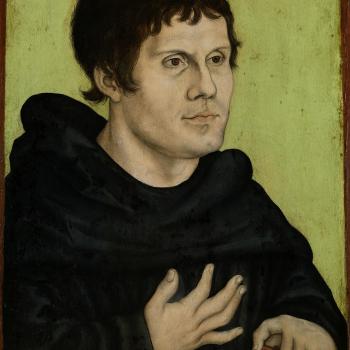
"Martin Luther: Dissenter & Defender": Introduction
Biblical Evidence for Catholicism

Why Wes Huff (and Everyone) Should Be Catholic
Biblical Evidence for Catholicism
Introducing "Faith Alone: The 'Theological Novum'”
Biblical Evidence for Catholicism
TRENDING AT PATHEOS Catholic

The Sermon on the Mount, Part I: Matthew...
The Sermon on the Mount, Part I (Matthew 4:12-5:12) St. Matthew moves...

What's up from Crossway: Reviewing some of their latest A few weeks...

Janie Learns the Way of the Cross: A...
Teaching children about Jesus' Passion can be challenging. Many parents and educators...

Looking For Good Catholic Writing - October 2026
He alone extends the heavens, and he walks upon the waves of...

In "Irreplaceable," our book on vocation and technology, Trevor Sutton and I...

I was strolling through the top floor of the brand new Parthenon...
view all Catholic blogs
Ad-Free & Subscriber Log-In Subscription Support
- About Us
- 2026 Calendar
- Videos
- Podcasts
- Library of World Religions
- Faith In Media Tracker
- Advertise With Us
- Write for Us
- Privacy Policy
- Terms of Service
- Do Not Sell My Data
- Contact Us
- Radiant Digital
- Manage Newsletter Subscriptions
- Unsubscribe From Notifications
- Sitemap
Copyright 2008-2026, Patheos. All rights reserved.
Subscription Support Ad-Free & Subscriber Log-In
Follow Patheos