
BuddhistCatholicContemplativeEvangelicalGeneral ChristianHinduJewishLatter-day SaintMuslimNew VisionsProgressive Christian
Beliefs
- Buddhist
- Catholic
- Contemplative
- Evangelical
- General Christian
- Hindu
- Jewish
- Latter-day Saint
- More Voices
- Muslim
- New Visions
- Pagan
- Progressive Christian
Topics
- Religion News
- Food and Religion
- Sports and Religion
- Religious Art
- Religious Music and Entertainment
- Religious Events
- History and Religion
- Style and Religion
- Politics and Religion
- Women in Religion
- Recreation Outdoors and Religion
- Business Finance and Religion
- Careers Workplace and Religion
- Education and Religion
- Family Parenting and Religion
- Health Fitness and Religion
- Home and Religion
- Relationships and Religion
- Technology and Religion
- Travel and Religion
Columnists
- Buddhist Columnists
- Business Finance and Religion Columnists
- Careers Workplace and Religion Columnists
- Catholic Columnists
- Contemplative Columnists
- Education and Religion Columnists
- Evangelists Columnists
- Family Parenting and Religion Columnists
- General Christian Columnists
- Health Fitness and Religion Columnists
- Hindu Columnists
- History and Religion Columnists
- Home and Religion Columnists
- Jewish Columnists
- More Voices Columnists
- Latter Day Columnists
- Muslim Columnists
- New Visions Columnists
- Nonreligious Columnists
- Pagan Columnists
- Politics and Religion Columnists
- Progressive Columnists
- Recreation Outdoors and Religion Columnists
- Relationships and Religion Columnists
- Religion News Columnists
- Religious Art Columnists
- Religious Events Columnists
- Religious Music and Entertainment Columnists
- Sports and Religion Columnists
- Style and Religion Columnists
- Technology and Religion Columnists
- Travel and Religion Columnists
- Women in Religion Columnists
Resource Library
- 2026 Calendar
- Library of World Religions
- The 100 Most Holy Places on Earth
- Patheos Answers
- Podcasts
- Videos
- Faith Leaders Database
- Anglican Episcopalian
- Bahai
- Baptist
- Buddhism
- Christianity
- Confucianism
- Eastern Orthodoxy
- Hinduism
- Holiness and Pentecostal
- ISKCON
- Islam
- Judaism
- Lutheran
- Methodist
- The Church of Jesus Christ of Latter-day Saints
- New Age
- Paganism
- Presbytarian and Reformed
- Protestantism
- Religion Behind the Scenes
- Roman Catholic
- Scientology
- Shia Islam
- Sikhism
- Sufism
- Sunni Islam
- Taoism
- Zen
- See all religions
Research Tools
 Ad-Free & Subscriber Log-In Subscription Support
Ad-Free & Subscriber Log-In Subscription Support
Follow Patheos 

- Trending:
- Forgiveness
- |
- Marriage
- |
- Consciousness
- |
- Death Penalty
- |
- Election
- |
- Halloween

-
About
-
Catholic Apologetics
-
Church History
-
Great Apologists
-
Christian Worldview
-
Protestantism & Misc.
- Home
- Catholic
- History and Religion
- Sola Scriptura, 2 Timothy 3:16-17, and “Man of God”
Sola Scriptura, 2 Timothy 3:16-17, and “Man of God”
Last updated on: June 5, 2026 at 11:39 pm by Dave Armstrong
Sola Scriptura, 2 Timothy 3:16-17, and “Man of God” 2026-06-05T23:39:30-04:00 Dave Armstrong
Patheos Explore the world's faith through different perspectives on religion and spirituality! Patheos has the views of the prevalent religions and spiritualities of the world.

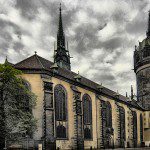
Photograph by Chris Sloan, 28 Nov. 2009 [Flickr / CC BY 2.0 license]
***
(1-27-12)
* * *
I came across the preliminary basis for this argument (quite new to me), by perusing the work, Lectures on the Doctrines and Practices of the Roman Catholic Church, by Nicholas Cardinal Wiseman (London: J. S. Hodson, 1836), in preparation for my upcoming book (a collection of excerpts), Classic Catholic Biblical Apologetics: 1525-1925.
First, here is the Bible passage under consideration (RSV):
2 Timothy 3:14-17 But as for you, continue in what you have learned and have firmly believed, knowing from whom you learned it [15] and how from childhood you have been acquainted with the sacred writings which are able to instruct you for salvation through faith in Christ Jesus. [16] All scripture is inspired by God and profitable for teaching, for reproof, for correction, and for training in righteousness, [17] that the man of God may be complete, equipped for every good work.
On pages 208-209 of his book, Cardinal Wiseman comments upon it:
. . . it is manifest that St. Paul is speaking of the Scriptures here used, not as it has to be read and used for the individual instruction and edification of all the faithful, but as it is to be observed by pastors—for observe what he says; he says, expressly, it is profitable for those purposes which are the exclusive function of the ministry, and not of others, for the learners, for the subjects of the Church of Christ; for he says, it is “profitable for doctrine,” that is, as the word means in its proper native sense, “for teaching, for reproof, for correction, for instruction in righteousness.” Therefore, he is to hold fast the doctrines which St. Paul taught, remembering upon whose authority he received them— that is, the authority of the Apostles. . . . he is to know besides, that this Scripture is profitable for the practice of his ministry, for correcting, for reproving, for instructing. These are points not for individual improvement, not for each one’s edification; but they are essentially acts for the ministry of the priesthood, for those who have to teach others; and, consequently, if this text prove anything regarding Scripture, it only goes to prove that the pastors of the church should be familiar with it, and make use of it for the purpose of correcting, and edifying their flocks.
This (for me) was a new approach to the passage, and I was struck by how “individualistic” my take in the past had been: shot through with the casually non-institutional assumptions of my “low church evangelical” Protestant past. I had assumed without conscious analysis, that the “teaching,” “reproof,” “correction,” and “training” referred to came straight from the Bible to the individual, whereas Cardinal Wiseman noted that it specifically referred to priests and pastors teaching their flocks. The Bible was, in other words, profitable as the essential aid for Christian teachers (essentially priests) to learn, in order to pass on Christian doctrine to laypeople. That is far different from the populist, anti-institutional, or anti-sacerdotal notion of sola Scriptura: the “me, my Bible, and the Holy Spirit” mentality.
It’s very interesting also, how in the larger context (the two previous verses: 3:14-15) of the passage as usually cited in Protestant polemics in favor of sola Scriptura (3:16-17 only), we see clear reference to apostolic tradition (“continue in what you have learned and have firmly believed, knowing from whom you learned it”). St. Paul is talking about himself and how he passed on the Christian tradition to Timothy (compare his language about receiving and delivering tradition — including oral tradition — in 1 Cor 11:2, 23; 15:1-3; Gal 1:9; 1 Thess 2:13; 2 Thess 2:15; 3:6; 2 Tim 1:13-14; 2:2).
Now here comes my part in this “new” analysis of a very familiar passage (much-beloved by Protestants as a supposed “proof” of sola Scriptura). Having discovered a better way to analyze in a general way the root meaning of the verses here, it occurred to me that the phrase “man of God” may be a further clue or key as to what St. Paul’s intention was. I thought that it could very well be a description of the clergyman or person otherwise very specially devoted to serving God. And then I was curious how it was used elsewhere in Scripture. This turned out to be a very fruitful avenue indeed. hence, the (Catholic) Navarre Bible (commentary) on 1 Timothy 6:11, the only other place in the New Testament where the phrase appears (“But as for you, man of God, shun all this; aim at righteousness, godliness, faith, love, steadfastness, gentleness”):
“Man of God”: this expression was used in the Old Testament of men who performed some special God-given mission — for example, Moses (Deut 33:1; Ps 40:1), Samuel (1 Sam 9:6–7); Elijah and Elisha (1 Kings 17:18; 2 Kings 4:7, 27, 42). In the Pastoral Epistles (cf. also 2 Tim 3:17) it is applied to Timothy insofar as ordination has conferred on him a ministry in the Church.
Protestant reference works concur in the general sense of noting that the phrase was used in the Old Testament to refer to exceptionally prominent followers of God; not any believer at all. Accordingly, The Eerdmans Bible Dictionary (“Man of God”, p. 684) notes:
A designation for early prophets in Israel . . . The term is used of unnamed prophets (1 Sam. 2:27; 1 Kgs. 13; 2 Chr. 25:7, 9), Moses (Deut. 33:1; Josh. 14:6; 1 Chr. 23:14; 2 Chr. 30:1; Ezra 3:2), the angel of the Lord — thought to be a prophet (Judg. 13:6, 8), Samuel (1 Sam. 9:6-10), . . . Elijah (1 Kgs. 17:18, 24), and Elisha (e.g., 2 Kgs. 1:9-13; 5:8-15). In later periods the term apparently came to be applied to some, other than prophets, who were thought of as bearing some special relationship to God, such as David (Neh. 12:24, 36; cf. Jer. 35:4).
Likewise, Keil and Delitzsch‘ Commentary on the Old Testament, Vol. 5: Psalms, Part III, p. 48 — a renowned Lutheran work — (on Psalms 90), observes:
To the name, which could not be allowed to remain so bald, because next to Abraham he is the greatest man known to the Old Testament history of redemption, is added the title of honour [Hebrew] (as in Deut. xxxiii. 1, Josh. xiv. 6), an ancient name of the prophets which expresses the close relationship of fellowship with God, just as “servant of Jahve” [Yahweh] expresses the relationship of service, in accordance with the special office and in relation to the history of redemption, into which Jahve has taken the man and into which he himself has entered.
Wikipedia (“Man of God”) gives a nice and handy summary of the usage, noting that only Moses was given this title in the Torah (first five books). Clearly, it was not used of any Jewish believer. See the entirety of all of the passages with the phrase, from an online RSV search page.
The argument then becomes, of course, that Paul was referring specifically to Timothy (an apostle) and other “men of God” of like eminence (priests) in 1 Timothy 6:11 and 2 Timothy 3:14-17. If so, the authority of Scripture was specifically to be delegated through authoritative, ordained interpreters, in accordance with the larger apostolic tradition (2 Tim 3:14-15, etc.). This is quite different from sola Scriptura in its usual Protestant definitions, and it is precisely harmonious with (if not identical to) the Catholic “three-legged stool” of Church-Scripture-Tradition.
If we go even deeper into the passage and reflect on the terms used, the case is strengthened all the more. For example, “profitable for teaching” (2 Tim 3:16). Does this make more sense as describing the Bible, or rather, a teacher (the “man of God”) who is teaching from the Bible with authority? If we search “teach” or “taught” or “instructed” or any similar terms in the Bible, we are hard pressed to find them ever applied to a mere book. In every instance I have found so far, it is always applied as a description of a man or God teaching (at times using the Bible as an aid). Examples:
God Teaching Moses
Exodus 4:12, 15 Now therefore go, and I will be with your mouth and teach you what you shall speak. . . . [15] And you shall speak to him and put the words in his mouth; and I will be with your mouth and with his mouth, and will teach you what you shall do.
Deuteronomy 5:31 But you, stand here by me, and I will tell you all the commandment and the statutes and the ordinances which you shall teach them, that they may do them in the land which I give them to possess.
MosesExodus 18:20 and you shall teach them the statutes and the decisions, and make them know the way in which they must walk and what they must do.
Deuteronomy 4:1 And now, O Israel, give heed to the statutes and the ordinances which I teach you, and do them; that you may live, and go in and take possession of the land which the LORD, the God of your fathers, gives you.
Deuteronomy 4:14 And the LORD commanded me at that time to teach you statutes and ordinances, that you might do them in the land which you are going over to possess.
Deuteronomy 6:1 Now this is the commandment, the statutes and the ordinances which the LORD your God commanded me to teach you, that you may do them in the land to which you are going over, to possess it;
Aaron
Leviticus 10:11 and you are to teach the people of Israel all the statutes which the LORD has spoken to them by Moses.
The Levites
Deuteronomy 33:10 They shall teach Jacob thy ordinances, and Israel thy law; . . .
Ezra
Ezra 7:10 For Ezra had set his heart to study the law of the LORD, and to do it, and to teach his statutes and ordinances in Israel.
Parents Teaching Children
Deuteronomy 6:7 and you shall teach them diligently to your children, and shall talk of them when you sit in your house, and when you walk by the way, and when you lie down, and when you rise. (cf. 11:19)
Eleven Disciples
Matthew 28:20 teaching them to observe all that I have commanded you . . .
Paul and Barnabas
Acts 15:35 But Paul and Barnabas remained in Antioch, teaching and preaching the word of the Lord, with many others also.
Paul
Acts 20:20 how I did not shrink from declaring to you anything that was profitable, and teaching you in public and from house to house,
Timothy
1 Timothy 4:13 Till I come, attend to the public reading of scripture, to preaching, to teaching.(cf. 4:11, 16)
Elders
1 Timothy 5:17 Let the elders who rule well be considered worthy of double honor, especially those who labor in preaching and teaching;
I can’t find a single example of “the Bible taught” or some sense of teaching directly from the Bible, in Scripture itself. If anyone finds this, please let me know. Here are all the instances of “teach” in the Bible, and “taught”, and “instruct[ed]”, and “learn[ed]”.
When I search “word / teaches” to find some connection, I come up with nothing. When I search “”taught / word” I don’t get passages referring to learning directly from the Bible; rather, I find passages (again) about people teaching the Word:
Galatians 6:6 Let him who is taught the word share all good things with him who teaches.
Then when I found “word” and “taught” together in another instance, it turned out to be an astonishingly striking corroboration of the Catholic interpretation of 2 Timothy 3:16-17, in similar words, and reinforcing the concept of authoritative interpretation and teaching of the Bible, since it is about a bishop:
Titus 1:7-9 For a bishop, as God’s steward, must be blameless; he must not be arrogant or quick-tempered or a drunkard or violent or greedy for gain, [8] but hospitable, a lover of goodness, master of himself, upright, holy, and self-controlled; [9] he must hold firm to the sure word as taught, so that he may be able to give instruction in sound doctrine and also to confute those who contradict it.
I want to make it clear that I am not arguing that no one can learn directly from Scripture. Of course they can. I’m referring specifically to the meaning and exegesis of 2 Timothy 3:14-17 and the phrase “profitable for teaching” and contending that according to all (far as I can determine) other instances of the notion of teaching in connection with the Bible or the Law (or separate from same) in Scripture itself, it always comes through human teachers or God, not directly from the Bible or the Law (that eventually comprised most of the first five books of the Old Testament). Therefore, I conclude that the phrase in 2 Timothy means “Scripture is profitable for the purpose of priests and other authoritative teachers in the church to pass on Christian teaching / tradition to all other believers.”
The same scenario applies to the other words used. The notion of “reproof” or “reprove” in Scripture is always used of God or persons, not the Bible or the Law. For example:
Titus 2:15 Declare these things; exhort and reprove with all authority. Let no one disregard you.
Revelation 3:19 Those whom I love, I reprove and chasten; so be zealous and repent.
It is the same for “correction” and for “training” (also never applied directly to the Bible apart from a teacher of it, and is applied to tradition):
1 Timothy 1:3-4 As I urged you when I was going to Macedonia, remain at Ephesus that you may charge certain persons not to teach any different doctrine, [4] nor to occupy themselves with myths and endless genealogies which promote speculations rather than the divine training that is in faith;
Titus 2:11-12 For the grace of God has appeared for the salvation of all men, [12] training us to renounce irreligion and worldly passions, and to live sober, upright, and godly lives in this world,
Everything we can find in the Bible itself along these lines leads inexorably to the same conclusion: 2 Timothy 3:16-17 is no proof for sola Scriptura at all, and is, to the contrary, a strong proof for the Catholic belief regarding authority and the rule of faith: the “three-legged stool” of Bible-Church-Tradition.
***
Previous Post
January 27, 2012
Luther & Lutherans on the Duration of the Real Presence
Next Post

February 11, 2012 Armstrong: "Biblical Evidence for the Communion of Saints"
Browse Our Archives
Select a Category & Last Things About Me Anti-Catholicism Atheism & Agnosticism Baptism and Sacramentalism Bible and Tradition Blessed Virgin Mary Books by Dave Armstrong C. S. Lewis Calvinism & General Protestantism Catholic Apologetics Catholic Apologists Catholic conversion Catholic converts Christmas Church (Ecclesiology) Church History Conversion and Converts Development of Doctrine Eastern Orthodoxy Ecumenism & Christian Unity Eucharist & Liturgy Fathers of the Church French Translations G. K. Chesterton Hell Hell & Satan Hell & Satan & Last Things Heresies & Comparative Religion Holistic Health Inquisition & Crusades & Scandals James White Jews & Judaism & Old Testament John Calvin John Henry Newman Liberal / Modernist Theology Life Issues Literary Resume Lutheranism Mariology Martin Luther Music Orthodoxy Papacy & Infallibility Personal Page Philosophy & Science Political & Ethical & Moral Issues Protestant Persecution & Intolerance Protestantism Purgatory Purgatory & Penance Romantic & Imaginative Theology Saints & Purgatory & Penance Salvation Salvation & Justification Satan & Last Things Sexuality and Gender Issues Spanish Translations Traditionalism vs. Radical Catholic Reactionaries Traducciones al español / tradução para português Trinitarianism & Christology Uncategorized Videos
Select a Month October 2026 September 2026 August 2026 July 2026 June 2026 May 2026 April 2026 March 2026 February 2026 January 2026 December 2025 November 2025 October 2025 September 2025 August 2025 July 2025 June 2025 May 2025 April 2025 March 2025 February 2025 January 2025 December 2024 November 2024 October 2024 September 2024 August 2024 July 2024 June 2024 May 2024 April 2024 March 2024 February 2024 January 2024 December 2023 November 2023 October 2023 September 2023 August 2023 July 2023 June 2023 May 2023 April 2023 March 2023 February 2023 January 2023 December 2022 November 2022 October 2022 September 2022 August 2022 July 2022 June 2022 May 2022 April 2022 March 2022 February 2022 January 2022 December 2021 November 2021 October 2021 September 2021 August 2021 July 2021 June 2021 May 2021 April 2021 March 2021 February 2021 January 2021 December 2020 November 2020 October 2020 September 2020 August 2020 July 2020 June 2020 May 2020 April 2020 March 2020 February 2020 January 2020 December 2019 November 2019 October 2019 September 2019 August 2019 July 2019 June 2019 May 2019 April 2019 March 2019 February 2019 January 2019 December 2018 November 2018 October 2018 September 2018 August 2018 July 2018 June 2018 May 2018 April 2018 March 2018 February 2018 January 2018 December 2017 November 2017 October 2017 September 2017 August 2017 July 2017 June 2017 May 2017 April 2017 March 2017 February 2017 January 2017 December 2016 November 2016 October 2016 September 2016 August 2016 July 2016 June 2016 May 2016 April 2016 March 2016 February 2016 January 2016 December 2015 November 2015 October 2015 September 2015 August 2015 July 2015 June 2015 May 2015 April 2015 March 2015 February 2015 January 2015 December 2014 November 2014 October 2014 September 2014 August 2014 July 2014 June 2014 April 2014 March 2014 February 2014 January 2014 December 2013 November 2013 October 2013 September 2013 August 2013 July 2013 June 2013 April 2013 March 2013 February 2013 January 2013 December 2012 November 2012 October 2012 September 2012 August 2012 July 2012 June 2012 May 2012 April 2012 March 2012 February 2012 January 2012 December 2011 November 2011 October 2011 September 2011 August 2011 July 2011 June 2011 April 2011 March 2011 February 2011 October 2010 September 2010 August 2010 July 2010 April 2010 March 2010 December 2009 October 2009 August 2009 July 2009 June 2009 May 2009 March 2009 February 2009 October 2008 September 2008 April 2008 March 2008 February 2008 January 2008 December 2007 November 2007 October 2007 May 2007 March 2007 February 2007 January 2007 November 2006 October 2006 September 2006 August 2006 July 2006 June 2006 May 2006 April 2006 March 2006 February 2006 October 2005 June 2005 April 2005 February 2005 July 2004 May 2004 April 2004
Follow Us!
TAKE THE
Religious Wisdom Quiz
Which Psalm begins with the words, "My God, my God, why have you forsaken me?", later quoted by Jesus?
Select your answer to see how you score.
Psalm 46 Psalm 110 Psalm 1 Psalm 22
Books by This Author Books by Dave Armstrong
Related posts from Biblical Evidence for Catholicism

A Few "Worst" & "Best" Arguments vs. Protestantism
Biblical Evidence for Catholicism

Jerusalem Council vs. James White & Sola Scriptura
Biblical Evidence for Catholicism

Biblical Perspicuity: Absurd Anti-Catholic "Defense"
Biblical Evidence for Catholicism

50 Biblical Disproofs of "Evident Clearness" of the...
Biblical Evidence for Catholicism
TRENDING AT PATHEOS Catholic

I was strolling through the top floor of the brand new Parthenon...

What Does Gêvâh Mean For Kimberley Guifoyle &...
This week, a lot of the news is focused on Kimberly Guilfoyle....

INNER CIRCLE: Profound Mystery (Of Christ In All...
Ephesians 5:31-32 “For this reason, a man will leave his father and...

Do Not Rejoice When Your Enemy Falls: The...
Turning an execution into a public spectacle is a disturbing expression of...

'The Chosen' S6 Trailer: The Passion Gets Very...
Not many watching 'The Chosen' worry about spoilers, but just because they...

The purpose-driven labor priest
A labor activist reads Rick Warren and it gets me wondering about...
view all Catholic blogs
Ad-Free & Subscriber Log-In Subscription Support
- About Us
- 2026 Calendar
- Videos
- Podcasts
- Library of World Religions
- Faith In Media Tracker
- Advertise With Us
- Write for Us
- Privacy Policy
- Terms of Service
- Do Not Sell My Data
- Contact Us
- Radiant Digital
- Manage Newsletter Subscriptions
- Unsubscribe From Notifications
- Sitemap
Copyright 2008-2026, Patheos. All rights reserved.
Subscription Support Ad-Free & Subscriber Log-In
Follow Patheos