
BuddhistCatholicContemplativeEvangelicalGeneral ChristianHinduJewishLatter-day SaintMuslimNew VisionsProgressive Christian
Beliefs
- Buddhist
- Catholic
- Contemplative
- Evangelical
- General Christian
- Hindu
- Jewish
- Latter-day Saint
- More Voices
- Muslim
- New Visions
- Pagan
- Progressive Christian
Topics
- Religion News
- Food and Religion
- Sports and Religion
- Religious Art
- Religious Music and Entertainment
- Religious Events
- History and Religion
- Style and Religion
- Politics and Religion
- Women in Religion
- Recreation Outdoors and Religion
- Business Finance and Religion
- Careers Workplace and Religion
- Education and Religion
- Family Parenting and Religion
- Health Fitness and Religion
- Home and Religion
- Relationships and Religion
- Technology and Religion
- Travel and Religion
Columnists
- Buddhist Columnists
- Business Finance and Religion Columnists
- Careers Workplace and Religion Columnists
- Catholic Columnists
- Contemplative Columnists
- Education and Religion Columnists
- Evangelists Columnists
- Family Parenting and Religion Columnists
- General Christian Columnists
- Health Fitness and Religion Columnists
- Hindu Columnists
- History and Religion Columnists
- Home and Religion Columnists
- Jewish Columnists
- More Voices Columnists
- Latter Day Columnists
- Muslim Columnists
- New Visions Columnists
- Nonreligious Columnists
- Pagan Columnists
- Politics and Religion Columnists
- Progressive Columnists
- Recreation Outdoors and Religion Columnists
- Relationships and Religion Columnists
- Religion News Columnists
- Religious Art Columnists
- Religious Events Columnists
- Religious Music and Entertainment Columnists
- Sports and Religion Columnists
- Style and Religion Columnists
- Technology and Religion Columnists
- Travel and Religion Columnists
- Women in Religion Columnists
Resource Library
- 2026 Calendar
- Library of World Religions
- The 100 Most Holy Places on Earth
- Patheos Answers
- Podcasts
- Videos
- Faith Leaders Database
- Anglican Episcopalian
- Bahai
- Baptist
- Buddhism
- Christianity
- Confucianism
- Eastern Orthodoxy
- Hinduism
- Holiness and Pentecostal
- ISKCON
- Islam
- Judaism
- Lutheran
- Methodist
- The Church of Jesus Christ of Latter-day Saints
- New Age
- Paganism
- Presbytarian and Reformed
- Protestantism
- Religion Behind the Scenes
- Roman Catholic
- Scientology
- Shia Islam
- Sikhism
- Sufism
- Sunni Islam
- Taoism
- Zen
- See all religions
Research Tools
 Ad-Free & Subscriber Log-In Subscription Support
Ad-Free & Subscriber Log-In Subscription Support
Follow Patheos 

- Trending:
- Forgiveness
- |
- Marriage
- |
- Consciousness
- |
- Death Penalty
- |
- Election
- |
- Halloween

-
About
-
Catholic Apologetics
-
Church History
-
Great Apologists
-
Christian Worldview
-
Protestantism & Misc.
- Home
- Catholic
- History and Religion
- Blaise Pascal on Ridicule & Sarcasm Regarding Sin & Folly
Blaise Pascal on Ridicule & Sarcasm Regarding Sin & Folly
Last updated on: May 29, 2017 at 3:04 pm by Dave Armstrong
Blaise Pascal on Ridicule & Sarcasm Regarding Sin & Folly 2017-05-29T15:04:03-04:00 Dave Armstrong
Patheos Explore the world's faith through different perspectives on religion and spirituality! Patheos has the views of the prevalent religions and spiritualities of the world.
. . . Sanctioned by God; Many Biblical Examples Provided
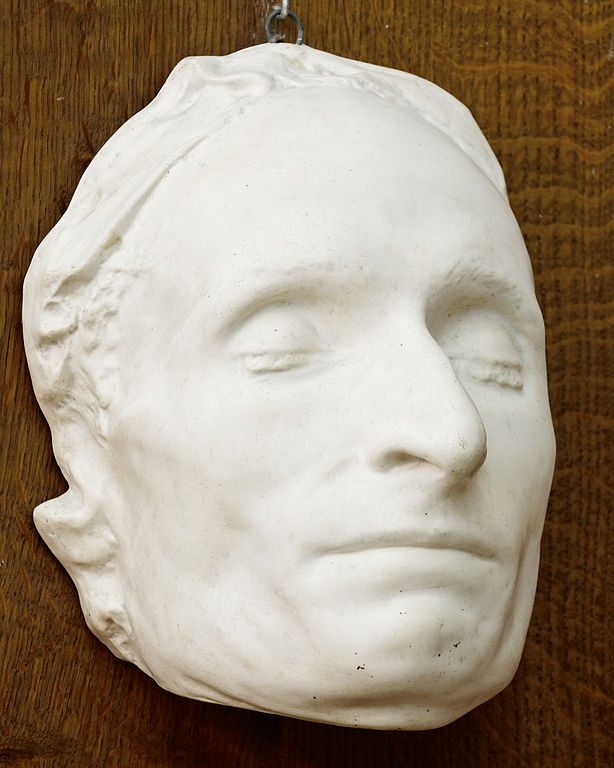
Death mask of Blaise Pascal (1623-1662): the great French mathematician, physicist, inventor, writer and Catholic apologist [Wikimedia Commons / Creative Commons Attribution 2.0 France

license]
***
(12-29-11)
***
From Provincial Letters, Letter XI (18 August 1656), pp. 167 ff. Bracketed, blue-colored additions are my own: biblical passages from RSV. Everything else is from Pascal.
* * *
Indeed, reverend sirs, there is a vast difference between laughing at religion, and laughing at those who profane it by their extravagant opinions. It were impiety to be wanting in respect for the verities which the Spirit of God has revealed; but it were no less impiety of another sort, to be wanting in contempt for the falsities which the spirit of man opposes to them.
For, fathers (since you will force me into this argument), I beseech you to consider that, just in proportion as Christian truths are worthy of love and respect, the contrary errors must deserve hatred and contempt; there being two things in the truths of our religion—a divine beauty that renders them lovely, and a sacred majesty that renders them venerable; and two things also about errors—an impiety, that makes them horrible, and an impertinence that renders them ridiculous. For these reasons, while the saints have ever cherished towards the truth the twofold sentiment of love and fear—the whole of their wisdom being comprised between fear, which is its beginning, and love which is its end—they have, at the same time, entertained towards error the twofold feeling of hatred and contempt, and their zeal has been at once employed to repel, by force of reasoning, the malice of the wicked, and to chastise, by the aid of ridicule, their extravagance and folly.
Do not then expect, fathers, to make people believe that it is unworthy of a Christian to treat error with derision. Nothing is easier than to convince all who were not aware of it before, that this practice is perfectly just—that it is common with the fathers of the Church, and that it is sanctioned by Scripture, by the example of the best of saints, and even by that of God himself.
Do we not find that God at once hates and despises sinners; so that even at the hour of death, when their condition is most sad and deplorable, Divine Wisdom adds mockery to the vengeance which consigns them to eternal punishment? “In interitu vestro ridebo et subsannabo—I will laugh at your calamity.”
[Proverbs 1:26-27 I also will laugh at your calamity; I will mock when panic strikes you, [27] when panic strikes you like a storm, and your calamity comes like a whirlwind, when distress and anguish come upon you.]
The saints, too, influenced by the same feeling, will join in the derision; for, according to David, when they witness the punishment of the wicked, “they shall fear, and yet laugh at it—videbunt justi et timebunt, et super eum ridebunt.”
[Psalm 52:5-7 But God will break you down for ever; he will snatch and tear you from your tent; he will uproot you from the land of the living. [Selah] [6] The righteous shall see, and fear, and shall laugh at him, saying, [7] “See the man who would not make God his refuge, but trusted in the abundance of his riches,
and sought refuge in his wealth!”]
And Job says: “Innocens zubsannabit eos—The innocent shall laugh at them.”
It is worthy of remark here, that the very first words which God addressed to man after his fall, contain, in the opinion of the fathers, “bitter irony” and mockery. After Adam had disobeyed his Maker, in the hope, suggested by the devil, of being like. God, it appears from Scripture that God, as a punishment, subjected him to death; and after having reduced him to this miserable condition, which was due to his sin, he taunted him in that state with the following terms of derision: “Behold, the man has become as one of us!—Ecce, Adam quasi unus ex nobis!” [Genesis 3:22] —which, according to St Jerome and the interpreters is “a grievous and cutting piece of irony,” with which God “stung him to the quick.” “Adam,” says Rupert, “deserved to be taunted in this manner, and he would be naturally made to feel his folly more acutely by this ironical expression than by a more serious one.” St Victor, after making the same remark, adds, “that this irony was due to his sottish credulity, and that this species of raillery is an act of justice, merited by him against whom it was directed.”
Thus you see, fathers, that ridicule is, in some cases, a very appropriate means of reclaiming men from their errors, and that it is accordingly an act of justice, because, as Jeremiah [48:26?] says, “the actions of those that err are worthy of derision, because of their vanity—vana simt et risu digna.” And so far from its being impious to laugh at them, St Augustine holds it to be the effect of divine wisdom: “The wise laugh at the foolish, because they are wise, not after their own wisdom, but after that divine wisdom which shall laugh at the death of the wicked.”
The prophets,”accordingly, filled with the Spirit of God, have availed themselves of ridicule, as we find from the examples of Daniel and Elias.
[1 Kings 18:26-27 And they took the bull which was given them, and they prepared it, and called on the name of Ba’al from morning until noon, saying, “O Ba’al, answer us!” But there was no voice, and no one answered. And they limped about the altar which they had made. [27] And at noon Eli’jah mocked them, saying, “Cry aloud, for he is a god; either he is musing, or he has gone aside, or he is on a journey, or perhaps he is asleep and must be awakened.”]
In short, examples of it are not awanting in the discourses of Jesus Christ himself. St Augustine remarks that, when he would humble Nicodemus, who deemed himself so expert in his knowledge of the law, “perceiving him to be puffed up with pride, from his rank as doctor of the Jews, he first beats down his presumption by the magnitude of his demands, and having reduced him so low that he was unable to answer, What! says he, you a master in Israel, and not know these things!—as if he had said, Proud ruler, confess that thou knowest nothing.” St Chrysostom and St Cyril likewise observe upon this, that “he deserved to be ridiculed in this manner.” [John 3:1-15]
. . . I am sure, fathers, these sacred examples are sufficient to convince you, that to deride the errors and extravagances of man is not inconsistent with the practice of the saints; otherwise we must blame that of the greatest doctors of the Church, who have been guilty of it—such as St Jerome, in his letters and writings against Jovinian, Vigilantius, and the Pelagians; Tertullian, in his Apology against the follies of idolaters; St Augustine against the monks of Africa, whom he styles “the hairy men;” St Irenaeus against the Gnostics; St Bernard and the other fathers of the Church, who, having been the imitators of the apostles, ought to be imitated by the faithful in all time coming; for, say what we will, they are the true models for Christians, even of the present day.
In following such examples, I conceived that I could not go far wrong; and, as I think I have sufficiently established this position, I shall only add, in the admirable words of Tertullian, which give the true explanation of the whole of my proceeding in this matter:
What I have now done is only a little sport before the real combat. I have rather indicated the wounds that might be given you, than inflicted any. If the reader has met with passages which have excited his risibility, he must ascribe this to the subjects themselves. There are many things which deserve to be held up in this way to ridicule and mockery, lest, by a serious refutation, we should attach a weight to them which they do not deserve. Nothing is more due to vanity than laughter; and it is the Truth properly that has a right to laugh, because she is cheerful, and to make sport of her enemies, because she is sure of the victory. Care must be taken, indeed, that the raillery is not too low, and unworthy of the truth; but, keeping this in view, when ridicule may be employed with effect, it is a duty to avail ourselves of it.
See also related passages:
Psalm 2:4-5 He who sits in the heavens laughs; the LORD has them in derision. [5] Then he will speak to them in his wrath, . . .
Psalm 37:12-13 The wicked plots against the righteous, and gnashes his teeth at him; [13] but the LORD laughs at the wicked, for he sees that his day is coming.
Psalm 59:8 But thou, O LORD, dost laugh at them; thou dost hold all the nations in derision.
Proverbs 3:34 Toward the scorners he is scornful, but to the humble he shows favor.
Proverbs 14:9 God scorns the wicked, but the upright enjoy his favor.
Amos 5:21 I hate, I despise your feasts, and I take no delight in your solemn assemblies.
Nahum 3:6 I will throw filth at you and treat you with contempt, and make you a gazingstock.
Matthew 7:3 Why do you see the speck that is in your brother’s eye, but do not notice the log that is in your own eye?
***
Previous Post

November 24, 2011
St. Francis de Sales: The Bible vs. Total Depravity
Next Post

December 29, 2011 Blaise Pascal on Biblical Paradox vs. False Dichotomies
Browse Our Archives
Select a Category & Last Things About Me Anti-Catholicism Atheism & Agnosticism Baptism and Sacramentalism Bible and Tradition Blessed Virgin Mary Books by Dave Armstrong C. S. Lewis Calvinism & General Protestantism Catholic Apologetics Catholic Apologists Catholic conversion Catholic converts Christmas Church (Ecclesiology) Church History Conversion and Converts Development of Doctrine Eastern Orthodoxy Ecumenism & Christian Unity Eucharist & Liturgy Fathers of the Church French Translations G. K. Chesterton Hell Hell & Satan Hell & Satan & Last Things Heresies & Comparative Religion Holistic Health Inquisition & Crusades & Scandals James White Jews & Judaism & Old Testament John Calvin John Henry Newman Liberal / Modernist Theology Life Issues Literary Resume Lutheranism Mariology Martin Luther Music Orthodoxy Papacy & Infallibility Personal Page Philosophy & Science Political & Ethical & Moral Issues Protestant Persecution & Intolerance Protestantism Purgatory Purgatory & Penance Romantic & Imaginative Theology Saints & Purgatory & Penance Salvation Salvation & Justification Satan & Last Things Sexuality and Gender Issues Spanish Translations Traditionalism vs. Radical Catholic Reactionaries Traducciones al español / tradução para português Trinitarianism & Christology Uncategorized Videos
Select a Month October 2026 September 2026 August 2026 July 2026 June 2026 May 2026 April 2026 March 2026 February 2026 January 2026 December 2025 November 2025 October 2025 September 2025 August 2025 July 2025 June 2025 May 2025 April 2025 March 2025 February 2025 January 2025 December 2024 November 2024 October 2024 September 2024 August 2024 July 2024 June 2024 May 2024 April 2024 March 2024 February 2024 January 2024 December 2023 November 2023 October 2023 September 2023 August 2023 July 2023 June 2023 May 2023 April 2023 March 2023 February 2023 January 2023 December 2022 November 2022 October 2022 September 2022 August 2022 July 2022 June 2022 May 2022 April 2022 March 2022 February 2022 January 2022 December 2021 November 2021 October 2021 September 2021 August 2021 July 2021 June 2021 May 2021 April 2021 March 2021 February 2021 January 2021 December 2020 November 2020 October 2020 September 2020 August 2020 July 2020 June 2020 May 2020 April 2020 March 2020 February 2020 January 2020 December 2019 November 2019 October 2019 September 2019 August 2019 July 2019 June 2019 May 2019 April 2019 March 2019 February 2019 January 2019 December 2018 November 2018 October 2018 September 2018 August 2018 July 2018 June 2018 May 2018 April 2018 March 2018 February 2018 January 2018 December 2017 November 2017 October 2017 September 2017 August 2017 July 2017 June 2017 May 2017 April 2017 March 2017 February 2017 January 2017 December 2016 November 2016 October 2016 September 2016 August 2016 July 2016 June 2016 May 2016 April 2016 March 2016 February 2016 January 2016 December 2015 November 2015 October 2015 September 2015 August 2015 July 2015 June 2015 May 2015 April 2015 March 2015 February 2015 January 2015 December 2014 November 2014 October 2014 September 2014 August 2014 July 2014 June 2014 April 2014 March 2014 February 2014 January 2014 December 2013 November 2013 October 2013 September 2013 August 2013 July 2013 June 2013 April 2013 March 2013 February 2013 January 2013 December 2012 November 2012 October 2012 September 2012 August 2012 July 2012 June 2012 May 2012 April 2012 March 2012 February 2012 January 2012 December 2011 November 2011 October 2011 September 2011 August 2011 July 2011 June 2011 April 2011 March 2011 February 2011 October 2010 September 2010 August 2010 July 2010 April 2010 March 2010 December 2009 October 2009 August 2009 July 2009 June 2009 May 2009 March 2009 February 2009 October 2008 September 2008 April 2008 March 2008 February 2008 January 2008 December 2007 November 2007 October 2007 May 2007 March 2007 February 2007 January 2007 November 2006 October 2006 September 2006 August 2006 July 2006 June 2006 May 2006 April 2006 March 2006 February 2006 October 2005 June 2005 April 2005 February 2005 July 2004 May 2004 April 2004
Follow Us!
TAKE THE
Religious Wisdom Quiz
What does "Pentateuch" mean?
Select your answer to see how you score.
Five Scrolls God's Law Sacred Teachings Holy Writings
Books by This Author Books by Dave Armstrong
Related posts from Biblical Evidence for Catholicism

Why Wes Huff (and Everyone) Should Be Catholic
Biblical Evidence for Catholicism

Invocation of Saints: Catholic Scholars vs. Me? Nope!
Biblical Evidence for Catholicism

My “Number Articles”: Alphabetized by Topic
Biblical Evidence for Catholicism
Big Plans for Catholic Bible Highlights in 2026!
Biblical Evidence for Catholicism
TRENDING AT PATHEOS Catholic

In "Irreplaceable," our book on vocation and technology, Trevor Sutton and I...

I was strolling through the top floor of the brand new Parthenon...

What Does Gêvâh Mean For Kimberley Guifoyle &...
This week, a lot of the news is focused on Kimberly Guilfoyle....

INNER CIRCLE: Profound Mystery (Of Christ In All...
Ephesians 5:31-32 “For this reason, a man will leave his father and...

Do Not Rejoice When Your Enemy Falls: The...
Turning an execution into a public spectacle is a disturbing expression of...

'The Chosen' S6 Trailer: The Passion Gets Very...
Not many watching 'The Chosen' worry about spoilers, but just because they...
view all Catholic blogs
Ad-Free & Subscriber Log-In Subscription Support
- About Us
- 2026 Calendar
- Videos
- Podcasts
- Library of World Religions
- Faith In Media Tracker
- Advertise With Us
- Write for Us
- Privacy Policy
- Terms of Service
- Do Not Sell My Data
- Contact Us
- Radiant Digital
- Manage Newsletter Subscriptions
- Unsubscribe From Notifications
- Sitemap
Copyright 2008-2026, Patheos. All rights reserved.
Subscription Support Ad-Free & Subscriber Log-In
Follow Patheos