
BuddhistCatholicContemplativeEvangelicalGeneral ChristianHinduJewishLatter-day SaintMuslimNew VisionsProgressive Christian
Beliefs
- Buddhist
- Catholic
- Contemplative
- Evangelical
- General Christian
- Hindu
- Jewish
- Latter-day Saint
- More Voices
- Muslim
- New Visions
- Pagan
- Progressive Christian
Topics
- Religion News
- Food and Religion
- Sports and Religion
- Religious Art
- Religious Music and Entertainment
- Religious Events
- History and Religion
- Style and Religion
- Politics and Religion
- Women in Religion
- Recreation Outdoors and Religion
- Business Finance and Religion
- Careers Workplace and Religion
- Education and Religion
- Family Parenting and Religion
- Health Fitness and Religion
- Home and Religion
- Relationships and Religion
- Technology and Religion
- Travel and Religion
Columnists
- Buddhist Columnists
- Business Finance and Religion Columnists
- Careers Workplace and Religion Columnists
- Catholic Columnists
- Contemplative Columnists
- Education and Religion Columnists
- Evangelists Columnists
- Family Parenting and Religion Columnists
- General Christian Columnists
- Health Fitness and Religion Columnists
- Hindu Columnists
- History and Religion Columnists
- Home and Religion Columnists
- Jewish Columnists
- More Voices Columnists
- Latter Day Columnists
- Muslim Columnists
- New Visions Columnists
- Nonreligious Columnists
- Pagan Columnists
- Politics and Religion Columnists
- Progressive Columnists
- Recreation Outdoors and Religion Columnists
- Relationships and Religion Columnists
- Religion News Columnists
- Religious Art Columnists
- Religious Events Columnists
- Religious Music and Entertainment Columnists
- Sports and Religion Columnists
- Style and Religion Columnists
- Technology and Religion Columnists
- Travel and Religion Columnists
- Women in Religion Columnists
Resource Library
- 2026 Calendar
- Library of World Religions
- The 100 Most Holy Places on Earth
- Patheos Answers
- Podcasts
- Videos
- Faith Leaders Database
- Anglican Episcopalian
- Bahai
- Baptist
- Buddhism
- Christianity
- Confucianism
- Eastern Orthodoxy
- Hinduism
- Holiness and Pentecostal
- ISKCON
- Islam
- Judaism
- Lutheran
- Methodist
- The Church of Jesus Christ of Latter-day Saints
- New Age
- Paganism
- Presbytarian and Reformed
- Protestantism
- Religion Behind the Scenes
- Roman Catholic
- Scientology
- Shia Islam
- Sikhism
- Sufism
- Sunni Islam
- Taoism
- Zen
- See all religions
Research Tools
 Ad-Free & Subscriber Log-In Subscription Support
Ad-Free & Subscriber Log-In Subscription Support
Follow Patheos 

- Trending:
- Forgiveness
- |
- Marriage
- |
- Consciousness
- |
- Death Penalty
- |
- Election
- |
- Halloween

-
About
-
Catholic Apologetics
-
Church History
-
Great Apologists
-
Christian Worldview
-
Protestantism & Misc.
- Home
- Catholic
- History and Religion
- Reply to William Whitaker’s “Sola Scriptura” Arguments
Reply to William Whitaker’s “Sola Scriptura” Arguments
Last updated on: June 6, 2026 at 12:26 am by Dave Armstrong
Reply to William Whitaker’s “Sola Scriptura” Arguments 2026-06-06T00:26:22-04:00 Dave Armstrong
Patheos Explore the world's faith through different perspectives on religion and spirituality! Patheos has the views of the prevalent religions and spiritualities of the world.
. . . Absurd Alleged Biblical Indications Against Apostolic Tradition
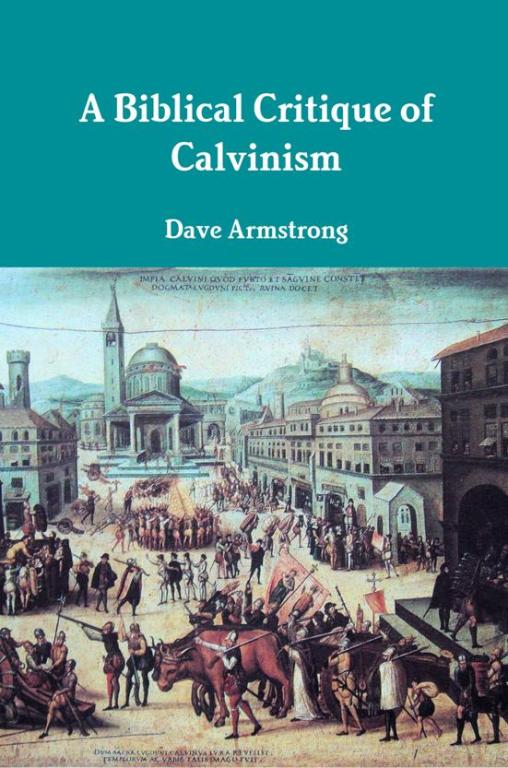
[see book information including purchase options]
***
(10-20-11)
* * *
I am utilizing a copy of the book available at Internet Archive.
***
Whitaker’s words will be in blue. Page numbers will correspond to the above book version.
* * *
I come now to another argument, the last of those touched upon by Bellarmine, and derived from various passages of scripture wherein traditions are condemned: as, Matth. xv. 6, “Ye have made the commandment of God of none effect by your traditions;” and the words of Isaiah, c. 29, alleged by Christ in that same chapter, “In vain do they worship me, teaching for doctrines the commandments of men:” and Galat. i. 14, where Paul says that, before his conversion, he was “zealous for the traditions of his elders.” From these and the like places, we reason thus: Christ and the apostles condemn traditions: therefore, they are not to be received; and consequently scripture is sufficient. (pp. 637-638)
*
This is the same weak, silly argument that we hear again and again. The gist of it is that, for many Protestants, “tradition is a dirty word.” But the Bible presents it in a far more nuanced way than this portrayal would have it. In the Bible there is a legitimate apostolic, divine tradition, that is good, and a false ‘tradition of men” over against God. St. Paul contrasts the two in the following passage:
Colossians 2:8 (RSV) See to it that no one makes a prey of you by philosophy and empty deceit, according to human tradition, according to the elemental spirits of the universe, and not according to Christ. (cf. 1 Cor 11:2; 2 Thess 2:15; 3:6; Phil 4:9; 2 Tim 1:13-14; 2:2)
The particular sense being used is always clear from context. Hence, in two of Whitaker’s examples above, we see the qualifiers: “your traditions” (i.e., over against God’s); “commandments of men” (i.e., ones that contradict the commandments of God).
Galatians 1:14, on the other hand, is a more neutral expression. It’s clear that Paul did not reject all traditions in Judaism. After all, he referred to himself as a “Pharisee” twice, after his conversion to Christianity (Acts 23:6; 26:5). He still acknowledged the authority of the high priest as his “ruler” during his trial, even when the latter had him struck on the mouth (Acts 23:2-5). Paul and Jesus and the early Christians still participated in Temple worship and rituals, and attended synagogues. When addressing non-Christian Jews, Paul calls them “brethren” (Acts 13:26,38; 22:1; 23:1,5-6).
St. Stephen did the same before a council with Jewish elders, scribes, and the high priest (Acts 6:12; 7:1), addressing them as “brethren and fathers” (7:2). Paul was still worshiping and even presiding over the services in synagogues (Acts 13:13-44).
Bellarmine hath but one reply, namely, that Christ and the apostles did not condemn those traditions which the Jews had received from Moses and the prophets, but those which they had received from certain later persons, whereof some were idle, and some impious. (p. 638)
*
And St. Robert Bellarmine was exactly right, because this is what Scripture teaches, and it is almost self-evident.
I answer: Firstly, it is false that the Jews received any traditions from Moses and the prophets. He himself does not prove they did, . . . (p. 638)
*
This is a remarkably clueless, extreme anti-traditional position that virtually no Protestant theologian, Bible scholar, or historian would hold today. It is well-known that the Pharisees accepted the oral tradition, and that early Christianity inherited several beliefs (angelology, the resurrection, notions of purgatory and prayer for the dead), including belief in this oral tradition, from that school.
Finally, it is evident from the scriptures: for Christ says, “Search the scriptures,” not tradition; and Abraham says, “They have Moses and the prophets, let them hear them.” Now by Moses and the prophets the scriptures are meant, as in Luke xxiv. 27. There is no mention in scripture of these traditions: the scriptures say not a single word about them: there were, therefore, none. (p. 638)
*
Whitaker essentially puts his head in the sand like an ostrich, and covers his eyes and ears like a monkey: he refuses to see the dozens; scores of biblical indications of tradition. He’s like the man who can look all over the sky on a clear day at high noon in the summer, and not see the sun. It’s such a breathtakingly ridiculous position that I feel like a clown seriously entertaining it at all. But this paragraph of Whitaker’s needed to be documented, lest no one believe that it could have been written by an intelligent student of the Bible. I’m embarrassed for my esteemed Protestant friends, that one of their proclaimed “champions” would make such utterly ludicrous “arguments.” But this is the pathetic intellectual level of anti-Catholicism. I shouldn’t be surprised.
. . . when Christ objects the commandment of God, and opposes the scriptures to tradition, it is plain that he condemns all unwritten traditions. . . . all unwritten traditions are condemned by Christ. (p. 639)
*
It’s not plain at all that this is the case! Jesus qualifies it by noting that mere men‘s traditions, held in opposition to God, are what should be condemned. If it were a blanket condemnation, the qualification wouldn’t be there; it would simply say “tradition.” If Jesus were supposedly completely opposed to all Jewish tradition at all (which included oral tradition); even tradition within Christianity, then why in the world would He say?:
Matthew 23:2-3a “The scribes and the Pharisees sit on Moses’ seat; [3] so practice and observe whatever they tell you, . . .
Even “Moses’ Seat” is not a phrase found in the Old Testament. It is found in the (originally oral) Mishna, where a sort of “teaching succession” from Moses on down is taught. Jesus upholds the Pharisees’ teaching authority even though He goes on to say that they are hypocrites, and to not follow what they “do,” and lambasts them in no uncertain terms, shortly afterwards, according to Matthew’s record. Despite all that, their teachings are still to be followed, even by His disciples.
These are the same people and faction, whom Paul referred to as possessing “traditions” (Gal 1:14; noted by Whitaker himself, at the top of this paper). They’re the same ones that Paul identifies himself twice as being a part of (after his conversion). All this, but there is no legitimate “tradition” whatever in the New Testament, according to “see no evil / hear no evil” Whitaker.
. . . Christ and the apostles always remand us to the scriptures . . . (p. 639)
*
That’s not true at all. There are scores and scores of evidences against such an absurd, unfactual statement. Here are several of the more famous non-biblical references in the New Testament:
1 Corinthians 10:4 and all drank the same supernatural drink. For they drank from the supernatural Rock which followed them, and the Rock was Christ.
The Old Testament says nothing about such miraculous movement, in the related passages about Moses striking the rock to produce water (Exodus 17:1-7; Numbers 20:2-13). But rabbinic tradition does.
2 Timothy 3:8 As Jannes and Jambres opposed Moses, so these men also oppose the truth, men of corrupt mind and counterfeit faith;
These two men cannot be found in the related Old Testament passage (Exodus 7:8 ff.), or anywhere else in the Old Testament.
James 5:17 Eli’jah was a man of like nature with ourselves and he prayed fervently that it might not rain, and for three years and six months it did not rain on the earth.
The reference to a lack of rain for three years is absent from the relevant Old Testament passage in 1 Kings 17.
1 Peter 3:19 in which he went and preached to the spirits in prison,
This is drawn from the Jewish apocalyptic book 1 Enoch (12-16).
Jude 9 But when the archangel Michael, contending with the devil, disputed about the body of Moses, he did not presume to pronounce a reviling judgment upon him, but said, “The Lord rebuke you.”
Not found in the Old Testament (see Deut 34:5-6 for the account of Moses’ death), but it was part of a Jewish tradition that Jude assumed his readers were familiar with.
Jude 14-15 It was of these also that Enoch in the seventh generation from Adam prophesied, saying, “Behold, the Lord came with his holy myriads, to execute judgment on all, and to convict all the ungodly of all their deeds of ungodliness which they have committed in such an ungodly way, and of all the harsh things which ungodly sinners have spoken against him.”
This is a direct quotation of the apocalyptic book 1 Enoch (1:9). Here is one translation of the latter passage:
And behold! He cometh with ten thousands of His holy ones To execute judgement upon all, And to destroy all the ungodly: And to convict all flesh Of all the works of their ungodliness which they have ungodly committed, And of all the hard things which ungodly sinners have spoken against Him.
That is not from any Scripture; yet it is said that Enoch “prophesied.” Thus, authentic, genuine prophecy is not confined to the Old Testament written record. If this is true prophecy (as we know it must be, because it is described as such in inspired revelation), who knows how much more of 1 Enoch or other non-canonical ancient Jewish books also contain true prophecy? That is tradition . . .
Moreover, the New Testament massively cites passages or thought-patterns or concepts found in the Deuterocanon: books that Protestants and Whitaker reject as canonical (and call the “Apocrypha”). Therefore, these are numerous additional examples of “Christ and the apostles” doing what Whitaker tells us they never supposedly do: citations of something other than what he thinks is Scripture.
Now the papists have run into still more intolerable errors in this matter than the Jews of old, since their religion is wholly occupied in observing and performing not those things which Christ sanctioned and enjoined, but those which man’s boldness and curiosity have devised. For example, those who are esteemed religious amongst the papists observe the rules of their founders far more punctiliously than the commands of God: the truth of which remark hath been now for a long time no secret to all the world. (p. 640)
*
Right. Just a slice of genuine, old-fashioned, bigoted anti-Catholicism, to remind us of the tunnel-vision mentality we are here dealing with. I especially love the imbecilic inanity of the use of “wholly”. It’s no wonder that Whitaker makes such poor, Scripture-torturing arguments, in defending sola Scriptura. His judgment is clouded by this sort of purely irrational, self-refuting nonsense.
At the time he was writing such things, men were having their hearts ripped out of their bodies and intestines slowly drawn out, then legs and arms and heads cut off (along with various other outrageous brutalities) in merrie olde “Reformation” England, for the horrific, treasonous crime of simply believing what their forefathers had believed for many hundreds of years: the Catholic faith of St. Anselm, the Venerable Bede, St. Boniface, Blessed Duns Scotus, St. Thomas Becket, St. Thomas More, St. John Fisher, and Alfred the Great.
The fourth place is taken from Luke xxiv. 25 and 27. Christ, in verse 25, blames the disciples for being slow “to beheve all that the prophets have spoken.” But where can those things be found? This appears from verse 27. There it follows: “Beginning at Moses and all the prophets, he expounded to them in all the scriptures the things concerning himself.” Hence we frame the following argument: If all the things that the prophets spoke may be found in the scriptures, then may those also which the apostles spoke be found in the scriptures also. The first is true: therefore also the second. The force of the consequence is manifest. For the same reason which impelled the prophets to commit all they said to writing, led the apostles also to take a similar course. For if the prophets wrote all that they spoke, why should we not suppose that the apostles and evangelists, proceeding with the same prudence, governed by the same Spirit, and having the same end in view, committed likewise to writing the sum of that doctrine which they delivered to the churches? The same judgment should be passed where the cases are the same. And hence those are refuted, who dream of the existence of some unwritten prophetic traditions. For Luke makes all that the prophets spake to be comprised in the scriptures. Therefore, there were no unwritten traditions of the prophets. Therefore, there were no unwritten traditions of the apostles. The reason is precisely the same. If the ancient church had every thing in scripture, the christian church likewise hath every thing in scripture. The antecedent is plain ; therefore also the consequent. Otherwise God provided better for the Jews than for us. (pp. 643-644)
*
This whole line of reasoning collapses, by the numerous examples I have provided above, which show that the writers of the New Testament, our Lord, the apostles, disciples, and early Christians all acknowledge traditions (and non-recorded acts) that go beyond the letter of the Bible. No passage in the Bible says that the entirety of the prophetic message (let alone the apostolic message) was committed to writing, in the Bible alone. That is simply a tradition of men, invented out of whole cloth. It is not deduced by the passages that Whitaker produces. It’s a mere fancy. There is no need to even refute it because no evidence (let alone biblical evidence) is given for it. Whitaker’s supposed strong deductions are simply faulty, wishful thinking “logic.”
It’s refuted also in the inspired New Testament, in examples we have already seen. James 5:17 informs us that Elijah the prophet prayed and caused rain to cease for three-and-a-half years. Why, then, was this not recorded in the Old Testament? Surely it was very significant: a miracle even greater than the plagues of Moses upon Egypt. It is used as an illustration of the power of the righteous man’s prayers. But it’s not there.
If Whitaker supposedly excels at logical deduction, perhaps he can grasp this one. This event occurred, because we know it for sure from inspired revelation in the New Testament. But it was not recorded. Therefore, it follows that extraordinary miracles from prophets were not all recorded in writing (or in the Bible), and were preserved, rather, in non-biblical tradition of some sort: precisely the opposite of what Whitaker would have us believe. Elijah lived about a thousand years before James, so that tradition had to be passed down somewhere other than in the Bible. It probably was an oral tradition at first. James cites the tradition matter-of-factly, as if there would be no doubt as to its authenticity.
Jude 14-15 said that Enoch (who lived much further back in history than Elijah) “prophesied.” Therefore, a prophecy occurred in remote centuries past, that was not a biblical one; yet regarded as authoritative by a New Testament writer and apostle: significant enough to be cited. How can this be, under Whitaker’s (false) premises? It cannot. His view is overthrown by Holy Scripture itself.
Likewise with Jude 9, which appears as a factual account, having to do with Moses, the devil, and the archangel Michael: nowhere to be seen in the Old Testament. So why is it cited as an authentic narrative of actual history? The New Testament was not dictated from above by God. The Bible writers utilized their own knowledge, which was preserved from error and inspired by God.
The seventh place is taken from Acts xvii. 2, 3, where Luke writes that Paul reasoned for three sabbath-days out of the scriptures, . . . that Christ had suffered; so that this was the Christ whom he preached unto them. Paul then discoursed from the scriptures, and confirmed his whole doctrine by the scriptures. Hence we gather the following argument: If Paul used no other evidence than that of scripture in teaching and delivering the gospel, and refuting the Jews; then all testimonies which are requisite either to confirm the true doctrine of the gospel or to refute heresies may be taken out of scripture. The former is true, and therefore the latter. The consequence is manifest. For if any other testimony had been necessary, the apostle would have used it. But he confirmed his doctrine only by the scriptures; and therefore, in verse 11, the Bereans are praised for having searched the scriptures, and examined Paul’s teaching by them. Therefore we ought to do likewise. Now no heretics are more keen disputers, or more difficult to be refuted, than the Jews. (pp. 645-646)
*
This is altogether silly, because it is amply refuted by Paul himself. When preaching to the Athenians (no intellectual slouches themselves, as the founders of philosophy), and doing his best to persuade them of the truth of the gospel, the great apostle didn’t stick to Scripture alone; he cited their own poets and philosophers:
Acts 17:22-28 So Paul, standing in the middle of the Are-op’agus, said: “Men of Athens, I perceive that in every way you are very religious. [23] For as I passed along, and observed the objects of your worship, I found also an altar with this inscription, `To an unknown god.’ What therefore you worship as unknown, this I proclaim to you. [24] The God who made the world and everything in it, being Lord of heaven and earth, does not live in shrines made by man, [25] nor is he served by human hands, as though he needed anything, since he himself gives to all men life and breath and everything. [26] And he made from one every nation of men to live on all the face of the earth, having determined allotted periods and the boundaries of their habitation, [27] that they should seek God, in the hope that they might feel after him and find him. Yet he is not far from each one of us, [28] for `In him we live and move and have our being’; as even some of your poets have said, `For we are indeed his offspring.’
Here he was citing the Greek poet Aratus: (c. 315-240 B.C.), and philosopher-poet Epimenides (6th c. B.C.). As I wrote elsewhere (one bracketed footnote presently added):
. . . the line that Paul cited on Mars Hill in Athens (Acts 17:28), from Aratus, was actually, in context, talking about Zeus:
Let us begin with Zeus, whom we mortals never leave unspoken.
For every street, every market-place is full of Zeus.
Even the sea and the harbour are full of this deity.
Everywhere everyone is indebted to Zeus.
For we are indeed his offspring… (Phaenomena 1-5).
So Paul used a pagan poet, talking about a false god (Zeus) and “Christianized” the thought, applying it to the true God. That’s Pauline apologetic method, . . . The Church has done this, historically, by “co-opting” pagan holidays and “baptizing” them, thus eventually wiping out the old pagan holidays.
The citation from Epimenides (the poem Cretica) involves the same thing; it was originally written about Zeus; Paul (Acts 17:28 again) takes it and applies it to Yahweh, the true God:
They fashioned a tomb for thee, O holy and high one—
The Cretans, always liars, evil beasts, idle bellies! [used by Paul at Titus 1:12]
But thou art not dead: thou livest and abidest forever,
For in thee we live and move and have our being.
St. Paul expressly cites these pagan Greek poets and philosophers precisely because that is what his sophisticated Athens audience (including “Epicurean and Stoic philosophers” — 17:18) could understand and relate to. He was using wise apologetic method and strategy.
Paul also cited the Greek dramatist Menander (c.342-291 B.C.) at 1 Corinthians 15:33: “bad company ruins good morals”. Thus, Whitaker’s claim, “if any other testimony had been necessary, the apostle would have used it. But he confirmed his doctrine only by the scriptures” is shown from Holy Scripture (three times) to be a falsehood (and we know where falsehood derives).
The eighth place is taken from Acts xviii. 24 and 28. Apollos was mighty in the scriptures, and refuted the Jews forcibly, . . . out of the scriptures. We may argue here as in the former case: If Apollos made use only of the scriptures in refuting the Jews and confirming the doctrine of the gospel, then the gospel may be confirmed and heresies refuted by the scriptures alone. The former is true, and consequently the latter also. (p. 646)
*
But the text doesn’t say that Apollos “made use only of the scriptures” (my italics). This is yet another of the now notorious incorrect deductions from plain biblical texts that Whitaker is a master of (one might call this sophistry). Acts 18:28 describes him as “showing by the scriptures that the Christ was Jesus.” But it doesn’t say that he made no arguments besides ones drawn from Scripture. To show that the Messiah (often mentioned in the Old Testament) was Jesus was something specifically related to the Bible and to the Jews (over against the Gentiles). So that is to be expected.
But in Acts 18:25 it states: “he spoke and taught accurately the things concerning Jesus.” Unless he was prooftexting the OT messianic texts, and only doing that (as in 18:28), virtually anything else about what Jesus was doing or teaching was based on present eyewitness accounts, and was not “arguing from the Bible” (the Gospels not having yet been written) but rather, from experience (i.e., oral tradition at that point). Thus it is quite likely and plausible (though not certain) that he also talked about things other than (OT) biblical texts.
It may be a fine point but it is a crucial technical distinction. Whitaker merely reads into the text what he already assumes. It’s not present in the text. The text is consistent with a hypothetical scenario whereby only Scripture was used, but it doesn’t prove that or disallow another scenario. It’s not conclusive in and of itself. This sort of bad logic and unwarranted leaps from texts is almost a constant in Protestant apologias for sola Scriptura. Then Whitaker makes a false deduction from a false conclusion: if the example is of using Scripture alone in sharing the Christian faith, then we should do the same.
The tenth place is taken from Acts xxvi. 22, where Paul says, that through the divine assistance he continued up to that very day, witnessing both to small and great, saying nothing beside, . . . “those things which Moses and the prophets did say should come.” Therefore Paul in preaching the gospel uttered not a word extraneous to the scriptures of the law and the prophets. From this passage we reason thus: If Paul, when he preached the gospel, uttered not a word beside the Mosaic and prophetical scriptures, then all things necessary to the preaching of the gospel are contained in the scriptures. Now the former is true, and therefore also the second. The consequence holds: for Paul preached the whole gospel, being designed for this special purpose by God, and in the whole explication of it spoke nothing beside the scriptures. In Acts XX. 27, he says that he declared to the Ephesians “the whole counsel of God.” Therefore the whole counsel of God in announcing the gospel may be learned from the scriptures. Hence another syllogism follows: If Paul taught nothing beside the scriptures, then neither is it now lawful for any one to deliver anything beside the scripture. But the former is true, and therefore the second. For who will dare to assume to himself what Paul could not or ought not to do? (p. 647)
*
Good grief. I have already shown that Paul did not cite only Scripture, in noting his four citations of pagan poets, philosophers and dramatists: two of them in the very act of preaching the gospel on Mars Hill in Athens. Therefore, since he is our model (as he said many times, and as Whitaker says), we don’t have to do so, either. Is Whitaker unable to read the biblical text for himself without missing so many obvious things in it? Who in the world does he think Paul was quoting in Acts 17:28, 1 Corinthians 15:33, and Titus 1:12? Paul also cites many times from the Deuterocanon, as documented in my paper on NT citations of those biblical books that Protestants reject. Every time Paul does that, it refutes Whitaker’s contention that he supposedly never does (since Whitaker thinks he never cites anything but Scripture, and for him, this is not Scripture).
Matters entrusted to men’s memories are easily consigned to oblivion. These are notorious truths. Let us see how our opponent meets this argument. He answers very confidently, that it is impossible that these traditions should not be preserved, because the care of them rests not on men, but on God. Here he notices God’s care in preserving his church; how God preserved traditions inviolate from Adam to the time of Moses, and the scriptures from Moses down to our times. Therefore, says he, God can now also preserve unwritten traditions. I answer; In the first place, I confess that the divine Providence can preserve from destruction whatever it chooses; for God can do whatever he wills. But if we choose thus to abuse the divine Providence, we may, in the same manner, infer that there is no need of the scriptures, that every thing should be trusted to the Divine Providence, and nothing committed to writing, because God can preserve religion safe without the scriptures. (p. 652)
*
Nice try. This is a failed reductio ad absurdum (a logical technique of trying to draw from opposing premises an absurd conclusion: I use it all the time). Whitaker takes the opposing position to a supposed necessary extreme, in order to dismiss it as absurd. He concedes that “the divine Providence can preserve from destruction whatever it chooses,” which is nearly the entire point and argument. Then he goes off and mocks a notion of having no Scripture at all as a result. But Catholics accept and revere Scripture as much as Protestants do. We are simply saying that there is tradition and an authoritative Church also.
Whitaker grants an indefectible Church in the following section, but in order to do so he has to (as an Anglican) redefine “the Church” as always historically understood, and give up many biblical attributes of it. He says that God can preserve what He wants to preserve, yet he has to fight against all semblance of tradition whatsoever, in defending his extreme sola Scriptura viewpoint. His position is incoherent and internally inconsistent (as all Protestant variations always are, in the final analysis).
But God hath nowhere promised that he will save and protect unwritten traditions from being lost: consequently, the church and tradition are not parallel cases. I can produce innumerable testimonies and promises wherewith God hath bound himself to the church to preserve it: let them produce any such promises of God respecting the preservation of traditions. Now this they cannot do. Secondly, I confess that God preserved his doctrine from Adam to Moses orally transmitted, that is, in the form of unwritten tradition. It cannot be denied. But then it was amongst exceeding few persons: for the great majority had corrupted this doctrine. (p. 652)
*
This is a fascinating study in illogic and cognitive dissonance. Whitaker denies that apostolic tradition could be preserved. Then he turns around and concedes that there was indeed an oral tradition and doctrine from Adam to Moses: an extraordinary concession indeed! He says that is possible and factual, but apostolic tradition, with the fuller revelation of the new covenant, and an indwelling and guiding Holy Spirit is not. Whether it was preserved by a few or ten million is irrelevant. It was preserved by God. New Testament tradition is indicated in many passages that I have already alluded to in the course of this series of refutations. It is always casually assumed to exist and to be authoritative.
Besides, God frequently and familiarly shewed himself to the holy fathers who then lived; conversed with them, and often renewed and restored the doctrine orally delivered, and brought it back to its integrity and purity, when not preserved from all corruption even by those godly men themselves. Thus God conversed familiarly with those ancient patriarchs: and if the reasoning of our opponent were of any weight now, God would still treat us in the same manner. But there is the greatest difference between those things and ours; and consequently his reasoning hath no weight. (p. 652)
*
The Bible says that we have far more privileges and access to God than the patriarchs of old. They were only selectively filled with the Holy Spirit, but every Christian is now. We have a much fuller, developed revelation. We have the appearance of Jesus, and all His teaching. We have a Church that even Whitaker grants is protected by God and indefectible. Yet Whitaker oddly concludes that oral tradition is far less possible now than it was then, and that we are vastly different from the great men of old. Jesus said of John the Baptist, who is considered the last of the prophets:
Luke 7:28 I tell you, among those born of women none is greater than John; yet he who is least in the kingdom of God is greater than he.
Thirdly, the fact of Moses having written his heavenly doctrine is a point of great importance against tradition, and strongly confirmatory of our opinion. For if God had seen that religion could have been preserved entire and uncorrupted without the scriptures, he would not have enjoined Moses to consign it in the lasting monuments of written records . . . (pp. 652-653)
*
More self-serving straw men . . . The argument is not over whether Scripture is necessary. No Catholic has ever denied it. The argument is whether there is such a thing as an authoritative Christian tradition. All of this writing wasted on defending the usefulness and great utility and blessing of Holy Scripture is a perfect non sequitur, because the parties are in total agreement. We’re not the ones who want things to be alone (like “Scripture Alone”). Our view is neither solo traditio nor sola ecclesia (if that is proper Latin). Apparently, Whitaker, not able to grasp this, thinks that in defending tradition, we must somehow denigrate Scripture, as if it were a zero sum game. Therefore, tradition could be defended to such an extent that Scripture is conceivably ditched altogether. But we haven’t ever thought or done so! It is Protestantism that has unbiblically ditched both tradition and an authoritative, infallible Church.
***
Previous Post
October 18, 2011
Biblical Evidence for the Oral Torah & Oral Apostolic Tradition
Next Post
October 24, 2011 Dialogue with a Calvinist: Was Paul a "Lone Ranger"?
Browse Our Archives
Select a Category & Last Things About Me Anti-Catholicism Atheism & Agnosticism Baptism and Sacramentalism Bible and Tradition Blessed Virgin Mary Books by Dave Armstrong C. S. Lewis Calvinism & General Protestantism Catholic Apologetics Catholic Apologists Catholic conversion Catholic converts Christmas Church (Ecclesiology) Church History Conversion and Converts Development of Doctrine Eastern Orthodoxy Ecumenism & Christian Unity Eucharist & Liturgy Fathers of the Church French Translations G. K. Chesterton Hell Hell & Satan Hell & Satan & Last Things Heresies & Comparative Religion Holistic Health Inquisition & Crusades & Scandals James White Jews & Judaism & Old Testament John Calvin John Henry Newman Liberal / Modernist Theology Life Issues Literary Resume Lutheranism Mariology Martin Luther Music Orthodoxy Papacy & Infallibility Personal Page Philosophy & Science Political & Ethical & Moral Issues Protestant Persecution & Intolerance Protestantism Purgatory Purgatory & Penance Romantic & Imaginative Theology Saints & Purgatory & Penance Salvation Salvation & Justification Satan & Last Things Sexuality and Gender Issues Spanish Translations Traditionalism vs. Radical Catholic Reactionaries Traducciones al español / tradução para português Trinitarianism & Christology Uncategorized Videos
Select a Month October 2026 September 2026 August 2026 July 2026 June 2026 May 2026 April 2026 March 2026 February 2026 January 2026 December 2025 November 2025 October 2025 September 2025 August 2025 July 2025 June 2025 May 2025 April 2025 March 2025 February 2025 January 2025 December 2024 November 2024 October 2024 September 2024 August 2024 July 2024 June 2024 May 2024 April 2024 March 2024 February 2024 January 2024 December 2023 November 2023 October 2023 September 2023 August 2023 July 2023 June 2023 May 2023 April 2023 March 2023 February 2023 January 2023 December 2022 November 2022 October 2022 September 2022 August 2022 July 2022 June 2022 May 2022 April 2022 March 2022 February 2022 January 2022 December 2021 November 2021 October 2021 September 2021 August 2021 July 2021 June 2021 May 2021 April 2021 March 2021 February 2021 January 2021 December 2020 November 2020 October 2020 September 2020 August 2020 July 2020 June 2020 May 2020 April 2020 March 2020 February 2020 January 2020 December 2019 November 2019 October 2019 September 2019 August 2019 July 2019 June 2019 May 2019 April 2019 March 2019 February 2019 January 2019 December 2018 November 2018 October 2018 September 2018 August 2018 July 2018 June 2018 May 2018 April 2018 March 2018 February 2018 January 2018 December 2017 November 2017 October 2017 September 2017 August 2017 July 2017 June 2017 May 2017 April 2017 March 2017 February 2017 January 2017 December 2016 November 2016 October 2016 September 2016 August 2016 July 2016 June 2016 May 2016 April 2016 March 2016 February 2016 January 2016 December 2015 November 2015 October 2015 September 2015 August 2015 July 2015 June 2015 May 2015 April 2015 March 2015 February 2015 January 2015 December 2014 November 2014 October 2014 September 2014 August 2014 July 2014 June 2014 April 2014 March 2014 February 2014 January 2014 December 2013 November 2013 October 2013 September 2013 August 2013 July 2013 June 2013 April 2013 March 2013 February 2013 January 2013 December 2012 November 2012 October 2012 September 2012 August 2012 July 2012 June 2012 May 2012 April 2012 March 2012 February 2012 January 2012 December 2011 November 2011 October 2011 September 2011 August 2011 July 2011 June 2011 April 2011 March 2011 February 2011 October 2010 September 2010 August 2010 July 2010 April 2010 March 2010 December 2009 October 2009 August 2009 July 2009 June 2009 May 2009 March 2009 February 2009 October 2008 September 2008 April 2008 March 2008 February 2008 January 2008 December 2007 November 2007 October 2007 May 2007 March 2007 February 2007 January 2007 November 2006 October 2006 September 2006 August 2006 July 2006 June 2006 May 2006 April 2006 March 2006 February 2006 October 2005 June 2005 April 2005 February 2005 July 2004 May 2004 April 2004
Follow Us!
TAKE THE
Religious Wisdom Quiz
Who asked Jesus, "What is truth?"
Select your answer to see how you score.
Caiaphas Pilate Nicodemus Herod
Books by This Author Books by Dave Armstrong
Related posts from Biblical Evidence for Catholicism

A Few "Worst" & "Best" Arguments vs. Protestantism
Biblical Evidence for Catholicism

Jerusalem Council vs. James White & Sola Scriptura
Biblical Evidence for Catholicism

Biblical Perspicuity: Absurd Anti-Catholic "Defense"
Biblical Evidence for Catholicism

50 Biblical Disproofs of "Evident Clearness" of the...
Biblical Evidence for Catholicism
TRENDING AT PATHEOS Catholic

I was strolling through the top floor of the brand new Parthenon...

What Does Gêvâh Mean For Kimberley Guifoyle &...
This week, a lot of the news is focused on Kimberly Guilfoyle....

INNER CIRCLE: Profound Mystery (Of Christ In All...
Ephesians 5:31-32 “For this reason, a man will leave his father and...

Do Not Rejoice When Your Enemy Falls: The...
Turning an execution into a public spectacle is a disturbing expression of...

'The Chosen' S6 Trailer: The Passion Gets Very...
Not many watching 'The Chosen' worry about spoilers, but just because they...

The purpose-driven labor priest
A labor activist reads Rick Warren and it gets me wondering about...
view all Catholic blogs
Ad-Free & Subscriber Log-In Subscription Support
- About Us
- 2026 Calendar
- Videos
- Podcasts
- Library of World Religions
- Faith In Media Tracker
- Advertise With Us
- Write for Us
- Privacy Policy
- Terms of Service
- Do Not Sell My Data
- Contact Us
- Radiant Digital
- Manage Newsletter Subscriptions
- Unsubscribe From Notifications
- Sitemap
Copyright 2008-2026, Patheos. All rights reserved.
Subscription Support Ad-Free & Subscriber Log-In
Follow Patheos