
BuddhistCatholicContemplativeEvangelicalGeneral ChristianHinduJewishLatter-day SaintMuslimNew VisionsProgressive Christian
Beliefs
- Buddhist
- Catholic
- Contemplative
- Evangelical
- General Christian
- Hindu
- Jewish
- Latter-day Saint
- More Voices
- Muslim
- New Visions
- Pagan
- Progressive Christian
Topics
- Religion News
- Food and Religion
- Sports and Religion
- Religious Art
- Religious Music and Entertainment
- Religious Events
- History and Religion
- Style and Religion
- Politics and Religion
- Women in Religion
- Recreation Outdoors and Religion
- Business Finance and Religion
- Careers Workplace and Religion
- Education and Religion
- Family Parenting and Religion
- Health Fitness and Religion
- Home and Religion
- Relationships and Religion
- Technology and Religion
- Travel and Religion
Columnists
- Buddhist Columnists
- Business Finance and Religion Columnists
- Careers Workplace and Religion Columnists
- Catholic Columnists
- Contemplative Columnists
- Education and Religion Columnists
- Evangelists Columnists
- Family Parenting and Religion Columnists
- General Christian Columnists
- Health Fitness and Religion Columnists
- Hindu Columnists
- History and Religion Columnists
- Home and Religion Columnists
- Jewish Columnists
- More Voices Columnists
- Latter Day Columnists
- Muslim Columnists
- New Visions Columnists
- Nonreligious Columnists
- Pagan Columnists
- Politics and Religion Columnists
- Progressive Columnists
- Recreation Outdoors and Religion Columnists
- Relationships and Religion Columnists
- Religion News Columnists
- Religious Art Columnists
- Religious Events Columnists
- Religious Music and Entertainment Columnists
- Sports and Religion Columnists
- Style and Religion Columnists
- Technology and Religion Columnists
- Travel and Religion Columnists
- Women in Religion Columnists
Resource Library
- 2026 Calendar
- Library of World Religions
- The 100 Most Holy Places on Earth
- Patheos Answers
- Podcasts
- Videos
- Faith Leaders Database
- Anglican Episcopalian
- Bahai
- Baptist
- Buddhism
- Christianity
- Confucianism
- Eastern Orthodoxy
- Hinduism
- Holiness and Pentecostal
- ISKCON
- Islam
- Judaism
- Lutheran
- Methodist
- The Church of Jesus Christ of Latter-day Saints
- New Age
- Paganism
- Presbytarian and Reformed
- Protestantism
- Religion Behind the Scenes
- Roman Catholic
- Scientology
- Shia Islam
- Sikhism
- Sufism
- Sunni Islam
- Taoism
- Zen
- See all religions
Research Tools
 Ad-Free & Subscriber Log-In Subscription Support
Ad-Free & Subscriber Log-In Subscription Support
Follow Patheos 

- Trending:
- Forgiveness
- |
- Marriage
- |
- Consciousness
- |
- Death Penalty
- |
- Election
- |
- Halloween

-
About
-
Catholic Apologetics
-
Church History
-
Great Apologists
-
Christian Worldview
-
Protestantism & Misc.
- Home
- Catholic
- History and Religion
- “Science vs. Catholicism” Myths Refuted
“Science vs. Catholicism” Myths Refuted
Last updated on: June 6, 2026 at 12:26 am by Dave Armstrong
“Science vs. Catholicism” Myths Refuted 2026-06-06T00:26:22-04:00 Dave Armstrong
Patheos Explore the world's faith through different perspectives on religion and spirituality! Patheos has the views of the prevalent religions and spiritualities of the world.
Original title: “Typical ‘Science vs. Catholicism’ Criticisms (and Myths) from an Agnostic Scientist Refuted”
(7-29-11)
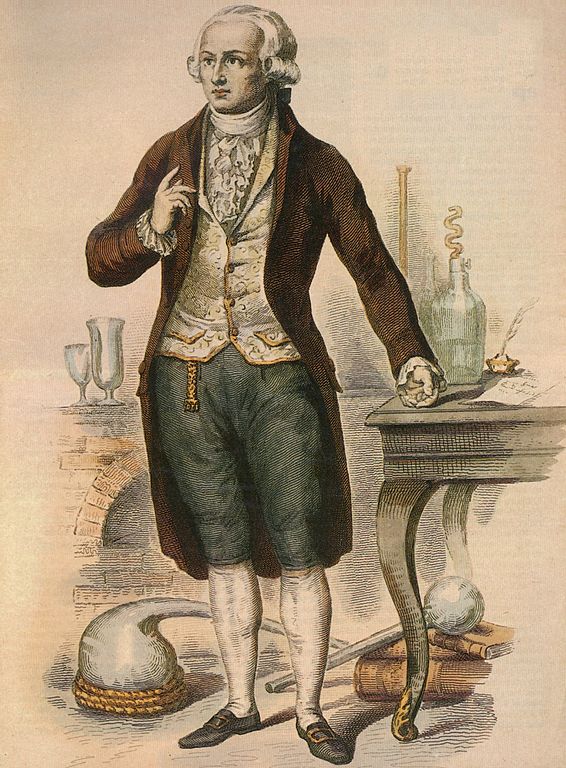
Lavoisier: line engraving by Louis Jean Desire Delaistre, after a design by Julien Leopold Boilly [public domain / Wikimedia Commons]

Antoine Lavoisier: the Father of Chemistry (1743-1794) was the real “martyr for science”: not Galileo or the rank heretic Bruno. Galileo was sentenced to comfortable house arrest by a Catholic tribunal. Lavoisier was not nearly so lucky: he got his head cut off by the “enlightened” atheist French revolutionaries (five other scientists were killed as well). Why, then, do we never hear about that?
*** * * * ***
I have received permission to post the words (but not the name) of an agnostic scientist who is a friend of a friend of mine. He wrote:
Please do not post with my name. I did not put any time into this, and was not intending to get into a scholarly debate with your friend. So would not want it to be considered as my “scholarly work” since it is not my area and I do not have time to read his book. Your friend obviously has a lot more time for this than I do. I am a scientist, not a philosopher of science (even though I have a doctor of philosophy). Rather than debate me, he should be debating someone who does research in this area. . . .
He can post [my words] if he wants without a name, but in my view he should not present me as some expert on the philosophy or history of science. I’m not. I’m a scientist with some opinions. If he is a scholar on the subject and wants scholarly debate, he should be engaging someone like Richard Dawkins.
Our mutual friend sent me a link to a video forwarded by the scientist, called Science Saved My Soul. That about summed up the situation for me, before I saw any particular objections. This is the error known as “scientism.” Blessed John Henry Cardinal Newman described it as follows:
I am not denying, I am granting, I am assuming, that there is reason and truth in the “leading ideas,” as they are called, and “large views” of scientific men; I only say that, though they speak truth, they do not speak the whole truth; that they speak a narrow truth, and think it a broad truth; that their deductions must be compared with other truths, which are acknowledged to be truths, in order to verify, complete, and correct them. They say what is true, exceptis excipiendis; what is true, but requires guarding; true, but must not be ridden too hard, or made what is called a hobby; true, but not the measure of all things; true, but if thus inordinately, extravagantly, ruinously carried out, in spite of other sciences, in spite of Theology, sure to become but a great bubble, and to burst.
(The Idea of a University, Part I, Discourse 4: “Bearing of Other Branches of Knowledge on Theology,” 1852)
They scorn any process of inquiry not founded on experiment; the Mathematics indeed they endure, because that science deals with ideas, not with facts, and leads to conclusions hypothetical rather than real; “Metaphysics” they even use as a by-word of reproach; and Ethics they admit only on condition that it gives up conscience as its scientific ground, and bases itself on tangible utility: but as to Theology, they cannot deal with it, they cannot master it, and so they simply outlaw it and ignore it.
(The Idea of a University, Part I, Discourse 9: “Duties of the Church Towards Knowledge,” 1852)
But science is not possible without theistic premises. Hence, I sent our scientist friend my book (as a PDF): Science and Christianity: Close Partners or Mortal Enemies? I also recommended many related articles on my Philosophy, Science, and Christianity and Atheism, Agnosticism, and Secularism web pages. This led to the following reply (a few typos corrected):
So I’ve skimmed. I get the message that science is strongly rooted in religion. I don’t argue this at all. In the past, everything was done in the church, it’s where education and research was carried out. Plus everyone at least pretended to be christian for fear of being burned at the stake or flogged. But history is full of examples where science progressed “despite” religion. Recall the Dark Ages for example. Galileo was sentenced to life in prison for establishing the truth using the scientific method. The Catholic church stood behind the biggest failed hypothesis of all time for 13 centuries. Ptolemy’s view of the solar system established in the 1st century AD had the Earth at the center of the solar system. The church refused to question this because it was in total agreement with the bible which said the Earth was stationary (which of course is incorrect). 13 centuries later Copernicus finally challenged this theory and put the sun at the center and and the Earth orbiting the sun. Several of Coperinicus’ supporters were burned at the stake by the Catholic church (Copernicus died of natural causes before he himself could be burned at the stake) for getting behind what was eventually shown to be absolutely correct. So yeah, religion helped get science going, but has been holding it back.
I responded in turn: not in extreme depth or supreme, but merely with a “fired-off” reply (as I was busy today doing other things) [additional material added presently in brackets]:
* * *
Obviously, your friend hasn’t read my book yet.
I’ve never heard of Copernicus’ supporters being burned at the stake. I demand (please convey to him) to see documentation of this. I don’t believe it.
[Possibly, our friend is referring to Giordano Bruno (1548-1600), but the problem is that he was not condemned primarily, or even remotely (if at all), for heliocentrism, but rather, for a host of heresies, including pantheism (all is God), erroneous opinions about the Trinity, Christ’s divinity, and His incarnation, denial of transubstantiation, the perpetual virginity of Mary, creation, and the last judgment, and belief in metempsychosis and in the transmigration of the human soul into non-humans, along with various forms of magic and divination. The Stanford Encyclopedia of Philosophy (“Nicolaus Copernicus”) concurs:
Pope Clement VII (r. 1523–1534) had reacted favorably to a talk about Copernicus’s theories, rewarding the speaker with a rare manuscript. There is no indication of how Pope Paul III, to whom On the Revolutions was dedicated reacted; however, a trusted advisor, Bartolomeo Spina of Pisa (1474–1546) intended to condemn it but fell ill and died before his plan was carried out (see Rosen, 1975). Thus, in 1600 there was no official Catholic position on the Copernican system, and it was certainly not a heresy. When Giordano Bruno (1548–1600) was burned at the stake as a heretic, it had nothing to do with his writings in support of Copernican cosmology, and this is clearly shown in Finocchiaro’s reconstruction of the accusations against Bruno (see also Blumenberg’s part 3, chapter 5, titled “Not a Martyr for Copernicanism: Giordano Bruno”).
Blumenberg, H., 1987, The Genesis of the Copernican World, trans. R.M. Wallace, Cambridge, MA: MIT Press.
Finocchiaro, M.A., 2002, “Philosophy versus Religion and Science versus Religion: the Trials of Bruno and Galileo,” [pp.] 51–96 in [Hilary] Gatti (ed.), 2002, Giordano Bruno: Philosopher of theRenaissance, Aldershot: Ashgate.
Likewise, The Catholic Encyclopedia (1908), in its article on Bruno, states:
Bruno was not condemned for his defence of the Copernican system of astronomy, nor for his doctrine of the plurality of inhabited worlds, but for his theological errors, among which were the following: that Christ was not God but merely an unusually skillful magician, that the Holy Ghost is the soul of the world, that the Devil will be saved, etc.
But our agnostic scientist friend wrote:
That he is not aware of the persecution of Copernicus supporters is interesting. I will help him by looking up the reference. It was in a text book I used for a class once – which doesn’t in itself make it right, but better than internet as a source.
Fine; if he refers to Bruno, it is now shown that it is a mistaken inference to say he was killed because of Copernicanism. But he maintained (my italics) that “Several of Coperincus’ [sic] supporters were burned at the stake by the Catholic church.” Very well, then, bring on these other unfortunate candidates. I am not saying no one was ever burned, but I am unaware of their being burned for heliocentrism or Copernicanism. If they were, they were, but it has to be documented. Blumenberg and Finocchiaro are scholars familiar with the specific subject matter. That is solid substantiation: at least for Bruno.]
Secondly, the relation of science and religion is not just “past” but extends to the current time, with a sizable percentage of scientists still professing belief in God, and great scientists right up to our time professed theists or otherwise religious.
[as I showed in my book: listing 31 scientists from 1900-1950 who were theists (e.g., Planck, Eddington, and Lemaître) or otherwise religious and not materialists (e.g., Einstein) ].
Galileo was not sentenced to life in prison, but to an extremely mild house arrest: most of the time living in houses that were palaces of high officials.
[I have noted (first draft for a portion — pp. 30-31 — of my book, The One-Minute Apologist):
In 1633 Galileo was “incarcerated” in the palace of Niccolini, the ambassador to the Vatican from Tuscany, who admired Galileo, spent five months with Archbishop Piccolomini in Siena, and then lived in comfortable environments with friends for the rest of his life (though technically under “house arrest”). No evidence exists to prove that he was ever actually subjected to torture or deliberately blinded (he lost his sight in 1637). ]
His polemical use of “dark ages” is the usual agnostic misunderstanding. It is not synonymous with the “middle ages” but for historians, the period of the late first millennium when the barbarians were in the ascendancy and classical learning was in danger. It was precisely the Church that preserved classical literature and culture, over against these non-Christian barbarians. Yet modern secularists have managed to perpetuate a myth that it was the very opposite of that. Gross ignorance there . . .
[see, e.g., Encyclopaedia Brittanica online (“Dark Ages”):
the early medieval period of western European history. Specifically, the term refers to the time (476–800) when there was no Roman (or Holy Roman) emperor in the West; or, more generally, to the period between about 500 and 1000, which was marked by frequent warfare and a virtual disappearance of urban life. It is now rarely used by historians because of the value judgment it implies.]
Anyone can make mistakes in science. That is not exclusive to Catholics in the Middle Ages or earlier. Galileo, Kepler, Newton and other scientists were neck-deep in astrology and the occult. Galileo made several errors in his cosmology and notions of scientific hypothesis; in some cases being corrected by St. Robert Bellarmine.
If we want persecution of scientists, as late as the late 18th century, I would recommend that your friend study up on the so-called French “Enlightenment” and particularly the case of the great chemist Lavoisier, who was (along with several other prominent scientists) murdered (head lopped off, of course) by the state (far beyond anything that happened to Galileo).
[These other scientist-martyrs to the “goddess of reason” were: Philippe-Frédéric de Dietrich (1748-1793), Nicolas de Condorcet (1743-1794), Jean Baptiste Gaspard Bochart de Saron (1730-1794), Guillaume-Chrétien de Lamoignon de Malesherbes (1721-1794), and Félix Vicq d’Azyr (1746-1794) ]
Previous Post

July 28, 2011
Massacres and Subjective Unwarranted Conclusions
Next Post
August 2, 2011 Catholic Lay Apologetics: Long "Magisterially Approved" History
Browse Our Archives
Select a Category & Last Things About Me Anti-Catholicism Atheism & Agnosticism Baptism and Sacramentalism Bible and Tradition Blessed Virgin Mary Books by Dave Armstrong C. S. Lewis Calvinism & General Protestantism Catholic Apologetics Catholic Apologists Catholic conversion Catholic converts Christmas Church (Ecclesiology) Church History Conversion and Converts Development of Doctrine Eastern Orthodoxy Ecumenism & Christian Unity Eucharist & Liturgy Fathers of the Church French Translations G. K. Chesterton Hell Hell & Satan Hell & Satan & Last Things Heresies & Comparative Religion Holistic Health Inquisition & Crusades & Scandals James White Jews & Judaism & Old Testament John Calvin John Henry Newman Liberal / Modernist Theology Life Issues Literary Resume Lutheranism Mariology Martin Luther Music Orthodoxy Papacy & Infallibility Personal Page Philosophy & Science Political & Ethical & Moral Issues Protestant Persecution & Intolerance Protestantism Purgatory Purgatory & Penance Romantic & Imaginative Theology Saints & Purgatory & Penance Salvation Salvation & Justification Satan & Last Things Sexuality and Gender Issues Spanish Translations Traditionalism vs. Radical Catholic Reactionaries Traducciones al español / tradução para português Trinitarianism & Christology Uncategorized Videos
Select a Month October 2026 September 2026 August 2026 July 2026 June 2026 May 2026 April 2026 March 2026 February 2026 January 2026 December 2025 November 2025 October 2025 September 2025 August 2025 July 2025 June 2025 May 2025 April 2025 March 2025 February 2025 January 2025 December 2024 November 2024 October 2024 September 2024 August 2024 July 2024 June 2024 May 2024 April 2024 March 2024 February 2024 January 2024 December 2023 November 2023 October 2023 September 2023 August 2023 July 2023 June 2023 May 2023 April 2023 March 2023 February 2023 January 2023 December 2022 November 2022 October 2022 September 2022 August 2022 July 2022 June 2022 May 2022 April 2022 March 2022 February 2022 January 2022 December 2021 November 2021 October 2021 September 2021 August 2021 July 2021 June 2021 May 2021 April 2021 March 2021 February 2021 January 2021 December 2020 November 2020 October 2020 September 2020 August 2020 July 2020 June 2020 May 2020 April 2020 March 2020 February 2020 January 2020 December 2019 November 2019 October 2019 September 2019 August 2019 July 2019 June 2019 May 2019 April 2019 March 2019 February 2019 January 2019 December 2018 November 2018 October 2018 September 2018 August 2018 July 2018 June 2018 May 2018 April 2018 March 2018 February 2018 January 2018 December 2017 November 2017 October 2017 September 2017 August 2017 July 2017 June 2017 May 2017 April 2017 March 2017 February 2017 January 2017 December 2016 November 2016 October 2016 September 2016 August 2016 July 2016 June 2016 May 2016 April 2016 March 2016 February 2016 January 2016 December 2015 November 2015 October 2015 September 2015 August 2015 July 2015 June 2015 May 2015 April 2015 March 2015 February 2015 January 2015 December 2014 November 2014 October 2014 September 2014 August 2014 July 2014 June 2014 April 2014 March 2014 February 2014 January 2014 December 2013 November 2013 October 2013 September 2013 August 2013 July 2013 June 2013 April 2013 March 2013 February 2013 January 2013 December 2012 November 2012 October 2012 September 2012 August 2012 July 2012 June 2012 May 2012 April 2012 March 2012 February 2012 January 2012 December 2011 November 2011 October 2011 September 2011 August 2011 July 2011 June 2011 April 2011 March 2011 February 2011 October 2010 September 2010 August 2010 July 2010 April 2010 March 2010 December 2009 October 2009 August 2009 July 2009 June 2009 May 2009 March 2009 February 2009 October 2008 September 2008 April 2008 March 2008 February 2008 January 2008 December 2007 November 2007 October 2007 May 2007 March 2007 February 2007 January 2007 November 2006 October 2006 September 2006 August 2006 July 2006 June 2006 May 2006 April 2006 March 2006 February 2006 October 2005 June 2005 April 2005 February 2005 July 2004 May 2004 April 2004
Follow Us!
TAKE THE
Religious Wisdom Quiz
Who denied Jesus three times before the rooster crowed?
Select your answer to see how you score.
Paul John Peter Judas
Books by This Author Books by Dave Armstrong
Related posts from Biblical Evidence for Catholicism

God, Modern Physics, & Dark Energy: An Analogy
Biblical Evidence for Catholicism

Parting of the Red Sea & Lake Erie...
Biblical Evidence for Catholicism
Deus me curou! (Úlcera, alergias alimentares)
Biblical Evidence for Catholicism
God Has Healed Me! (Ulcer, Irritable Bowel Syndrome)
Biblical Evidence for Catholicism
TRENDING AT PATHEOS Catholic

The Sermon on the Mount, Part I: Matthew...
The Sermon on the Mount, Part I (Matthew 4:12-5:12) St. Matthew moves...

What's up from Crossway: Reviewing some of their latest A few weeks...

Janie Learns the Way of the Cross: A...
Teaching children about Jesus' Passion can be challenging. Many parents and educators...

Looking For Good Catholic Writing - October 2026
He alone extends the heavens, and he walks upon the waves of...

In "Irreplaceable," our book on vocation and technology, Trevor Sutton and I...

I was strolling through the top floor of the brand new Parthenon...
view all Catholic blogs
Ad-Free & Subscriber Log-In Subscription Support
- About Us
- 2026 Calendar
- Videos
- Podcasts
- Library of World Religions
- Faith In Media Tracker
- Advertise With Us
- Write for Us
- Privacy Policy
- Terms of Service
- Do Not Sell My Data
- Contact Us
- Radiant Digital
- Manage Newsletter Subscriptions
- Unsubscribe From Notifications
- Sitemap
Copyright 2008-2026, Patheos. All rights reserved.
Subscription Support Ad-Free & Subscriber Log-In
Follow Patheos