
BuddhistCatholicContemplativeEvangelicalGeneral ChristianHinduJewishLatter-day SaintMuslimNew VisionsProgressive Christian
Beliefs
- Buddhist
- Catholic
- Contemplative
- Evangelical
- General Christian
- Hindu
- Jewish
- Latter-day Saint
- More Voices
- Muslim
- New Visions
- Pagan
- Progressive Christian
Topics
- Religion News
- Food and Religion
- Sports and Religion
- Religious Art
- Religious Music and Entertainment
- Religious Events
- History and Religion
- Style and Religion
- Politics and Religion
- Women in Religion
- Recreation Outdoors and Religion
- Business Finance and Religion
- Careers Workplace and Religion
- Education and Religion
- Family Parenting and Religion
- Health Fitness and Religion
- Home and Religion
- Relationships and Religion
- Technology and Religion
- Travel and Religion
Columnists
- Buddhist Columnists
- Business Finance and Religion Columnists
- Careers Workplace and Religion Columnists
- Catholic Columnists
- Contemplative Columnists
- Education and Religion Columnists
- Evangelists Columnists
- Family Parenting and Religion Columnists
- General Christian Columnists
- Health Fitness and Religion Columnists
- Hindu Columnists
- History and Religion Columnists
- Home and Religion Columnists
- Jewish Columnists
- More Voices Columnists
- Latter Day Columnists
- Muslim Columnists
- New Visions Columnists
- Nonreligious Columnists
- Pagan Columnists
- Politics and Religion Columnists
- Progressive Columnists
- Recreation Outdoors and Religion Columnists
- Relationships and Religion Columnists
- Religion News Columnists
- Religious Art Columnists
- Religious Events Columnists
- Religious Music and Entertainment Columnists
- Sports and Religion Columnists
- Style and Religion Columnists
- Technology and Religion Columnists
- Travel and Religion Columnists
- Women in Religion Columnists
Resource Library
- 2026 Calendar
- Library of World Religions
- The 100 Most Holy Places on Earth
- Patheos Answers
- Podcasts
- Videos
- Faith Leaders Database
- Anglican Episcopalian
- Bahai
- Baptist
- Buddhism
- Christianity
- Confucianism
- Eastern Orthodoxy
- Hinduism
- Holiness and Pentecostal
- ISKCON
- Islam
- Judaism
- Lutheran
- Methodist
- The Church of Jesus Christ of Latter-day Saints
- New Age
- Paganism
- Presbytarian and Reformed
- Protestantism
- Religion Behind the Scenes
- Roman Catholic
- Scientology
- Shia Islam
- Sikhism
- Sufism
- Sunni Islam
- Taoism
- Zen
- See all religions
Research Tools
 Ad-Free & Subscriber Log-In Subscription Support
Ad-Free & Subscriber Log-In Subscription Support
Follow Patheos 

- Trending:
- Forgiveness
- |
- Marriage
- |
- Consciousness
- |
- Death Penalty
- |
- Election
- |
- Halloween

-
About
-
Catholic Apologetics
-
Church History
-
Great Apologists
-
Christian Worldview
-
Protestantism & Misc.
- Home
- Catholic
- History and Religion
- Anglican Newman on the Falsity of Perspicuity (Clearness) of Scripture
Anglican Newman on the Falsity of Perspicuity (Clearness) of Scripture
Last updated on: May 30, 2017 at 4:24 pm by Dave Armstrong
Anglican Newman on the Falsity of Perspicuity (Clearness) of Scripture 2017-05-30T16:24:38-04:00 Dave Armstrong
Patheos Explore the world's faith through different perspectives on religion and spirituality! Patheos has the views of the prevalent religions and spiritualities of the world.
***
(3-7-11)
***
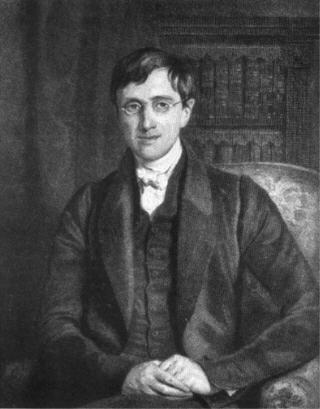
The following are excerpts from my book of quotations from Blessed John Henry Cardinal Newman: The Quotable Newman.
The first selection is from his book, Arians of the Fourth Century (1833). The second is from Tracts for the Times #73: On the Introduction of Rationalistic Principles into Revealed Religion (1836). All of the remaining excerpts are from Tracts for the Times #85: Lectures on the Scripture Proof of the Doctrines of the Church (September 1838).
* * * * *
. . . the Bible, though various in its parts, forms a whole, grounded on a few distinct doctrinal principles discernible throughout it; and is in consequence intelligible indeed in its general drift, but obscure in its text; and even tempts the student, if I may so speak, to a lax and disrespectful interpretation of it.
* * *
No revelation can be complete and systematic, from the weakness of the human intellect; so far as it is not such, it is mysterious. When nothing is revealed, nothing is known, and there is nothing to contemplate or marvel at; but when something is revealed, and only something, for all cannot be, there are forthwith difficulties and perplexities. A Revelation is religious doctrine viewed on its illuminated side; a Mystery is the selfsame doctrine viewed on the side unilluminated. Thus Religious Truth is neither light nor darkness, but both together; it is like the dim view of a country seen in the twilight, with forms half extricated from the darkness, with broken lines, and isolated masses. Revelation, in this way of considering it, is not a revealed system, but consists of a number of detached and incomplete truths belonging to a vast system unrevealed, of doctrines and injunctions mysteriously connected together; that is, connected by unknown media, and bearing upon unknown portions of the system. And in this sense we see the propriety of calling St. John’s prophecies, though highly mysterious, yet a revelation.
* * *
. . . though there really is a true creed or system in Scripture, still it is not on the surface of Scripture, but is found latent and implicit within it, and to be maintained only by indirect arguments, by comparison of texts, by inferences from what is said plainly, and by overcoming or resigning oneself to difficulties . . . If we will not submit to the notion of the doctrines of the Gospel being hidden under the text of Scripture from the view of the chance reader, we must submit to believe either that there are no doctrines at all in Christianity, or that the doctrines are not in Scripture, . . .
* * *
If we will have it so, that the doctrines of Scripture should be on the surface of Scripture, though I may have my very definite notion what doctrines are on the surface, and you yours, and another his, yet you and he and I, though each of us in appearance competent to judge, though all serious men, earnest, and possessed of due attainments, nevertheless will not agree together what those doctrines are; so that, practically, what I have said will come about in the end,—that (if we are candid) we shall be forced to allow, that there is no system, no creed, no doctrine at all lucidly and explicitly set forth in Scripture . . .
* * *
As to the nondescript system of religion now in fashion, viz., that nothing is to be believed but what is clearly stated in Scripture, that all its own doctrines are clearly there and none other, and that, as to history, it is no matter what history says and what it does not say, except so far as it must of course be used to prove the canonicity of Scripture, . . . it has all the external extravagance of Latitudinarianism without any gain in consistency.
* * *
That He has overruled matters so far as to make the apparently casual writings of the Apostles a complete canon of saving faith, is no reason why He should have given them a systematic structure, or a didactic form, or a completeness in their subject-matter.
* * *
. . . if Scripture contains any religious system at all, it must contain it covertly, and teach it obscurely, because it is altogether most immethodical and irregular in its structure; and therefore, that the indirectness of the Scripture proofs of the Catholic system is not an objection to its cogency, except as it is an objection to the Scripture proofs of every other form of Christianity . . .
* * *
. . . we are nowhere told in Scripture, certainly not in the Old Testament, that the Serpent that tempted Eve was the Devil. The nearest approach to an intimation of it is the last book of the Bible, where the devil is called “that old serpent.” Can we be surprised that other truths are but obscurely conveyed in Scripture, when this hardly escapes (as I may say) omission?
* * *
The characteristics then, of the narrative portion of Scripture are such as I have described; it is unsystematic and unstudied;—from which I would infer, that as Scripture relates facts without aiming at completeness or consistency, so it relates doctrines also; . . . From which it follows, that we must not be surprised to find in Scripture doctrines of the Gospel, however momentous, nevertheless taught obliquely, and capable only of circuitous proof;—such, for instance, . . . the especial Church doctrines, such as the Apostolical Succession, the efficacy of the Holy Eucharist, . . .
* * *
I have been arguing that Scripture is a deep book, and that the peculiar doctrines concerning the Church, contained in the Prayer Book, are in its depths. Now let it be remarked in corroboration, first, that the early Church always did consider Scripture to be what I have been arguing that it is from its structure,—viz., a book with very recondite meanings; this they considered, not merely with reference to its teaching the particular class of doctrines in question, but as regards its entire teaching. They considered that it was full of mysteries. Therefore, saying that Scripture has deep meanings, is not an hypothesis invented to meet this particular difficulty, that the Church doctrines are not on its surface, but is an acknowledged principle of interpretation independent of it.
* * *
We have reason to believe that God, our Maker and Governor, has spoken to us by Revelation; yet why has He not spoken more distinctly? He has given us doctrines which are but obscurely gathered from Scripture, and a Scripture which is but obscurely gathered from history.
* * *
That Gospel which was to be “the glory of His people Israel,” [Luke ii. 32.] was a stumblingblock to them, as for other reasons, so especially because it was not on the surface of the Old Testament.
***
Previous Post

March 5, 2011
Newman on Theological Liberalism ("Tracts of the Times" No. 73)
Next Post
April 20, 2011 Quibble About Lutheran Dislike of the Term "Consubstantiation"
Browse Our Archives
Select a Category & Last Things About Me Anti-Catholicism Atheism & Agnosticism Baptism and Sacramentalism Bible and Tradition Blessed Virgin Mary Books by Dave Armstrong C. S. Lewis Calvinism & General Protestantism Catholic Apologetics Catholic Apologists Catholic conversion Catholic converts Christmas Church (Ecclesiology) Church History Conversion and Converts Development of Doctrine Eastern Orthodoxy Ecumenism & Christian Unity Eucharist & Liturgy Fathers of the Church French Translations G. K. Chesterton Hell Hell & Satan Hell & Satan & Last Things Heresies & Comparative Religion Holistic Health Inquisition & Crusades & Scandals James White Jews & Judaism & Old Testament John Calvin John Henry Newman Liberal / Modernist Theology Life Issues Literary Resume Lutheranism Mariology Martin Luther Music Orthodoxy Papacy & Infallibility Personal Page Philosophy & Science Political & Ethical & Moral Issues Protestant Persecution & Intolerance Protestantism Purgatory Purgatory & Penance Romantic & Imaginative Theology Saints & Purgatory & Penance Salvation Salvation & Justification Satan & Last Things Sexuality and Gender Issues Spanish Translations Traditionalism vs. Radical Catholic Reactionaries Traducciones al español / tradução para português Trinitarianism & Christology Uncategorized Videos
Select a Month October 2026 September 2026 August 2026 July 2026 June 2026 May 2026 April 2026 March 2026 February 2026 January 2026 December 2025 November 2025 October 2025 September 2025 August 2025 July 2025 June 2025 May 2025 April 2025 March 2025 February 2025 January 2025 December 2024 November 2024 October 2024 September 2024 August 2024 July 2024 June 2024 May 2024 April 2024 March 2024 February 2024 January 2024 December 2023 November 2023 October 2023 September 2023 August 2023 July 2023 June 2023 May 2023 April 2023 March 2023 February 2023 January 2023 December 2022 November 2022 October 2022 September 2022 August 2022 July 2022 June 2022 May 2022 April 2022 March 2022 February 2022 January 2022 December 2021 November 2021 October 2021 September 2021 August 2021 July 2021 June 2021 May 2021 April 2021 March 2021 February 2021 January 2021 December 2020 November 2020 October 2020 September 2020 August 2020 July 2020 June 2020 May 2020 April 2020 March 2020 February 2020 January 2020 December 2019 November 2019 October 2019 September 2019 August 2019 July 2019 June 2019 May 2019 April 2019 March 2019 February 2019 January 2019 December 2018 November 2018 October 2018 September 2018 August 2018 July 2018 June 2018 May 2018 April 2018 March 2018 February 2018 January 2018 December 2017 November 2017 October 2017 September 2017 August 2017 July 2017 June 2017 May 2017 April 2017 March 2017 February 2017 January 2017 December 2016 November 2016 October 2016 September 2016 August 2016 July 2016 June 2016 May 2016 April 2016 March 2016 February 2016 January 2016 December 2015 November 2015 October 2015 September 2015 August 2015 July 2015 June 2015 May 2015 April 2015 March 2015 February 2015 January 2015 December 2014 November 2014 October 2014 September 2014 August 2014 July 2014 June 2014 April 2014 March 2014 February 2014 January 2014 December 2013 November 2013 October 2013 September 2013 August 2013 July 2013 June 2013 April 2013 March 2013 February 2013 January 2013 December 2012 November 2012 October 2012 September 2012 August 2012 July 2012 June 2012 May 2012 April 2012 March 2012 February 2012 January 2012 December 2011 November 2011 October 2011 September 2011 August 2011 July 2011 June 2011 April 2011 March 2011 February 2011 October 2010 September 2010 August 2010 July 2010 April 2010 March 2010 December 2009 October 2009 August 2009 July 2009 June 2009 May 2009 March 2009 February 2009 October 2008 September 2008 April 2008 March 2008 February 2008 January 2008 December 2007 November 2007 October 2007 May 2007 March 2007 February 2007 January 2007 November 2006 October 2006 September 2006 August 2006 July 2006 June 2006 May 2006 April 2006 March 2006 February 2006 October 2005 June 2005 April 2005 February 2005 July 2004 May 2004 April 2004
Follow Us!
TAKE THE
Religious Wisdom Quiz
How many disciples did Jesus have?
Select your answer to see how you score.
Thirty Seven One hundred Twelve
Books by This Author Books by Dave Armstrong
Related posts from Biblical Evidence for Catholicism

A Few "Worst" & "Best" Arguments vs. Protestantism
Biblical Evidence for Catholicism

Jerusalem Council vs. James White & Sola Scriptura
Biblical Evidence for Catholicism

Biblical Perspicuity: Absurd Anti-Catholic "Defense"
Biblical Evidence for Catholicism

50 Biblical Disproofs of "Evident Clearness" of the...
Biblical Evidence for Catholicism
TRENDING AT PATHEOS Catholic

In "Irreplaceable," our book on vocation and technology, Trevor Sutton and I...

I was strolling through the top floor of the brand new Parthenon...

What Does Gêvâh Mean For Kimberley Guifoyle &...
This week, a lot of the news is focused on Kimberly Guilfoyle....

INNER CIRCLE: Profound Mystery (Of Christ In All...
Ephesians 5:31-32 “For this reason, a man will leave his father and...

Do Not Rejoice When Your Enemy Falls: The...
Turning an execution into a public spectacle is a disturbing expression of...

'The Chosen' S6 Trailer: The Passion Gets Very...
Not many watching 'The Chosen' worry about spoilers, but just because they...
view all Catholic blogs
Ad-Free & Subscriber Log-In Subscription Support
- About Us
- 2026 Calendar
- Videos
- Podcasts
- Library of World Religions
- Faith In Media Tracker
- Advertise With Us
- Write for Us
- Privacy Policy
- Terms of Service
- Do Not Sell My Data
- Contact Us
- Radiant Digital
- Manage Newsletter Subscriptions
- Unsubscribe From Notifications
- Sitemap
Copyright 2008-2026, Patheos. All rights reserved.
Subscription Support Ad-Free & Subscriber Log-In
Follow Patheos