
BuddhistCatholicContemplativeEvangelicalGeneral ChristianHinduJewishLatter-day SaintMuslimNew VisionsProgressive Christian
Beliefs
- Buddhist
- Catholic
- Contemplative
- Evangelical
- General Christian
- Hindu
- Jewish
- Latter-day Saint
- More Voices
- Muslim
- New Visions
- Pagan
- Progressive Christian
Topics
- Religion News
- Food and Religion
- Sports and Religion
- Religious Art
- Religious Music and Entertainment
- Religious Events
- History and Religion
- Style and Religion
- Politics and Religion
- Women in Religion
- Recreation Outdoors and Religion
- Business Finance and Religion
- Careers Workplace and Religion
- Education and Religion
- Family Parenting and Religion
- Health Fitness and Religion
- Home and Religion
- Relationships and Religion
- Technology and Religion
- Travel and Religion
Columnists
- Buddhist Columnists
- Business Finance and Religion Columnists
- Careers Workplace and Religion Columnists
- Catholic Columnists
- Contemplative Columnists
- Education and Religion Columnists
- Evangelists Columnists
- Family Parenting and Religion Columnists
- General Christian Columnists
- Health Fitness and Religion Columnists
- Hindu Columnists
- History and Religion Columnists
- Home and Religion Columnists
- Jewish Columnists
- More Voices Columnists
- Latter Day Columnists
- Muslim Columnists
- New Visions Columnists
- Nonreligious Columnists
- Pagan Columnists
- Politics and Religion Columnists
- Progressive Columnists
- Recreation Outdoors and Religion Columnists
- Relationships and Religion Columnists
- Religion News Columnists
- Religious Art Columnists
- Religious Events Columnists
- Religious Music and Entertainment Columnists
- Sports and Religion Columnists
- Style and Religion Columnists
- Technology and Religion Columnists
- Travel and Religion Columnists
- Women in Religion Columnists
Resource Library
- 2026 Calendar
- Library of World Religions
- The 100 Most Holy Places on Earth
- Patheos Answers
- Podcasts
- Videos
- Faith Leaders Database
- Anglican Episcopalian
- Bahai
- Baptist
- Buddhism
- Christianity
- Confucianism
- Eastern Orthodoxy
- Hinduism
- Holiness and Pentecostal
- ISKCON
- Islam
- Judaism
- Lutheran
- Methodist
- The Church of Jesus Christ of Latter-day Saints
- New Age
- Paganism
- Presbytarian and Reformed
- Protestantism
- Religion Behind the Scenes
- Roman Catholic
- Scientology
- Shia Islam
- Sikhism
- Sufism
- Sunni Islam
- Taoism
- Zen
- See all religions
Research Tools
 Ad-Free & Subscriber Log-In Subscription Support
Ad-Free & Subscriber Log-In Subscription Support
Follow Patheos 

- Trending:
- Forgiveness
- |
- Marriage
- |
- Consciousness
- |
- Death Penalty
- |
- Election
- |
- Halloween

-
About
-
Catholic Apologetics
-
Church History
-
Great Apologists
-
Christian Worldview
-
Protestantism & Misc.
- Home
- Catholic
- History and Religion
- Interview with a Catholic Apologist (Dave Armstrong) by Peter Vere, JCL
Interview with a Catholic Apologist (Dave Armstrong) by Peter Vere, JCL
Last updated on: June 2, 2017 at 5:34 pm by Dave Armstrong
Interview with a Catholic Apologist (Dave Armstrong) by Peter Vere, JCL 2017-06-02T17:34:31-04:00 Dave Armstrong
Patheos Explore the world's faith through different perspectives on religion and spirituality! Patheos has the views of the prevalent religions and spiritualities of the world.
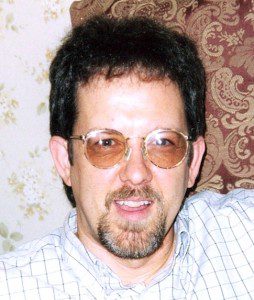
Dave Armstrong: July 2001
***
(11-12-01)
***
Introduction by webmaster Stephen Hand (Traditional Catholic Reflections):
Many, many, know David Armstrong by his most comprehensive and highly regarded, award winning Catholic website (very highly recommended by TCR!); others know of his efforts to show people of all faiths the biblical and philosophical basis of the truths of the Catholic faith. Now that his first book is hitting the stands, TCR and Canonist Peter Vere asked David if he would mind doing an interview with us to introduce him to those who might still not know of his journey and work.
The best kept secret of the Catholic Apologetics (defense of the Faith) movement is Dave Armstrong. How do I know? From experience. Some time ago, while struggling with the Catholicity of the Church after the Second Vatican Council, I encountered Dave on an email discussion group and immediately challenged him to a debate. Rather than accept my challenge, Dave invited me to converse with him on the subjects of the Roman Papacy and the role of Tradition in the Church.
During our conversation, I found Dave’s honesty and sincerity refreshing. With regards to the authentic expression of Catholicism, he was both gentle and firm. At the time, I did not know these were hallmarks of Dave’s Catholic evangelism, and this is why Dave was instrumental in bringing me back to the Catholic Church. Rather than refute any of the objections I raised against the Catholic Church, Dave held my hand and encouraged me to confront them. Afterwards we parted ways as friends, my confidence in the Church restored.
Dave and I recently crossed paths again, owing to the release of his new book. Entitled A Biblical Defense of Catholicism, I recommend this wonderful resource to anyone interested in becoming a Catholic apologist and evangelist. To give a little bit of Dave’s background, he is 43 years of age, and was received into the Church ten years ago by the legendary catechist Fr. John Hardon, S.J. Along with his wife Judy, Dave Armstrong has three sons and their family has recently been blessed with their first daughter.
With regards to faith background, Dave was raised liberal Methodist, became almost a pagan for ten years, with occultic leanings, and converted to evangelical Protestantism in 1977. He was involved in counter-cult work in the early 1980s and started writing apologetics at that time. In the late 80s he became a campus missionary and pro-life activist. He has published several articles since becoming a Catholic, and his work has been featured in The Catholic Answer, Envoy Magazine, This Rock Magazine, and Tradtional Catholic Reflections. His journey into the Catholic Church is one of many to appear in the Catholic best-seller Surprised By Truth, and Dave’s website won Envoy Magazine‘s prestigious website of the year award for 1998.
Pete: As a former Protestant, did you ever find yourself hating the Catholic Church?
Dave: No. I was never a fundamentalist, nor was I a Calvinist: systems of belief where this tendency is the strongest. I certainly fought vigorously against the doctrines of the Catholic Church that I disagreed with, but I always regarded Catholics as brothers in Christ, however much they were “deluded” in various ways. We even played John Michael Talbot songs at our wedding, six years before my conversion. I always loved Church history too, and was somewhat of a medievalist. It’s difficult to be anti-Catholic when one so greatly admires the cathedrals, knightly chivalry, St. Francis, St. Thomas Aquinas, St. Thomas More, and so forth.
Pete: Now what brought you into the Catholic Church from Protestantism?
Dave: The short answer I always offer consists of three elements: i) A realization that the Catholic Church had uniquely preserved in its fullness the moral theology of the early Church, particularly regarding contraception (which was the first thing I changed my mind about), abortion, and divorce. ii) A study of the events of the 16th century from both sides, instead of from only one (naturally biased) side, and discovering that my hero Martin Luther and others of his cohorts were not nearly so “pure” and noble as I had thought, and that they were far more revolutionaries than reformers. iii) Development of doctrine as an adequate explanation of Catholic doctrinal growth (as a result of reading Cardinal Newman).
Pete: Who were the most influential instruments of your conversion?
Dave: My friend John McAlpine, a fellow pro-life activist, who patiently offered replies to my endless and vigorous questions, and who suggested that I read Newman. His example of an articulate, informed, orthodox, and (above all) charitable Catholic was crucial. The late Fr. John A. Hardon, S.J., whom I was privileged to meet and sit under as an informal student, during my journey. Cardinal Newman was the biggest intellectual influence; I had also read (early) Thomas Merton, Karl Adam, G.K. Chesterton, and Thomas Howard, and was enormously impressed by all of them. I had long enjoyed Malcolm Muggeridge. And of course, I admired tremendously John Paul II and Mother Teresa.
Pete: What role did the Holy Eucharist, the Blessed Mother and the Papacy play in your conversion?
Dave: The Catholic doctrine of the Eucharist was not a very large roadblock. I simply accepted transubstantiation once I was convinced of the authority of the Catholic Church. I do remember someone relating it to the Incarnation, and that made sense to me. If God could become a Man, He could also become substantially present in what appears to be bread. I already regarded the Blessed Virgin Mary as the greatest woman who ever lived, and was utterly fascinated with the Second Eve concept, when my friend John first carefully explained it to me: that became the door to a fuller, Catholic Mariology. I loved analogy and types and shadows, so that sparked my interest. And the papacy (eventually) seemed to me a reasonable and necessary governmental element which would help to keep the Church unified (I had always detested the rampant sectarianism in Protestantism).
Pete: How did you go from being a Catholic convert to a Catholic writer, apologist, and evangelist?
Dave: I didn’t really undergo any transformation in that sense, as I had already been doing those things for some nine years, as an evangelical. So it was natural to continue doing so. I think my conversion, however, gave me a fresh impetus and much more motivation to write. What is now my first book was originally lengthy explanations of Catholic distinctives (done on a typewriter) intended to bolster my confidence in and understanding of my newfound discovery, and to explain myself to my Protestant friends. I didn’t even think of publishing them for a year or two. Once I got online in early 1996 I have written more or less constantly. I amaze myself, how much I have written!
Pete: Why do you employ a dialogue style of evangelism and apologetics over a more confrontational debate style?
Dave: Some would dispute that I am not confrontational! My goal, initially, is to find common ground: a foundation on which to build an argument, so that perhaps I can persuade my opponent, like St. Paul’s methodology in his sermon on Mars Hill (Acts 17). I have also sought to follow the Apostle Paul’s injunction: “I have become all things to all men, that by all means I may save some.” And I was profoundly influenced by Socrates, in a college philosophy course, even before I was involved in apologetics. I’ve tried to carry on conversations on the level of “equals,” rather than from an attitude of “superior-subordinate.” I think this is all a part of being as charitable as we can in presenting Catholic claims.
Pete: What is the importance of charity when engaging in Catholic evangelism and apologetics?
Dave: It’s supremely important; indispensable. I think people are far more influenced by that than by the arguments themselves, as I was myself, with regard to my friend John, as noted above. Apologetics, as I (and virtually all apologists) see it, is only a means to remove “roadblocks” and objections to faith, and Catholic doctrine. People are ultimately convicted and converted by the Holy Spirit and grace. God may use our paltry efforts now and then, but they are always a small part of the large picture. Our greatest influence on a human level is the charity we show. All people respond to love, but they don’t all respond to arguments and reasoning. At the same time, we need to be firm and unwavering in presenting truth, and it will offend some folks no matter how gentle we are, because that was the case with our Lord Jesus as well, and He was, of course, perfect.
Pete: Of what importance is prayer when engaging in the type of ministry you conduct?
Dave: As important as charity, if not more so. We mustn’t separate the mind from the heart, or pit theology against spirituality and devotion and worship and prayer. This is one of the many glories of the Catholic Church: it doesn’t create false dichotomies, as so many other Christian groups have a tendency to do. The greatest Catholic mind ever, St. Thomas Aquinas, was also a thoroughgoing mystic, with a profound eucharistic and Marian devotion. We can’t do it ourselves; we are only vessels, entirely enabled by God’s grace to do what we do as apologists. Anyone who doesn’t fully understand that has no business being an apologist. We’re out to win souls, not arguments, though we do try to demonstrate the superiority and truthfulness of our beliefs, by means of rational, biblical, historical argument, of course. It’s mainly an attitudinal question.
Pete: Now you were one of the first individuals to engage in active apologetics against modern day integrism. In fact, you were instrumental in my return to the Catholic Church from the SSPX schism for this very reason. What is the true role of Tradition in the Church?
Dave: What a huge question! I would say that Tradition is what the Bible describes as being “passed down” from the Apostles to the faithful, through the centuries: the body of Christian truths, uniquely preserved in the Catholic Church. Dogma is non-negotiable. Other things such as customs and liturgical matters can be changed, and can incorporate cultural diversity. Tradition is infallibly communicated in Ecumenical Councils and by popes, in the ordinary and extraordinary Magisterium. That’s why it is folly for any Catholic to arbitrarily select which doctrines (or papal and conciliar decrees) they will accept and which they will reject. I’ve often noted how some “traditionalists” have (quite ironically) combined the modernist principle of picking and choosing (“cafeteria Catholicism”) and the Protestant principle of Private Judgment (where their own opinion is in effect the final arbiter), as opposed to a true submission to the Church and granting of even internal assent to solidly-established Catholic teachings.
Pete: Because of your strong Internet presence, many Catholic teens and young adults have been attracted to your ministry. What advice can you share with them concerning how to be an effective Catholic apologist?
Dave: Read and study (a LOT), pray (always), live the life and belief-system you proclaim, boldly share your faith by stepping out and seeing what God can do with any person willing to be used by Him. Start on the Internet, or with good friends who seem open, and start slowly. Don’t push it with parents and spouses. Admit when you don’t know something: that will always reflect well on you. That night you can find a ton of stuff on the Internet or in books in order to go back the next day and offer a strong and reasonable answer. Don’t ever pretend to know something you don’t know. Acknowledge common ground, and really listen to the other guy (not just pretending to as a sort of “tactic”). Use wisdom and prudence in matters of timing. Separate people from their ideas, and believe the best of them, as Paul tells us to do in 1 Corinthians 13. As St. Francis said: “preach the gospel at all times; if necessary, even using words.” I love that.
Pete: In concluding this interview, I wish to thank Dave for answering these questions for our readers. I have immensely enjoyed reading his book, and imagine our readership will enjoy it as well. With a Foreword by Fr. John Hardon, Dave Armstrong’s A Biblical Defense of Catholicism is 230 pages of solid apologetics, . . . It includes a handy Scriptural Index, convenient footnoting and a large 12 page Bibliography of recommended apologetics books . . .
Dave’s second book, More Biblical Evidence for a Catholicism, is a companion to the first, picking up where the first left off and going into more depth as to the basis of Catholic doctrines. It has a Foreword by Scott Hahn and is scheduled to appear in December 2001.
*****
Meta Description: Pete Vere interviews Catholic author and apologist Dave Armstrong, concerning his work.
Meta Keywords: Catholic apologist Dave Armstrong, Catholic author Dave Armstrong, Pete Vere
Catholic apologist Dave Armstrong
Catholic author Dave Armstrong
Previous Post
January 3, 2007
Atheist Myths: "Christianity vs. Science and Reason"
Next Post

January 13, 2007 Dave Armstrong: Catholic Apologetics' "Socratic Evangelist"
Browse Our Archives
Select a Category & Last Things About Me Anti-Catholicism Atheism & Agnosticism Baptism and Sacramentalism Bible and Tradition Blessed Virgin Mary Books by Dave Armstrong C. S. Lewis Calvinism & General Protestantism Catholic Apologetics Catholic Apologists Catholic conversion Catholic converts Christmas Church (Ecclesiology) Church History Conversion and Converts Development of Doctrine Eastern Orthodoxy Ecumenism & Christian Unity Eucharist & Liturgy Fathers of the Church French Translations G. K. Chesterton Hell Hell & Satan Hell & Satan & Last Things Heresies & Comparative Religion Holistic Health Inquisition & Crusades & Scandals James White Jews & Judaism & Old Testament John Calvin John Henry Newman Liberal / Modernist Theology Life Issues Literary Resume Lutheranism Mariology Martin Luther Music Orthodoxy Papacy & Infallibility Personal Page Philosophy & Science Political & Ethical & Moral Issues Protestant Persecution & Intolerance Protestantism Purgatory Purgatory & Penance Romantic & Imaginative Theology Saints & Purgatory & Penance Salvation Salvation & Justification Satan & Last Things Sexuality and Gender Issues Spanish Translations Traditionalism vs. Radical Catholic Reactionaries Traducciones al español / tradução para português Trinitarianism & Christology Uncategorized Videos
Select a Month October 2026 September 2026 August 2026 July 2026 June 2026 May 2026 April 2026 March 2026 February 2026 January 2026 December 2025 November 2025 October 2025 September 2025 August 2025 July 2025 June 2025 May 2025 April 2025 March 2025 February 2025 January 2025 December 2024 November 2024 October 2024 September 2024 August 2024 July 2024 June 2024 May 2024 April 2024 March 2024 February 2024 January 2024 December 2023 November 2023 October 2023 September 2023 August 2023 July 2023 June 2023 May 2023 April 2023 March 2023 February 2023 January 2023 December 2022 November 2022 October 2022 September 2022 August 2022 July 2022 June 2022 May 2022 April 2022 March 2022 February 2022 January 2022 December 2021 November 2021 October 2021 September 2021 August 2021 July 2021 June 2021 May 2021 April 2021 March 2021 February 2021 January 2021 December 2020 November 2020 October 2020 September 2020 August 2020 July 2020 June 2020 May 2020 April 2020 March 2020 February 2020 January 2020 December 2019 November 2019 October 2019 September 2019 August 2019 July 2019 June 2019 May 2019 April 2019 March 2019 February 2019 January 2019 December 2018 November 2018 October 2018 September 2018 August 2018 July 2018 June 2018 May 2018 April 2018 March 2018 February 2018 January 2018 December 2017 November 2017 October 2017 September 2017 August 2017 July 2017 June 2017 May 2017 April 2017 March 2017 February 2017 January 2017 December 2016 November 2016 October 2016 September 2016 August 2016 July 2016 June 2016 May 2016 April 2016 March 2016 February 2016 January 2016 December 2015 November 2015 October 2015 September 2015 August 2015 July 2015 June 2015 May 2015 April 2015 March 2015 February 2015 January 2015 December 2014 November 2014 October 2014 September 2014 August 2014 July 2014 June 2014 April 2014 March 2014 February 2014 January 2014 December 2013 November 2013 October 2013 September 2013 August 2013 July 2013 June 2013 April 2013 March 2013 February 2013 January 2013 December 2012 November 2012 October 2012 September 2012 August 2012 July 2012 June 2012 May 2012 April 2012 March 2012 February 2012 January 2012 December 2011 November 2011 October 2011 September 2011 August 2011 July 2011 June 2011 April 2011 March 2011 February 2011 October 2010 September 2010 August 2010 July 2010 April 2010 March 2010 December 2009 October 2009 August 2009 July 2009 June 2009 May 2009 March 2009 February 2009 October 2008 September 2008 April 2008 March 2008 February 2008 January 2008 December 2007 November 2007 October 2007 May 2007 March 2007 February 2007 January 2007 November 2006 October 2006 September 2006 August 2006 July 2006 June 2006 May 2006 April 2006 March 2006 February 2006 October 2005 June 2005 April 2005 February 2005 July 2004 May 2004 April 2004
Follow Us!
TAKE THE
Religious Wisdom Quiz
What was Paul’s profession before becoming an apostle?
Select your answer to see how you score.
Tentmaker Tax Collector Fisherman Carpenter
Books by This Author Books by Dave Armstrong
Related posts from Biblical Evidence for Catholicism

Why Wes Huff (and Everyone) Should Be Catholic
Biblical Evidence for Catholicism
100 Motown Stars: Info. & Links / My...
Biblical Evidence for Catholicism

Invocation of Saints: Catholic Scholars vs. Me? Nope!
Biblical Evidence for Catholicism
My 19 Imprimaturs vs. James Swan's Slanders
Biblical Evidence for Catholicism
TRENDING AT PATHEOS Catholic

I was strolling through the top floor of the brand new Parthenon...

What Does Gêvâh Mean For Kimberley Guifoyle &...
This week, a lot of the news is focused on Kimberly Guilfoyle....

INNER CIRCLE: Profound Mystery (Of Christ In All...
Ephesians 5:31-32 “For this reason, a man will leave his father and...

Do Not Rejoice When Your Enemy Falls: The...
Turning an execution into a public spectacle is a disturbing expression of...

'The Chosen' S6 Trailer: The Passion Gets Very...
Not many watching 'The Chosen' worry about spoilers, but just because they...

The purpose-driven labor priest
A labor activist reads Rick Warren and it gets me wondering about...
view all Catholic blogs
Ad-Free & Subscriber Log-In Subscription Support
- About Us
- 2026 Calendar
- Videos
- Podcasts
- Library of World Religions
- Faith In Media Tracker
- Advertise With Us
- Write for Us
- Privacy Policy
- Terms of Service
- Do Not Sell My Data
- Contact Us
- Radiant Digital
- Manage Newsletter Subscriptions
- Unsubscribe From Notifications
- Sitemap
Copyright 2008-2026, Patheos. All rights reserved.
Subscription Support Ad-Free & Subscriber Log-In
Follow Patheos