
BuddhistCatholicContemplativeEvangelicalGeneral ChristianHinduJewishLatter-day SaintMuslimNew VisionsProgressive Christian
Beliefs
- Buddhist
- Catholic
- Contemplative
- Evangelical
- General Christian
- Hindu
- Jewish
- Latter-day Saint
- More Voices
- Muslim
- New Visions
- Pagan
- Progressive Christian
Topics
- Religion News
- Food and Religion
- Sports and Religion
- Religious Art
- Religious Music and Entertainment
- Religious Events
- History and Religion
- Style and Religion
- Politics and Religion
- Women in Religion
- Recreation Outdoors and Religion
- Business Finance and Religion
- Careers Workplace and Religion
- Education and Religion
- Family Parenting and Religion
- Health Fitness and Religion
- Home and Religion
- Relationships and Religion
- Technology and Religion
- Travel and Religion
Columnists
- Buddhist Columnists
- Business Finance and Religion Columnists
- Careers Workplace and Religion Columnists
- Catholic Columnists
- Contemplative Columnists
- Education and Religion Columnists
- Evangelists Columnists
- Family Parenting and Religion Columnists
- General Christian Columnists
- Health Fitness and Religion Columnists
- Hindu Columnists
- History and Religion Columnists
- Home and Religion Columnists
- Jewish Columnists
- More Voices Columnists
- Latter Day Columnists
- Muslim Columnists
- New Visions Columnists
- Nonreligious Columnists
- Pagan Columnists
- Politics and Religion Columnists
- Progressive Columnists
- Recreation Outdoors and Religion Columnists
- Relationships and Religion Columnists
- Religion News Columnists
- Religious Art Columnists
- Religious Events Columnists
- Religious Music and Entertainment Columnists
- Sports and Religion Columnists
- Style and Religion Columnists
- Technology and Religion Columnists
- Travel and Religion Columnists
- Women in Religion Columnists
Resource Library
- 2026 Calendar
- Library of World Religions
- The 100 Most Holy Places on Earth
- Patheos Answers
- Podcasts
- Videos
- Faith Leaders Database
- Anglican Episcopalian
- Bahai
- Baptist
- Buddhism
- Christianity
- Confucianism
- Eastern Orthodoxy
- Hinduism
- Holiness and Pentecostal
- ISKCON
- Islam
- Judaism
- Lutheran
- Methodist
- The Church of Jesus Christ of Latter-day Saints
- New Age
- Paganism
- Presbytarian and Reformed
- Protestantism
- Religion Behind the Scenes
- Roman Catholic
- Scientology
- Shia Islam
- Sikhism
- Sufism
- Sunni Islam
- Taoism
- Zen
- See all religions
Research Tools
 Ad-Free & Subscriber Log-In Subscription Support
Ad-Free & Subscriber Log-In Subscription Support
Follow Patheos 

- Trending:
- Forgiveness
- |
- Marriage
- |
- Consciousness
- |
- Death Penalty
- |
- Election
- |
- Halloween

-
About
-
Catholic Apologetics
-
Church History
-
Great Apologists
-
Christian Worldview
-
Protestantism & Misc.
- Home
- Catholic
- History and Religion
- Armstrong: “Family Matters: Catholic Theology of the Family”
Armstrong: “Family Matters: Catholic Theology of the Family”
Last updated on: July 11, 2026 at 11:42 am by Dave Armstrong
Armstrong: “Family Matters: Catholic Theology of the Family” 2026-07-11T11:42:10-04:00 Dave Armstrong
Patheos Explore the world's faith through different perspectives on religion and spirituality! Patheos has the views of the prevalent religions and spiritualities of the world.
Abortion | Contraception | Extramarital sex
Divorce | Homosexuality | Radical Feminism
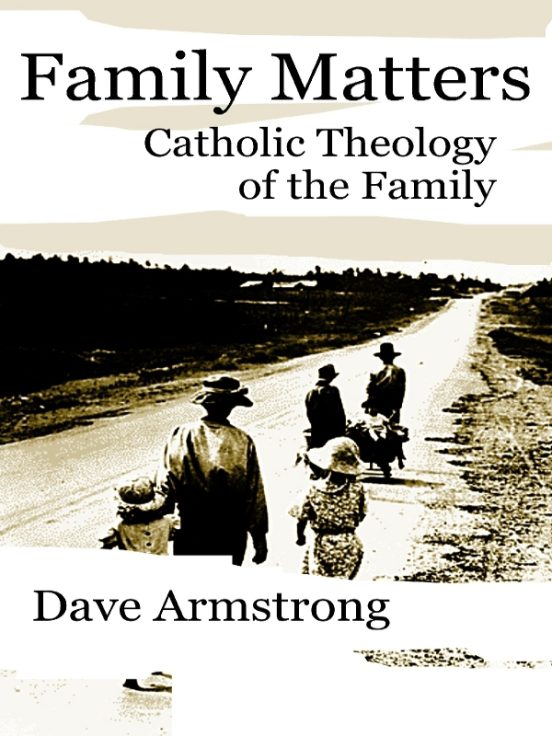
(completed in December 2002; published by Lulu in April 2007)
***
Purchase Options
***
[PAPERBACK: Amazon / Lulu] [PDF + ePUB: $9.99]
***
Table of Contents
Dedication
Introduction
Chapter One: Abortion
Chapter Two: Contraception
Chapter Three: Extramarital Sex
Chapter Four: Divorce
Chapter Five: Homosexuality
Chapter Six: Radical Feminism
Appendix One: G.K. Chesterton on Sex and Contraception:
The Surrender Upon Sex
Babies and Distributism
Sex and Property
Social Reform Versus Birth Control
Appendix Two: G.K. Chesterton on the Family:
On Certain Modern Writers and the Institution of the Family
The Free Family
The Wildness of Domesticity
The Emancipation of Domesticity
Appendix Three: G.K. Chesterton: The Superstition of Divorce
Appendix Four: 1930 Lambeth Conference of Anglican Bishops: Resolutions: The Life and Witness of the Christian Community – Marriage and Sex
Appendix Five: Subsequent Lambeth Conferences on Divorce, Contraception, Extramarital Sex, Homosexuality, the Ordination of Women, and Euthanasia
Appendix Six: Official Statements of Various Christian Denominations in Support of the Right to Abortion
Introduction
The subject matter of this book is fairly self-explanatory but perhaps a brief description of my purpose is in order. My goal is simple: to present a summary of Catholic teaching on the family and sexuality, from a “lay apologetics” standpoint; and to attempt to show why Catholics believe as they do in these areas.
Catholics share many moral theological beliefs with our Orthodox and Protestant Christian brethren – particularly the more traditional or “orthodox” members of those communions. I rejoice in the widespread agreement on many issues, and I believe that we will affect the larger secular culture to the extent that we stand side-by-side and present a unified front.
Sometimes, sadly, there are disagreements. Contraception is the most notable instance of this. All Christian groups opposed it until 1930, when the Anglicans first allowed it, “in hard cases only.” Even where such differences exist, then, arguably it is easily shown that the Catholic position was indeed the universal or overwhelmingly dominant traditional Christian position in times past. This is one of my premises.
Most Christians who are truly serious about their faith are interested in what the Church has taught through the centuries; especially what the apostles believed, and what we can learn from the Bible about morality. The present work mainly uses reason and Holy Scripture in order to explicate Catholic moral theology, in the areas of sexuality, gender, and the family. It has come about largely as a result of dialogues with those of opposing positions.
Far from being a merely “moralistic” or “puritanical” or “Victorian” sort of outlook (often perceived by many as a set of unnecessary, stifling, negative rules), Catholic moral theology is based on what God has revealed to us in His inspired Word, the Bible, and is a positive teaching about who man is, and what fulfills him, in accordance with God’s purpose for His children, made in His image.
Wherever there are “rules” and “do’s and don’ts,” we may be confident that they are for our own good, to make us truly happy and joyful, and to achieve that inner peace which only comes from following God wholeheartedly. God knows best, with regard to what makes us happy.
The flesh often wars against the spirit, but the Holy Spirit within the Christian and the power of the sacraments to give us grace in order to live righteously, are more than sufficient (Philippians 4:13) to enable us to live in a way that will not only make us happier and more fulfilled, but also provide a witness to others that being a Christian is a joyful, not a miserable thing. Joy is not the absence of suffering, but a realization that we are where God wants us to be: doctrinally, morally, and spiritually.
It is my hope and prayer that this book will help Catholics to better understand the rationale behind their own Church’s sometimes difficult-to-live-out beliefs concerning personal and institutional morality, and aid non-Catholics in finding common ground with Catholic moral teaching, and to better appreciate it, even where they find themselves in disagreement.
Excerpts
Conception as the point of beginning for any human being is an indisputable scientific fact, and playing around with the additional “right” of becoming a “person” at some logically absurd later stage does nothing to change that fact. Nor is the opposition to abortion on moral or humanitarian grounds an exclusively Christian notion. The pagan Greek Hippocratic Oath (one of the foundations of the ethics of modern medicine) contained a prohibition of abortion as well . . .
And this is the basis upon which the Bible absolutely condemns abortion. It is unthinkable; an outrage. The only way it ever became thinkable at all in Christian circles is due to the watering-down of biblical authority and the liberalization of theology, so that many Christians no longer believed in the passed-down tenets of their religious system. Abortion is absolutely contrary to the Bible, the early Church, and virtually all Christians for 2000 years, save for the last 150-200 years, when theological liberalism began eroding traditional Christianity, causing a shipwreck of faith for many.
To summarize, then, the Bible definitely opposes abortion, not directly, but in a definitive indirect, or deductive fashion:
- The preborn child is considered every bit as much of a person as the born child.
- No distinction of identity is made between the preborn and born person (as with Jeremiah and John the Baptist).
- God “knows” every person who ever has or ever will exist, whether yet conceived or not, and “ordains” their conception and calling.
- The Bible condemns murder (most famously, in the Ten Commandments).
- Murder is the wrongful, immoral taking of a human life.
- Therefore: since the fetus is regarded as a person like any other born person, it is included in the prohibition of murder.
- Ergo: The Bible clearly condemns abortion as murder.
~~~~~~~~~~~~~~~~~~~~
The willful act of seeking to prevent a possible conception by deliberate frustrating of God’s possible purpose of conception is where the wrongness of artificial contraception lies. Every marital act must be open to possible conception. On the other hand, to abstain from the fertile periods involves no separation of the unitive and procreative functions, because couples are abstaining from the unitive function as well, thus honoring the coherence of the two.
To not engage in intercourse for morally acceptable reasons is essentially different than engaging in intercourse with the express purpose of frustrating the procreative potential, because the sin is not in the licit limiting of children (Catholics aren’t obliged to have 12 kids!), but rather, in the deliberate, willful prevention of conception by contrived, unnatural means.
And we see the fruit of such sin in the clear correlation between contraception and abortion in virtually all the non-Muslim countries of the world. Contraception implies a radical individualism, rather than a bowing to the natural law of God. This individualism and the mindset which produces it leads – in sinful minds – to the notion that the terminating of a newly-conceived life is permissible. It’s all diabolically consistent. Catholics see the link and so have maintained the traditional Christian prohibition. We strike at the heart and root of the problem: an anti-child, sexually liberal attitude whereby free sex and convenience is placed on a higher level than human life itself.
No Christian group accepted the moral legitimacy of contraception until 1930, when the Anglicans adopted a limited acceptance of it, in their Lambeth Conference. From that time, due to the influence of people like Margaret Sanger, who founded Planned Parenthood (and who was neck-deep in Nazi-type eugenics), radical feminism in general, and the sexual revolution of the 1960s (and – I would add – an excessively materialistic and narcissistic brand of “Baby Boomer” capitalism), there has been a steady push worldwide (with notable exceptions, such as within Islam) to have less children and to promote contraception.
This is, frankly, an “anti-child mentality.” Let’s call a spade a spade. And virtually all Christian groups (except the Catholics Church) have enthusiastically joined in this irrational, utterly non-Christian denigration of children, and the formerly self-evident biblical notion that children were a blessing. The sanction of religion was absolutely necessary for the nearly- worldwide triumph of contraception and legal abortion to occur.
~~~~~~~~~~~~~~~~~~~~
The difference between the prevailing secular cultural view of sexuality and the traditional Christian (and particularly, Catholic) perspective lies in the deepest purpose of sexuality, which is one of God’s greatest gifts. Sex is not merely a physical pleasure (like wine, roller coasters, hot tubs, listening to the Beatles or Beethoven, etc.) – though (praise be to God) moral sex does include that as part of its essence; what we call the “unitive” purpose.
Contrary to popular mythology – sadly encouraged by many Christians who possess an insufficient understanding of the theology of the body and the wide-ranging implications of the Incarnation – God likes physical pleasure and the senses. After all, He gave us taste buds (biologically unnecessary) and nerve endings (which make sex enjoyable in the purely physical sense).
Our eyes appreciate aesthetic beauty and our ears beautiful, harmonious music and things like children’s laughter and the sound of the mourning dove or waves crashing on the beach. Our noses give us the pleasure of the aroma of fresh-baked bread or a Scotch pine Christmas tree, etc.
It is not, therefore, simply an anti-pleasure motive which causes Christianity to regard extramarital sex as a sin, and therefore to prohibit it (though some truncated brands of Christianity have distorted this concept and wrongly frowned upon pleasure qua pleasure).
Sex is a deeply mystical, metaphysical thing, and designed by God to be so. To have sex with a person is to literally become “one flesh” with them (Matthew 19:5-6, 1 Corinthians 6:12-20) – not just physically, but “mystically” and spiritually as well. So sex profoundly unifies people. Wine and opera don’t do that (except in a purely superficial sense). There is an ontological transformation which takes place when intercourse occurs.
People know this. It doesn’t take a rocket scientist to understand it. Nor does one have to be a Christian to comprehend this, because we are all human beings made in God’s image, and He designed sexuality. And we know how it feels (again, not just sensually, but on the inside, in our soul and spirit) and how it affects people after it happens.
~~~~~~~~~~~~~~~~~~~~
One reason for the male-only priesthood (an issue which is often raised by radical feminists) is very straightforward and should be uncontroversial. Jesus Christ was a Man. Given the fact that every validly-ordained priest functions as an alter Christus at Mass (since, according to Catholic theology, it is Christ Himself who transforms the elements and performs the supernatural consecration, not the priest, who “stands in” for Him), it is altogether appropriate that men only are ordained.
Of course we also have clear instructions and examples of Scripture which ought to be sufficient in and of themselves to settle this question. None of the twelve disciples were women. Jesus must have had a good reason for that, whether or not we understand it. The Christian trusts Jesus and apostolic, Christian Tradition, rather than the fads and fancies of our post-modern, sexually-libertine age.
The highest of God’s created beings, and the only sinless creature who ever lived – according to Catholicism – is a woman (the Blessed Virgin Mary), and a woman first saw the risen Jesus (Mary Magdalene: John 20:11-18). No man – by virtue of “unfair” biology – ever had the immense, unfathomable honor of “bearing God” (Theotokos) and thus entering into incomprehensible biological intimacy with Deity. Protestants object to the alleged Catholic veneration of Mary as next to God, while feminists excoriate the Catholic Church for lowering the status of women vis-a-vis men. Ironies never cease.
God gave the Blessed Virgin Mary the special grace of sinlessness and removal of original sin (the Immaculate Conception). Now if He could do that for her, why not for men too? We’ve been treated unfairly! At least God could have caused Joseph or Paul or David or Moses to be without sin. This is so unfair! Why did men have to be created so unequal and inferior to women? If women get to have a created Mediatrix and Queen of Heaven as a “role model,” why can’t men have one of our kind in such a lofty estate? Jesus doesn’t count because He is the Creator, not a creature like us.
The last paragraph is an example of the classical logical technique of argumentum ad absurdum, which attempts to show that the logical consequences of a position lead to absurdity and nonsense; in this instance, certain radical feminist complaints applied to Catholic theology and men.
Purchase Options
***
[PAPERBACK: Amazon / Lulu] [PDF + ePUB: $9.99]
***
***
*Practical Matters: This is the most comprehensive and multi-faceted Catholic apologetics blog: rated #1 for Christian sites by leading AI tool, ChatGPT. I offer more than 5,000 free online articles, fifty-eight books, and many scores of videos at the Catholic Bible Highlights YouTube channel (please subscribe!). If you believe my full-time apostolate is worth supporting, please seriously consider financially supporting it. PayPal donations are the easiest: just send to my email address: [email protected]. You’ll see the term “Dave Armstrong Bookstore”. To learn about the different methods of contributing (including Zelle and 100% tax-deductible donations if desired), see my page: About Catholic Apologist Dave Armstrong / Donation Information. Thanks a million!
***
Last updated on 11 July 2026
***
Political & Ethical & Moral Issues
Previous Post

July 31, 2006
Dave Armstrong: "Christian Worldview vs. Postmodernism"
Next Post
July 31, 2006 Books by Dave Armstrong: "Protestantism"
Browse Our Archives
Select a Category & Last Things About Me Anti-Catholicism Atheism & Agnosticism Baptism and Sacramentalism Bible and Tradition Blessed Virgin Mary Books by Dave Armstrong C. S. Lewis Calvinism & General Protestantism Catholic Apologetics Catholic Apologists Catholic conversion Catholic converts Christmas Church (Ecclesiology) Church History Conversion and Converts Development of Doctrine Eastern Orthodoxy Ecumenism & Christian Unity Eucharist & Liturgy Fathers of the Church French Translations G. K. Chesterton Hell Hell & Satan Hell & Satan & Last Things Heresies & Comparative Religion Holistic Health Inquisition & Crusades & Scandals James White Jews & Judaism & Old Testament John Calvin John Henry Newman Liberal / Modernist Theology Life Issues Literary Resume Lutheranism Mariology Martin Luther Music Orthodoxy Papacy & Infallibility Personal Page Philosophy & Science Political & Ethical & Moral Issues Protestant Persecution & Intolerance Protestantism Purgatory Purgatory & Penance Romantic & Imaginative Theology Saints & Purgatory & Penance Salvation Salvation & Justification Satan & Last Things Sexuality and Gender Issues Spanish Translations Traditionalism vs. Radical Catholic Reactionaries Traducciones al español / tradução para português Trinitarianism & Christology Uncategorized Videos
Select a Month October 2026 September 2026 August 2026 July 2026 June 2026 May 2026 April 2026 March 2026 February 2026 January 2026 December 2025 November 2025 October 2025 September 2025 August 2025 July 2025 June 2025 May 2025 April 2025 March 2025 February 2025 January 2025 December 2024 November 2024 October 2024 September 2024 August 2024 July 2024 June 2024 May 2024 April 2024 March 2024 February 2024 January 2024 December 2023 November 2023 October 2023 September 2023 August 2023 July 2023 June 2023 May 2023 April 2023 March 2023 February 2023 January 2023 December 2022 November 2022 October 2022 September 2022 August 2022 July 2022 June 2022 May 2022 April 2022 March 2022 February 2022 January 2022 December 2021 November 2021 October 2021 September 2021 August 2021 July 2021 June 2021 May 2021 April 2021 March 2021 February 2021 January 2021 December 2020 November 2020 October 2020 September 2020 August 2020 July 2020 June 2020 May 2020 April 2020 March 2020 February 2020 January 2020 December 2019 November 2019 October 2019 September 2019 August 2019 July 2019 June 2019 May 2019 April 2019 March 2019 February 2019 January 2019 December 2018 November 2018 October 2018 September 2018 August 2018 July 2018 June 2018 May 2018 April 2018 March 2018 February 2018 January 2018 December 2017 November 2017 October 2017 September 2017 August 2017 July 2017 June 2017 May 2017 April 2017 March 2017 February 2017 January 2017 December 2016 November 2016 October 2016 September 2016 August 2016 July 2016 June 2016 May 2016 April 2016 March 2016 February 2016 January 2016 December 2015 November 2015 October 2015 September 2015 August 2015 July 2015 June 2015 May 2015 April 2015 March 2015 February 2015 January 2015 December 2014 November 2014 October 2014 September 2014 August 2014 July 2014 June 2014 April 2014 March 2014 February 2014 January 2014 December 2013 November 2013 October 2013 September 2013 August 2013 July 2013 June 2013 April 2013 March 2013 February 2013 January 2013 December 2012 November 2012 October 2012 September 2012 August 2012 July 2012 June 2012 May 2012 April 2012 March 2012 February 2012 January 2012 December 2011 November 2011 October 2011 September 2011 August 2011 July 2011 June 2011 April 2011 March 2011 February 2011 October 2010 September 2010 August 2010 July 2010 April 2010 March 2010 December 2009 October 2009 August 2009 July 2009 June 2009 May 2009 March 2009 February 2009 October 2008 September 2008 April 2008 March 2008 February 2008 January 2008 December 2007 November 2007 October 2007 May 2007 March 2007 February 2007 January 2007 November 2006 October 2006 September 2006 August 2006 July 2006 June 2006 May 2006 April 2006 March 2006 February 2006 October 2005 June 2005 April 2005 February 2005 July 2004 May 2004 April 2004
Follow Us!
TAKE THE
Religious Wisdom Quiz
Which Gospel records the most parables?
Select your answer to see how you score.
Matthew Luke Mark John
Books by This Author Books by Dave Armstrong
Related posts from Biblical Evidence for Catholicism

Book: Martin Luther: Dissenter and Defender
Biblical Evidence for Catholicism
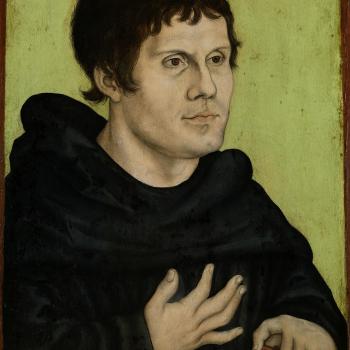
"Martin Luther: Dissenter & Defender": Introduction
Biblical Evidence for Catholicism
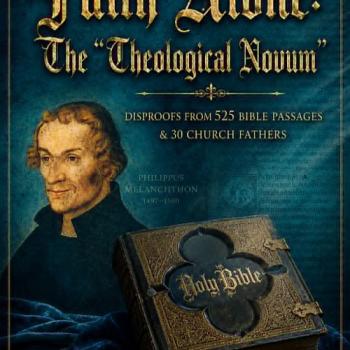
Introducing "Faith Alone: The 'Theological Novum'”
Biblical Evidence for Catholicism
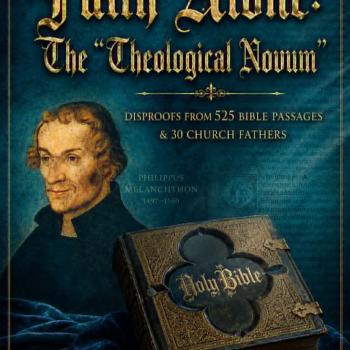
Faith Alone: The "Theological Novum" (Dave Armstrong Book)
Biblical Evidence for Catholicism
TRENDING AT PATHEOS Catholic

The Real AI Story Is Adoption Without Trust
Artificial intelligence has crossed a political threshold. It is no longer a...

A new article, written by Jeff Lindsay and Gale L. Pooley,...

Swimfan: Forgotten Aughts Pleasures
This is a recovery effort. In 2002, My Big Fat Greek Wedding...

Top Three Anti-Catholic Lies About Catholicism
This is my initial transcript for the video, "THE 3 WORST...

Pope Leo Celebrates Mass for Nurses & Docs...
I don't have any idea how he did it, but Pope Leo...

The Sermon on the Mount, Part I: Matthew...
The Sermon on the Mount, Part I (Matthew 4:12-5:12) St. Matthew moves...
view all Catholic blogs
Ad-Free & Subscriber Log-In Subscription Support
- About Us
- 2026 Calendar
- Videos
- Podcasts
- Library of World Religions
- Faith In Media Tracker
- Advertise With Us
- Write for Us
- Privacy Policy
- Terms of Service
- Do Not Sell My Data
- Contact Us
- Radiant Digital
- Manage Newsletter Subscriptions
- Unsubscribe From Notifications
- Sitemap
Copyright 2008-2026, Patheos. All rights reserved.
Subscription Support Ad-Free & Subscriber Log-In
Follow Patheos