
BuddhistCatholicContemplativeEvangelicalGeneral ChristianHinduJewishLatter-day SaintMuslimNew VisionsProgressive Christian
Beliefs
- Buddhist
- Catholic
- Contemplative
- Evangelical
- General Christian
- Hindu
- Jewish
- Latter-day Saint
- More Voices
- Muslim
- New Visions
- Pagan
- Progressive Christian
Topics
- Religion News
- Food and Religion
- Sports and Religion
- Religious Art
- Religious Music and Entertainment
- Religious Events
- History and Religion
- Style and Religion
- Politics and Religion
- Women in Religion
- Recreation Outdoors and Religion
- Business Finance and Religion
- Careers Workplace and Religion
- Education and Religion
- Family Parenting and Religion
- Health Fitness and Religion
- Home and Religion
- Relationships and Religion
- Technology and Religion
- Travel and Religion
Columnists
- Buddhist Columnists
- Business Finance and Religion Columnists
- Careers Workplace and Religion Columnists
- Catholic Columnists
- Contemplative Columnists
- Education and Religion Columnists
- Evangelists Columnists
- Family Parenting and Religion Columnists
- General Christian Columnists
- Health Fitness and Religion Columnists
- Hindu Columnists
- History and Religion Columnists
- Home and Religion Columnists
- Jewish Columnists
- More Voices Columnists
- Latter Day Columnists
- Muslim Columnists
- New Visions Columnists
- Nonreligious Columnists
- Pagan Columnists
- Politics and Religion Columnists
- Progressive Columnists
- Recreation Outdoors and Religion Columnists
- Relationships and Religion Columnists
- Religion News Columnists
- Religious Art Columnists
- Religious Events Columnists
- Religious Music and Entertainment Columnists
- Sports and Religion Columnists
- Style and Religion Columnists
- Technology and Religion Columnists
- Travel and Religion Columnists
- Women in Religion Columnists
Resource Library
- 2026 Calendar
- Library of World Religions
- The 100 Most Holy Places on Earth
- Patheos Answers
- Podcasts
- Videos
- Faith Leaders Database
- Anglican Episcopalian
- Bahai
- Baptist
- Buddhism
- Christianity
- Confucianism
- Eastern Orthodoxy
- Hinduism
- Holiness and Pentecostal
- ISKCON
- Islam
- Judaism
- Lutheran
- Methodist
- The Church of Jesus Christ of Latter-day Saints
- New Age
- Paganism
- Presbytarian and Reformed
- Protestantism
- Religion Behind the Scenes
- Roman Catholic
- Scientology
- Shia Islam
- Sikhism
- Sufism
- Sunni Islam
- Taoism
- Zen
- See all religions
Research Tools
 Ad-Free & Subscriber Log-In Subscription Support
Follow Patheos 

- Trending:
- Advent
- |
- Forgiveness
- |
- Thanksgiving
- |
- Election
- |
- Seasonal Holidays
- |
- Marriage

-
About
-
Catholic Apologetics
-
Church History
-
Great Apologists
-
Christian Worldview
-
Protestantism & Misc.
- Home
- Catholic
- History and Religion
- Books by Apologist Dave Armstrong: “The Catholic Verses”
Books by Apologist Dave Armstrong: “The Catholic Verses”
Last updated on: July 11, 2026 at 12:03 pm by Dave Armstrong
Books by Apologist Dave Armstrong: “The Catholic Verses” 2026-07-11T12:03:23-04:00 Dave Armstrong
Patheos Explore the world's faith through different perspectives on religion and spirituality! Patheos has the views of the prevalent religions and spiritualities of the world.
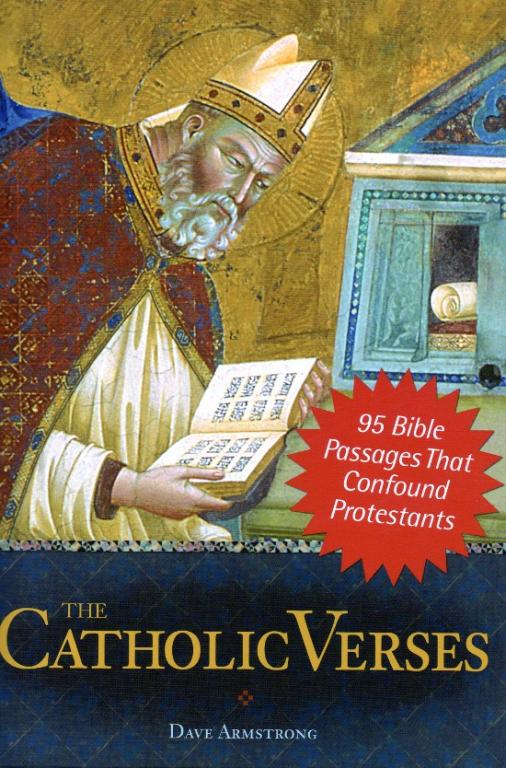
[235 pages; published by Sophia Institute Press in August 2004]
[cover design by Theodore Schluenderfritz]
***
Purchase Options
[PAPERBACK: Amazon / Sophia Institute Press] [KINDLE: $9.99]
***
[This title is also published in Portugese (2-8-17). Read more about it, including purchase information]
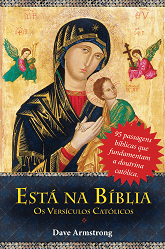
Table of Contents
[linked portions available online indicated by color]
Dedication
Introduction
1. The Church
-
- The Church is the “Pillar of the Truth”
- The Binding Authority of Councils, Led by the Holy Spirit
- The Authority of Oral Tradition
- Sinners in the Church
2. Divisions and Denominationalism
-
- Christians Ought to Be One as Jesus and His Father Are One
- A Multiplicity of Divisions Is a Bad Thing
- Dissensions and Denominationalism Forbidden by St. Paul
3. Bible and Tradition
-
- The Necessity of Authoritative Interpretation
- The Binding Authority of Tradition, According to St. Paul
- Oral and Extrabiblical Tradition in the New Testament
4. The Papacy
-
- St. Peter as the Rock and Possessor of the Keys of the Kingdom
- Justification and Salvation
-
- Faith and Works: Two Sides of One Coin
- The Rich Young Ruler’s Question About Salvation
- God’s Fellow Workers?
- St. Paul’s Plea: “Work Out Your Salvation”
- Obedience Necessary for Salvation
- Disobedience Led to Death, Obedience to Justification
- St. Paul on Falling Away from the Faith and Salvation
- Other Biblical Writers on Apostasy
6. Judgment and Good Works
-
- The Crucial Role of Works (and Absence of Faith) in Judgment Day Accounts
- St. Paul: “Doers of the Law” Will Be Justified
7. Baptism
-
- Baptism of Entire Households (Implying the Baptism of Children) .
- Baptismal Regeneration
8. The Eucharist
-
- The Last Supper: “This Is My Body”
- “He Who Eats My Flesh and Drinks My Blood Has Eternal Life”
- “Participation” in the Body and Blood of Christ
- Profaning the Body and Blood of the Lord
9. Penance
-
- Sharing in Christ’s Sufferings
- Carrying Christ’s Afflictions in Our Bodies
10. The Communion of the Saints
-
- The Imitation of Paul and the Veneration of the Saints
- Saints in Heaven as a “Cloud of Witnesses” Watching Those on Earth
- The Intercession of the Saints and Their Connection with the Earth
11. Relics and Sacramentals
-
- Elisha’s Bones Raise a Man from the Dead
- More Biblical Relics: Elijah’s Mantle, Peter’s Shadow, and Paul’s Handkerchief
12. Purgatory and Prayers for the Dead
-
- A Fairly Explicit Biblical Argument for Purgatory
- Baptism for the Dead: the Most “Un-Protestant” Verse in the Bible
- The Case of Onesiphorus: Did St. Paul Pray for a Dead Man?
- Prayers for the Dead When the Dead Are Raised
13. The Blessed Virgin Mary
- Clerical Celibacy
-
- Voluntary Eunuchs for the Sake of the Kingdom of Heaven
- “Each Has His Own Special Gift”; “Undivided Devotion to the Lord”
- Divorce
-
- Our Lord Jesus’ “Strict” Stance on Divorce
16. Contraception
-
- The Sin of Onan [online excerpt is from the first draft, and contains some differences]
Conclusion
Bibliography
Introduction
The total of ninety-five Bible passages presented in this book – as many readers no doubt suspect – subtly makes reference to the famous Ninety-Five Theses of Martin Luther, tacked on the door of a church in Wittenberg, Germany, on October 31, 1517, in protest against certain doctrines and practices of the Catholic Church. That act is considered the beginning of what is called the Protestant Reformation.
The Catholic Church is often attacked (to use a prominent, cynical example) with the claim that it has allowed “traditions of men” to obscure the pure word of God found in Holy Scripture and substituted for it a Pharisee-like tradition by which it diabolically holds souls in bondage, woefully ignorant of the Bible and God’s grace and mercy alike.
Be that as it may (of course, Catholics completely disagree with this assessment), when it comes to Scripture, Protestantism is not without its own serious internal inconsistencies, shortcomings, and problems. Since Protestants almost casually assume that the Bible is their book – that they have a virtual monopoly on correct Bible interpretation — and that it always supports their positions and disproves Catholic ones, it is good once in a while to “turn the tables” and closely examine and scrutinize Protestant traditions.
No one comes to the Bible as a completely impartial and objective observer or reader. We all approach it, whether consciously or unconsciously, with some sort of preexisting theology, or at least a disposition toward a certain viewpoint. It is impossible not to do this. It is part of the very nature of the thinking process.
Protestants are no exception. They claim that the Bible is clear (“perspicuous”) for almost anyone to understand in its main outlines (and indeed, Catholics agree that it is in many important respects), yet they have been unable, in nearly five hundred years, to come to agreement in many significant areas of theology, and they remain institutionally divided (something repeatedly condemned in no uncertain terms by the Bible).
I shall contend throughout this book that, far too often, Protestants do not take all of Scripture into account, and that they are guilty of eisegesis (reading into Scripture one’s own presuppositions), at least as often as Catholics are, if not more often. Protestants (especially on a popular level) often emphasize relatively few “proof texts” to the exclusion of a great deal of relevant biblical data.
Moreover, only rarely do they seriously engage the biblical texts utilized by Catholics to support their positions through the centuries. In probably most cases, they are not even aware of any passages that a Catholic might use to prove anything that would be contrary to Protestantism. Habitually, they do not even entertain the possibility. For many Protestants, such a state of affairs is literally impossible. It is not supposed to happen. When Catholics and Protestants grapple over the Bible and its interpretation, Protestants must always win (so they casually assume).
I hasten to add – and emphasize to the greatest degree — that these tendencies of bias and subjectivism and subconscious influence of denominational traditions do not necessarily entail a deliberate attempt to ignore or to twist Scripture. Every serious student of the Bible comes to the biblical text with a theological framework, in order to interpret it and make sense of it in its entirety. This is proper and right, and no one should have any objection to it.
Both Catholics and Protestants engage in systematic theology, a method which involves finding proof texts for a given doctrine. In so doing, men will have honest disagreements, in good faith. We highly respect the devotion to Bible study and to theological reflection exhibited by many of our Protestant brethren – often putting Catholics to shame.
With that disclaimer always in mind, and without at all questioning the sincerity or integrity of Protestants, I shall now proceed to offer a critique of common Protestant attempts to ignore, explain away, rationalize, wish away, overpolemicize, minimize, de-emphasize, evade clear consequences of, or special plead with regard to “the Catholic Verses”: ninety-five biblical passages that provide the foundation for Catholicism’s most distinctive doctrines. This is not a scholarly work, as I am no scholar in the first place, but merely a lay Catholic apologist; but it is not “anti-scholarly,” and I will incorporate scholarship wherever necessary to substantiate the argument.
My emphasis will be on the popular level, but John Calvin and Martin Luther (the primary founders of Protestantism, or, as Protestants and historians refer to them, “Reformers”) will be cited quite frequently, as well as other scholars, especially well-known Protestant commentators such as Matthew Henry, John Wesley, Albert Barnes, and Adam Clarke, when a particular argument concerning the prevalent Protestant viewpoint vis-à-vis a Bible passage needs to be backed up or documented.
I will cite Martin Luther and John Calvin primarily as “prototypes” for later Protestant exegesis and hermeneutics (fancy words for Bible commentary and interpretation). In other words, their commentary will serve as representative of Protestantism, insofar as they hold to historically influential positions that are largely held by subsequent and current-day Protestants. Most Protestants respect these two men, even if they deny (as surprisingly many do) any direct or significant historical and theological connection with them.
Occasionally, however, I will demonstrate how Luther or Calvin, or both, held to views that are rejected by today’s Protestants. In some cases (such as the issue of contraception), it is striking how early Protestant opinion was virtually identical to traditional Catholic beliefs. Those are instances in which (ironically) Protestants today are far less in harmony with their own historical and theological heritage than Catholics are, and where today’s Protestants ignore or re-interpret some Bible passages in ways that would have been utterly rejected by the founders of Protestantism. A few historically significant examples of this sort will be included in this book for educational purposes, in order to illustrate that Protestant theology is a fluid, changeable phenomenon.
I will assert – with all due respect and, I hope, with a minimum of “triumphalism” — the ultimate incoherence, inadequacy, inconsistency, or exegetical and theological implausibility of the Protestant interpretations, and will submit the Catholic views as exegetically and logically superior alternatives.
The ninety-five Catholic Verses here considered are, I submit, so closely related to Catholic “distinctives” that they form an essential body of biblical material, useful and crucial for every Catholic who wishes to better understand and defend the Catholic Faith. Nothing is more effective (or more respected), in discourse with our Protestant brothers and sisters in the Lord than a cogent, persuasive biblical argument.
It should also be noted how the explosion of religious dialogue on the Internet has been a great and exciting opportunity for expanding discussions like these. One might describe theologically oriented Internet discussion boards, lists, and chat rooms as the twenty-first-century equivalent of Speaker’s Corner in London’s Hyde Park, a place where Catholics (for example, the well-known lay apologist Frank Sheed and his Catholic Evidence Guild) disputed and dialogued with atheists, Protestants, and other opponents of Catholicism, and where free discussion occurred. I have been very active in online apologetics for nearly eight years and will incorporate in this book my experiences in discussing Scripture with Protestants.
The Second Vatican Council dealt with the use of such means in its Decree on the Means of Social Communication (Inter Mirifica: 4 December 1963), referring to “those means of communication which of their nature can reach and influence . . . the whole of human society. These are the press, the cinema, radio, television, and others of a like nature” (1). The council urged that all Catholics “should make a concerted effort to ensure that the means of communication are put at the service of the multiple forms of the apostolate without delay and as energetically as possible” (13).
As always in my apologetics, I ask readers to have an open mind and to be as objective as possible in their appraisal of competing points of view. I ask (in fact, plead with) non-Catholic readers to allow the Catholic outlook a fair hearing. Perhaps many will be surprised to see that Catholicism can be so strongly supported by the Bible.
It’s one thing to have an honest disagreement with a fellow Christian, without questioning his basic integrity or the worth of his paradigm or theological framework or tradition; it is quite another to reject other Christian theologies and belief-systems as corrupt, “unbiblical” entities that can succeed only by a deliberately dishonest distortion or outright suppression of the biblical text. Too often, the latter approach is wrongly applied to Catholicism by Protestants.
Catholics typically do not respond in kind; we gladly acknowledge Protestants as fellow Christians and brothers and sisters in Christ and rejoice in the many things that we hold in common. One can disagree without belittling the opponents’ belief system or demonizing them as individuals. That is my present goal: I consider this discussion an “in-house” fight, not a battle between darkness and light or good and evil. I write as a fellow brother in Christ with a respectful disagreement.
If this book can convince the reader that Catholicism is at least as “biblically respectable” as any brand of Protestantism, I will have succeeded in my goal. In any event, I trust that all students of the Bible will be interested in comparative exegesis and a side-by-side analysis of competing views. Of course my ultimate aim is persuasion, but increased understanding (even while disagreement remains) is also a worthy accomplishment.
The Bible is our common ground, and I hope we can all engage in mutually respectful discussion of its contents and meaning. I learned to love and study holy Scripture as a Protestant, and for that (among many other blessings) I shall always be thankful.
Finally, I wish to address an anticipated charge that I am merely “proof-texting” or operating in a “Protestant” mode of sola Scriptura, whereby every doctrine must be explicitly proven in Scripture, and in Scripture Alone. Catholics do not believe that. We do believe, however, that all our doctrines are present in Scripture, either explicitly or in kernel form (later to be more fully developed), or as straightforward deductions from biblical material. This is the notion of “material sufficiency” of Scripture.
Nevertheless, not every doctrine has to rest solely on Scripture alone. All doctrines need to be harmonious with, and not contradictory to Scripture (which is a notion distinct from sola Scriptura). Another way to look at this difference is to realize that when a Protestant uses the terms unbiblical or extrabiblical, he usually means “not found in Scripture.” When Catholics, however, use those terms, we mean “not explicitly in Scripture, yet not contrary to it, and fully consistent with it (as all true doctrines must be).”
I recently dealt with this very charge, made by an Orthodox Christian who suggested that I was adopting the Protestant method in my biblical apologetics. I emphasized to him that when Catholics argue from Scripture, we are acting very much like the Church Fathers, who constantly appealed to Scripture against the heretics, but whose final court of appeal was always Tradition and Holy Mother Church, where the proper interpretation of Scripture was verified. Like St. Athanasius in his dealing with the Arian heretics (who denied that Jesus was God), we can (and it is very good to) argue mostly from Scripture, but rest our final appeal on the Church and unbroken apostolic Tradition.
In effect, Catholics are saying, “So you want to argue doctrines based on the standard of Bible Alone? We can match you verse for verse (without adopting your principle of sola Scriptura). We aren’t afraid to subject our views to the most intense biblical scrutiny and exegesis. In fact, we eagerly welcome it.” The fact remains that diverse interpretations arise, and a final authority outside of Scripture is needed to resolve those controversies. This does not imply in the least that Scripture itself (rightly understood) is not sufficient to overcome the errors. It is only formally insufficient by itself (that is, it cannot interpret itself; this is where Church and Tradition come in).
Needless to say (but I want to make it clear!): my arguments are not the be-all and end-all of theological reflection or even of the specific field of apologetics. I offer them as food for thought; as a perspective, I believe, entirely in accord with the dogmatic teachings of the Church. My main purpose is to show that Catholics need not “yield” Scripture to Protestants, as if the Bible were a Protestant book. It is not. It is, if we must speak in this fashion, a Catholic book, produced and preserved by Catholics for nearly 1,500 years before Protestantism even appeared.
The Bible translation used in this book is the Revised Standard Version (RSV; Old Testament: 1952; New Testament: second edition, 1971). I have deliberately refrained from using the Catholic edition of the RSV (RSVCE) to avoid any charges of stacking the deck in favor of the Catholic interpretation. Certain instances where the RSVCE differs will be mentioned in the text.
Materials Related to the Book
Reply to a Calvinist Critique of my Book, The Catholic Verses (Introduction)
***
Meet the Author, with host Ken Huck, produced by Radio Maria. 45-minute interview about my books, The Quotable Newman, and The Catholic Verses, 17 January 2013. Listen to the audio file: see #14. I’ve also posted my written interview notes, that contain a lot of material that we didn’t get to, due to the constraints of time.
Reviews
Jonathan Prejean (amazon.com / and on his blog, Crimson Catholic)
Dr. Stan Williams review posted at Catholic Exchange
Review by liberal Reformed Protestant E.T. Ashworth, and My Response
Julie D.: 5-29-05
Michael J. Miller, in Homiletic & Pastoral Review, October 2005
Jay from the Deo Omnis Gloria blog, 1-15-07.
Gazizza.net (Paul Smith Jr.), 8-29-07
***
Purchase Options
[PAPERBACK: Amazon / Sophia Institute Press] [KINDLE: $9.99]
*
***
*
Practical Matters: This is the most comprehensive and multi-faceted Catholic apologetics blog: rated #1 for Christian sites by leading AI tool, ChatGPT. I offer more than 5,000 free online articles, fifty-eight books, and many scores of videos at the Catholic Bible Highlights YouTube channel (please subscribe!). If you believe my full-time apostolate is worth supporting, please seriously consider financially supporting it. PayPal donations are the easiest: just send to my email address: [email protected]. You’ll see the term “Dave Armstrong Bookstore”. To learn about the different methods of contributing (including Zelle and 100% tax-deductible donations if desired), see my page: About Catholic Apologist Dave Armstrong / Donation Information. Thanks a million!
*
***
*
Last revised on 11 July 2026
***
Previous Post
July 31, 2006
Books by Dave Armstrong: "Twin Scourges"
Next Post
July 31, 2006 Books by Dave Armstrong: "The One-Minute Apologist"
Browse Our Archives
Select a Category & Last Things About Me Anti-Catholicism Atheism & Agnosticism Baptism and Sacramentalism Bible and Tradition Blessed Virgin Mary Books by Dave Armstrong C. S. Lewis Calvinism & General Protestantism Catholic Apologetics Catholic Apologists Catholic conversion Catholic converts Christmas Church (Ecclesiology) Church History Conversion and Converts Development of Doctrine Eastern Orthodoxy Ecumenism & Christian Unity Eucharist & Liturgy Fathers of the Church French Translations G. K. Chesterton Hell Hell & Satan Hell & Satan & Last Things Heresies & Comparative Religion Holistic Health Inquisition & Crusades & Scandals James White Jews & Judaism & Old Testament John Calvin John Henry Newman Liberal / Modernist Theology Life Issues Literary Resume Lutheranism Mariology Martin Luther Music Orthodoxy Papacy & Infallibility Personal Page Philosophy & Science Political & Ethical & Moral Issues Protestant Persecution & Intolerance Protestantism Purgatory Purgatory & Penance Romantic & Imaginative Theology Saints & Purgatory & Penance Salvation Salvation & Justification Satan & Last Things Sexuality and Gender Issues Spanish Translations Traditionalism vs. Radical Catholic Reactionaries Traducciones al español / tradução para português Trinitarianism & Christology Uncategorized Videos
Select a Month November 2026 October 2026 September 2026 August 2026 July 2026 June 2026 May 2026 April 2026 March 2026 February 2026 January 2026 December 2025 November 2025 October 2025 September 2025 August 2025 July 2025 June 2025 May 2025 April 2025 March 2025 February 2025 January 2025 December 2024 November 2024 October 2024 September 2024 August 2024 July 2024 June 2024 May 2024 April 2024 March 2024 February 2024 January 2024 December 2023 November 2023 October 2023 September 2023 August 2023 July 2023 June 2023 May 2023 April 2023 March 2023 February 2023 January 2023 December 2022 November 2022 October 2022 September 2022 August 2022 July 2022 June 2022 May 2022 April 2022 March 2022 February 2022 January 2022 December 2021 November 2021 October 2021 September 2021 August 2021 July 2021 June 2021 May 2021 April 2021 March 2021 February 2021 January 2021 December 2020 November 2020 October 2020 September 2020 August 2020 July 2020 June 2020 May 2020 April 2020 March 2020 February 2020 January 2020 December 2019 November 2019 October 2019 September 2019 August 2019 July 2019 June 2019 May 2019 April 2019 March 2019 February 2019 January 2019 December 2018 November 2018 October 2018 September 2018 August 2018 July 2018 June 2018 May 2018 April 2018 March 2018 February 2018 January 2018 December 2017 November 2017 October 2017 September 2017 August 2017 July 2017 June 2017 May 2017 April 2017 March 2017 February 2017 January 2017 December 2016 November 2016 October 2016 September 2016 August 2016 July 2016 June 2016 May 2016 April 2016 March 2016 February 2016 January 2016 December 2015 November 2015 October 2015 September 2015 August 2015 July 2015 June 2015 May 2015 April 2015 March 2015 February 2015 January 2015 December 2014 November 2014 October 2014 September 2014 August 2014 July 2014 June 2014 April 2014 March 2014 February 2014 January 2014 December 2013 November 2013 October 2013 September 2013 August 2013 July 2013 June 2013 April 2013 March 2013 February 2013 January 2013 December 2012 November 2012 October 2012 September 2012 August 2012 July 2012 June 2012 May 2012 April 2012 March 2012 February 2012 January 2012 December 2011 November 2011 October 2011 September 2011 August 2011 July 2011 June 2011 April 2011 March 2011 February 2011 October 2010 September 2010 August 2010 July 2010 April 2010 March 2010 December 2009 October 2009 August 2009 July 2009 June 2009 May 2009 March 2009 February 2009 October 2008 September 2008 April 2008 March 2008 February 2008 January 2008 December 2007 November 2007 October 2007 May 2007 March 2007 February 2007 January 2007 November 2006 October 2006 September 2006 August 2006 July 2006 June 2006 May 2006 April 2006 March 2006 February 2006 October 2005 June 2005 April 2005 February 2005 July 2004 May 2004 April 2004
Follow Us!
TAKE THE
Religious Wisdom Quiz
Who said, "The Lord will fight for you; you need only to be still"?
Select your answer to see how you score.
David Moses Joshua Solomon
Books by This Author Books by Dave Armstrong
Related posts from Biblical Evidence for Catholicism
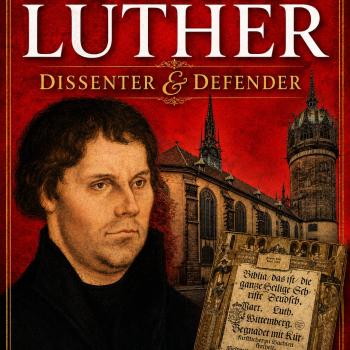
Book: Martin Luther: Dissenter and Defender
Biblical Evidence for Catholicism
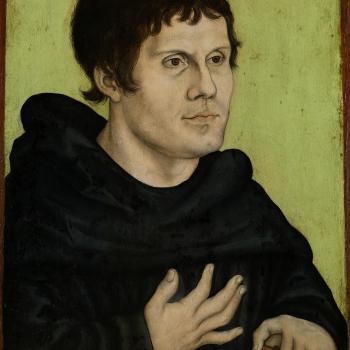
"Martin Luther: Dissenter & Defender": Introduction
Biblical Evidence for Catholicism
Why Wes Huff (and Everyone) Should Be Catholic
Biblical Evidence for Catholicism
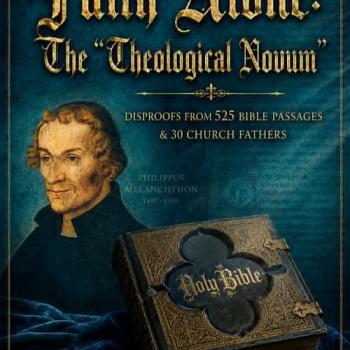
Introducing "Faith Alone: The 'Theological Novum'”
Biblical Evidence for Catholicism
TRENDING AT PATHEOS Catholic

An Advent Calendar, and a Tree full of...
I've spent the weekend deeply invested in internet drama about a $150...

How to Have Financial Transparency in Marriage
Despite the fact that financial issues and money problems are the number...
The Healing Power of Forgiveness in Marriage
Learning how to give and accept apologies are essential ingredients of a...

The West's Christian Moral Inheritance: A Legacy Denied
Whether we like it or not, our environment matters, shaping us both...

How Does Tôḏâ Connect Florida & Thanksgiving?
The big news this weekend has been about the continued flooding on...
Were Early Christians Drinking Psychedelic Wine?
The Secret Sacrament the Church Took Away The early Christian church was...
view all Catholic blogs
Ad-Free & Subscriber Log-In Subscription Support
- About Us
- 2026 Calendar
- Videos
- Podcasts
- Library of World Religions
- Faith In Media Tracker
- Advertise With Us
- Write for Us
- Privacy Policy
- Terms of Service
- Do Not Sell My Data
- Contact Us
- Radiant Digital
- Manage Newsletter Subscriptions
- Unsubscribe From Notifications
- Sitemap
Copyright 2008-2026, Patheos. All rights reserved.
Subscription Support Ad-Free & Subscriber Log-In
Follow Patheos