
BuddhistCatholicContemplativeEvangelicalGeneral ChristianHinduJewishLatter-day SaintMuslimNew VisionsProgressive Christian
Beliefs
- Buddhist
- Catholic
- Contemplative
- Evangelical
- General Christian
- Hindu
- Jewish
- Latter-day Saint
- More Voices
- Muslim
- New Visions
- Pagan
- Progressive Christian
Topics
- Religion News
- Food and Religion
- Sports and Religion
- Religious Art
- Religious Music and Entertainment
- Religious Events
- History and Religion
- Style and Religion
- Politics and Religion
- Women in Religion
- Recreation Outdoors and Religion
- Business Finance and Religion
- Careers Workplace and Religion
- Education and Religion
- Family Parenting and Religion
- Health Fitness and Religion
- Home and Religion
- Relationships and Religion
- Technology and Religion
- Travel and Religion
Columnists
- Buddhist Columnists
- Business Finance and Religion Columnists
- Careers Workplace and Religion Columnists
- Catholic Columnists
- Contemplative Columnists
- Education and Religion Columnists
- Evangelists Columnists
- Family Parenting and Religion Columnists
- General Christian Columnists
- Health Fitness and Religion Columnists
- Hindu Columnists
- History and Religion Columnists
- Home and Religion Columnists
- Jewish Columnists
- More Voices Columnists
- Latter Day Columnists
- Muslim Columnists
- New Visions Columnists
- Nonreligious Columnists
- Pagan Columnists
- Politics and Religion Columnists
- Progressive Columnists
- Recreation Outdoors and Religion Columnists
- Relationships and Religion Columnists
- Religion News Columnists
- Religious Art Columnists
- Religious Events Columnists
- Religious Music and Entertainment Columnists
- Sports and Religion Columnists
- Style and Religion Columnists
- Technology and Religion Columnists
- Travel and Religion Columnists
- Women in Religion Columnists
Resource Library
- 2026 Calendar
- Library of World Religions
- The 100 Most Holy Places on Earth
- Patheos Answers
- Podcasts
- Videos
- Faith Leaders Database
- Anglican Episcopalian
- Bahai
- Baptist
- Buddhism
- Christianity
- Confucianism
- Eastern Orthodoxy
- Hinduism
- Holiness and Pentecostal
- ISKCON
- Islam
- Judaism
- Lutheran
- Methodist
- The Church of Jesus Christ of Latter-day Saints
- New Age
- Paganism
- Presbytarian and Reformed
- Protestantism
- Religion Behind the Scenes
- Roman Catholic
- Scientology
- Shia Islam
- Sikhism
- Sufism
- Sunni Islam
- Taoism
- Zen
- See all religions
Research Tools
 Ad-Free & Subscriber Log-In Subscription Support
Follow Patheos 

- Trending:
- Advent
- |
- Forgiveness
- |
- Thanksgiving
- |
- Election
- |
- Seasonal Holidays
- |
- Marriage

-
About
-
Catholic Apologetics
-
Church History
-
Great Apologists
-
Christian Worldview
-
Protestantism & Misc.
- Home
- Catholic
- History and Religion
- Books by Dave Armstrong: “A Biblical Defense of Catholicism”
Books by Dave Armstrong: “A Biblical Defense of Catholicism”
Last updated on: July 11, 2026 at 11:09 am by Dave Armstrong
Books by Dave Armstrong: “A Biblical Defense of Catholicism” 2026-07-11T11:09:33-04:00 Dave Armstrong
Patheos Explore the world's faith through different perspectives on religion and spirituality! Patheos has the views of the prevalent religions and spiritualities of the world.
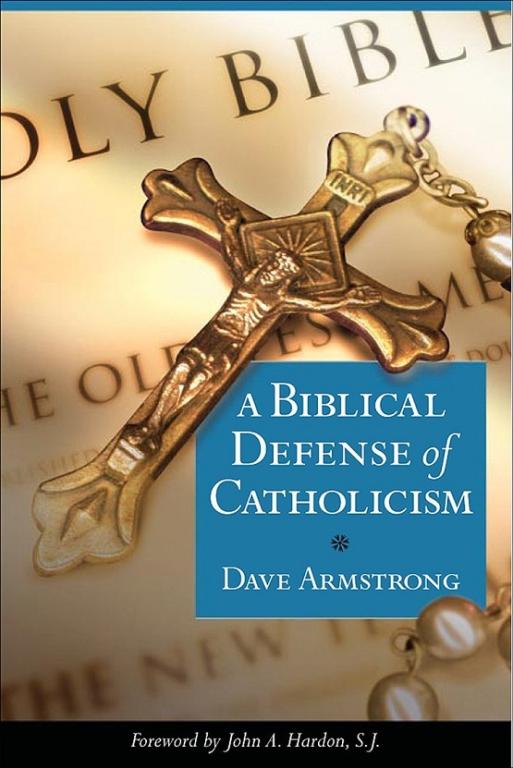
[297 pages; completed in May 1996. Published in October 2001 by AuthorHouse and in June 2003 by Sophia Institute Press; cover illustration and design by Theodore Schluenderfritz]
Purchase Options
[PAPERBACK: Amazon / Sophia Institute Press] [KINDLE: $9.99]
Table of Contents
[you can read the hyper-linked portions below online, as sample material. The Sophia Institute edition is slightly different]
Dedication
Acknowledgements
Foreword: Fr. John A. Hardon, S.J [read below]
Introduction [read below]
- Bible and Tradition: Maintain the Traditions . . .
- Justification: Faith Apart From Works is Barren
- Development of Doctrine: He Will Teach You . . .
- The Eucharist: This is My Body
- The Sacrifice of the Mass: A Lamb . . . Slain
- The Communion of Saints: All Who Are In Christ
- Purgatory: . . . Saved, But Only As Through Fire [most of chapter posted online]
- Penance: . . . Share Christ’s Sufferings
- The Blessed Virgin Mary: Hail, Full of Grace
- The Papacy and Infallibility: Keys of the Kingdom
Appendix 1: The “Perspicuity” (Clearness) of Scripture [read online]
Appendix 2: The Visible, Hierarchical, Apostolic Church
Appendix 3: The Historical Case for the “Apocrypha”
Appendix 4: The Biblical Basis for Clerical Celibacy
Appendix 5: A Dialogue on Infant Baptism [linked]
Appendix 6: A Dialogue on Liturgy and “Vain Worship” [read online]Recommended Catholic Apologetic and Historical Works
Index of Scriptures [e-book versions only]
Index of Proper Names [e-book versions only]Foreword
Fr. John A. Hardon, S.J.
Please allow me to introduce to you Dave Armstrong. I know Dave and his wife Judy personally. I received him into the Church on February 8, 1991, and baptized both their children, Paul and Michael. Dave has attended my classes on spirituality and catechetics. He was formerly a missionary as an evangelical Protestant, and has spent twelve years in intensive study of various theological topics. He carries this evangelistic zeal with him into the Catholic Church.
In particular, I highly recommend his work, A Biblical Defense of Catholicism, which I find to be thoroughly orthodox, well-written, and effective for the purpose of making Catholic truth more understandable and accessible to the public at large. Dave has edited and compiled much material from great Catholic writers past and present, interspersed with his own commentary and analysis. It is, I firmly believe, a fine book of popular Catholic apologetics.
Throughout his writing, Dave has emphasized the inability of Protestantism to explain coherently the biblical and historical data concerning Christian doctrine and practice. I feel this is very important in light of the inroads of Protestant thought into the hearts and minds of millions of insufficiently catechized Catholics.
In Our Lord,
John A. Hardon, S.J.
September 17, 1993
Introduction
During the course of 1990 I was actively and sincerely engaged in a lengthy historical and biblical critique of Catholicism (primarily having to do with papal infallibility) as a result of the ongoing dialogue taking place in an Ecumenical Discussion Group which I had initiated. I thought that I might entice my Catholic friends out from under the alleged “yoke” of Rome. Little did I know that before the year was over, I would be the one to change my mind!
With heartfelt joy and a keen sense of discovery, I now attempt to uphold that which I formerly attacked, and to critique many of the evangelical Protestant interpretations of Scripture which I strongly affirmed not long ago. Formerly, as an evangelical countercult and campus missionary, I was committed to the defense of mere, or generic Christianity. Now I seek to defend that Faith which might be called Ancient or Historic.
The present work endeavors to show that Catholicism can more than hold its own with regard to the evidence of the Bible, as it relates to distinctive doctrines which are considered unbiblical or even anti-biblical by many evangelical Protestants. Our separated brethren often contend that Catholics (to understate it) are very unfamiliar with the Bible. This is, sadly, probably true as a general observation (although biblical illiteracy is certainly not confined to Catholics).
Nevertheless, it has no bearing on the question of whether the Bible in fact upholds the teachings of Catholicism. Many Catholic biblical arguments and interesting exegetical conclusions are entirely unfamiliar to most Protestants (and for that matter, most Catholics as well).
I myself learned of the vast majority of these scriptural evidences in favor of Catholicism while engaged in the research for this book, which was itself originally intended as a defense of my newfound views, primarily for the sake of Protestant friends who were curious as to the rationale behind my conversion to Catholicism. The more I studied Catholic apologetic works (many of which were older books obtained at used bookstores), the more I realized what a wealth of biblical material existed in favor of Catholic positions on a number of “controversial” doctrines.
I was continually amazed at the depth and solidity of these arguments, and pleasantly surprised that the Bible, which I had loved and studied intensely for ten years, could so confidently be utilized as a bulwark in defense of the Catholic faith. Catholicism, rightly understood, is – I believe strongly – an eminently and thoroughly biblical belief system.
This was entirely contrary to what I had so cavalierly assumed, as an evangelical Protestant. Reputable Protestant commentaries often ignore, overlook, or present very unsatisfactory explanations for Catholic biblical evidences, sometimes offering no more than an unsubstantiated denial of the Catholic interpretation, with no alternative.
The weight of the evidence herein presented is all the more compelling, I think, by virtue of its cumulative effect, which is well-nigh overwhelming. Time and time again, I discovered that Catholicism is altogether consistent with biblical teaching. Many claim that distinctive Catholic beliefs are simply not found in Scripture. Often, however, those who present this charge have little or no understanding of the notion of the development of doctrine, implicit biblical evidence, or the complementary (and biblically-based) roles of Tradition and the Church. All of these factors and other related ones will be examined in this work.
Catholics need only to show the harmony of a doctrine with Holy Scripture. It is not our view that every tenet of the Christian faith must appear whole, explicit, and often, in the pages of the Bible. We also acknowledge Sacred Tradition, the authority of the Church, and the development of understanding of essentially unchanging Christian truths, as is to be expected with a living organism (the Body of Christ) guided by the Holy Spirit. A belief implicitly biblical is not necessarily anti-biblical or unbiblical. But we maintain that the Protestant principle of sola Scriptura, on the other hand, is incoherent and – I dare say – quite unbiblical.
In fact, many doctrines accepted by Protestants are either not found in the Bible at all (for example, sola Scriptura and the Canon of Scripture), are based on only a very few direct passages (for example, the Virgin Birth), or are indirectly deduced from many implicit passages (for example, the Trinity, the Two Natures of Jesus, many attributes of God such as His omnipresence and omniscience).
I have no formal theological training (although I have done a great deal of independent study over the last twenty years). This work is intended primarily as a layman’s observations for other laymen, without pretending to be anything beyond that. C. S. Lewis, the great Anglican Christian apologist (and my favorite author) often made a similar claim for his own writings. He was formally educated in English literature, not theology. To my knowledge, neither G. K. Chesterton nor Malcolm Muggeridge had any formal theological education, either. They were journalists by trade, and self-definition. Yet they – along with Lewis – are among the most celebrated Christian apologists of the twentieth century.
Furthermore, my relative lack of credentials might actually be somewhat of an advantage on my part, from the vantage point of Protestant assumptions about the perspicuity, or “clearness” of the Bible (in terms of its outlines of the means whereby a man can be saved). Martin Luther made a famous remark to the effect that even a “plowboy” could interpret Scripture in the main without the necessary help of the Church. This is, then, largely, a Catholic “plowboy’s” attempt to learn and to share from Scripture itself (although without in the least denying the authoritativeness of the Church and Tradition).
I am always wholeheartedly willing to interact with scholars and reflective and thoughtful non-scholars who hold opposing viewpoints. If, however, even superior theological education cannot suffice for an adequate, reasonable alternate explanation over against the Catholic interpretations of various portions of Scripture presented herein, then it seems to me that this would serve only to strengthen the case I have made as an ordinary layman.
The widespread existence of evangelical Protestant Commentaries and various Lexicons, Bible Dictionaries, Concordances and so forth, for the use of laypeople, is based on a presupposition that individuals without formal theological education can arrive at conclusions on their own. This is largely what I am attempting presently. The only difference is that I am willing to modify or relinquish any conclusions of mine which turn out to be contrary to the clear teachings and dogmas of the Catholic Church, whereas the quintessential Protestant ultimately can stand on his own (like Luther), “on the Bible,” against, if need be, the whole Tradition of the Christian Church. I formulate my conclusions based on the work of Church Councils, great Catholic scholars, Fathers, Doctors, and saints, just as the conscientious Protestant would consult the scholars and great pastors and theologians of his own persuasion.
Far from having to force the Scripture to conform to Catholic teaching, or to equivocate, or to rationalize away glaring contradictions, I’ve found that – invariably and delightfully – the converse is true: Catholicism is indeed the round peg, so to speak, that naturally fits into the round hole of Scripture. I have not undergone any torments of conscience or “intellectual suicide” in this endeavor, and I am more confident than ever that the Catholic Church is the “Bible Church” par excellence.
This discovery will never cease being wondrous and marvelous to me (as well as to many other fellow converts to the Catholic Church via evangelical Protestantism). For it means that we can continue to be evangelical in every proper and true sense of that word: to love and cherish the Scriptures, to follow Jesus with all our heart, soul, strength, and mind, and to proclaim the message found in the Bible in its fullness and apostolic integrity, unmingled with the error of excessively individualistic interpretation, and competing, contradicting denominational beliefs. Accordingly, this work cites hundreds of Scriptural passages from 229 out of the 259 chapters in the New Testament (88%), and more than 250 Old Testament references.
Catholicism is not a blind faith, but rather, one that is altogether reasonable, as far as reason goes (without excluding at all the essential religious characteristics of mystery, miracle, supernatural revelation, and love). A Catholic need not forsake hermeneutical rigor or critical acumen in any way.
Catholics can, assuredly, learn much from many positive and godly attributes of evangelicalism and Protestantism in general. Likewise, a Protestant can derive much benefit from Catholicism, whether he feels compelled to convert or not. The non-Catholic can – after grappling with facts and arguments such as those presented herein – eventually recognize that Catholics are able to put forth a very strong biblical case for their beliefs. Likewise, the average Catholic in the pew, who oftentimes suffers from a marked lack of spiritual confidence, can greatly benefit from an increased familiarity with the biblical arguments which bolster the Catholic position.
Each chapter will contain an authoritative definition and relatively brief exposition of the Catholic doctrine to be defended, followed by extensive scriptural commentary on individual passages. Footnotes will direct the reader who wishes to pursue issues in greater depth to other relevant works, and reinforce the arguments from scholarly sources, but will not interrupt the flow of the writing – intended to be popular and relatively non-technical in style.
It is not my intention to minimize the importance of Tradition, Councils, papal pronouncements, and suchlike, at all. Rather, I seek to exhibit as many of the biblical evidences as can be brought to bear on any particular distinctively Catholic doctrine (at least all that I’ve personally found – certainly more exist). Doctrines held in common with Protestants and Eastern Orthodox Christians, such as the Trinity, Bodily Resurrection of Christ, heaven and hell, and so forth, are not here dealt with.
All Christians agree that it is worthwhile to study and meditate upon the Bible – God’s own inspired Revelation for all mankind. Non-Catholics and even non-Christians might receive here some biblical food for thought, even if they are unconvinced by my arguments. It is a worthwhile endeavor to build bridges of understanding between Christians of all stripes, as commanded in Scripture. If this work causes the reader to delve more deeply into Holy Scripture, or various Catholic sources, or to think more critically and deeply about the biblical evidences for various Protestant and Catholic doctrines, then it will have fulfilled its purpose.
Book Reviews
Interview with Peter Vere, JCL: 12 November 2001.
Donal Anthony Foley (on the Theotokos Catholic Website: January 2002).
Bookideas.com website: review by John Hoh (Lutheran).
Anonymous review on my blog (from a Protestant considering Catholicism).
Michael J. Miller, in Homiletic & Pastoral Review, May 2004.
Albert, at the Christian Book Reviews site (traditional Anglican)
R.E. Aguirre, at the Ex Umbris Et Imaginibus In Veritatem blog (April 2008).
Radio Interviews About the Book
Kresta in the Afternoon (4-30-02); listen to the audio: see #6
Faith & Family Live with Steve Wood (7-10-03); listen to the audio: see #7
***
Purchase Options
[PAPERBACK: Amazon / Sophia Institute Press] [KINDLE: $9.99]
*
***
*
Practical Matters: This is the most comprehensive and multi-faceted Catholic apologetics blog: rated #1 for Christian sites by leading AI tool, ChatGPT. I offer more than 5,000 free online articles, fifty-eight books, and many scores of videos at the Catholic Bible Highlights YouTube channel (please subscribe!). If you believe my full-time apostolate is worth supporting, please seriously consider financially supporting it. PayPal donations are the easiest: just send to my email address: [email protected]. You’ll see the term “Dave Armstrong Bookstore”. To learn about the different methods of contributing (including Zelle and 100% tax-deductible donations if desired), see my page: About Catholic Apologist Dave Armstrong / Donation Information. Thanks a million!
*
***
*
Last revised on 11 July 2026
***
A Biblical Defense of Catholicism
Previous Post
July 18, 2006
Armstrong: "Reflections on Radical Catholic Reactionaries"
Next Post
July 31, 2006 Dave Armstrong: "More Biblical Evidence for Catholicism"
Browse Our Archives
Select a Category & Last Things About Me Anti-Catholicism Atheism & Agnosticism Baptism and Sacramentalism Bible and Tradition Blessed Virgin Mary Books by Dave Armstrong C. S. Lewis Calvinism & General Protestantism Catholic Apologetics Catholic Apologists Catholic conversion Catholic converts Christmas Church (Ecclesiology) Church History Conversion and Converts Development of Doctrine Eastern Orthodoxy Ecumenism & Christian Unity Eucharist & Liturgy Fathers of the Church French Translations G. K. Chesterton Hell Hell & Satan Hell & Satan & Last Things Heresies & Comparative Religion Holistic Health Inquisition & Crusades & Scandals James White Jews & Judaism & Old Testament John Calvin John Henry Newman Liberal / Modernist Theology Life Issues Literary Resume Lutheranism Mariology Martin Luther Music Orthodoxy Papacy & Infallibility Personal Page Philosophy & Science Political & Ethical & Moral Issues Protestant Persecution & Intolerance Protestantism Purgatory Purgatory & Penance Romantic & Imaginative Theology Saints & Purgatory & Penance Salvation Salvation & Justification Satan & Last Things Sexuality and Gender Issues Spanish Translations Traditionalism vs. Radical Catholic Reactionaries Traducciones al español / tradução para português Trinitarianism & Christology Uncategorized Videos
Select a Month November 2026 October 2026 September 2026 August 2026 July 2026 June 2026 May 2026 April 2026 March 2026 February 2026 January 2026 December 2025 November 2025 October 2025 September 2025 August 2025 July 2025 June 2025 May 2025 April 2025 March 2025 February 2025 January 2025 December 2024 November 2024 October 2024 September 2024 August 2024 July 2024 June 2024 May 2024 April 2024 March 2024 February 2024 January 2024 December 2023 November 2023 October 2023 September 2023 August 2023 July 2023 June 2023 May 2023 April 2023 March 2023 February 2023 January 2023 December 2022 November 2022 October 2022 September 2022 August 2022 July 2022 June 2022 May 2022 April 2022 March 2022 February 2022 January 2022 December 2021 November 2021 October 2021 September 2021 August 2021 July 2021 June 2021 May 2021 April 2021 March 2021 February 2021 January 2021 December 2020 November 2020 October 2020 September 2020 August 2020 July 2020 June 2020 May 2020 April 2020 March 2020 February 2020 January 2020 December 2019 November 2019 October 2019 September 2019 August 2019 July 2019 June 2019 May 2019 April 2019 March 2019 February 2019 January 2019 December 2018 November 2018 October 2018 September 2018 August 2018 July 2018 June 2018 May 2018 April 2018 March 2018 February 2018 January 2018 December 2017 November 2017 October 2017 September 2017 August 2017 July 2017 June 2017 May 2017 April 2017 March 2017 February 2017 January 2017 December 2016 November 2016 October 2016 September 2016 August 2016 July 2016 June 2016 May 2016 April 2016 March 2016 February 2016 January 2016 December 2015 November 2015 October 2015 September 2015 August 2015 July 2015 June 2015 May 2015 April 2015 March 2015 February 2015 January 2015 December 2014 November 2014 October 2014 September 2014 August 2014 July 2014 June 2014 April 2014 March 2014 February 2014 January 2014 December 2013 November 2013 October 2013 September 2013 August 2013 July 2013 June 2013 April 2013 March 2013 February 2013 January 2013 December 2012 November 2012 October 2012 September 2012 August 2012 July 2012 June 2012 May 2012 April 2012 March 2012 February 2012 January 2012 December 2011 November 2011 October 2011 September 2011 August 2011 July 2011 June 2011 April 2011 March 2011 February 2011 October 2010 September 2010 August 2010 July 2010 April 2010 March 2010 December 2009 October 2009 August 2009 July 2009 June 2009 May 2009 March 2009 February 2009 October 2008 September 2008 April 2008 March 2008 February 2008 January 2008 December 2007 November 2007 October 2007 May 2007 March 2007 February 2007 January 2007 November 2006 October 2006 September 2006 August 2006 July 2006 June 2006 May 2006 April 2006 March 2006 February 2006 October 2005 June 2005 April 2005 February 2005 July 2004 May 2004 April 2004
Follow Us!
TAKE THE
Religious Wisdom Quiz
True or False: Song of Solomon is also called Song of Songs.
Select your answer to see how you score.
TRUE FALSE
Books by This Author Books by Dave Armstrong
Related posts from Biblical Evidence for Catholicism
Thy Word is Truth: The Bible Vindicated by...
Biblical Evidence for Catholicism
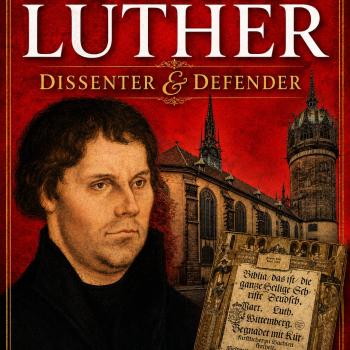
Book: Martin Luther: Dissenter and Defender
Biblical Evidence for Catholicism
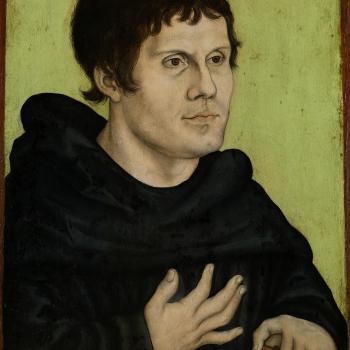
"Martin Luther: Dissenter & Defender": Introduction
Biblical Evidence for Catholicism
Why Wes Huff (and Everyone) Should Be Catholic
Biblical Evidence for Catholicism
TRENDING AT PATHEOS Catholic

Book III, Chapter 3: Christ "Classic" (Matt. 9:9-34)
Book III, Chapter 3: Christ "Classic" (Matt. 9:9-34) In honor of tomorrow's...

Jesus explicitly mentions the book of Jonah twice, but he retells the...

Peggy Sue Got Married: Coppola’s Always Been Like...
I enjoyed Megalopolis (2024). It’s a mess, but I enjoyed it. The...

My dissertation The Place of Mysticism in the Late Middle Ages concerns...

God and the Contingency of This World
The great Catholic philosopher Aquinas and the great Lutheran philosopher Leibniz developed...

Pope Francis and The Devil – A Pagan...
According to his private diaries, Pope Francis saw visions of the devil...
view all Catholic blogs
Ad-Free & Subscriber Log-In Subscription Support
- About Us
- 2026 Calendar
- Videos
- Podcasts
- Library of World Religions
- Faith In Media Tracker
- Advertise With Us
- Write for Us
- Privacy Policy
- Terms of Service
- Do Not Sell My Data
- Contact Us
- Radiant Digital
- Manage Newsletter Subscriptions
- Unsubscribe From Notifications
- Sitemap
Copyright 2008-2026, Patheos, part of the Radiant Digital network of media brands. All rights reserved.
Subscription Support Ad-Free & Subscriber Log-In
Follow Patheos