
BuddhistCatholicContemplativeEvangelicalGeneral ChristianHinduJewishLatter-day SaintMuslimNew VisionsProgressive Christian
Beliefs
- Buddhist
- Catholic
- Contemplative
- Evangelical
- General Christian
- Hindu
- Jewish
- Latter-day Saint
- More Voices
- Muslim
- New Visions
- Pagan
- Progressive Christian
Topics
- Religion News
- Food and Religion
- Sports and Religion
- Religious Art
- Religious Music and Entertainment
- Religious Events
- History and Religion
- Style and Religion
- Politics and Religion
- Women in Religion
- Recreation Outdoors and Religion
- Business Finance and Religion
- Careers Workplace and Religion
- Education and Religion
- Family Parenting and Religion
- Health Fitness and Religion
- Home and Religion
- Relationships and Religion
- Technology and Religion
- Travel and Religion
Columnists
- Buddhist Columnists
- Business Finance and Religion Columnists
- Careers Workplace and Religion Columnists
- Catholic Columnists
- Contemplative Columnists
- Education and Religion Columnists
- Evangelists Columnists
- Family Parenting and Religion Columnists
- General Christian Columnists
- Health Fitness and Religion Columnists
- Hindu Columnists
- History and Religion Columnists
- Home and Religion Columnists
- Jewish Columnists
- More Voices Columnists
- Latter Day Columnists
- Muslim Columnists
- New Visions Columnists
- Nonreligious Columnists
- Pagan Columnists
- Politics and Religion Columnists
- Progressive Columnists
- Recreation Outdoors and Religion Columnists
- Relationships and Religion Columnists
- Religion News Columnists
- Religious Art Columnists
- Religious Events Columnists
- Religious Music and Entertainment Columnists
- Sports and Religion Columnists
- Style and Religion Columnists
- Technology and Religion Columnists
- Travel and Religion Columnists
- Women in Religion Columnists
Resource Library
- 2026 Calendar
- Library of World Religions
- The 100 Most Holy Places on Earth
- Patheos Answers
- Podcasts
- Videos
- Faith Leaders Database
- Anglican Episcopalian
- Bahai
- Baptist
- Buddhism
- Christianity
- Confucianism
- Eastern Orthodoxy
- Hinduism
- Holiness and Pentecostal
- ISKCON
- Islam
- Judaism
- Lutheran
- Methodist
- The Church of Jesus Christ of Latter-day Saints
- New Age
- Paganism
- Presbytarian and Reformed
- Protestantism
- Religion Behind the Scenes
- Roman Catholic
- Scientology
- Shia Islam
- Sikhism
- Sufism
- Sunni Islam
- Taoism
- Zen
- See all religions
Research Tools
 Ad-Free & Subscriber Log-In Subscription Support
Ad-Free & Subscriber Log-In Subscription Support
Follow Patheos 

- Trending:
- Forgiveness
- |
- Marriage
- |
- Consciousness
- |
- Death Penalty
- |
- Election
- |
- Halloween

-
About
-
Catholic Apologetics
-
Church History
-
Great Apologists
-
Christian Worldview
-
Protestantism & Misc.
- Home
- Catholic
- History and Religion
- Science vs. Religion? 16th-17th Century Astronomers Loved Astrology
Science vs. Religion? 16th-17th Century Astronomers Loved Astrology
Last updated on: April 15, 2019 at 10:52 am by Dave Armstrong
Science vs. Religion? 16th-17th Century Astronomers Loved Astrology 2019-04-15T10:52:23-04:00 Dave Armstrong
Patheos Explore the world's faith through different perspectives on religion and spirituality! Patheos has the views of the prevalent religions and spiritualities of the world.
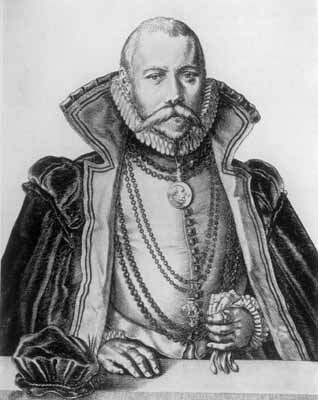
Tycho Brahe (1546-1601): brilliant astronomer and also a geocentrist and astrologer [public domain / Wikimedia Commons]

***
(5-25-06)
***
[See Part Two, where I document this acceptance]
* * * * *
I love this particular subject matter (beyond my keen interest in the whole science and religion discussion) because I especially enjoy (as an apologist) doing the following two things:
1) demolishing historical or philosophical or theological or exegetical myths and errors,
and:
2) documenting that the actual truth of virtually any given historical matter is invariably more complex and interesting than the black-and-white, warmed-over, half-baked and half-truth myths that we are constantly fed in the mass media, educational institutions, and even in movies, television documentaries and so forth.
One of the most cherished myths of our secular culture is “Religion (Christianity) vs. Science” or “Reason vs. Faith” or “Science vs. the Bible” as if the two things are inexorably opposed, by their very nature. They are not at all, of course. And this is obviously the case, since science deals with physical matter and the causative laws affecting it, whereas religion deals primarily with non-material things such as ethics, soul, spirit, God the spirit, love, faith, and so forth (not to mention the historical fact that modern science arose in explicitly Christian-Catholic western European culture; arguably would not have developed otherwise, and that almost all the early great scientists were Christians of some sort).
In other words, basically, it is an “apples and oranges” scenario. The two (both rightly-understood) need not clash at all; there is no necessity whatsoever for there to be any earth-shaking conflict (and there usually isn’t). Galileo got it right when he said that “the Bible teaches us how to go to heaven; not how the heavens go.” That’s as good of a brief summary as anyone could give on the subject, I think. Science is science; theology is theology. Is this not obvious? There is overlap, of course (as there is between religion and philosophy), but they are two essentially different fields of study or belief, in aims, subject matter, and methods.
Since the Renaissance, however, and the advent of (Baconian, Copernican, Newtonian) modern science and scientific method as a (rightly) cherished vehicle for arriving at truths concerning the laws of nature and this world and the universe, for some reason, a certain type of secular, skeptically-inclined, usually religiously nominal or liberal mindset, including many (but not all, by any means) scientists want to keep the old “religion vs. science” false dichotomy going, for whatever reasons. Sometimes it is largely a reaction against the ongoing “creation vs. evolution” controversy.
Other times, it is an obsessive dwelling on one-time historical errors such as the Galileo fiasco or some of the nonsense which went down during the initial reaction to Darwin’s Origin of Species, or the notorious Scopes Trial of 1925. Certain tiny, fringe factions on the Christian side have also adopted an “anti-science” or “know-nothing” attitude as well, which does no good. Impressions formed by the incessant trumpeting of these unfortunate events apparently have a staying power for those otherwise inclined to question Christianity and the biblical revelation. Stereotypes thus arrived at have a dismaying influence over minds and serve a purpose of minimizing strains of thought (intellectually respectable Christian theology and faith) which are deemed by certain folks as (intellectually) retrograde, undesirable, indefensible, and excessively or completely irrational.
Part of the larger myth here considered is the notion of a sort of black-and-white dichotomy, as if the scientists in any given conflict with religion or faith (e.g., Darwin and Galileo), were these rationalistic, reasonable always-objective, solely truth-seeking machines, so to speak, whereas those on the Christian “side” were invariably dogmatic, closed to reason and inquiry and scientific observation, and indeed, opposed to same (hence we hear about the few Catholic throwbacks who refused to peer into Galileo’s telescope or young-earth creationists with their various kooky “scientific” arguments for a 6000-year old earth).
Recently, in an effort to start attempting to break down some of these ridiculous, historically warped and outrageously unfair, revisionist myths (which are used to bash Christianity and Catholicism in particular), I have touched upon the Galileo incident, in three papers.
This incident is far more interesting than the caricatured myth which has received widespread promulgation. For instance, how many people know that Galileo was mistaken in positing circular, rather than (Keplerian) elliptical orbits, or in his “proof” that tides were caused by the rotation of the earth or that the entire universe revolved around the sun (in circular orbits)? How many know that Galileo (an orthodox Catholic, by the way) was dogmatically proclaiming all this as “fact” whereas one of his critics, St. Robert Bellarmine, actually held the more scientifically correct view that scientific hypotheses were not factual, but provisional, and relatively more or less “proven,” and that Galileo hadn’t proven his theory by simple observation through a telescope. And no, Galileo was not tortured or blinded or ever thrown into a dirty dungeon. He simply lived under “house arrest” in fairly luxurious environments, including the palaces of two sympathetic bishops.
In other words, it was not the stereotype of the perfectly reasonable, open-minded scientist vs. the perfectly-bullheaded Catholic, impervious to empirical demonstration. Though a terrible mistake in judgment occurred in one Catholic tribunal (whereas most Catholic intellectuals of the time disagreed), there was also over-dogmatism and folly and hubris on Galileo’s part. That’s the part of the story we never hear! Truth is stranger than fiction; history is more fascinating and complex than historical fiction or myth would have it.
There were serious errors made, for which the Catholic Church has paid dearly, but there have been equally outrageous errors made in the name of science as well, as I pointed out in one of the above papers. Why do we never hear about those? Propaganda so often wins the day, but I am interested in historical facts, whatever they are, just as I am interested in scientific facts, whatever they are.
There is also a sub-bias that operates within the larger secular vs. religion mentality; somewhat related to it: that of early Protestantism somehow being more open to science than Catholicism was (based largely or disproportionately, I imagine, on the grossly-exaggerated implications of the Galileo farce). For some people (including many Protestants, as one would expect), Protestantism is considered a bit more rational and closer to “intelligent, secular, scientific thought” than Catholicism. So they simply assume that it had – historically – a more open attitude towards science. This is certainly untrue concerning the period of the 16th and 17th centuries (if it ever was true at any time, which is highly-debatable). It is only relatively small factions of both faiths that fell into the error of thinking in “anti-science” terms.
And so I have dealt with that myth in other writings of mine. So I have dealt with the secular, scientific gripe against Christianity and Catholicism in particular (using Galileo as a prime example of a conflict), or the assertion that science and faith are contradictory and opposites,as well as the Protestant claim that it is (and/or, has been) more open to science than Catholicism. These are both myths.
Now it is time to turn our attention to the flaws and faults (in retrospect) of many of the 16th and 17th century scientists who are “used” for the purpose of bashing Christianity. I will be examining their connection to, and adherence of astrology, which is now considered by virtually all scientists as false and unscientific (pseudo-science at best and sheer fabrication at worst), and scorned and rejected by Protestants and Catholics and Orthodox, too, as occultic nonsense (and often, in practice, quackery). In fact, astrology and astronomy, by all accounts, were very closely connected in the 16th century. It was a bit hard to entangle one from the other.
Again, the Christian / faith side isn’t always completely “bad” in conflicts and the scientists aren’t always free from error and dogmatism: even on a large scale. The acceptance of astrology illustrates this. If the Christians must be pilloried and mocked and ridiculed for their errors, then isn’t it fair also to point out something like this: the widespread acceptance of astrology, even in scientific circles: among the very greatest scientists? What’s good for the goose is good for the gander. Yet what often happens (I’ve seen it a million times in my hundreds of dialogues) is that we Christians usually have to “pay” for our past mistakes forever, while similar whoppers on the scientific side are soon forgotten and hardly ever brought up at all.
The actual facts, again, are extremely fascinating. You have a great Catholic scientist like Galileo, in the forefront of the emerging heliocentrism, who had a significant belief in astrology and wrote many astrological charts! And you have great Lutheran scientists such as Kepler and Tycho Brahe doing the same thing. Even Isaac Newton was fascinated with alchemy, a sort of half-sister to astrology. The categories of the myths don’t fit; they don’t work: the whole scenario gets turned upside down.
The best early scientists are not supposed to be good Christians, according to the stupid, anti-Christian myth, but almost all of them (like the later Gregor Mendel: the monk who founded genetics) were. Likewise, the scientists (who are the “good guys” and enlightened folks, over against the oppressive, know-nothing Catholic Church and the Lutherans) are not supposed to believe in something so absurd as astrology (or alchemy). But they did. So the myth falls and fails at least four times:
Science (or scientists) is not always absolutely right and religion absolutely wrong when they come into conflict. This is a gross simplifying of the historical reality.
Protestantism has not been – historically; especially in the 16th and 17th centuries – more open to, and less hostile to science than Catholicism. In fact, a good case might be made for the contrary position.
The great early scientists were usually Christians of some sort (which clearly suggests that the often trumped-up conflict is not inherent).
The great early scientists made huge mistakes just as the Christians have sometimes done (witness: astrology).
Conclusion: there is plenty enough error and folly to go around; therefore Christians of all stripes are often subjected to a quite unfair and outrageous “bum rap”. The more knowledge we have of the relevant historical particulars, the better we understand this.
[See Part Two, where I document this acceptance]
Previous Post

May 24, 2006
Replies to Objections to the Christian Doctrine of Hell
Next Post

May 30, 2006 Did St. Thomas Aquinas Accept Astrology?
Browse Our Archives
Select a Category & Last Things About Me Anti-Catholicism Atheism & Agnosticism Baptism and Sacramentalism Bible and Tradition Blessed Virgin Mary Books by Dave Armstrong C. S. Lewis Calvinism & General Protestantism Catholic Apologetics Catholic Apologists Catholic conversion Catholic converts Christmas Church (Ecclesiology) Church History Conversion and Converts Development of Doctrine Eastern Orthodoxy Ecumenism & Christian Unity Eucharist & Liturgy Fathers of the Church French Translations G. K. Chesterton Hell Hell & Satan Hell & Satan & Last Things Heresies & Comparative Religion Holistic Health Inquisition & Crusades & Scandals James White Jews & Judaism & Old Testament John Calvin John Henry Newman Liberal / Modernist Theology Life Issues Literary Resume Lutheranism Mariology Martin Luther Music Orthodoxy Papacy & Infallibility Personal Page Philosophy & Science Political & Ethical & Moral Issues Protestant Persecution & Intolerance Protestantism Purgatory Purgatory & Penance Romantic & Imaginative Theology Saints & Purgatory & Penance Salvation Salvation & Justification Satan & Last Things Sexuality and Gender Issues Spanish Translations Traditionalism vs. Radical Catholic Reactionaries Traducciones al español / tradução para português Trinitarianism & Christology Uncategorized Videos
Select a Month October 2026 September 2026 August 2026 July 2026 June 2026 May 2026 April 2026 March 2026 February 2026 January 2026 December 2025 November 2025 October 2025 September 2025 August 2025 July 2025 June 2025 May 2025 April 2025 March 2025 February 2025 January 2025 December 2024 November 2024 October 2024 September 2024 August 2024 July 2024 June 2024 May 2024 April 2024 March 2024 February 2024 January 2024 December 2023 November 2023 October 2023 September 2023 August 2023 July 2023 June 2023 May 2023 April 2023 March 2023 February 2023 January 2023 December 2022 November 2022 October 2022 September 2022 August 2022 July 2022 June 2022 May 2022 April 2022 March 2022 February 2022 January 2022 December 2021 November 2021 October 2021 September 2021 August 2021 July 2021 June 2021 May 2021 April 2021 March 2021 February 2021 January 2021 December 2020 November 2020 October 2020 September 2020 August 2020 July 2020 June 2020 May 2020 April 2020 March 2020 February 2020 January 2020 December 2019 November 2019 October 2019 September 2019 August 2019 July 2019 June 2019 May 2019 April 2019 March 2019 February 2019 January 2019 December 2018 November 2018 October 2018 September 2018 August 2018 July 2018 June 2018 May 2018 April 2018 March 2018 February 2018 January 2018 December 2017 November 2017 October 2017 September 2017 August 2017 July 2017 June 2017 May 2017 April 2017 March 2017 February 2017 January 2017 December 2016 November 2016 October 2016 September 2016 August 2016 July 2016 June 2016 May 2016 April 2016 March 2016 February 2016 January 2016 December 2015 November 2015 October 2015 September 2015 August 2015 July 2015 June 2015 May 2015 April 2015 March 2015 February 2015 January 2015 December 2014 November 2014 October 2014 September 2014 August 2014 July 2014 June 2014 April 2014 March 2014 February 2014 January 2014 December 2013 November 2013 October 2013 September 2013 August 2013 July 2013 June 2013 April 2013 March 2013 February 2013 January 2013 December 2012 November 2012 October 2012 September 2012 August 2012 July 2012 June 2012 May 2012 April 2012 March 2012 February 2012 January 2012 December 2011 November 2011 October 2011 September 2011 August 2011 July 2011 June 2011 April 2011 March 2011 February 2011 October 2010 September 2010 August 2010 July 2010 April 2010 March 2010 December 2009 October 2009 August 2009 July 2009 June 2009 May 2009 March 2009 February 2009 October 2008 September 2008 April 2008 March 2008 February 2008 January 2008 December 2007 November 2007 October 2007 May 2007 March 2007 February 2007 January 2007 November 2006 October 2006 September 2006 August 2006 July 2006 June 2006 May 2006 April 2006 March 2006 February 2006 October 2005 June 2005 April 2005 February 2005 July 2004 May 2004 April 2004
Follow Us!
TAKE THE
Religious Wisdom Quiz
Who prayed in a den of lions?
Select your answer to see how you score.
Elijah Noah Daniel David
Books by This Author Books by Dave Armstrong
Related posts from Biblical Evidence for Catholicism

God, Modern Physics, & Dark Energy: An Analogy
Biblical Evidence for Catholicism

Parting of the Red Sea & Lake Erie...
Biblical Evidence for Catholicism
Deus me curou! (Úlcera, alergias alimentares)
Biblical Evidence for Catholicism
God Has Healed Me! (Ulcer, Irritable Bowel Syndrome)
Biblical Evidence for Catholicism
TRENDING AT PATHEOS Catholic

Swimfan: Forgotten Aughts Pleasures
This is a recovery effort. In 2002, My Big Fat Greek Wedding...

Top Three Anti-Catholic Lies About Catholicism
This is my initial transcript for the video, "THE 3 WORST...

Pope Leo Celebrates Mass for Nurses & Docs...
I don't have any idea how he did it, but Pope Leo...

The Sermon on the Mount, Part I: Matthew...
The Sermon on the Mount, Part I (Matthew 4:12-5:12) St. Matthew moves...

What's up from Crossway: Reviewing some of their latest A few weeks...

Janie Learns the Way of the Cross: A...
Teaching children about Jesus' Passion can be challenging. Many parents and educators...
view all Catholic blogs
Ad-Free & Subscriber Log-In Subscription Support
- About Us
- 2026 Calendar
- Videos
- Podcasts
- Library of World Religions
- Faith In Media Tracker
- Advertise With Us
- Write for Us
- Privacy Policy
- Terms of Service
- Do Not Sell My Data
- Contact Us
- Radiant Digital
- Manage Newsletter Subscriptions
- Unsubscribe From Notifications
- Sitemap
Copyright 2008-2026, Patheos. All rights reserved.
Subscription Support Ad-Free & Subscriber Log-In
Follow Patheos