
BuddhistCatholicContemplativeEvangelicalGeneral ChristianHinduJewishLatter-day SaintMuslimNew VisionsProgressive Christian
Beliefs
- Buddhist
- Catholic
- Contemplative
- Evangelical
- General Christian
- Hindu
- Jewish
- Latter-day Saint
- More Voices
- Muslim
- New Visions
- Pagan
- Progressive Christian
Topics
- Religion News
- Food and Religion
- Sports and Religion
- Religious Art
- Religious Music and Entertainment
- Religious Events
- History and Religion
- Style and Religion
- Politics and Religion
- Women in Religion
- Recreation Outdoors and Religion
- Business Finance and Religion
- Careers Workplace and Religion
- Education and Religion
- Family Parenting and Religion
- Health Fitness and Religion
- Home and Religion
- Relationships and Religion
- Technology and Religion
- Travel and Religion
Columnists
- Buddhist Columnists
- Business Finance and Religion Columnists
- Careers Workplace and Religion Columnists
- Catholic Columnists
- Contemplative Columnists
- Education and Religion Columnists
- Evangelists Columnists
- Family Parenting and Religion Columnists
- General Christian Columnists
- Health Fitness and Religion Columnists
- Hindu Columnists
- History and Religion Columnists
- Home and Religion Columnists
- Jewish Columnists
- More Voices Columnists
- Latter Day Columnists
- Muslim Columnists
- New Visions Columnists
- Nonreligious Columnists
- Pagan Columnists
- Politics and Religion Columnists
- Progressive Columnists
- Recreation Outdoors and Religion Columnists
- Relationships and Religion Columnists
- Religion News Columnists
- Religious Art Columnists
- Religious Events Columnists
- Religious Music and Entertainment Columnists
- Sports and Religion Columnists
- Style and Religion Columnists
- Technology and Religion Columnists
- Travel and Religion Columnists
- Women in Religion Columnists
Resource Library
- 2026 Calendar
- Library of World Religions
- The 100 Most Holy Places on Earth
- Patheos Answers
- Podcasts
- Videos
- Faith Leaders Database
- Anglican Episcopalian
- Bahai
- Baptist
- Buddhism
- Christianity
- Confucianism
- Eastern Orthodoxy
- Hinduism
- Holiness and Pentecostal
- ISKCON
- Islam
- Judaism
- Lutheran
- Methodist
- The Church of Jesus Christ of Latter-day Saints
- New Age
- Paganism
- Presbytarian and Reformed
- Protestantism
- Religion Behind the Scenes
- Roman Catholic
- Scientology
- Shia Islam
- Sikhism
- Sufism
- Sunni Islam
- Taoism
- Zen
- See all religions
Research Tools
 Ad-Free & Subscriber Log-In Subscription Support
Ad-Free & Subscriber Log-In Subscription Support
Follow Patheos 

- Trending:
- Forgiveness
- |
- Marriage
- |
- Consciousness
- |
- Death Penalty
- |
- Election
- |
- Halloween

-
About
-
Catholic Apologetics
-
Church History
-
Great Apologists
-
Christian Worldview
-
Protestantism & Misc.
- Home
- Catholic
- History and Religion
- Galileo Debacle and the State of Astronomical Knowledge in 1633
Galileo Debacle and the State of Astronomical Knowledge in 1633
Last updated on: June 3, 2017 at 4:33 pm by Dave Armstrong
Galileo Debacle and the State of Astronomical Knowledge in 1633 2017-06-03T16:33:01-04:00 Dave Armstrong
Patheos Explore the world's faith through different perspectives on religion and spirituality! Patheos has the views of the prevalent religions and spiritualities of the world.
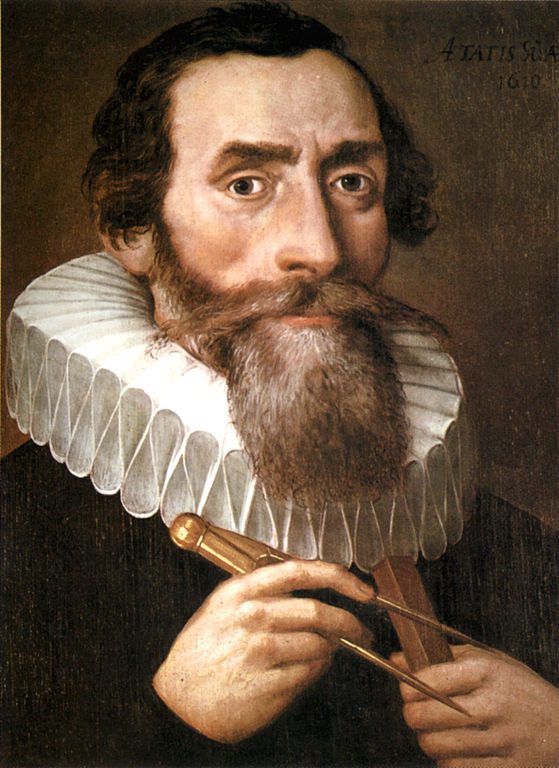
The great German Lutheran astronomer (and astrologer), Johannes Kepler (1571-1630) in 1610 [public domain / Wikimedia Commons]

***
(5-13-06)
***
This is a collection of follow-up discussion and my additional comments, with regard to my earlier summary-post, Galileo: The Myths and the Facts. Eric is a fellow Catholic. His words will be in green. The words of the philosopher-scientist Thomas Kuhn will be in blue.
* * * * *
“DelRay”, a Catholic, wrote:
I’m concerned that you weaken, rather than strengthen, your argument by bringing in Luther, Zwingli, Melanchton, et.al. Few thoughtful Protestants attribute any kind of infallibility to them. Remember that the point under discussion is not geocentrism, but infallibility.
Sure, but I still think it is relevant, even if off the technically main point. Infallibility is probably the main target of those who wish to make hay out of the Galileo case. I did it myself before I converted.
But we must remember that there is also the charge that the Church is anti-science, which was a strong sub-theme of my paper; not only anti-science, but particularly so over against the Protestants. It’s the old double standard again: our isolated, atypical mistake is trumpeted, exaggerated and even presented inaccurately, while the Protestants (who had a far worse record regarding science) get a pass. For the sake of historical accuracy this needs to be pointed out, because Protestants will attempt to use Galileo as a club to supposedly show their better record, just as scientists and secularists and atheists use it to show that religion is fundamentally opposed to science.
In that sense, it is highly important to include that material. It’s the historical record. No one in their right mind (who is familiar with the facts) would accuse either Protestants or Catholics today of being anti-science (except for the small group of young earth creationists).
I present these things for much the same reason that I wrote my paper, The Protestant Inquisition; precisely because no one ever hears about that, and it is casually assumed that the early Protestants were brave, noble champions of freedom of religion. Nothing could be further from the truth. I would contend that their record of intolerance was worse than the Catholic one, and also more internally-inconsistent.
* * *
Galileo was overconfident in proclaiming his theory as fact, which is ironic, since the Church gets excoriated for doing the same thing from its perspective. Both sides were overly-dogmatic; a little less on each side and this thing wouldn’t even be known today; or so it seems to me.
* * *
I think your post would be more effective if you took the time to document the various claims, for instance the dates his works were allowed to be published, and then taken off the Forbidden Index, as well as the various ideas and quotations you cite in the second paragraph.
As it stands, it is right from my upcoming book: The One-Minute Apologist, the first draft of which will be finished this very day. I was allowed about 700 words or two pages for each section, so it was very difficult getting everything that I thought needed to be included in the space I had. But I am adding more relevant (and I think, interesting and informative) information in the present post.
Have you ever taken the time to actually read the decrees of the Church condemning Galileo? . . . It seems to me that there’s more that was condemned than a simple forbidding of talking about the matter. Even holding heliocentrism as a private belief was considered heretical!
I looked over some of them. I don’t think they can be defended at all. It was a huge mistake. That being the case, an apologist like myself can only make arguments that it didn’t affect infallibility and that there were factors of excessive dogmatism on both sides, etc.
My main concern is infallibility and to counter the notion that this somehow proves that the entire Church is hostile to scientific inquiry. It is not, and this is quite clear, the more one studies the matter. For heaven’s sake, science certainly has its skeletons in the closet that we rarely hear about, too, such as widespread support for the racist pseudo-science of phrenology in the 19th and early 20th centuries.
Also, one could cite eugenics, the Nazi scientific enterprises of experimentation on concentration camp inmates (after all, Germany was a highly scientifically-advanced nation), so-called Nebraska Man, presented as compelling evidence for human evolution at the Scopes Trial in 1925: a single tooth which turned out to be that of an extinct pig; Piltdown Man, which was revealed as a (rather obvious) hoax in 1954 (after 42 years of being widely accepted and triumphalistically proclaimed as “evidence”), etc.
How much does one hear about all of that? I’m sure there is much more folly to be found, too (e.g., it was standard belief for a long time that the universe was eternal, whereas we now know that is false, and Christians had always known it from revelation).
And these were theories or “facts” touted by science proper. So the Church (i.e., one of its tribunals) made a mistake (one not affecting its doctrine of infallibility); many prominent scientists and scientific institutions have made plenty of stupid mistakes too. I am all about showing the entire historical record, which is invariably far more complex and interesting than the propaganda we largely get fed in schools and in popular secularist thinking.
This post still leaves the Church with a dilemma. Constantly, we Catholics are told that we have to give internal assent and external obedience to all decisions of the Church, even non-infallible ones. Anytime a Catholic questions, for example, monogenism or the Church’s condemnations of millenialism, they are considered heretics or dissenters, although the Church has not declared anything infallible on these matters.
Which is to say: If the Church was wrong on Galileo, why should we believe her on anything else she teaches noninfallibly? Why should I believe her on monogenism, for instance?
Monogenism (the common origin of all mankind) has far more to do with theology than with science, so therefore it is within the Church’s purview of faith and morals. Its main component is the belief that man has a soul, supernaturally infused by God. This cannot be proven by science; it would be like trying to prove that Jesus was the God-Man by physically examining Him. It can’t be done, because it is a non-material question which science cannot treat, by definition. Likewise, this is true regarding “proof” that man has a soul. I would contend that this is infallible teaching.
Millenarianism (a literal 1000-year kingdom of Christ on earth prior to the 2nd Coming) is a little trickier. The Catechism does casually reject it (#676) and a decree was made by the Holy Office on 21 July 1944 (Denzinger 2296). The Catechism also mentions Denzinger 3839 from the 1965 edition (which is more recent than my 1955 version). That seems to be sufficient in the ordinary magisterium, though I am no expert in this area and simply give my opinion as a lay apologist.
In any event, it requires faith to believe that the Church speaks authoritatively and can be trusted for its theological judgments (neither of these two matters being primarily scientific ones). You’ll never be able to prove that in an “airtight” sense. I’m quite untroubled and satisfied myself as to the validity and solidity of my Catholic faith. In fact, the more apologetics I do, the more strong my faith becomes, because the cumulative “case” is so compelling and so superior to any alternative I have seen.
As well, why wouldn’t geocentrism be considered a one-time doctrine of the Church’s ordinary magisterium?
Because it was never taught or defined by the magisterium. This is the whole point. That’s why my friend Patrick Madrid, in his book Pope Fiction, in the section on Galileo, challenges anyone to produce the name of a pope and date and name of a document where this was supposedly done (p. 179). You are welcome to do so yourself. The pope during the Galileo trial of 1633 didn’t even sign the document condemning heliocentrism.
If Galileo had denied this cosmology, he would have been tortured, burned at the stake, and denied burial in consecrated ground.
Hardly. Folks knew that he already denied it. He simply lied, saying he didn’t hold it. Apparently it was a sort of game for many, such as Republican Supreme Court nominees saying what the liberal Democrats need to hear, and being “minimalistic” in their replies, so that they can be confirmed. This was a “monkey trial” or a kind of “circus”, just as those proceedings in the Senate are these days. So I say that most people who knew anything knew that he was a heliocentrist, yet he wasn’t burned or tortured, and wasn’t denied a burial in consecrated ground.
I’d say this is indication that the Church wanted this to be held definitively by the faithful!
From what I have seen, some people in high places (including the pope of that time) thought it should be held, but it was not decreed on any sort of magisterial level, let alone infallible. So this is a non-issue.
* * *
This was a difficult section to write in the space that I had, so I wanted to do the very best I could to do the subject justice and give the best Catholic “case” that could be given in a nutshell. As it turned out, I found out that Frederick Copleston (the famous Catholic historian of philosophy) and Thomas Kuhn (author of The Copernican Revolution and the well-known, influential Structure of Scientific Revolutions) both maintained that St. Robert (Cardinal) Bellarmine had a more realistic view of the epistemological strength of a scientific hypothesis than Galileo. Galileo was dogmatically proclaiming that his theory was a fact. We know beyond a doubt that important aspects of it were dead wrong.
Thomas Kuhn, in his book, The Copernican Revolution, after commenting on some folks who refused to look through Galileo’s telescope, wrote:
“Most of Galileo’s opponents behaved more rationally. Like Bellarmine, they agreed that the phenomena were in the sky but denied that they proved Galileo’s contentions. In this, of course, they were quite right. Thought the telescope argued much, it proved nothing.”
(New York: Random House / Vintage Books, 1957, p. 226)
I also read that Thomas Henry Huxley, no champion of the Catholic Church, felt that the Church had actually made the better case, according to the level of scientific knowledge on the question of cosmology at that time.
After all, the Danish scientist Tycho Brahe (1546-1601), whom Kuhn described in the same book as “the preeminent astronomical authority” of the second half of the 16th century, who had “immense prestige” and who was greater in “technical proficiency” than even Copernicus (p. 200), never became convinced of heliocentrism.
In Tycho’s cosmology, the earth was the fixed center of the universe, and the sun and moon revolved around it, but the other planets revolved around the sun.
Kuhn praised Tycho’s “great ingenuity,” “phenomenal achievements” of naked-eye observations, improvement of instruments and calculations, “the reliability and the scope of the entire body of data that he collected,” and concluded, “Trustworthy, extensive, and up-to-date data are Brahe’s primary contribution to the solution of the problem of the planets” (pp. 200-201).
In other words, this man was an eminent scientist; the best astronomer, according to Kuhn, from 1550-1600 (only 16 or 33 years before Galileo’s inquiries), despite the earlier Copernicus, and yet he, too, rejected heliocentrism. So then, why is it considered such a scandal that the Church (whose sphere of expertise is not science) was so outrageously wrong, for merely accepting a position similar to that of the scientist Tycho? One must have a proper historico-scientific perspective.
Kuhn even claims that Tycho’s cosmology reconciled some of the factors in the Copernican system:
“The remarkable and historically significant feature of the Tychonic system is its adequacy as a compromise solution of the problems raised by the De Revolutionibus [Copernicus’ innovative and revolutionary treatise]. Since the earth is stationary and at the center, all the main arguments against Copernicus’ proposal vanish. Scripture, the laws of motion, and the absence of stellar parallax, all are reconciled by Brahe’s proposal, and this reconciliation is effected without sacrificing any of Copernicus’ major mathematical harmonies. The Tychonic system is, in fact, precisely the equivalent mathematically to Copernicus’ system. Distance determination, the apparent anomalies in the behavior of the inferior planets, these and the other new harmonies that convinced Copernicus of the earth’s motion are all preserved.
“. . . The relative motions of the planets are the same in both systems, and the harmonies are therefore preserved.”
(pp. 202-204)
Tycho was even quite influential:
“[T]he Tychonic system did not convert those few Neoplatonic astronomers, like Kepler, who had been attracted to Copernicus’ system by its great symmetry. But it did convert most technically proficient non-Copernican astronomers of the day, because it provided an escape from a widely-felt dilemma: it retained the mathematical advantages of Copernicus’ system without the physical, cosmological, and theological drawbacks. . . . The Tychonic system . . . appears to be an immediate by-product of the De Revolutionibus.”
(pp. 204-205)
“. . . geometrically, the Tychonic and Copernican systems were identical.”
(p. 205)
Tycho, in fact, introduced some innovations that went beyond Copernicus:
“Brahe’s system . . . forced his followers to abandon the crystalline spheres which, in the past, had carried the planets about their orbits . . . Copernicus himself had utilized spheres to account for the planetary motions . . . Any break with the tradition worked for the Copernicans, and the Tychonic system, for all its traditional elements, was an important break.
“Brahe’s skillful observations were even more important than his system in leading his contemporaries toward a new cosmology. They provided the essential basis for the work of Kepler, who converted Copernicus’ innovation into the first really adequate solution of the problems of the planets . . . the new data collected by Brahe suggested the necessity of another major departure from classical cosmology – they raised questions about the immutability of the heavens.”
(pp. 205-206)
Even the elliptical orbits and other crucial astronomical contributions of Johannes Kepler (1571-1630) were not immediately triumphant, as Kuhn notes:
“[N]ot until the last decades of the seventeenth century did Kepler’s Laws become the universally accepted basis for planetary computations even among the best practicing European astronomers.”
(p. 225)
Protestants were slow to adopt the new cosmology:
“[D]uring the closing decades of the [17th] century Copernican, Ptolemaic, and Tychonic astronomy were taught side by side in many prominent Protestant universities, and during the eigteenth century lectures on the last two systems were gradually dropped.”
(p. 227)
Previous Post

April 18, 2006
Romantic and Imaginative Theology: Inklings of Heaven
Next Post

May 18, 2006 Galileo Affair: Not a Disproof of Catholic Infallibility at All
Browse Our Archives
Select a Category & Last Things About Me Anti-Catholicism Atheism & Agnosticism Baptism and Sacramentalism Bible and Tradition Blessed Virgin Mary Books by Dave Armstrong C. S. Lewis Calvinism & General Protestantism Catholic Apologetics Catholic Apologists Catholic conversion Catholic converts Christmas Church (Ecclesiology) Church History Conversion and Converts Development of Doctrine Eastern Orthodoxy Ecumenism & Christian Unity Eucharist & Liturgy Fathers of the Church French Translations G. K. Chesterton Hell Hell & Satan Hell & Satan & Last Things Heresies & Comparative Religion Holistic Health Inquisition & Crusades & Scandals James White Jews & Judaism & Old Testament John Calvin John Henry Newman Liberal / Modernist Theology Life Issues Literary Resume Lutheranism Mariology Martin Luther Music Orthodoxy Papacy & Infallibility Personal Page Philosophy & Science Political & Ethical & Moral Issues Protestant Persecution & Intolerance Protestantism Purgatory Purgatory & Penance Romantic & Imaginative Theology Saints & Purgatory & Penance Salvation Salvation & Justification Satan & Last Things Sexuality and Gender Issues Spanish Translations Traditionalism vs. Radical Catholic Reactionaries Traducciones al español / tradução para português Trinitarianism & Christology Uncategorized Videos
Select a Month October 2026 September 2026 August 2026 July 2026 June 2026 May 2026 April 2026 March 2026 February 2026 January 2026 December 2025 November 2025 October 2025 September 2025 August 2025 July 2025 June 2025 May 2025 April 2025 March 2025 February 2025 January 2025 December 2024 November 2024 October 2024 September 2024 August 2024 July 2024 June 2024 May 2024 April 2024 March 2024 February 2024 January 2024 December 2023 November 2023 October 2023 September 2023 August 2023 July 2023 June 2023 May 2023 April 2023 March 2023 February 2023 January 2023 December 2022 November 2022 October 2022 September 2022 August 2022 July 2022 June 2022 May 2022 April 2022 March 2022 February 2022 January 2022 December 2021 November 2021 October 2021 September 2021 August 2021 July 2021 June 2021 May 2021 April 2021 March 2021 February 2021 January 2021 December 2020 November 2020 October 2020 September 2020 August 2020 July 2020 June 2020 May 2020 April 2020 March 2020 February 2020 January 2020 December 2019 November 2019 October 2019 September 2019 August 2019 July 2019 June 2019 May 2019 April 2019 March 2019 February 2019 January 2019 December 2018 November 2018 October 2018 September 2018 August 2018 July 2018 June 2018 May 2018 April 2018 March 2018 February 2018 January 2018 December 2017 November 2017 October 2017 September 2017 August 2017 July 2017 June 2017 May 2017 April 2017 March 2017 February 2017 January 2017 December 2016 November 2016 October 2016 September 2016 August 2016 July 2016 June 2016 May 2016 April 2016 March 2016 February 2016 January 2016 December 2015 November 2015 October 2015 September 2015 August 2015 July 2015 June 2015 May 2015 April 2015 March 2015 February 2015 January 2015 December 2014 November 2014 October 2014 September 2014 August 2014 July 2014 June 2014 April 2014 March 2014 February 2014 January 2014 December 2013 November 2013 October 2013 September 2013 August 2013 July 2013 June 2013 April 2013 March 2013 February 2013 January 2013 December 2012 November 2012 October 2012 September 2012 August 2012 July 2012 June 2012 May 2012 April 2012 March 2012 February 2012 January 2012 December 2011 November 2011 October 2011 September 2011 August 2011 July 2011 June 2011 April 2011 March 2011 February 2011 October 2010 September 2010 August 2010 July 2010 April 2010 March 2010 December 2009 October 2009 August 2009 July 2009 June 2009 May 2009 March 2009 February 2009 October 2008 September 2008 April 2008 March 2008 February 2008 January 2008 December 2007 November 2007 October 2007 May 2007 March 2007 February 2007 January 2007 November 2006 October 2006 September 2006 August 2006 July 2006 June 2006 May 2006 April 2006 March 2006 February 2006 October 2005 June 2005 April 2005 February 2005 July 2004 May 2004 April 2004
Follow Us!
TAKE THE
Religious Wisdom Quiz
Who prayed for rain after a long drought and sent his servant to look seven times?
Select your answer to see how you score.
Elijah Isaiah Samuel Hosea
Books by This Author Books by Dave Armstrong
Related posts from Biblical Evidence for Catholicism

God, Modern Physics, & Dark Energy: An Analogy
Biblical Evidence for Catholicism

Parting of the Red Sea & Lake Erie...
Biblical Evidence for Catholicism
Deus me curou! (Úlcera, alergias alimentares)
Biblical Evidence for Catholicism
God Has Healed Me! (Ulcer, Irritable Bowel Syndrome)
Biblical Evidence for Catholicism
TRENDING AT PATHEOS Catholic

I was strolling through the top floor of the brand new Parthenon...

What Does Gêvâh Mean For Kimberley Guifoyle &...
This week, a lot of the news is focused on Kimberly Guilfoyle....

INNER CIRCLE: Profound Mystery (Of Christ In All...
Ephesians 5:31-32 “For this reason, a man will leave his father and...

Do Not Rejoice When Your Enemy Falls: The...
Turning an execution into a public spectacle is a disturbing expression of...

'The Chosen' S6 Trailer: The Passion Gets Very...
Not many watching 'The Chosen' worry about spoilers, but just because they...

The purpose-driven labor priest
A labor activist reads Rick Warren and it gets me wondering about...
view all Catholic blogs
Ad-Free & Subscriber Log-In Subscription Support
- About Us
- 2026 Calendar
- Videos
- Podcasts
- Library of World Religions
- Faith In Media Tracker
- Advertise With Us
- Write for Us
- Privacy Policy
- Terms of Service
- Do Not Sell My Data
- Contact Us
- Radiant Digital
- Manage Newsletter Subscriptions
- Unsubscribe From Notifications
- Sitemap
Copyright 2008-2026, Patheos. All rights reserved.
Subscription Support Ad-Free & Subscriber Log-In
Follow Patheos