
BuddhistCatholicContemplativeEvangelicalGeneral ChristianHinduJewishLatter-day SaintMuslimNew VisionsProgressive Christian
Beliefs
- Buddhist
- Catholic
- Contemplative
- Evangelical
- General Christian
- Hindu
- Jewish
- Latter-day Saint
- More Voices
- Muslim
- New Visions
- Pagan
- Progressive Christian
Topics
- Religion News
- Food and Religion
- Sports and Religion
- Religious Art
- Religious Music and Entertainment
- Religious Events
- History and Religion
- Style and Religion
- Politics and Religion
- Women in Religion
- Recreation Outdoors and Religion
- Business Finance and Religion
- Careers Workplace and Religion
- Education and Religion
- Family Parenting and Religion
- Health Fitness and Religion
- Home and Religion
- Relationships and Religion
- Technology and Religion
- Travel and Religion
Columnists
- Buddhist Columnists
- Business Finance and Religion Columnists
- Careers Workplace and Religion Columnists
- Catholic Columnists
- Contemplative Columnists
- Education and Religion Columnists
- Evangelists Columnists
- Family Parenting and Religion Columnists
- General Christian Columnists
- Health Fitness and Religion Columnists
- Hindu Columnists
- History and Religion Columnists
- Home and Religion Columnists
- Jewish Columnists
- More Voices Columnists
- Latter Day Columnists
- Muslim Columnists
- New Visions Columnists
- Nonreligious Columnists
- Pagan Columnists
- Politics and Religion Columnists
- Progressive Columnists
- Recreation Outdoors and Religion Columnists
- Relationships and Religion Columnists
- Religion News Columnists
- Religious Art Columnists
- Religious Events Columnists
- Religious Music and Entertainment Columnists
- Sports and Religion Columnists
- Style and Religion Columnists
- Technology and Religion Columnists
- Travel and Religion Columnists
- Women in Religion Columnists
Resource Library
- 2026 Calendar
- Library of World Religions
- The 100 Most Holy Places on Earth
- Patheos Answers
- Podcasts
- Videos
- Faith Leaders Database
- Anglican Episcopalian
- Bahai
- Baptist
- Buddhism
- Christianity
- Confucianism
- Eastern Orthodoxy
- Hinduism
- Holiness and Pentecostal
- ISKCON
- Islam
- Judaism
- Lutheran
- Methodist
- The Church of Jesus Christ of Latter-day Saints
- New Age
- Paganism
- Presbytarian and Reformed
- Protestantism
- Religion Behind the Scenes
- Roman Catholic
- Scientology
- Shia Islam
- Sikhism
- Sufism
- Sunni Islam
- Taoism
- Zen
- See all religions
Research Tools
 Ad-Free & Subscriber Log-In Subscription Support
Ad-Free & Subscriber Log-In Subscription Support
Follow Patheos 

- Trending:
- Forgiveness
- |
- Marriage
- |
- Consciousness
- |
- Death Penalty
- |
- Election
- |
- Halloween
 Daughters of Eve
- Home
- Pagan
- My Kid is Kind of Swedish….. (#30DayRBHC)
My Kid is Kind of Swedish….. (#30DayRBHC)
Last updated on: June 17, 2014 at 10:07 am by Crystal Blanton
My Kid is Kind of Swedish….. (#30DayRBHC) 2014-06-17T10:07:50-04:00 Crystal Blanton
Patheos Explore the world's faith through different perspectives on religion and spirituality! Patheos has the views of the prevalent religions and spiritualities of the world.
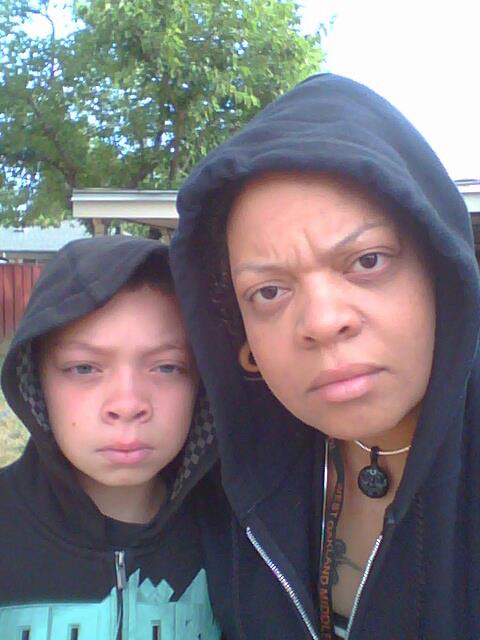 Several weeks ago we had an incident at home that really stopped me in my tracks, and helped me to remember that parenting is complicated for all people and some situations have no one right way to deal with them. Last time I checked, I have not seen anything in the parenting rule book about how to talk to children about race, especially when they are of mixed race.
You see, growing up there was never a question about what I was. My mother never entertained the concept of discussing race because it was assumed that we all knew exactly what we were and what that meant. It was the definition of our culture that was not spoken yet implied. The world around me finished filling in the gaps as soon as I was of age to understand the language that society spoke in my ear.
Now I am 38 years old, and have a child that is right at the age where he is trying to figure out who he really is. He is in his teens, and working towards getting it all figured out but in reality these are conversations that are not easily understood.
After a brief conversation with my husband, my son took away from the discussion that he was Swedish. My husband, making a statement about his ancestry, mentioned the swedish blood in his lineage, not thinking this might translate the way that it did to a 12 year old child. All any 12 year old kid might hear in that conversation is that having swedish ancestry makes you Swedish, and that is exactly what my son heard.
Explaining racial and cultural aspects to a young child escapes the average person, and I am no exception. What I realized very quickly in this conversation was that I had the tools to talk to adults about the politics of race and culture but did not have those same skills for my own son. The complexity of what it means to be Black in America is something not easily explained, nor understood. And so I struggled with this conversation.
I don’t think I have stuttered in any other conversation quite as much as I did in that conversation, and I am not foreign to complex dialogs.
The stream of thoughts that went through my head sounded a bit like this:
- “You are black even though you have the blood of many others inside of you, including the Natives, Scottish, German, and English. But you are still Black.”
- “You have scottish blood but you are not scottish”.
- “Society will always see you as Black, no matter what else you are”
- “What is wrong with being Black? Why do you want to be scottish so much”.
While I didn’t say any of these, I struggled with coming up with an explanation for a 12 and a half year old that would make sense, and not be so biased that he could not come to his own understanding of the culture of being Black. I could just hear some of my relatives now, making references of being brainwashed by white people, thinking I should just tell him what he is.
“Boy, you are Black and that is just what it is!”
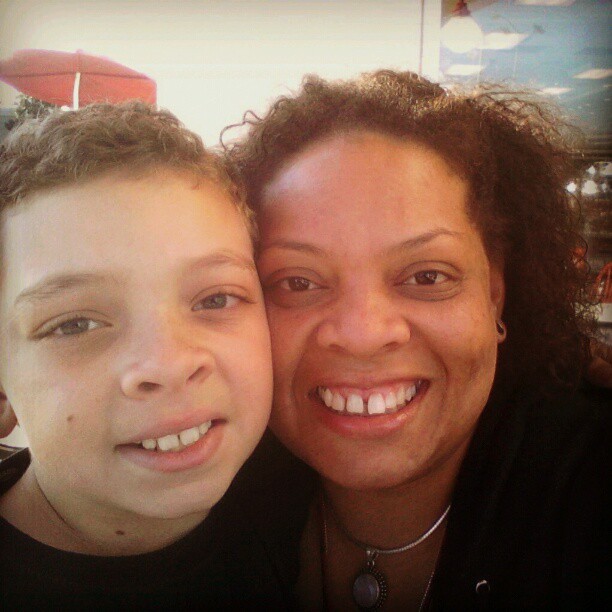 But I didn’t go that route, I did not want to create a closed conversational dynamic that did not give him room to explore the meaning of this conversation later. I did talk about him being Black but tried to put more context to it than just stamping a label on his forehead.
In the process of this incredibly strange and unexpected conversation with our son, my husband made reference to being “uncomfortable” and how it was time for him to “get up and get busy in the kitchen”. I responded to him, pointing out the privilege in being able to walk away from conversations about race that are uncomfortable and that Black people do not have that choice in America. We have to sit in the discomfort, all while figuring out who exactly we are, what that means, and what society thinks we are. We do not get to walk away, we have to carry it on our skin.
My husband reflected on this momentarily, and almost immediately said he got that. He rejoined the conversation of grappling with how to talk to our 12 year old about identity issues that are above the capacity to understand for some adults.
I did not walk away from the conversation with all the answers, while I feel I am closer than when we started. Here are some thoughts I DID walk away with, all of them enlightening, valuable and insightful.
- A Black person and a White person can have conversations about the impact of race and privilege that is empathetic and supportive, and that mostly depends on the ability to trust one another and be in the moment of the conversation.
- The tools that we need to discuss privilege and the impact of racism on Black people in America are slowly developing, even though we are not there yet, but the tools we need for our children are even further behind that learning curve.
- Balancing personal culture, societal culture, expectations of others, and our history can make for a complex conversation that we must continue to work to uncode so that we can explore it with our kids. There does not have to be one way to explain such things to our kids, but we must give ourselves permission go through this process with them.
- Take the opportunity to teach your children your culture, and don’t wait for them to learn it from others in your community. When we define what it is to be whatever culture we are, we can make that a transparent process of learning for those around us, giving context to the confusion, or to topics like race.
- When people explore privilege, they are giving themselves an opportunity to spiritually stretch their understanding of empathy. The more developed our ability to understand the pain, trauma, and experiences of others, the more it will brings us closer to the divine experience of humanity. It is definitely a spiritual thang, and unpacking privilege is a valuable road to answers previously unknown.
In the end, this will not be one conversation that I have with my son. This uncovering of ancestral information will be a lifelong process for him that I will help start with discussions, stories, explanations, and information about who we are and where we come from. The ability to gather knowledge that shines a light on our inner core, gives us access to our ancestral power in a way that isn’t previously imaginable. We are a powerful people, spiritually aligned with the mission of resilience and cultured by the magic of our history.
It is a source of magic that he holds as a part of his birthright, and understanding what it is will be the next journey of his spiritual expansion.
And in the end? I have a Black boy… that is kind of swedish.
Previous Post
June 14, 2014
30 Day Real Black History Challenge 2014 – Week Two (#30DayRBHC)
Next Post
June 28, 2014 30 Day Real Black History Challenge 2014 – Week Three (#30DayRBHC)
Browse Our Archives
Select a Category Ancestors Culture goddess justice Magical work Natural hair Paganism parenting ritual service Spiritual Growth Uncategorized Wicca
Select a Month April 2016 February 2016 January 2016 December 2015 November 2015 September 2015 July 2015 June 2015 May 2015 March 2015 February 2015 January 2015 December 2014 November 2014 October 2014 September 2014 August 2014 July 2014 June 2014 May 2014 April 2014 March 2014 February 2014 January 2014 December 2013 November 2013 October 2013 September 2013 August 2013 July 2013 June 2013 May 2013 April 2013 March 2013 February 2013 January 2013 December 2012 November 2012 October 2012 September 2012 August 2012 July 2012 June 2012 May 2012 April 2012 March 2012 February 2012 January 2012 December 2011 November 2011 October 2011 September 2011 August 2011 July 2011 June 2011 May 2011 April 2011 March 2011
Follow Us!
TAKE THE
Religious Wisdom Quiz
What does 1 John say about anyone who claims to be in the light but hates a brother or sister?
Select your answer to see how you score.
They are hypocrites They do not know God They are in darkness They are liars
Related posts from Daughters of Eve

Conjuring a Path: Embracing African-American Folk Magic



Dropping the Crystal Ball with A Little Grace,...
TRENDING AT PATHEOS Pagan

I was recently chatting with someone on Instagram. She asked me what...

While there are many people who share their results, the end of...

On July 23, I saw Christopher Nolan's The Odyssey which is Homer’s...

As I write this two big events have just finished up. One...

Restoring the Watershed of Divine Love
Perhaps cooperation is not something we manufacture through legislation, ideology, or moral...

Many UUs don’t pray because of bad experiences in a previous religion,...
view all Pagan blogs
Ad-Free & Subscriber Log-In Subscription Support
- About Us
- 2026 Calendar
- Videos
- Podcasts
- Library of World Religions
- Faith In Media Tracker
- Advertise With Us
- Write for Us
- Privacy Policy
- Terms of Service
- Do Not Sell My Data
- Contact Us
- Radiant Digital
- Manage Newsletter Subscriptions
- Unsubscribe From Notifications
- Sitemap
Copyright 2008-2026, Patheos. All rights reserved.
Subscription Support Ad-Free & Subscriber Log-In
Follow Patheos