
BuddhistCatholicContemplativeEvangelicalGeneral ChristianHinduJewishLatter-day SaintMuslimNew VisionsProgressive Christian
Beliefs
- Buddhist
- Catholic
- Contemplative
- Evangelical
- General Christian
- Hindu
- Jewish
- Latter-day Saint
- More Voices
- Muslim
- New Visions
- Pagan
- Progressive Christian
Topics
- Religion News
- Food and Religion
- Sports and Religion
- Religious Art
- Religious Music and Entertainment
- Religious Events
- History and Religion
- Style and Religion
- Politics and Religion
- Women in Religion
- Recreation Outdoors and Religion
- Business Finance and Religion
- Careers Workplace and Religion
- Education and Religion
- Family Parenting and Religion
- Health Fitness and Religion
- Home and Religion
- Relationships and Religion
- Technology and Religion
- Travel and Religion
Columnists
- Buddhist Columnists
- Business Finance and Religion Columnists
- Careers Workplace and Religion Columnists
- Catholic Columnists
- Contemplative Columnists
- Education and Religion Columnists
- Evangelists Columnists
- Family Parenting and Religion Columnists
- General Christian Columnists
- Health Fitness and Religion Columnists
- Hindu Columnists
- History and Religion Columnists
- Home and Religion Columnists
- Jewish Columnists
- More Voices Columnists
- Latter Day Columnists
- Muslim Columnists
- New Visions Columnists
- Nonreligious Columnists
- Pagan Columnists
- Politics and Religion Columnists
- Progressive Columnists
- Recreation Outdoors and Religion Columnists
- Relationships and Religion Columnists
- Religion News Columnists
- Religious Art Columnists
- Religious Events Columnists
- Religious Music and Entertainment Columnists
- Sports and Religion Columnists
- Style and Religion Columnists
- Technology and Religion Columnists
- Travel and Religion Columnists
- Women in Religion Columnists
Resource Library
- 2026 Calendar
- Library of World Religions
- The 100 Most Holy Places on Earth
- Patheos Answers
- Podcasts
- Videos
- Faith Leaders Database
- Anglican Episcopalian
- Bahai
- Baptist
- Buddhism
- Christianity
- Confucianism
- Eastern Orthodoxy
- Hinduism
- Holiness and Pentecostal
- ISKCON
- Islam
- Judaism
- Lutheran
- Methodist
- The Church of Jesus Christ of Latter-day Saints
- New Age
- Paganism
- Presbytarian and Reformed
- Protestantism
- Religion Behind the Scenes
- Roman Catholic
- Scientology
- Shia Islam
- Sikhism
- Sufism
- Sunni Islam
- Taoism
- Zen
- See all religions
Research Tools
 Ad-Free & Subscriber Log-In Subscription Support
Ad-Free & Subscriber Log-In Subscription Support
Follow Patheos 

- Trending:
- Forgiveness
- |
- Marriage
- |
- Consciousness
- |
- Death Penalty
- |
- Election
- |
- Halloween
 Daughters of Eve
- Home
- Pagan
- Cultivating Paganism: The Beauty of Horticulture in Our Bubble
Cultivating Paganism: The Beauty of Horticulture in Our Bubble
Last updated on: April 4, 2013 at 2:55 pm by Crystal Blanton
Cultivating Paganism: The Beauty of Horticulture in Our Bubble 2013-04-04T14:55:27-04:00 Crystal Blanton
Patheos Explore the world's faith through different perspectives on religion and spirituality! Patheos has the views of the prevalent religions and spiritualities of the world.
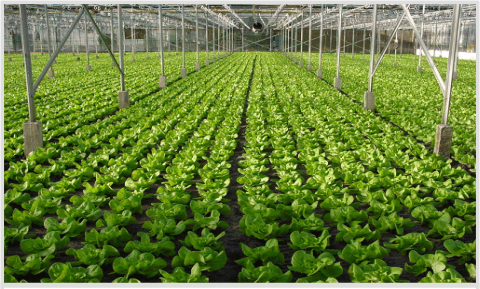
picture from livenewsbee.com
The art of horticulture is important to this piece, because it demonstrates the controlled, skilled and purposeful growth of cultivated crops for reasons of health and beauty. One of the best worded descriptions I found on the internet about the movement of horticulture was on Wikipedia, where it states:
Horticulturists apply the knowledge, skills, and technologies used to grow intensively produced plants for human food and non-food uses and for personal or social needs. Their work involves plant propagation and cultivation with the aim of improving plant growth, yields, quality, nutritional value, and resistance to insects, diseases, and environmental stresses. They work as gardeners, growers, therapists, designers, and technical advisers in the food and non-food sectors of horticulture.
Horticultural scientists focus on the research that underpins horticultural knowledge, skills, technologies, education, and commerce.
I was reading these descriptions and thinking, “isn’t that exactly the beauty in Pagan community?”
We come together as a society of practitioners that are a minority religion within a larger societal, religious picture. We come together to apply “knowledge, skills, and technologies used to intensively produce” a product that supports our social and Pagan culture. It is the shared commonality of community that plants, breeds and cultivates infrastructure that is not brick and mortar, but instead is spiritual, cultural and social capital.
Let’s take a moment to define culture. In the article Whose Culture has Capital? A Critical Race Theory Discussion of Community Cultural Wealth, Yosso states (2002), “Culture refers to behaviors and values that are learned, shared and exhibited by a group of people. Culture is also evidenced in material and nonmaterial productions of a people. Culture as a set of characteristics is neither fixed nor static.” (Gomex-Quinoines, 1977)
What is social or cultural capital? And why is it important to acknowledge the importance of it here? Cultural capital is a theory that identifies the knowledge, skills and resources as capital within that community; social capital refers to the social networks and community resources.
Ultimately these theories acknowledge that what is important within one culture may not always be important within another. Often Critical Race Theory (CRT) and ideas of social or cultural capital are applied in social work discussions around the inequalities between certain groups of people, acknowledging that value is placed differently depending on the actual culture of the group. The skill of being bilingual in a Spanish-speaking home, is not going to be the same as within an African-American home. The skills of creating clothing from animal skins did not have the same value to the invading colonists as it did to the Natives that had been living on this land. The value of those skills did not translate from one culture to the other, and it is the same in many cultures today.
In the Journal of African American History, there was an issue on “cultural capital and African American education,” where the author Frankin referred to cultural capital as “the sense of a group consciousness and collective identity that serves as a resource aimed at the advancement of an entire group.”
This is an important concept to this discussion because there is cultural capital in the Pagan community, and often it is not valued the same within the larger religious community. Effectively running a Pagan ceremony will not have the same value to larger society, even if it is a necessary skill among our own. Any community, especially a minority sect of larger society, will have beliefs, practices, vocabulary, skills, fashion, social understandings, and even customs that are full of wealth within that culture. It is the cultivation of community that happens around these concepts, the grooming of stories and associations that becomes a part of the importance of the structure of beliefs. Pagans are no different; we are very much the same as other minority religions, ethnic, or gender communities.
When I go into another person’s home, a person who happens to be from another ethnic group, I do not assume they practice the same customs in their cooking and eating as I have learned from my family. Thanksgiving in my home is compiled of collard greens, yams, turkey, ham, potato salad, thick gravy from scratch, mac and cheese, corn bread, banana pudding and pumpkin pie with strudel topping. This meal is of great importance to our family, and we are often critical of others whose turkey is too dry. Until the death of my mother, our turkey was smoked, giving it a flavor that we associate with great skill. Since her death, I have yet to learn this skill. I have gone to other’s Thanksgiving feasts before and our customs are strange to them. Greens? Potato salad instead of mashed potatoes? No traditional pumpkin pie or cranberry sauce? The differences in our cultures does not easily translate to the others.
In reality, this is understandable and it is ok. Critical Race Theory talks about systems and structures that should take cultural influences into consideration, such as academia. What if we could take that into account within and without the Pagan community? What if we were able to be comfortable with the sense of Pagan community as much-needed culture building, that creates community cultural and social capital? This space would be the place we go for support, understanding, shared spiritual experience, teaching, social activity, skill building, and service. And we wouldn’t have to feel like there is something in that process that does not have value. Where we cultivate culture, we have the chance to redefine who we are, and gain the tools to sustain that emotionally, intellectually and spiritually.
AND we get to also exist in the greater community. Just like with other cultures, we often will share what value sets might have capital in other communities and those things that translate. I don’t force Southern collard greens on my friends who are not interested, just like I don’t assume that the greater world wants to learn about circle casting. Now, I do know that some areas of metaphysical work have capital in both communities, and so those things might make sense to share.
 We exist in a collaboration of bouncing bubbles; all connected and yet distinctly different than one another at the same time. They often rub up against each other and join into one bubble before separating again to form individual ones.
I tend to think that I float in and out of bubbles that encompass my multi-faceted needs, fulfilling different areas of identity and connection for me. I have my Pagan bubble, my social work/counseling bubble, my family bubble and my greater society bubble. I also have my Black bubble and my woman bubble, too, but none of these bubbles confine me. Instead, they are interconnected links that individually hold strength and make my system able to withstand the pressure that comes with this here body, this here mind, this here heart, and in this here world and corner of society. My chain must remain strong to withstand the pressure it endures, and so I must cultivate each one to be a strong link. There is no weakest link in the chain.
And all day long I am still a Black woman, who is a social worker and a mother, who is also a Pagan in greater society. I am all of those things all at once, and I hold the individual cultures of them all — cultivated through time and preserved through acknowledgement of their capital. If we focus too much on a melting-pot theory of togetherness, we loose ourselves in the sameness. It is important that I remember that.
As farmers to our Pagan culture, we should remember the work and the wisdom put into the process of cultivation. We cannot plant in other people’s soils until we can grow in our own. When we apply CRT thinking to this process, it replaces a deficit model of thinking with one that is positive and full of life.
Previous Post

March 27, 2013
Stepping Out of the Broom Closet and Gliding Across Boundaries
Next Post

April 7, 2013 200 Words: Patheos Blogger Challenge by Porsha Williams
Browse Our Archives
Select a Category Ancestors Culture goddess justice Magical work Natural hair Paganism parenting ritual service Spiritual Growth Uncategorized Wicca
Select a Month April 2016 February 2016 January 2016 December 2015 November 2015 September 2015 July 2015 June 2015 May 2015 March 2015 February 2015 January 2015 December 2014 November 2014 October 2014 September 2014 August 2014 July 2014 June 2014 May 2014 April 2014 March 2014 February 2014 January 2014 December 2013 November 2013 October 2013 September 2013 August 2013 July 2013 June 2013 May 2013 April 2013 March 2013 February 2013 January 2013 December 2012 November 2012 October 2012 September 2012 August 2012 July 2012 June 2012 May 2012 April 2012 March 2012 February 2012 January 2012 December 2011 November 2011 October 2011 September 2011 August 2011 July 2011 June 2011 May 2011 April 2011 March 2011
Follow Us!
TAKE THE
Religious Wisdom Quiz
Proverbs warns against what kind of woman as a symbol of temptation?
Select your answer to see how you score.
Mother-in-law Adulterous woman Widow Queen
Related posts from Daughters of Eve

Conjuring a Path: Embracing African-American Folk Magic



Dropping the Crystal Ball with A Little Grace,...
TRENDING AT PATHEOS Pagan

I was recently chatting with someone on Instagram. She asked me what...

While there are many people who share their results, the end of...

On July 23, I saw Christopher Nolan's The Odyssey which is Homer’s...

As I write this two big events have just finished up. One...

Restoring the Watershed of Divine Love
Perhaps cooperation is not something we manufacture through legislation, ideology, or moral...

Many UUs don’t pray because of bad experiences in a previous religion,...
view all Pagan blogs
Ad-Free & Subscriber Log-In Subscription Support
- About Us
- 2026 Calendar
- Videos
- Podcasts
- Library of World Religions
- Faith In Media Tracker
- Advertise With Us
- Write for Us
- Privacy Policy
- Terms of Service
- Do Not Sell My Data
- Contact Us
- Radiant Digital
- Manage Newsletter Subscriptions
- Unsubscribe From Notifications
- Sitemap
Copyright 2008-2026, Patheos. All rights reserved.
Subscription Support Ad-Free & Subscriber Log-In
Follow Patheos