
BuddhistCatholicContemplativeEvangelicalGeneral ChristianHinduJewishLatter-day SaintMuslimNew VisionsProgressive Christian
Beliefs
- Buddhist
- Catholic
- Contemplative
- Evangelical
- General Christian
- Hindu
- Jewish
- Latter-day Saint
- More Voices
- Muslim
- New Visions
- Pagan
- Progressive Christian
Topics
- Religion News
- Food and Religion
- Sports and Religion
- Religious Art
- Religious Music and Entertainment
- Religious Events
- History and Religion
- Style and Religion
- Politics and Religion
- Women in Religion
- Recreation Outdoors and Religion
- Business Finance and Religion
- Careers Workplace and Religion
- Education and Religion
- Family Parenting and Religion
- Health Fitness and Religion
- Home and Religion
- Relationships and Religion
- Technology and Religion
- Travel and Religion
Columnists
- Buddhist Columnists
- Business Finance and Religion Columnists
- Careers Workplace and Religion Columnists
- Catholic Columnists
- Contemplative Columnists
- Education and Religion Columnists
- Evangelists Columnists
- Family Parenting and Religion Columnists
- General Christian Columnists
- Health Fitness and Religion Columnists
- Hindu Columnists
- History and Religion Columnists
- Home and Religion Columnists
- Jewish Columnists
- More Voices Columnists
- Latter Day Columnists
- Muslim Columnists
- New Visions Columnists
- Nonreligious Columnists
- Pagan Columnists
- Politics and Religion Columnists
- Progressive Columnists
- Recreation Outdoors and Religion Columnists
- Relationships and Religion Columnists
- Religion News Columnists
- Religious Art Columnists
- Religious Events Columnists
- Religious Music and Entertainment Columnists
- Sports and Religion Columnists
- Style and Religion Columnists
- Technology and Religion Columnists
- Travel and Religion Columnists
- Women in Religion Columnists
Resource Library
- 2026 Calendar
- Library of World Religions
- The 100 Most Holy Places on Earth
- Patheos Answers
- Podcasts
- Videos
- Faith Leaders Database
- Anglican Episcopalian
- Bahai
- Baptist
- Buddhism
- Christianity
- Confucianism
- Eastern Orthodoxy
- Hinduism
- Holiness and Pentecostal
- ISKCON
- Islam
- Judaism
- Lutheran
- Methodist
- The Church of Jesus Christ of Latter-day Saints
- New Age
- Paganism
- Presbytarian and Reformed
- Protestantism
- Religion Behind the Scenes
- Roman Catholic
- Scientology
- Shia Islam
- Sikhism
- Sufism
- Sunni Islam
- Taoism
- Zen
- See all religions
Research Tools
 Ad-Free & Subscriber Log-In Subscription Support
Ad-Free & Subscriber Log-In Subscription Support
Follow Patheos 

- Trending:
- Forgiveness
- |
- Marriage
- |
- Consciousness
- |
- Death Penalty
- |
- Election
- |
- Halloween
 Daughters of Eve
- Home
- Pagan
- A plague o’ both your houses: historical trauma, the collective shadow and the Pagan community
A plague o’ both your houses: historical trauma, the collective shadow and the Pagan community
Last updated on: January 18, 2013 at 11:34 am by Crystal Blanton
A plague o’ both your houses: historical trauma, the collective shadow and the Pagan community 2013-01-18T11:34:16-05:00 Crystal Blanton
Patheos Explore the world's faith through different perspectives on religion and spirituality! Patheos has the views of the prevalent religions and spiritualities of the world.
During the climactic Act III, Scene I in Shakespeare’s Romeo and Juliet, Mercutio (in pain) speaks to his best friend Romeo as a dying man. “’Tis not so deep as a well, nor so wide as a church-door; but ‘tis enough, ‘twill serve: ask for me to-morrow, and you shall find me a grave man. I am peppered, I warrant, for this world. A plague o’ both your houses!”
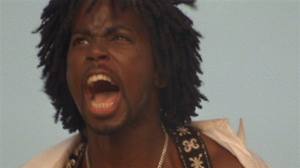
Mercutio (played by Harold Perrineau) yelling the famous line in 1996 version of Romeo and Juliet.
A plague on both our houses; simple, profound, and so relevant in today’s society.
I went to a trauma summit in Oakland today. This summit concentrated on trauma-informed practices and the effects of trauma over time. It in essence was focused on providing hope for those who have experienced trauma by infusing new techniques with providers.
There are some things I could talk about that happened within the summit, but they would not be totally relevant to this particular blog. But one of the sessions I went to was called “Systematic Oppression and Resiliency.”
The facilitators, Dr. Jackson and Ms. King, packed this workshop with information that applied to the historical damage that has been done to the American Indians and African American people. The concept that damage, violence, harm, institutional racism, and the devaluing of humanity for an entire category of people, has lasting effects for coming generations. Part of this workshop addressed how individual treatment of trauma does not work for the healing of historical trauma because the root is in the systematic harm that has been caused. In essence, individual treatment does not fix society’s ills.
Dr. Jackson made some incredible points in response to people’s privileged statements about how slavery is over and we should move on. Some of those points addressed the concept of disenfranchised grief, the withholding of mental health service access during, and post-slavery (and even now), the collective shadow, and the need for psychological liberation.
Professionally it is my passion to work through historical, social and structural injustice in order to create opportunity for the underprivileged. This is the reason why I have worked in drug treatment for 13 years, and more importantly, it is why I have stayed working in the trauma-laced communities with youth for six of those 13. But it is also my spiritual mission in many ways as well because one cannot separate the two, as we are a “one” people.
In healing within any culture, there needs to be an opportunity to explore the untold stories. African Americans have not had the opportunity to do that within a safe and accepting societal structure. The reality is that Caucasians have not either. The damage of the historical trauma brought upon African Americans was also brought upon Caucasians as well. No group of people could do that level of damage to another group of people without being damaged in the process. In our Americanized-societal values, we choose to glance over the harm of our history instead of inviting ourselves to explore what our history means to who we are. And in the process we have some cultures feeling disenfranchised from the grief of their historical pain, and another culture unable to explore the discomfort of “white guilt” that has underlined privileges given due to the suffering of others within history.
One of the quotes from the workshop struck me to the core. “If the white man has inflicted the wounds of racism upon black men, the cost has been that he would receive the mirror image of that wound into himself,” (Berry, 1989). I ponder that thought. How are we ever able to engage authentically with one another when we are not exploring the need for healing that is rooted in our very core? Society as a whole suffers from this, and so does the Pagan community.
Much of this discussion I was listening to overlapped with my beliefs around the needs within my professional and spiritual community work. The key note speaker, Mary Blake, made a comment earlier in the summit about how “the impact and legacy of violence does not go away.” And instead of embracing our collective needs for exploring the historical ramifications that these atrocities have had in our communities, we instead ignore their existence and then villainize one another for our responsive behavior to the “forgotten” traumas within our psyche.
The facilitators of this workshop gave a list of some of the things that support healing from historical trauma; I will include a couple points here.
- Tell the untold story.
- Put behavior and conditions in context of the history.
- Ceremony and Native models.
Whether we are talking about Native people, African Americans or our dear Pagan communities, what if we applied this wisdom to ourselves? What if we allowed ourselves to listen, tell and learn from the untold stories of our history and our ancestors? Not the ones in the history books, but the ones of pain, the oppressed and the oppressors that were removed from modern American history. What if we approached one another with the knowledge that behaviors are influenced by the history of our collective stories and our collective shadow? What would it look like if we acknowledged one another’s need to heal and solidified that healing with ceremonies and culturally-relevant models of celebratory practices that would help us transition individually and collectively as a healthier community?
Why don’t we have rituals and ceremonies that allow us to embrace the shadows of our history? Why don’t we have rites of passage to empower and mark the transition from our past trauma into a place of spiritual wholeness? Why don’t we have ceremonies that reinforce our need for a trauma-informed community and support empathy for one another’s historical trauma?
These are big questions. I don’t have all the answers and yet I feel that the next movement in society will mirror the movement within the Pagan community, and our need to redefine our relationships with social justice, diversity, community values and sustainability will become more prevalent. Do we gloss over our road blocks as if they do not exist, or do we embrace the complexity of our human nature by acknowledging that our love of the Goddess does not erase the harm of our histories?
As the focus continue to turn to privilege, labels, inclusiveness, exclusion, community and our collective potential, let us stop allowing the “scratching the surface” norms to be acceptable within Pagan culture. Let’s challenge one another by extending a chance for safe exploration of who we are individually, who we are within our societies, who we are within our ethnic cultures, and who we are collectively as one Pagan community.
If we don’t take our opportunities to move toward health, it could be the keys to continued dysfunction or the beginning of our end. We are living in the plagued houses of Mercutio’s curse and we have forgotten where we are. As Maya Angelou said, “There is no greater agony than bearing an untold story inside of you”.
Maybe if we release our stories, we can then be free to create new ones.
Writers note: This video was shared in the workshop. I had to share it here. It brought tears to my eyes.
Previous Post

January 16, 2013
Guest Post: Year and a Day Journey
Browse Our Archives
Select a Category Ancestors Culture goddess justice Magical work Natural hair Paganism parenting ritual service Spiritual Growth Uncategorized Wicca
Select a Month April 2016 February 2016 January 2016 December 2015 November 2015 September 2015 July 2015 June 2015 May 2015 March 2015 February 2015 January 2015 December 2014 November 2014 October 2014 September 2014 August 2014 July 2014 June 2014 May 2014 April 2014 March 2014 February 2014 January 2014 December 2013 November 2013 October 2013 September 2013 August 2013 July 2013 June 2013 May 2013 April 2013 March 2013 February 2013 January 2013 December 2012 November 2012 October 2012 September 2012 August 2012 July 2012 June 2012 May 2012 April 2012 March 2012 February 2012 January 2012 December 2011 November 2011 October 2011 September 2011 August 2011 July 2011 June 2011 May 2011 April 2011 March 2011
Follow Us!
TAKE THE
Religious Wisdom Quiz
Who was the slave who became a Christian and whose master was Philemon?
Select your answer to see how you score.
Barnabas Onesimus Sosthenes Tychicus
Related posts from Daughters of Eve
Magical Beginnings Begin Again

Self Actualization, Spiritual Oneness, Freedom and the Fourth...
Privilege and Racialist Paganism Talks at Pantheacon
A Community Influx: The Journey to Redefine the...
TRENDING AT PATHEOS Pagan

When we talk about Greek religion, we often begin with the dodekatheion—the...

I was recently chatting with someone on Instagram. She asked me what...

While there are many people who share their results, the end of...

On July 23, I saw Christopher Nolan's The Odyssey which is Homer’s...

As I write this two big events have just finished up. One...

Restoring the Watershed of Divine Love
Perhaps cooperation is not something we manufacture through legislation, ideology, or moral...
view all Pagan blogs
Ad-Free & Subscriber Log-In Subscription Support
- About Us
- 2026 Calendar
- Videos
- Podcasts
- Library of World Religions
- Faith In Media Tracker
- Advertise With Us
- Write for Us
- Privacy Policy
- Terms of Service
- Do Not Sell My Data
- Contact Us
- Radiant Digital
- Manage Newsletter Subscriptions
- Unsubscribe From Notifications
- Sitemap
Copyright 2008-2026, Patheos. All rights reserved.
Subscription Support Ad-Free & Subscriber Log-In
Follow Patheos