
BuddhistCatholicContemplativeEvangelicalGeneral ChristianHinduJewishLatter-day SaintMuslimNew VisionsProgressive Christian
Beliefs
- Buddhist
- Catholic
- Contemplative
- Evangelical
- General Christian
- Hindu
- Jewish
- Latter-day Saint
- More Voices
- Muslim
- New Visions
- Pagan
- Progressive Christian
Topics
- Religion News
- Food and Religion
- Sports and Religion
- Religious Art
- Religious Music and Entertainment
- Religious Events
- History and Religion
- Style and Religion
- Politics and Religion
- Women in Religion
- Recreation Outdoors and Religion
- Business Finance and Religion
- Careers Workplace and Religion
- Education and Religion
- Family Parenting and Religion
- Health Fitness and Religion
- Home and Religion
- Relationships and Religion
- Technology and Religion
- Travel and Religion
Columnists
- Buddhist Columnists
- Business Finance and Religion Columnists
- Careers Workplace and Religion Columnists
- Catholic Columnists
- Contemplative Columnists
- Education and Religion Columnists
- Evangelists Columnists
- Family Parenting and Religion Columnists
- General Christian Columnists
- Health Fitness and Religion Columnists
- Hindu Columnists
- History and Religion Columnists
- Home and Religion Columnists
- Jewish Columnists
- More Voices Columnists
- Latter Day Columnists
- Muslim Columnists
- New Visions Columnists
- Nonreligious Columnists
- Pagan Columnists
- Politics and Religion Columnists
- Progressive Columnists
- Recreation Outdoors and Religion Columnists
- Relationships and Religion Columnists
- Religion News Columnists
- Religious Art Columnists
- Religious Events Columnists
- Religious Music and Entertainment Columnists
- Sports and Religion Columnists
- Style and Religion Columnists
- Technology and Religion Columnists
- Travel and Religion Columnists
- Women in Religion Columnists
Resource Library
- 2026 Calendar
- Library of World Religions
- The 100 Most Holy Places on Earth
- Patheos Answers
- Podcasts
- Videos
- Faith Leaders Database
- Anglican Episcopalian
- Bahai
- Baptist
- Buddhism
- Christianity
- Confucianism
- Eastern Orthodoxy
- Hinduism
- Holiness and Pentecostal
- ISKCON
- Islam
- Judaism
- Lutheran
- Methodist
- The Church of Jesus Christ of Latter-day Saints
- New Age
- Paganism
- Presbytarian and Reformed
- Protestantism
- Religion Behind the Scenes
- Roman Catholic
- Scientology
- Shia Islam
- Sikhism
- Sufism
- Sunni Islam
- Taoism
- Zen
- See all religions
Research Tools
 Ad-Free & Subscriber Log-In Subscription Support
Ad-Free & Subscriber Log-In Subscription Support
Follow Patheos 

- Trending:
- Forgiveness
- |
- Marriage
- |
- Consciousness
- |
- Death Penalty
- |
- Election
- |
- Halloween
 Daughters of Eve
- Home
- Pagan
- Guest Post: Ritualized Rhythm
Guest Post: Ritualized Rhythm
Last updated on: December 10, 2011 at 3:59 am by Crystal Blanton
Guest Post: Ritualized Rhythm 2011-12-10T03:59:39-05:00 Crystal Blanton
Patheos Explore the world's faith through different perspectives on religion and spirituality! Patheos has the views of the prevalent religions and spiritualities of the world.
 For thousands of years dance has played an integral role in ritual and religion. For many, it was story telling and theater that led to the formation of their ritualized services. Eventually the origin stories themselves may fade but the dances, emotion, and resonance remain. For African Americans, many of whom have very little links to our ancestral pasts, our own dances and rituals have often been scandalized, sexualized, or out right vilified as unfit for public consumption.
Search You Tube for African dances and you will see a variety of styles from the highly stylized ecstasies of the Yankadi to the lesser known dances of the Xhosa and Woodaabe; each movement represents a concept or theme. Boasting, welcome, coming of age, fertility, or plain “I want to have fun.” can be communicated through the wave of an arm or a steady hip bump to the sound of beating drums.
Even before becoming a follower of Dionysos I loved to dance. Growing up in the south, I learned square dancing in middle school and the compulsory arms-length-away dancing of high school prom. As I entered the pagan community I discovered new dances, most of which involved skipping in circles or some other form of dance accepted by the gentry of Europe’s past and passed along to their children.
It wasn’t until I discovered African, Indian, and Middle Eastern styles of dance that I finally felt “free.” A body of curves, strength, and energy were ignited by the pulsing drums, hypnotic chants, and shouts of joy emanating from the throats of women who looked like me. Dance went from a portion of ritual, to being ritual itself and once my hips became involved there was no stopping me.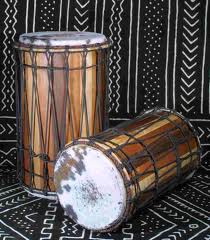
See, despite being fit, I have hips. Hips made for bearing children, and bumping doors closed, and swiveling in a fitted pair of jeans. In my opinion, my hips are made for dancing, for scooping out the best part of a beat and accentuating it with my femininity. Historically within Western culture, the bodies of women of color and especially black women are viewed as naturally lewd or made for the sole purpose of sex. By the time you combine these stigmas with the festive dances of some cultures where the hips, stomach, and buttocks are put to motion, it’s no wonder a dance of beauty, creativity, or fiery worship to one individual can become another person’s“trash.”
Sadly, some African Americans have completely forgotten just how powerful and wonderful our dances are. This isn’t to say that all black pagans should practice some form of ethnic dance, but I wonder why more of us aren’t bringing our rhythms, and our hips, to the community. I wonder if this is part of our fear that we will be seen as “hood rats” or worse for daring to shimmy and praise the gods to the beat of drums that are our own. Perhaps I’m generalizing too much. Instead of asking this of all black pagans I say this for fellow dancers for, and to, the gods.
Each movement can be devotion, acceptance, and a shedding of the stigmas against out bodies so many of us have, subconsciously, internalized. Dancing with our hips, to the drums that drive us, to the shouts we’ve long forgotten is a way of showing the gods that not only have we opened ourselves to our brothers and sisters within the pagan community but that we’ve also worked to accept ourselves in our entirety.
Perhaps we will see some kind of change soon enough. Belly dance has become an acceptable form of dance for women of all races and is welcomed in most pagan settings. As more women, and especially black women, embrace Bhangra, Raqs Baladi, and Nmane we can not only learn about new cultures and share this experience with others, but we can also gain acceptance and love for our own hips, lips, and fingertips in the many shapes and forms they take.
-
“These hips are big hips.
they need space to
move around in.
they don’t fit into little
petty places. these hips
are free hips.
they don’t like to be held back.
these hips have never been enslaved,
they go where they want to go
they do what they want to do.
these hips are mighty hips.
these hips are magic hips.
i have known them
to put a spell on a man and
spin him like a top “Lucille Clifton (1936-2010)
 K. Pythia Theocritos has been a practicing pagan, both in and out of the community, for 11 years. She is currently a devotee of The Olympians, editor of He Epistole; A Hellenic Polytheist Newsletter, and proud purveyor of self-deprecating humor. Having studied eclectic Wiccan-influenced magical practices, she seeks to construct, for herself, a ceremonial magic system based on Greco-Roman symbolism instead of the, typical, Judeo-Christian archetypes. This project, combined with her studies in alchemy, have forced her to convert her blood into pure caffeine for efficiency. She is engaged in a wonderfully playful inter-faith marriage; is the personal butler of 4 cats, and is fond of a good drink, a few laughs, and profanity when it fits the surrounding company.
Previous Post

December 4, 2011
Daughters of Eve: Clio Ajana
Next Post
December 29, 2011 Politics, Views and the Gods
Browse Our Archives
Select a Category Ancestors Culture goddess justice Magical work Natural hair Paganism parenting ritual service Spiritual Growth Uncategorized Wicca
Select a Month April 2016 February 2016 January 2016 December 2015 November 2015 September 2015 July 2015 June 2015 May 2015 March 2015 February 2015 January 2015 December 2014 November 2014 October 2014 September 2014 August 2014 July 2014 June 2014 May 2014 April 2014 March 2014 February 2014 January 2014 December 2013 November 2013 October 2013 September 2013 August 2013 July 2013 June 2013 May 2013 April 2013 March 2013 February 2013 January 2013 December 2012 November 2012 October 2012 September 2012 August 2012 July 2012 June 2012 May 2012 April 2012 March 2012 February 2012 January 2012 December 2011 November 2011 October 2011 September 2011 August 2011 July 2011 June 2011 May 2011 April 2011 March 2011
Follow Us!
TAKE THE
Religious Wisdom Quiz
What nation took Israel into captivity in 722 BC?
Select your answer to see how you score.
Assyria Egypt Persia Babylon
Related posts from Daughters of Eve

Conjuring a Path: Embracing African-American Folk Magic



Dropping the Crystal Ball with A Little Grace,...
TRENDING AT PATHEOS Pagan

I was recently chatting with someone on Instagram. She asked me what...

While there are many people who share their results, the end of...

On July 23, I saw Christopher Nolan's The Odyssey which is Homer’s...

As I write this two big events have just finished up. One...

Restoring the Watershed of Divine Love
Perhaps cooperation is not something we manufacture through legislation, ideology, or moral...

Many UUs don’t pray because of bad experiences in a previous religion,...
view all Pagan blogs
Ad-Free & Subscriber Log-In Subscription Support
- About Us
- 2026 Calendar
- Videos
- Podcasts
- Library of World Religions
- Faith In Media Tracker
- Advertise With Us
- Write for Us
- Privacy Policy
- Terms of Service
- Do Not Sell My Data
- Contact Us
- Radiant Digital
- Manage Newsletter Subscriptions
- Unsubscribe From Notifications
- Sitemap
Copyright 2008-2026, Patheos. All rights reserved.
Subscription Support Ad-Free & Subscriber Log-In
Follow Patheos