
BuddhistCatholicContemplativeEvangelicalGeneral ChristianHinduJewishLatter-day SaintMuslimNew VisionsProgressive Christian
Beliefs
- Buddhist
- Catholic
- Contemplative
- Evangelical
- General Christian
- Hindu
- Jewish
- Latter-day Saint
- More Voices
- Muslim
- New Visions
- Pagan
- Progressive Christian
Topics
- Religion News
- Food and Religion
- Sports and Religion
- Religious Art
- Religious Music and Entertainment
- Religious Events
- History and Religion
- Style and Religion
- Politics and Religion
- Women in Religion
- Recreation Outdoors and Religion
- Business Finance and Religion
- Careers Workplace and Religion
- Education and Religion
- Family Parenting and Religion
- Health Fitness and Religion
- Home and Religion
- Relationships and Religion
- Technology and Religion
- Travel and Religion
Columnists
- Buddhist Columnists
- Business Finance and Religion Columnists
- Careers Workplace and Religion Columnists
- Catholic Columnists
- Contemplative Columnists
- Education and Religion Columnists
- Evangelists Columnists
- Family Parenting and Religion Columnists
- General Christian Columnists
- Health Fitness and Religion Columnists
- Hindu Columnists
- History and Religion Columnists
- Home and Religion Columnists
- Jewish Columnists
- More Voices Columnists
- Latter Day Columnists
- Muslim Columnists
- New Visions Columnists
- Nonreligious Columnists
- Pagan Columnists
- Politics and Religion Columnists
- Progressive Columnists
- Recreation Outdoors and Religion Columnists
- Relationships and Religion Columnists
- Religion News Columnists
- Religious Art Columnists
- Religious Events Columnists
- Religious Music and Entertainment Columnists
- Sports and Religion Columnists
- Style and Religion Columnists
- Technology and Religion Columnists
- Travel and Religion Columnists
- Women in Religion Columnists
Resource Library
- 2026 Calendar
- Library of World Religions
- The 100 Most Holy Places on Earth
- Patheos Answers
- Podcasts
- Videos
- Faith Leaders Database
- Anglican Episcopalian
- Bahai
- Baptist
- Buddhism
- Christianity
- Confucianism
- Eastern Orthodoxy
- Hinduism
- Holiness and Pentecostal
- ISKCON
- Islam
- Judaism
- Lutheran
- Methodist
- The Church of Jesus Christ of Latter-day Saints
- New Age
- Paganism
- Presbytarian and Reformed
- Protestantism
- Religion Behind the Scenes
- Roman Catholic
- Scientology
- Shia Islam
- Sikhism
- Sufism
- Sunni Islam
- Taoism
- Zen
- See all religions
Research Tools
 Ad-Free & Subscriber Log-In Subscription Support
Ad-Free & Subscriber Log-In Subscription Support
Follow Patheos 

- Trending:
- Forgiveness
- |
- Marriage
- |
- Consciousness
- |
- Death Penalty
- |
- Election
- |
- Halloween

- Home
- Latter-day Saint
- History and Religion
- Last Night in England
Last Night in England
Last updated on: May 22, 2026 at 4:01 pm by Dan Peterson
Last Night in England 2026-05-22T16:01:52-06:00 Dan Peterson
Patheos Explore the world's faith through different perspectives on religion and spirituality! Patheos has the views of the prevalent religions and spiritualities of the world.
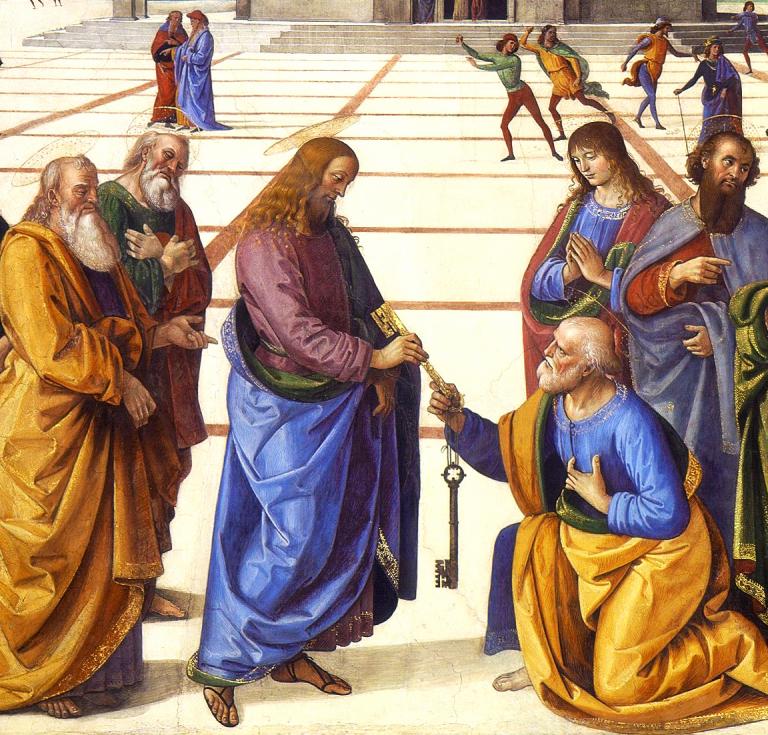
In this painting by Pietro Perugino (d. 1523), the Savior hands the keys of the Kingdom to Peter while the other disciples look solemnly on. (Wikimedia Commons public domain image)
A new article has appeared in Interpreter: A Journal of Latter-day Saint Faith and Scholarship 69 (2026): 1-22. It is “Joseph Smith and the Twin Priesthood Keys of Authority and Knowledge,” and it was written by Matthew Scott Stenson:
Abstract: This article proposes that priesthood keys are of two general categories: 1) keys of authority and 2) keys of knowledge. The keys of authority are the type most often discussed in meetings and classrooms, and thus, are relatively familiar. However, keys of knowledge, though an extension of the keys of authority, may be less familiar. The word key in this second case is used in a broad sense, including the keys of both knowledge and intelligence, which are richly featured in the revelations of the Doctrine and Covenants, as well as in the teachings of the Prophet Joseph Smith. After some preliminaries, I examine the keys of authority and the keys of knowledge. Then, I demonstrate that keys of knowledge can also be of two sorts: 1) formally revealed scriptural keys of knowledge and 2) informally revealed non-scriptural keys of knowledge. The paper finishes with a related discussion of the special keys of authority and power (if not also knowledge) that Jesus Christ holds over death, hell, and final judgment.
It’s accompanied online by “Interpreting Interpreter: Keys of Knowledge,” which was written by Kyler Rasmussen:
This post is a summary of the article “Joseph Smith and the Twin Priesthood Keys of Authority and Knowledge” by Matthew Scott Stenson in Volume 69 of Interpreter: A Journal of Latter-day Saint Faith and Scholarship. All of the Interpreting Interpreter articles may be seen at https://interpreterfoundation.org/category/summaries/. An introduction to the Interpreting Interpreter series is available at https:/interapreterfoundation.org/interpreting-interpreter-on-abstracting-thought/.
A video introduction to this Interpreter article is now available on all of our social media channels, including on YouTube at https://youtube.com/shorts/IVa8NiV-9hM. The Takeaway: Stenson discusses the concept of “keys” within Latter-day Saints doctrine, distinguishing the familiar “keys of authority” with the less familiar “keys of knowledge,” outlining the latter as special principles by which we can gain further understanding.
And I don’t think that I mentioned this new episode of The Interpreter Insights Podcast with Martin Tanner, which went up on 21 May 2026: “Seers and Stones: The Translation of the Book of Mormon as Divine Visions of an Old-Time Seer,” which was written by Stan Spencer.
In the 21 May 2026 episode of The Interpreter Insights Podcast, our host Martin Tanner reviews “Seers and Stones: The Translation of the Book of Mormon as Divine Visions of an Old-Time Seer” by Stan Spencer in Volume 24 of Interpreter: A Journal of Mormon Scripture.
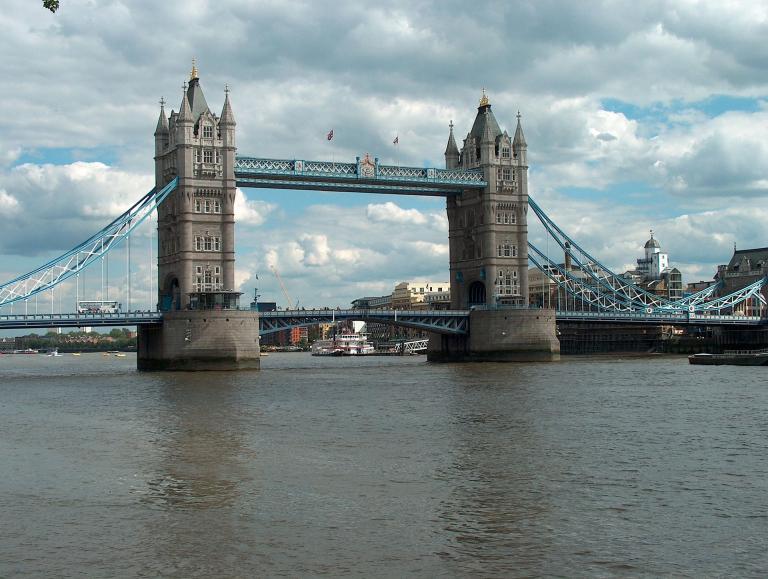
London’s famous “Tower Bridge” over the River Thames
(Wikimedia Commons public domain photograph)
We drove this morning from Newquay, Cornwall, back to Plymouth, in Devon, where we dropped off our rental car. Then we caught the train into London’s Paddington Station. The countryside that we passed through all along the way was monotonously green and beautiful.
We’re now back in London for our last night. I love the English countryside and the multitude of smaller cities and towns and hamlets. But, in a quite different way, I also love London. I share with you two passages from James Boswell’s celebrated Life of Samuel Johnson. In the first quotation, a very famous one, it is Samuel Johnson who is speaking (or, perhaps I should say, who is declaiming):
“Why, Sir, you find no man, at all intellectual, who is willing to leave London. No, Sir, when a man is tired of London, he is tired of life; for there is in London all that life can afford.”
Born in Edinburgh in 1740, Boswell was not only Scottish but the 9th Laird of Auchinleck, which adds a bit of flavor to the following exchange:
Johnson: “The happiness of London is not to be conceived but by those who have been in it. I will venture to say, there is more learning and science within the circumference of ten miles from where we now sit, than in all the rest of the world.” Boswell: “The only disadvantage is the great distance at which people live from one another.” Johnson: “Yes, Sir, but that is occasioned by the largeness of it, which is the cause of all the other advantages.” Boswell: “Sometimes I have been in the humour of wishing to retire to a desart.” Johnson: “Sir, you have desart enough in Scotland.”
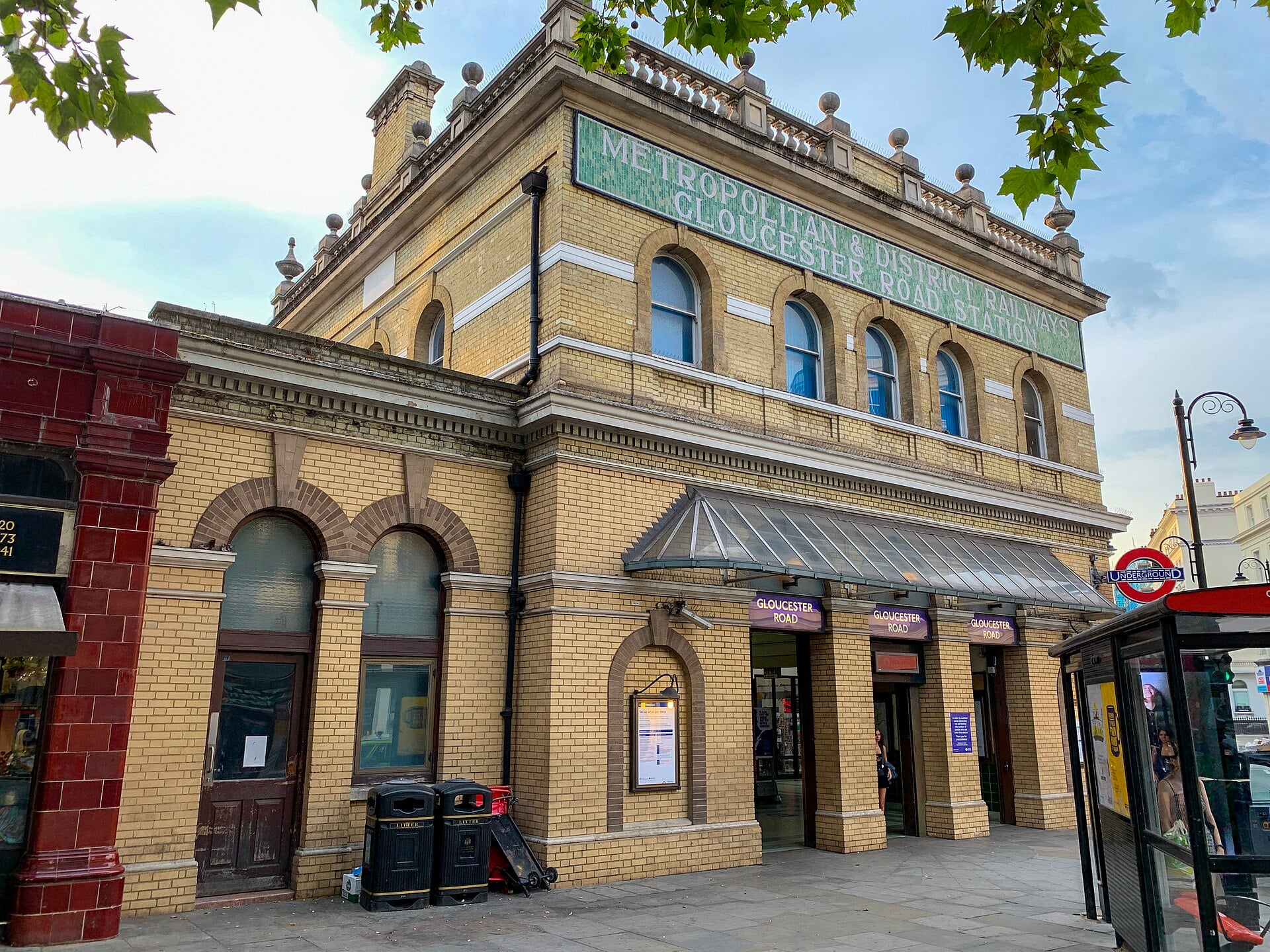
The London hotel in which our recent England tour groups have stayed stands directly across from the Gloucester Road tube station, which dates to 1868. The apartment where we enjoyed dinner this evening is about three blocks from the station, along Gloucester Road, (Wikimedia Commons public domain image)
We had dinner at their place with Elder Lew Cramer and Sister Barbara Welch Cramer and with Don and Kathleen Stapley, who had been members of our tour group—they’re sticking around for the rest of May—and who had preceded the Cramers in their calling as diplomatic liaisons for international and public affairs on behalf of the Church of Jesus Christ of Latter-day Saints. The Cramers are living in the Stapleys’ former apartment. (My addiction to eating every single day has reduced me now to shamelessly accepting donations of food from others, invading their homes to get my daily fix.)
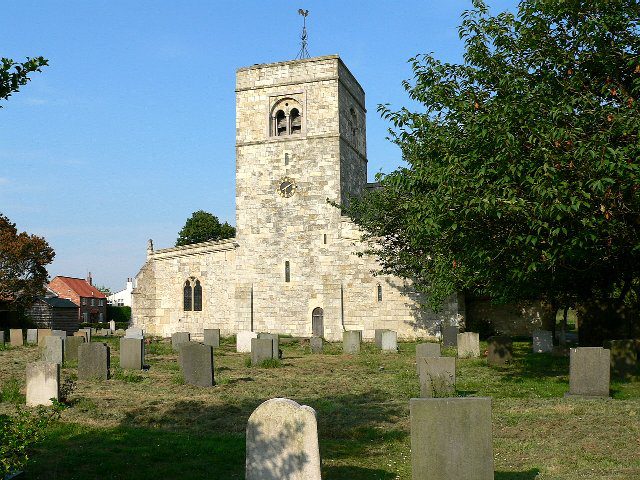
St. Mary’s parish church at Riccall in Yorkshire, a Norman structure dating to about 1100, was the church where many of my ancestors worshiped and where, no doubt, many are buried. (Wikimedia Commons public domain photograph)
Lately, when visiting the United Kingdom, I’ve been struggling to get over an unjustified mindset that I’ve discerned in myself: I tend to think of England’s history as foreign history, as their history. But that’s to think about it incorrectly. Up to a certain relatively recent point, in fact, my maternal ancestors were every bit as British as were the ancestors of those who have remained here. They were no less English or, in another of my lines, no less Scottish. St. Augustine’s bringing of Roman Christianity to Canterbury, the Norman Conquest, the seemingly endless wars with France (A Thousand Years of Irritating the French is the approximate title of one historical narrative about England), the Wars of the Roses, the English Reformation, the Dissolution of the Monasteries, and the unification of Scotland and England affected them no less than others were affected. The fact that some of their descendants would eventually leave the British Isles for the New World doesn’t change the fact that they themselves were fully British. Thus, the history of this place is my history, too. Before my relatively recent maternal ancestors left for America, this was the only location where they had a history. There was certainly nowhere else where they had history. It’s an obvious point, of course. But it’s easy (for me, at least) not to think of it that way.
Posted from London, England
History and Religion
Travel and Religion
Previous Post

May 21, 2026
Tintagel
Next Post

May 23, 2026 Passing it on
Recent Comments
"Another class of memories are of individuals who previously lived. Some of these remembered individuals ..."
"Sutherland's lecture sounds interesting. He seems to restate the Washington consensus that trade brings peace ..."
Learning more about a region of ..."
"In a meeting today, I learned another important reason why accurate (or at least as ..."
From Serbia’s “White City,” Belgrade
"I've been watching a lot of video interviews of NDErs and researchers. I think in ..."
Browse Our Archives
Select a Category Uncategorized
Select a Month October 2026 September 2026 August 2026 July 2026 June 2026 May 2026 April 2026 March 2026 February 2026 January 2026 December 2025 November 2025 October 2025 September 2025 August 2025 July 2025 June 2025 May 2025 April 2025 March 2025 February 2025 January 2025 December 2024 November 2024 October 2024 September 2024 August 2024 July 2024 June 2024 May 2024 April 2024 March 2024 February 2024 January 2024 December 2023 November 2023 October 2023 September 2023 August 2023 July 2023 June 2023 May 2023 April 2023 March 2023 February 2023 January 2023 December 2022 November 2022 October 2022 September 2022 August 2022 July 2022 June 2022 May 2022 April 2022 March 2022 February 2022 January 2022 December 2021 November 2021 October 2021 September 2021 August 2021 July 2021 June 2021 May 2021 April 2021 March 2021 February 2021 January 2021 December 2020 November 2020 October 2020 September 2020 August 2020 July 2020 June 2020 May 2020 April 2020 March 2020 February 2020 January 2020 December 2019 November 2019 October 2019 September 2019 August 2019 July 2019 June 2019 May 2019 April 2019 March 2019 February 2019 January 2019 December 2018 November 2018 October 2018 September 2018 August 2018 July 2018 June 2018 May 2018 April 2018 March 2018 February 2018 January 2018 December 2017 November 2017 October 2017 September 2017 August 2017 July 2017 June 2017 May 2017 April 2017 March 2017 February 2017 January 2017 December 2016 November 2016 October 2016 September 2016 August 2016 July 2016 June 2016 May 2016 April 2016 March 2016 February 2016 January 2016 December 2015 November 2015 October 2015 September 2015 August 2015 July 2015 June 2015 May 2015 April 2015 March 2015 February 2015 January 2015 December 2014 November 2014 March 2014 August 2013 February 2012
Follow Us!
TAKE THE
Religious Wisdom Quiz
What Christian tradition is associated with the seven sacraments?
Select your answer to see how you score.
Quakerism Roman Catholicism Protestantism Seventh-day Adventism
Related posts from Sic et Non


Notes on Women, Priesthood, and General Conference

"The Book of Moses as a Temple Text"

TRENDING AT PATHEOS Latter-day Saint

The Sermon on the Mount, Part I: Matthew...
The Sermon on the Mount, Part I (Matthew 4:12-5:12) St. Matthew moves...

What's up from Crossway: Reviewing some of their latest A few weeks...

Janie Learns the Way of the Cross: A...
Teaching children about Jesus' Passion can be challenging. Many parents and educators...

Looking For Good Catholic Writing - October 2026
He alone extends the heavens, and he walks upon the waves of...

In "Irreplaceable," our book on vocation and technology, Trevor Sutton and I...

I was strolling through the top floor of the brand new Parthenon...
view all Latter-day Saint blogs
What Are Your Thoughts?leave a comment
Ad-Free & Subscriber Log-In Subscription Support
- About Us
- 2026 Calendar
- Videos
- Podcasts
- Library of World Religions
- Faith In Media Tracker
- Advertise With Us
- Write for Us
- Privacy Policy
- Terms of Service
- Do Not Sell My Data
- Contact Us
- Radiant Digital
- Manage Newsletter Subscriptions
- Unsubscribe From Notifications
- Sitemap
Copyright 2008-2026, Patheos. All rights reserved.
Subscription Support Ad-Free & Subscriber Log-In
Follow Patheos