
BuddhistCatholicContemplativeEvangelicalGeneral ChristianHinduJewishLatter-day SaintMuslimNew VisionsProgressive Christian
Beliefs
- Buddhist
- Catholic
- Contemplative
- Evangelical
- General Christian
- Hindu
- Jewish
- Latter-day Saint
- More Voices
- Muslim
- New Visions
- Pagan
- Progressive Christian
Topics
- Religion News
- Food and Religion
- Sports and Religion
- Religious Art
- Religious Music and Entertainment
- Religious Events
- History and Religion
- Style and Religion
- Politics and Religion
- Women in Religion
- Recreation Outdoors and Religion
- Business Finance and Religion
- Careers Workplace and Religion
- Education and Religion
- Family Parenting and Religion
- Health Fitness and Religion
- Home and Religion
- Relationships and Religion
- Technology and Religion
- Travel and Religion
Columnists
- Buddhist Columnists
- Business Finance and Religion Columnists
- Careers Workplace and Religion Columnists
- Catholic Columnists
- Contemplative Columnists
- Education and Religion Columnists
- Evangelists Columnists
- Family Parenting and Religion Columnists
- General Christian Columnists
- Health Fitness and Religion Columnists
- Hindu Columnists
- History and Religion Columnists
- Home and Religion Columnists
- Jewish Columnists
- More Voices Columnists
- Latter Day Columnists
- Muslim Columnists
- New Visions Columnists
- Nonreligious Columnists
- Pagan Columnists
- Politics and Religion Columnists
- Progressive Columnists
- Recreation Outdoors and Religion Columnists
- Relationships and Religion Columnists
- Religion News Columnists
- Religious Art Columnists
- Religious Events Columnists
- Religious Music and Entertainment Columnists
- Sports and Religion Columnists
- Style and Religion Columnists
- Technology and Religion Columnists
- Travel and Religion Columnists
- Women in Religion Columnists
Resource Library
- 2026 Calendar
- Library of World Religions
- The 100 Most Holy Places on Earth
- Patheos Answers
- Podcasts
- Videos
- Faith Leaders Database
- Anglican Episcopalian
- Bahai
- Baptist
- Buddhism
- Christianity
- Confucianism
- Eastern Orthodoxy
- Hinduism
- Holiness and Pentecostal
- ISKCON
- Islam
- Judaism
- Lutheran
- Methodist
- The Church of Jesus Christ of Latter-day Saints
- New Age
- Paganism
- Presbytarian and Reformed
- Protestantism
- Religion Behind the Scenes
- Roman Catholic
- Scientology
- Shia Islam
- Sikhism
- Sufism
- Sunni Islam
- Taoism
- Zen
- See all religions
Research Tools
 Ad-Free & Subscriber Log-In Subscription Support
Ad-Free & Subscriber Log-In Subscription Support
Follow Patheos 

- Trending:
- Forgiveness
- |
- Marriage
- |
- Consciousness
- |
- Death Penalty
- |
- Election
- |
- Halloween

- Home
- Latter-day Saint
- Travel and Religion
- Remembering Thomas W. Mackay
Remembering Thomas W. Mackay
Last updated on: January 8, 2026 at 10:26 pm by Dan Peterson
Remembering Thomas W. Mackay 2026-01-08T22:26:57-07:00 Dan Peterson
Patheos Explore the world's faith through different perspectives on religion and spirituality! Patheos has the views of the prevalent religions and spiritualities of the world.
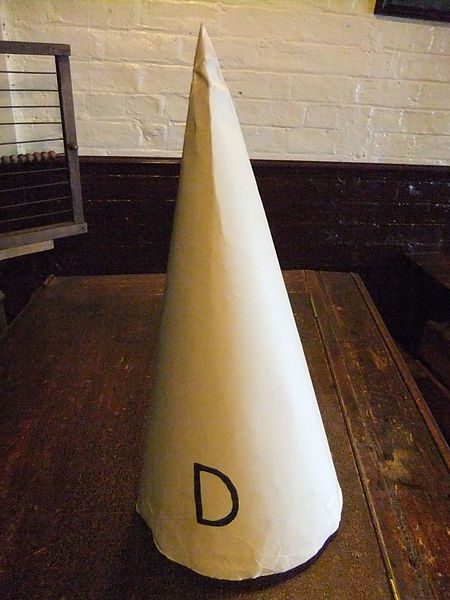
An authentic dunce’s cap, from the Museum of Lincolnshire Life in Lincoln, England (Wikimedia Commons public domain image)
To some of my critics and its critics, the Interpreter Foundation provides endless inspiration for their conspiracy theories and for their attempts to explain the impenetrable mysteries that their imaginations have summoned into existence concerning it. Here are two recent instances, to which I respond with easily accessible materials from the current, ongoing issue of Interpreter: A Journal of Latter-day Saint Faith and Scholarship::
Why — cue portentous music — has the Interpreter Foundation had nothing to say about polygamy denialism? Well, it has had something to say about polygamy denialism: Paul Fields, Steven T. Densley Jr., Matthew Roper, and “Historical and Stylometric Evidence for the Authorship of Doctrine and Covenants 132,” Interpreter: A Journal of Latter-day Saint Faith and Scholarship 67 (2025) : 1-70
Why — cue ominous music — did Jeff Lindsay leave the Interpreter Foundation? Was it out of disgust at its scandalously unethical behavior and the universally acknowledged moral turpitude and buffoonery of its president? Well, Jeff Lindsay hasn’t left the Interpreter Foundation: He is an active, participating member of its board of directors and is the author of not just one but three articles in the current issue of its journal, including the two that have been most recently published:
- “The Next Big Thing in LDS Apologetics: Strong Semitic and Egyptian Elements in Uto-Aztecan Languages,” Interpreter: A Journal of Mormon Scripture 26 (2017) : 227-267.
- “Parallels between the Book of Moses and the Book of Mormon, Part 1: Details of Their Distribution and Relationships to the JST,” Interpreter: A Journal of Latter-day Saint Faith and Scholarship 67 (2025) : 275-320.
- “Parallels between the Book of Moses and the Book of Mormon, Part 2: The Updated List of 146 Parallels,” Interpreter: A Journal of Latter-day Saint Faith and Scholarship 67 (2025) : 321-370.
I guess that we should probably stop hiding such things in places where our poor critics simply can’t find them. It’s not fair to those unfortunate souls.
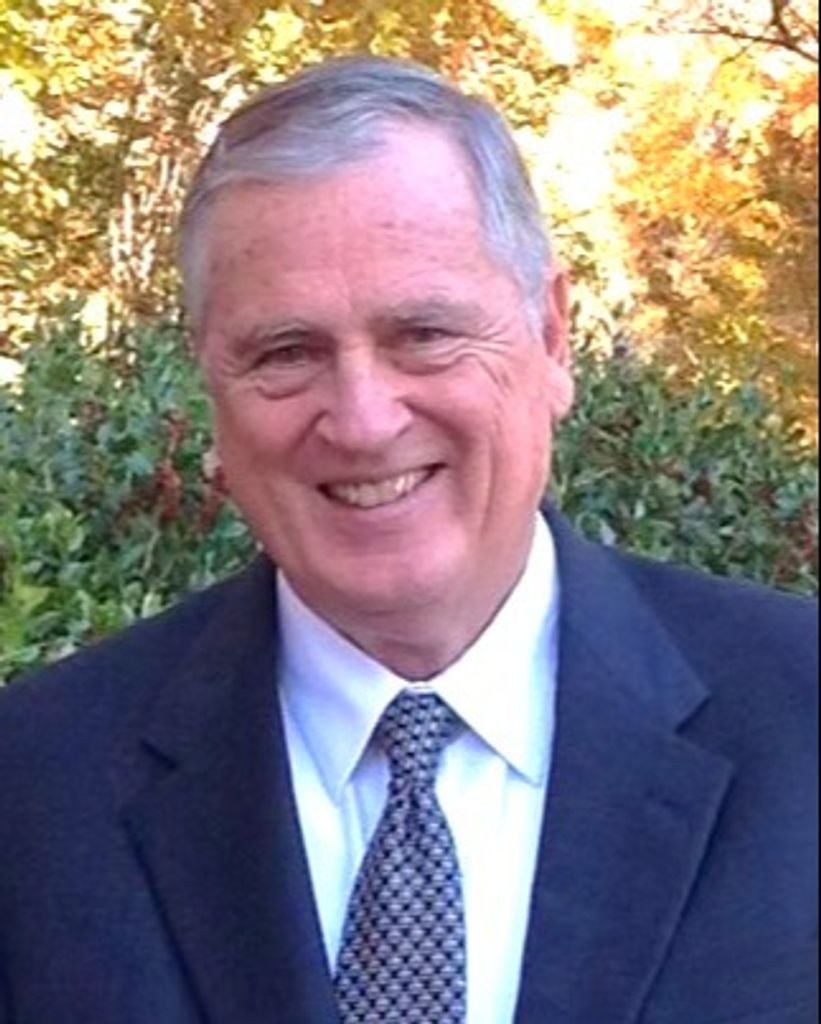
Tom Mackay, a bit older and grayer than when I first met him.
I was saddened, just before Christmas, to learn of the death of Thomas W. Mackay, and I said here at the time that I would write up some comments at a future date. It’s taken longer than I had anticipated, but here are a few thoughts:
People whom I admired as a child and as a young man and who had great influence on me are mostly gone now, and those who remain are rapidly leaving. This is a sobering fact.
Tom Mackay was a pivotal influence on me as an undergraduate, and may have been the single professor from whom I took the most classes. He was brilliant, and he could be intimidating, but he was a major help to me in ways that I certainly didn’t deserve. Herewith, a few memories of him:
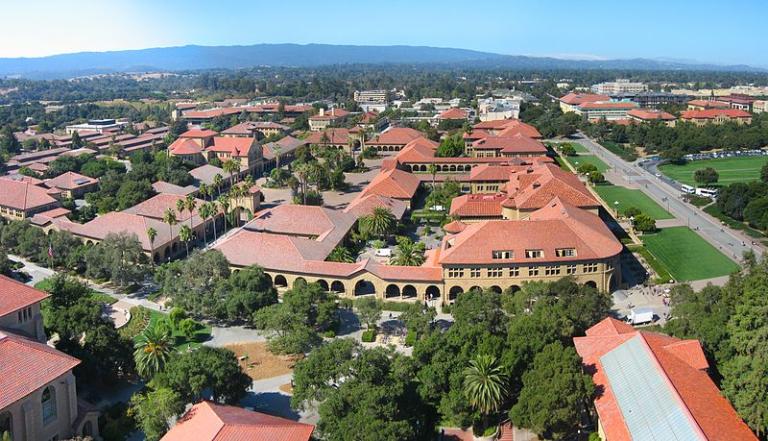
A view of Stanford University, in California (Wikimedia Commons public domain photograph)
When I first arrived at BYU, fall semesters continued into January, when final exams were given. It offered an opportunity to cram for examinations over Christmas break, but that wasn’t an unmixed blessing: It rather blighted Christmas vacation. On 1 January 1971, Stanford — Professor Mackay’s graduate school — defeated Ohio State in the Rose Bowl. Arriving at our Greek final a few days later, he informed us that it was very fortunate for us that Stanford had won. The exam, he said, would have been much tougher had Stanford lost.

The Rose Bowl, not terribly far from where I grew up. (Wikimedia Commons public domain photograph)
I was at BYU for two full years before my mission. At the end of my last semester before leaving, Professor Mackay approached me and said that he knew that my final exam schedule was really crammed, with all or most of my finals somehow falling on just a couple of days. (How he knew that, I don’t know.) Would I like to take his exam separately, at my own convenience? As I say, I didn’t deserve such help. But I took it.

Looking downstream on the Limmat River in central Zürich, Switzerland
(Wikimedia Commons public domain photo)
I received an “A” for that course. After my mission, a couple of months into my first semester back, Tom approached me and said “Guess what I just found under a pile of papers on my desk!” (His desk was always utter chaos. Some of us joked about the piles on it resembling the multiple layers of Heinrich Schliemann’s excavations at Troy.) I had no idea. “I found your final exam from before your mission! Do you want me to grade it?” I could think of no good reason to say Yes — since he had already given me an A for the course, the only possible change, if any, would be downward — so I said “No, thanks.”
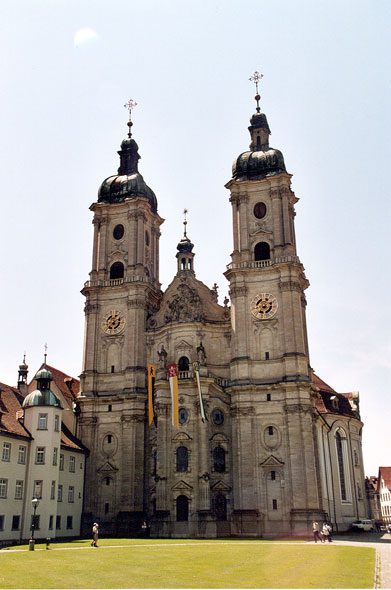
The Benedictine Abbey of St. Gall (or St. Gallen) in Switzerland is one of the most historically significant religious and cultural centers in that wonderful country that I love so deeply.
(Wikimedia Commons public domain image)
At one point during my mission in Switzerland, I was stationed in the town of Kloten, which is where the Zürich International Airport is located. I was serving as a zone leader at the time. One day, I received a letter from Tom indicating that he would be arriving in Zürich in a few weeks and then continuing on to eastern Swtizerland, where he would be doing some research in the monastic library in St. Gallen. Could we meet up? He knew the date of his arrival but not yet the flight number, its point of origin, or its landing time. He would send that information shortly, in the hope that we could briefly touch base. As it happened, my companion at the time had also been in a class with Professor Mackay, so we were excited to see him.
But his follow-up letter never came.
On the day of his arrival, though, I woke up at 6 AM, somehow knowing for a certainty that he would be arriving shortly and that we needed to get to the airport as soon as possible if we were to have any hope of meeting him there. Our regulation wake-up time was 6:30 AM. To put this in perspective, you need to understand that I am not now and have never been an early-morning person – except from the other side. I’m a living, walking, breathing violation of Doctrine and Covenants 88:124, despite lifelong efforts at reformation and repentance. In other words, waking up early is not something that I generally or willingly do.
We met him as he was coming off the plane and were able to spend part of the day with him.
I’ve thought about that experience many times since, about the prompting that woke me up and hurried us out the door. What was the point of it? It wouldn’t have spoiled some great eternal plan, so far as I’m aware, if we hadn’t met him. But I can’t deny what happened. And it occurs to me that, if nothing else, it was a reminder that it’s possible to know things in seemingly non-natural ways.

A view to the northeast across a portion of the Provo campus of Brigham Young University
(Wikimedia Commons public domain image)
Our Greek classes, especially the upper division ones, were always very small. Three to six students, typically. So we were always “on” and expected to be prepared. Mostly, we translated. One day, I was translating from the Antigone of Sophocles.
“Dan,” he asked, innocently, “what kind of a participle is that?”
“It’s a circumstantial participle.”
“No, it’s not. But how do we know that it’s not a circumstantial particle?”
But I didn’t know that it wasn’t. I thought it was.
He didn’t help me out. He kept asking more and more questions, and I looked more and more like the complete doofus that, in fact, I was. I was like a live bug pinned to a laboratory cork board, still wriggling but unable to escape.
I was so embarrassed and angry that, after class, I vented to my former missionary companion, Stephen Ricks, where we were sitting in the Harold B. Lee Library’s Ancient Studies Reading Room. He was a graduate student in Classics by then, and he was and is a polyglot linguistic genius.
He was very familiar with Tom Mackay, whom we loved and occasionally really hated. He told me that he had little on his plate for the next day or two that was very urgent, and that he would help me prepare the hundred lines of Sophocles that were my class’s assignment for the following day.
We worked into the wee hours of the night, until the library closed. An especially good resource was a multivolume Vergleichende Grammatik der Indogermanischen Sprachen, of which we made thorough use. By the time we were done, I was equipped to answer any question at all about those hundred lines — not only with regard to classical Greek, but to Proto-Indo-European semantics, Old Irish and Old Latin parallels, cognate Sanskrit verbal forms, and possibly relevant Hittite idioms.
The next day, I arrived in class absolutely itching to display my prodigious learning. I think that Tom must have sensed it. It may have been the only time in my undergraduate career that he didn’t call on me.

The Amphore de Milo, an example of red-figure vase painting (Wikimedia Commons public domain image)
On another occasion, all of us had arrived in the classroom but Professor Mackay had not. (He was chronically late to class.) We soon realized that, owing to a variety of factors, none of us was really prepared with the day’s reading. So we deployed our Nuclear Option. We had discussed it on several prior occasions, agreeing that it could probably only be used once and under the most dire of circumstances.
When he came into class, one of us asked him a question about red-figure Attic vase painting. None of us had any particular interest in the topic, but it was a passion of Tom’s. He discoursed to us on the subject for the entire class period. We did no translating that day.
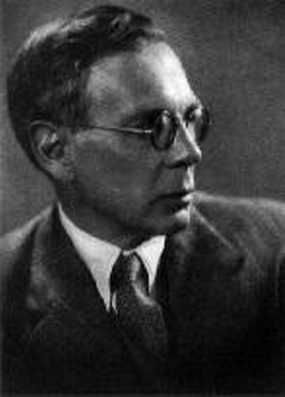
Charles Williams (d. 1945)
(Wikimedia Commons public domain photo)
Friend of T. S. Eliot, C. S. Lewis, J. R. R. Tolkien, Dorothy Sayers, and their circles
Tom Mackay’s was one of the most vivid and memorable personalities that I’ve ever encountered. And, so, I’m reminded of a comment made by C. S. Lewis in a letter that he wrote roughly two weeks after the unexpected death of his friend (and fellow “Inkling”) Charles Williams:
Death has done nothing to my idea of him, but he has done – oh, I can’t say what – to my idea of death. It has made the next world much more real and palpable.
When death meets someone as vital and alive as Thomas W. Mackay, death itself seems somehow diminished. But so, unfortunately, does this mortal sphere. And so we mourn.
Travel and Religion
History and Religion
Previous Post
January 7, 2026
Mark your calendar and watch your step!
Next Post
January 9, 2026 "Early Anti-Mormonism in Great Britain, 1837–1842"
Recent Comments
"Another class of memories are of individuals who previously lived. Some of these remembered individuals ..."
"Sutherland's lecture sounds interesting. He seems to restate the Washington consensus that trade brings peace ..."
Learning more about a region of ..."
"In a meeting today, I learned another important reason why accurate (or at least as ..."
From Serbia’s “White City,” Belgrade
"I've been watching a lot of video interviews of NDErs and researchers. I think in ..."
Browse Our Archives
Select a Category Uncategorized
Select a Month October 2026 September 2026 August 2026 July 2026 June 2026 May 2026 April 2026 March 2026 February 2026 January 2026 December 2025 November 2025 October 2025 September 2025 August 2025 July 2025 June 2025 May 2025 April 2025 March 2025 February 2025 January 2025 December 2024 November 2024 October 2024 September 2024 August 2024 July 2024 June 2024 May 2024 April 2024 March 2024 February 2024 January 2024 December 2023 November 2023 October 2023 September 2023 August 2023 July 2023 June 2023 May 2023 April 2023 March 2023 February 2023 January 2023 December 2022 November 2022 October 2022 September 2022 August 2022 July 2022 June 2022 May 2022 April 2022 March 2022 February 2022 January 2022 December 2021 November 2021 October 2021 September 2021 August 2021 July 2021 June 2021 May 2021 April 2021 March 2021 February 2021 January 2021 December 2020 November 2020 October 2020 September 2020 August 2020 July 2020 June 2020 May 2020 April 2020 March 2020 February 2020 January 2020 December 2019 November 2019 October 2019 September 2019 August 2019 July 2019 June 2019 May 2019 April 2019 March 2019 February 2019 January 2019 December 2018 November 2018 October 2018 September 2018 August 2018 July 2018 June 2018 May 2018 April 2018 March 2018 February 2018 January 2018 December 2017 November 2017 October 2017 September 2017 August 2017 July 2017 June 2017 May 2017 April 2017 March 2017 February 2017 January 2017 December 2016 November 2016 October 2016 September 2016 August 2016 July 2016 June 2016 May 2016 April 2016 March 2016 February 2016 January 2016 December 2015 November 2015 October 2015 September 2015 August 2015 July 2015 June 2015 May 2015 April 2015 March 2015 February 2015 January 2015 December 2014 November 2014 March 2014 August 2013 February 2012
Follow Us!
TAKE THE
Religious Wisdom Quiz
Who was crucified and rose again after three days?
Select your answer to see how you score.
Moses John the Baptist Jesus Paul
Related posts from Sic et Non


Some notes on the archaeology of the Bible


TRENDING AT PATHEOS Latter-day Saint

The Sermon on the Mount, Part I: Matthew...
The Sermon on the Mount, Part I (Matthew 4:12-5:12) St. Matthew moves...

What's up from Crossway: Reviewing some of their latest A few weeks...

Janie Learns the Way of the Cross: A...
Teaching children about Jesus' Passion can be challenging. Many parents and educators...

Looking For Good Catholic Writing - October 2026
He alone extends the heavens, and he walks upon the waves of...

In "Irreplaceable," our book on vocation and technology, Trevor Sutton and I...

I was strolling through the top floor of the brand new Parthenon...
view all Latter-day Saint blogs
What Are Your Thoughts?leave a comment
Ad-Free & Subscriber Log-In Subscription Support
- About Us
- 2026 Calendar
- Videos
- Podcasts
- Library of World Religions
- Faith In Media Tracker
- Advertise With Us
- Write for Us
- Privacy Policy
- Terms of Service
- Do Not Sell My Data
- Contact Us
- Radiant Digital
- Manage Newsletter Subscriptions
- Unsubscribe From Notifications
- Sitemap
Copyright 2008-2026, Patheos. All rights reserved.
Subscription Support Ad-Free & Subscriber Log-In
Follow Patheos