
BuddhistCatholicContemplativeEvangelicalGeneral ChristianHinduJewishLatter-day SaintMuslimNew VisionsProgressive Christian
Beliefs
- Buddhist
- Catholic
- Contemplative
- Evangelical
- General Christian
- Hindu
- Jewish
- Latter-day Saint
- More Voices
- Muslim
- New Visions
- Pagan
- Progressive Christian
Topics
- Religion News
- Food and Religion
- Sports and Religion
- Religious Art
- Religious Music and Entertainment
- Religious Events
- History and Religion
- Style and Religion
- Politics and Religion
- Women in Religion
- Recreation Outdoors and Religion
- Business Finance and Religion
- Careers Workplace and Religion
- Education and Religion
- Family Parenting and Religion
- Health Fitness and Religion
- Home and Religion
- Relationships and Religion
- Technology and Religion
- Travel and Religion
Columnists
- Buddhist Columnists
- Business Finance and Religion Columnists
- Careers Workplace and Religion Columnists
- Catholic Columnists
- Contemplative Columnists
- Education and Religion Columnists
- Evangelists Columnists
- Family Parenting and Religion Columnists
- General Christian Columnists
- Health Fitness and Religion Columnists
- Hindu Columnists
- History and Religion Columnists
- Home and Religion Columnists
- Jewish Columnists
- More Voices Columnists
- Latter Day Columnists
- Muslim Columnists
- New Visions Columnists
- Nonreligious Columnists
- Pagan Columnists
- Politics and Religion Columnists
- Progressive Columnists
- Recreation Outdoors and Religion Columnists
- Relationships and Religion Columnists
- Religion News Columnists
- Religious Art Columnists
- Religious Events Columnists
- Religious Music and Entertainment Columnists
- Sports and Religion Columnists
- Style and Religion Columnists
- Technology and Religion Columnists
- Travel and Religion Columnists
- Women in Religion Columnists
Resource Library
- 2026 Calendar
- Library of World Religions
- The 100 Most Holy Places on Earth
- Patheos Answers
- Podcasts
- Videos
- Faith Leaders Database
- Anglican Episcopalian
- Bahai
- Baptist
- Buddhism
- Christianity
- Confucianism
- Eastern Orthodoxy
- Hinduism
- Holiness and Pentecostal
- ISKCON
- Islam
- Judaism
- Lutheran
- Methodist
- The Church of Jesus Christ of Latter-day Saints
- New Age
- Paganism
- Presbytarian and Reformed
- Protestantism
- Religion Behind the Scenes
- Roman Catholic
- Scientology
- Shia Islam
- Sikhism
- Sufism
- Sunni Islam
- Taoism
- Zen
- See all religions
Research Tools
 Ad-Free & Subscriber Log-In Subscription Support
Ad-Free & Subscriber Log-In Subscription Support
Follow Patheos 

- Trending:
- Forgiveness
- |
- Marriage
- |
- Consciousness
- |
- Death Penalty
- |
- Election
- |
- Halloween

- Home
- Latter-day Saint
- Travel and Religion
- Church leaders and scholars: retreating from “historicity”?
Church leaders and scholars: retreating from “historicity”?
Last updated on: January 15, 2026 at 9:07 pm by Dan Peterson
Church leaders and scholars: retreating from “historicity”? 2026-01-15T21:07:51-07:00 Dan Peterson
Patheos Explore the world's faith through different perspectives on religion and spirituality! Patheos has the views of the prevalent religions and spiritualities of the world.
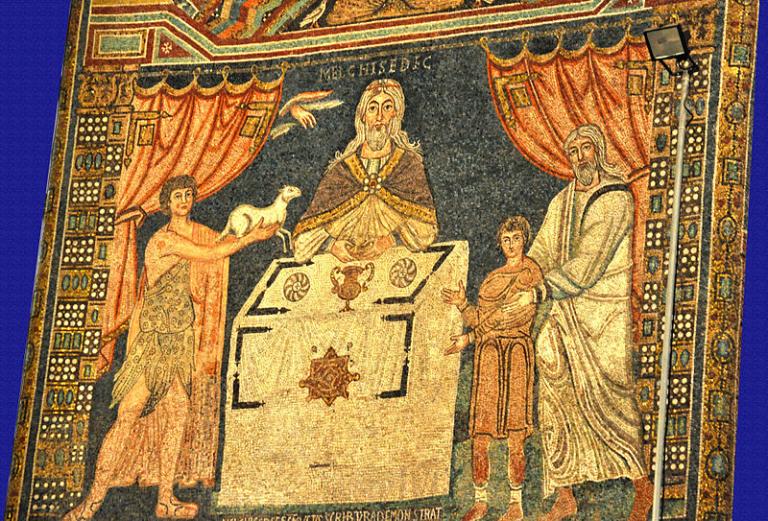
A mosaic in the Church of Sant’ Apollinare in Clase, Ravenna, Italy, dating to the second half of the sixth century, depicting three Old Testament sacrifices. On the left is Abel with his lamb (Genesis 4:1-16). In the center, Melchizedek presides over the sacrifice of bread (Genesis 14:18-20). The two round loaves with crosses at the center and the wine (in the two-handed pitcher between the loaves) represent the mass, or (in Latter-day Saint terms) the sacrament. On the right is Abraham with his son Isaac, whom he was willing to sacrifice at God’s command (Genesis 22:1-14). All three sacrifices, of course, foreshadow the atoning sacrifice of Christ.
This item was posted earlier today: The Interpreter Insights Podcast — January 15, 2026: “Abraham, Enoch, and Melchizedek:
In the 15 January 2026 episode of the Interpreter Insights Podcast, Terry Hutchinson and Martin Tanner interview Jeffrey Bradshaw about Abraham, Enoch, and Melchizedek:
The Interpreter Insights Podcast is a weekly discussion of matters of interest to the hosts and guests of the show. The views expressed on Interpreter Insights are those of the individuals involved and do not necessarily reflect the views of the Interpreter Foundation, nor should statements made on the show be construed as official doctrinal statements of the Church.
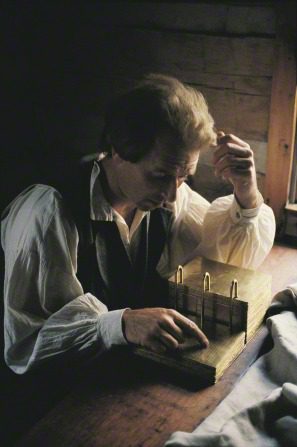
This image isn’t quite accurate, historically speaking, but it will serve my purpose here.
(LDS.org)
As I said the other day, the current issue of BYU Studies is unusually rich in articles that interest me. For today, I read Stephen O. Smoot, ““Sight and Power to Translate”: Revelatory Translation, Seership, and Joseph Smith’s Scriptural Productions,” BYU Studies 64/4 (2025): 59-83.
On multiple occasions over the past few years, I’ve encountered the hopeful allegation that Latter-day Saint leaders and scholars are backing away from the “traditional” claim that two of Joseph Smith’s scriptural productions — the Book of Mormon and the Book of Abraham — are authentically ancient. The critics advancing that allegation often point, as evidence in its support, to descriptions of the two books as being the products of revelation or inspiration, which they take to signify a weakening of belief in their having actually been translated and, thus, a step toward abandoning their historicity altogether.
The allegation has always seemed overeager and baseless to me and, now, Stephen Smoot’s article has marshaled a large amount of evidence demonstrating just that. He shows that the terms revelation, inspiration, and translation have been used from the beginning and throughout Latter-day Saint history in association with each other and sometimes pretty much interchangeably with regard to both the Book of Mormon and the Book of Abraham:
I argue that the modern dichotomy of revelation versus translation is largely an external framework imposed on Joseph Smith’s conceptualization of these texts and his role in producing them. For Joseph and the early Saints, revelation and translation were nearly synonymous because both categories converged within his role as a seer. (61)
The pronouncements of Orson Pratt and William Appleby anticipated Elder Soares’s 2020 general conference address by nearly one hundred and fifty years. This reflects an indisputably long and consistent pattern in Latter-day Saint religious discourse of using the terms revelation (and related words like inspiration) and translation practically interchangeably when describing Joseph Smith’s scriptural productions—a pattern particularly evident in discussions of both the Book of Mormon and the book of Abraham.
On a final note, lest there be any lingering confusion, it is important to emphasize that this terminological fluidity does not suggest a strategic retreat from the authenticity of Joseph Smith’s scriptural productions. There is no evidence to indicate that Latter-day Saint leaders—from Orson Pratt and Wilford Woodruff to their modern successors—have sometimes described Joseph Smith’s translations of ancient scripture as revelations out of deference to critics or bashful concession that they lack historicity. On the contrary, the Latter-day Saint apologetic tradition has consistently offered a robust and spirited defense of the historicity and divine inspiration of both the Book of Mormon and the book of Abraham. In the case of the book of Abraham, it may be observed that Church leaders have recently shown greater openness to questions about the manner of its translation, but this is far from conceding to critics seeking to discredit its ancient authenticity.
The sources reviewed here are unequivocal: While these texts were often described as revelations, such descriptions were never meant to deny their status as ancient records. Recognizing this is essential for accurately understanding Joseph Smith’s view of his scriptural texts, how Latter-day Saints have historically conceptualized Restoration scripture, and how that understanding has endured. (82-83)
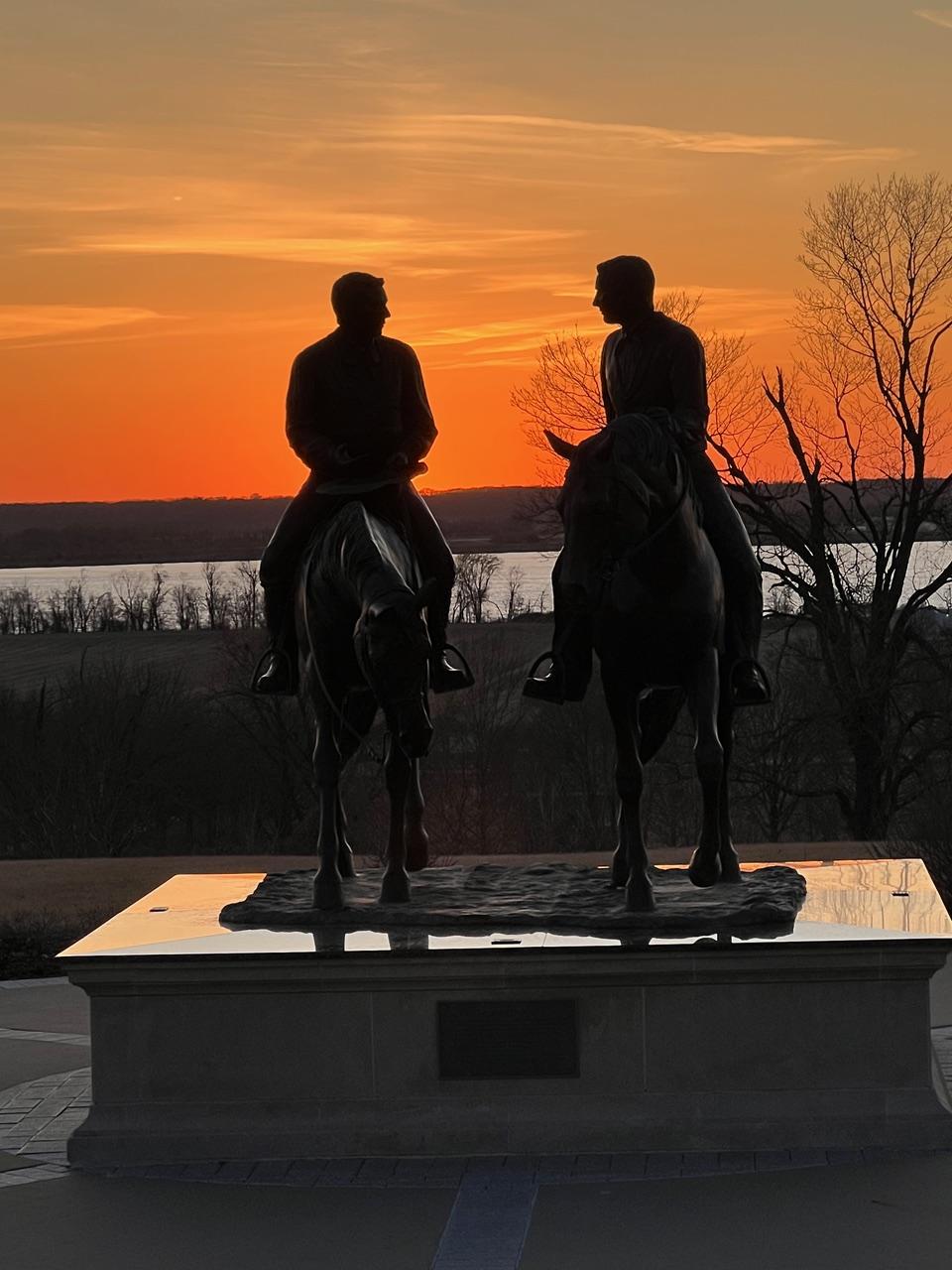
This statue of Joseph and Hyrum Smith stands directly across the street in front of the rebuilt Nauvoo Illinois Temple. My wife took the photograph just after sunset during a previous visit, looking westward.
We thought that we would need to film tomorrow (Friday) morning, but we’ve been so impressively efficient during this trip that we actually managed to wrap our work up today, filming at the Family Living Center and at the John and Leonora Taylor Home. Yesterday was cold and windy, but today seemed a bit warmer and it was definitely not as cold. So, of course, all of today’s filming was inside. The first episode of Becoming Brigham is due to premiere in about a week and a half, on Monday, 26 January 2026.

Political map of Africa (public domain, Central Intelligence Agency). Malawi is located in the southeastern portion of the continent, southward from Tanzania, eastward from Zambia, and largely surrounded by the much larger nation of Mozambique.
It’s tradition, at the end of these filming expeditions and after we’ve finished our work, to have a “movie night” on the evening before we head home. We take turns choosing a film to show in one of our motel rooms. Tonight, it was Russ Richins’s turn to choose, and the movie that he selected for sharing was Chiwetel Ejiofor’s powerful 2019 film The Boy Who Harnessed the Wind, which is based on a true story that comes out of Malawi. The primary vehicle of the film’s dialogue is Chichewa, a Bantu language — which is translated in subtitles — although there’s also a fair amount of English. Toward the end, there are a few phrases of beautiful Classical Arabic, which, after the Chichewa, seemed to me like arriving comfortably home. We all liked the film, and I recommend it.
Posted from Fort Madison, Iowa
Travel and Religion
History and Religion
The Boy Who Harnessed the Wind
Previous Post
January 14, 2026
On Church finances, Martin Harris, and Book of Mormon plates
Next Post

January 16, 2026 One set of plates? Or TWO?
Recent Comments
"In a meeting today, I learned another important reason why accurate (or at least as ..."
From Serbia’s “White City,” Belgrade
"I've been watching a lot of video interviews of NDErs and researchers. I think in ..."
"PL: "Let's hope he doesn't have your address..."I have to frankly confess that a few ..."
From Serbia’s “White City,” Belgrade
"Let's hope he doesn't have your address..."
From Serbia’s “White City,” Belgrade
Browse Our Archives
Select a Category Uncategorized
Select a Month October 2026 September 2026 August 2026 July 2026 June 2026 May 2026 April 2026 March 2026 February 2026 January 2026 December 2025 November 2025 October 2025 September 2025 August 2025 July 2025 June 2025 May 2025 April 2025 March 2025 February 2025 January 2025 December 2024 November 2024 October 2024 September 2024 August 2024 July 2024 June 2024 May 2024 April 2024 March 2024 February 2024 January 2024 December 2023 November 2023 October 2023 September 2023 August 2023 July 2023 June 2023 May 2023 April 2023 March 2023 February 2023 January 2023 December 2022 November 2022 October 2022 September 2022 August 2022 July 2022 June 2022 May 2022 April 2022 March 2022 February 2022 January 2022 December 2021 November 2021 October 2021 September 2021 August 2021 July 2021 June 2021 May 2021 April 2021 March 2021 February 2021 January 2021 December 2020 November 2020 October 2020 September 2020 August 2020 July 2020 June 2020 May 2020 April 2020 March 2020 February 2020 January 2020 December 2019 November 2019 October 2019 September 2019 August 2019 July 2019 June 2019 May 2019 April 2019 March 2019 February 2019 January 2019 December 2018 November 2018 October 2018 September 2018 August 2018 July 2018 June 2018 May 2018 April 2018 March 2018 February 2018 January 2018 December 2017 November 2017 October 2017 September 2017 August 2017 July 2017 June 2017 May 2017 April 2017 March 2017 February 2017 January 2017 December 2016 November 2016 October 2016 September 2016 August 2016 July 2016 June 2016 May 2016 April 2016 March 2016 February 2016 January 2016 December 2015 November 2015 October 2015 September 2015 August 2015 July 2015 June 2015 May 2015 April 2015 March 2015 February 2015 January 2015 December 2014 November 2014 March 2014 August 2013 February 2012
Follow Us!
TAKE THE
Religious Wisdom Quiz
True or False: Paul instructs the Philippians to do everything without grumbling or arguing.
Select your answer to see how you score.
FALSE TRUE
Related posts from Sic et Non


Some notes on the archaeology of the Bible


TRENDING AT PATHEOS Latter-day Saint

Janie Learns the Way of the Cross: A...
Teaching children about Jesus' Passion can be challenging. Many parents and educators...

Looking For Good Catholic Writing - October 2026
He alone extends the heavens, and he walks upon the waves of...

In "Irreplaceable," our book on vocation and technology, Trevor Sutton and I...

I was strolling through the top floor of the brand new Parthenon...

What Does Gêvâh Mean For Kimberley Guifoyle &...
This week, a lot of the news is focused on Kimberly Guilfoyle....

INNER CIRCLE: Profound Mystery (Of Christ In All...
Ephesians 5:31-32 “For this reason, a man will leave his father and...
view all Latter-day Saint blogs
What Are Your Thoughts?leave a comment
Ad-Free & Subscriber Log-In Subscription Support
- About Us
- 2026 Calendar
- Videos
- Podcasts
- Library of World Religions
- Faith In Media Tracker
- Advertise With Us
- Write for Us
- Privacy Policy
- Terms of Service
- Do Not Sell My Data
- Contact Us
- Radiant Digital
- Manage Newsletter Subscriptions
- Unsubscribe From Notifications
- Sitemap
Copyright 2008-2026, Patheos. All rights reserved.
Subscription Support Ad-Free & Subscriber Log-In
Follow Patheos