
BuddhistCatholicContemplativeEvangelicalGeneral ChristianHinduJewishLatter-day SaintMuslimNew VisionsProgressive Christian
Beliefs
- Buddhist
- Catholic
- Contemplative
- Evangelical
- General Christian
- Hindu
- Jewish
- Latter-day Saint
- More Voices
- Muslim
- New Visions
- Pagan
- Progressive Christian
Topics
- Religion News
- Food and Religion
- Sports and Religion
- Religious Art
- Religious Music and Entertainment
- Religious Events
- History and Religion
- Style and Religion
- Politics and Religion
- Women in Religion
- Recreation Outdoors and Religion
- Business Finance and Religion
- Careers Workplace and Religion
- Education and Religion
- Family Parenting and Religion
- Health Fitness and Religion
- Home and Religion
- Relationships and Religion
- Technology and Religion
- Travel and Religion
Columnists
- Buddhist Columnists
- Business Finance and Religion Columnists
- Careers Workplace and Religion Columnists
- Catholic Columnists
- Contemplative Columnists
- Education and Religion Columnists
- Evangelists Columnists
- Family Parenting and Religion Columnists
- General Christian Columnists
- Health Fitness and Religion Columnists
- Hindu Columnists
- History and Religion Columnists
- Home and Religion Columnists
- Jewish Columnists
- More Voices Columnists
- Latter Day Columnists
- Muslim Columnists
- New Visions Columnists
- Nonreligious Columnists
- Pagan Columnists
- Politics and Religion Columnists
- Progressive Columnists
- Recreation Outdoors and Religion Columnists
- Relationships and Religion Columnists
- Religion News Columnists
- Religious Art Columnists
- Religious Events Columnists
- Religious Music and Entertainment Columnists
- Sports and Religion Columnists
- Style and Religion Columnists
- Technology and Religion Columnists
- Travel and Religion Columnists
- Women in Religion Columnists
Resource Library
- 2026 Calendar
- Library of World Religions
- The 100 Most Holy Places on Earth
- Patheos Answers
- Podcasts
- Videos
- Faith Leaders Database
- Anglican Episcopalian
- Bahai
- Baptist
- Buddhism
- Christianity
- Confucianism
- Eastern Orthodoxy
- Hinduism
- Holiness and Pentecostal
- ISKCON
- Islam
- Judaism
- Lutheran
- Methodist
- The Church of Jesus Christ of Latter-day Saints
- New Age
- Paganism
- Presbytarian and Reformed
- Protestantism
- Religion Behind the Scenes
- Roman Catholic
- Scientology
- Shia Islam
- Sikhism
- Sufism
- Sunni Islam
- Taoism
- Zen
- See all religions
Research Tools
 Ad-Free & Subscriber Log-In Subscription Support
Ad-Free & Subscriber Log-In Subscription Support
Follow Patheos 

- Trending:
- Forgiveness
- |
- Marriage
- |
- Consciousness
- |
- Death Penalty
- |
- Election
- |
- Halloween

- Home
- Latter-day Saint
- Travel and Religion
- As our moon to the Sun
As our moon to the Sun
Last updated on: December 23, 2025 at 9:41 pm by Dan Peterson
As our moon to the Sun 2025-12-23T21:41:25-07:00 Dan Peterson
Patheos Explore the world's faith through different perspectives on religion and spirituality! Patheos has the views of the prevalent religions and spiritualities of the world.
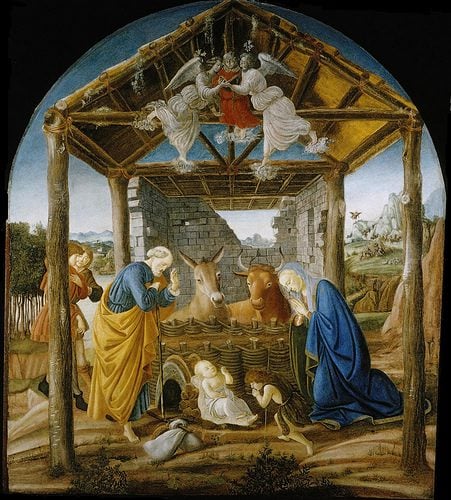
A nativity by Sandro Botticelli
(Wikimedia Commons public domain image)
Today marks the 220th anniversary of the birth of the Prophet Joseph Smith.
For the past several years, I’ve awakened every 23 December to the distant braying of donkeys. Cynically contemptuous of the Prophet Joseph Smith, they’re mocking “Smithmas,” an alleged Latter-day Saint holiday that they’ve invented as a vehicle for sneering not only at him but at those who respect him and accept him as a prophet.
The claim among a small handful of critics of the Church of Jesus Christ of Latter-day Saints is that Latter-day Saints celebrate the Prophet’s birthday with more enthusiasm and vigor than we celebrate the mainstream Christian holiday of Christmas. For many such unfortunates, I think it’s just a mirthless and rather bitter joke. A few, though, seem to take the claim seriously — or, at least, to want others to take it seriously. (It may simply be yet another irresistible opportunity for them to bear false witness.)
The overwhelmingly probably truth, of course, is that most Latter-day Saints don’t even remember that 23 December is the Prophet’s birthday, let alone celebrate it. The charge that “Smithmas” is our most beloved and revered holy day rests on an obscure blend of ill-humored joking and, perhaps, flat dishonesty.
Just to put the truth on the record, though, for those who might otherwise be innocently taken in by the claim, here are some things that I’ve written about it in previous years:
“Prophet’s birthday fits with season”
“‘Twas the last Sunday before ‘Smithmas’”
“Joseph Smith would be 210 years old today”
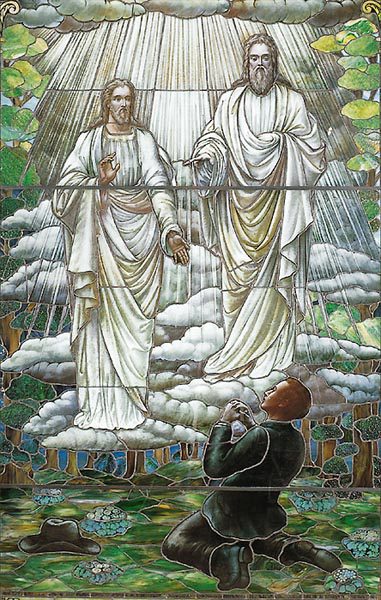
Joseph Smith’s First Vision
A 1913 stained glass by an unknown artist
(Wikimedia Commons public domain image)
Do we honor and respect and, yes, praise Joseph Smith? Yes. Rather in the manner, I suppose, that many Christians in other traditions honor, respect, and praise the canonized saints. Please note, though, that we neither address prayers to Joseph Smith nor celebrate his “feast day.”
Many years ago, while living in Cairo, I had the great privilege of studying one-on-one with Father Georges Anawati, an Egyptian monk of the Dominican order who was an eminent scholar of Islamic philosophy. Father Anawati was a wonderful man. When I told him of the birth of our son Joseph, he asked “Is he named after St. Joseph the Carpenter?” No, I said. Not really. “Then, after Joseph Smith?” No, not that, either. “Well,” he asked, “you do pray to Joseph Smith, don’t you?” No, I told him. We venerate the Prophet and other good men, we respect them, but we don’t pray to them. He reflected for a few seconds and then said, as if to himself, “These heresies are all so bizarre!”
The image of Joseph Smith’s First Vision shown above will serve as clearly as anything, I suppose, to illustrate the view of actual believing Latter-day Saints regarding his position in our history and doctrine. It is clearly a subordinate one. The Father and the Son initiated that visit. Joseph didn’t. He was the (surprised and eventually altogether overwhelmed) petitioner. The Father and the Son are instructing him, not the other way around. He is kneeling before them. They are not kneeling before him.
Joseph’s is a reflected light. He doesn’t shine of himself, innately. Thanks to the sun, our planet teems with life on land, in the soil, in the air, and in the waters. The pale light of our moon cannot sustain life on its own. Earth would be sterile if lunar light were all we had. And, absent the sun, the moon itself would also be lost in utter darkness.

Christmas lights at the birthplace of the Prophet Joseph Smith in Sharon, Vermont
(Wikimedia Commons public domain photograph)
Already this morning, I’ve seen History of the Church 6:408-409 deployed against Joseph. I suppose that such weaponization is intended to insinuate that, as Latter-day Saints supposedly do more generally, Joseph himself claimed superiority to the Savior or, at least, parity with Him. It’s part of an emerging quasi-liturgical pattern, I think, a kind of repetitive, ritualistic, and slanderous litany for those who love and make this particular lie. (See Revelation 22:15.) Here’s a column on the subject that I published in the Deseret News back on 4 September 2014:
Some critics like to use a quotation attributed to Joseph Smith as a weapon against him:
“I have more to boast of,” he’s reported to have said, “than ever any man had. I am the only man that has ever been able to keep a whole church together since the days of Adam. . . . Neither Paul, John, Peter nor Jesus ever did it. I boast that no man ever did such work as I. The followers of Jesus ran away from him; but the Latter-day Saints never ran away from me yet” (History of the Church 6:408-409).
The comment seems arrogant, lacking the humility appropriate to a prophet or even an ordinary member of The Church of Jesus Christ of Latter-day Saints.
But at least four points should be remembered when evaluating it. Much of what follows is taken from a personal message I wrote that became the basis of a FairMormon wiki post on the subject.
First, the context: Joseph was applying a passage from the apostle Paul (2 Corinthians 11-12) to his own perilous situation. The idea of “boasting” wasn’t Joseph’s; it was Paul’s. The critics typically forget that.
Second, Joseph seems actually to be praising his followers’ faithfulness, not himself.
Third, Joseph didn’t write the quotation; it was reconstructed after his death. Thus, it almost certainly doesn’t represent his precise words. Even History of the Church (often called the “Documentary History”) says that it rests upon a “synopsis” by Thomas Bullock.
Joseph delivered the sermon on May 26, 1844. A month later, he was dead. So did he supervise or approve this entry? No. Entries in the History of the Church for at least his last five years were actually made by others, after his assassination. Like other chroniclers of the period, they reconstructed his speeches from the notes and memories of those who’d heard them. (There were no recordings.) His well-intentioned scribes admired and missed him enormously, and they worked as accurately as they could, but it’s unreasonable to expect verbal exactness from their method.
This is vitally important to recall when trying to assess Joseph’s character, his moral and spiritual quality, via History of the Church. Even when he seems to be speaking in the first person, it may or may not be his actual voice.
Dean Jessee’s preface to his collection of The Personal Writings of Joseph Smith specifically addresses the seeming egotism that entered into Joseph’s later statements — an attitude quite foreign to the historical man himself. He didn’t suddenly become egotistical; the later voice is no longer his: it’s the work of disciples who felt comfortable “praising” Joseph, after his death, in ways he might not have endorsed.
Given the manner of its composition, the nuances, tone, and details of History of the Church should be treated with caution. Curiously, though, at least in this case, Joseph’s critics insist that the overall narrative of the History is incorrect (e.g. divine intervention, revelation, Joseph Smith’s prophetic calling, etc.) while expecting us to accept as precisely accurate its details of tone and mood — at least when those details seem to cast the Prophet in a bad light.
Fourth, Joseph’s authenticated personal statements plainly reveal him to have been a humble and sincere man, struggling to do the will of God as he understood it — and this particular statement should be placed in the context of his overall life and behavior. (See Mark McConkie’s Remembering Joseph: Personal Recollections of Those Who Knew the Prophet Joseph Smith.)
Consider, for example, the following excerpt from a private letter Joseph wrote to his wife, Emma, in June 1832: “I will try to be contented with my lot, knowing that God is my friend. In him I shall find comfort. I have given my life into his hands. I am prepared to go at his call. I desire to be with Christ. I count not my life dear to me (except) to do his will.”
These are scarcely the words of a man who believed himself better than Christ. Nor are these, which are taken from History of the Church 5:401:
“I do not think there have been many good men on the earth since the days of Adam; but there was one good man and his name was Jesus. Many persons think a prophet must be a great deal better than anybody else. … I do not want you to think that I am very righteous, for I am not.”
Joseph Smith saw himself as an instrument in the hands of God — no less, but also definitely no more.
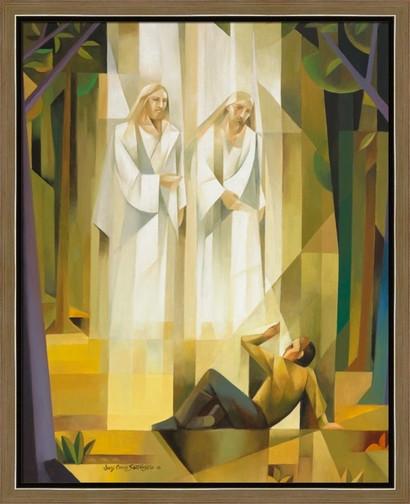
A depiction of the First Vision by the Argentinian Latter-day Saint artist Jorge Cocco Santángelo.
I have, incidentally, made an effort to discover the copyright status of this image, but have been unable to be certain of it. I’m assuming that my employment of it here constitutes an example of “fair use.” Authoritative communications to the contrary would be welcomed. I would like Jorge Cocco’s work to be better known in the Latter-day Saint community.
There is, of course, absolutely no doctrinal requirement to think about Joseph Smith today, or to read about him. There is no such expectation. But, just in case you are inclined to give him a few minutes, here are a couple of brief but very recent items about him that I enjoyed. They’re both based upon accounts of people who actually knew him:
- Marilynne Todd Linford, in Meridian Magazine: “If Joseph Smith Had a Birthday Party, Who Would Come?”
- Jacob Hess, in the Deseret News: “Understanding Joseph Smith through the eyes of those who knew him: ‘A plain, sensible, strong-minded man’: The people who knew the Prophet best describe his goodness, integrity”

Sorry, but I do think this is funny: Feliz Navidad! (Wikimedia Commons public domain photograph)
For today’s selection of Christmas music, I offer a wonderful Catalonian carol, performed by The King’s Singers in Salt Lake City’s Conference Center: https://www.youtube.com/watch?v=1AyseeqSSlY
¿Qué le daremos al Niño chiquito
Con que se pueda reír y alegrar?
Un lindo ramo de hermosas naranjas
Con verdes hojas y flor de ahazarTan ta, ran tán
Que los higos son verdes
Tan ta, ran tán
Que ya maduraran¿Qué le daremos, qué le daremos?
Frum, frum¿Qué la daremos al Niño bonito
Qué le daremos major para Él?
Vamos a hacerle unas tortas muy dulces
De Blanca harina, de nueces y miel¿Qué le daremos al Niño querido
Que sea bueno y le pueda gustar?
Vamos a darle una cesta de guindas
Para comerlas o para jugar.
And here it is, performed in English by the Tabernacle Choir at Temple Square and accompanied by a very moving video: https://www.youtube.com/watch?v=fH9nK_9OBDg
Travel and Religion
History and Religion
Previous Post
December 22, 2025
"Christmas Solves the Ultimate Question"
Next Post
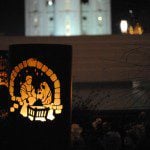
December 24, 2025 On the Eve of Christ's Nativity
Recent Comments
"I have cpnsidered in my mond if the 4 volume Saints could be made into ..."
From Serbia’s “White City,” Belgrade
"Another class of memories are of individuals who previously lived. Some of these remembered individuals ..."
"Sutherland's lecture sounds interesting. He seems to restate the Washington consensus that trade brings peace ..."
Learning more about a region of ..."
"In a meeting today, I learned another important reason why accurate (or at least as ..."
From Serbia’s “White City,” Belgrade
Browse Our Archives
Select a Category Uncategorized
Select a Month October 2026 September 2026 August 2026 July 2026 June 2026 May 2026 April 2026 March 2026 February 2026 January 2026 December 2025 November 2025 October 2025 September 2025 August 2025 July 2025 June 2025 May 2025 April 2025 March 2025 February 2025 January 2025 December 2024 November 2024 October 2024 September 2024 August 2024 July 2024 June 2024 May 2024 April 2024 March 2024 February 2024 January 2024 December 2023 November 2023 October 2023 September 2023 August 2023 July 2023 June 2023 May 2023 April 2023 March 2023 February 2023 January 2023 December 2022 November 2022 October 2022 September 2022 August 2022 July 2022 June 2022 May 2022 April 2022 March 2022 February 2022 January 2022 December 2021 November 2021 October 2021 September 2021 August 2021 July 2021 June 2021 May 2021 April 2021 March 2021 February 2021 January 2021 December 2020 November 2020 October 2020 September 2020 August 2020 July 2020 June 2020 May 2020 April 2020 March 2020 February 2020 January 2020 December 2019 November 2019 October 2019 September 2019 August 2019 July 2019 June 2019 May 2019 April 2019 March 2019 February 2019 January 2019 December 2018 November 2018 October 2018 September 2018 August 2018 July 2018 June 2018 May 2018 April 2018 March 2018 February 2018 January 2018 December 2017 November 2017 October 2017 September 2017 August 2017 July 2017 June 2017 May 2017 April 2017 March 2017 February 2017 January 2017 December 2016 November 2016 October 2016 September 2016 August 2016 July 2016 June 2016 May 2016 April 2016 March 2016 February 2016 January 2016 December 2015 November 2015 October 2015 September 2015 August 2015 July 2015 June 2015 May 2015 April 2015 March 2015 February 2015 January 2015 December 2014 November 2014 March 2014 August 2013 February 2012
Follow Us!
TAKE THE
Religious Wisdom Quiz
Who refused to bow to the king's statue and was thrown in the fire?
Select your answer to see how you score.
Shadrach, Meshach, Abednego Joseph Daniel Paul
Related posts from Sic et Non


Notes on Women, Priesthood, and General Conference

"The Book of Moses as a Temple Text"

TRENDING AT PATHEOS Latter-day Saint

The First Eucharistic Controversy: Christ’s Real Presence
For Catholics, the Eucharist is the source and summit of the Christian...

What a Stop Sign Can Teach Us About...
How to Make a Decision When You Can't Hear God Main point:...

Archdiocese Hosts Military Marriage Retreat in Germany
RASTATT, Germany — The transient military lifestyle, with its frequent deployments and...

Nearly every morning, I make the drive to Detroit with my high-school-age...

The Real AI Story Is Adoption Without Trust
Artificial intelligence has crossed a political threshold. It is no longer a...

A new article, written by Jeff Lindsay and Gale L. Pooley,...
view all Latter-day Saint blogs
What Are Your Thoughts?leave a comment
Ad-Free & Subscriber Log-In Subscription Support
- About Us
- 2026 Calendar
- Videos
- Podcasts
- Library of World Religions
- Faith In Media Tracker
- Advertise With Us
- Write for Us
- Privacy Policy
- Terms of Service
- Do Not Sell My Data
- Contact Us
- Radiant Digital
- Manage Newsletter Subscriptions
- Unsubscribe From Notifications
- Sitemap
Copyright 2008-2026, Patheos. All rights reserved.
Subscription Support Ad-Free & Subscriber Log-In
Follow Patheos