
BuddhistCatholicContemplativeEvangelicalGeneral ChristianHinduJewishLatter-day SaintMuslimNew VisionsProgressive Christian
Beliefs
- Buddhist
- Catholic
- Contemplative
- Evangelical
- General Christian
- Hindu
- Jewish
- Latter-day Saint
- More Voices
- Muslim
- New Visions
- Pagan
- Progressive Christian
Topics
- Religion News
- Food and Religion
- Sports and Religion
- Religious Art
- Religious Music and Entertainment
- Religious Events
- History and Religion
- Style and Religion
- Politics and Religion
- Women in Religion
- Recreation Outdoors and Religion
- Business Finance and Religion
- Careers Workplace and Religion
- Education and Religion
- Family Parenting and Religion
- Health Fitness and Religion
- Home and Religion
- Relationships and Religion
- Technology and Religion
- Travel and Religion
Columnists
- Buddhist Columnists
- Business Finance and Religion Columnists
- Careers Workplace and Religion Columnists
- Catholic Columnists
- Contemplative Columnists
- Education and Religion Columnists
- Evangelists Columnists
- Family Parenting and Religion Columnists
- General Christian Columnists
- Health Fitness and Religion Columnists
- Hindu Columnists
- History and Religion Columnists
- Home and Religion Columnists
- Jewish Columnists
- More Voices Columnists
- Latter Day Columnists
- Muslim Columnists
- New Visions Columnists
- Nonreligious Columnists
- Pagan Columnists
- Politics and Religion Columnists
- Progressive Columnists
- Recreation Outdoors and Religion Columnists
- Relationships and Religion Columnists
- Religion News Columnists
- Religious Art Columnists
- Religious Events Columnists
- Religious Music and Entertainment Columnists
- Sports and Religion Columnists
- Style and Religion Columnists
- Technology and Religion Columnists
- Travel and Religion Columnists
- Women in Religion Columnists
Resource Library
- 2026 Calendar
- Library of World Religions
- The 100 Most Holy Places on Earth
- Patheos Answers
- Podcasts
- Videos
- Faith Leaders Database
- Anglican Episcopalian
- Bahai
- Baptist
- Buddhism
- Christianity
- Confucianism
- Eastern Orthodoxy
- Hinduism
- Holiness and Pentecostal
- ISKCON
- Islam
- Judaism
- Lutheran
- Methodist
- The Church of Jesus Christ of Latter-day Saints
- New Age
- Paganism
- Presbytarian and Reformed
- Protestantism
- Religion Behind the Scenes
- Roman Catholic
- Scientology
- Shia Islam
- Sikhism
- Sufism
- Sunni Islam
- Taoism
- Zen
- See all religions
Research Tools
 Ad-Free & Subscriber Log-In Subscription Support
Ad-Free & Subscriber Log-In Subscription Support
Follow Patheos 

- Trending:
- Forgiveness
- |
- Marriage
- |
- Consciousness
- |
- Death Penalty
- |
- Election
- |
- Halloween

- Home
- Latter-day Saint
- History and Religion
- On hunting ghosts
On hunting ghosts
Last updated on: June 28, 2025 at 9:00 pm by Dan Peterson
On hunting ghosts 2025-06-28T21:00:24-06:00 Dan Peterson
Patheos Explore the world's faith through different perspectives on religion and spirituality! Patheos has the views of the prevalent religions and spiritualities of the world.

The Preston England Temple in winter. (LDS Media Library)
Our (superb) guide on the recent Interpreter Foundation Church history tour, Peter Fagg — whom my wife and I have known for years now, and who will also, if all goes according to plan, accompany us on a Christian history-themed tour of England in May of 2026 — shared these remarks with us while we were there a few weeks ago. We liked them so very much that we invited him to share them with the readership of the Interpreter Foundation. He generously agreed to do so: “Empty Chairs: Reflections on How Faithful Latter-day Saints Can Handle the Pain Presented by Wayward Loved Ones,” written by Peter Fagg
[Editor’s Note: Peter Fagg gave these remarks at a Sacrament Meeting of the Chorley Second Ward of the Preston England Stake on 30 June 2024. With his kind permission, we share them here, lightly edited, with the hope that they might be helpful and comforting to some of our readers.]

From James Jordan during an earlier Interpreter Foundation filming-visit to Africa, a view along the Congo River in the Democratic Republic of the Congo (formerly Zaire).
We held our quarterly Interpreter Foundation board meeting today. I’m deeply impressed by — and very grateful for — all of the time and effort that our uncompensated board puts into the Foundation’s work, along with the time and effort given by all of our volunteers. Jeff Bradshaw returned only very early this morning from (I think) six weeks in Africa, where he’s been working on the Not by Bread Alone project.
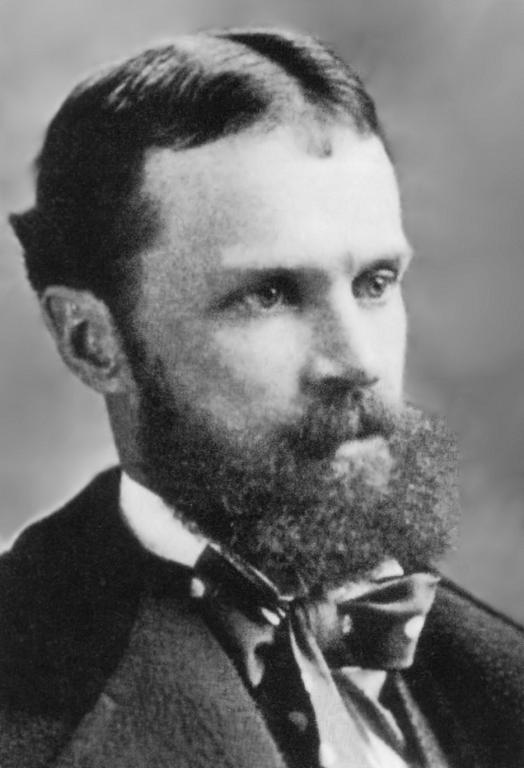
William James (1842-1910), psychologist, philosopher, illustrious professor at Harvard, and brother of the novelist Henry James (Wikimedia Commons public domain photo)
I want to share some passages that I recently marked during a reading of Deborah Blum, Ghost Hunters: William James and the Search for Scientific Proof of Life After Death (Penguin, 2007):
James and his companions in this scientific ghost hunt were famed for their intellectual brilliance—their intellectual courage gained them less admiration. Yet they possessed both qualities in abundance. James’s fellow ghost hunters included the codiscoverer of the theory of evolution, a physiologist from France who would win the Nobel Prize in Medicine, an Australian who became a founding member of the American Anthropological Society, a female mathematician who became principal of Cambridge University’s first college for women, a pioneer in British utilitarian philosophy, and a trio of respected physicists. All of them had reputations that would suffer as a consequence, and all of them, like William James, would refuse to abandon the search. (15)
James wrote to Science magazine, a journal devoted to upholding the research ethic, that he loathed the reverential use of the word “scientist … it suggests to me the priggish, sectarian view of science, as something against religion, against sentiment,” even against real-life experience. (17)
In his most famous demonstration—investigated by German philosopher Immanuel Kant—Swedenborg disrupted a garden party by suddenly announcing a firestorm in Stockholm, some three hundred miles away. Staring at a clear evening sky, Swedenborg described the fire’s progress, street by street and building by building, to the disbelieving company. Two days later, a messenger from Stockholm confirmed every detail. Kant concluded that the case showed “beyond all possibility of doubt” that Swedenborg did indeed possess an extraordinary visionary gift. (23)
In the quotation that follows, it seems that the term sensitive is being used in a legitimate but perhaps somewhat unfamiliar and even archaic sense, which refers to a person thought to possess occult or psychic powers:
“The ideal of every science is that of a closed and completed system of truth,” James acknowledged. If supernatural events did not match the categories of the scientific system they “must be held untrue.” James admired the efficiency of the “scientific” approach to the spiritual murkiness. “It is far better tactics, if you wish to get rid of mystery, to brand the narratives themselves as unworthy of trust,” James wrote. But while he agreed that most so-called supernatural events were suspect, he worried that scientists stayed deliberately blind to the rare credible ones, that researchers might be ignoring “a natural kind of fact of which we do not yet know the full extent.” And he worried too about the larger effect of such prejudice on the way people viewed science itself. “Thousands of sensitive organizations in the United States today live as steadily in the light of these experiences, and are as indifferent to modern science, as if they lived in Bohemia in the twelfth century. They are indifferent to science, because science is so callously indifferent to their experiences.” (42)
If scientists did not afford some respect to the beliefs of the lay public, James warned, there was little reason for the public to respect the pronouncements of science. (42)
And, finally, this one. It’s a bit off-theme, but it certainly seems a good passage to keep in mind during our own peculiar era:
Nations, James said simply, are not saved by wars. They are saved, he said, by “acts without external picturesqueness; by speaking, writing, voting reasonably; by smiting corruption swiftly; by good temper between parties—by people knowing true men when they see them, preferring them as leaders to rabid partisans and empty quacks.”

Only a few decades ago, a blissfully atheistic utopia appeared to be almost within reach. This is the cover of a magazine published in the Soviet Union during the 1920s by the government-sponsored League of the Militant Godless, showing the deities of Judaism, Christianity, and Islam being destroyed by the first Leninist Five Year Plan. (Wikimedia Commons public domain image)
Finally, lest the zealous defenders of humanity against the ravages of theism grow too complacent, I offer several appalling items of evidence, drawn from the venerable Christopher Hitchens Memorial “How Religion Poisons Everything” File™, of how busybody religious believers continue to afflict and torment innocent men, women, and children around the world:
- “Church Donation Funds the Training of Breast Cancer Specialists in Mexico”
- “Church Donates Equipment to Koforidua Polyclinic in Ghana”
- “The Church Gifts Ethiopian Christians a New Worship Space in Utah.” “If everyone followed the example of your prophets and saw things from a wider perspective, we wouldn’t have this worrisome world.”
- “A Closer Look at Caring: How the Church Is Helping in Jordan, Cambodia and Mongolia”
History and Religion
Travel and Religion
Previous Post

June 27, 2025
181 Years Ago, Today
Next Post

June 30, 2025 Twenty-two years ago
Recent Comments
"In a meeting today, I learned another important reason why accurate (or at least as ..."
From Serbia’s “White City,” Belgrade
"PL: "Let's hope he doesn't have your address..."I have to frankly confess that a few ..."
From Serbia’s “White City,” Belgrade
"Let's hope he doesn't have your address..."
From Serbia’s “White City,” Belgrade
"PL: "The layers are peeling back."He appears to be suffering under an odd but powerful ..."
From Serbia’s “White City,” Belgrade
Browse Our Archives
Select a Category Uncategorized
Select a Month October 2026 September 2026 August 2026 July 2026 June 2026 May 2026 April 2026 March 2026 February 2026 January 2026 December 2025 November 2025 October 2025 September 2025 August 2025 July 2025 June 2025 May 2025 April 2025 March 2025 February 2025 January 2025 December 2024 November 2024 October 2024 September 2024 August 2024 July 2024 June 2024 May 2024 April 2024 March 2024 February 2024 January 2024 December 2023 November 2023 October 2023 September 2023 August 2023 July 2023 June 2023 May 2023 April 2023 March 2023 February 2023 January 2023 December 2022 November 2022 October 2022 September 2022 August 2022 July 2022 June 2022 May 2022 April 2022 March 2022 February 2022 January 2022 December 2021 November 2021 October 2021 September 2021 August 2021 July 2021 June 2021 May 2021 April 2021 March 2021 February 2021 January 2021 December 2020 November 2020 October 2020 September 2020 August 2020 July 2020 June 2020 May 2020 April 2020 March 2020 February 2020 January 2020 December 2019 November 2019 October 2019 September 2019 August 2019 July 2019 June 2019 May 2019 April 2019 March 2019 February 2019 January 2019 December 2018 November 2018 October 2018 September 2018 August 2018 July 2018 June 2018 May 2018 April 2018 March 2018 February 2018 January 2018 December 2017 November 2017 October 2017 September 2017 August 2017 July 2017 June 2017 May 2017 April 2017 March 2017 February 2017 January 2017 December 2016 November 2016 October 2016 September 2016 August 2016 July 2016 June 2016 May 2016 April 2016 March 2016 February 2016 January 2016 December 2015 November 2015 October 2015 September 2015 August 2015 July 2015 June 2015 May 2015 April 2015 March 2015 February 2015 January 2015 December 2014 November 2014 March 2014 August 2013 February 2012
Follow Us!
TAKE THE
Religious Wisdom Quiz
According to 1 Peter, what does love do?
Select your answer to see how you score.
Bears all things Never fails Covers over a multitude of sins Casts out fear
Related posts from Sic et Non


Notes on Women, Priesthood, and General Conference

"The Book of Moses as a Temple Text"

TRENDING AT PATHEOS Latter-day Saint

The Sermon on the Mount, Part I: Matthew...
The Sermon on the Mount, Part I (Matthew 4:12-5:12) St. Matthew moves...

What's up from Crossway: Reviewing some of their latest A few weeks...

Janie Learns the Way of the Cross: A...
Teaching children about Jesus' Passion can be challenging. Many parents and educators...

Looking For Good Catholic Writing - October 2026
He alone extends the heavens, and he walks upon the waves of...

In "Irreplaceable," our book on vocation and technology, Trevor Sutton and I...

I was strolling through the top floor of the brand new Parthenon...
view all Latter-day Saint blogs
What Are Your Thoughts?leave a comment
Ad-Free & Subscriber Log-In Subscription Support
- About Us
- 2026 Calendar
- Videos
- Podcasts
- Library of World Religions
- Faith In Media Tracker
- Advertise With Us
- Write for Us
- Privacy Policy
- Terms of Service
- Do Not Sell My Data
- Contact Us
- Radiant Digital
- Manage Newsletter Subscriptions
- Unsubscribe From Notifications
- Sitemap
Copyright 2008-2026, Patheos. All rights reserved.
Subscription Support Ad-Free & Subscriber Log-In
Follow Patheos